




Nearshoring in logistics
Table of contents
- Nearshoring: The paradigm shift in logistics and the real estate industry
- Definition and demarcation: Why nearshoring is not "hype"
- Impact on warehouse logistics: From buffer to strategic asset
- Contract Logistics: New Requirements for 3PL Service Providers
- The logistics property: Technical specifications in flux
- Location factors and data: Where is the music playing?
- Expert Q&A: The most important questions in a nutshell
- Conclusion for practice
Nearshoring: The paradigm shift in logistics and the real estate industry
The era of borderless globalization based on the principles of "just-in-time" and "lowest cost country sourcing" is reaching its physical and geopolitical limits. They are being replaced by nearshoring – the relocation of production facilities and storage capacities to geographically nearby countries. For the DACH region, this primarily means a shift towards Central and Eastern Europe (CEE) and the Maghreb region.
Definition and demarcation: Why nearshoring is not "hype"
While offshoring (e.g. production in East Asia) focuses primarily on labour cost advantages, nearshoring focuses on resilience, speed and sustainability.
- Onshoring: Production in one's own high-wage country (often too expensive).
- Nearshoring: Production in neighboring countries (e.g. Poland, Czech Republic, Hungary, Turkey).
- Friendshoring: Relocation to politically allied states.
Impact on warehouse logistics: From buffer to strategic asset
Nearshoring is fundamentally changing the role of the warehouse. In the past, warehouses were often pure transit stations (cross-docking). Today, they serve as safety anchors.
- Inventory: Companies are increasing their safety stocks. The storage period is extended, which increases the demand for space.
- Complexity: As more intermediate products are temporarily stored regionally, the requirements for inventory management (WMS) and picking handling are increasing.
- Fact: According to industry analysis, more than 60% of European industrial companies plan to expand their warehouse capacity near the border within the next three years.
Contract Logistics: New Requirements for 3PL Service Providers
Third-Party Logistics (3PL) providers need to become more flexible. Nearshoring does not only mean "closer", but often also "more detailed".
- Value Added Services (VAS): Since final assembly or customization is once again taking place closer to the sales market, contract logistics specialists are increasingly taking on production-related tasks such as assembly, quality inspection or kitting.
- Personnel intensity: Nearshoring locations in Eastern Europe benefit from lower wages than in Germany, but are also struggling with a shortage of skilled workers. Automation in contract logistics is therefore also becoming mandatory at nearshoring locations.
The logistics property: Technical specifications in flux
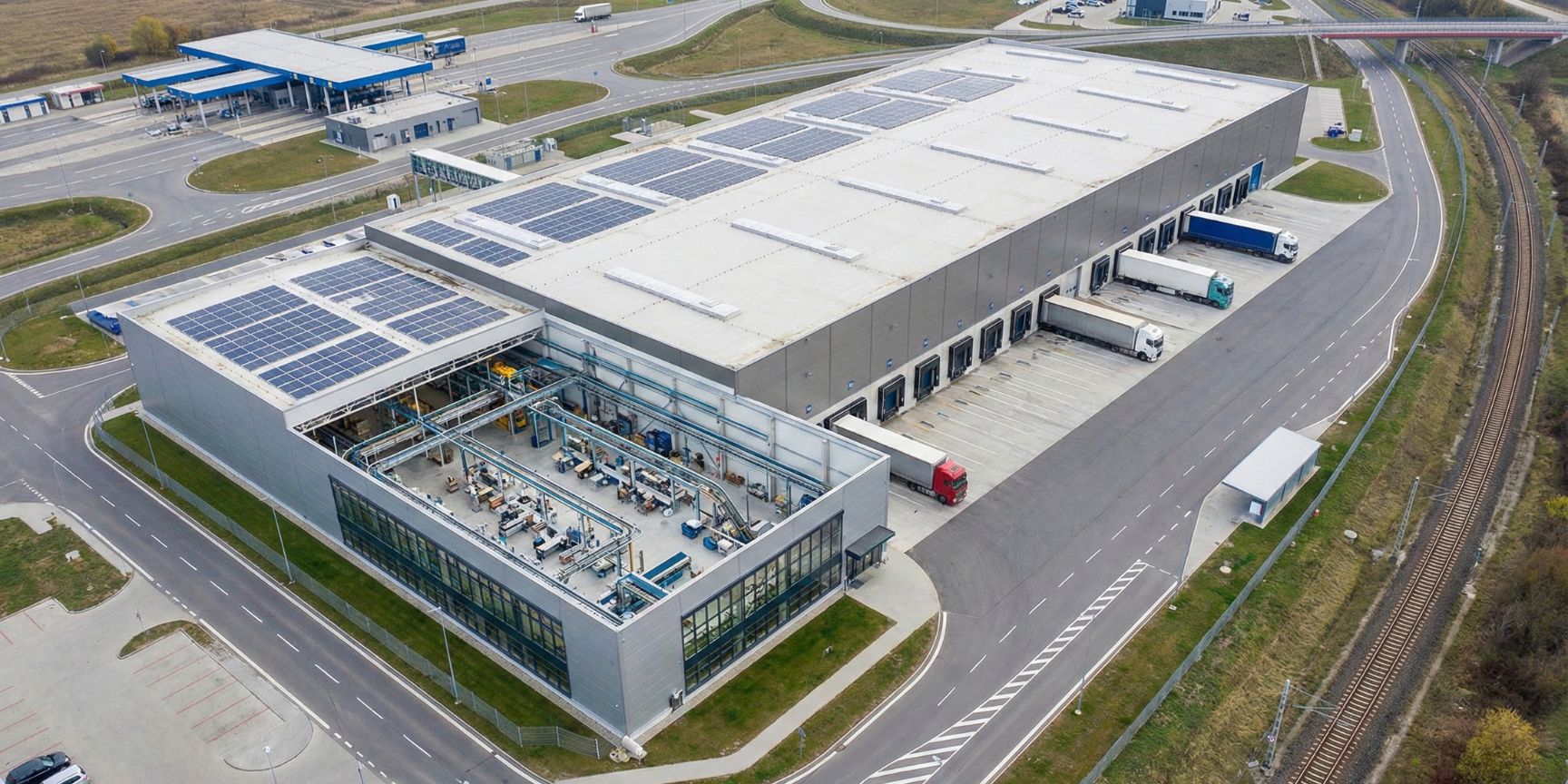
The "hall" of today is no longer the hall of yesterday. When production and storage merge, the structural requirements for the property change:
| Feature | Classic logistics property | Nearshoring/Light Industrial Hall |
| Floor load capacity | 5 t/m² | Often > 7.5 t/m² (for machines) |
| Power capacity | Standard (Lighting/Sprinklers) | High (for production equipment/automation) |
| Office share | 5 % | 10–15% (for Administration & Engineering) |
| Mezzanine | Storage space | Assembly and test surfaces |
In addition, ESG (Environmental, Social, Governance) compliance is coming into focus. Those who engage in nearshoring in order to save CO2 during transport must not nullify this advantage with energy-efficient real estate.
Location factors and data: Where is the music playing?
Nearshoring is a game of regions. In Europe, clear hotspots are emerging:
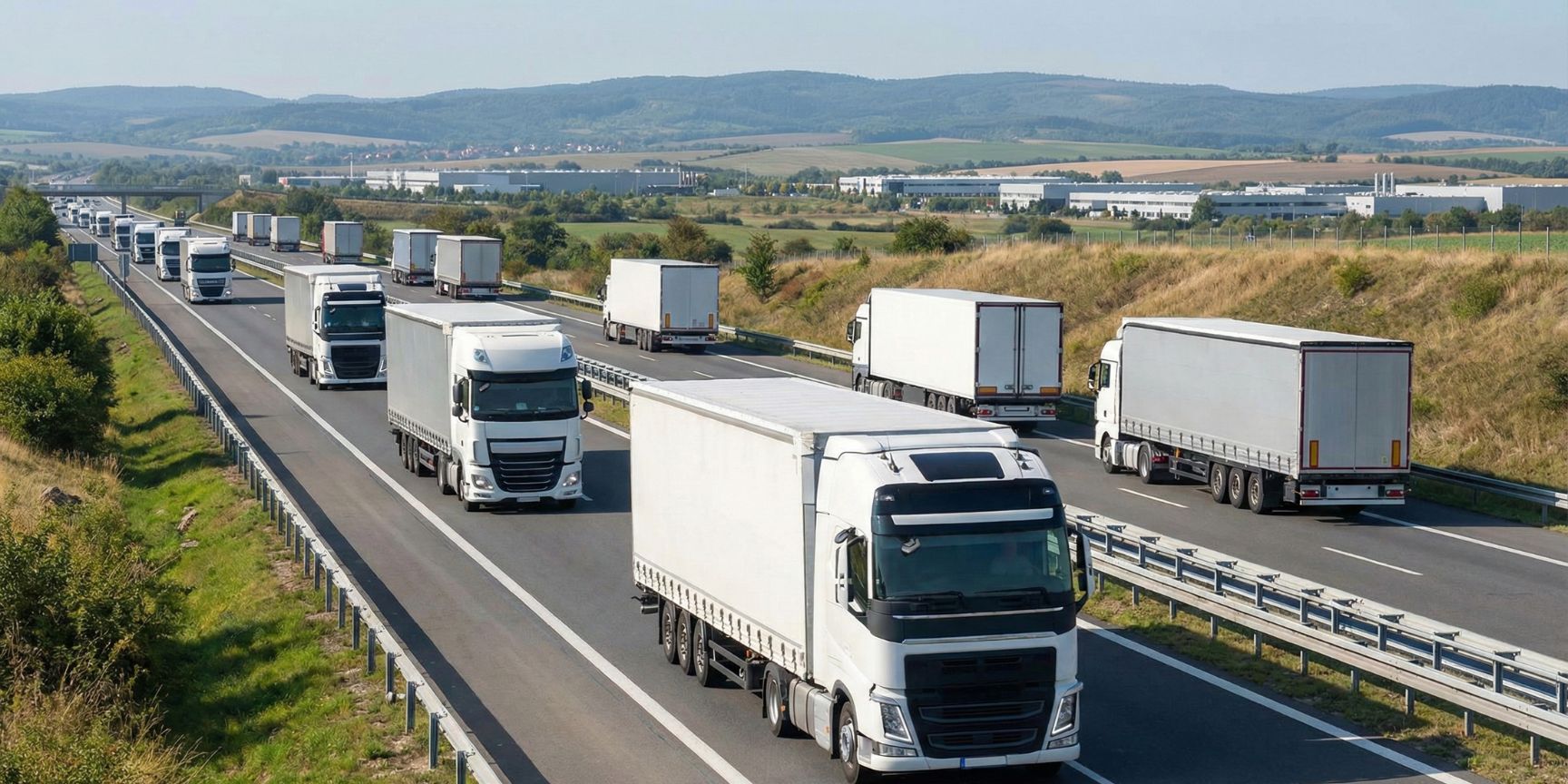
- Poland & Czech Republic: Germany's extended workbench. Excellent motorway connections, but rising rents (Prime Rents in Warsaw or Prague sometimes over €6.50/m²).
- Romania & Bulgaria: Cost advantages in terms of personnel and land, but infrastructural challenges.
- Morocco: Growing hub for the automotive industry (short distances via Spain).
An important key figure: The transport cost savings through nearshoring (shorter lead times) often compensate for the higher production costs compared to the Far East as soon as container rates for sea freight rise above a certain level or there is a risk of delivery disruptions.
Expert Q&A: The most important questions in a nutshell
Question: Is nearshoring worthwhile despite higher labor costs compared to Asia?
Answer: Yes, if you look at the "Total Cost of Ownership" (TCO). Shorter delivery times mean less tied up capital in working capital. In addition, the risk costs for supply disruptions and CO2 levies (CBAM) are reduced.
Question: What role does automation play in nearshoring?
Answer: A decisive one. Since wages are also rising in nearshoring countries, the hall is not competitive in the long term without automation (AGVs, sorters, shuttles). The property must offer the appropriate IT infrastructure and electricity load.
Question: Are existing properties suitable for nearshoring purposes?
Answer: Only to a limited extent. Many older halls have ceiling heights that are too low or insufficient power connections for integrated production processes. "Build-to-suit" solutions are usually the standard here.
Conclusion for practice
Nearshoring is not a short-term response to crises, but a structural adaptation to a new world order. For logistics companies and real estate developers, this means:
- Flexibility: Halls must be designed to allow both storage and light production.
- Technology: Investing in software to provide real-time visibility into the shorter but more clock-driven supply chain is essential.
- Location: The proximity to transport hubs (rail/road) beats the pure "greenfield".