



Neo-Logistics at a glance
Table of contents
- What is Neo-Logistics? A definition
- FAQ: What distinguishes neo-logistics from traditional logistics?
- The technological drivers of neo-logistics
- Focus on warehouse logistics: The "Neo-Warehouse"
- Change in contract logistics: From service provider to partner
- The neo-logistics property: Smart, green and flexible
- Practical check: What does neo-logistics mean for my company?
- Conclusion: Neo-logistics as a strategic competitive advantage
What is Neo-Logistics? A definition
Neo-logistics (derived from "new" and "logistics") describes the modern evolutionary stage of logistics, which goes far beyond the traditional transport, handling and storage (TUL) of goods. It is a holistic approach characterized by four central pillars:
- Digitization & networking: Comprehensive integration of data streams along the entire supply chain.
- Automation & Robotics: Use of intelligent technologies to increase efficiency and reduce errors.
- Sustainability (ESG): Focus on environmental, social and corporate responsibility.
- Customer & Service Orientation: Shifting the focus from pure cost efficiency to value-added services and resilience.
At its core, neo-logistics transforms the supply chain from a reactive chain of command to a proactive, self-learning organism.
FAQ: What distinguishes neo-logistics from traditional logistics?
This question is central to understanding the concept. Here is an overview of the most important differences:
- Question: Doesn't traditional logistics already work with IT?
- Answer: Yes, but in traditional logistics, IT systems often work in silos (e.g. a separate system for warehouse management, one for transport). Neo-logistics is about the seamless, horizontal and vertical networking of all players and systems in real time – from the sensor on the product to the warehouse management system (WMS) to the customer's ERP software.
- Question: Hasn't automation been an issue for a long time?
- Answer: Traditional automation was often rigid and designed for high volumes of the same processes (e.g. permanently installed conveyor belts). Neo-Logistics relies on flexible and scalable automation such as Autonomous Mobile Robots (AMRs), which can dynamically adapt to changing order structures, which is particularly crucial in e-commerce.
- Question: What is the biggest strategic difference?
- Answer: Traditional logistics was primarily cost-driven. Neo-logistics is value-driven. It aims to create a measurable competitive advantage for the customer through data analysis, transparency and additional services and to make the supply chain more resilient to disruptions.
The technological drivers of neo-logistics
Neo-logistics is made possible by a convergence of several technologies:
- Internet of Things (IoT): Sensors on pallets, containers or directly on the product provide real-time data on location, condition and environment.
- Artificial Intelligence (AI) & Machine Learning (ML): AI algorithms optimize routes, predict demand fluctuations (predictive analytics) and control autonomous robotics in the warehouse.
- Big data analytics: Analyzing huge amounts of data uncovers inefficiencies and enables informed strategic decisions.
- Cloud computing: Provides the scalable and flexible infrastructure to store and process data and make applications (such as WMS or TMS) globally available.
Focus on warehouse logistics: The "Neo-Warehouse"
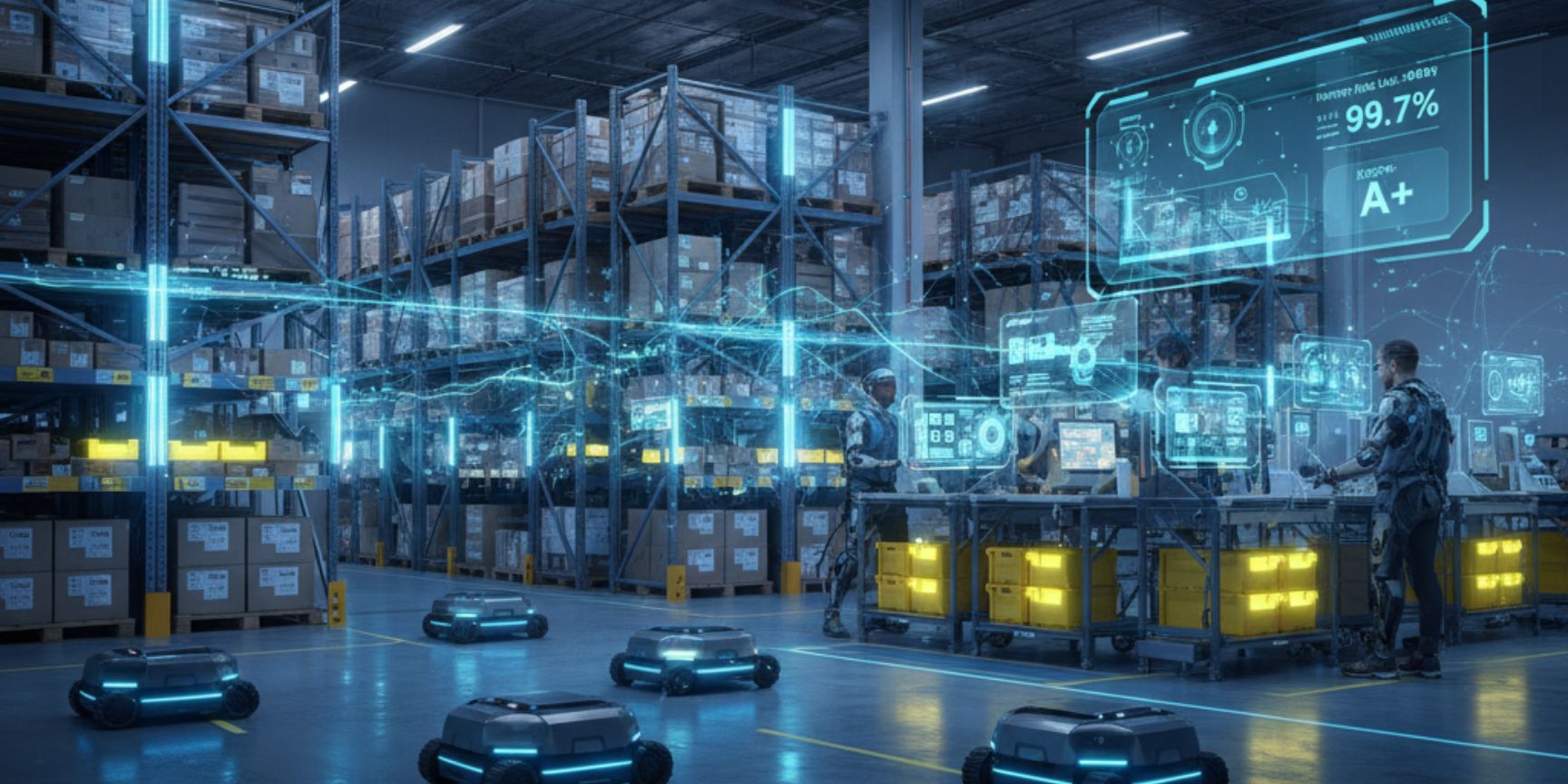
The warehouse is no longer a passive storage location, but a highly dynamic fulfillment center. In the "Neo-Warehouse", physical and digital processes merge:
- Automation: Instead of pure forklift fleets, automated guided vehicles (AGVs) and AMRs that implement "goods-to-person" principles dominate.
- Data centricity: A modern warehouse management system (WMS) acts as the brain of the warehouse. It not only controls storage and retrieval, but also optimizes walking routes in real time, predicts bottlenecks and dynamically assigns tasks to personnel and robots.
- Flexibility: The warehouse infrastructure has a modular structure in order to be able to react quickly to seasonalities or changing assortments (e.g. in e-commerce).
Change in contract logistics: From service provider to partner
In neo-logistics, the contract logistics company is transforming itself from a pure executive body to a deeply integrated strategic partner. This is expressed by:
- Value Added Services (VAS): Assumption of complex services such as packaging, returns management, quality control or even light assembly activities.
- Data sharing and transparency: The logistics provider uses dashboards to provide the customer with deep insight into key performance indicators (KPIs) such as stock levels, throughput times and costs – often in real time.
- Gain-sharing models: Compensation is no longer just transaction-based, but is linked to jointly achieved efficiency or quality goals.
The neo-logistics property: Smart, green and flexible
The physical hall itself becomes an intelligent asset. A neo-logistics property is characterized by three features:
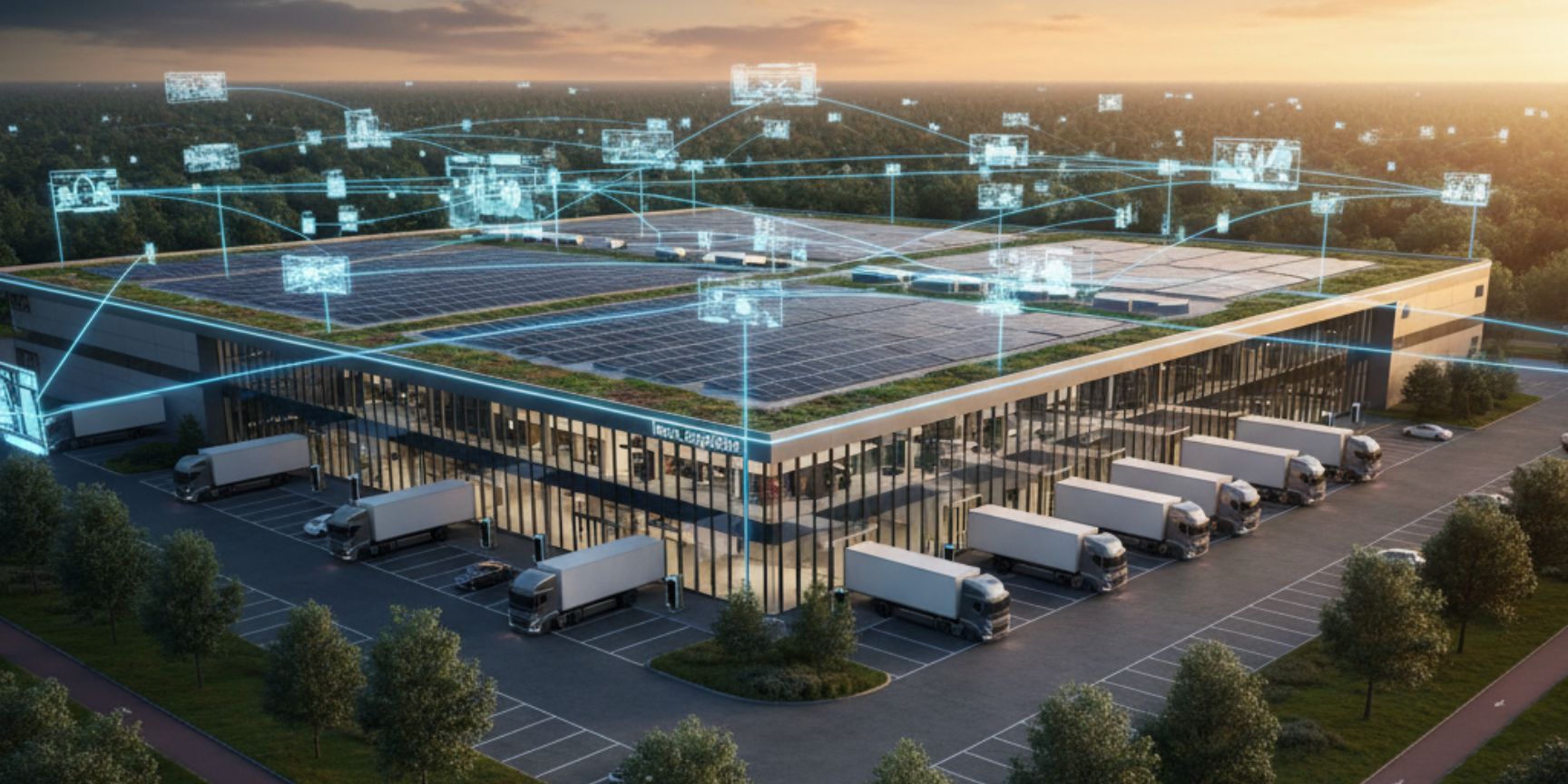
- Sustainability (ESG): Certifications such as BREEAM or DGNB are now standard. This includes photovoltaic systems on the roof, LED lighting, e-charging stations for trucks and cars, and resource-saving construction. The CO₂ footprint of a property is becoming a decisive rental and investment criterion.
- Intelligence ("smart building"): IoT sensors monitor energy consumption, control heating and ventilation as needed, and enable predictive maintenance of technical systems.
- Third-party usability: The property is designed to be usable for various industries and logistics processes (e.g. e-commerce fulfillment, production supply, multi-user warehouse) without major conversions. This ensures the long-term value of the property.
Practical check: What does neo-logistics mean for my company?
For companies that use or offer logistics, there are concrete fields of action:
- For shippers/industry: Check whether your logistics partner only manages costs or actively uses data to optimize processes. Demand transparency and proactive suggestions.
- For logistics service providers: Invest specifically in technology and IT expertise. Train your employees on how to use data and automation. Develop your business model from a pure service provider to a solution provider.
- For investors/developers: Plan logistics properties according to ESG criteria and with smart building technology right from the start. Flexibility and third-party usability are more important than a hyper-specialized one-user solution.
Conclusion: Neo-logistics as a strategic competitive advantage
Neo-logistics is not a short-term trend, but the inevitable consequence of globalization, digitization and the increasing demands of end customers. Companies that actively shape this change create resilient, efficient and sustainable supply chains. In doing so, they not only secure an operational advantage, but also a key strategic position in the value networks of the future.