



Repository in logistics
Table of contents
- Focus on the repository: Interface between high-security logistics and real estate management
- What defines a repository in modern logistics?
- The logistics property: Requirements for the "eternity hall"
- Final Disposal in Contract Logistics: More Than Just Space
- Safety and technology: The ultimate
- Sustainability and energy efficiency of special halls
- Expert FAQ: Questions and answers for practice
- Legal framework and liability
- Conclusion: The repository as a niche with a future
Focus on the repository: Interface between high-security logistics and real estate management
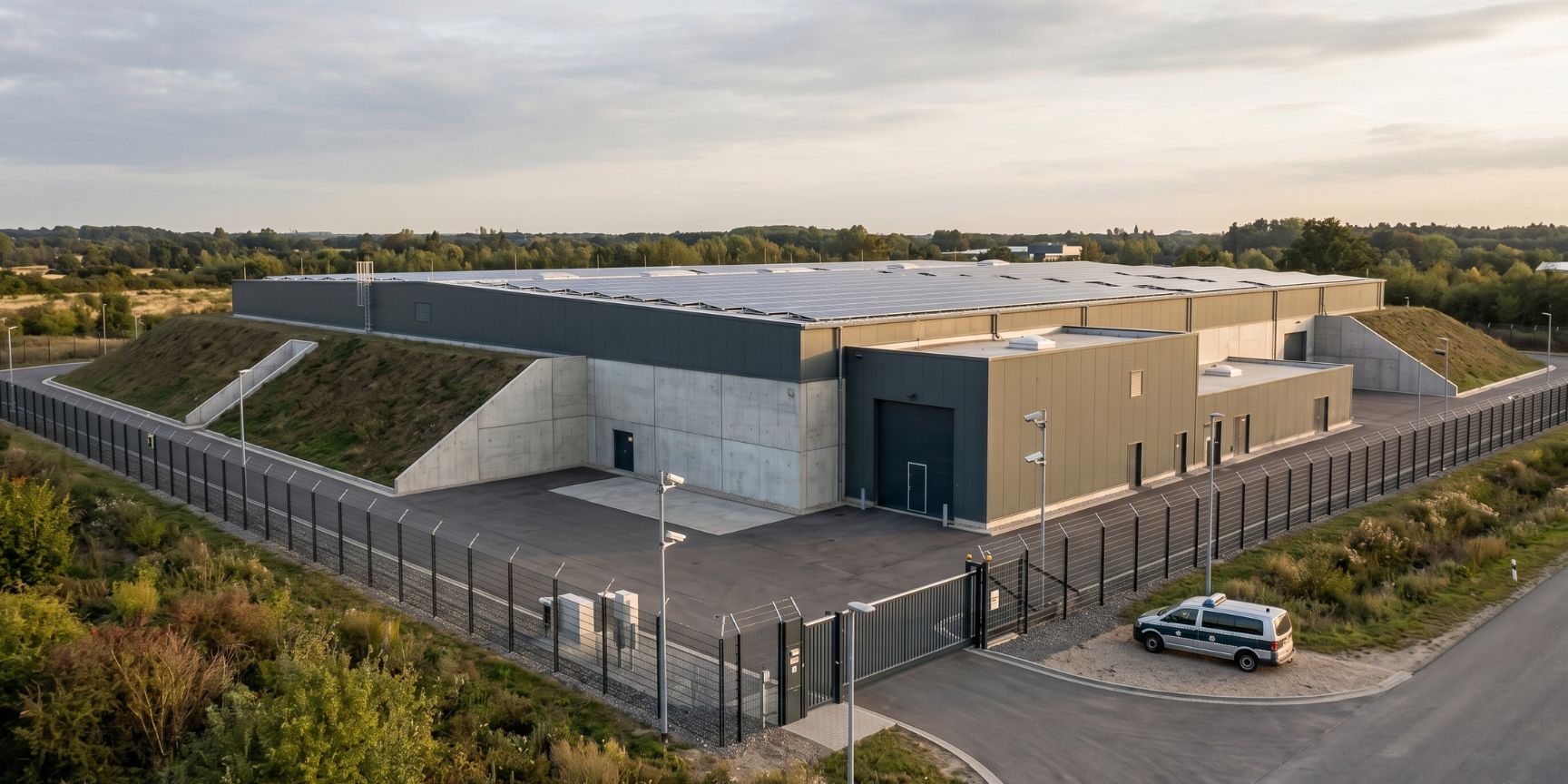
In common parlance, the term "repository" is often directly associated with radioactive waste. But from the point of view of warehouse logistics and the real estate industry, this definition falls short. In a niche specialist portal, we consider the repository as a specialised form of logistics property that is designed for the permanent or extremely long-term storage of sensitive goods, documents or residual materials.
This is not about fast moving consumer goods, but about maximum stability, security and legal compliance.
What defines a repository in modern logistics?
A repository is a logistics unit whose process design is not geared towards the return of the goods. In contract logistics, this often means taking on liability risks for decades. While classic distribution centers are optimized for throughput times, the focus here is on the integrity of storage conditions.
- Shelf life: 10 to 100+ years.
- Turnover speed: close to zero.
- Core competence: monitoring, security and documentation.
The logistics property: Requirements for the "eternity hall"
A classic standard hall (Grade A warehouse) is usually not sufficient for the requirements of a repository. The property itself becomes the protective armor of the stored goods.
Structural features:
- Soil conditions: Extreme WHG requirements (Water Resources Act) and load capacities of often more than 10-15 tons per square meter.
- Fire protection: Use of inerting technology (oxygen reduction) to nip fires in the bud, instead of sprinkler systems that could damage the stored goods with water.
- Air conditioning: Constant humidity and temperature (e.g. 18°C at 40% relative humidity for long-term archives), often ensured by redundant HVAC systems (heating, ventilation, air conditioning, sanitation).
Final Disposal in Contract Logistics: More Than Just Space
In contract logistics, repository management is a high-risk business. The service provider guarantees not only the physical presence, but also the findability and readability (in the case of data/documents) for generations.
Facts & Figures: Compared to a standard warehouse, a modern repository for sensitive industrial goods causes approx. 30-50% higher investment costs (CAPEX) per square meter, while operating costs (OPEX) decrease due to lower personnel costs, but are buffered by high energy costs for air conditioning and security.
Safety and technology: The ultimate
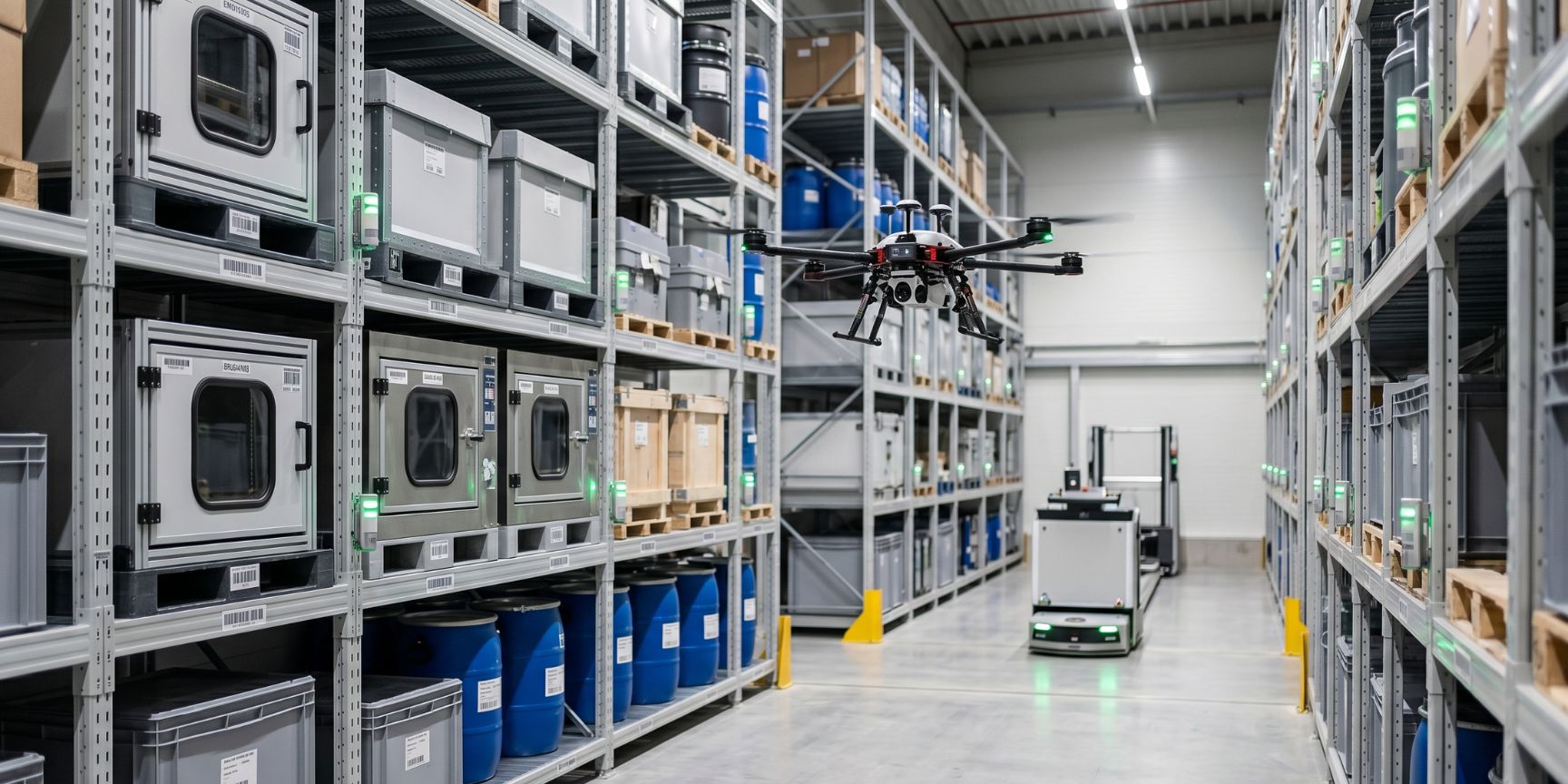
A repository without high-tech is unthinkable today. Since the goods often have a high ideal, legal or dangerous value, the monitoring is structured in several stages:
- Perimeter protection: Fences with sensors and video surveillance (AI-supported anomaly detection).
- Access control: Biometric procedures and 2-factor authentication.
- Digital twin: Every unit in the repository is digitally recorded in order to know its exact condition and location even after 30 years without a physical inventory.
Sustainability and energy efficiency of special halls
Since repositories are often operated for decades, energy efficiency is the decisive lever for profitability. Logistics properties in this area are increasingly focusing on:
- PV systems: Full-surface occupancy of the roof surfaces for self-power supply for the cooling.
- Geothermal energy: Use of the ground for passive temperature control of the hall.
- Insulation: U-values of the façade that achieve passive house standard in order to take advantage of the thermal inertia of the hall.
Expert FAQ: Questions and answers for practice
Question: Is it worthwhile to build your own repository hall or is outsourcing better? Answer: For most industrial companies, contract logistics is the better choice. Specialist providers have the necessary permits (e.g. according to the BImSchG) and the technical infrastructure, the construction of which would not be economically feasible for a sole proprietorship.
Question: What role does AI play in repository management? Answer: AI is mainly used for predictive maintenance of the property. Sensors report the smallest cracks in the concrete or changes in the power consumption of the air conditioning system before damage occurs to the stored goods. In addition, AI optimizes the use of space for the storage of hazardous substances (bans on joint storage).
Question: How high are the space costs in such special properties? Answer: While standard logistics space in Germany (depending on the location) is between €5.50 and €8.50 per m², special repository space can cost between €12.00 and €25.00 per m² due to the high level of technical equipment and safety features .
Legal framework and liability
Anyone who operates a repository has one foot in liability law. Whether file storage (GDPR-compliant) or residual material storage (waste law) – the documentation obligation is complete. In the logistics property, the insurance conditions (VdS classes) must also be strictly adhered to, as a total loss in the repository would usually threaten the existence of the repository or be ecologically catastrophic.
Conclusion: The repository as a niche with a future
The final repository in logistics is much more than a "dead hall". It is a highly complex system of special real estate, precise technology and legally compliant contract logistics. For investors, these properties offer an attractive, albeit investment-intensive, asset class due to the extremely long lease terms and low fluctuation.
For logistics managers, choosing the right repository means securing the company's future. In a world where data and specialty materials are becoming increasingly critical, the need for these "logistics vaults" is growing steadily.
Your Ideal Logistics Warehouse
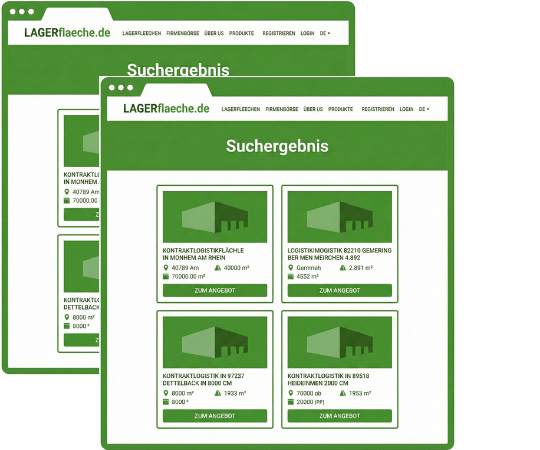
Browse listings for warehouse space, logistics real estate, industrial land, and contract logistics solutions.
Browse Exposés
Maximize Exposure for Your Warehouse Space
Showcase your logistics properties and attract qualified inquiries.
Discover Products