



Same-Day Delivery in Logistics
Table of contents
- Same-Day Delivery: Definition and Importance in Modern Retail
- The transformation of warehouse logistics
- Contract logistics as an enabler for same-day concepts
- Requirements for logistics properties and halls
- Facts, figures and figures on same-day delivery
- Challenges and practical benefits for companies
- Q&A: Frequently asked questions about same-day delivery (glossary check)
- Conclusion: The Future of Fast Delivery
Same-Day Delivery: Definition and Importance in Modern Retail
Same-day delivery (SDD), i.e. the delivery of an online order on the same day, is considered the supreme discipline of modern logistics. What began as a premium service for customers in a hurry is increasingly becoming a decisive competitive factor in e-commerce. But while consumers' focus is on smooth handover at the front door, the real revolution is taking place in the background: in warehouse logistics, at specialized contract logistics companies and in the strategic planning of logistics properties. This guide examines the massive impact of same-day deliveries on the entire logistics value chain.
The transformation of warehouse logistics
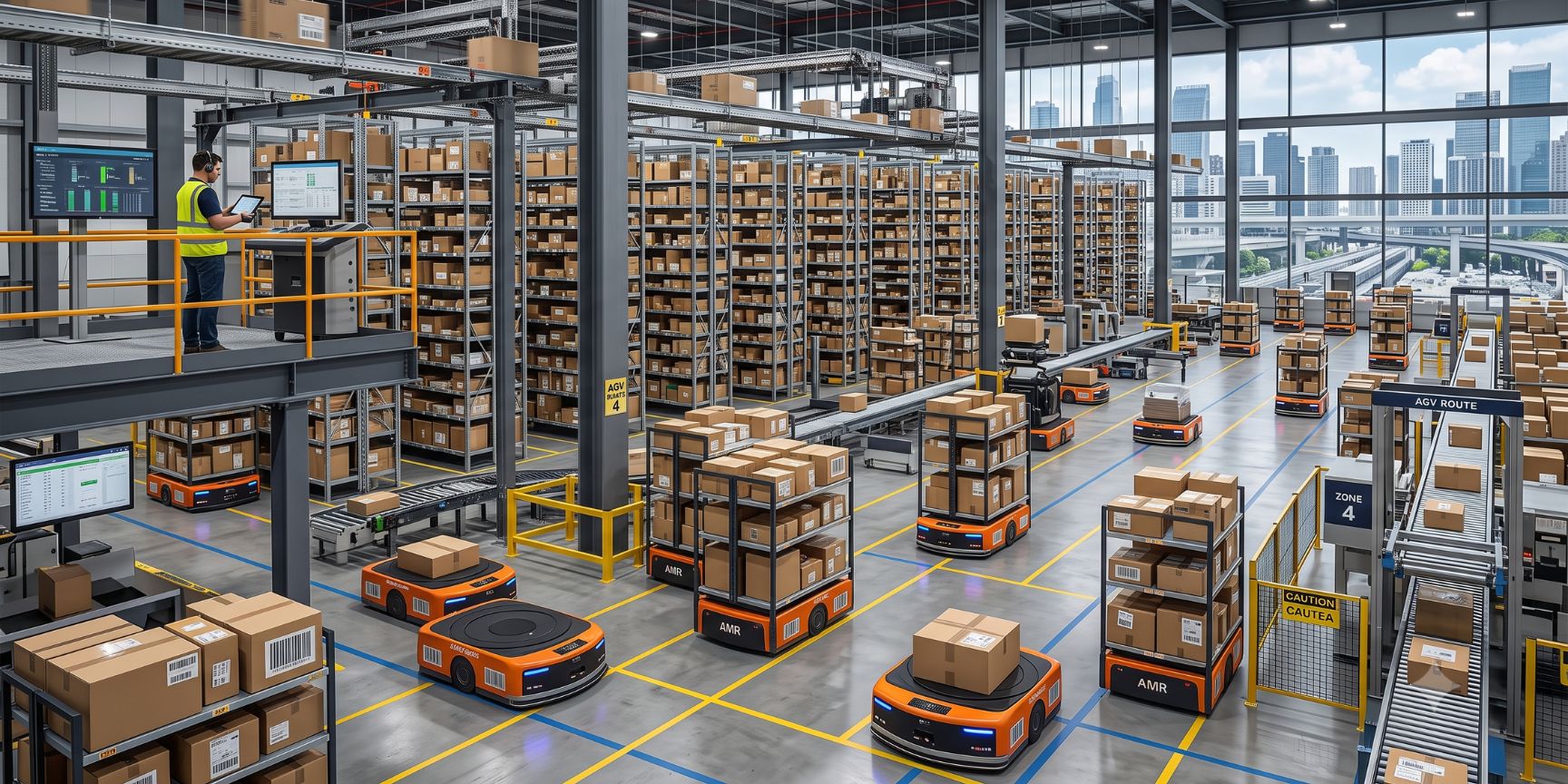
To deliver orders within a few hours, a conventional "first-in-first-out" principle is no longer sufficient. Intralogistics must be trimmed for maximum speed and freedom from errors.
- Dynamic picking: Travel times in the warehouse must be drastically minimized. The use of automated guided vehicles (AGVs) and pick-by-light or pick-by-voice technologies is essential.
- Automation as the backbone: Fully automated small parts warehouses (AS/RS) and intelligent robotics solutions take over picking and packing in record time. The throughput time from order receipt to provision at the ramp shrinks from hours to minutes.
- Real-time inventory accuracy: A same-day promise does not tolerate stock-outs. Warehouse management software (WMS) must map inventory with an accuracy of almost 100% in real time.
Contract logistics as an enabler for same-day concepts
Many dealers outsource the complex requirements of SDD to specialized service providers. Contract logistics takes on the role of strategic accelerator here.
Contract logistics companies offer scalable fulfillment solutions based on strict service level agreements (SLAs). They bundle shipment volumes from different clients in order to make last-mile tours economical. Thanks to highly flexible personnel planning, they can efficiently absorb order peaks, which often occur in the late afternoon hours (cut-off times) with same-day delivery. The close IT integration between retailers, contract logistics providers and CEP service providers (courier, express, parcel) ensures a seamless flow of information.
Requirements for logistics properties and halls
The concept of same-day delivery is fundamentally changing the map of logistics real estate. The times when a central mega-warehouse on a greenfield site could supply the entire republic are over for this business model.
- Micro-fulfillment centers (MFC): Instead of huge central warehouses, smaller, highly automated logistics halls are moving directly into urban conurbations (urban logistics). Proximity to the end customer is the most important currency.
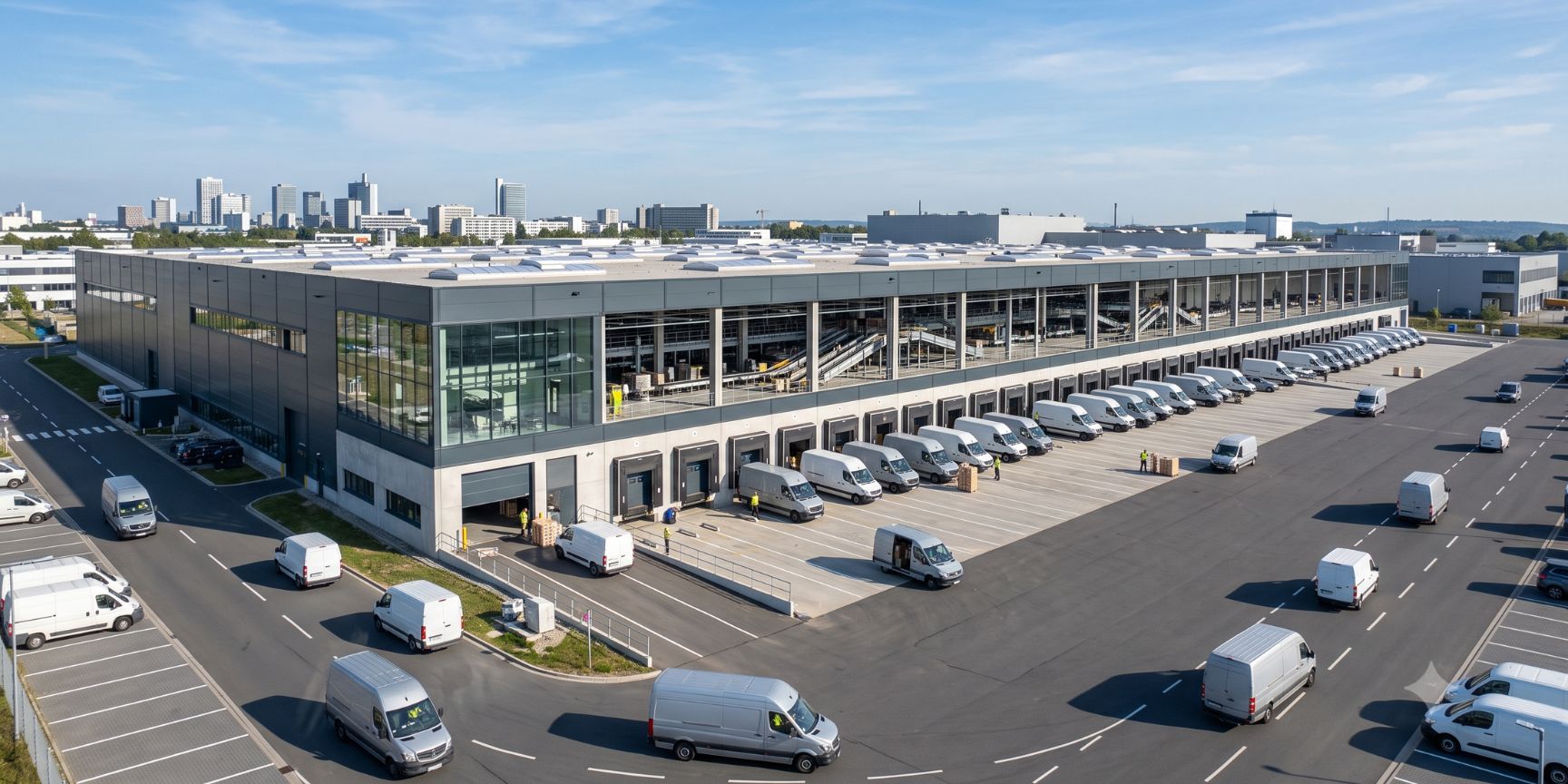
- Cross-docking capability: Real estate must be designed for rapid goods handling. The number of gates in relation to the hall area (gate density) is increasing in order to be able to quickly unload incoming trucks and load small delivery vehicles for the last mile simultaneously.
- Specific hall equipment: A high floor load capacity for automation technology, powerful power connections (also for e-van fleets) and comprehensive high-speed Wi-Fi for scanners and robots are mandatory for modern same-day properties.
Facts, figures and figures on same-day delivery
To make the dimension of the trend tangible, it is worth taking a look at the industry key figures:
- Market growth: The global market for same-day delivery is estimated to be growing at an annual rate of 20 to 25%.
- Willingness to pay: Studies show that about 60% of customers are willing to pay a reasonable premium for guaranteed same-day delivery.
- Cut-off times: While regular deliveries often allow cut-off times until 6:00 p.m., same-day orders for evening deliveries often have to be received by 1:00 p.m. or 2:00 p.m. regionally.
- Real estate demand: The demand for urban logistics space has caused prime rents in metropolitan regions to rise by up to 30% in recent years .
Challenges and practical benefits for companies
Anyone who wants to implement SDD faces high initial hurdles. The cost of the last mile often accounts for over 50% of the total logistics costs. A practical approach to coping:
- Use predictive analytics: Artificial intelligence helps predict which items will soon be ordered in which region. These are being relocated to micro-hubs close to the city as a preventive measure.
- Build decentralized networks: Cooperate with contract logistics companies that already have a decentralized warehouse network in order to avoid high real estate investments of their own.
- Radically streamline processes: Reduce unnecessary packaging steps. In the case of same-day concepts, simple, secure outer packaging is often sufficient, as the parcels do not run for days on conveyor belts at large distribution centres.
Q&A: Frequently asked questions about same-day delivery
Question: From what size of company does same-day delivery pay off?
Answer: In general, it is difficult to pin it down to size. The decisive factors are the margin, product type and regional concentration of the target group. For high-priced electronics, medicines or urgent spare parts, SDD often pays off for specialised SMEs, especially in cooperation with a local contract logistics provider.
Question: How does a same-day logistics hall differ from a standard warehouse?
Answer: A same-day hall focuses on handling speed instead of pure storage capacity. It has more loading gates (especially for Sprinter/cargo bikes), wider staging areas for fast sorting and is spatially directly connected to urban transport hubs.
Question: What role does artificial intelligence (AI) play in this process?
Answer: AI is indispensable for dynamic route planning of drivers, taking into account the real-time traffic situation, and for predictive inventory planning (predictive analytics) so that goods are in the right warehouse before they are ordered.
Conclusion: The Future of Fast Delivery
Same-day delivery is a stress test for the entire supply chain, but it offers enormous potential for customer loyalty. For warehouse logistics, this means the absolute compulsion to automate and digitize. Contract logistics positions itself as an indispensable partner that provides networks and know-how. However, the market for logistics real estate is feeling the change the most: urban areas, smart halls and decentralised micro-hubs are the foundation on which the promise of same-day delivery can only be realised. If you plan your logistics infrastructure today, you have to integrate tomorrow's speed into the floor plan.
Your Ideal Logistics Warehouse
Browse listings for warehouse space, logistics real estate, industrial land, and contract logistics solutions.
Browse Exposés
Maximize Exposure for Your Warehouse Space
Showcase your logistics properties and attract qualified inquiries.
Discover Products