



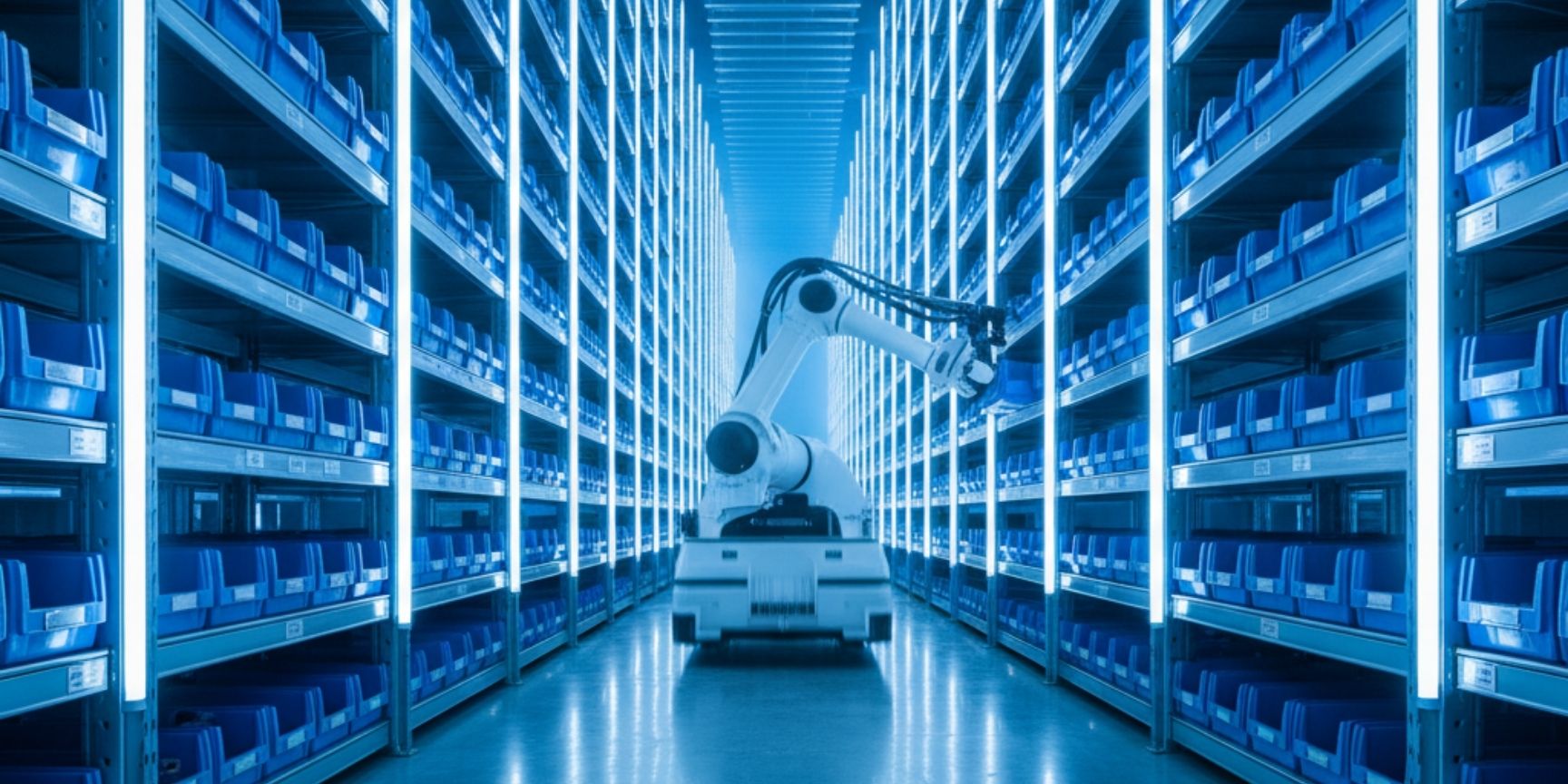
Efficiency has a system: The complete overview of shelving systems for professionals
Table of Contents
- From A for small parts to Z for row racking: The most common shelving systems at a glance
- The perfect match: Which shelf for which warehouse and which industry?
- From Stack to System: The Evolution of Warehousing
- The future is autonomous: AI and robotics in the warehouse
- Worldwide differences: Why German shelves are different
- Safety first: The obligation to inspect racks
- Costs vs. Benefits: More Than Just the Price of Steel
- Conclusion: The shelving system as a strategic success factor
From A for small parts to Z for row racking: The most common shelving systems at a glance
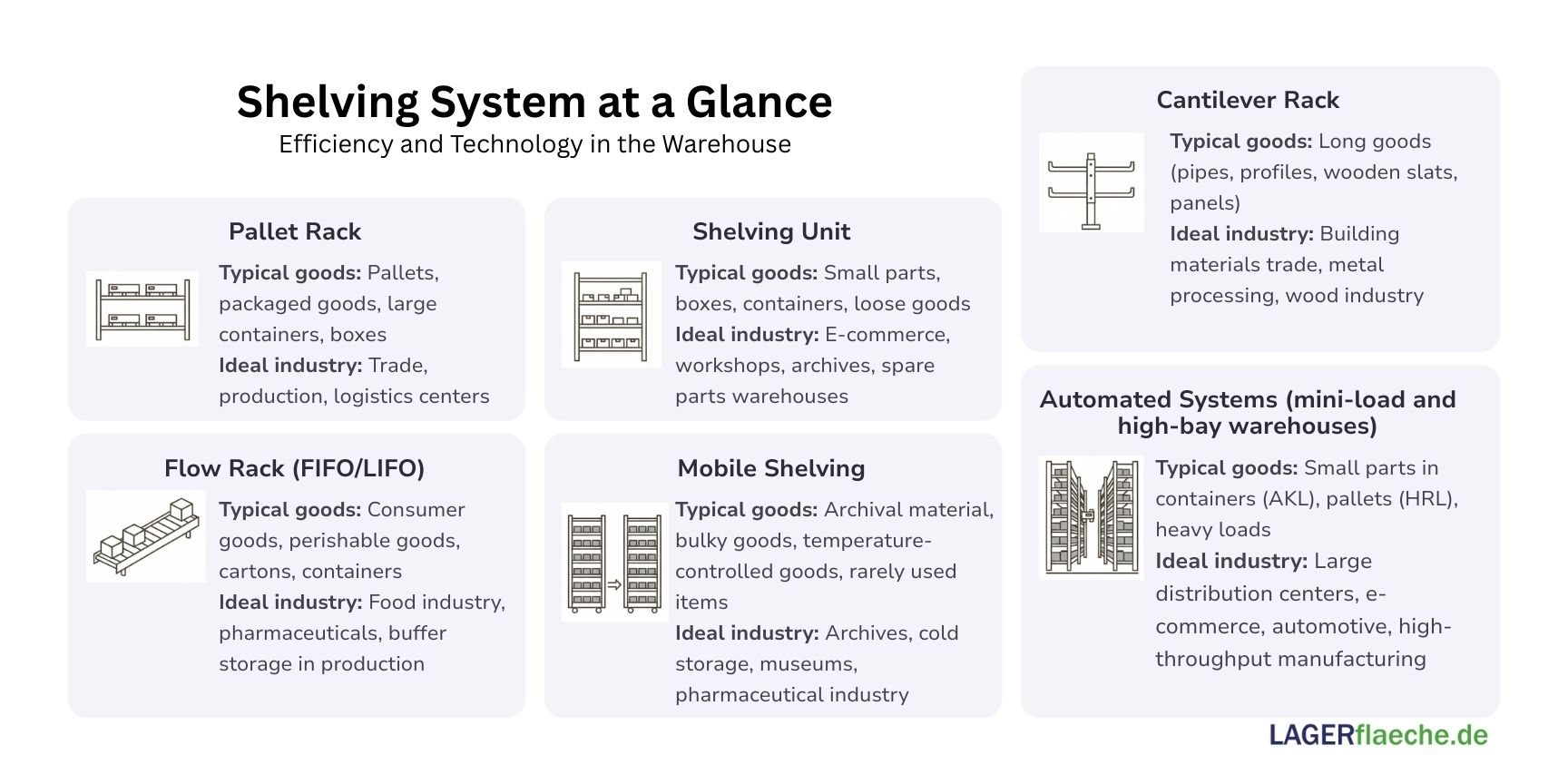
Choosing the right racking system is the first step in optimising a warehouse. Each system has specific strengths and is suitable for different goods, room heights and handling speeds. Here are the most important representatives:
The pallet rack
The undisputed all-rounder and the most widely used system. It is designed for the longitudinal or transverse storage of Euro pallets and industrial pallets.
- Advantages: Direct access to each pallet, relatively inexpensive, high flexibility in height and width.
- Ideal for: Classic distribution and production warehouses with a wide variety of palletized goods.
The shelving unit
The classic solution for the manual storage of non-palletized, light to medium-heavy goods.
- Advantages: Clear storage of small parts, flexible height adjustment of the floors, cost-effective.
- Ideal for: e-commerce picking warehouses, workshops, archives, spare parts warehouses.
The cantilever rack
The specialist when it comes to long, bulky or heavy stored goods. Horizontal arms attached to vertical uprights carry the load.
- Advantages: Optimal storage of long goods such as pipes, wooden panels, steel beams.
- Ideal for: timber trade, steel industry, building materials markets, metalworking companies.
The flow rack (FIFO/LIFO):
These dynamic systems use gravity. The goods are stored on roller conveyors on one side and slip through to the removal side.
- FIFO principle (First-In, First-Out): Guarantees that the goods stored first are also removed first. Perfect for perishable products.
- LIFO principle (last-in, first-out): Also known as slide-in shelf. Here, storage and retrieval are carried out from the same side.
- Ideal for: food industry, pharmaceutical logistics, buffer storage in production.
The Sliding Shelf
The solution for maximum use of space. The racking rows are mounted on rails and can be moved electrically or manually, so that only a single "operation" is required.
- Advantages: Increases storage capacity by up to 85% in the same area compared to static racks.
- Ideal for: deep-freeze warehouses (every refrigerated cubic meter is expensive), archives, warehouses for slow-moving goods.
Automated Systems (AS/RS)
The premier class of warehouse technology.
- Automatic small parts warehouse (AS/RS): Fully automatic storage and retrieval of containers, trays or cartons with storage and retrieval machines. Provides extremely high picking performances.
- High-bay warehouse (HRL): Pallet racks with heights of 12 to over 50 meters, which are also operated by automatic storage and retrieval machines. Maximum use of space at height.
- Ideal for: Large distribution centers, e-commerce hubs, high-throughput production buffers.
The perfect match: Which shelf for which warehouse and which industry?
Theory is one thing, practice is another. The industry-specific requirements largely determine the selection of the system.
| Industry | Typical challenge | Ideal shelving systems |
| E-Commerce & Mail Order | Huge variety of articles, small order sizes, high return rate, peak loads (e.g. Black Friday) | Shelving racks (often multi-storey), automated small parts warehouses, shuttle systems |
| Automobile industries | Just-in-time/just-in-sequence delivery, high variety of parts, safe container handling | Pallet racks, small parts warehouses, special container racks, flow racks |
| Pharmaceuticals & Chemicals | Strict legal requirements (batch traceability, GMP), temperature control, storage of hazardous substances | Air-conditioned pallet racks, FIFO flow racks, hazardous goods racks with drip trays |
| Food industry | Compliance with best-before dates, hygiene regulations, different temperature zones | FIFO flow racks, drive-in racks, mobile racks (in the freezer area), stainless steel shelves |
| Mechanical and plant engineering | Heavy, bulky and unwieldy components, long goods | Heavy-duty pallet racks, cantilever racks, robust shelving racks |
From Stack to System: The Evolution of Warehousing
How did we actually get here? The history of shelving systems is a fascinating journey, driven by inventiveness and economic necessity.
Before the industrial revolution, warehousing was primarily block storage. Goods were simply stacked on the floor. Not only was this chaotic, but it also made extremely inefficient use of expensive storage space.
The decisive turning point came in the 1920s and 1930s in the USA with two fundamental inventions: the wooden pallet and the forklift. Suddenly, standardised load units could be transported efficiently. The logical consequence was the development of steel racks in order to store these pallets not only next to each other, but above all on top of each other. The basic idea of conquering vertical space was born and is still the driving principle of warehouse technology today.
The post-war period and the economic miracle in Germany led to a construction boom in warehouses and production halls. In the 1960s, the first high-bay warehouses were built, which exceeded the limits of what was possible with conventional forklifts and required the use of rail-guided storage and retrieval machines. The driver for this was steadily rising land prices in the conurbations.
The future is autonomous: AI and robotics in the warehouse
The development is rapid. The warehouses of the future will be smarter, more flexible and more autonomous. What trends are emerging?
- Goods-to-person systems: Instead of the employee going to the shelf, the goods come to the employee. Autonomous mobile robots (AMR) transport entire racking units (mobile racks) or shuttle vehicles retrieve containers from the shelf and bring them to picking stations. According to the Fraunhofer Institute for Material Flow and Logistics IML, this increases the picking performance by two to three times.
- Artificial intelligence (AI) in warehouse management: Future warehouse management systems will not only manage, but also control them with foresight. An AI constantly analyzes sales data and access patterns in order to dynamically optimize storage locations (chaotic warehousing 2.0). It can predict sales trends and automatically move fast-moving items close to the outgoing goods area even before the orders come in.
- Sustainability and new materials: The focus on sustainability will also change the shelving systems themselves. In addition to recyclable steel, lighter but high-strength materials such as carbon fiber composites could be used to reduce the dead weight in automated systems and thus save energy.
Worldwide differences: Why German shelves are different
A shelf is a shelf? Far from it. The design, the technology used and the standards differ considerably worldwide.
- Germany/Europe: In Germany and large parts of Europe, there are high standards of quality and safety. Manufacturers are often highly specialized engineering companies. The strict safety regulations, such as DGUV rule 108-007, require detailed static calculations and regular, mandatory inspections. High labor costs are also driving the degree of automation strongly.
- USA: The US market is often more pragmatic and price-sensitive. Standardized, roll-formed profiles, often in the so-called "teardrop" design, dominate the market for pallet racking. While automation is increasing, it is not as widespread as in Europe or Japan due to greater space availability and historically lower labor costs.
- Asia (esp. Japan): Japan, characterized by high population density and extreme earthquake risk, was an early pioneer for particularly space-saving and earthquake-resistant automated systems. Vertical lifts and densely packed AS/RS are common here.
The reasons for these differences are manifold: wage and land costs, legal safety standards, the industrial structure of a country and, last but not least, the mentality.
Safety first: The obligation to inspect racks
A shelving system is a piece of work equipment and a structural system that can pose considerable dangers in the event of failure. Therefore, the operator is legally obliged to guarantee safety. The already mentioned DGUV rule 108-007 is the central regulation for this in Germany.
It prescribes an annual inspection by a qualified person . This checks the rack for visible damage (e.g. due to collision damage by forklifts), correct assembly, compliance with load limits and general stability. An inspection protocol documents the condition and any necessary measures. This inspection is not a "can" but a "must" and serves to protect human lives and property.
Costs vs. Benefits: More Than Just the Price of Steel
The purchase of a shelving system is an important investment. But how do you assess whether it is worth it? The pure purchase price is only half the truth. Professional planners look at the total cost of ownership (TCO), the total costs over the entire service life.
In addition to the purchase, the following factors are also taken into account here:
- Efficiency gain: How much does the system speed up the storage and retrieval processes?
- Use of space: How much expensive storage space is saved?
- Error reduction: How many incorrect deliveries or damage to goods are avoided?
- Personnel costs: How much staff is retained or can be used for more value-adding activities?
- Operating costs: energy costs, maintenance and inspections.
Such a holistic view often shows that an automated system, which at first glance seems more expensive, is the much more economical solution in the long term.
Conclusion: The shelving system as a strategic success factor
The shelving system has long since ceased to be a passive piece of furniture. It is an active and decisive factor for the performance of your intralogistics. The right choice, based on a careful analysis of goods, processes and industry requirements, is a powerful lever for increasing efficiency, flexibility and cost-effectiveness.
From the rock-solid basis of the pallet rack to the AI-controlled, autonomous systems of the future – development does not stand still. By understanding the principles and possibilities, you can not only optimize your warehouse, but also secure a decisive competitive advantage for the future.
Latest Blog Posts
Stay up to date with the newest trends, insights, and tips in warehouse and logistics. Our latest articles help you navigate the industry with confidence.
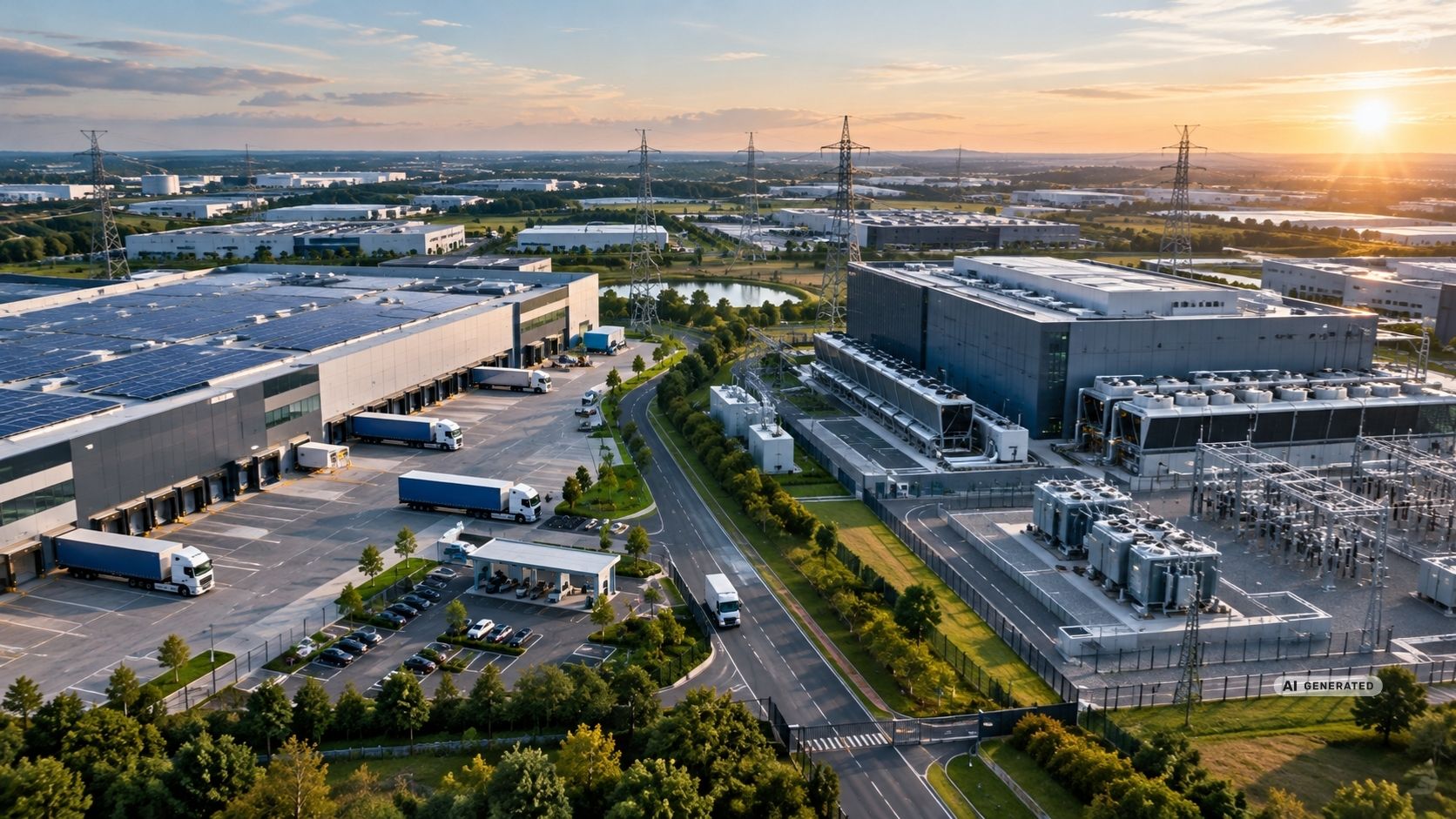
Data Centres vs. Logistics Facilities: The Race for Power and Land
Across Europe, logistics operators are competing for more than land and transport access. They increasingly need something much harder to secure: grid capacity. Data centres are intensifying that competition — and changing how logistics locations are evaluated....
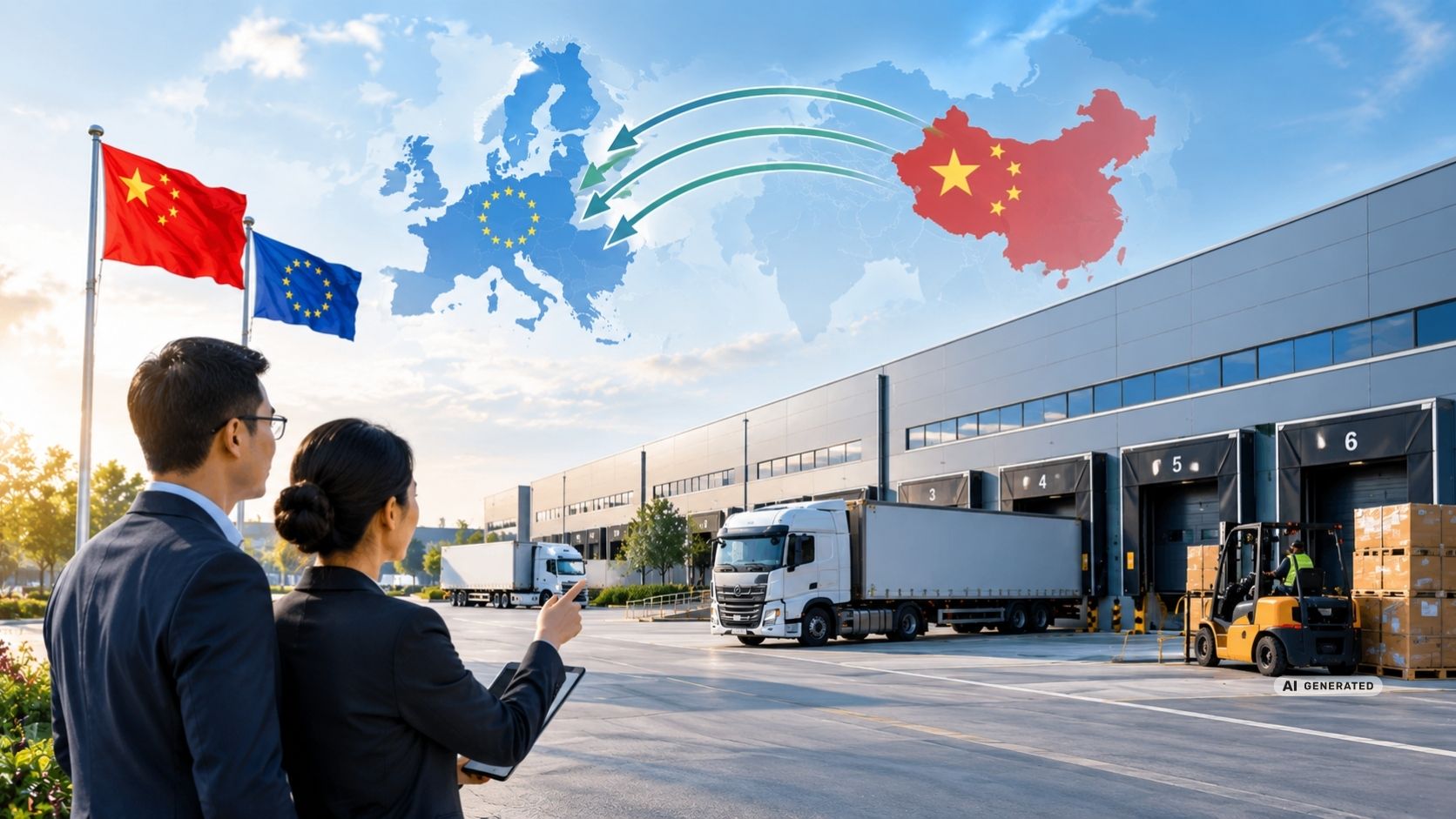
Chinese companies discover Europe's logistics real estate
Chinese companies are becoming an increasingly visible user group in Europe's logistics real estate market. What does this mean for warehouse space, 3PL structures and the requirements for European logistics locations?...
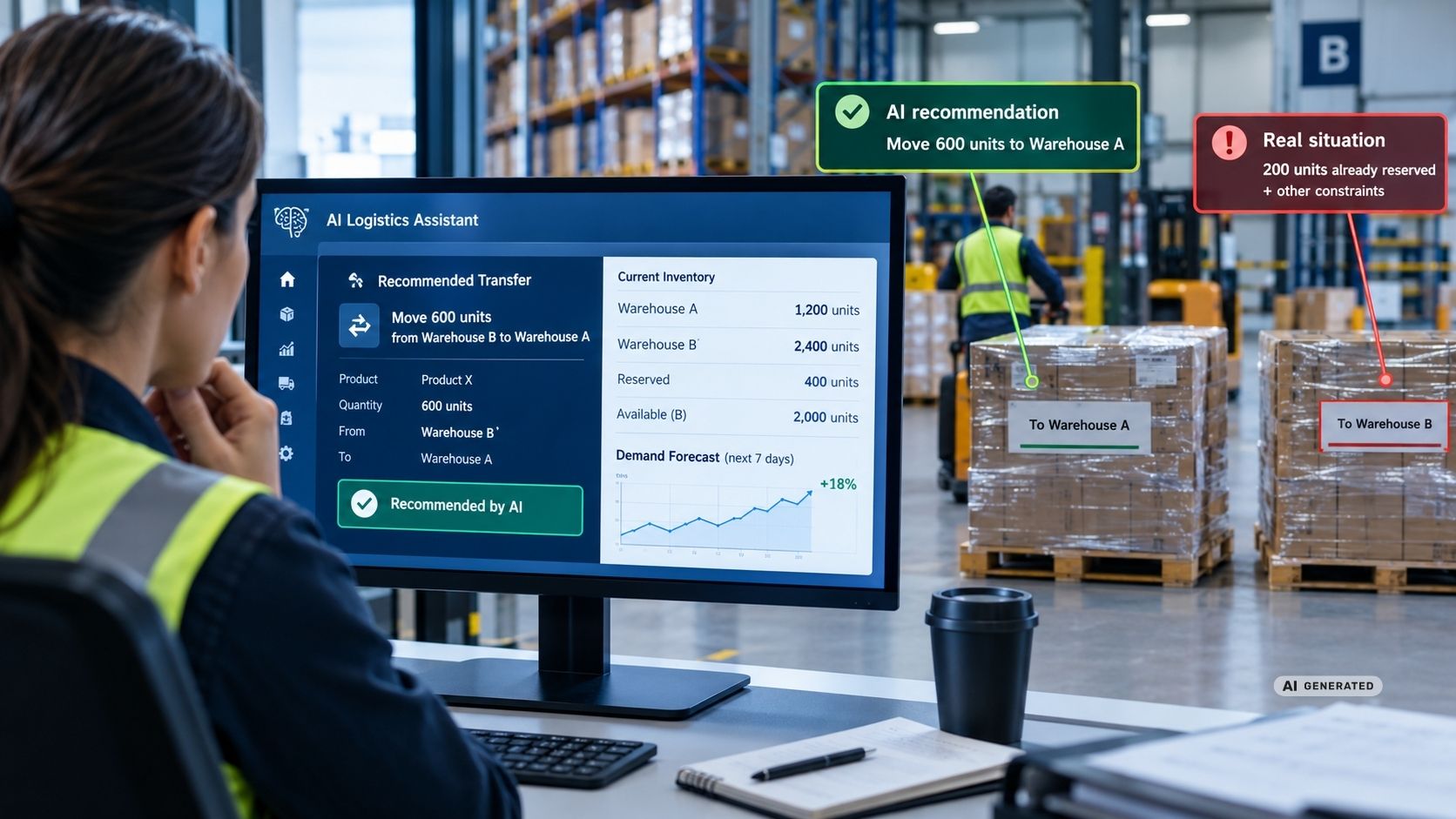
AI Hallucinations in Logistics: When AI Plans the Wrong Delivery
AI can analyze enormous amounts of logistics data — but it can also produce a convincing answer that is simply wrong. The critical question is not whether AI makes mistakes, but what happens when a wrong recommendation becomes an operational decision....
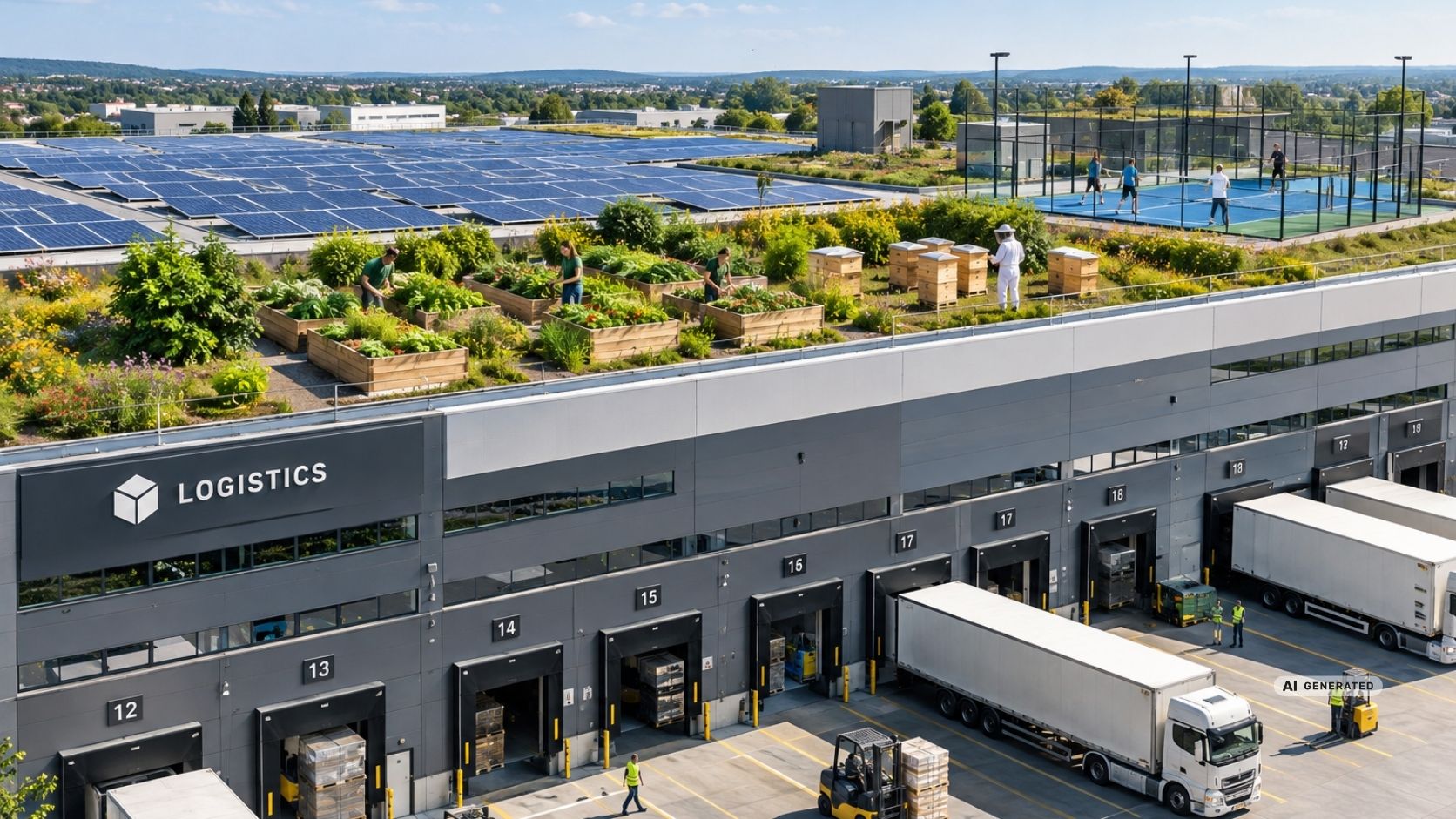
The Green Revolution on the Hall Roof: From Concrete Block to Ecological Power Plant?
Logistics roofs can do more than PV: greening, bees, urban farming and even sports areas turn unused roof space into multifunctional rooms....