



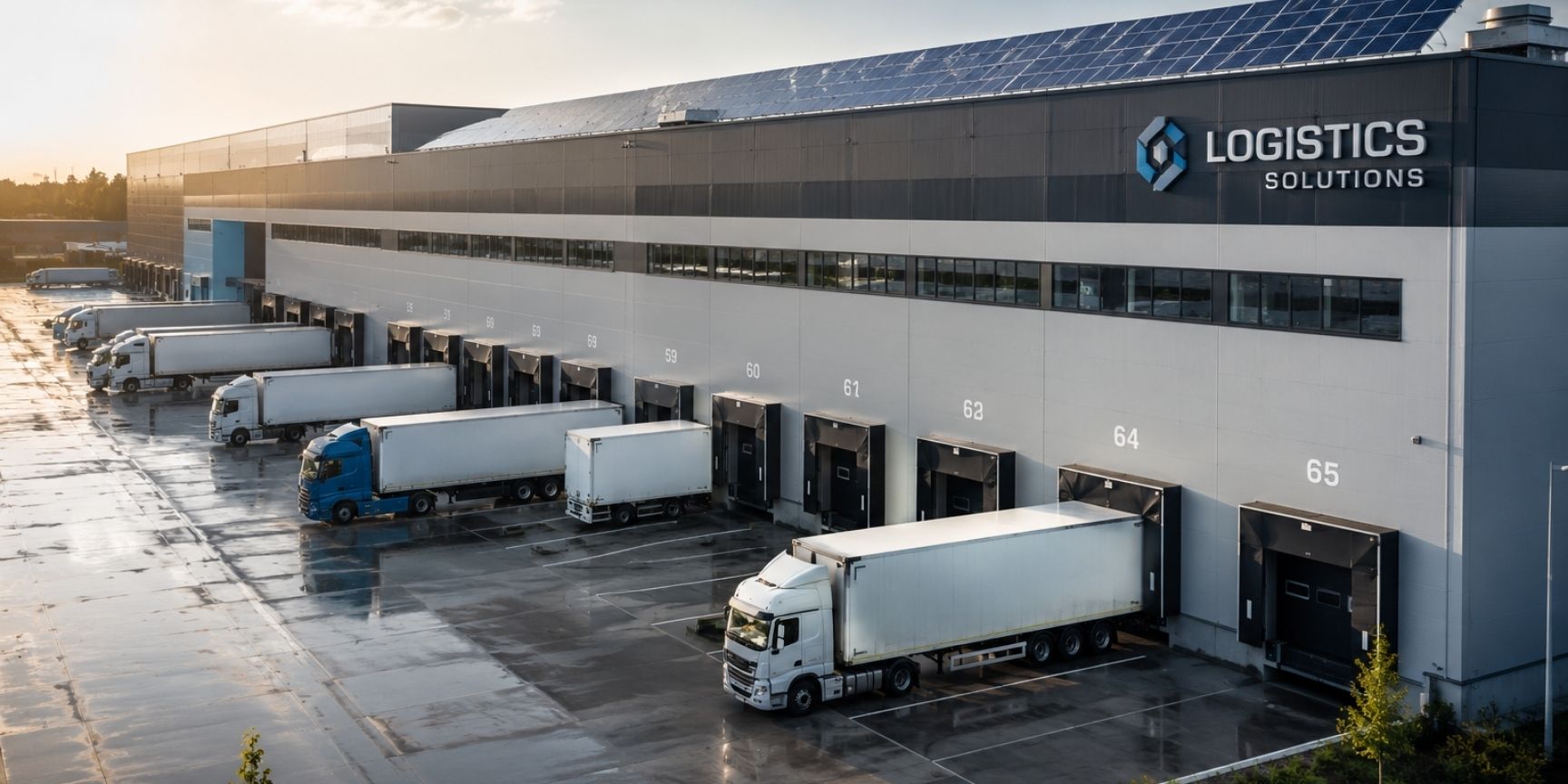
Warehouse Space Cost Factors: Why Identical Halls Can Be Completely Different Economically
Table of Contents
- Why Prices Per Square Meter Alone are Hardly Informative
- Location Quality: The Greatest Economic Lever of Modern Warehouse Space
- Labour Market: Why Cheap Regions can Suddenly Become Expensive
- Automation Capability: Why Modern Halls are More Expensive
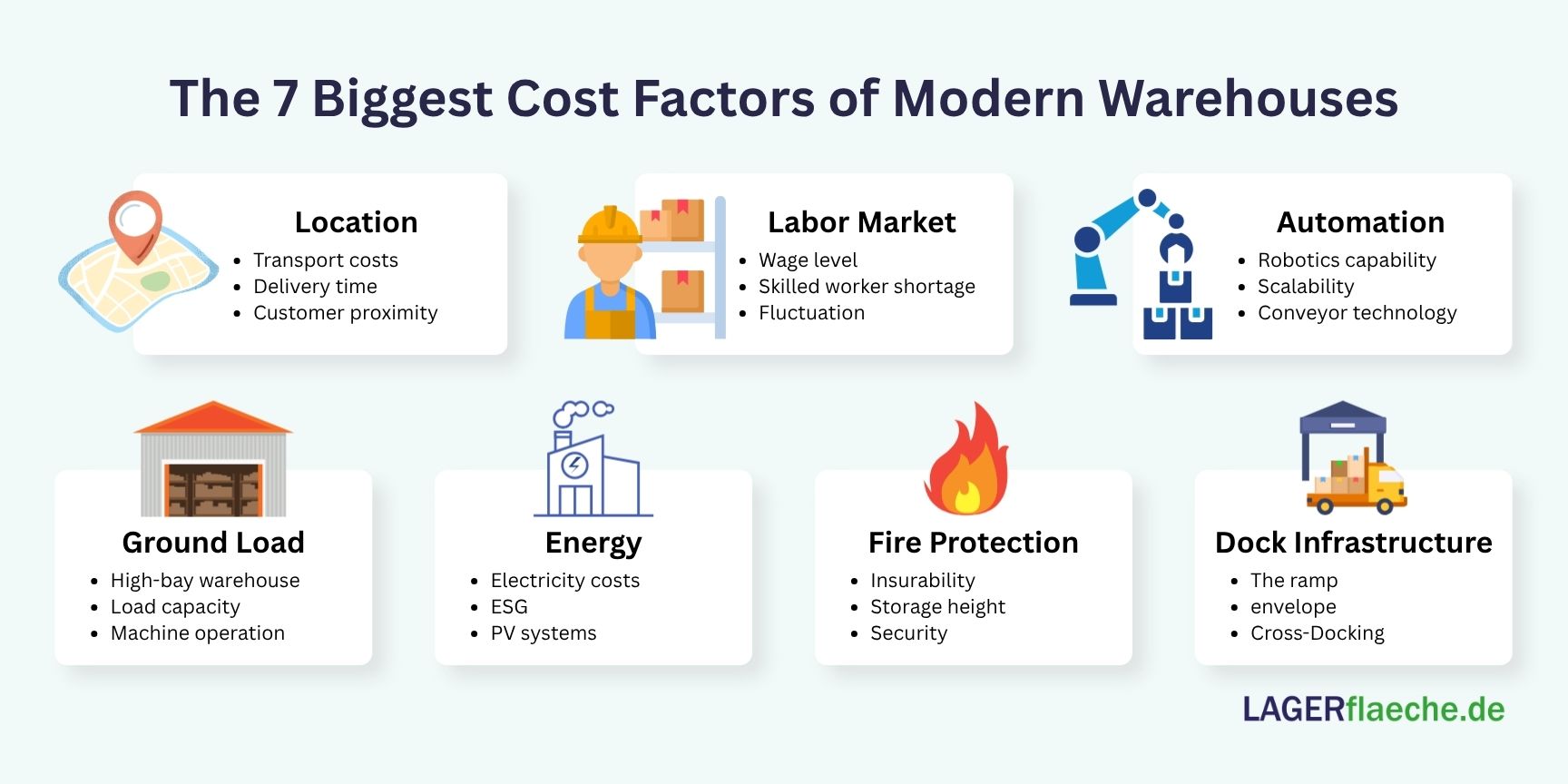
- Floor Load and Hall Technology: Small Technical Details with a Big Cost Effect
- Energy Efficiency: The New Dominant Cost Factor
- Sprinkler Systems and Fire Protection: The Often-underestimated Economic Factor
- Dock Infrastructure: Why Ramps have a Direct Impact on Costs
- Conclusion: Today's Modern Warehouse Space must be Valued like Strategic Infrastructure
A warehouse with 20,000 m² in Rotterdam can be much more attractive economically than a supposedly cheaper area of identical size in a secondary location in Germany. At the same time, there are halls with almost identical square meters, whose total costs differ by millions over several years.
Why?
When looking for a hall, many companies primarily look at the rental price per square metre. But this is exactly where the misvaluation of modern logistics real estate often begins.
This is because the actual profitability of a storage space does not arise from the rent alone. It results from the combination of:
- location quality,
- labour market,
- energy efficiency,
- automation capability,
- infrastructure,
- technical building quality,
- and operational scalability.
The decisive question today is therefore no longer:
"How cheap is the storage space?"
But:
"How economically does this property work within my supply chain?"
Especially for:
- Industrial companies,
- E-commerce merchants,
- Contract logistics specialists,
- Fulfillment providers,
- Procurement departments,
- and fast-growing medium-sized companies
this consideration is now strategically decisive.
According to BNP Paribas Real Estate, prime rents of modern European logistics properties continue to rise, while at the same time ESG requirements, energy prices and automation are massively changing market requirements.
This article shows in a practical way what storage space cost factors companies really need to understand — and why the cheapest hall can often be the most expensive solution in the long term.
Why Prices Per Square Meter Alone are Hardly Informative
Most tenders for storage space still start with a simple question:
"What does the area cost per square meter?"
However, this figure falls far short of the mark.
This is because two halls of identical size can produce completely different operational results.
A low-cost existing property can:
- cause higher personnel costs,
- achieve poorer handling performance,
- generate higher energy costs,
- prevent automation,
- and later investments necessary.
A more modern space with a higher rental price, on the other hand, can:
- enable more efficient processes,
- saving energy,
- facilitate scaling,
- reduce staff shortages,
- and improve delivery performance.
The valuation of modern warehouse space is therefore increasingly developing in the direction of:
"Warehouse Total Cost of Ownership".
This involves the overall profitability of the property over several years.
We analyse in detail how general storage prices are currently developing in the article: Storage unit prices Germany 2025
Location Quality: The Greatest Economic Lever of Modern Warehouse Space
The location influences not only the rent, but almost all operational costs of a supply chain.
Why do regions such as:
- Frankfurt Rhine-Main,
- Rotterdam,
- Venlo,
- Hamburg,
- Rhine-Ruhr,
- or Antwerp
significantly higher rents?
Because modern logistics no longer primarily means storage — but speed.
Customer proximity reduces supply chain costs
Especially in e-commerce, the following are decisive today:
- Same-day delivery,
- Next-Day-Delivery,
- Returns speed,
- Delivery reliability,
- and transport times
competitiveness.
A strategically located hall can:
- reduce transport costs,
- shorten delivery times,
- optimize tours,
- and reduce CO₂ emissions.
As a result, higher rents are often compensated for by lower operating costs.
Transport infrastructure is becoming a productivity factor
Locations nearby are particularly valuable:
- motorway junction,
- freight transport centres,
- inland ports,
- rail terminals,
- container hubs,
- and urban agglomerations.
If this infrastructure is missing, the following often arise:
- higher transport costs,
- longer truck times,
- poorer route planning,
- lower delivery performance.
International companies in particular therefore calculate much more holistically today than they did just a few years ago.
Labour Market: Why Cheap Regions can Suddenly Become Expensive
Many first-time buyers massively underestimate the influence of regional labor markets.
Personnel costs are one of the largest cost blocks in many warehouse operations.
The battle for warehouse staff intensifies
In high-density logistics regions, companies are increasingly competing for:
- forklift drivers,
- order pickers,
- shift supervisor,
- warehouse specialists,
- technical specialists.
This leads to:
- rising wages,
- high fluctuation,
- recruiting costs,
- increasing temporary work,
- and operational risks.
According to current European market analyses, labour costs in warehousing continue to rise significantly.
Why labour market analyses are now part of hall evaluation
A hall with a low rent can become economically unattractive if:
- there are hardly any workers available,
- there is high fluctuation,
- or long commute times.
That's why professional companies are now analyzing:
- regional unemployment rates,
- wage levels,
- commuter structures,
- level of education,
- competitive situations,
- and employee availability.
We analyze in detail how minimum wage increases and AI are changing warehouse management here: Minimum wage meets AI revolution
Automation Capability: Why Modern Halls are More Expensive
One of the most important developments in the European warehouse market is increasing automation.
Robotics, autonomous vehicles and intelligent conveyor technology are currently fundamentally changing the requirements for logistics real estate.
Modern halls must be automation-ready
Automation requires:
- high ceilings,
- stable floors,
- modern power supply,
- high-performance data networks,
- fire protection,
- and flexible building structures.
If these requirements are missing, high retrofitting costs are incurred.
This is why modern Grade A properties achieve significantly higher market prices today.
Why automation improves profitability
Automated warehouses can:
- increase picking performance,
- reduce walking distances,
- reduce error rates,
- compensate for staff shortages,
- and scaling.
Gartner predicts that by 2030, around half of new warehouses will be planned robot-centric.
Especially for fast-growing companies, the technical future viability of a property is thus the decisive evaluation criterion.
Floor Load and Hall Technology: Small Technical Details with a Big Cost Effect
For many first-time buyers, technical building data seems secondary. In practice, however, they often decide on the usability of the entire property.
Why the floor load is crucial
The permissible soil load effects:
- high-bay warehouse,
- heavy machinery,
- automation,
- shelf heights,
- and storage density.
Especially industries such as:
- Automotive,
- Mechanical engineering,
- Beverages,
- Chemistry,
- or Industrial production
often require significantly higher ground loads.
The consequences of technical limitations
Inadequate hall technology can later mean:
- expensive reinforcements,
- lower storage capacities,
- limited automation,
- higher maintenance costs,
- lower scalability.
This is precisely why professional users today differentiate much more strongly between:
- low-cost existing properties,
- and technically high-quality new buildings.
Energy Efficiency: The New Dominant Cost Factor
Just a few years ago, energy costs played a minor role in many hall searches.
Today, they are one of the most important evaluation criteria for modern warehouse space.
Why energy prices are changing the logic of real estate
Warehouse operations require large amounts of energy for:
- lighting,
- conveyor technology,
- charging infrastructure,
- robotics,
- cooling,
- heating,
- IT systems.
Older halls in particular often cause:
- high electricity costs,
- poor insulation values,
- inefficient lighting,
- and high operating costs.
ESG is becoming an economic competitive advantage
Modern logistics properties are increasingly based on:
- photovoltaics,
- LED systems,
- heat pumps,
- intelligent building technology,
- sustainable building standards.
As a result, in the long term, the following decreases:
- Energy costs,
- CO₂ emissions,
- regulatory risks,
- and operating costs.
Our article also sheds light on why energy efficiency is becoming increasingly crucial in modern logistics properties: Cost brake bearing Evolution
Sprinkler Systems and Fire Protection: The Often-underestimated Economic Factor
Many companies do not test fire protection systems until very late in the selection process.
In doing so, they influence:
- insurability,
- shelf heights,
- permits,
- storage types,
- and automation options.
Modern sprinkler systems enable greater efficiency
ESFR systems and modern fire protection solutions allow:
- higher storage densities,
- better use of space,
- secure automation,
- lower insurance risks.
A lack of fire protection technology, on the other hand, can lead to:
- Conversion costs,
- Restrictions,
- approval problems,
- or higher insurance premiums.
Especially in the fulfillment and e-commerce sector, fire protection is therefore increasingly becoming a strategic factor.
Dock Infrastructure: Why Ramps have a Direct Impact on Costs
One of the most underestimated components of modern warehouse space is the dock infrastructure.
In doing so, it decides directly on:
- Turnover speed,
- truck waiting times,
- Personnel efficiency,
- and process stability.
Modern docks increase operational performance
Particularly efficient halls have:
- many dock levellers,
- Generous manoeuvring areas,
- separate traffic flows,
- Cross-docking options,
- and optimized access roads.
As a result, the following decreases:
- Waiting times,
- Idle,
- Personnel costs,
- and operational delays.
Especially in contract logistics and fulfillment, the dock infrastructure can create massive economic differences.
Practical example: Why two identical hall sizes can be completely different economically
A medium-sized e-commerce retailer is looking for 15,000 m² of warehouse space in the DACH region.
Hall A
- low rent,
- older existing property,
- low ceiling height,
- few docks,
- high energy costs,
- limited automation.
Hall B
- higher rent,
- modern Grade A property,
- ESG compliant,
- automation-ready,
- good transport connections,
- modern dock infrastructure.
The overall analysis shows:
- Hall B reduces personnel costs,
- improves delivery performance,
- reduces energy costs,
- increases scalability,
- and reduces operational risks.
This more than compensates for the higher rent economically.
The economically best storage space is rarely the cheapest
Companies that value warehouse space exclusively on the basis of rental price often underestimate:
- operational risks,
- scaling issues,
- energy efficiency,
- personnel costs,
- and technical future viability.
Modern warehouse decisions therefore no longer start with the rent — but with the overall profitability of the property.
We analyse in detail how transport, storage and process costs influence each other here: Anatomy of logistics costs
Conclusion: Today's Modern Warehouse Space must be Valued like Strategic Infrastructure
The pricing logic of modern warehouse space has changed fundamentally.
In the past, the following stood mainly:
- prices per square metre,
- Rental costs,
- and location
in focus.
Today, the following are also decisive:
- Automation capability,
- ESG,
- Energy efficiency,
- Labor market,
- Dock infrastructure,
- Indoor technology,
- and scalability.
Therefore, two identical hall sizes can deliver completely different results economically.
Anyone who professionally evaluates modern warehouse space not only analyzes the rental price — but the entire operational performance of the property.
This is exactly where the difference lies today:
Favourable area
and
economically sensible area.
Sources
- BNP Paribas Real Estate – European Logistics Market Reports
- Transport Intelligence (Ti) – Warehouse Cost Tracker Europe
- Gartner Warehouse Automation Forecast
- Business Insider – Warehouse Automation Case Studies
- LAGERflaeche.de – Market analyses and technical articles
Latest Blog Posts
Stay up to date with the newest trends, insights, and tips in warehouse and logistics. Our latest articles help you navigate the industry with confidence.

Data Centres vs. Logistics Facilities: The Race for Power and Land
Across Europe, logistics operators are competing for more than land and transport access. They increasingly need something much harder to secure: grid capacity. Data centres are intensifying that competition — and changing how logistics locations are evaluated....

Chinese companies discover Europe's logistics real estate
Chinese companies are becoming an increasingly visible user group in Europe's logistics real estate market. What does this mean for warehouse space, 3PL structures and the requirements for European logistics locations?...
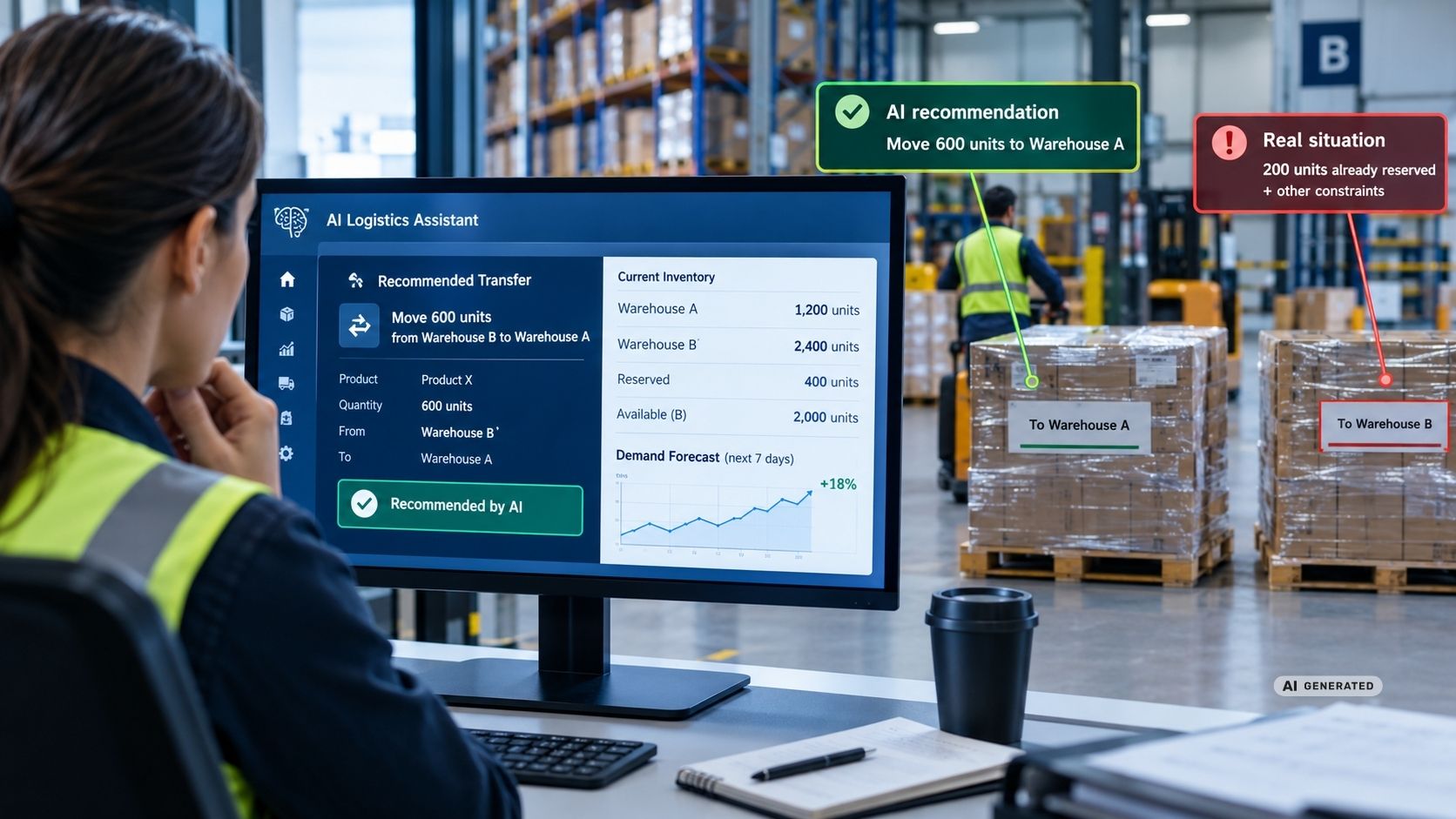
AI Hallucinations in Logistics: When AI Plans the Wrong Delivery
AI can analyze enormous amounts of logistics data — but it can also produce a convincing answer that is simply wrong. The critical question is not whether AI makes mistakes, but what happens when a wrong recommendation becomes an operational decision....
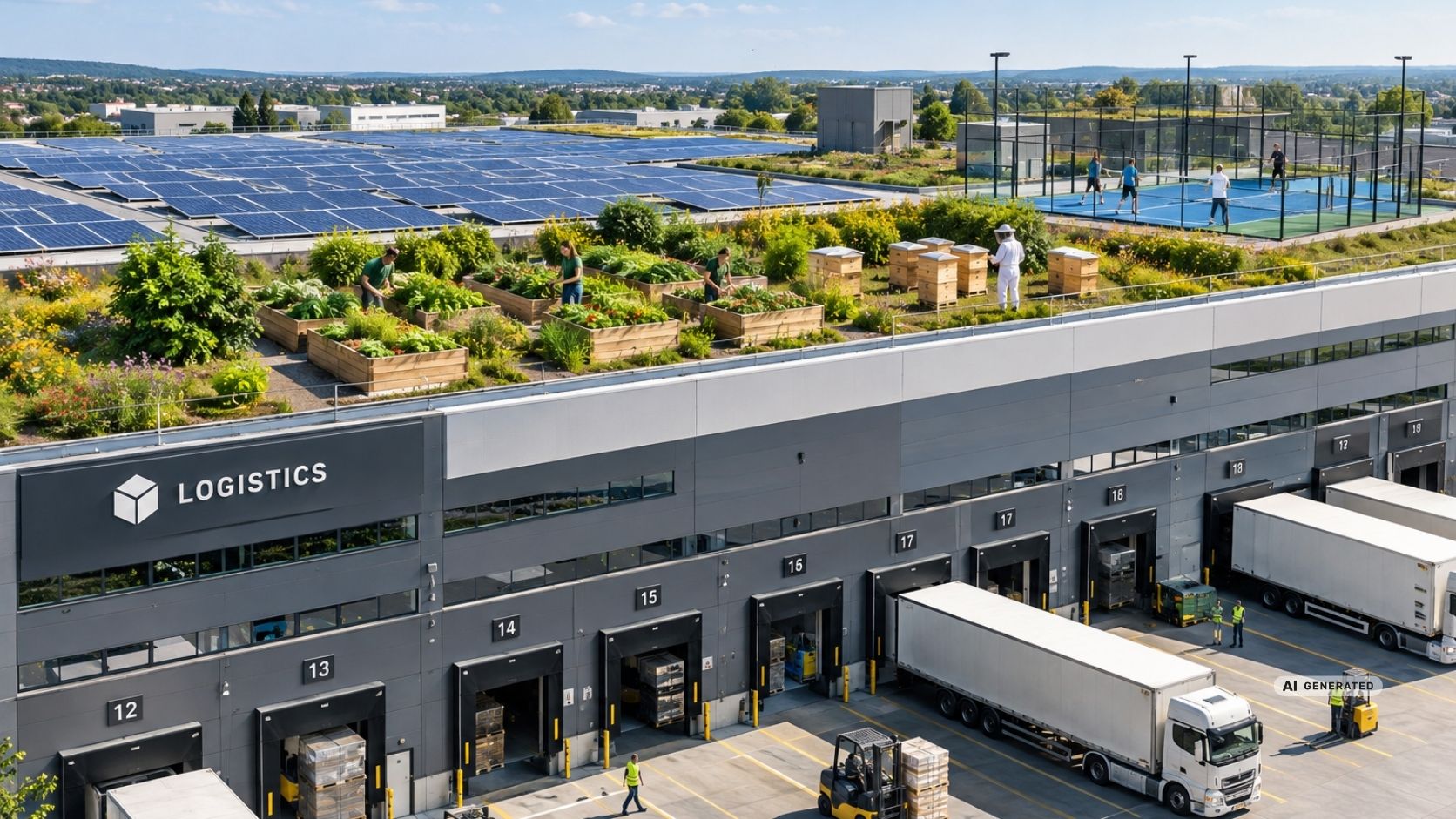
The Green Revolution on the Hall Roof: From Concrete Block to Ecological Power Plant?
Logistics roofs can do more than PV: greening, bees, urban farming and even sports areas turn unused roof space into multifunctional rooms....