



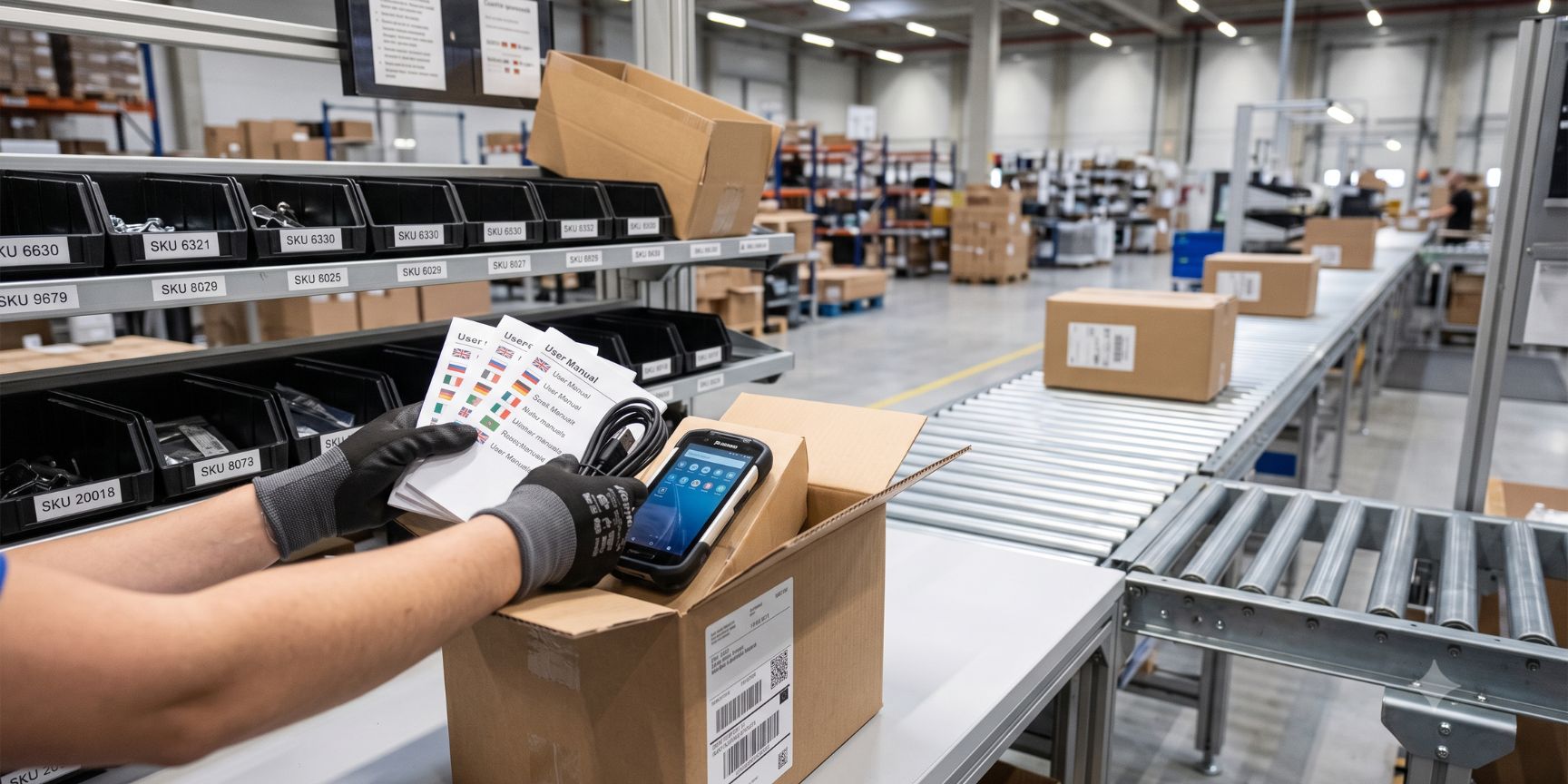
More than just transport: How value-added services are changing logistics forever
Table of Contents
- Evolution: How has Logistics Changed Over Time?
- How to Get There: How did Value-added Services Come About?
- What does VAS mean? The Real Added Value for Customers and Service Providers
- A Seamless Process: VAS Integrated Directly into the Logistics Process
- Practical Example: How an Electronics Manufacturer Revolutionized its Supply Chain with VAS
- Proximity and Responsibility: Is Logistics Really Decided in Detail?
- International Comparison: Germany vs. Europe and the World
- Outlook: What does the Future of Logistics Look Like in 10 to 20 Years?
- Conclusion: Those Who Create Added Value Win the Future
What if logistics not only delivers, but also creates real added value? For a long time, the industry was reduced to a simple formula: move goods from A to B and store them safely in between. But those days are finally over. The modern supply chain has grown into a highly complex ecosystem in which efficiency alone is no longer enough to survive in global competition.
Today, companies demand end-to-end processes from a single source. This is exactly where we can see what modern logistics can really achieve: through so-called value-added services (VAS). In this technical article, we examine the evolution of logistics, explain the true benefits of VAS, take a look at international differences and venture a forecast for the next 10 to 20 years.
Evolution: How has Logistics Changed Over Time?
To understand the importance of value-added services today, we need to take a look back. Historically, logistics has been a purely executive force. In the 1970s and 1980s, the focus was on physical distribution (transport and handling). With globalization in the 1990s, the need for huge interim storage facilities grew. Pure transporters became integrated logistics service providers (Third-Party Logistics, 3PL).
But with the rapid rise of e-commerce and just-in-time production, the requirements changed drastically. Standardized processes are no longer sufficient. The supply chain had to become more flexible, faster and more individual. The logistics company has transformed itself from a pure "warehouse manager" to a strategic partner that is deeply integrated into its customers' value chain.
How to Get There: How did Value-added Services Come About?
The birth of value-added services was characterized by massive cost pressure and the desire to streamline processes. A typical customer approached his logistics service provider with a clear requirement: "In addition to storage and transport, assembly, testing and packaging should also be taken care of. And please do this without additional interfaces, without additional effort and without friction losses."
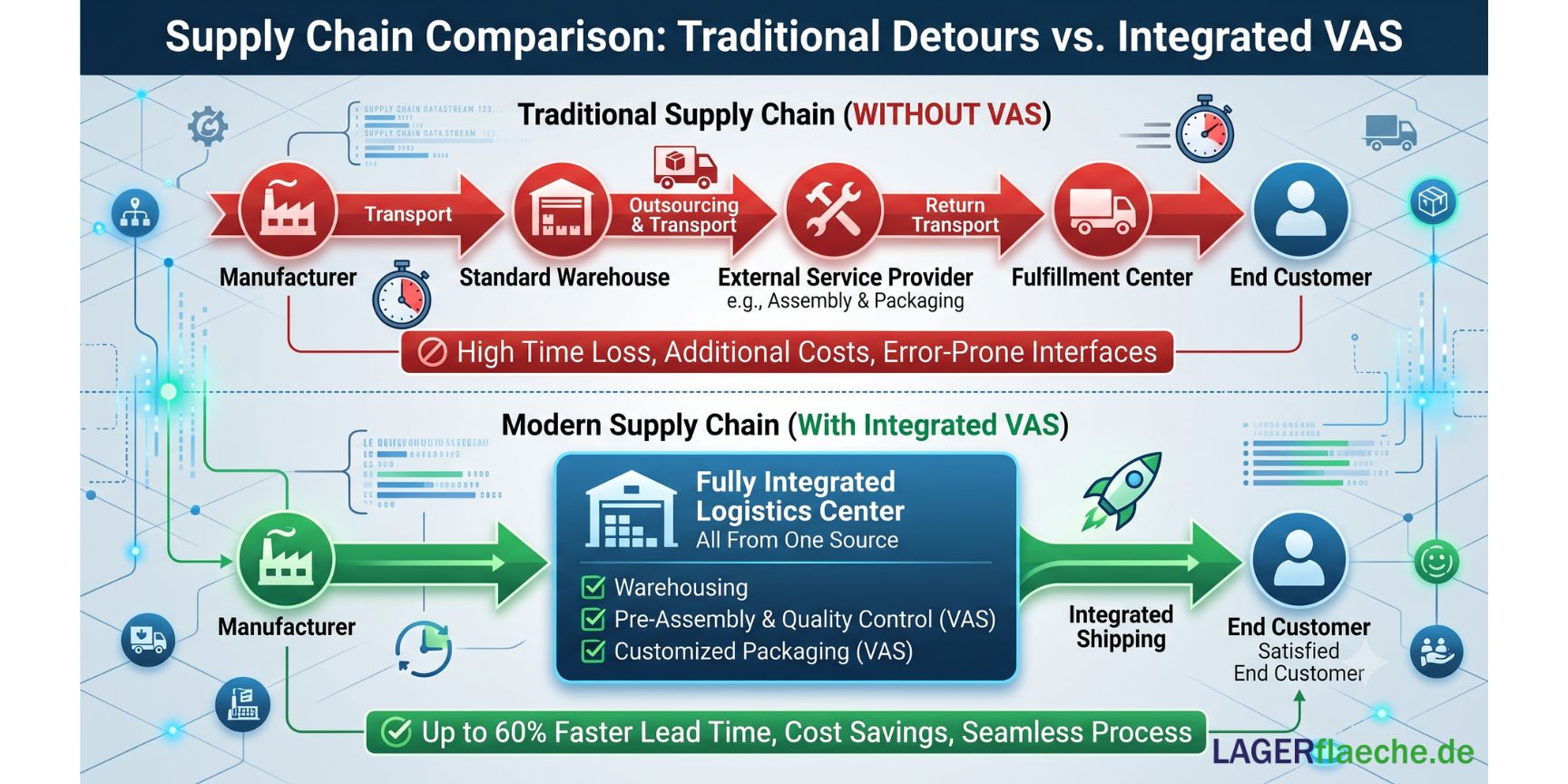
In the past, goods often had to leave the warehouse for rework, set formation or quality controls, be driven to an external service provider and brought back again. Each of these steps cost time, money and increased the risk of damage. The logistics industry recognized this potential and began to integrate these value-adding activities directly into its own halls.
What does VAS mean? The Real Added Value for Customers and Service Providers
Value Added Services (to German: value-added services) are all additional logistical services that go beyond pure transport, handling and storage (TUL processes). Modern contract logistics companies offer much more than just pallet spaces. Value-added services such as quality controls, pre-assembly, labeling or customs clearance are now part of the absolute standard repertoire of local providers.
For the customer
VAS creates an enormous relief in day-to-day business. By outsourcing peripheral activities, manufacturing companies or dealers can concentrate fully on their core business (research, development, sales). A clear competitive advantage is created through faster time-to-market cycles.
For the logistics service provider
Offer VAS the opportunity to break away from the comparability of the pure price war (rent per square meter). Those who offer complex assemblies retain customers in the long term and achieve significantly higher margins.
A Seamless Process: VAS Integrated Directly into the Logistics Process
How are value-added services integrated directly into the existing process? The secret lies in avoiding detours. No external dependencies, but an end-to-end process from a single source. In state-of-the-art logistics properties, special VAS zones are directly linked to incoming or outgoing goods.
In practice, this means in concrete terms:
Pre-assembly of components directly in the warehouse
Parts are no longer delivered individually to the customer's production line, but are already assembled into finished assemblies (modules) in the logistics center.
Quality checks before shipment
Technical devices are tested for their function directly in the warehouse before delivery to the end customer (e.g. installing software updates or carrying out visual inspections).
Individual packaging solutions
Goods are packaged in brand-specific packaging, provided with inserts (flyers, vouchers) or repacked into special, seawater-resistant wooden crates for export.
Practical Example: How an Electronics Manufacturer Revolutionized its Supply Chain with VAS
A concrete case study illustrates the benefits: The fictitious "TechAudio GmbH" produces high-end loudspeakers. So far, the components have been delivered from Asia to a German warehouse. For the European market, however, country-specific power cables had to be included and the operating instructions had to be replaced.
In the past, this meant outsourcing goods, driving them to a packaging service provider, repacking, bringing them back to the warehouse and then shipping.
Thanks to the integration of VAS at the logistics service provider, the process is completely different today: the contract logistics company stores the basic loudspeakers. If an order is received from France, the warehouse employee removes the device, encloses the French power cord and the appropriate instructions directly at the packing station, seals the box and hands it over to the shipping department.
The result? The throughput time was reduced by 60%, transport costs between different service providers were completely eliminated and the error rate was reduced to a minimum.
Proximity and Responsibility: Is Logistics Really Decided in Detail?
"The future of logistics will not only be decided on the road, but in the details of the processes." Is that true? Yes, absolutely. Pure transport is increasingly becoming an interchangeable standard service (commodity). What makes logistics service providers indispensable today is proximity to the customer, a deep understanding of their production and sales processes and the willingness to take on operational responsibility.
Anyone who takes over the final inspection of a medical device as a service provider or delivers just-in-sequence (in exactly the right order) to the assembly line of an automotive manufacturer is no longer an external supplier – it is the heart of the value chain.
International Comparison: Germany vs. Europe and the World
The characteristics of value-added services differ massively around the world, driven by geographical, economic and structural factors.
| Region | Focus of Logistics & VAS Characteristics | Background & Causes |
| Germany | Highly complex industrial VAS: pre-assembly, quality inspection, just-in-time. | The German economy is extremely decentralized. The strong presence of the automotive, mechanical engineering and chemical industries requires tailor-made, high-tech additional services. |
| United Kingdom | Retail & e-commerce VAS: outer packaging, returns management, display construction. | The UK is the home of standardized pallet networks. The economy is strongly oriented towards retail and the end consumer market. |
| Asia (e.g. Singapore) | Automated high-density VAS: Fully automatic kitting at height or depth. | In city-states like Singapore, there is an absolute lack of space. VAS processes must be extremely space-efficient and often robot-supported, sometimes even in underground facilities. |
| USA | Scalable fulfillment VAS: Mass labeling, rapid consolidation. | The US market is dominated by gigantic distances and huge LTL carriers. The focus is on sheer volume and extreme speed in the e-commerce sector. |
Outlook: What does the Future of Logistics Look Like in 10 to 20 Years?
The global market for value-added services in logistics will grow massively. Market research data (such as forecasts from Grand View Research and Intel Market Research for 2026) predicts that the global logistics market will grow to over $8,000 billion by the 2030s. VAS will be one of the strongest growth drivers.
But what does the hall of the future look like?
Artificial Intelligence and Predictive Maintenance
AI predicts which spare parts will be needed in the coming weeks. Value-added services are carried out predictively even before the end customer presses the order button.
Full automation (dark warehouses)
Future logistics centers will in some cases do not require any human workers in the area. So-called "dark warehouses" not only take care of storage, but also simple VAS such as labeling and set formation by autonomous robotic arms in the dark.
3D printing in the warehouse
In 15 years, spare parts will no longer necessarily be shipped halfway around the world. The logistics service provider only receives a digital CAD file, prints out the component in its own hall in a 3D printer, packs it and delivers it on the same day. The logistician becomes a producer.
Sustainability (Green Logistics)
The circular economy will dominate VAS. Service providers take care of the repair, refurbishment and professional recycling of returns directly in the warehouse.
Conclusion: Those Who Create Added Value Win the Future
The path from a pure box pusher to a process-integrated value-added partner was a decisive step in survival for the logistics industry. Value-added services are no longer nice add-ons, but the foundation of an agile, crisis-resistant and profitable supply chain. Anyone planning or renting a logistics property today must take into account space for pre-assembly, returns management and quality controls. At the end of the day, in the modern economy, it is more true than ever: convenience, speed and absolute reliability have their price – and they are decisive for market success.
Latest Blog Posts
Stay up to date with the newest trends, insights, and tips in warehouse and logistics. Our latest articles help you navigate the industry with confidence.
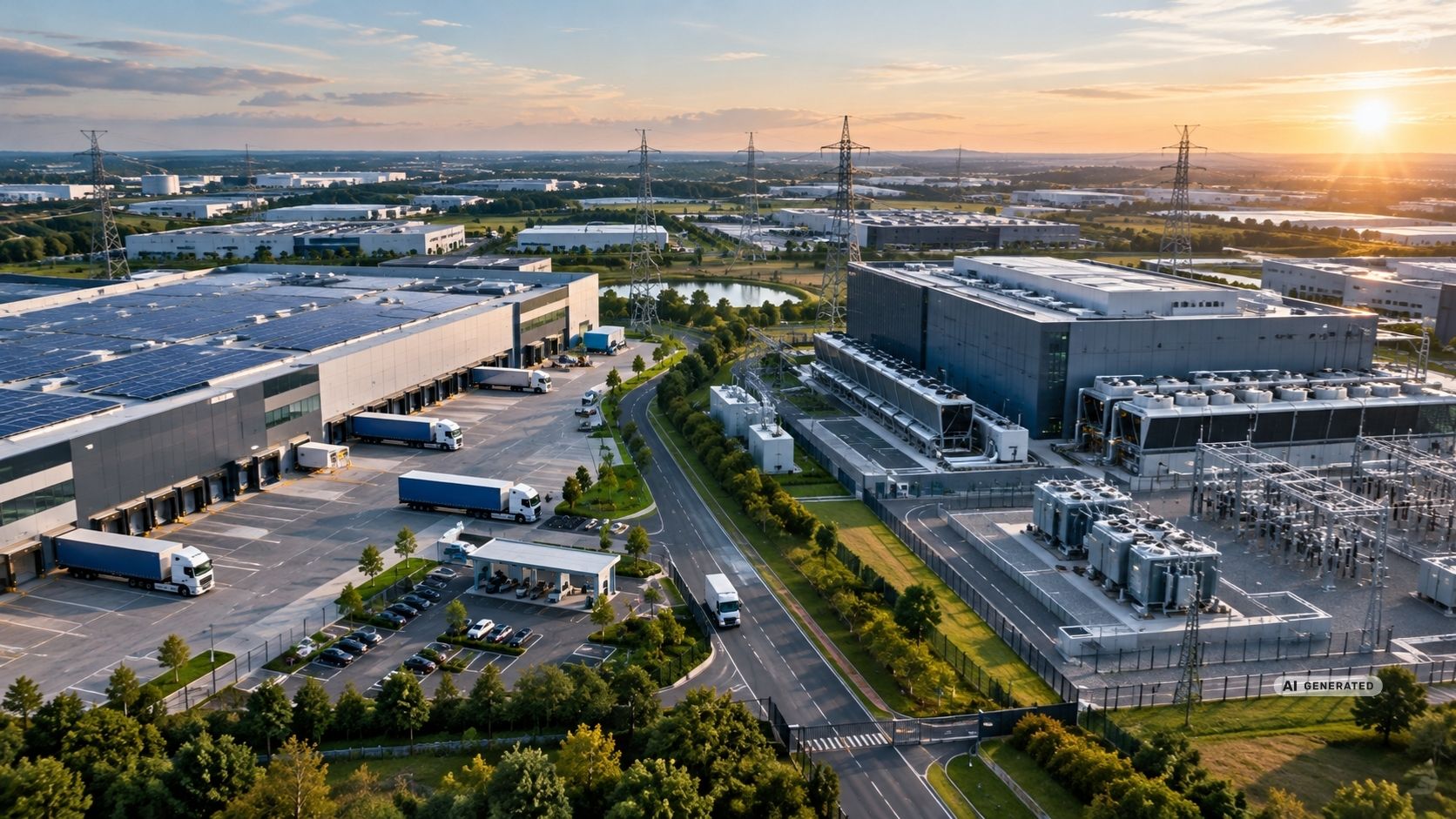
Data Centres vs. Logistics Facilities: The Race for Power and Land
Across Europe, logistics operators are competing for more than land and transport access. They increasingly need something much harder to secure: grid capacity. Data centres are intensifying that competition — and changing how logistics locations are evaluated....
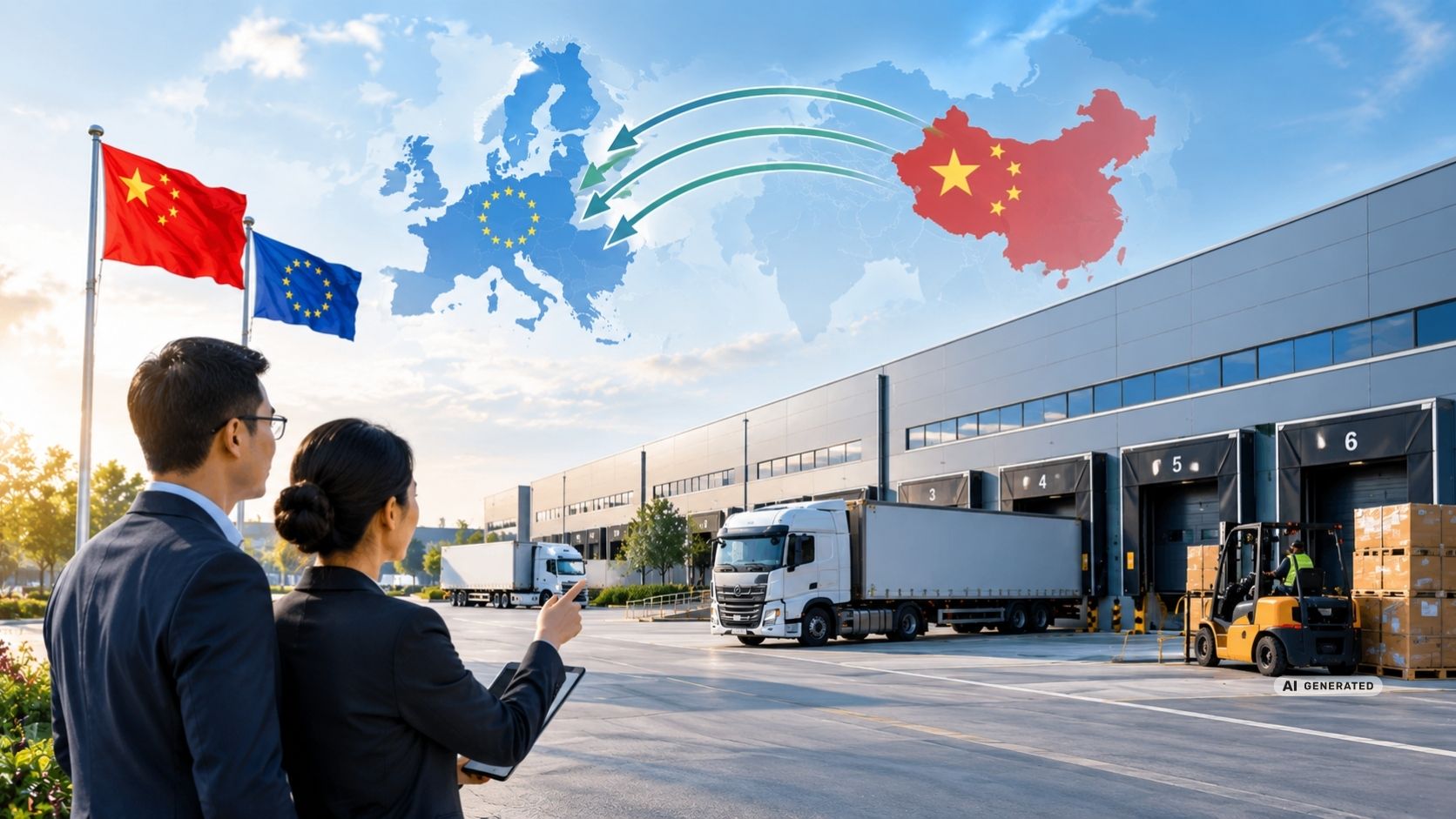
Chinese companies discover Europe's logistics real estate
Chinese companies are becoming an increasingly visible user group in Europe's logistics real estate market. What does this mean for warehouse space, 3PL structures and the requirements for European logistics locations?...
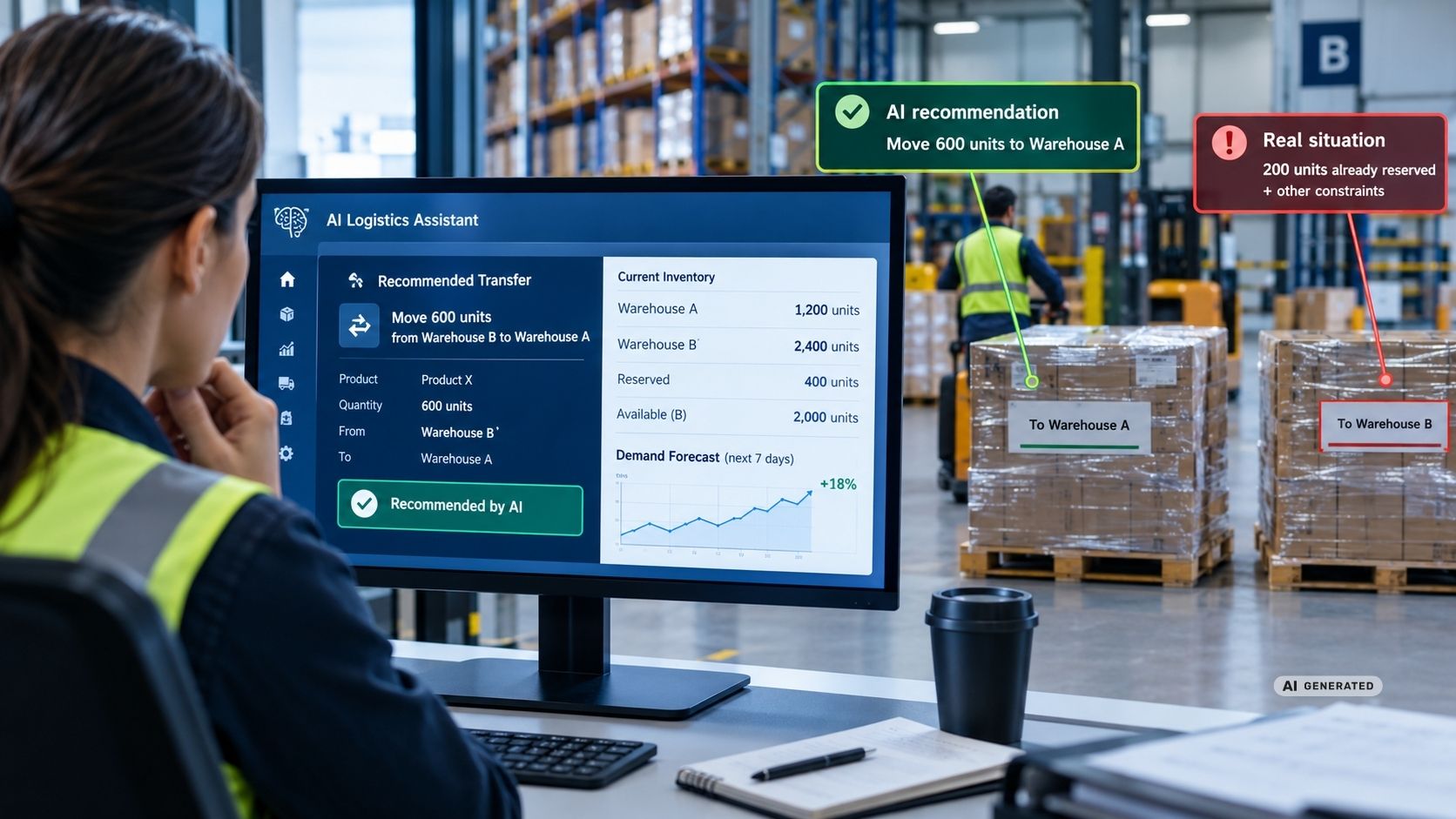
AI Hallucinations in Logistics: When AI Plans the Wrong Delivery
AI can analyze enormous amounts of logistics data — but it can also produce a convincing answer that is simply wrong. The critical question is not whether AI makes mistakes, but what happens when a wrong recommendation becomes an operational decision....
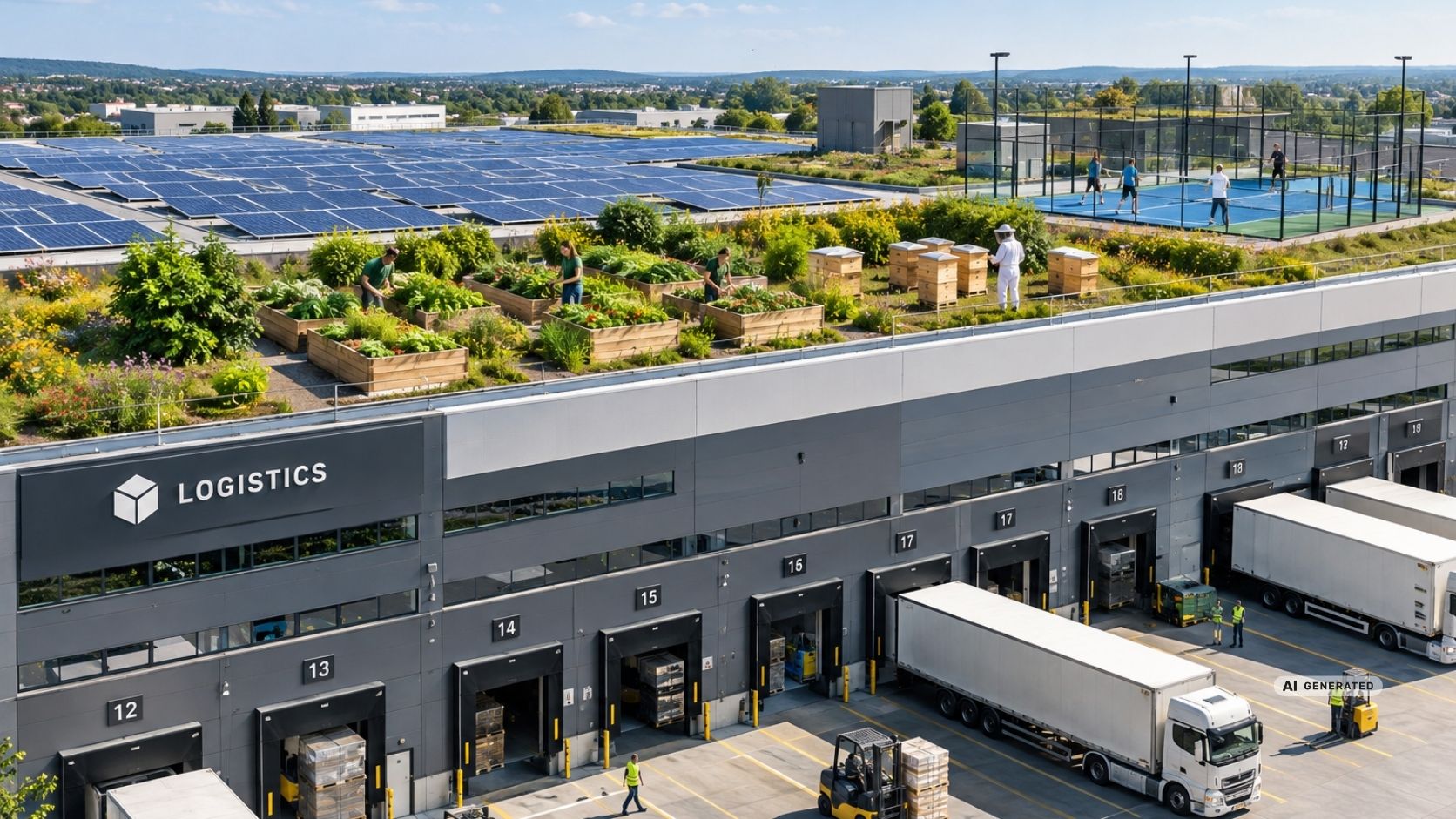
The Green Revolution on the Hall Roof: From Concrete Block to Ecological Power Plant?
Logistics roofs can do more than PV: greening, bees, urban farming and even sports areas turn unused roof space into multifunctional rooms....