


Cleaning in the Hall: From Chaotic Warehouse to High-gloss Logistics Center
Table of Contents
- Laws, Regulations and Ordinances: What Applies in Germany?
- Cleaning Requirements: What Operators of Different Storage Types Need to Pay Attention to
- The Order on the Outdoor Surfaces: More Than Just the Figurehead
- Waste Management and Waste Separation: Reduce Costs and Meet CSRD
- What Happens to Organic Leftovers and Spoiled Food?
- AI and Robotics: Misconception or the Future of Hall Cleaning?
- International Differences: Europe and the World in Comparison
- Conclusion and Practical Example: Cleaning as a Return Lever
In the past, the view into many warehouses was more like a functional chaos: cardboard boxes lying around, oil-smeared floors, thick layers of dust on the top rows of shelves and a smell of diesel exhaust fumes were part of everyday life. Today, modern logistics properties often present themselves in a clinical purity that is more reminiscent of semiconductor factories.
Why is that? What has changed in recent years? The change has purely economic and technical reasons. Firstly, the triumph of automation forces perfect environmental conditions. Sensors of automated guided vehicles (AGVs) fail in the event of dirty floors. Dust that is stirred up by forklifts, for example, does not directly trigger the sprinkler system, but it can blind the highly sensitive optical sensors of the conveyor system. Secondly, cleanliness is now a central element of lean management (e.g. 5S method) and occupational safety. A clean floor prevents accidents caused by slipping and reduces the downtime of industrial trucks.
Laws, Regulations and Ordinances: What Applies in Germany?
The cleaning of a commercial property is by no means just a question of appearance, but strictly regulated. Anyone who saves money here risks severe penalties from the employers' liability insurance associations.
In Germany, the Workplace Ordinance (ArbStättV) forms the legal foundation. It stipulates that workplaces must be set up and operated in such a way that they do not pose a risk to the safety and health of employees. In concrete terms, this means:
- It is imperative that traffic routes are kept free of obstacles, waste and slip hazards.
- DGUVRegulation 1 (Principles of Prevention) obliges operators to carry out regular maintenance and thorough cleaning in order to avoid slipping, tripping and falling accidents.
- Special requirements apply to air pollution control (TRGS 900), which is why pure dry sweeping with a broom, which stirs up harmful fine dust, is often no longer permitted in large industrial halls. Professional scrubber driers with water binding or high-performance HEPA filters must be used here.
Cleaning Requirements: What Operators of Different Storage Types Need to Pay Attention to
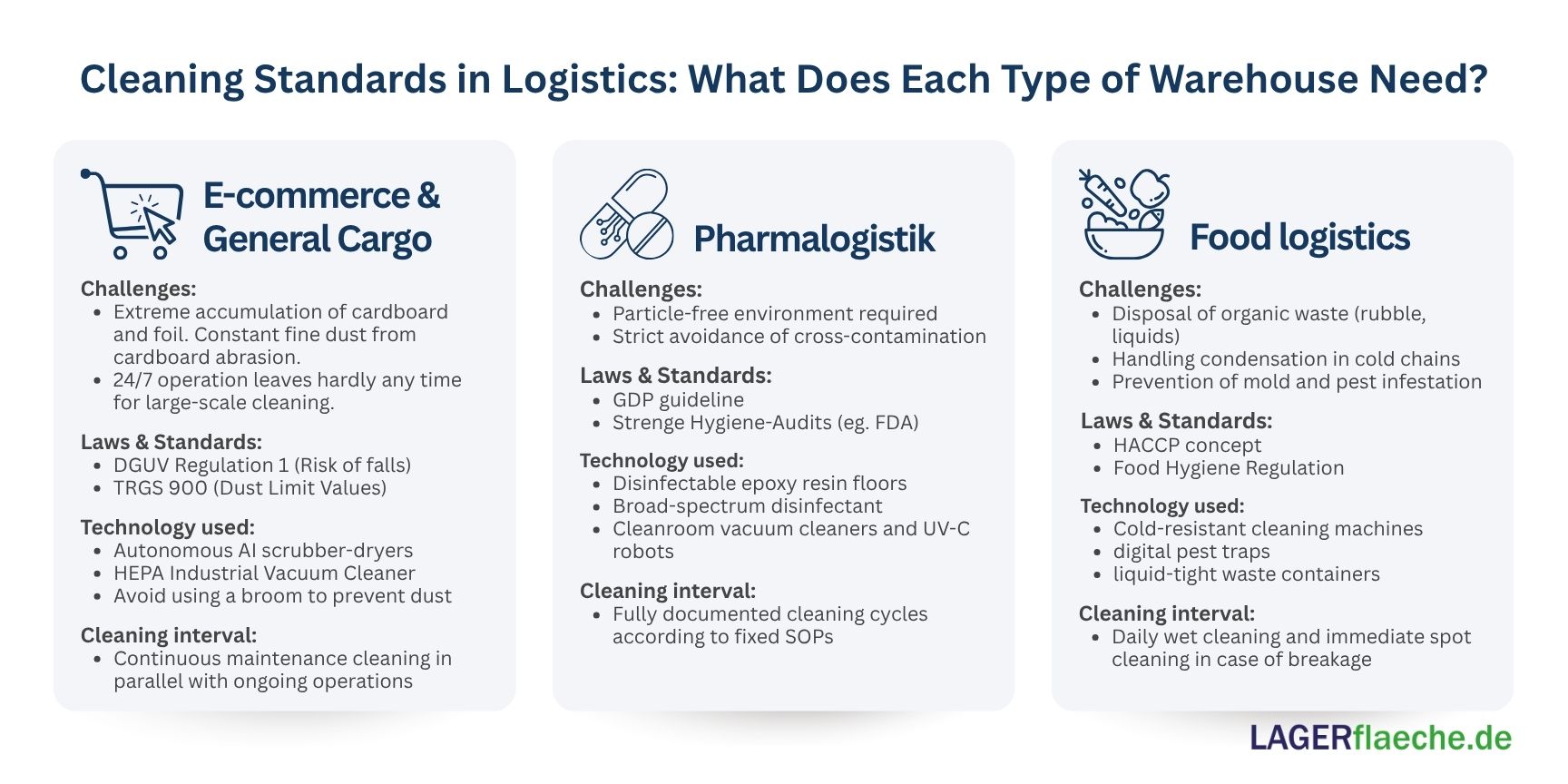
Not all warehouses are the same. The cleaning intervals and methods differ massively depending on the industry:
- E-commerce & general cargo logistics: An extremely large amount of packaging material (cardboard, film) and fine dust are produced here due to constant cardboard abrasion. The challenge is the ongoing maintenance cleaning of the picking aisles without disturbing the rapid flow of material.
- Pharmaceutical logistics: The rules of the game are completely different here. Operators in this sector have to meet extremely high quality and hygiene requirements for transporting medicines. Storage is subject to the GDP (Good Distribution Practice) Directive. Floors must be sanitizable, and cleaning schedules are rigorously audited.
- Food logistics: This is where the HACCP concept (Hazard Analysis and Critical Control Points) comes into play. Pest control and the immediate removal of organic residues are required by law to avoid cross-contamination.
The Order on the Outdoor Surfaces: More Than Just the Figurehead
The first impression of a logistics center is at the gate and in the courtyard. But the cleaning of the outer surfaces, loading zones and ramps has more far-reaching logistical reasons.
- Prevent dirt from entering: What is outside is inevitably carried into the hall by the tires of trucks and forklifts. Consistent yard cleaning with industrial sweepers drastically reduces indoor cleaning costs.
- Road safety: In autumn and winter, wet leaves, mud or remnants of snow turn the marshalling yards into dangerous slides for 40-ton trucks.
- Waste avoidance: Tension belts, pallet splinters or film residues often accumulate on the ramps. These foreign objects can cause expensive tire damage to vehicles or get caught in the roller doors.
Waste Management and Waste Separation: Reduce Costs and Meet CSRD
A clean hall requires intelligent waste management. What happens to the waste and how can costs be saved?
The motto is: Waste is a recyclable material. The times when everything was thrown into a residual waste compactor container are over. Strict waste separation in fractions (paper/cardboard, flexible films, wood, residual waste) can often halve disposal costs, as disposal companies even pay remuneration for clean cardboard and PE films.
The impact of CSRD: The new EU Sustainability Reporting Directive (CSRD) has completely changed the way waste is handled in logistics properties. Tenants today have to collect precise data on their waste generation in bins and their recycling rates. These hard facts are absolutely necessary for reporting according to the ESRS E5 standard (Resource Use & Circular Economy). To ensure this contractually secured, modern green leases now contain strict requirements for waste separation.
What Happens to Organic Leftovers and Spoiled Food?
In refrigerated logistics or food retailing, breakages, expired best-before dates or interruptions in the cold chain inevitably occur.
Spoiled food must not end up in regular commercial waste under any circumstances. They must be collected as organic residues (often category 3 animal by-products) in special, liquid-tight containers. Specialized disposal companies (such as ReFood) collect them. The recycling process is highly ecological: the residues are unpacked and converted into green electricity and heat in biogas plants. Used cooking fats are refined and serve as a valuable raw material for the production of climate-friendly biodiesel. Waste is thus directly turned into new drive energy for the supply chain.
AI and Robotics: Misconception or the Future of Hall Cleaning?
Will logistics halls soon only be cleaned by robots? This is no longer a misconception, but is currently the fastest growing trend in facility management.
This is already a reality in state-of-the-art facilities. So-called "dark warehouses" do not require any human workers in the area. In these systems, automated guided vehicles (AGVs), robotic arms and automated storage and retrieval systems (AS/RS) pick the goods in absolute darkness. Since people only enter the facility for maintenance work, the use of a classic human cleaning crew is also obsolete.
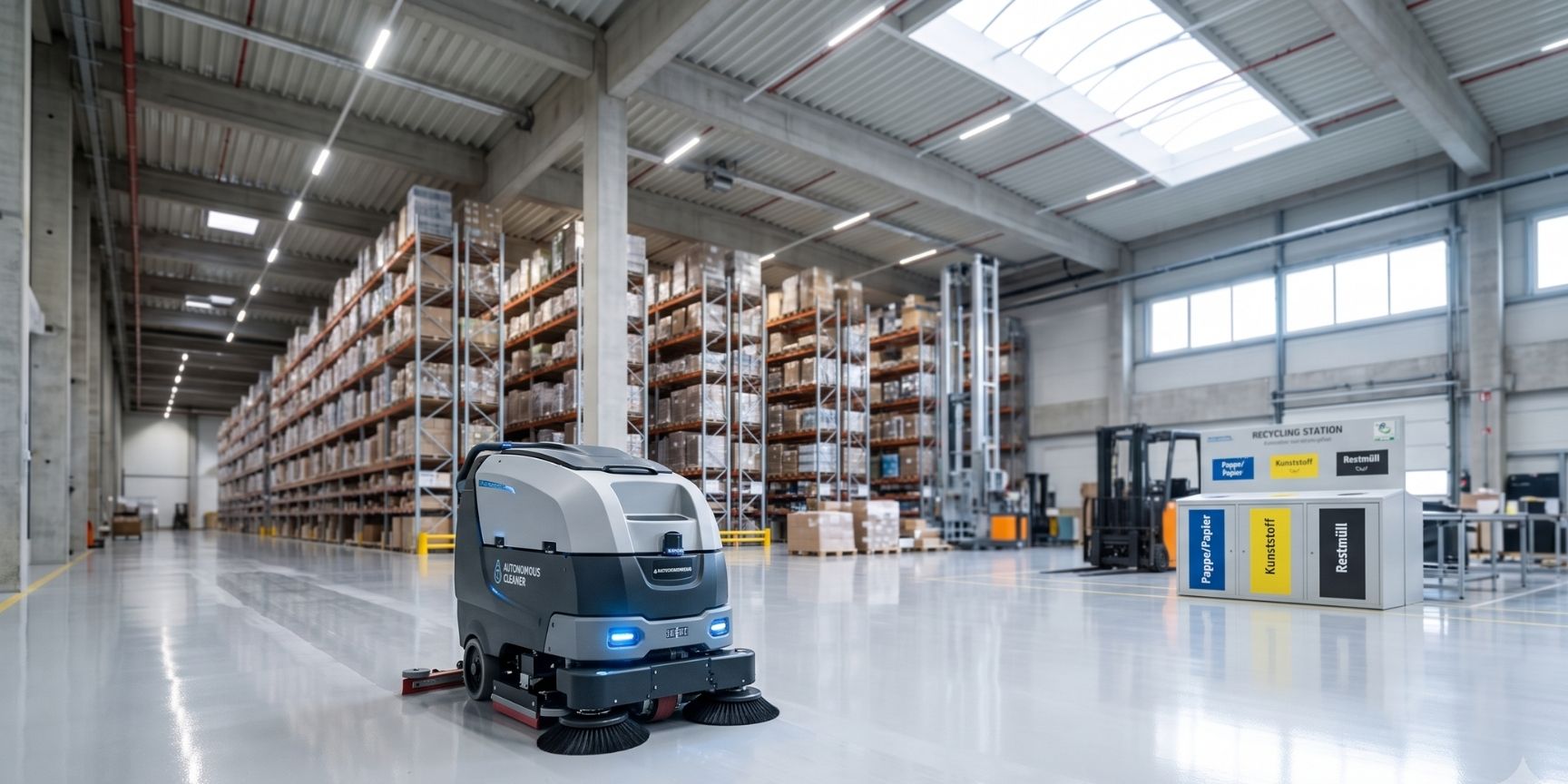
This is where autonomous scrubber driers take over. Equipped with lidar sensors, cameras and artificial intelligence (AI), they map the hall independently. They detect dynamic obstacles (such as parked pallets), safely avoid them, empty their dirty water at docking stations and charge their batteries independently. The AI optimizes the route guidance so that cleaning takes place exactly when there is no picking activity in the respective aisle row.
International Differences: Europe and the World in Comparison
The approach to cleaning and waste management differs massively globally, driven by geology, legislation and wage structures.
- Germany: Is considered a pioneer worldwide in the strict separation of waste fractions (Circular Economy Act) and very strict occupational health and safety guidelines (ArbStättV). The documentation effort here is the highest in an international comparison.
- France: Here, the strict "Décret Tertiaire" forces real estate operators to make drastic energy savings. This has an impact on facility management: cleaning machines must be energy-efficient, and cleaning times are increasingly being shifted to daylight hours in order to be able to switch off lighting and heating completely at night.
- Singapore: Due to an acute lack of alternatives, the city-state is moving into the rock. Singapore is currently evaluating plans to relocate entire container logistics hubs underground. In such underground, extremely densely packed infrastructures, mechanical and automated cleaning (due to exhaust air and space problems) is often the only legally permitted option.
- USA: While safety standards (OSHA) are strict, waste separation in many states (exceptions such as California confirm the rule) lags behind European levels. Large-scale "landfilling" (landfilling) is often still used instead of legally enforcing sorting quotas as in Europe.
Conclusion and Practical Example: Cleaning as a Return Lever
Today, an intelligent cleaning and waste strategy is no longer a necessary evil, but a measurable profitability driver.
Practical example: A fictitious medium-sized contract logistics company in the Ruhr region changed its facility management. Until now, an external service provider cleaned the 15,000 m² hall manually, and the waste was thrown unsorted into compactor containers.
The solution: The company leased two autonomous AI cleaning robots that wipe the main paths at night. At the same time, cardboard and flexible film were collected strictly separately at each packing station.
The result: Personnel costs for cleaning fell by 40%. By selling the single-origin cardboard to recycling companies, the disposal costs were transformed from a negative item into a small source of income. The error rate of the AGV forklifts fell to zero due to the clean floors.
Logistics operators who neglect cleaning and waste management today not only lose operational efficiency, but also fail at the latest due to the ESG and CSRD requirements of their stakeholders.
Latest Blog Posts
Stay up to date with the newest trends, insights, and tips in warehouse and logistics. Our latest articles help you navigate the industry with confidence.
Data Centres vs. Logistics Facilities: The Race for Power and Land
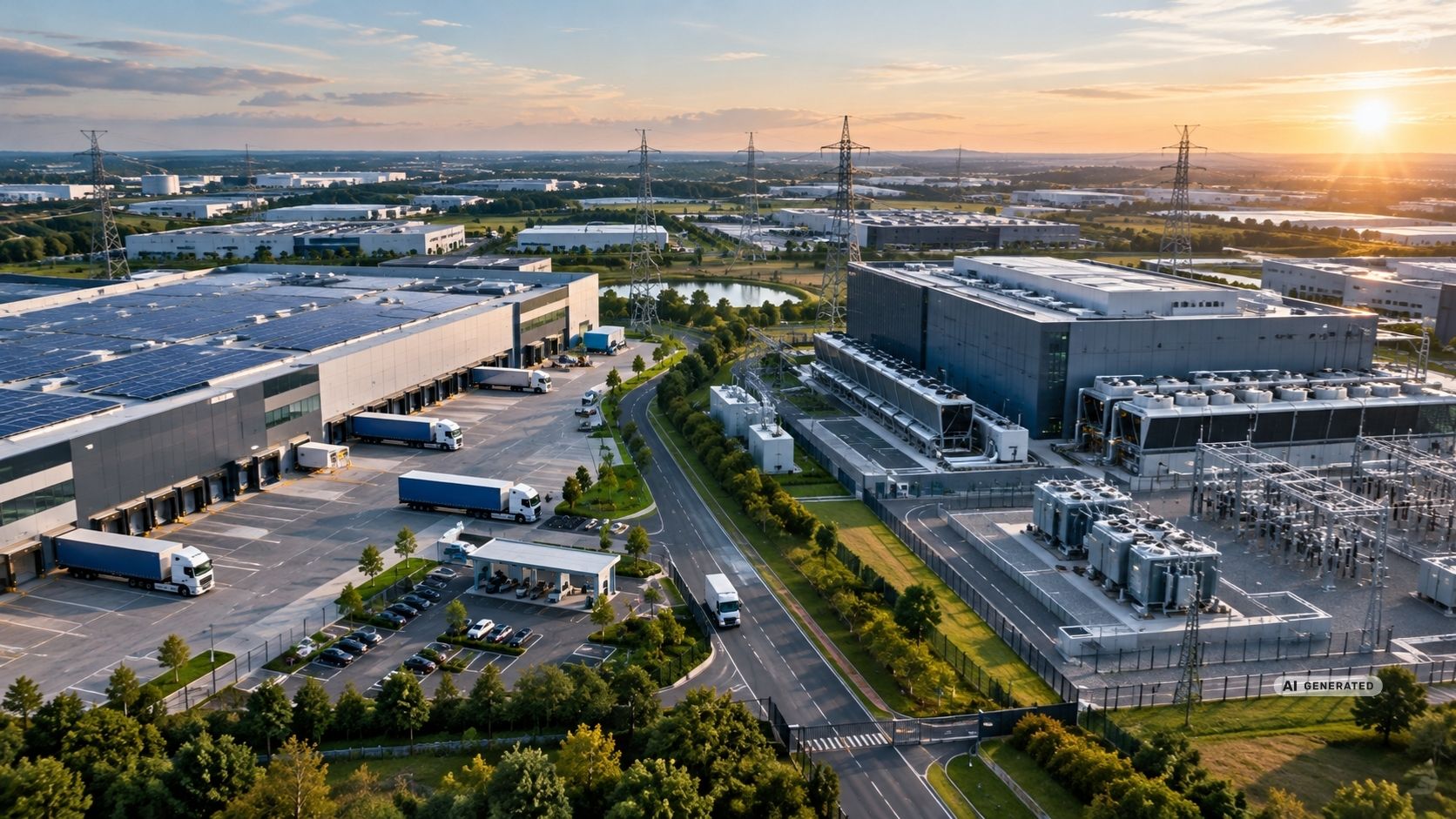
Across Europe, logistics operators are competing for more than land and transport access. They increasingly need something much harder to secure: grid capacity. Data centres are intensifying that competition — and changing how logistics locations are evaluated....

Chinese companies discover Europe's logistics real estate
Chinese companies are becoming an increasingly visible user group in Europe's logistics real estate market. What does this mean for warehouse space, 3PL structures and the requirements for European logistics locations?...
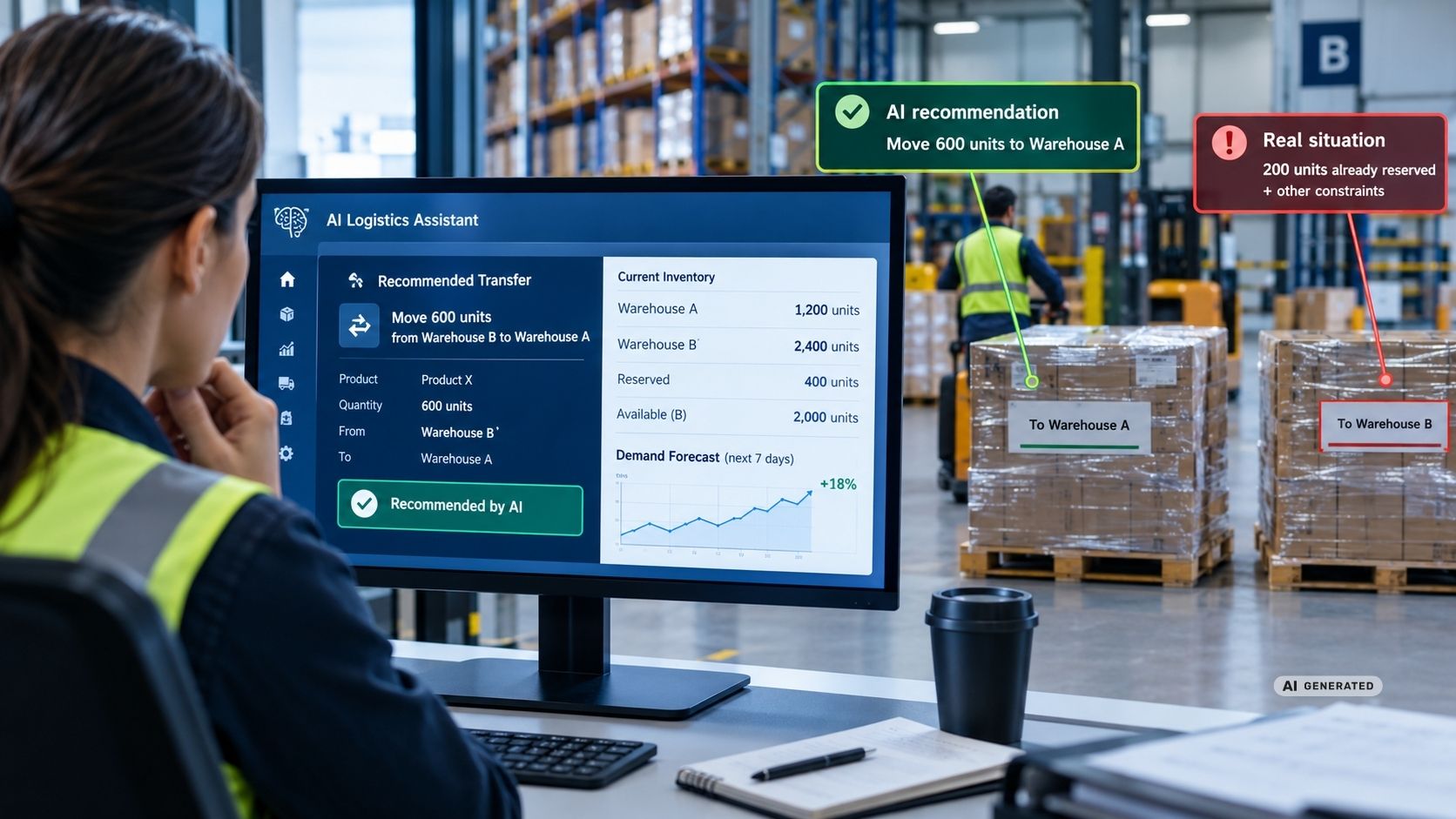
AI Hallucinations in Logistics: When AI Plans the Wrong Delivery
AI can analyze enormous amounts of logistics data — but it can also produce a convincing answer that is simply wrong. The critical question is not whether AI makes mistakes, but what happens when a wrong recommendation becomes an operational decision....
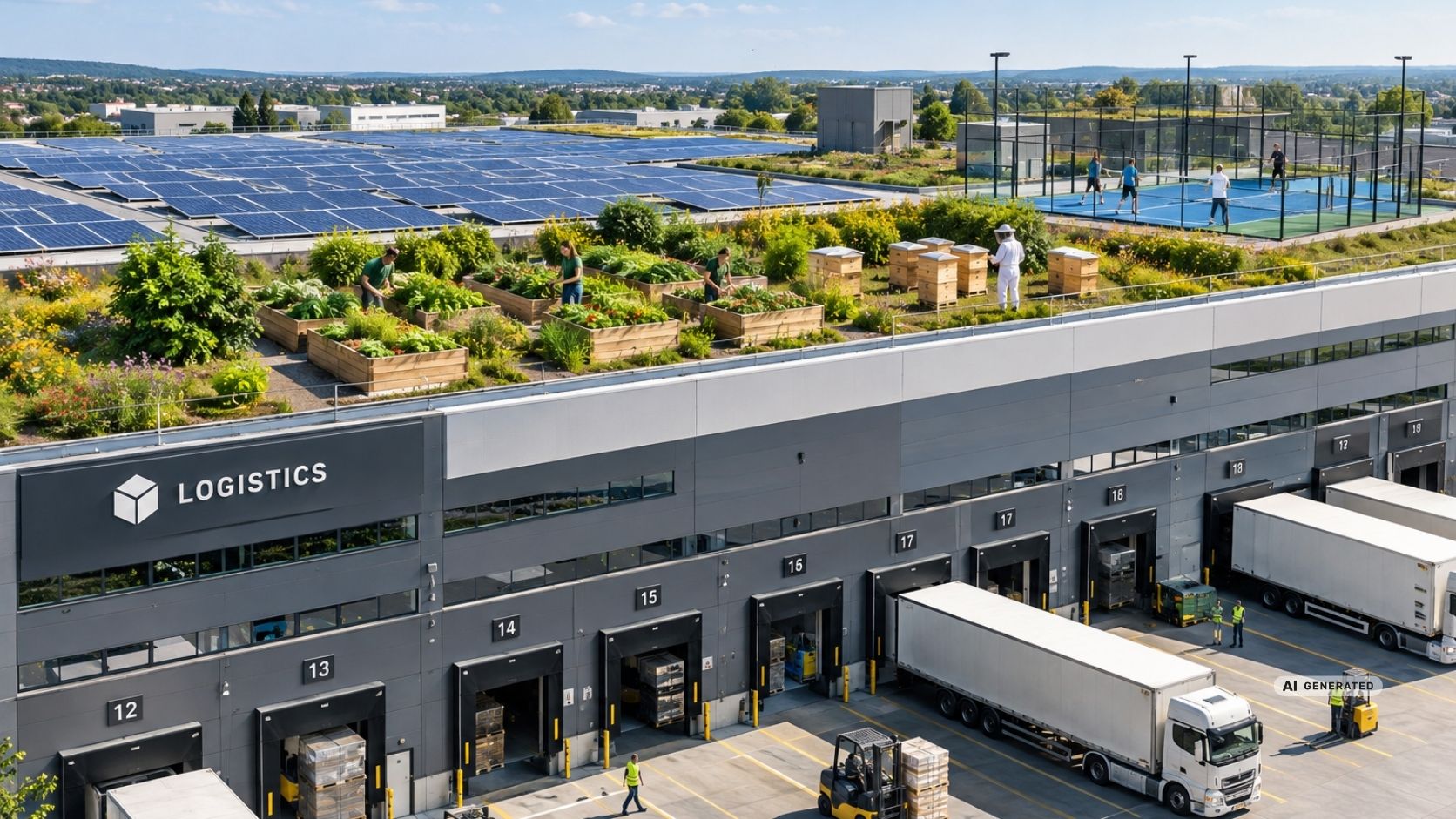
The Green Revolution on the Hall Roof: From Concrete Block to Ecological Power Plant?
Logistics roofs can do more than PV: greening, bees, urban farming and even sports areas turn unused roof space into multifunctional rooms....