




The Hidden Costs of Poor Contract Logistics: Where Is Your Margin Bleeding?
Table of Contents
- Why Contract Logistics Often Becomes a Cost Trap
- The 6 Most Massive Cost Drivers in Contract Logistics
- Are There Any Other Hidden Costs?
- Which Factors have the Greatest Impact?
- Recognizing Alarm Signs: What Customers Need to See and Discuss
- Are There Optimization Tools for Exactly These Cases?
- International Differences: Germany in a Global Comparison
- Practical Example: How a Medium-sized Company Saved 15% on Logistics Costs
- Conclusion: Transparency is the hardest currency
Have you ever wondered why your logistics costs are constantly rising even though the agreed rates with your logistics service provider (LDL) have remained unchanged? How much does a warehouse error really cost you? And why does smooth cooperation often fail because of seemingly small things?
In the modern supply chain, contract logistics is the backbone of many companies. But when processes do not mesh perfectly, pain points arise that often remain under the radar for a long time. For specialists and managers in the supply chain, these "hidden costs" are the real margin killer. This guide completely illuminates the dark corners of contract logistics, uncovers cost drivers and provides you with tangible solutions as a niche and specialist portal.
Why Contract Logistics Often Becomes a Cost Trap
Outsourcing logistics services promises flexibility and scalability. The reality is often different: frictional losses between client and service provider quickly eat up the calculated savings. These costs are rarely shown as a direct item on the monthly bill of the LDL. They hide in lost working time, lost sales and dissatisfied end customers.
In the following, we analyze the most serious pain points in detail.
The 6 Most Massive Cost Drivers in Contract Logistics
1. Inventory Inaccuracies: The Phantom in the Warehouse
If the system displays 100 items, but there are only 85 physically, it is called a "phantom stock". The hidden costs here are enormous:
- Overstocking: To compensate for uncertainties, more safety stock is built up. This ties up capital unnecessarily.
- Out-of-stock situations: Customers order items that cannot be delivered. The result: cancellations and loss of reputation.
- Search times: Warehouse employees spend hours searching for lost pallets.
Facts & Figures: According to a study by Fraunhofer IML on warehouse logistics (2023), warehouses without real-time booking have an average inventory inaccuracy of 3 to 5%. With a portfolio value of 10 million euros, this corresponds to a capital commitment or loss margin of up to 500,000 euros.
2. Delayed Fulfillment
Every hour that a parcel leaves the warehouse too late costs money. Delayed fulfillment leads to express surcharges, which the shipper often has to pay himself in order to reach the customer in time. However, the true cost lies in customer lifetime value (CLV). A customer who receives their goods late is 40% less likely to order again. The marketing costs that were spent on acquiring this customer (customer acquisition cost) are thus lost.
3. Claims handling: More than just the value of the goods
If goods are damaged in the warehouse or in transit, replacing the product is just the tip of the iceberg. The hidden costs include:
- Return Merchandise Authorization (RMA) process costs: Process customer service tickets, create return labels.
- Quality inspection: Employees must document and evaluate the damage.
- Disposal or refurbishment: Costs for professional destruction or reprocessing.
A damaged item worth 50 euros often causes additional administrative and procedural costs of another 30 to 45 euros.
4. Invisibility (lack of transparency)
Where is the container currently located? Has the pallet already been captured? If clients look blindly into the processes of their LDL, opportunity costs arise. Without real-time data (visibility), decisions must be made on the basis of assumptions. This leads to the infamous "bullwhip effect", where small fluctuations in demand lead to massive over- or understocking in the supply chain.
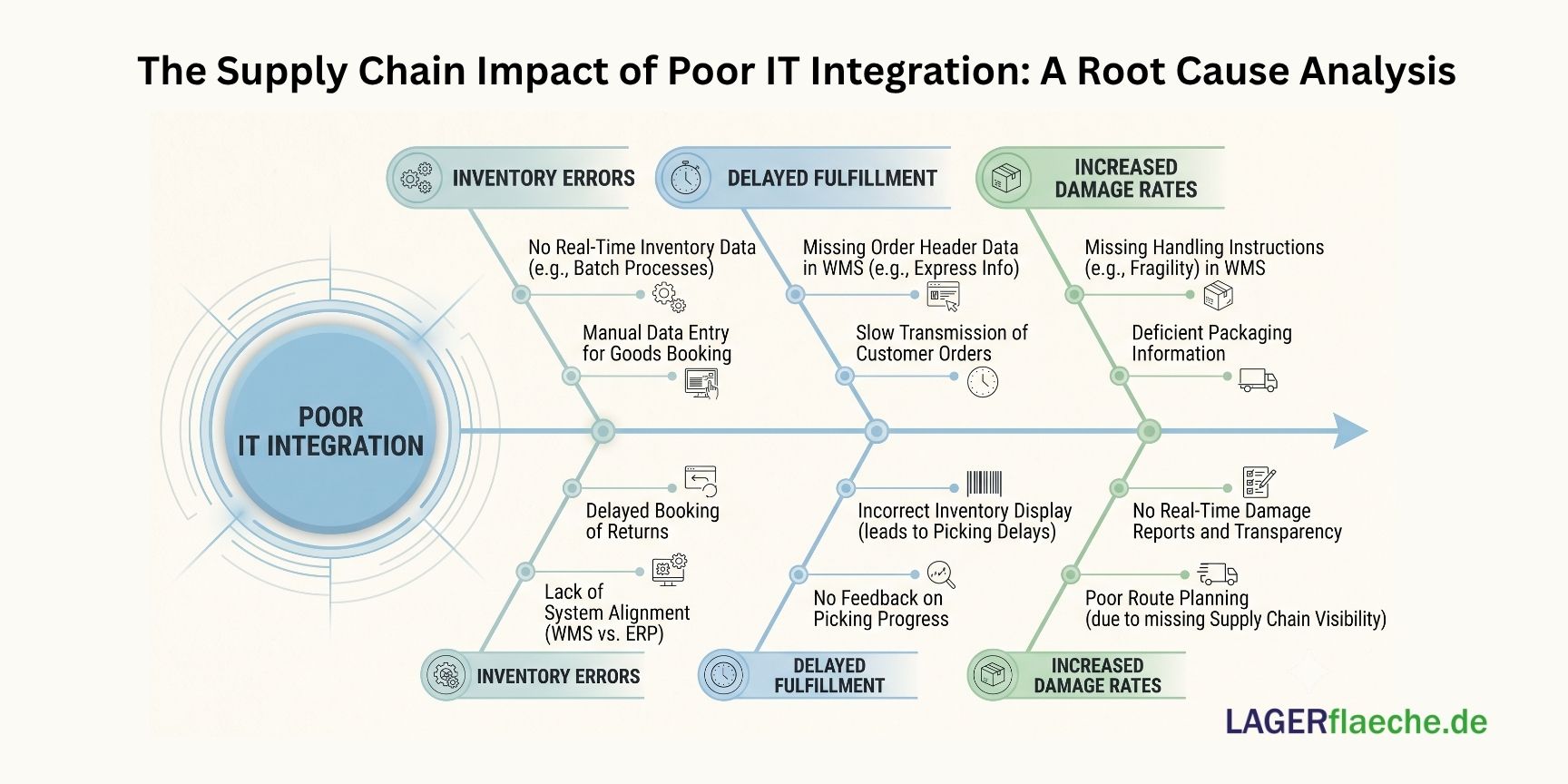
5. Poor IT integration as a bottleneck
Data exchange via CSV files, e-mail or even telephone is error-prone and slow. Poor IT integration between the customer's ERP system (e.g. SAP) and the service provider's WMS (Warehouse Management System) leads to media discontinuities.
- Manual data entry: Inevitably leads to transmission errors.
- Lack of synchronization: Inventory, order status, and tracking data are hours or days behind.
6. Work instability and staff shortages
Contract logistics is personnel-intensive. A high turnover at the service provider means constant onboarding of new, inexperienced employees. This directly leads to a higher error rate in picking (pick errors) and slower throughput times. If temporary workers are not sufficiently trained, productivity drops drastically.
Are There Any Other Hidden Costs?
Yes, the spectrum is even broader. Factors that are often overlooked include:
- Compliance and penalty costs: Incorrect customs documents or non-compliance with dangerous goods regulations by the LDL can lead to severe fines for the client.
- Lack of scalability (opportunity cost): If a product goes viral but the LDL cannot process the order volume quickly enough, the company loses massive sales.
- Exit costs: If the cooperation fails, the costs for migrating to a new service provider (warehouse move, new IT connection) are exorbitantly high.
Which Factors have the Greatest Impact?
The poor IT integration and the resulting invisibility have by far the greatest leverage. Why? Because they are the cause of almost all other symptoms.
Without real-time data via API integration, inventory inaccuracies inevitably arise. Without system integration, fulfillment is delayed because orders are queued. If the IT interfaces do not work seamlessly, the customer loses control of his own supply chain, even if the physical goods are with the service provider.
Recognizing Alarm Signs: What Customers Need to See and Discuss
As a client, you are not powerless. However, you need to know what indicators to look for.
| The Symptom (What You See) | The possible cause of LDL | How to conduct the conversation (plot) |
| Customer complaints about incorrect items are on the rise | Pick errors due to high staff turnover or outdated handheld scanners. | "Our error rate increased by 2% in Q3. Let's review your training processes for new pickers and the use of pick-by-light systems." |
| Cancellations due to delivery delays are increasing | Order backlog, too late cut-off times for parcel service providers. | "The SLA target of 98% same-day fulfillment was undercut. What are your capacity plans for the upcoming peak times?" |
| Inventory differences in monthly financial statements | No permanent inventory, improper returns booking. | "We need a real-time audit capability for inventory bookings. Let's talk about an API update to our WMS-ERP interface." |
The key: Establish Quarterly Business Reviews (QBRs). Do not treat LDL as a pure cost factor, but as a strategic partner. Use hard data (KPIs) instead of emotional finger-pointing.
Are There Optimization Tools for Exactly These Cases?
Logistics technology has developed rapidly. There are specialized solutions for every pain point:
- Order Management Systems (OMS): These orchestrate orders across different sales channels and dynamically route them to the best warehouse. They resolve the Delayed Fulfillment issue.
- Middleware and API platforms: Tools like Cleo or specialized iPaaS (Integration Platform as a Service) translate data between legacy LDL systems and modern ERPs in real-time, addressing poor IT integration.
- Digital Twins: AI-powered simulations of the warehouse. They make invisibility visible by predicting bottlenecks before they physically occur.
- Automation (AMR / AGVs): Autonomous mobile robots partially decouple the service provider from work instability and drastically reduce pick errors.
International Differences: Germany in a Global Comparison
Contract logistics is a local business with global implications. The causes of hidden costs vary massively depending on the location.
Germany: High standards, rigid structures
In Germany, quality standards are high, but companies often suffer from labor instability and a shortage of skilled workers. Wage costs are extremely high, strong trade unions and strict working time laws (e.g. night work restrictions) make spontaneous scaling during peak times expensive and inflexible. The focus in Germany is therefore strongly on expensive automation in order to reduce personnel costs. However, the IT landscape of many German medium-sized companies and traditional logistics companies is often still characterized by cumbersome legacy systems (e.g. old AS/400 systems).
Poland & Eastern Europe: The booming hub with growing pains
Countries like Poland have become the "storehouse of Europe". The reason: lower wage costs and geographical proximity to the DACH region.
- Difference to DE: Personnel was available cheaply for a long time, which inhibited automation. In the meantime, however, the shortage of staff there is also increasing rapidly. Hidden costs often arise here due to infrastructure bottlenecks and language barriers in the IT integration of cross-border systems.
Great Britain: The Brexit consequences
In the UK, hidden costs in the form of compliance issues and extreme customs delays dominate. Labor instability here has been historically high since Brexit, as Eastern European workers left the market. The fluctuation costs are immense.
USA: Distance and fragmentation
In the U.S., the pain points often lie in the sheer size of the country. A single warehouse is not enough to guarantee reasonable delivery times.
- Difference to DE: Extremely high fluctuation (often over 100% per year in fulfillment centers). The hire-and-fire mentality leads to massive pick errors. In addition, the IT landscape is extremely fragmented, which increases invisibility across different nodes in the supply chain.
China: Speed before failure
In Asia, especially China, the focus is extremely on throughput and speed (e.g. pushed by Alibaba, JD.com).
- Difference to DE: The massive use of high-tech (swarms of sorting robots) is the standard. Hidden costs arise here less from labor costs, but rather from damage handling due to mass instead of class in packaging as well as complex intercontinental returns (returns).
Practical Example: How a Medium-sized Company Saved 15% on Logistics Costs
The company: "TechParts GmbH", a fictitious but representative B2B dealer for electronic components from North Rhine-Westphalia.
The problem: The contract logistics company's monthly invoices did not increase, but TechParts' profit margin fell by 4%. Customers complained about incorrect deliveries (inventory inaccuracies), and returns piled up unprocessed by the service provider for weeks (inefficient claims handling).
The analysis: TechParts conducted an audit.
The result: The systems communicated via nightly batch runs (FTP servers). If an item was damaged and booked out in the warehouse during the day, TechParts' ERP system did not find out about this until 24 hours later. In the meantime, the sales department resold the item – a classic out-of-stock situation.
The solution:
- IT upgrade: Introduction of an API-based middleware that synchronizes inventory changes in milliseconds between the service provider's WMS and TechParts' SAP.
- SLA adjustment: Instead of a flat storage fee, penalties (contractual penalties) for pick errors of more than 0.5% were agreed, coupled with a bonus if the error rate fell below 0.2%.
- Joint process optimization: LDL invested in pick-by-wearables (smartwatches for employees) to keep their hands free during picking and to minimize errors.
The result: After six months, pick errors fell by 80%. The costs for processing customer complaints and replacement deliveries were halved. The bottom line is that total logistics costs (including hidden ones) fell by a good 15%.
Conclusion: Transparency is the hardest currency
Poor contract logistics doesn't bleed on the monthly bill, it bleeds in your processes. Inventory inaccuracies, delayed fulfillment times, non-transparent processes and poor IT integration are not laws of nature, but solvable management tasks.
Your checklist for the next steps:
Question the status quo. The best contract logistics provider is not the one with the lowest pallet storage space prices, but the one whose processes are so seamlessly interlinked with yours that hidden costs do not arise in the first place.
Source references for market data: The percentages and effects mentioned in the text are based on aggregated best-practice analyses of the logistics industry, based on studies on supply chain resilience (e.g. BVL - Bundesvereinigung Logistik e.V., Fraunhofer Institute for Material Flow and Logistics IML, 2023/2024).
Latest Blog Posts
Stay up to date with the newest trends, insights, and tips in warehouse and logistics. Our latest articles help you navigate the industry with confidence.
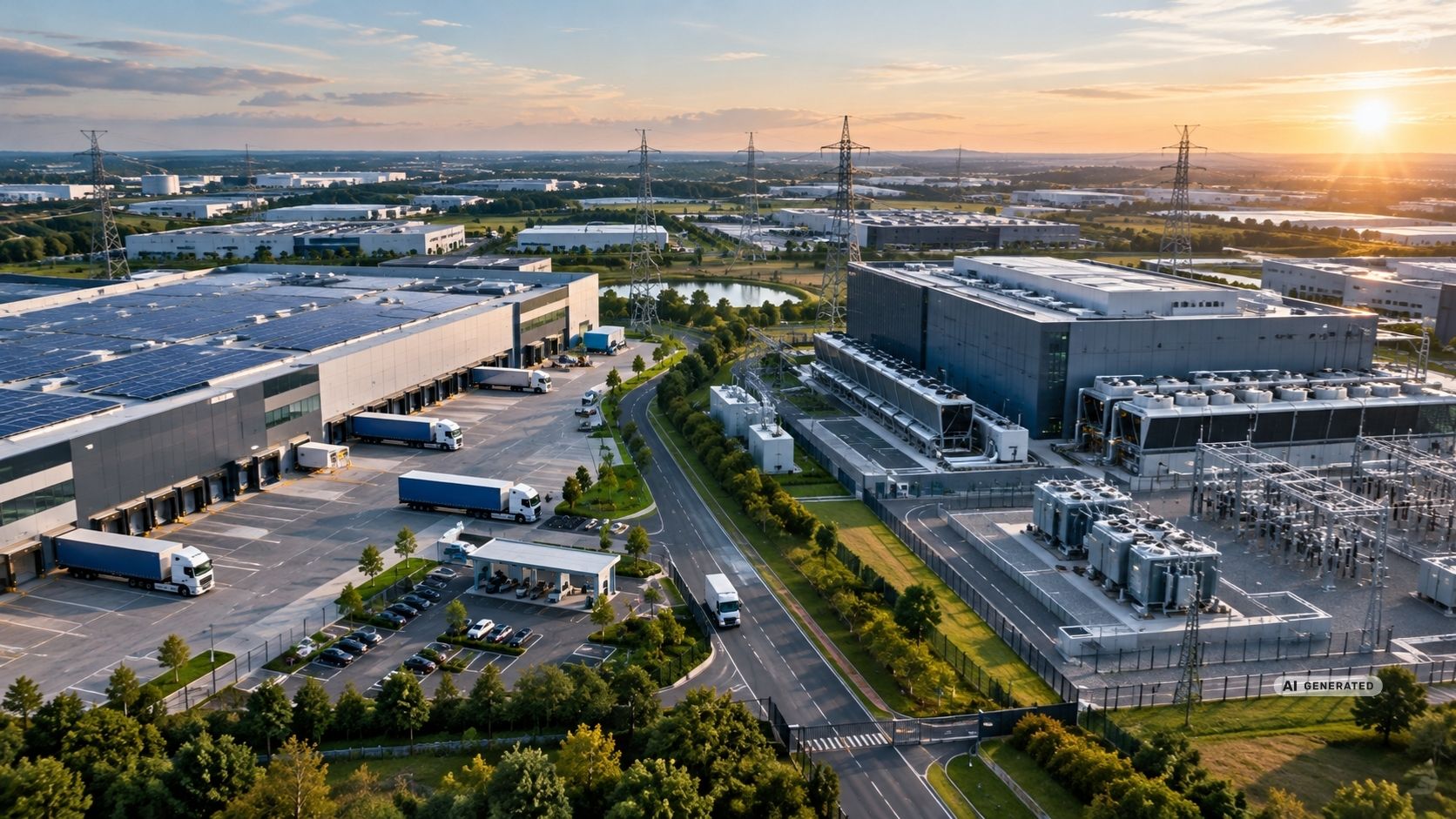
Data Centres vs. Logistics Facilities: The Race for Power and Land
Across Europe, logistics operators are competing for more than land and transport access. They increasingly need something much harder to secure: grid capacity. Data centres are intensifying that competition — and changing how logistics locations are evaluated....
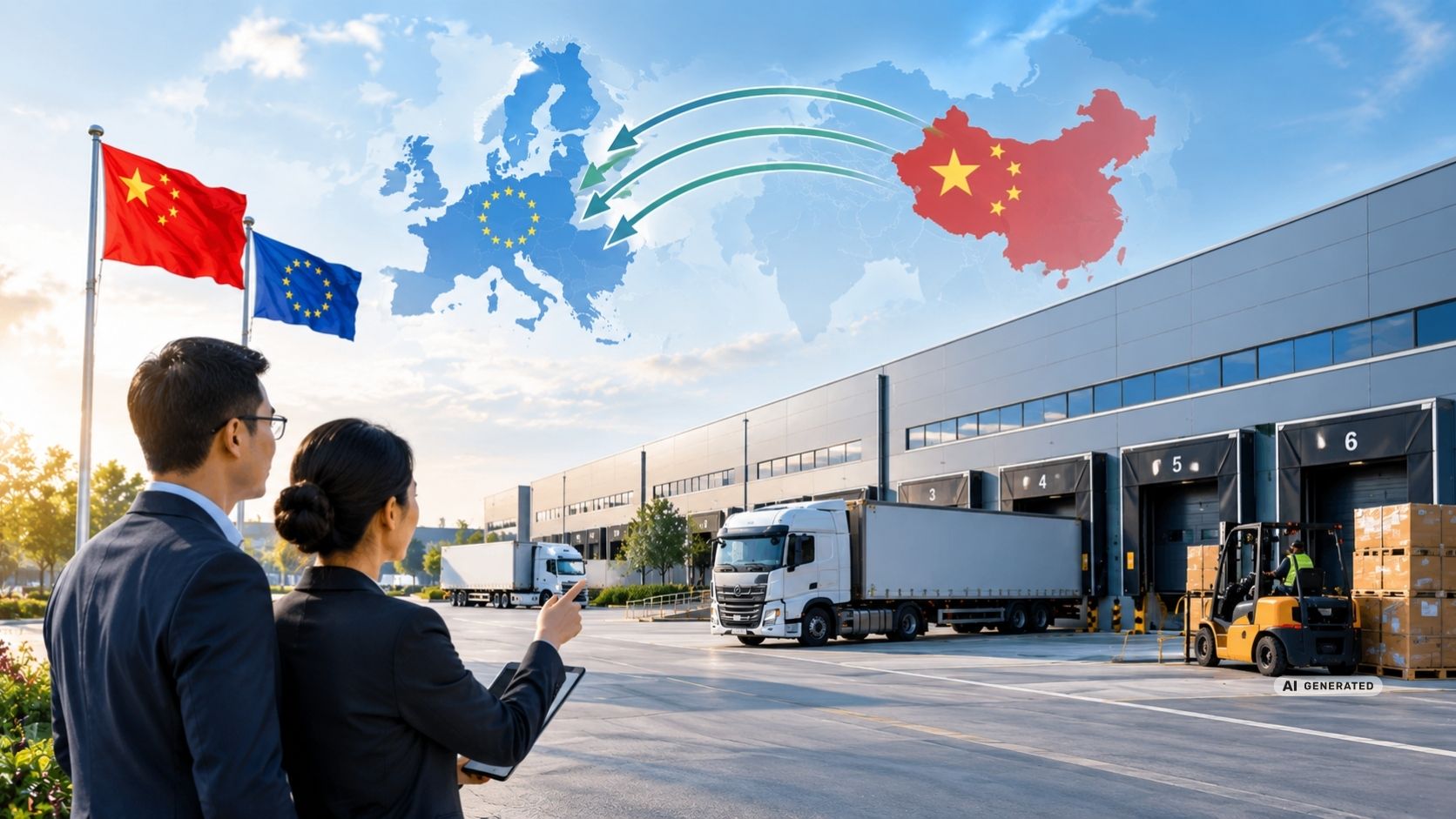
Chinese companies discover Europe's logistics real estate
Chinese companies are becoming an increasingly visible user group in Europe's logistics real estate market. What does this mean for warehouse space, 3PL structures and the requirements for European logistics locations?...
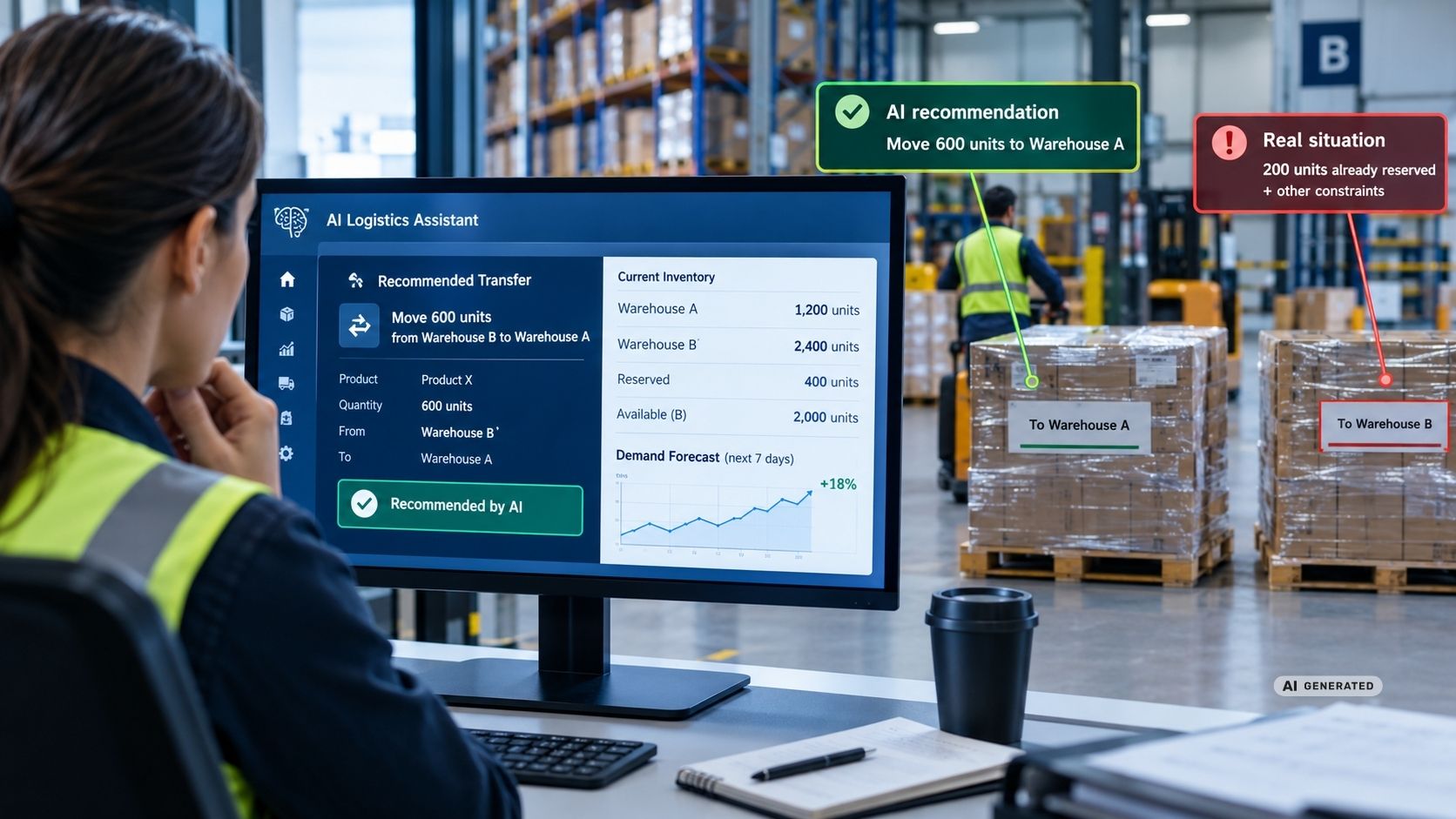
AI Hallucinations in Logistics: When AI Plans the Wrong Delivery
AI can analyze enormous amounts of logistics data — but it can also produce a convincing answer that is simply wrong. The critical question is not whether AI makes mistakes, but what happens when a wrong recommendation becomes an operational decision....
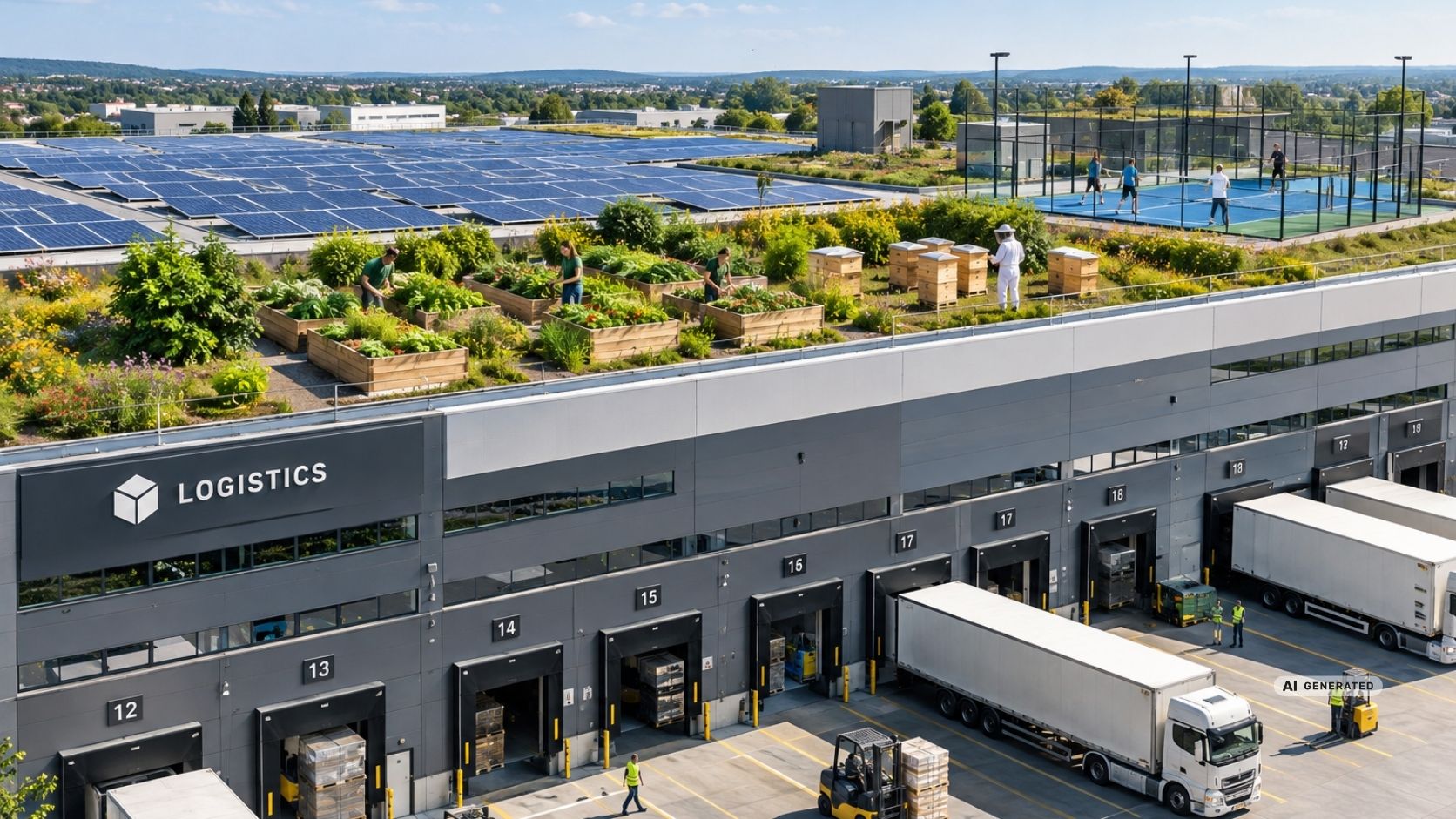
The Green Revolution on the Hall Roof: From Concrete Block to Ecological Power Plant?
Logistics roofs can do more than PV: greening, bees, urban farming and even sports areas turn unused roof space into multifunctional rooms....