



The Anatomy of Logistics Costs: What You Really Pay for Storage, Transport & Co.
Table of Contents
- The Building Blocks of a Logistics Price: More than just Storage Space
- The Black Box of the Logistics Company: How is it Calculated?
- The Other Side of the Coin: The Calculation in Retail
- Europe Price Comparison: Why Logistics don't Cost the same Everywhere
- VAS: The Key to Differentiation and Efficiency
- How Transparent does a Logistics Price have to be?
- The Future of Pricing: Digitalization and Sustainability
- Conclusion: Understanding Price to Optimize Costs
A look behind the scenes of pricing in contract logistics and the sometimes serious differences in Europe.
Have you ever wondered what the price of storing a single pallet is like? Or what factors determine whether transporting your goods from A to B is a bargain or a significant cost factor? The world of logistics pricing is a complex web of variable and fixed costs, strategic calculations and market-dependent influences. For companies in trade and production, understanding this cost structure is crucial for their own competitiveness.
This article dives deep into the matter. We break down how the prices for central logistics services such as storage, picking, packing, finishing, packaging, transport and value-added services (VAS) are composed. We shed light on the different calculation methods used by contract logistics companies and retailers and take a close look at the price differences in a European comparison – with a special focus on Germany. Prepare for a detailed journey through the world of logistics costs, peppered with figures, data and facts that give you a real knowledge advantage.
The Building Blocks of a Logistics Price: More than just Storage Space
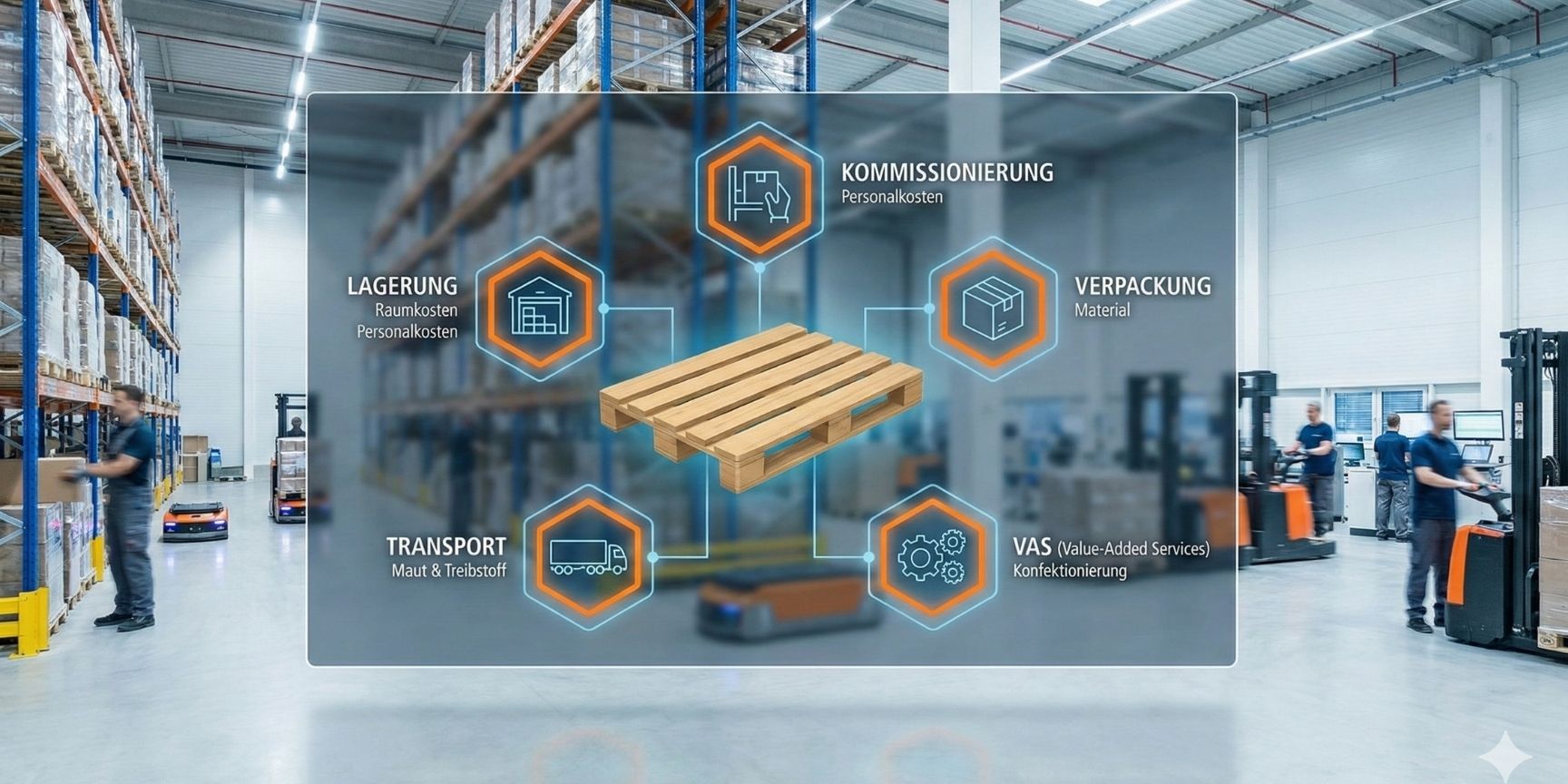
The price a company pays for logistics services is rarely a lump sum. Rather, it is a mosaic of many small and large cost stones. To understand the calculation, we first need to look at the basic services and their cost drivers.
- Storage: This is not just about renting the storage space. The cost per pallet (often between 6.00 - 9.00 € per month in Germany) depends on height, weight and specific requirements. Dangerous goods, temperature-controlled goods or the need for increased security measures drive up the price.
- Picking: Assembling goods for a shipment is one of the most cost-intensive processes in the warehouse and can account for 50-70% of the total storage costs. The costs are often calculated per "pick" (removal of an item). In e-commerce, these are often between € 1.20 and € 1.70 for an item weighing less than 1 kg. Each additional item of the same type costs additionally, e.g. 0.10 - 0.50 €.
- Packaging & Outer Packaging: The cost of cardboard, filling material and the packaging process itself. Optimal packaging not only saves material, but also transport costs due to lower volume and weight.
- Packaging & Finishing (Value-Added Services): This includes all services that go beyond basic storage. Creating displays for the point of sale, enclosing instructions, quality control or applying labels (labelling) are typical examples. These are calculated individually, often on an hourly basis or per unit worked.
- Transport: The cost of transport is made up of the distance, weight, volume and urgency. In addition, there are variable costs such as fuel surcharges and statutory charges such as tolls.
The Black Box of the Logistics Company: How is it Calculated?
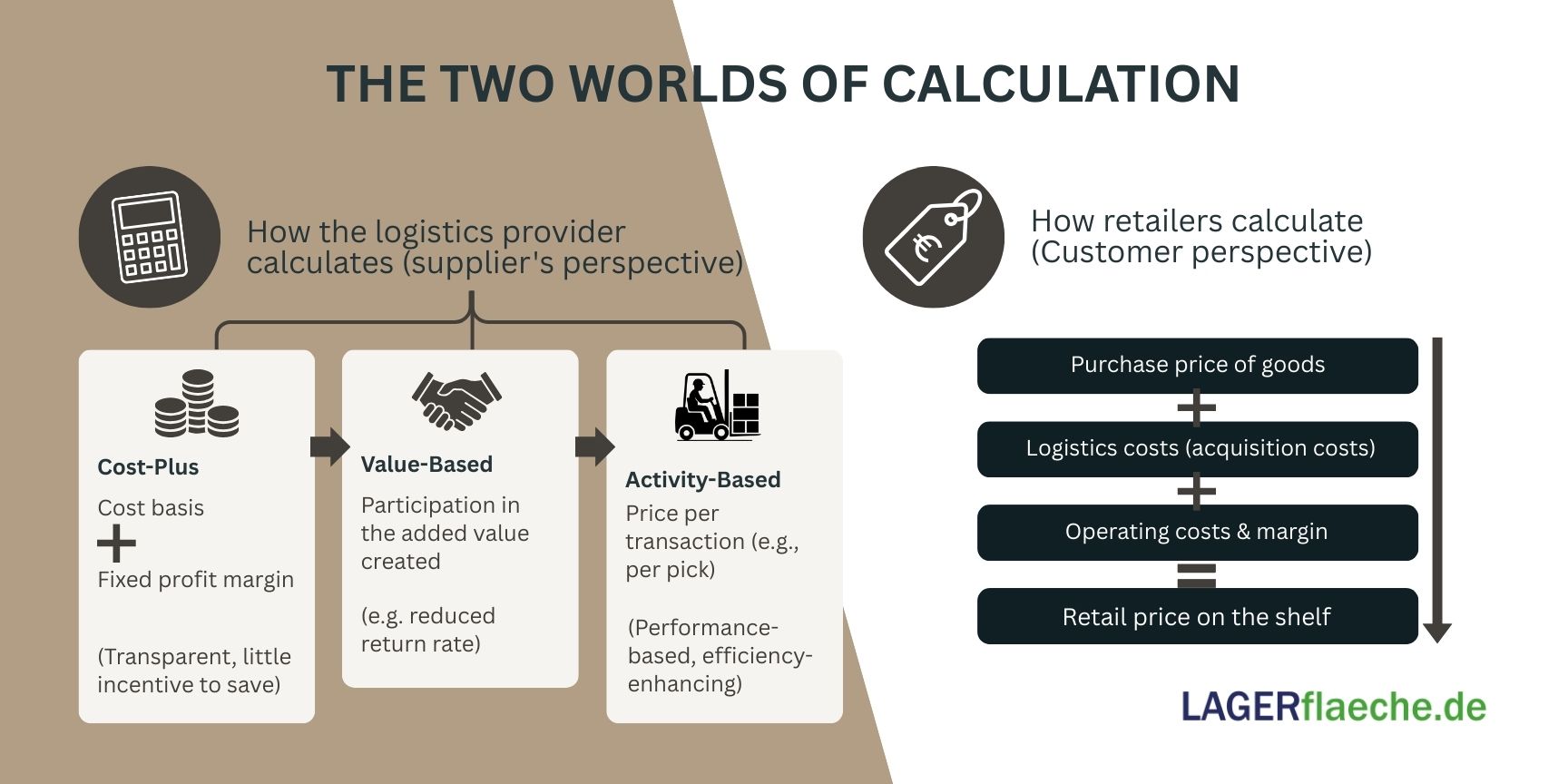
A contract logistics company that often enters into long-term partnerships with its customers cannot simply add up costs and charge a markup. His calculation must be viable for years to come and is usually based on one of three main models:
- Cost-Plus: This is the most transparent model. The logistics provider discloses all its costs (personnel, rent, IT, etc.) and charges a pre-agreed management fee or a percentage surcharge. This model is flexible and works well when the volume of business fluctuates greatly or the requirements are not yet precisely defined at the beginning. The disadvantage: It offers little incentive for the service provider to reduce its own costs.
- Activity-Based / Throughput-Based (Activity-Based Costing): Here, billing is done per transaction. Every activity – every storage, every pick, every packaged shipment, every pallet transported – has a fixed price. This model is very common and creates a clear, comprehensible basis for billing. The customer pays for the actual use. Efficiency increases of the logistics company lead directly to its own profit.
- Value-based pricing: This sophisticated model is less oriented towards the costs of the logistics provider and more towards the added value created for the customer. If, for example, the logistics company takes over the complete returns processing and reduces the reject rate by 20% through professional processing, he can claim part of this saving as a fee for himself.
In practice, mixed forms of these models are often found, which are individually tailored to the customer.
The Other Side of the Coin: The Calculation in Retail
For a trading company, logistics costs are a central item in the so-called trade calculation. They are included in the calculation of the cost price and thus significantly determine the subsequent sales price and margin.
The classic forward calculation looks simplified as follows:
- Supplier discount
= Target purchase price
- Discount
= Cash purchase price
+ Procurement costs (freight, transport insurance, logistics costs of the service provider)
= Cost price (cost)
+ Handling costs (rent, personnel, marketing, etc.)
+ Profit surcharge
= Net sales price
+ Value added tax
= Gross sales price
However, retailers also use retrograde (backward) calculation. In doing so, they start from the competitive market price and calculate how high the maximum purchase price may be in order to cover their own costs and achieve the desired margin. This puts pressure on logistics service providers to make the most cost-efficient offers possible.
Europe Price Comparison: Why Logistics don't Cost the same Everywhere
The costs of logistics services vary considerably within Europe. A company that produces and stores in Germany has a completely different cost base than a competitor in Poland or Spain. The main reasons for this are:
Personnel costs
The biggest lever. Labour costs in logistics vary massively. While Western Europe, especially the DACH region, has very high labor costs, these are significantly lower in Eastern European countries such as Poland. According to Germany Trade and Invest (GTAI), non-wage labour costs in Poland were only 18.1% in 2023, while the EU average was 24.7%. This advantage enables service providers in these countries to offer labor-intensive activities such as picking and packing at a much lower price.
Truck tolls and ancillary transport costs
A decisive factor in cross-border traffic. Since the introduction of the CO₂-dependent toll component in Germany on December 1, 2023, toll costs for trucks in this country have almost doubled. Other countries such as Austria and Hungary have also drastically increased their toll rates. These costs are added directly to the transport price and lead to significant differences depending on the transit route.
| Country | Development of tolls (examples) |
| Germany | Increase of up to 86% since the end of 2023 (Source: TIMOCOM) |
| Austria | Successive increases since January 2024 |
| Hungary | Temporary doubling of tolls |
| Czech Republic | Increase in tolls and introduction of CO₂-based charges |
Rental costs for logistics properties
The demand for modern logistics space exceeds supply throughout Europe. This has caused rents to rise sharply in recent years. According to an analysis by CBRE, the vacancy rate in Europe was at an all-time low of just 2.3% at the end of 2022. Rents have exploded, especially in conurbations and at important transport hubs. A report by Deka Institutionell showed a Europe-wide rent increase of 12.4% in 2022, and by as much as 19% in the top German markets. Regions with available and cheaper land have a clear locational advantage here.
Energy costs
Warehouses and transport fleets are energy-intensive. Electricity and diesel prices vary considerably in Europe. Data from the Energy and Water Industry Austria (EHA) from June 2025 show that German companies pay an average of 23.3 ct/kWh for industrial electricity, around 25% more than the European average (18.7 ct/kWh). Countries with a high share of renewable energies and lower taxes can score points here.
VAS: The Key to Differentiation and Efficiency
Value-added services (VAS) are much more than just a "nice-to-have". They are often the decisive factor for an efficient and customer-oriented supply chain. The calculation for these value-added services is highly individual. It can be done on an hourly basis, per piece or as part of a flat rate. The real value, however, lies in the cost savings they make possible elsewhere: Quality control in the logistics provider's warehouse, which may cost only a few cents per unit, can prevent expensive returns and damage to the company's image worth many euros.
How Transparent does a Logistics Price have to be?
The question of transparency is a constant companion in the relationship between customer and service provider. While the cost-plus model offers maximum transparency, activity-based models focus on performance. In the end, what counts is the trust and understanding that a fair price must not only cover the costs of the service provider, but also enable them to invest in technology, qualified personnel and sustainable processes. This is the only way to create a long-term successful partnership.
The Future of Pricing: Digitalization and Sustainability
What does the future hold? Two megatrends will continue to influence pricing:
- Digitization & automation: Robots in the warehouse and AI-supported route planning reduce process-related costs. Service providers who invest here can offer more competitive prices in the long term.
- Sustainability: CO₂ pricing in transport is just the beginning. In the future, the ecological footprint of warehouse buildings and packaging materials will also be included in the costs. Sustainable logistics is changing from a "soft" factor to a hard calculation element.
Conclusion: Understanding Price to Optimize Costs
The composition of a logistics price is complex and multifactorial. From individual picking to Europe-wide toll policy, countless variables influence the final sum on the invoice. If you want to effectively control your logistics costs as a retailer or manufacturing company, you need to understand the calculation logic of your partners and know the main cost drivers. Due to its heterogeneity, the European market offers both challenges and opportunities. A careful analysis of location factors – from wage to energy to real estate costs – is essential in order to optimally position one's own supply chain and survive in the competition. The cheapest price is not always the best. A strategic partner in logistics that reduces overall costs through intelligent processes and value-added services is often the more economical choice.
Latest Blog Posts
Stay up to date with the newest trends, insights, and tips in warehouse and logistics. Our latest articles help you navigate the industry with confidence.

Data Centres vs. Logistics Facilities: The Race for Power and Land
Across Europe, logistics operators are competing for more than land and transport access. They increasingly need something much harder to secure: grid capacity. Data centres are intensifying that competition — and changing how logistics locations are evaluated....
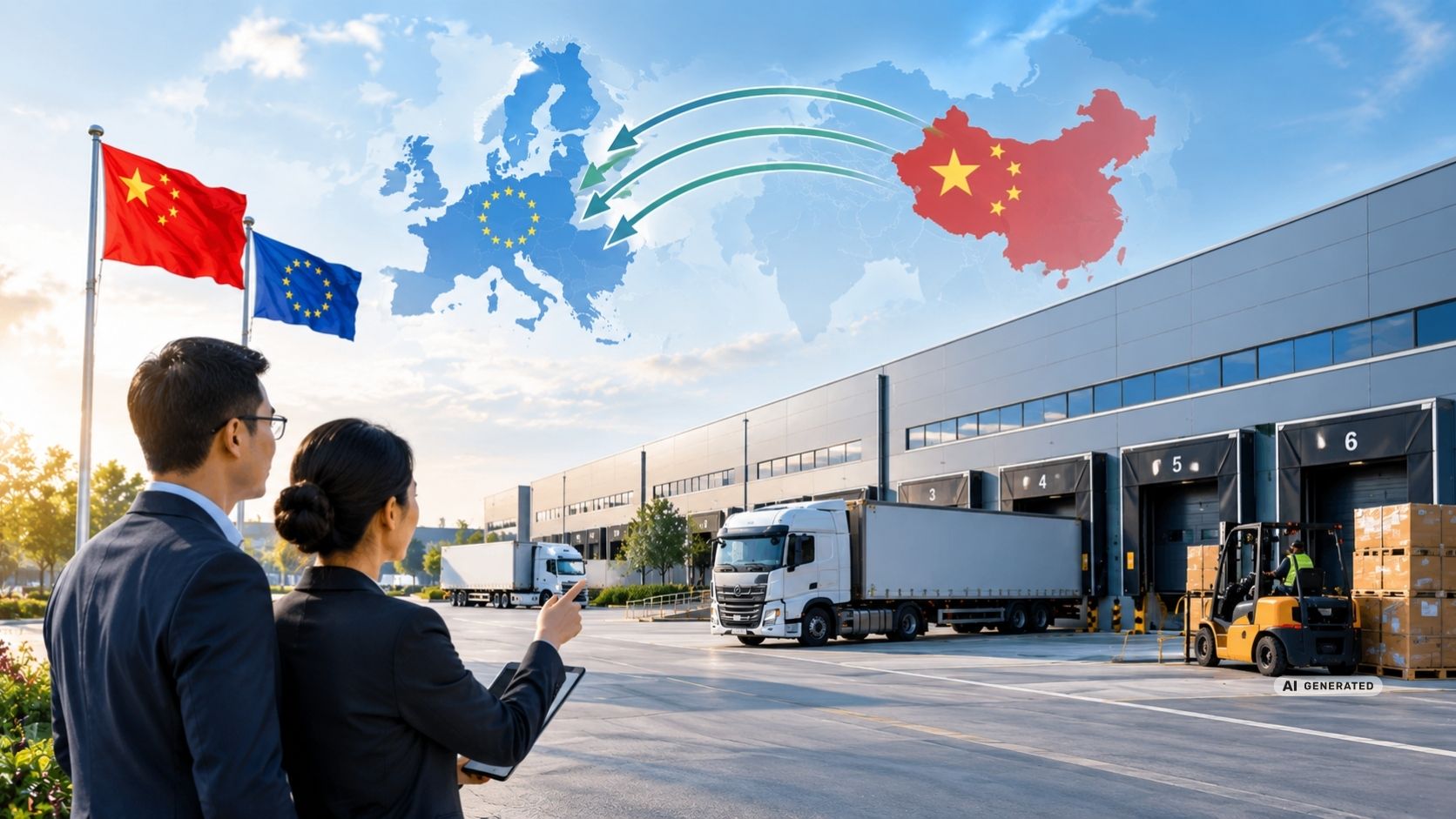
Chinese companies discover Europe's logistics real estate
Chinese companies are becoming an increasingly visible user group in Europe's logistics real estate market. What does this mean for warehouse space, 3PL structures and the requirements for European logistics locations?...
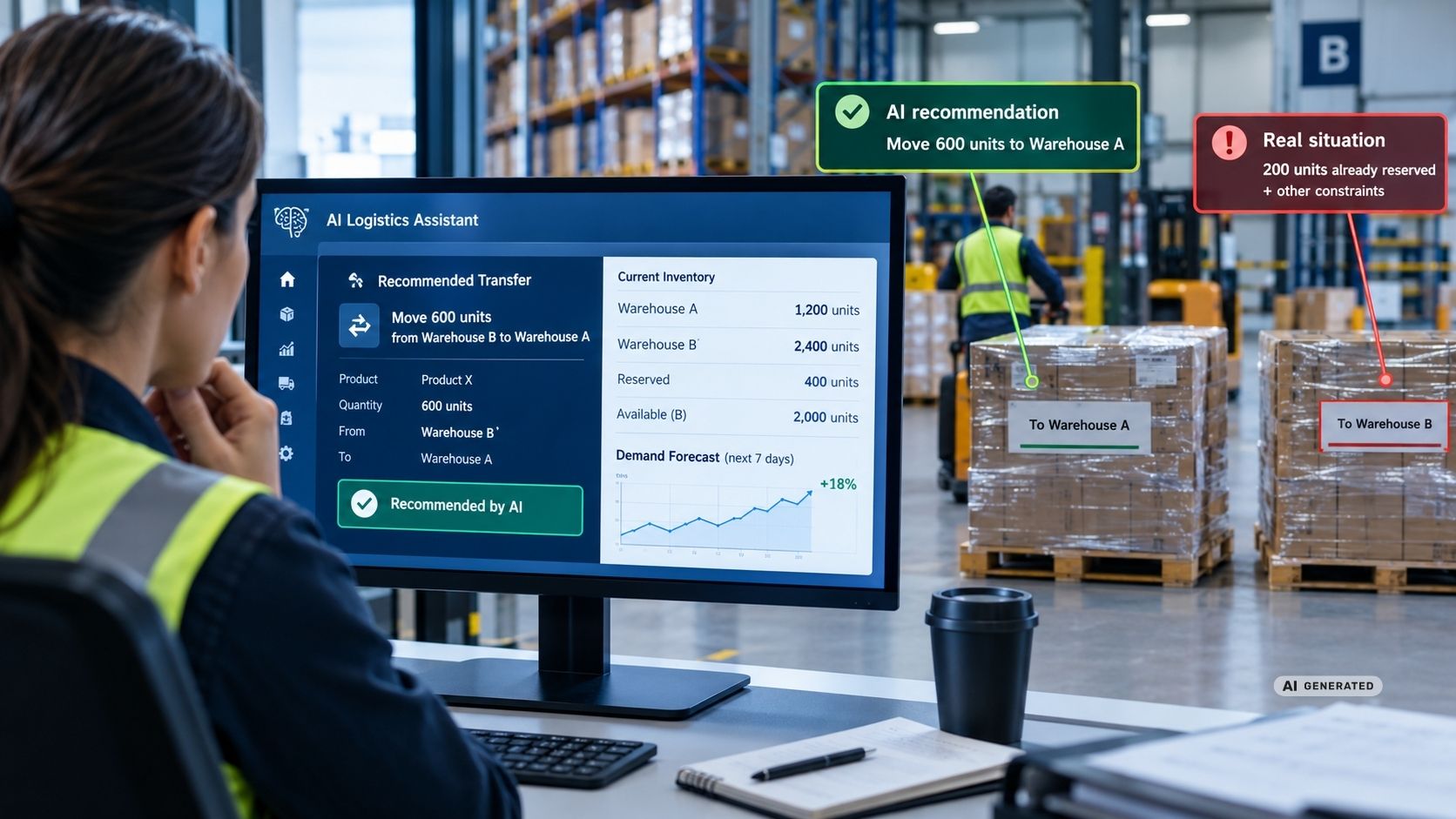
AI Hallucinations in Logistics: When AI Plans the Wrong Delivery
AI can analyze enormous amounts of logistics data — but it can also produce a convincing answer that is simply wrong. The critical question is not whether AI makes mistakes, but what happens when a wrong recommendation becomes an operational decision....
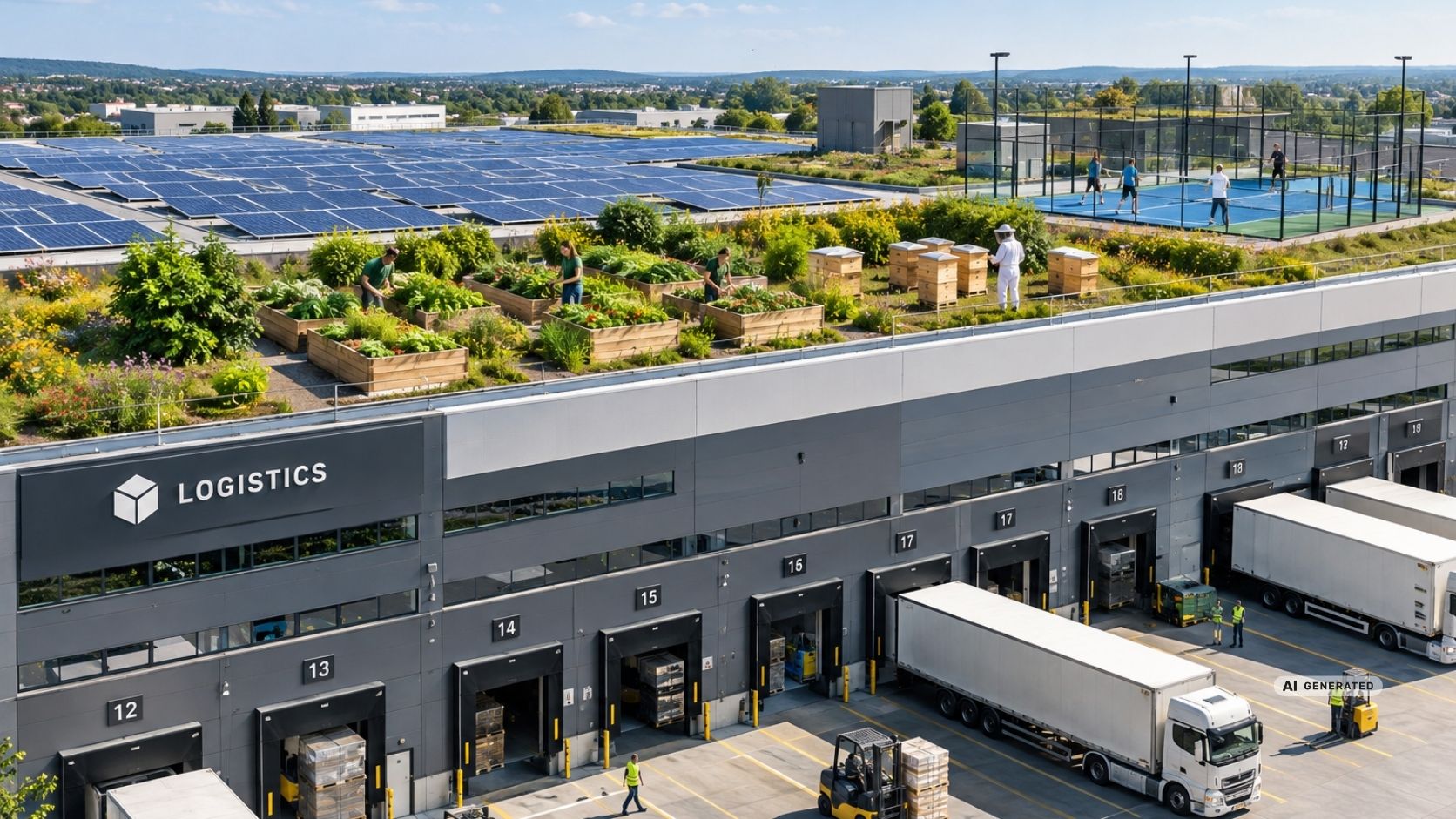
The Green Revolution on the Hall Roof: From Concrete Block to Ecological Power Plant?
Logistics roofs can do more than PV: greening, bees, urban farming and even sports areas turn unused roof space into multifunctional rooms....