


Cost Brake in the Warehouse: The Evolution of Energy Efficiency in Intralogistics
Table of Contents
- Review: What has happened in the last 10 years? (2015–2025)
- The Next 10 years: The Warehouse as an Energy Hub (2026–2036)
- Photovoltaics and LEDs: Are we Already at the Limit?
- The Battery Revolution: Li-ion, Solids and Hydrogen
- Hidden Energy Guzzlers: Peak Shaving and Building Envelope
- International Comparison: Why Germany is a Pioneer and Driven at the same time
- Case Study: Retrofit of a 15-year-old Logistics Center
- Checklist: Where is your potential?
- Conclusion and Outlook: How you should Act Now
Is your warehouse still a pure cost factor or already a power plant? Logistics managers and managing directors have to ask themselves this question today. The days when energy was "just there" and cheap are over. Energy efficiency in warehouse logistics has long since ceased to be a pure "greenwashing" issue, but a hard economic survival factor. In this deep dive, we analyze the development of the last decade, take a well-founded look into the future and show where the true, often overlooked savings potentials lie.
Review: What has happened in the last 10 years? (2015–2025)
Ten years ago, the topic of "green logistics" was often still a niche topic for marketing brochures. But the pressure from rising electricity prices and stricter climate protection requirements (such as the EnEV in Germany) has transformed the industry.
The triumph of LEDs and the farewell to lead
The biggest change took place on the hall ceiling. The replacement of conventional HQL (mercury vapor lamps) or fluorescent tubes with LED technology was the "low hanging fruit" of the industry.
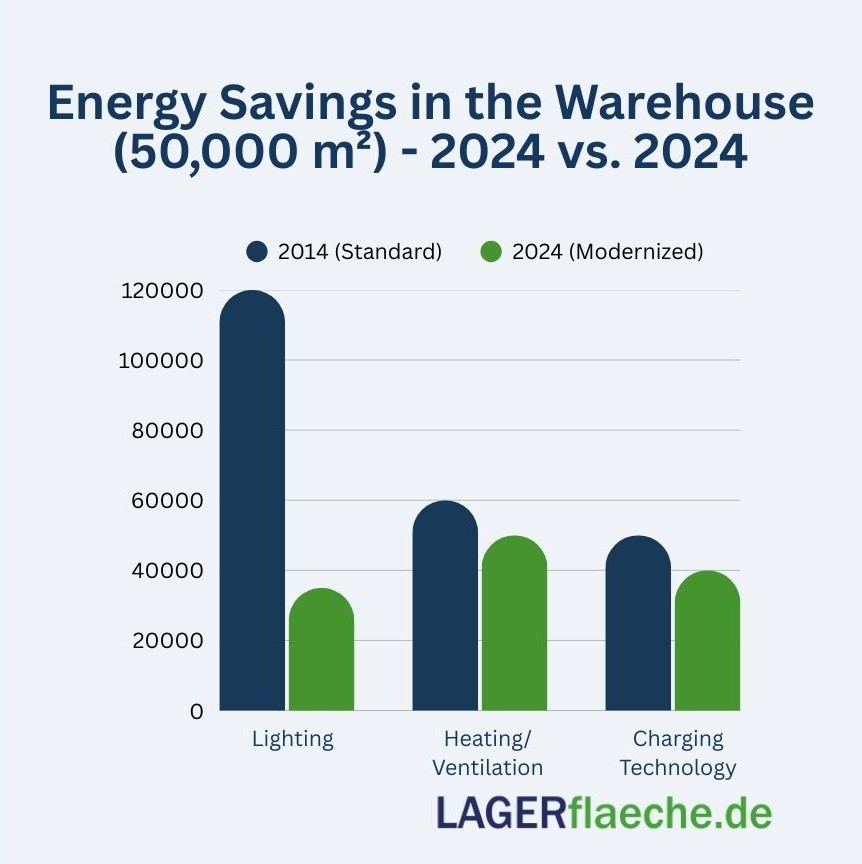
- Fact: The retrofit has allowed companies to save an average of 60% to 80% on lighting costs.
- Technology leap: LEDs not only offered less consumption, but also instant brightness without a warm-up time, which made the use of motion sensors in aisles make sense in the first place.
At the same time, the slow but steady farewell to lead-acid batteries towards lithium-ion technology (Li-ion) for industrial trucks (FFZ) began.
- Efficiency gain: While lead-acid batteries have an efficiency of about 70% (30% energy loss in heat during charging), Li-ion systems achieve over 90% to 95%.
- Process advantage: The elimination of exchangeable batteries and battery rooms not only saves energy, but also valuable storage space.
The Next 10 years: The Warehouse as an Energy Hub (2026–2036)
If the last ten years were dominated by hardware (lamp, battery), the next ten years will be dominated by software, AI and sector coupling.
The "Dark Warehouse" and AI-Driven Energy Management
Automation is advancing. In fully automated warehouses (AutoStore, shuttle systems), light and heating become obsolete for humans.
- Scenario: The "Dark Warehouse" does not require lighting and can be operated at lower temperatures, as machines do not need a comfort zone of 18 °C.
- AI optimization: Algorithms will control the charging times of forklifts in such a way that they charge exactly when electricity is cheap on the stock exchange or when one's own PV system produces surplus (Smart Grid Ready).
Sector coupling
Warehouses have huge roof areas. In the future, the warehouse will not only consume energy, but also serve as a buffer for the local power grid. The solar power produced is temporarily stored in stationary battery storage systems (second-life batteries from electric forklift trucks) and released into the grid as needed or used for the company's own e-truck fleet.
Photovoltaics and LEDs: Are we Already at the Limit?
Many believe that LEDs and a few solar panels are enough. This is a mistake. There is still massive potential in the details here.
Photovoltaik (PV) 2.0
It is no longer just about the occupancy of the roof.
- Façade PV: Modern logistics buildings use vertical surfaces.
- Self-consumption optimization: The pure feed-in is hardly worthwhile anymore. The key lies in self-consumption.
- Data: A 10,000 m² roof area can produce approx. 750 kWp to 1 MWp of power. This is often enough to run the entire intralogistics operation autonomously – provided that the storage system is right.
Intelligentes Licht (Human Centric Lighting)
Modern LED systems are networked.
- Light on demand: The light follows the order picker ("follow-me" light). Where there is no one, it is dark.
- Daylight use: Sensors dim the artificial light exactly as far down as daylight enters through skylights. This saves another 20-30% compared to "dumb" LED solutions.
The Battery Revolution: Li-ion, Solids and Hydrogen
Today, the choice of drive is a strategic decision for the next 5 to 8 years.
Lithium-ion: The new standard
Li-Ion is now standard. The advantages of opportunity charging enable 24/7 operation without changing the battery.
- Savings potential: No maintenance costs (no need to refill water), no gassing (no ventilation system required in the cargo area).
- Lifetime: 3,000 to 4,000 charging cycles compared to approx. 1,200 for lead-acid.
Hydrogen (H2) & Fuel Cell
When is H2 worthwhile? Currently, hydrogen is particularly interesting for large fleets (from approx. 50–100 vehicles) and in intensive multi-shift operation.
- Advantage: Refueling in 2-3 minutes (like diesel). No load peaks in the power grid due to charging many forklifts at the same time.
- Disadvantage: High infrastructure costs (filling station) and even higher price for green hydrogen.
- Forecast: H2 will complement the Li-Ion battery in the heavy-duty sector and for large pallet truck fleets, but will not replace it in small warehouses.
Hidden Energy Guzzlers: Peak Shaving and Building Envelope
An often underestimated cost factor in Germany is the power price. Industrial customers pay not only for the kWh consumed (energy price), but also for the highest measured power peak in the year.
The problem of simultaneity
When production starts at 06:00 in the morning, the lights come on and 20 forklifts are attached to the fast-charging station at the same time, the load curve shoots up. This one peak can increase grid fees by tens of thousands of euros for the whole year.
Solution: Peak Shaving
An intelligent battery management system or a stationary battery storage system cuts these peaks.
- Forklifts load sequentially instead of in parallel.
- The battery storage system buffers energy at peak times.
Building envelope: gates and docks
- High-speed goals: An open goal is like a hole in your wallet in winter. Modern high-speed doors with insulation minimise air exchange.
- Loading bellows: Inflatable dock shelters prevent warm air from escaping when the truck is docked.
International Comparison: Why Germany is a Pioneer and Driven at the same time
Energy efficiency is prioritized differently around the world. The main driver is almost always the local energy price.
| Region | Drivers & Status | Special features |
| Germany / DACH | Extremely high. High electricity prices and political requirements (GEG) are forcing efficiency. | Global leader in the integration of PV and building technology. High pressure for CO2 neutrality. |
| United States | Medium. Lower energy costs are slowing down pure cost-saving measures, but high investment in automation. | The focus is more on saving manpower (automation) than on energy. However, the Inflation Reduction Act (IRA) massively promotes green tech. |
| China | High (by mandate). Government requirements for "green logistics". | Massive scaling of e-mobility and huge automated logistics centers. Rapid adaptation of hydrogen. |
| Scandinavia | Role model. Focus on fossil-free logistics. | Already very far along in the use of heat pumps and e-trucks in the logistics chain. |
| Eastern Europe | Catching up. Many new buildings (greenfields) are built directly to a high standard. | Benefit from the "Late Mover Advantage" – build directly modern without having to convert old loads. |
Why these differences? In the USA, the industrial electricity kWh often costs only a fraction of the German price. Therefore, an LED conversion or expensive insulation often only pays for itself after 5-6 years, while in Germany it often pays for itself after 1.5-2 years (ROI). This inevitably makes German companies innovation leaders in efficiency.
Case Study: Retrofit of a 15-year-old Logistics Center
Let's consider a fictitious but realistic scenario of a medium-sized logistics company ("Müller Logistik GmbH") with a 10,000 m² hall, built in 2008.
Initial situation:
- Lighting: fluorescent tubes (T8).
- Fleet: 15 forklifts (lead-acid).
- Electricity costs: Exploding.
Package of measures:
- Light: Complete conversion to LED with daylight control. (Invest: 40,000 €, funding: 20 %).
- Energy: Installation of a 750 kWp PV system on the roof.
- Fleet: Leasing replacement of the forklifts to Li-Ion + introduction of a loading management system to avoid load peaks.
Result after 1 year:
- Lighting power consumption: 72% reduction.
- Electricity purchased from the grid: Reduction of 55% (through self-consumption PV).
- Peak load: 15% reduction through smart charging.
- ROI (return on investment): The entire project pays for itself in approx. 3.8 years.
Quote from an expert: "The cheapest energy is the one we don't consume. But the second cheapest is the one we produce ourselves on the roof of the hall." – (General industry consensus)
Checklist: Where is your potential?
Take a proactive approach to this issue. Here are the most important points for an internal quick audit:
Lighting: Are there still areas without LED lighting? Are corridors lit up where no one works?
Compressed air: In many warehouses (packaging machines), up to 30% of compressed air escapes through leaks. A classic “silent eater.”
Standby: Are conveyor systems completely shut down during breaks?
Charging times: Do your forklifts all charge at the same time at shift change? (Risk of expensive load peaks).
Gates: Do the gates close quickly enough? Are the seals on the ramps intact?
Conclusion and Outlook: How you should Act Now
The energy transition in the warehouse is not a dream of the future, it is reality. In the coming years, we will see a fusion of logistics and the energy industry. Anyone who still relies on old lighting and stupid charging technology today burns money and loses competitiveness.
Key findings:
- LED is mandatory, not freestyle. Those who have not yet converted lose money every day.
- Data is key. Without smart metering and energy monitoring, you cannot manage peak loads.
- Think holistically. Forklifts, lights, roofs and building envelopes must be considered as one energy system.
Latest Blog Posts
Stay up to date with the newest trends, insights, and tips in warehouse and logistics. Our latest articles help you navigate the industry with confidence.
Data Centres vs. Logistics Facilities: The Race for Power and Land
Across Europe, logistics operators are competing for more than land and transport access. They increasingly need something much harder to secure: grid capacity. Data centres are intensifying that competition — and changing how logistics locations are evaluated....
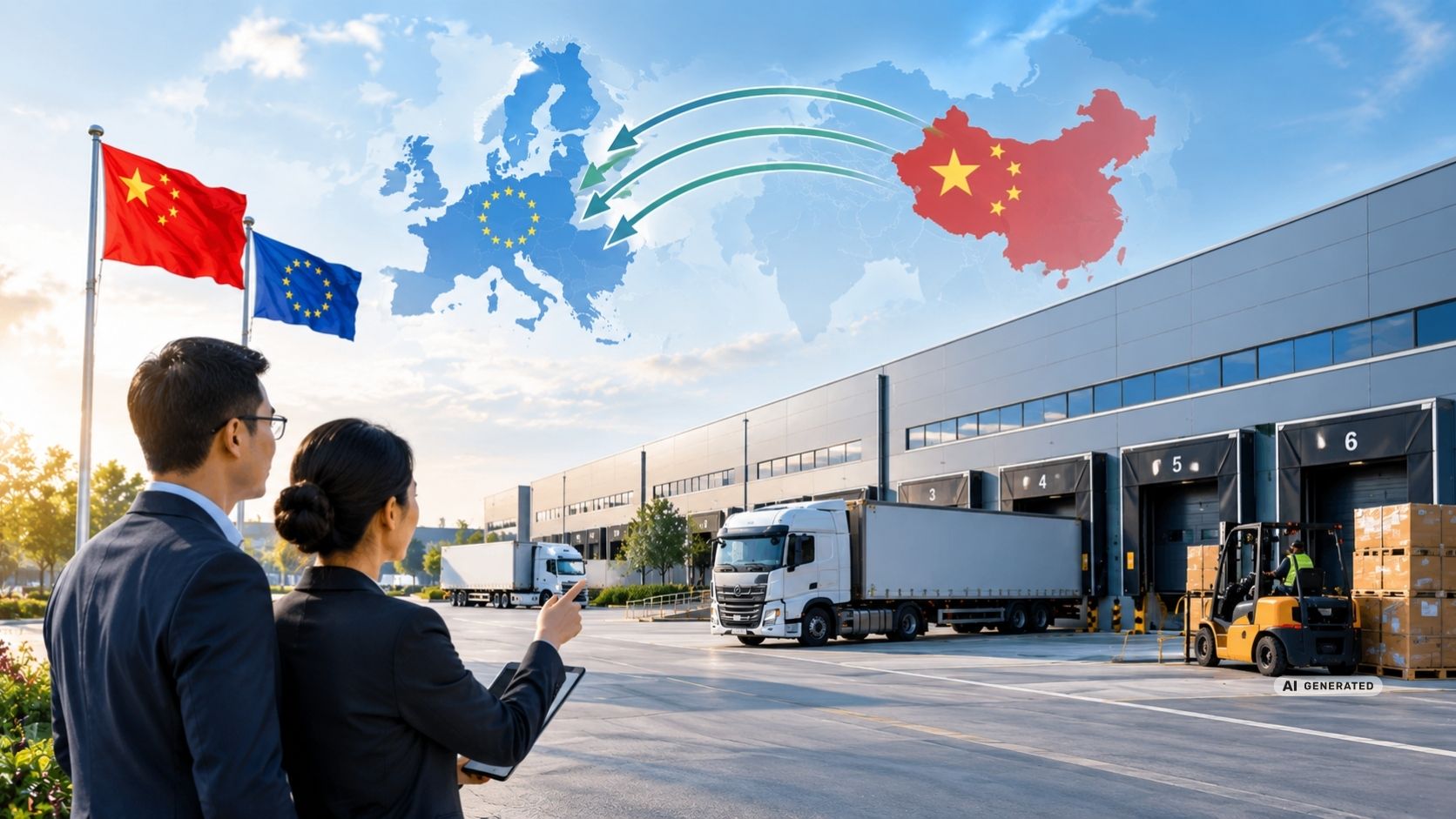
Chinese companies discover Europe's logistics real estate
Chinese companies are becoming an increasingly visible user group in Europe's logistics real estate market. What does this mean for warehouse space, 3PL structures and the requirements for European logistics locations?...
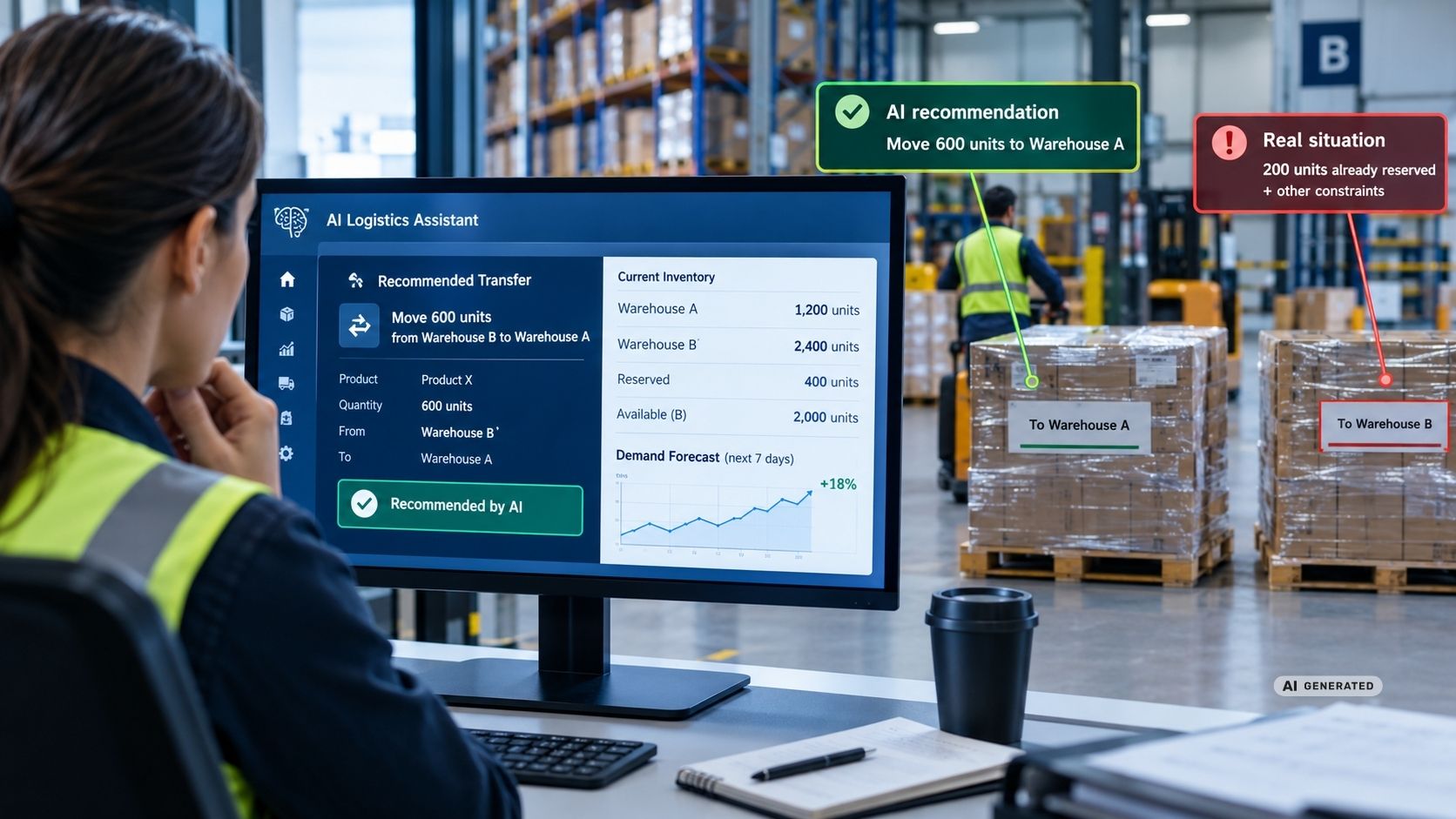
AI Hallucinations in Logistics: When AI Plans the Wrong Delivery
AI can analyze enormous amounts of logistics data — but it can also produce a convincing answer that is simply wrong. The critical question is not whether AI makes mistakes, but what happens when a wrong recommendation becomes an operational decision....
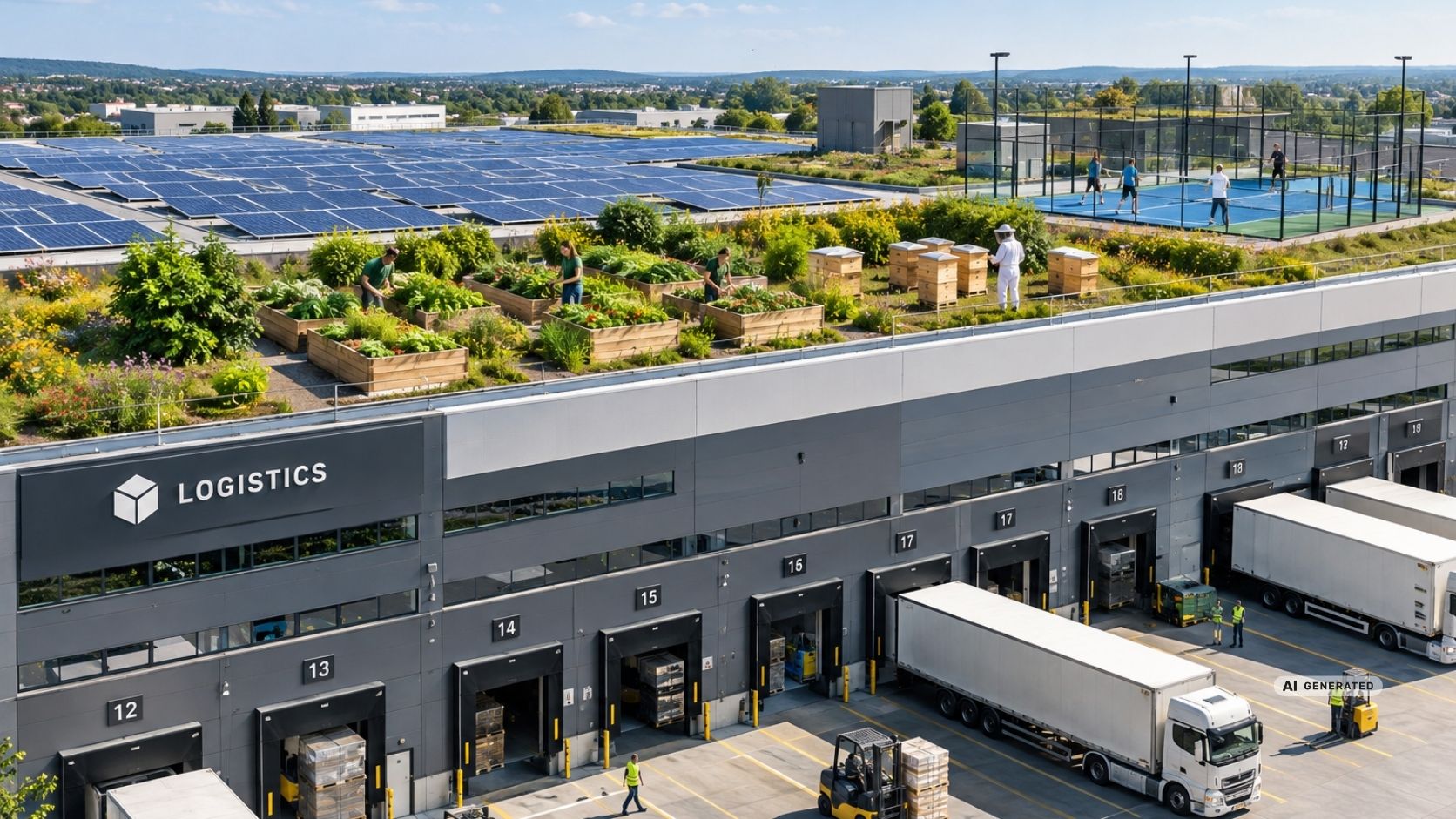
The Green Revolution on the Hall Roof: From Concrete Block to Ecological Power Plant?
Logistics roofs can do more than PV: greening, bees, urban farming and even sports areas turn unused roof space into multifunctional rooms....