




Loading docks in the warehouse
Table of Contents
- Loading docks in logistics: The heart of the supply chain
- What is a charging dock and what components does it consist of?
- Loading docks from the perspective of warehouse logistics and contract logistics
- The Role of Loading Docks for Logistics Properties and Halls
- Figures, data and facts: Measures and standards at a glance
- Practical utility: safety and efficiency at the loading gate
- Frequently Asked Questions (FAQ)
- Future Outlook: Automation and IoT at the Charging Dock
Loading docks in logistics: The heart of the supply chain
In the modern economy, the flow of materials must function smoothly. The loading dock (also known as the loading station or loading gate) is the neuralgic point where external transport routes and intralogistics processes meet. Whether in classic warehouse logistics, highly flexible contract logistics or in the planning of a new logistics property – the design and technical equipment of the loading docks is decisive for the handling speed and profitability of a hall. This guide examines the topic comprehensively and offers practical expertise for logisticians, planners and real estate experts.
What is a charging dock and what components does it consist of?
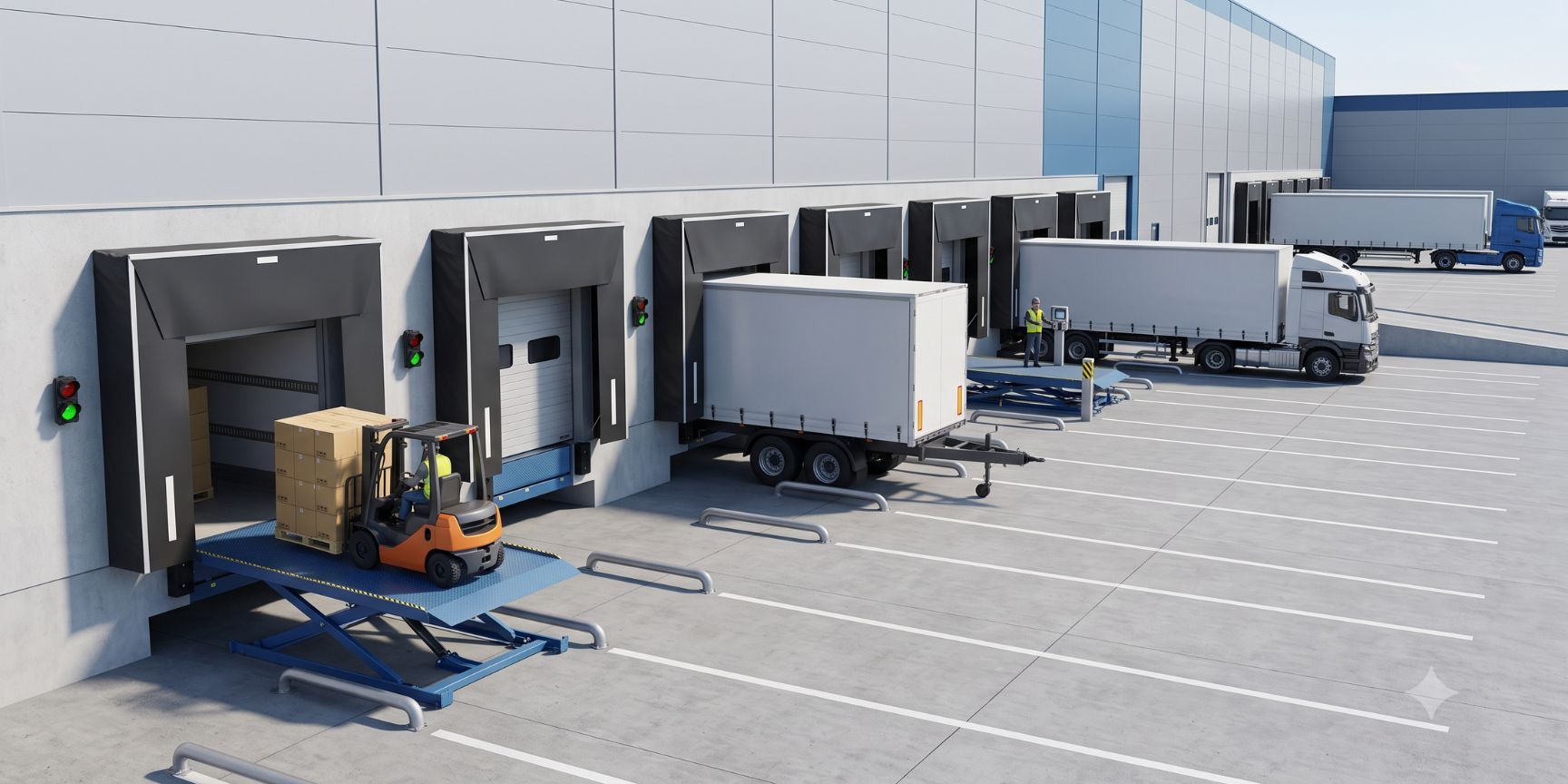
A loading dock is a specially designed area on a building where trucks, vans or freight trains are loaded and unloaded. To ensure a seamless transition of goods, a modern loading dock consists of a perfectly coordinated system of several components:
- Dock Leveler: This compensates for the difference in height and the distance between the hall floor and the loading area of the truck.
- Dock shelter: It protects personnel and goods from the weather and minimizes energy loss (cold or heat) in the hall.
- Industrial door: Usually sectional or roller doors that securely close the hall when not in use.
- Start-up buffers: Robust rubber blocks that prevent damage to the building façade and the vehicle during docking.
- Instruction aids: Floor markings or wheel guides that guide the truck driver centrally to the gate.
Loading docks from the perspective of warehouse logistics and contract logistics
In warehouse logistics, the loading dock dictates the pace. This is where it is decided how quickly goods receipts are booked and goods issues are sent on their way. A traffic jam at the ramps immediately leads to delays in the entire hall.
In contract logistics, there is another factor: flexibility. Since contract logistics companies often look after changing customers and thus a wide variety of goods (from temperature-controlled food to heavy machine parts), the loading docks must be designed for various vehicle types (standard semitrailers, Sprinters, jumbo trucks). Multidirectional dock levellers or special lift tables are an enormous competitive advantage here.
The Role of Loading Docks for Logistics Properties and Halls
For project developers and investors in logistics real estate, the charging dock is a key value criterion. The number of gates in relation to the hall area (the so-called gate-to-area ratio) determines the usability of the property. A well-planned hall also needs a sufficiently dimensioned forecourt (yard) so that trucks can maneuver without obstructing ongoing traffic. The architecture of the loading docks also has a direct influence on the building permit, especially with regard to noise protection and surface sealing.
Figures, data and facts: Measures and standards at a glance
In order to maximize efficiency, certain standards have been established in European logistics. These depend heavily on the vehicles used:
| Criterion | Standard guideline value in practice |
| Ramp height (standard truck) | 1.20 m to 1.30 m above farm level |
| Ramp height (jumbo truck) | approx. 0.90 m to 1.00 m |
| Gate width x door height | approx. 2.80 m x 3.00 m (up to 3.50 m for high-cube) |
| Gate-to-area ratio (standard bearings) | 1 door per 1,000 m² of hall space |
| Gate-to-area ratio (cross-docking) | 1 gate per 500 m² (or less) |
| Required manoeuvring space in front of the dock | At least 35 meters depth from the edge of the building |
Practical utility: safety and efficiency at the loading gate
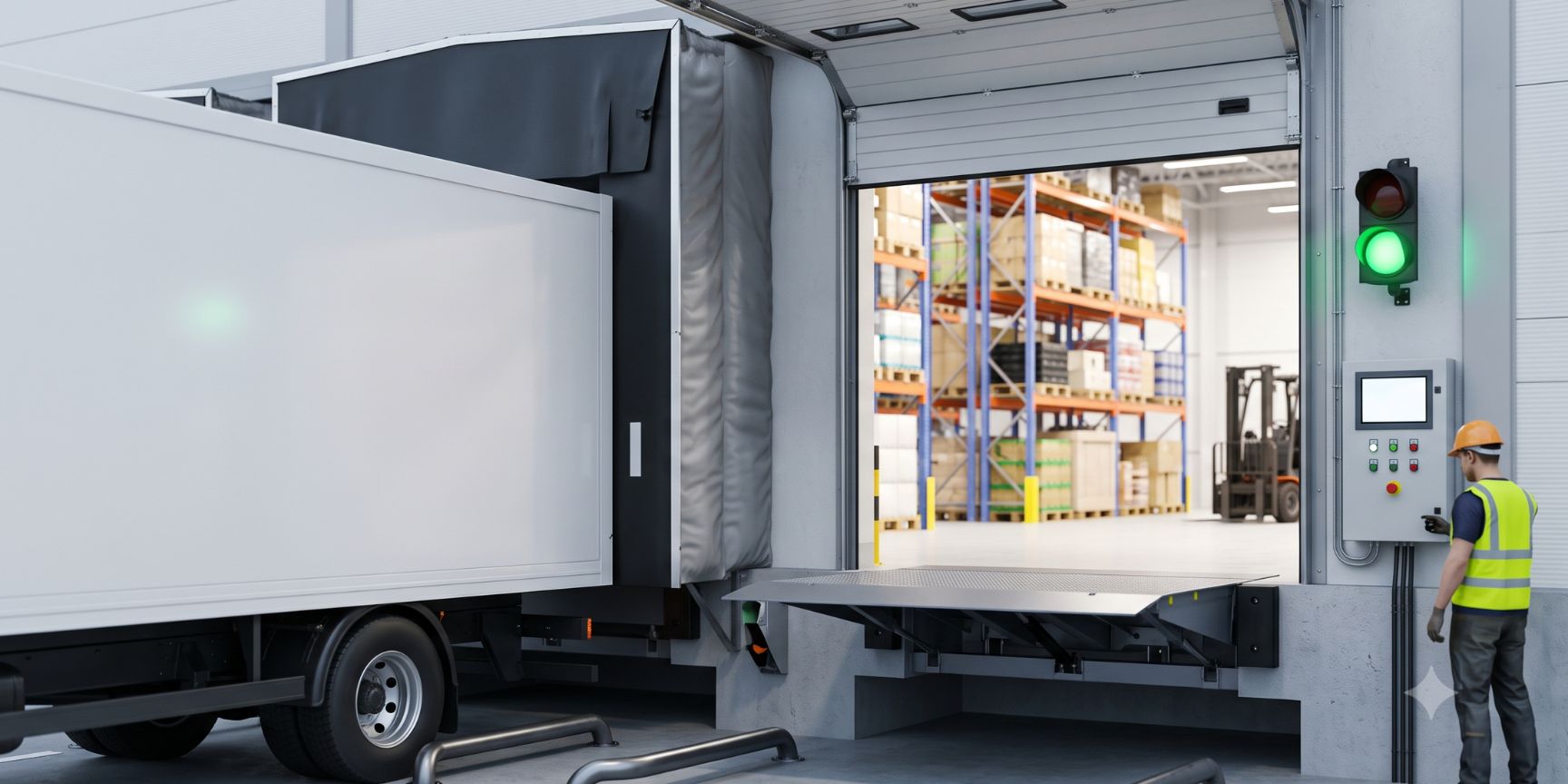
Workplace accidents at loading docks are a real hazard due to heavy industrial trucks (forklifts) and manoeuvring trucks. The use of modern safety technology is therefore essential. Automated wheel locking systems prevent the dreaded "premature departure" of the truck while the forklift is still loading. Traffic lights (red/green) inside and outside the gate ensure clear communication between the driver and warehouse staff. An efficient time slot management system (slot booking) also prevents peak times on the farm and balances the utilization of the loading docks throughout the day.
Frequently Asked Questions (FAQ)
Question: How long does it take on average to load or unload a loading dock?
Answer: For a standardised transport of full containers (complete truck with palletised goods), it takes about 45 to 60 minutes. In the case of general cargo or if a quality control takes place directly at the door, the time can be significantly longer.
Question: What is the difference between a loading dock and a loading dock?
Answer: A ramp is often only a structural elevation that vehicles drive up to or approach. A loading dock (or loading station) describes the fully equipped system including dock leveller, gate and sealing as a fixed interface into the hall.
Question: How do charging docks affect the energy balance of a logistics property?
Answer: Considerably. Open gates are the largest "heat holes" in a hall. Inflatable shelters and ISO sectional doors can reduce energy loss by up to 80%, which is particularly critical in cold stores (refrigerated logistics).
Future Outlook: Automation and IoT at the Charging Dock
The logistics of the future will not stop at the hall gates. So-called "smart docks" are equipped with IoT (Internet of Things) sensors. They measure how often a door is opened, detect wear and tear on the dock leveller at an early stage (predictive maintenance) and report to the Warehouse Management System (WMS) in real time whether a dock is free or occupied. This digital networking of the loading docks will further minimize throughput times in warehouse and contract logistics in the future and make the hall of the future even more efficient.
Your Ideal Logistics Warehouse
Browse listings for warehouse space, logistics real estate, industrial land, and contract logistics solutions.
Browse Exposés
Maximize Exposure for Your Warehouse Space
Showcase your logistics properties and attract qualified inquiries.
Discover Products