


Business Park 2.0: More Than Just Concrete – The Future of Corporate Ecosystems
Table of Contents
- What is a business park and what distinguishes it?
- Diversity in the business park: From commercial park to "light industrial" area
- Who will build and develop the corporate cities of tomorrow?
- The business park in transition: Digitization and sustainability as drivers
- Focus on logistics: The beating heart of the business park
- Business park rents in Germany: A look at figures, data, facts
- The international comparison: How do business parks differ worldwide?
- Conclusion: The future is multifunctional and networked
Business parks and light industrial areas have long since ceased to be a novelty in the German corporate landscape – and yet it is worth taking a fresh, in-depth look. What was once often considered a grey collection of functional buildings on the outskirts of the city is now developing into a dynamic, multifunctional and technologically advanced ecosystem for companies. But what exactly does the term mean, what forces are driving change and where does Germany stand in international comparison? This blog text dives deep into the world of business parks and sheds light on everything you need to know.
What is a business park and what distinguishes it?
By definition, a business park is a spatially delimited area that is developed and developed specifically for the settlement of commercial companies. In contrast to a purely industrial area, which is often characterized by large-scale production, a modern business park is characterized by a heterogeneous structure and a broad mix of industries.
Features that make the difference:
- Planned infrastructure: One of the key features is the excellent connection to transport networks such as motorways, ports or airports. Internally, a well-thought-out development with roads, parking areas and often also public transport connections ensures smooth processes.
- Space flexibility: Modern business parks offer a variety of rental units – from small workshops and offices in so-called commercial yards to large logistics halls and production areas in the "light industrial" segment. This flexibility allows companies to grow or adapt with their space needs.
- Synergy effects: The physical proximity of different companies promotes cooperation and business relationships. An IT service provider finds its customer in the neighboring production plant, and the logistics company takes over distribution for several local companies.
- Central administration: Professional park management takes care of maintenance, security, cleaning and often also services such as a shared canteen, childcare or conference rooms. This relieves the burden on individual tenants and increases the attractiveness of the location.
Diversity in the business park: From commercial park to "light industrial" area
Not every business park is the same. An important distinction lies in the type of space offered. Commercial yards are often structured on a smaller scale and are reminiscent of historic craftsmen's yards. They usually offer a mix of workshop, warehouse and office space and are ideal for craft businesses, start-ups and small to medium-sized enterprises (SMEs).
In contrast, there are light industrial areas. This term describes real estate that is suitable for a wide range of uses such as storage, logistics, assembly, research and development or small-scale production. According to a definition by Brockhoff, this often includes halls in business parks with an attached office building and an area of less than 10,000 m². They are the backbone of many business parks and serve enormous demand.
Who will build and develop the corporate cities of tomorrow?
The development of business parks is a complex business driven by specialized players. These include:
- Project developers: Companies such as SEGRO, Prologis, CTP and Garbe Industrial Real Estate are leaders in the design, construction and leasing of logistics and business parks in Germany and Europe.
- Municipal economic development agencies: Cities and municipalities have a strong interest in attracting companies and creating jobs. They designate corresponding areas and often work in public-private partnerships (PPP) with private developers.
- Investors: Institutional investors such as pension funds and insurance companies see business parks as an attractive asset class due to stable rental income and high demand.
The business park in transition: Digitization and sustainability as drivers
The requirements for commercial real estate are changing rapidly. Two megatrends are significantly shaping the development:
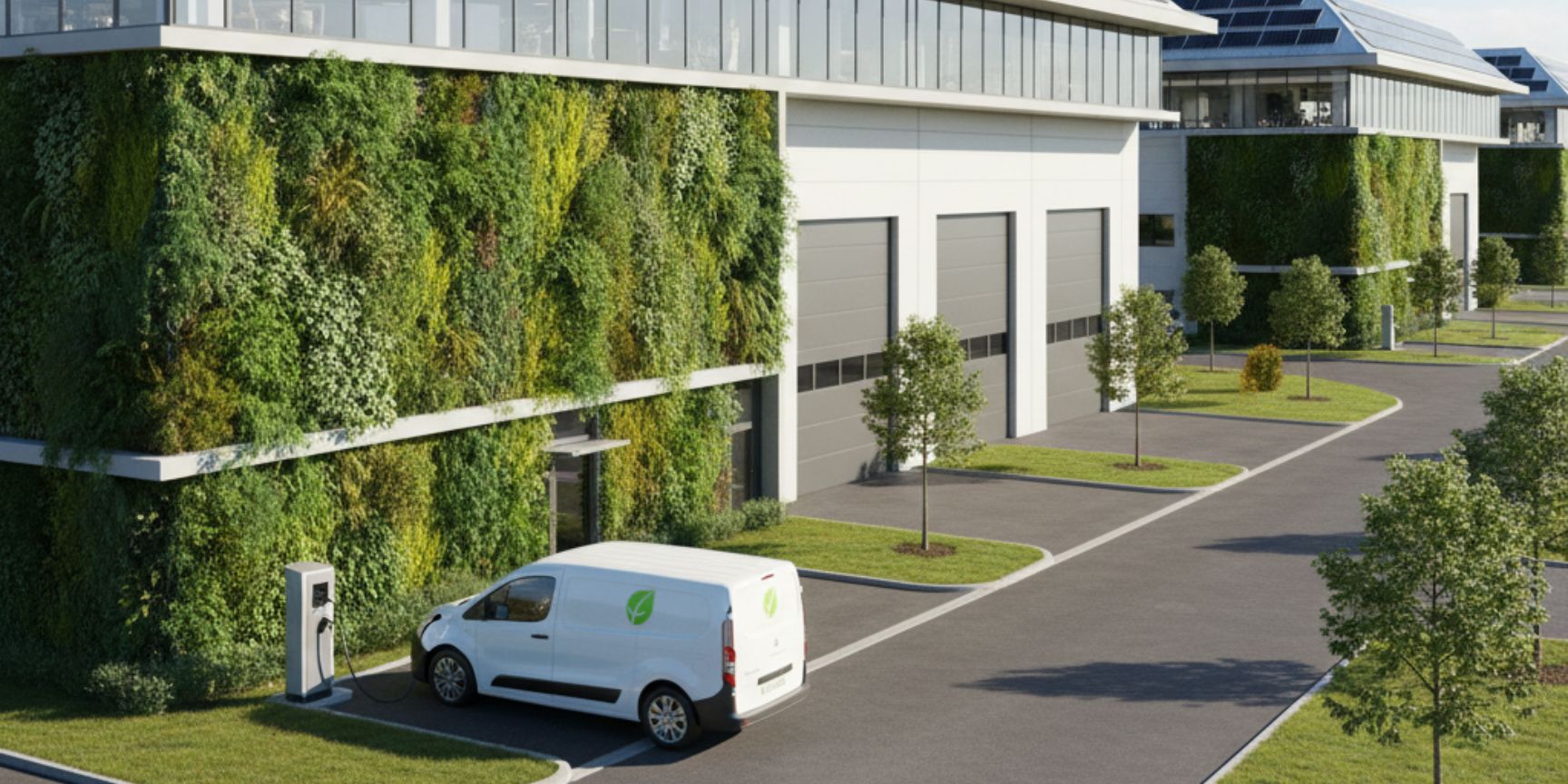
- Sustainability (ESG): Energy efficiency, resource conservation and social responsibility are no longer an option, but a duty. Modern parks are striving for certifications such as DGNB Platinum. This includes photovoltaic systems on the roofs, green spaces to promote biodiversity, e-charging stations and sustainable construction. A project such as the industrial and commercial park in Grimma, developed by Hines, sets new standards here and shows how ESG principles are consistently implemented.
- Digitalization: "Smart parks" are on the rise. Intelligent building technology to optimize energy consumption, digital access controls, a nationwide fiber-optic infrastructure and the automation of logistics processes are decisive competitive factors. However, a study by Drees & Sommer shows that the real estate industry still has some catching up to do here and often does not exploit its technological potential.
Focus on logistics: The beating heart of the business park
One of the most dominant user groups in today's business parks is the logistics industry. The boom in e-commerce has caused the demand for well-connected space to explode.
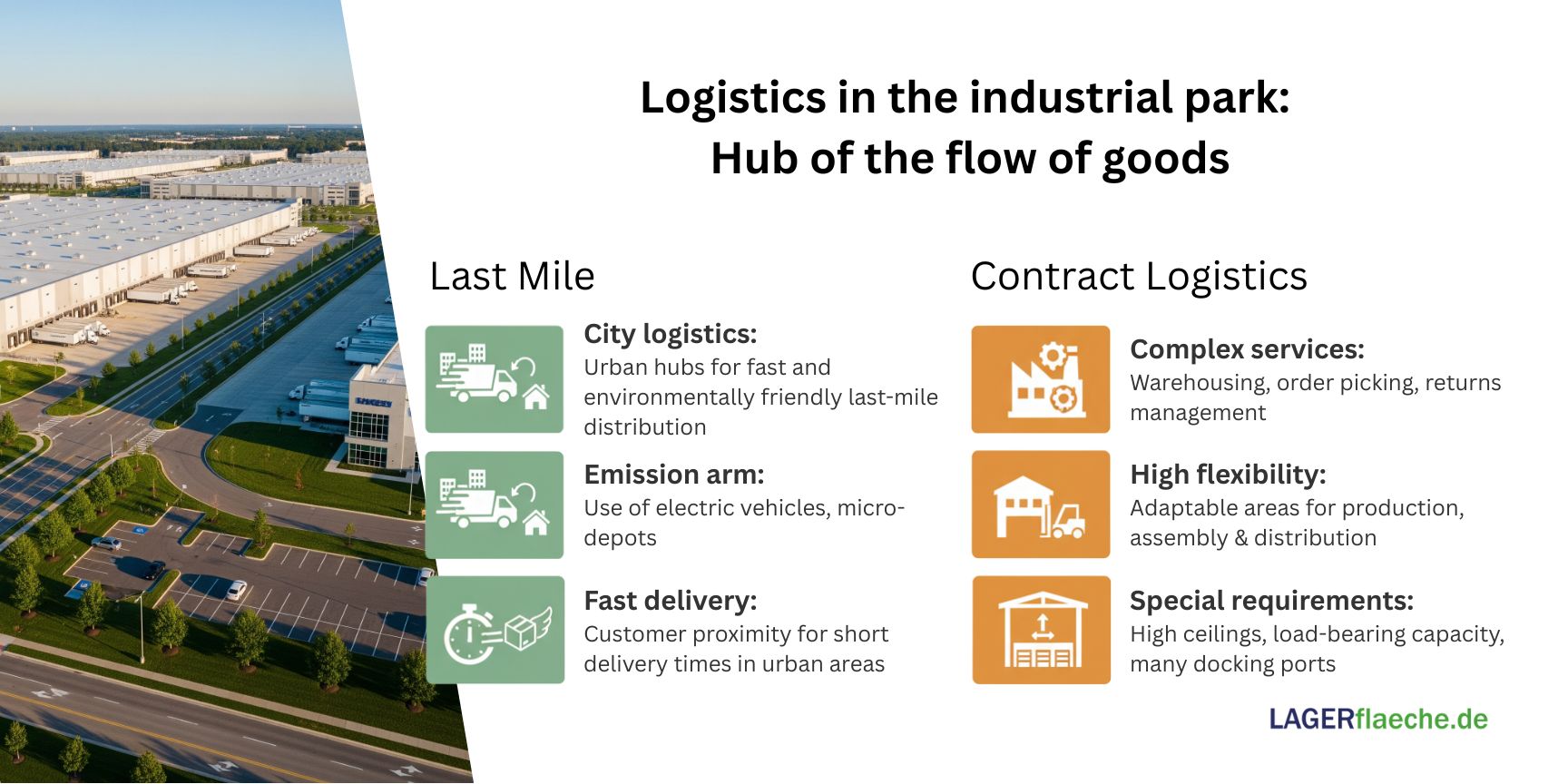
City logistics and the "last mile": Especially in urban areas, business parks are becoming crucial hubs for the fine distribution of goods. From here, parcels are transferred to smaller, often electric vehicles in order to deliver to customers in city centres quickly and with low emissions. This proximity to the end consumer is an invaluable locational advantage.
Contract logistics as a key user: Contract logistics companies take on much more than just pure transport for their customers. They offer complex service packages that include warehousing, picking, packing and returns management. To do this, they need highly flexible and modern real estate, which they find in business parks. The requirements are high: sufficient ceiling heights (often 10-12 meters), high floor load capacity, a variety of docking gates and adaptable office and social areas.
Business park rents in Germany: A look at figures, data, facts
The high demand, especially in the logistics sector, has caused rents for commercial real estate to rise sharply in recent years. Even though the increase has slowed recently, the level remains high.
According to an analysis by CBRE, the prime rent on average of the top 5 logistics markets in Germany rose by 4.5% to €8.79/m² in 2024. A market report by German Property Partners (GPP) for Q1-4 2024 shows the range of prime rents in the top 7 cities:
| City | Prime Rents |
| Munich | 10,80 €/m² |
| Berlin | 9,80 €/m² |
| Frankfurt | 9,00 €/m² |
| Hamburg | 8,50 €/m² |
| Stuttgart | 8,50 €/m² |
| Düsseldorf | 7,90 €/m² |
| Cologne | 7,50 €/m² |
(Source: GPP Market Report Industry | Logistics Q1-4 2024)
These figures illustrate the attractiveness of the large logistics hubs. However, tenants in B and C cities often find significantly more favourable conditions with also good infrastructure.
The international comparison: How do business parks differ worldwide?
Although the basic concept is global, there are significant national differences that are shaped by geographical, economic and political conditions.
- USA: American "industrial parks" are often gigantic and strongly oriented towards large-scale logistics and production companies. Zoning is strict, and the parks are usually located far outside the cities at major highway intersections. Small-scale use, as in German commercial courtyards, is rarer. The focus is clearly on efficiency and scalability for the huge internal market.
- UK: "Business parks" in the UK are similar to the German model, but often have a stronger focus on office and service users (tertiary sector). Traditionally, they attach great importance to a high quality of stay with landscaped green spaces, ponds and community facilities such as gyms or pubs. The location is typically on the outskirts of cities with good transport links.
- Netherlands: As Europe's logistics hub, the Netherlands relies on highly specialized logistics parks. A key feature is the excellent multimodal connection, which intelligently links water, rail and road. The government is actively promoting the formation of logistics clusters along strategic corridors to maximize efficiency and manage land use.
- China: The Special Economic Zones (SEZ) model dominates here. These are huge, state-controlled industrial and commercial parks that attract targeted foreign investment, especially for export-oriented production, with massive tax incentives, a highly developed infrastructure and simplified administrative procedures.
The main difference to Germany is often in the structure and planning. While an organically grown mix of SMEs, logistics and production prevails in Germany, the models in the USA and China are often more focused on a specific purpose (large-scale logistics or export production) and economies of scale.
Conclusion: The future is multifunctional and networked
The business park has evolved from a mere collection of buildings to a vibrant business ecosystem. The successful parks of the future are not only locations, but strategic partners for their tenants. They are green, digitally networked, offer flexible areas and promote synergies. They have become indispensable for logistics, especially contract logistics and city logistics. Companies looking for a new location today no longer only ask about square meters and rental price, but about the overall performance of the park: How sustainable is the location? How good is the digital infrastructure? What services are offered? The answer to these questions will determine the competitiveness of tomorrow.
Latest Blog Posts
Stay up to date with the newest trends, insights, and tips in warehouse and logistics. Our latest articles help you navigate the industry with confidence.
Data Centres vs. Logistics Facilities: The Race for Power and Land
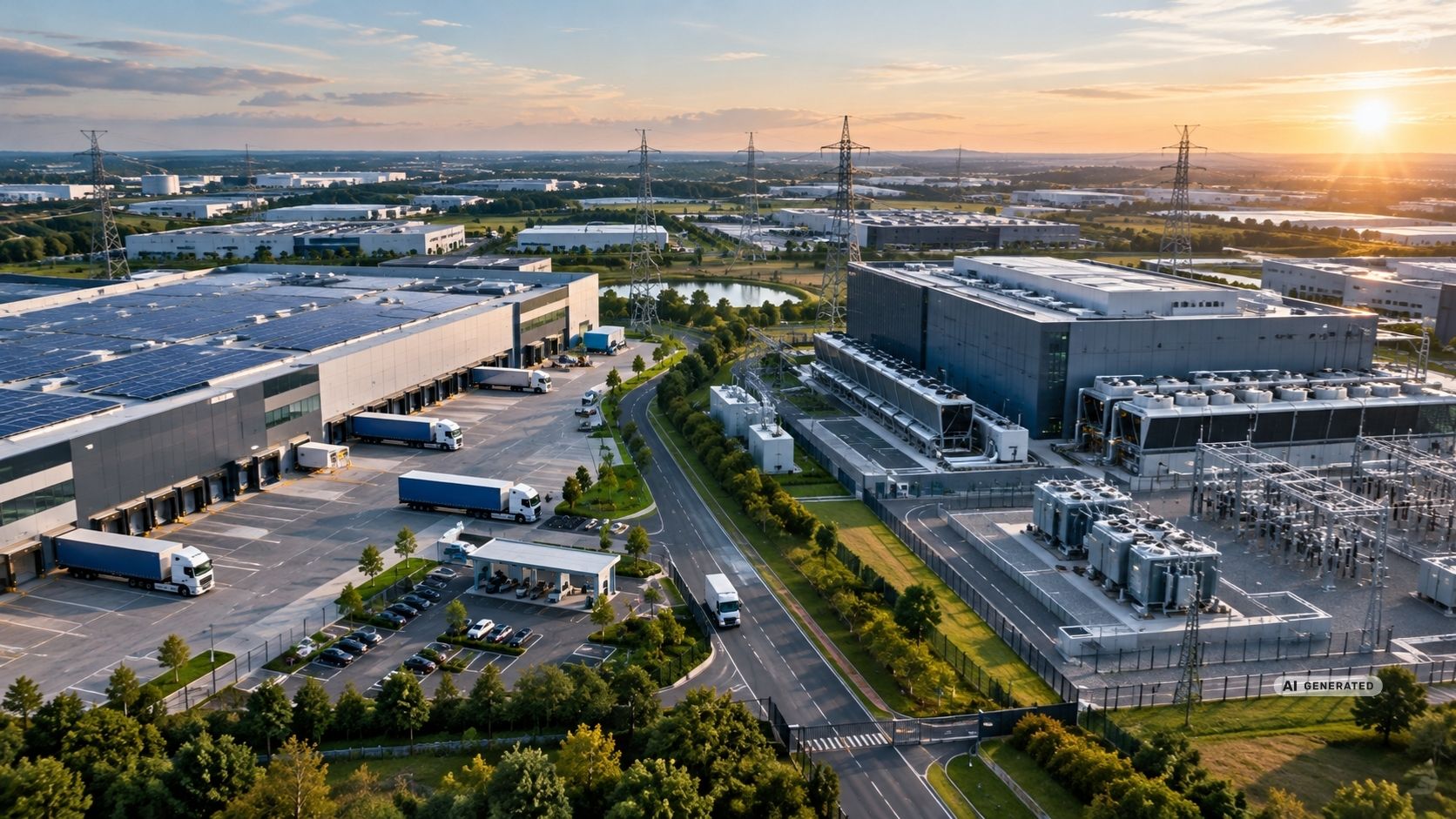
Across Europe, logistics operators are competing for more than land and transport access. They increasingly need something much harder to secure: grid capacity. Data centres are intensifying that competition — and changing how logistics locations are evaluated....
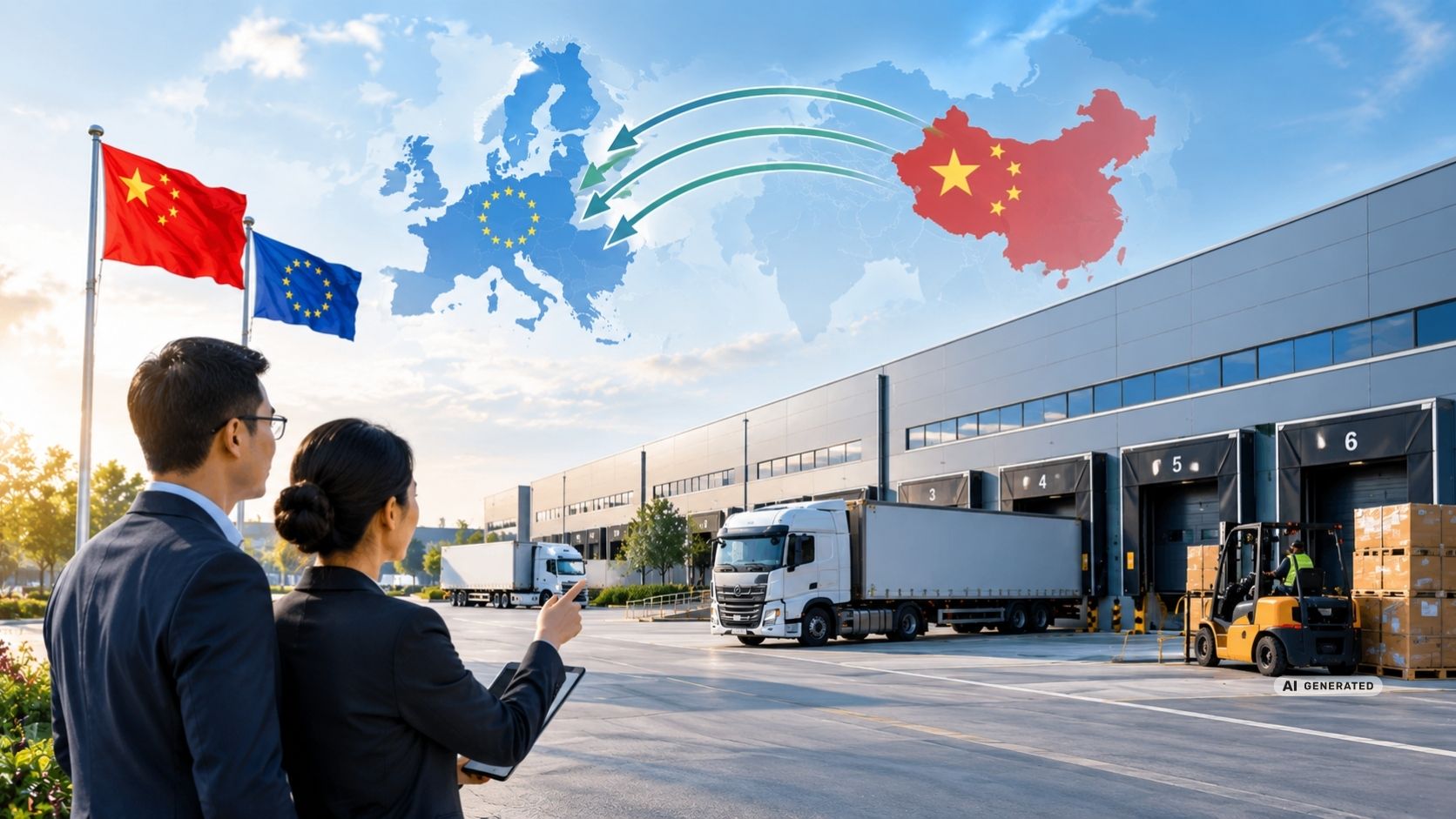
Chinese companies discover Europe's logistics real estate
Chinese companies are becoming an increasingly visible user group in Europe's logistics real estate market. What does this mean for warehouse space, 3PL structures and the requirements for European logistics locations?...
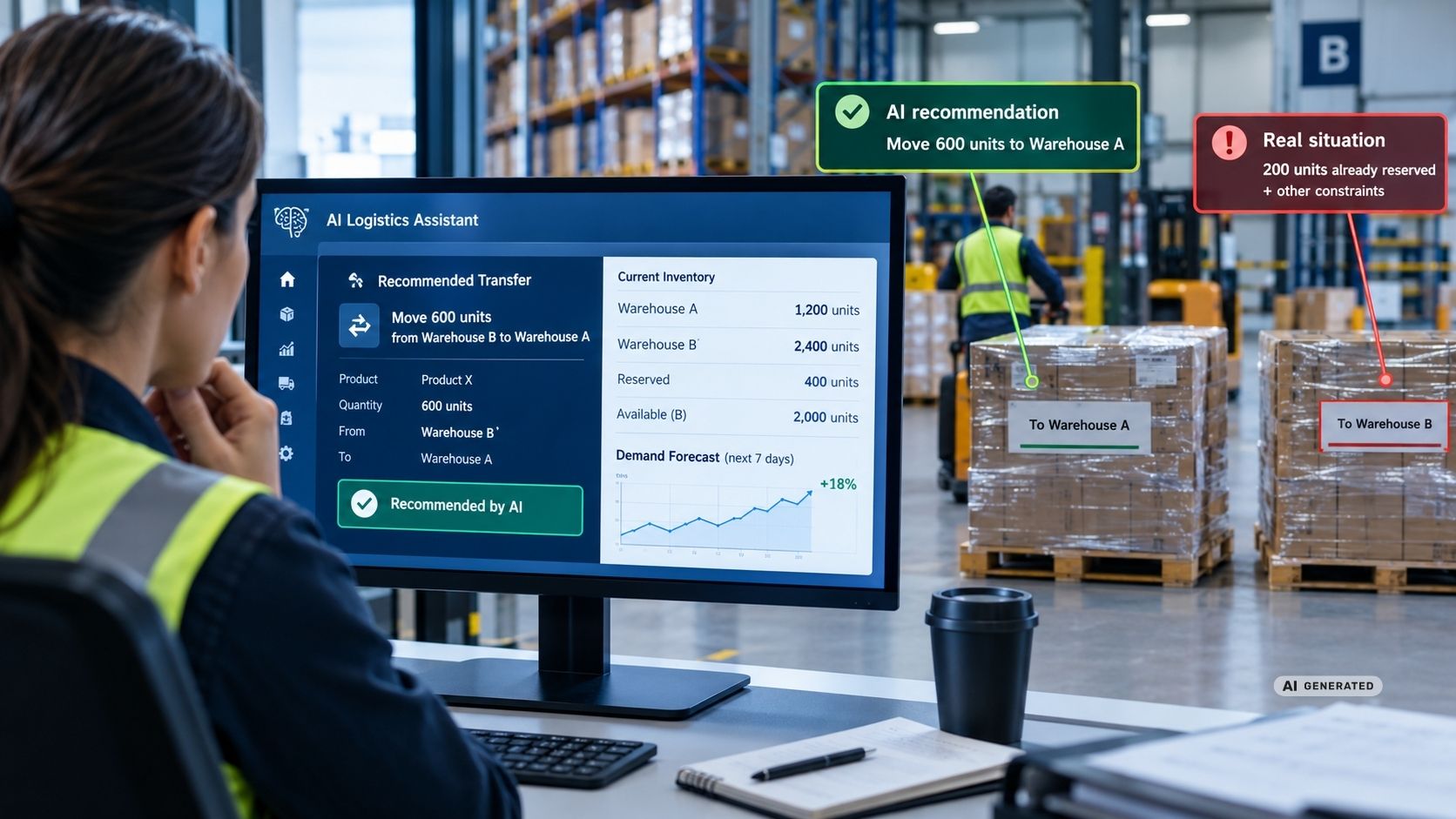
AI Hallucinations in Logistics: When AI Plans the Wrong Delivery
AI can analyze enormous amounts of logistics data — but it can also produce a convincing answer that is simply wrong. The critical question is not whether AI makes mistakes, but what happens when a wrong recommendation becomes an operational decision....
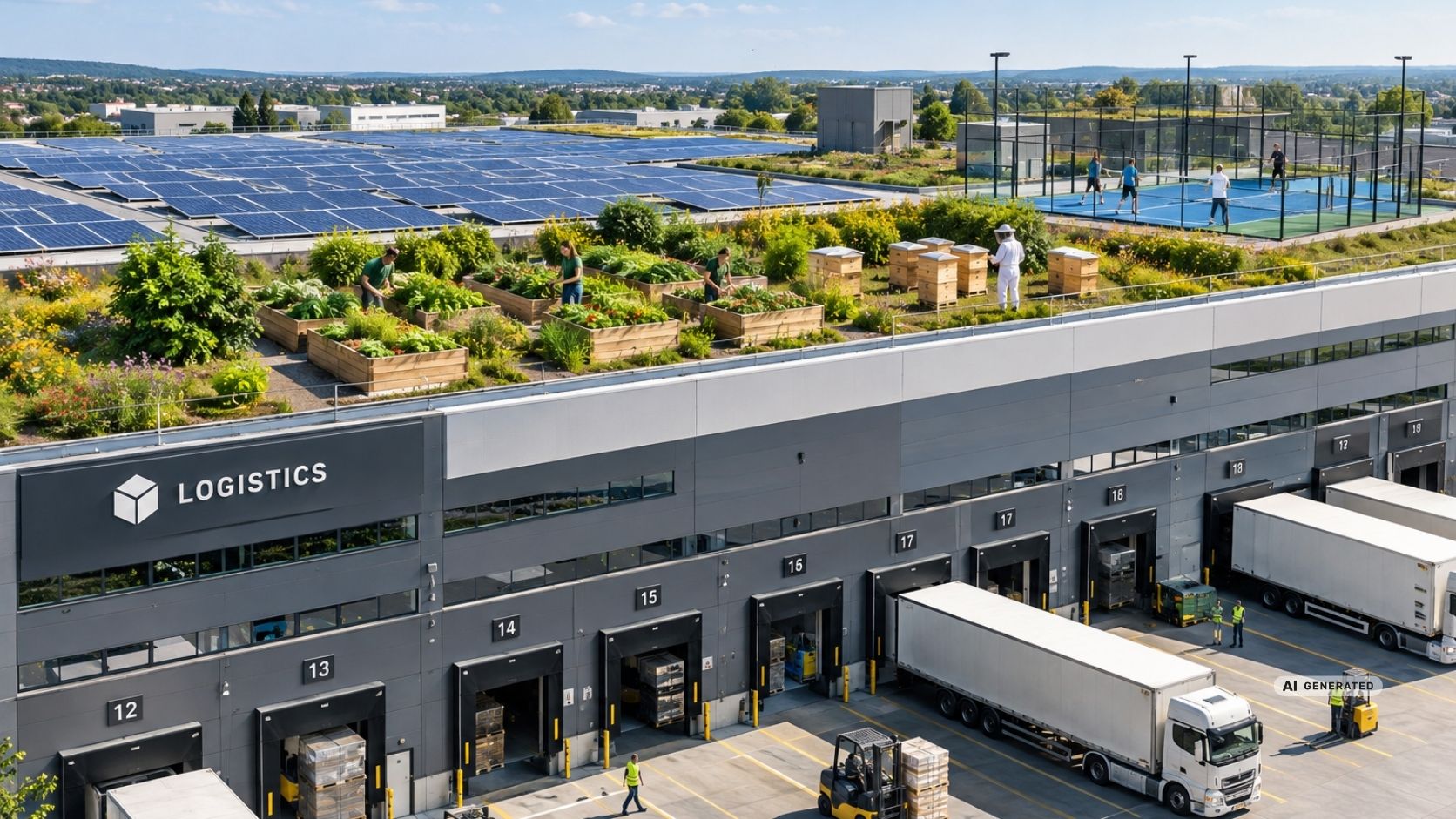
The Green Revolution on the Hall Roof: From Concrete Block to Ecological Power Plant?
Logistics roofs can do more than PV: greening, bees, urban farming and even sports areas turn unused roof space into multifunctional rooms....