



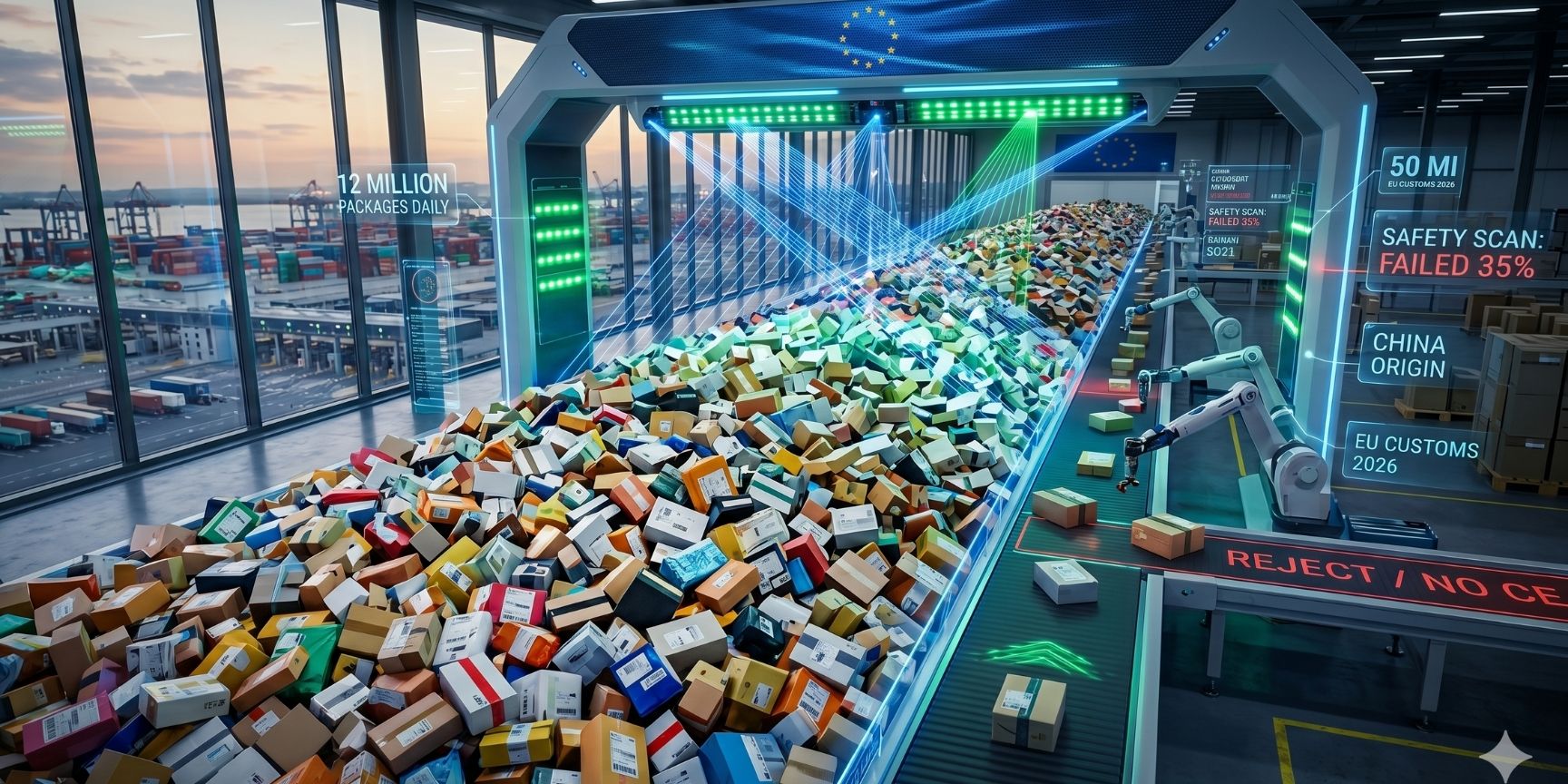
Customs chaos 2026: Why the EU borders fail at 12 million parcels a day
Table of Contents
- The Stocktaking: A System at the Limit
- The Tsunami from the Far East: 12 Million Parcels and the Security Gap
- The 5 Customs Trends for 2026: Customs as a Control Tool
- Germany in Comparison: Why we are often Slower
- The Solution: A Single EU Digital Customs Platform
- Practical Example: The Medium-sized Company between the Fronts
- Why the Flat-rate Tariff Falls Short
- Conclusion: 2026 will be the Touchstone for Customs Management
The year is 2026. What was considered the growth engine of world trade just a few years ago has developed into a Herculean administrative task: cross-border e-commerce. While supply chains are getting faster and faster, the European Union's regulatory corset is reaching its physical and digital limits.
But what does this mean for companies that depend on smooth imports? Is the "3-euro flat-rate tariff" the salvation or just a plaster on a gaping wound? In this deep dive, we analyze the structural fractures of EU customs, compare international strategies and show why customs management has become a decisive competitive factor in 2026.
The Stocktaking: A System at the Limit
The numbers are alarming. Since 2022, the volume of small consignments (consignments with a value of less than 150 euros) has doubled every year. Today, in 2026, over 12 million parcels flood the European single market every day.
An EU-wide control operation published at the beginning of January 2026 confirmed the worst fears: a significant proportion of goods from third countries – especially from China – do not meet European safety standards or environmental requirements (such as REACH or CE markings).
The core questions that concern us today:
- Can manual customs control still work at this volume?
- Why does the flat-rate duty for small consignments fall short?
- Which countries solve the problem more efficiently than Germany?
The Tsunami from the Far East: 12 Million Parcels and the Security Gap
The majority of the packages come from platforms like Temu, Shein, and Alibaba. The problem is not only the fiscal component (lost customs revenues), but market surveillance.
| Statistics | Value (estimated 2026) | Source |
| Daily parcel volume EU | 12.5 million | EU Commission / Eurostat |
| Sampling Complaint Rate | 35% (safety deficiencies) | OLAF / Zollkriminalamt |
| Annual growth in small consignments | +100% (since 2022) | WCO E-Commerce Report |
The previous practice of leaving shipments under 150 euros duty-free (only import VAT was incurred) has led to massive abuse. "Split shipments" – the breaking up of large orders into many small packages – has become the standard model to avoid levies.
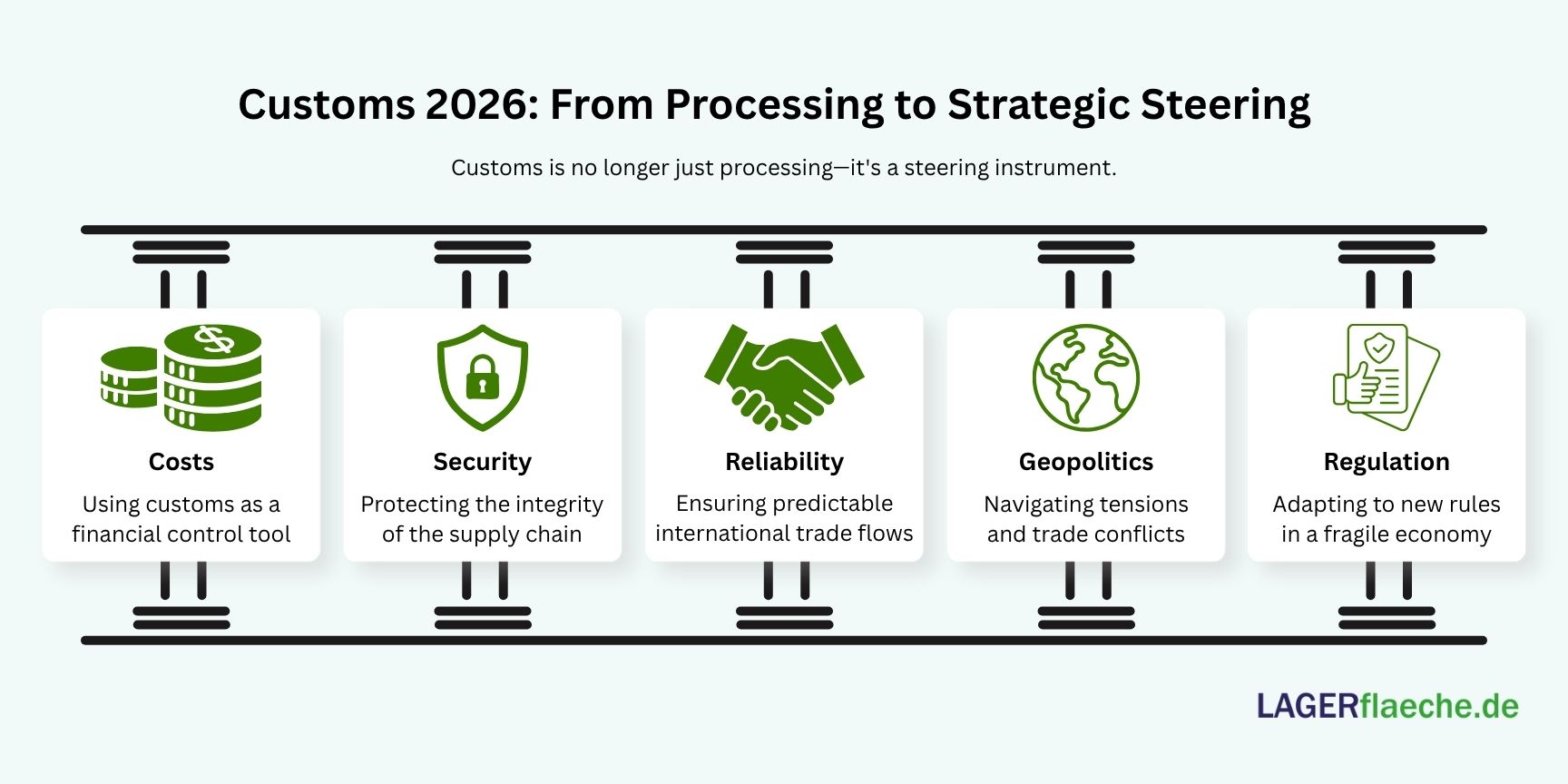
The 5 Customs Trends for 2026: Customs as a Control Tool
After a turbulent year in 2025, it is clear that customs is no longer just a settlement issue. The Customs Support Group defines five key trends for 2026:
- Geopolitical volatility: Tariffs are increasingly used as a means of exerting political pressure (e.g. in the trade conflict with the USA or China).
- Green Customs (CBAM): The CO2 border adjustment mechanism will take full effect in 2026 and requires precise data on the CO2 intensity of imported goods.
- Data-driven compliance: If you don't provide clean digital customs data, you'll be stuck in port. The Import Control System 2 (ICS2) has become mandatory for all modes of transport.
- Elimination of the 150 euro limit: The EU is discussing (and partially implementing) the complete abolition of the duty-free limit in order to create a level playing field.
- AI in risk management: Algorithms decide in milliseconds which packet is X-rayed and which one goes through.
Germany in Comparison: Why we are often Slower
Germany is considered the "logistics heart" of Europe, but the German customs administration is struggling with structural problems.
- Germany: High degree of bureaucracy, fragmented IT systems (ATLAS modernization) and acute staff shortages for on-site inspections. Germany relies heavily on formal correctness, which leads to massive traffic jams with 12 million parcels.
- Netherlands (Rotterdam/Schiphol): The Netherlands is a pioneer in digital pre-registration. This is where "Smart Border" is lived. Data is analyzed even before the ship reaches the port.
- USA (De Minimis Rule): The USA has a very high exemption limit (800 USD), but faces the same problems as the EU. Currently, the US government is rowing back because the sheer mass of "Section 321" shipments (small shipments) endangers national security (fentanyl crisis, counterfeit products).
- China: While China is flooding the world as an exporter, it is protecting its domestic market through extremely efficient, state-controlled digital platforms that track imports down to the level of the buyer's individual identity number.
The Solution: A Single EU Digital Customs Platform
A "€3 flat tariff" on every parcel is a short-term fiscal solution, but it does not alleviate the core problem of the lack of control. The solution, which is being demanded more and more loudly in 2026, is a structural restructuring.
An EU-wide digital customs platform would:
- directly access data from platform operators (Amazon, Temu, etc.).
- Use artificial intelligence to detect fraud patterns (under-invoicing).
- The liability for product safety is transferred to the platforms, not to the end consumer.
"We don't need a customs duty that opens every parcel, but a customs that analyses every data packet." – Excerpt from the EU reform paper on the Customs Union 2026.
Practical Example: The Medium-sized Company between the Fronts
Case study: "TechParts GmbH" from Baden-Württemberg TechParts GmbH imports specialized sensors from Asia. Until now, these have often fallen under the de minimis rule.
Problem 2026: Due to the new ICS2 requirements and the elimination of the 150 euro limit, every shipment will be subject to customs duties. The costs for the customs declaration (approx. 15-30 euros per shipment with a service provider) exceed the value of the small parts (10 euros).
Solution: The company is switching to the "self-assessment" procedure and uses an API connection to the new EU customs portal. Instead of registering each package individually, TechParts GmbH transmits monthly collective reports based on verified master data.
The result: 70% time savings in processing and full compliance with CBAM reporting obligations.
Why the Flat-rate Tariff Falls Short
The often discussed flat-rate duty (e.g. fixed 3 euros per small consignment) sounds charming, but is problematic:
- Unfairness: A 2-euro charging cable will be disproportionately more expensive than a 140-euro branded T-shirt.
- Safety aspect: A flat-rate duty does not check CE marking. Dangerous batteries or toxic textiles continue to enter the market unhindered.
- Bureaucracy: A flat-rate tariff must also be levied, accounted for and controlled. The administrative effort per parcel remains high.
Conclusion: 2026 will be the Touchstone for Customs Management
In 2026, customs will no longer be a "necessary evil" of logistics, but a strategic control instrument. Companies that have their data under control and use the new digital platforms will win. Those who continue to rely on manual processes and hope for "duty-free" will get stuck in the traffic jams of the 12 million daily parcels.
The EU is at a crossroads: Either the leap to a fully automated, data-driven customs union succeeds, or the internal market will be permanently damaged by uncontrolled cheap imports and bureaucratic overload.
Practical checklist for your customs management in 2026
References:
- Europäische Kommission: "Proposal for a Regulation establishing the Union Customs Code" (COM/2023/258)
- WCO (World Customs Organization): "E-Commerce Strategy 2025-2027"
- Customs Support Group: "Annual Trade Trends Report 2026"
- Eurostat: "International trade in goods - e-commerce statistics 2025"
Latest Blog Posts
Stay up to date with the newest trends, insights, and tips in warehouse and logistics. Our latest articles help you navigate the industry with confidence.

Data Centres vs. Logistics Facilities: The Race for Power and Land
Across Europe, logistics operators are competing for more than land and transport access. They increasingly need something much harder to secure: grid capacity. Data centres are intensifying that competition — and changing how logistics locations are evaluated....
Chinese companies discover Europe's logistics real estate
Chinese companies are becoming an increasingly visible user group in Europe's logistics real estate market. What does this mean for warehouse space, 3PL structures and the requirements for European logistics locations?...
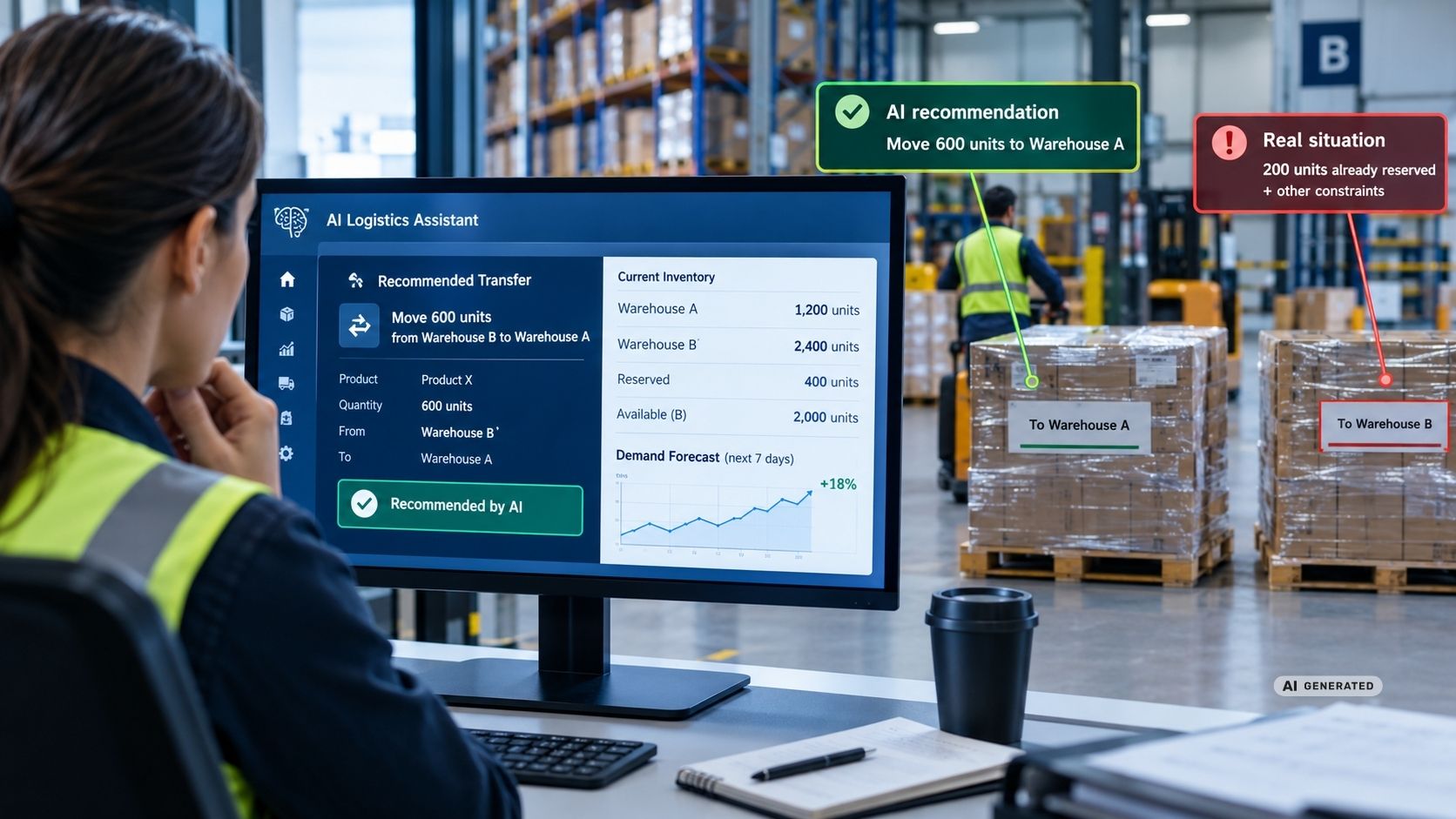
AI Hallucinations in Logistics: When AI Plans the Wrong Delivery
AI can analyze enormous amounts of logistics data — but it can also produce a convincing answer that is simply wrong. The critical question is not whether AI makes mistakes, but what happens when a wrong recommendation becomes an operational decision....
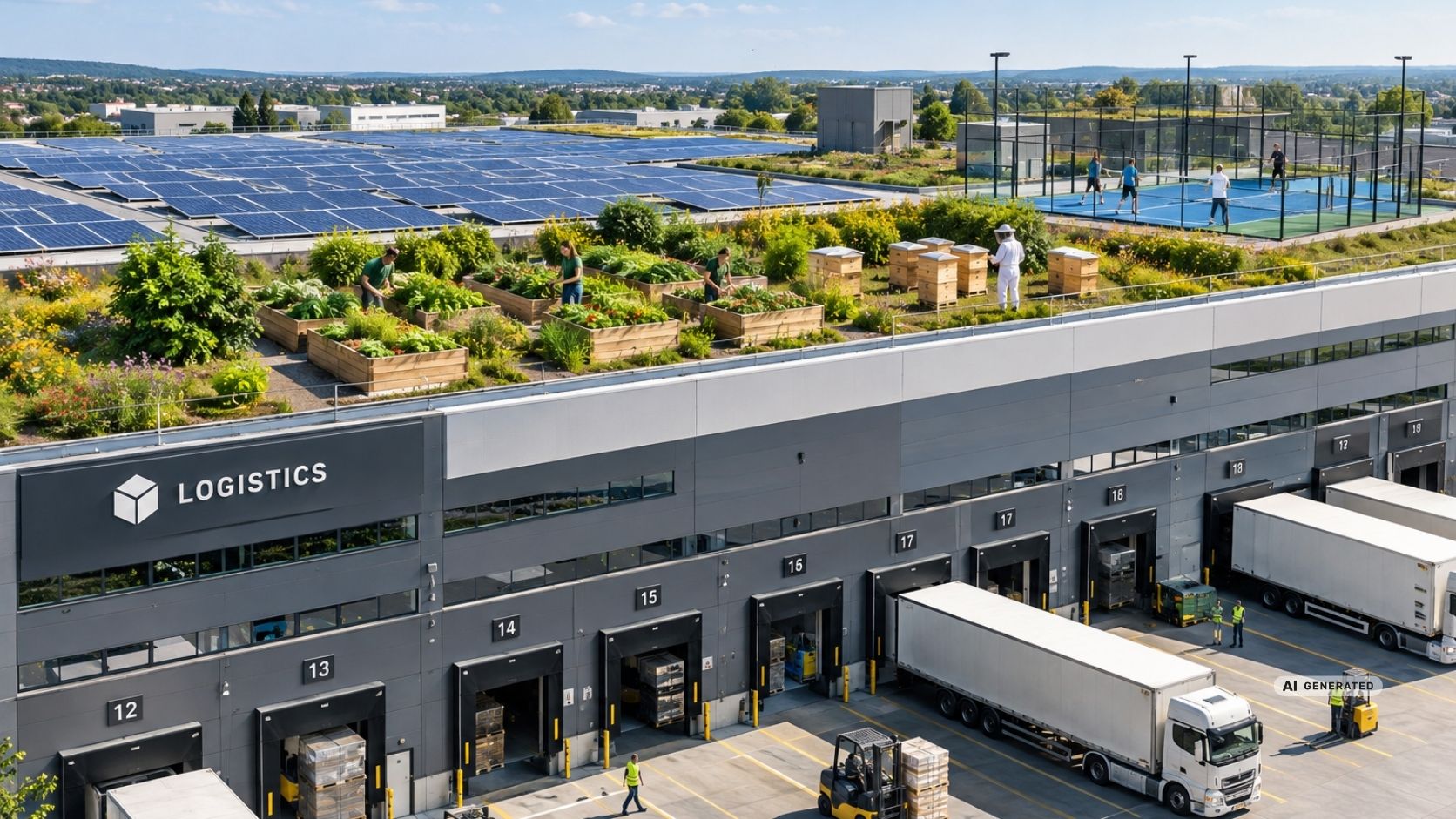
The Green Revolution on the Hall Roof: From Concrete Block to Ecological Power Plant?
Logistics roofs can do more than PV: greening, bees, urban farming and even sports areas turn unused roof space into multifunctional rooms....