


From Offshoring to Reshoring: Redefining Warehouse Logistics in a Volatile World
Table of Contents
- The Glossary of Location Strategies: Definitions and Nuances
- The Historical Change: From Cost Dictates to Resilience Strategy
- Logistics in Transition: How Sourcing Strategies Dictate Warehouse Layout
- The Decision Matrix: Which Approach Suits Your Company?
- Geopolitics in Focus: Germany vs. Europe vs. World
- Practical Check: How a German Hidden Champion Doubled its Resilience
- Data, Facts & Graphics: Logistics in Figures
- Conclusion and Outlook: The Hybrid Future of Warehouse Logistics
In recent decades, the logistics world has known only one direction: globalization at all costs. But the gold-rush atmosphere of offshoring has given way to a new, complex reality. Pandemics, geopolitical tensions and blocked channels have painfully shown that a supply chain is only as strong as its weakest link.
Today, logistics managers are faced with crucial questions:
- Is cost efficiency still the primary goal or is security of supply the new currency?
- How does reshoring change our requirements for storage capacities?
- What role does the political convictions of a partner country (friendshoring) suddenly play in my risk analysis?
This article sheds light on the evolution of sourcing approaches and analyzes their profound influence on modern warehouse logistics.
The Glossary of Location Strategies: Definitions and Nuances
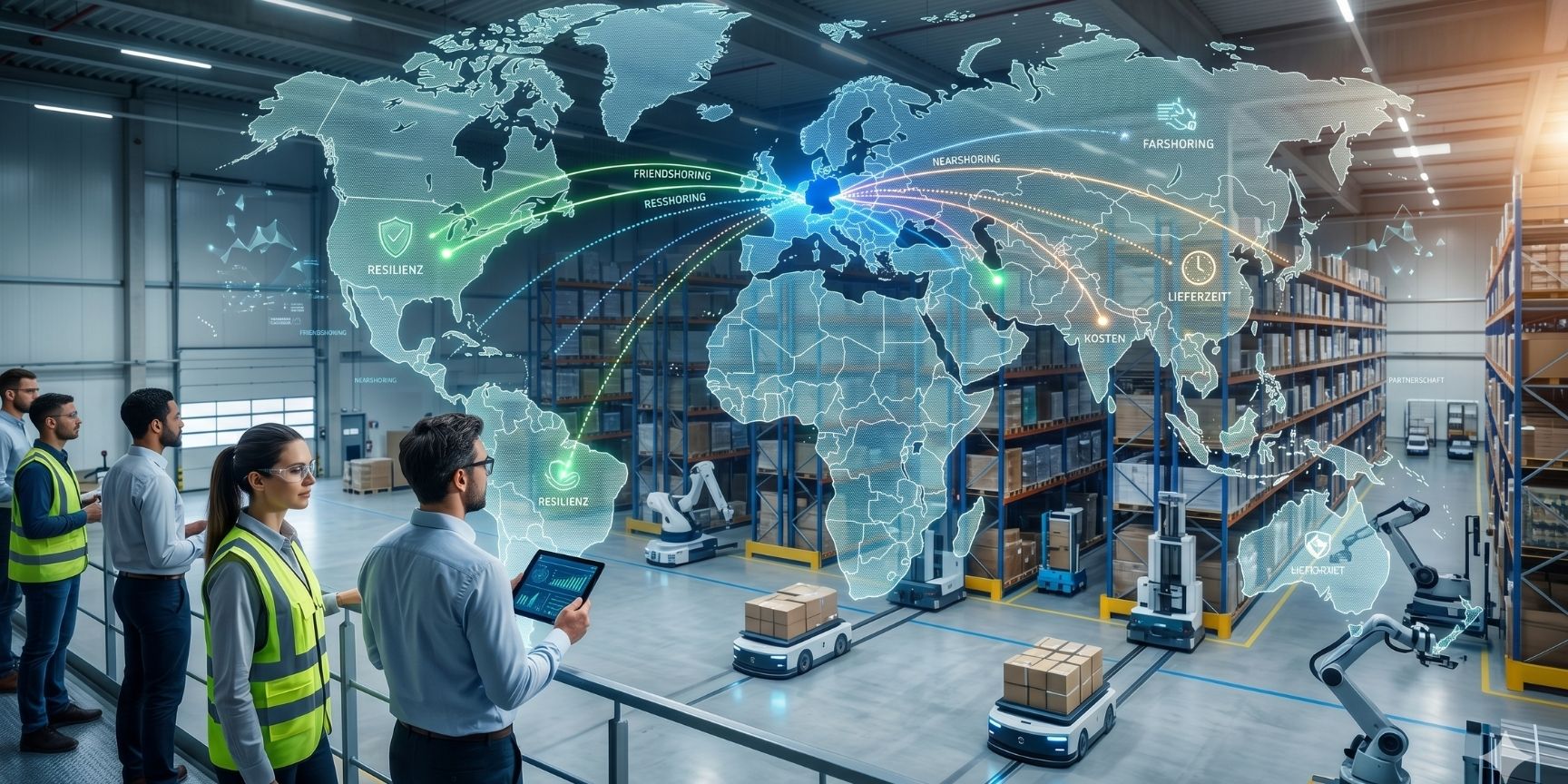
To understand the impact on the camp, we first need to sharpen the terminology. Each strategy has a specific risk profile and logistical requirements.
- Offshoring (farshoring): The relocation of processes or production to distant countries (usually low-wage countries such as China, Vietnam or India). Focus: Maximum labor cost savings.
- Nearshoring: The relocation to nearby foreign countries. For Germany, these are often countries in Eastern Europe (Poland, Czech Republic, Hungary) or North Africa (Morocco, Tunisia).
- Reshoring (backshoring): The complete relocation of production to the home country (e.g. to Germany).
- Friendshoring: A relatively new term, characterized by geopolitical instability. Here, supply chains are preferably relocated to countries that share similar political values and norms in order to minimize the risk of sanctions or trade wars.
The Historical Change: From Cost Dictates to Resilience Strategy
Why have we developed this way? Until about 2010, offshoring dominated. The logistics were optimized to move huge quantities over long distances as cheaply as possible. Camps were considered a "necessary evil"; the goal was just-in-time (JIT).
The turning point:
The years 2020 to 2024 marked a turning point. According to a study by the Kiel Institute for the World Economy (IfW), supply chain disruptions led to massive production losses at German companies. Suddenly it became clear that dependence on distant clusters (especially China) is a cluster risk.
Development reasons:
- Wage cost alignment: The wage gap between China and Eastern Europe is shrinking.
- CO2 balance: The ecological footprint of long transport routes is becoming more expensive due to regulatory requirements (such as the Supply Chain Due Diligence Act – LkSG).
- Digitalization: Industry 4.0 and automation are making production in the high-wage country of Germany competitive again.
Logistics in Transition: How Sourcing Strategies Dictate Warehouse Layout
Every shift in the production site triggers a chain reaction in the warehouse.
From just-in-time to just-in-case
When offshoring, warehouses had to be one thing above all: a buffer for extreme uncertainty. Long lead times of 6 to 12 weeks required massive safety stocks.
- The result: high capital commitment, large space requirements, risk of obsolescence of goods.
With nearshoring and reshoring, lead times are reduced to a few days. This allows for a return to leaner stocks, but requires a higher turnover speed.
- Requirements for the warehouse: Automation (e.g. AutoStore or shuttle systems) is becoming essential to map the fast cycles.
Variability instead of statics
Friendshoring brings a new component: political dynamics. Today's warehouse locations need to be more flexible. Those who can "breathe" – i.e. build up capacities quickly or outsource them through fulfillment partners (3PL) – win.
The Decision Matrix: Which Approach Suits Your Company?
There is no "one-size-fits-all" solution. The choice depends heavily on the product.
| Strategy | Product Type | Company Profile | Focus |
| Offshoring | Standardized mass-produced goods, low margins. | Large corporations with high volumes. | Economies of scale, costs. |
| Nearshoring | Time-critical goods, fashion, automotive components. | Medium-sized companies with a focus on flexibility. | Speed, low freight costs. |
| Reshoring | High-tech, IP-sensitive products, medical technology. | Quality leaders, R&D-heavy companies. | IP protection, quality, automation. |
| Friendshoring | Critical infrastructure, semiconductors, raw materials. | Strategically important sectors. | Security, Compliance, Values. |
Geopolitics in Focus: Germany vs. Europe vs. World
Where is investment being made and why? A concrete country comparison shows the shifts.
Germany as a reshoring destination
Despite high energy costs, Germany remains attractive for high-end production. The reason: skilled workers and infrastructure. One example is the semiconductor industry (Magdeburg/Dresden). Here, reshoring is practiced to secure technological sovereignty. On-site warehouse logistics must offer cleanroom conditions and highly complex small parts storage.
Eastern Europe: The Nearshoring Mecca
Countries such as Poland and Romania have become the "workbenches of Europe".
- Advantage: Direct connection to the European motorway network.
- Comparison with Germany: Wage costs are often still 30-50% of the German level, while at the same time they are highly qualified. As a result, central warehouses for the European market are often built on the German-Polish border.
USA and Mexico: The "Twin Plant" Model
Globally, the USA is massively pushing nearshoring to Mexico (T-MEC agreement). This is a direct counter-draft to China offshoring. For German world market leaders, this means that they have to regionalize their warehouse strategy ("In the region for the region").
Practical Check: How a German Hidden Champion Doubled its Resilience
Let's consider a medium-sized mechanical engineering company from Baden-Württemberg (fictitious case study based on market trends).
Initial situation:
80% of the cast components came from China (offshoring). During the pandemic, production came to a standstill for 4 months. The stocks were high, but "wrongly" sorted (too many C-parts, missing A-parts).
The changeover:
- Nearshoring: Switching to a supplier in Turkey and Poland.
- Warehouse transformation: Investing in an AI-powered inventory management system.
- The result: the delivery time fell from 14 weeks to 10 days. Safety stocks were reduced by 40%, which relieved working capital by € 2.5 million. The warehouse was converted from a static pallet warehouse to a dynamic picking center.
Data, Facts & Graphics: Logistics in Figures
To underpin the depth of the topic, let's take a look at current surveys:
Statistics: According to a survey by Statista (2023), 62% of European companies plan to make their supply chains more resilient through near- or friendshoring.
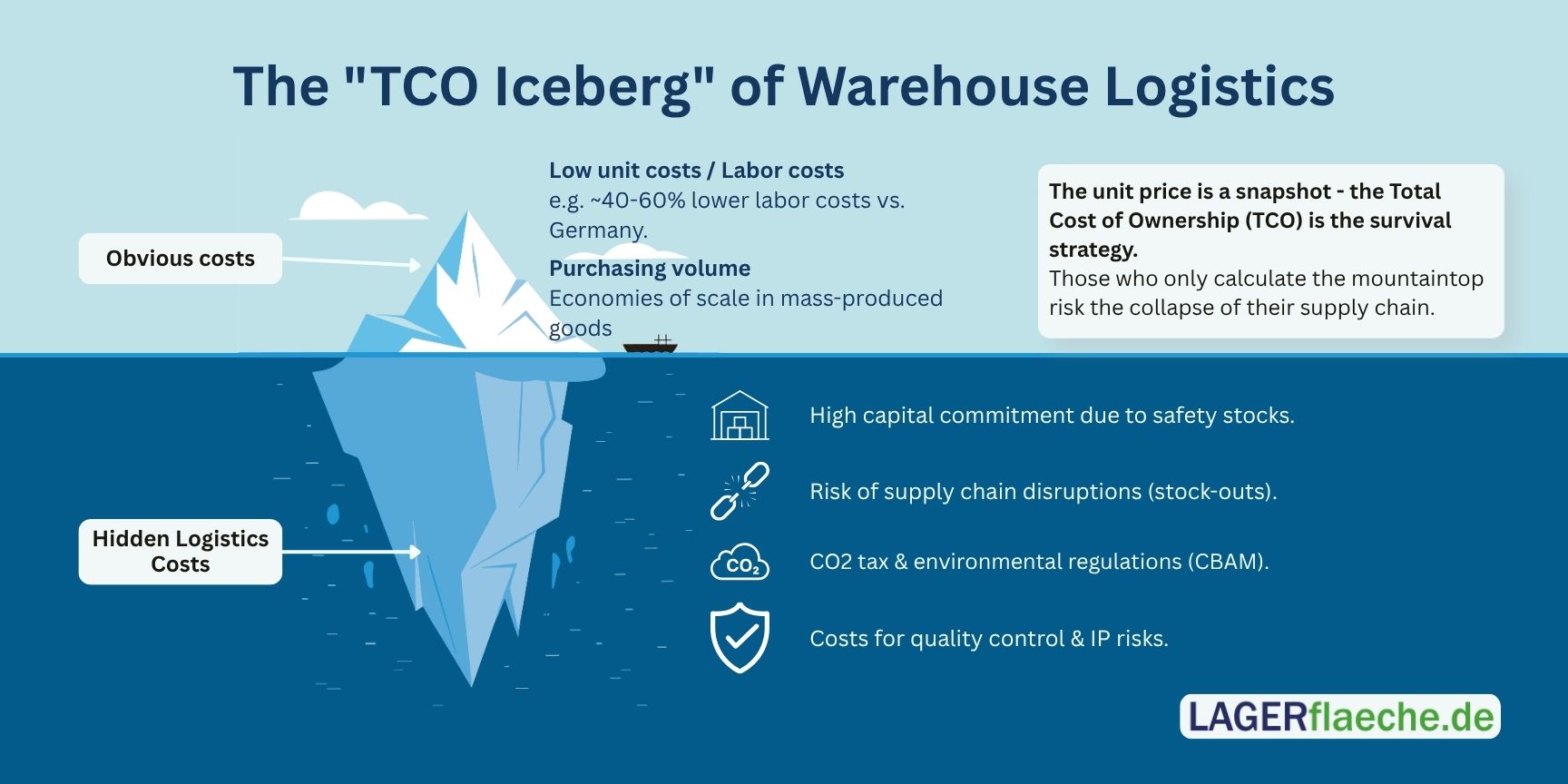
- Offshoring: Low production costs, but exponentially increasing risk costs and inventory lock-up costs in the event of disruptions.
- Nearshoring: Moderate production costs, stable low logistics and storage costs.
- Intersection: When taking into account the CO2 taxes (CBAM of the EU), the break-even point shifts more and more in the direction of nearshoring.
Conclusion and Outlook: The Hybrid Future of Warehouse Logistics
The trend is moving away from extreme offshoring towards hybrid models. Companies will not completely abandon China, but they will build "second sources" in politically stable or geographically close regions.
For warehouse logistics, this means:
- Decentralization: Instead of a global central warehouse, regional hubs are being created.
- Intelligence: The warehouse must act with foresight. AI analyses that evaluate weather data, strikes and geopolitical news are becoming the standard tool.
- Flexibility: The hardware (racks, conveyor technology) must become more modular in order to be able to react to rapid sourcing changes.
Today, the question is no longer: "Where is it cheapest?", but "Where is my goods safest and fastest with the customer?". Those who answer this question precisely for their product portfolio will not only manage the warehouse logistics of the future, but also use it as a competitive advantage.
References:
- Kiel Institute for the World Economy (IfW): Analyses of Supply Chain Resilience (2024).
- Statista: Surveys on the sourcing behavior of European companies (2023/2024).
- Federal Ministry for Economic Affairs and Climate Action (BMWK): Reports on the Supply Chain Act.
- Fraunhofer Institute for Material Flow and Logistics (IML): Studies on the future of warehousing.
Latest Blog Posts
Stay up to date with the newest trends, insights, and tips in warehouse and logistics. Our latest articles help you navigate the industry with confidence.
Data Centres vs. Logistics Facilities: The Race for Power and Land
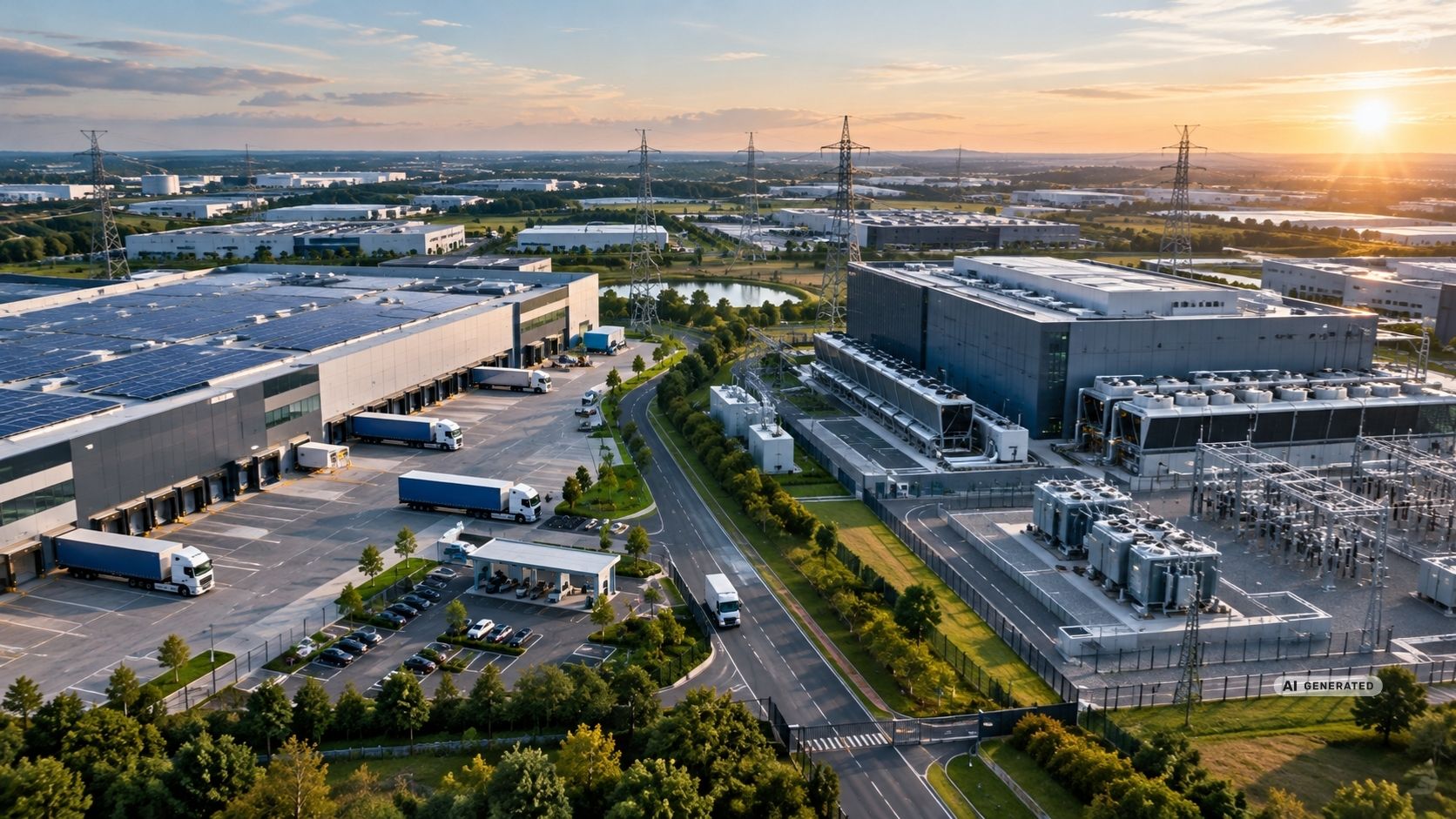
Across Europe, logistics operators are competing for more than land and transport access. They increasingly need something much harder to secure: grid capacity. Data centres are intensifying that competition — and changing how logistics locations are evaluated....
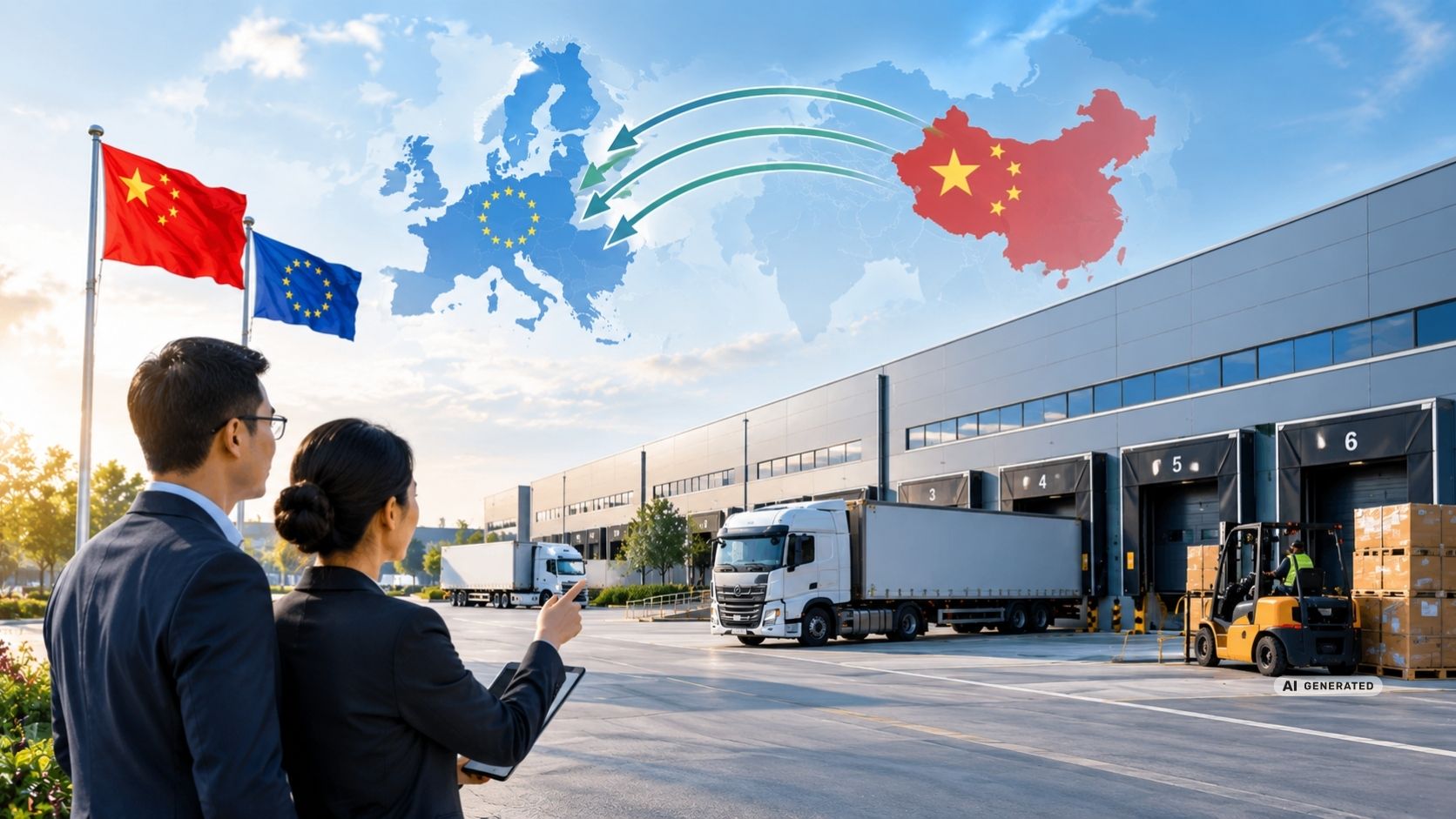
Chinese companies discover Europe's logistics real estate
Chinese companies are becoming an increasingly visible user group in Europe's logistics real estate market. What does this mean for warehouse space, 3PL structures and the requirements for European logistics locations?...
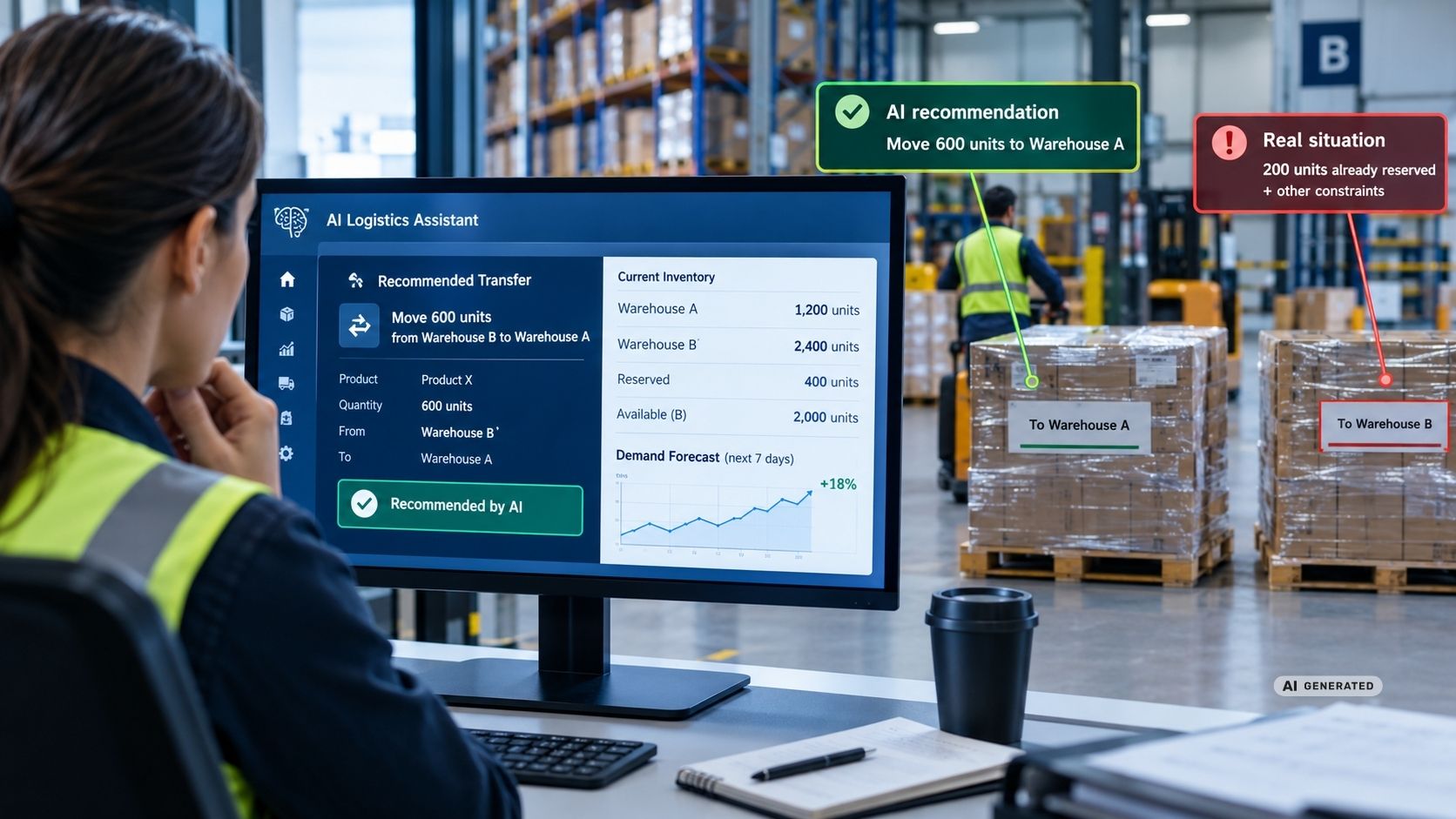
AI Hallucinations in Logistics: When AI Plans the Wrong Delivery
AI can analyze enormous amounts of logistics data — but it can also produce a convincing answer that is simply wrong. The critical question is not whether AI makes mistakes, but what happens when a wrong recommendation becomes an operational decision....
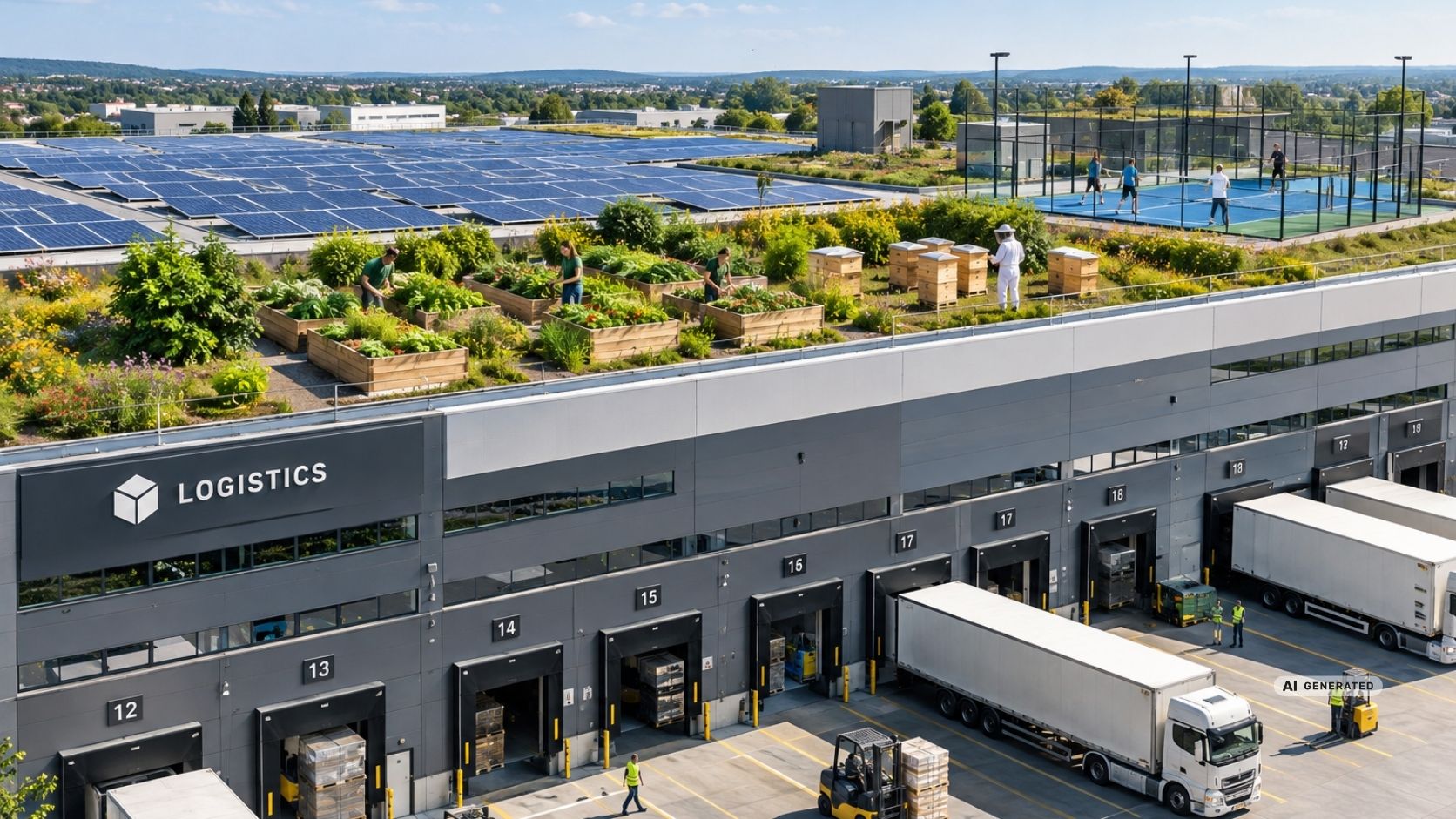
The Green Revolution on the Hall Roof: From Concrete Block to Ecological Power Plant?
Logistics roofs can do more than PV: greening, bees, urban farming and even sports areas turn unused roof space into multifunctional rooms....