




Digitalisation: When Estonia ignites the turbo and Germany is stuck in traffic jams
Table of Contents
- The Estonian Phenomenon: More than just "Paperless"
- Implementation Failure in Germany: A Systemic Problem
- The Warehouse Logistics World: Where Digital Standstill Costs Money
- Special Logistics: High-performance Sport in a Bureaucratic Swamp
- AI in logistics: The brain is waiting for the data
- Global Comparison: Who is Passing us by?
- Are We Ready? The Mentality Problem
- Short-term Approaches: What can Logistics do Now?
- Conclusion: From World Champion in Knowledge to World Champion in Implementation
We need to talk. Not about the "whether", but about the "how". In the German logistics industry – and especially in the highly sensitive special logistics sector – the word "digitalization" is now associated with a certain resignation. While we philosophize about the potential of artificial intelligence (AI) in expert panels, everyday life often fails at the interface with the authority. Estonia has been showing us for years that the state does not have to be a brake block.
In this article, we answer the following key questions:
- Why does Estonia save 2% of its GDP annually through digitization and Germany does not?
- How specifically does the "implementation failure" of the authorities slow down our warehouse and special logistics?
- Which countries have cracked the code and what do they do differently than we do?
- Is German skepticism about innovation a cultural or a structural problem?
- What short-term levers can logistics companies move now?
The Estonian Phenomenon: More than just "Paperless"
In Estonia, 99% of government services are available online – 24/7. The only things you have to show up physically for are marriages and divorces (and even when buying real estate, it's becoming more and more digital). At the heart of it all is the X-Road, a decentralized data exchange platform that securely connects all government agencies and even private companies.
The hard facts:
- Time saved: Estonia saves an estimated 844 years of working time per year through digital signatures alone (source: e-Estonia Briefing Centre).
- Cost: Digital infrastructure saves the country about 2% of its annual gross domestic product (GDP). Extrapolated to Germany, that would be over 70 billion euros – per year.
For a logistics specialist, this sounds like science fiction. In Estonia, it takes 15 minutes to set up a company. In Germany, specialist logistics companies sometimes wait weeks for a simple permit for a heavy transport, because communication between the municipalities takes place by post or – dare to say it – fax.
Implementation Failure in Germany: A Systemic Problem
It is no longer a problem of knowledge. Everyone knows that we have to become more digital. The problem is the failure of implementation. Germany is getting caught up in the thicket of federalism. The Online Access Act (OZG) was supposed to digitize all administrative services by the end of 2022. The result? A torso.
Why we fail:
- Responsibility ping-pong: Municipalities, states and the federal government work with incompatible IT solutions.
- Data protection as a killer argument: While Estonia lives "Data Once Only", in Germany every interface is blocked for fear of GDPR violations.
- Legacy systems: We build digital frontends on top of analog backends. If the citizen fills out a form online, which is printed out at the end of the office and filed manually, this is not progress, but a farce.
Graphic suggestion (placeholder): A comparison graphic "Approval process for heavy transport". Links (Estonia): Digital application -> Automatic check against road data -> Digital release in < 24 hours. Right (Germany): Application VEMAGS -> examination by 5 affected districts -> queries by post -> manual review -> release after 14-21 days. (Source: Own illustration based on industry interviews with the Logistics Association)
The Warehouse Logistics World: Where Digital Standstill Costs Money
In warehouse logistics today, digitization usually means WMS (Warehouse Management Systems) and automation. But the logistics do not end at the ramp.
Interface customs and dangerous goods:
Especially in special logistics (chemicals, pharmaceuticals, heavy loads), we depend on official approvals. If a warehouse for hazardous substances is to be expanded, years go by. The digitization of building permits and fire protection inspections is a patchwork quilt in Germany.
Concrete effects:
- Land use: Without a real-time data connection to land registry offices or customs authorities, the establishment of logistics centers is massively delayed.
- Transparency: While AI calculates in the warehouse which box needs to be moved next, the freight forwarder often does not know whether his customs application is even being processed at the office.
Special Logistics: High-performance Sport in a Bureaucratic Swamp
Special logistics services – such as the transport of wind turbines or highly sensitive medical technology – depend on precision. Here, the failure to implement is particularly painful.
Case study: Wind power transport
A logistician has to transport an 80-meter-long shovel across Germany. He needs permits from dozens of authorities. In a digitized country such as Estonia or the Netherlands, road data (bridge loads, curve radii) are stored digitally. An AI could validate the route in seconds. In Germany, officials often still check cards by hand. A digital twin of infrastructure? Nothing.
This leads to immense costs due to downtimes and incorrect planning. If the logistics are "special" but the administration is "standard from 1995", efficiency collapses.
AI in logistics: The brain is waiting for the data
We talk a lot about AI. But AI is like a Formula 1 engine: without the right fuel (structured, digital data), it doesn't move a millimeter.
Where AI is already starting today:
- Predictive maintenance: Predicting when a forklift will fail.
- Route optimization: Consideration of real-time traffic data.
Where AI fails because of the state:
If we want to use AI to make supply chains more resilient, we would need access to government data (ports, customs, infrastructure construction sites) in real time. Estonia offers these APIs (interfaces). Germany offers PDF downloads. An AI can have a very hard time working with a PDF, which is a scan of a handwritten form.
Global Comparison: Who is Passing us by?
Germany regularly occupies only places in the middle of the field in the EU's Digital Economy and Society Index (DESI). Other countries are light years ahead of us:
| Country | Strength | Why does it work? |
| Estonia | Radical networking | "X-Road" platform, digital mindset from school to office. |
| Denmark | Digital Identity | Every citizen has a central ID (MitID) that works for everything. |
| Singapore | Logistics-Hub 4.0 | Fully automated ports that communicate directly with customs AI. |
| USA | Private Innovation | Less state, more pressure from giants like Amazon, which set their own standards. |
The difference: In these countries, digitization is understood as an infrastructure project, comparable to the construction of highways in the 20th century. In Germany, it is seen as a "chore" of the IT department.
Are We Ready? The Mentality Problem
Is the German population or the worker in logistics unreceptive? The answer is twofold.
On the one hand, there is a deep-rooted fear of job loss due to AI and automation. On the other hand, the frustration with the inefficient bureaucracy is so great that acceptance of digital solutions would increase – if they worked.
The problem is not the hostility to innovation, but the lack of confidence in the state's implementation competence. If the "ELSTER" tax software is the highlight of state digitization, one should not be surprised if the enthusiasm fails to materialize.
Short-term Approaches: What can Logistics do Now?
We cannot wait for German federalism to reform itself. Companies have to take the initiative on their own.
- Interface standardization: Use platforms that already enable digital advice and shipment tracking between private partners (e.g. gate check apps).
- AI in the niche: Implement AI where you don't need authorities – in internal warehouse optimization or workforce planning.
- Pressure via associations: Logistics is the third largest economic sector in Germany. The pressure on politicians to radically digitize approval processes (especially for special transports) must be more concerted.
- Hybrid solutions: Use service providers who build "digital bridges" – i.e. tools that take your digital data and translate it into the required (unfortunately often still analogue) format for the authority.
Conclusion: From World Champion in Knowledge to World Champion in Implementation
Estonia is not a miracle, but the result of a clear decision: Digital First. Germany does not suffer from a lack of bright minds or money, but from a lack of courage to simplify.
For logistics and special logistics, an efficient authority structure is not a "nice-to-have", but a critical competitive factor. If we don't want to lose touch with the global market, we need to stop philosophizing about privacy concerns while other countries are already reaping the rewards of the AI revolution.
The question for you: Is your company ready to go through with the digital transformation even against the resistance of bureaucracy, or are you waiting for the "big hit" from Berlin?
References:
- e-Estonia Briefing Centre: "Digital Economy Statistics"
- EU Commission: Digital Economy and Society Index (DESI) 2023
- Federal Statistical Office (Destatis): "Digital administration in Germany"
- Logistics Indicator of the German Logistics Association (BVL)
Latest Blog Posts
Stay up to date with the newest trends, insights, and tips in warehouse and logistics. Our latest articles help you navigate the industry with confidence.

Data Centres vs. Logistics Facilities: The Race for Power and Land
Across Europe, logistics operators are competing for more than land and transport access. They increasingly need something much harder to secure: grid capacity. Data centres are intensifying that competition — and changing how logistics locations are evaluated....
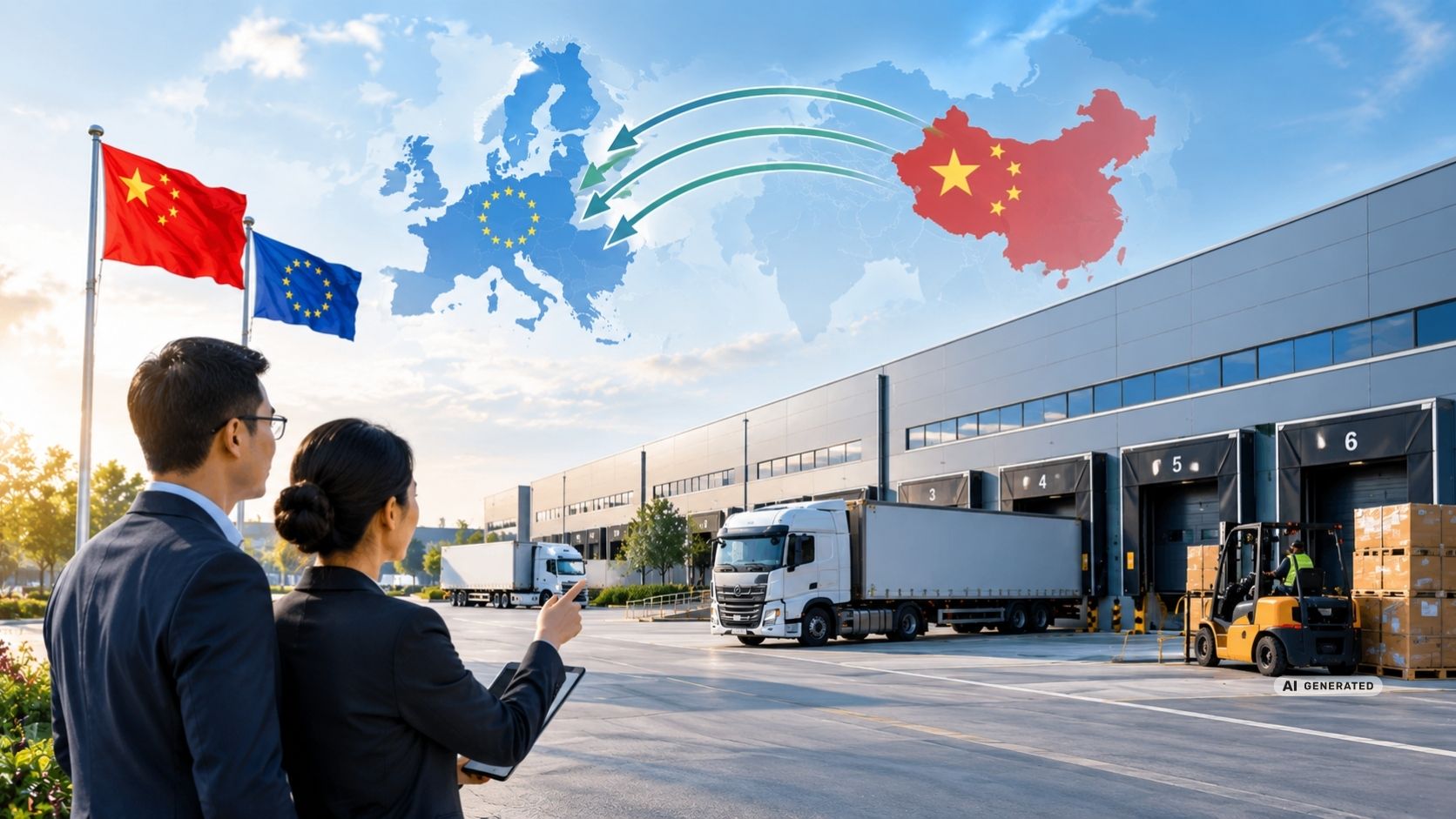
Chinese companies discover Europe's logistics real estate
Chinese companies are becoming an increasingly visible user group in Europe's logistics real estate market. What does this mean for warehouse space, 3PL structures and the requirements for European logistics locations?...
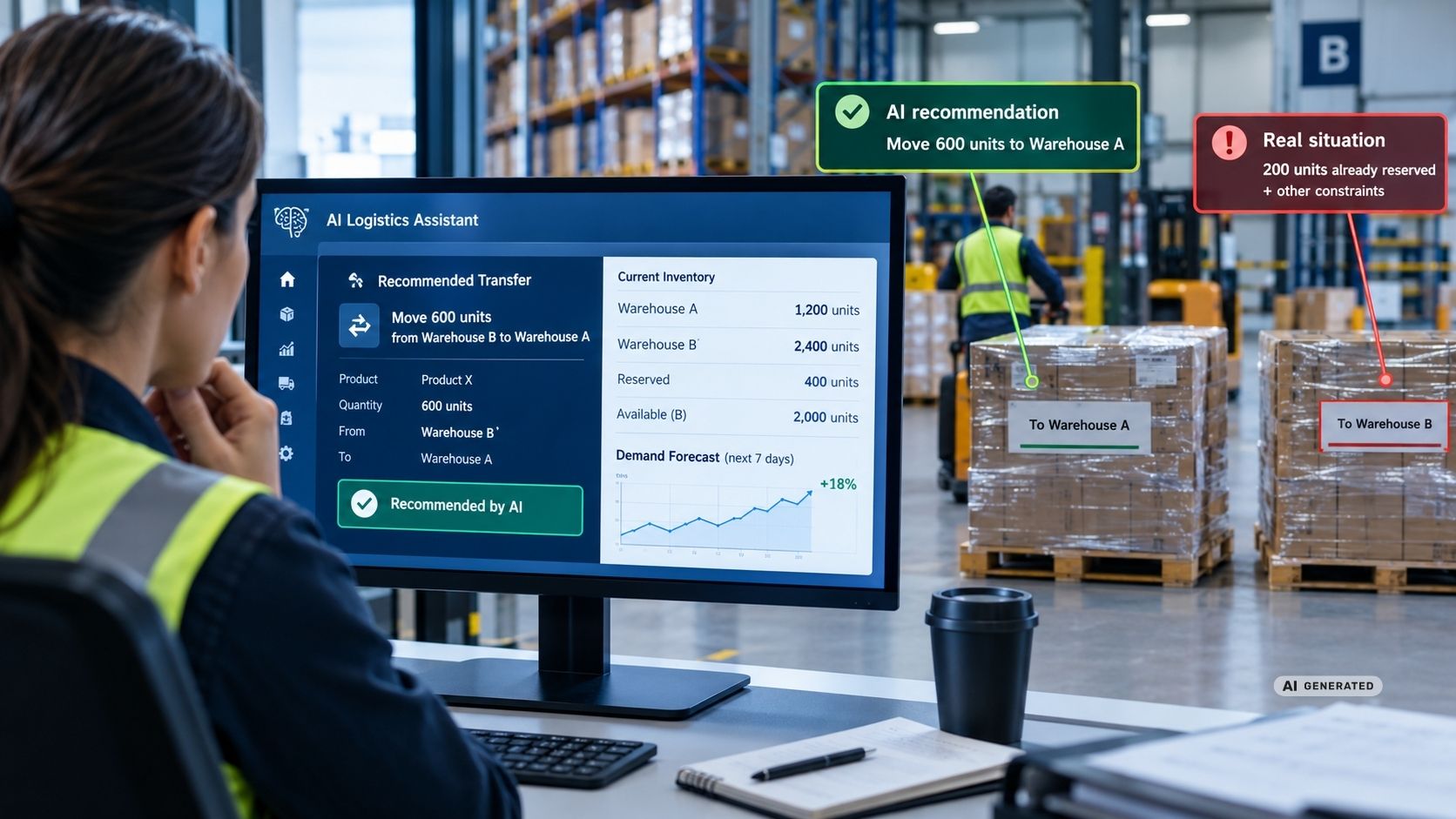
AI Hallucinations in Logistics: When AI Plans the Wrong Delivery
AI can analyze enormous amounts of logistics data — but it can also produce a convincing answer that is simply wrong. The critical question is not whether AI makes mistakes, but what happens when a wrong recommendation becomes an operational decision....
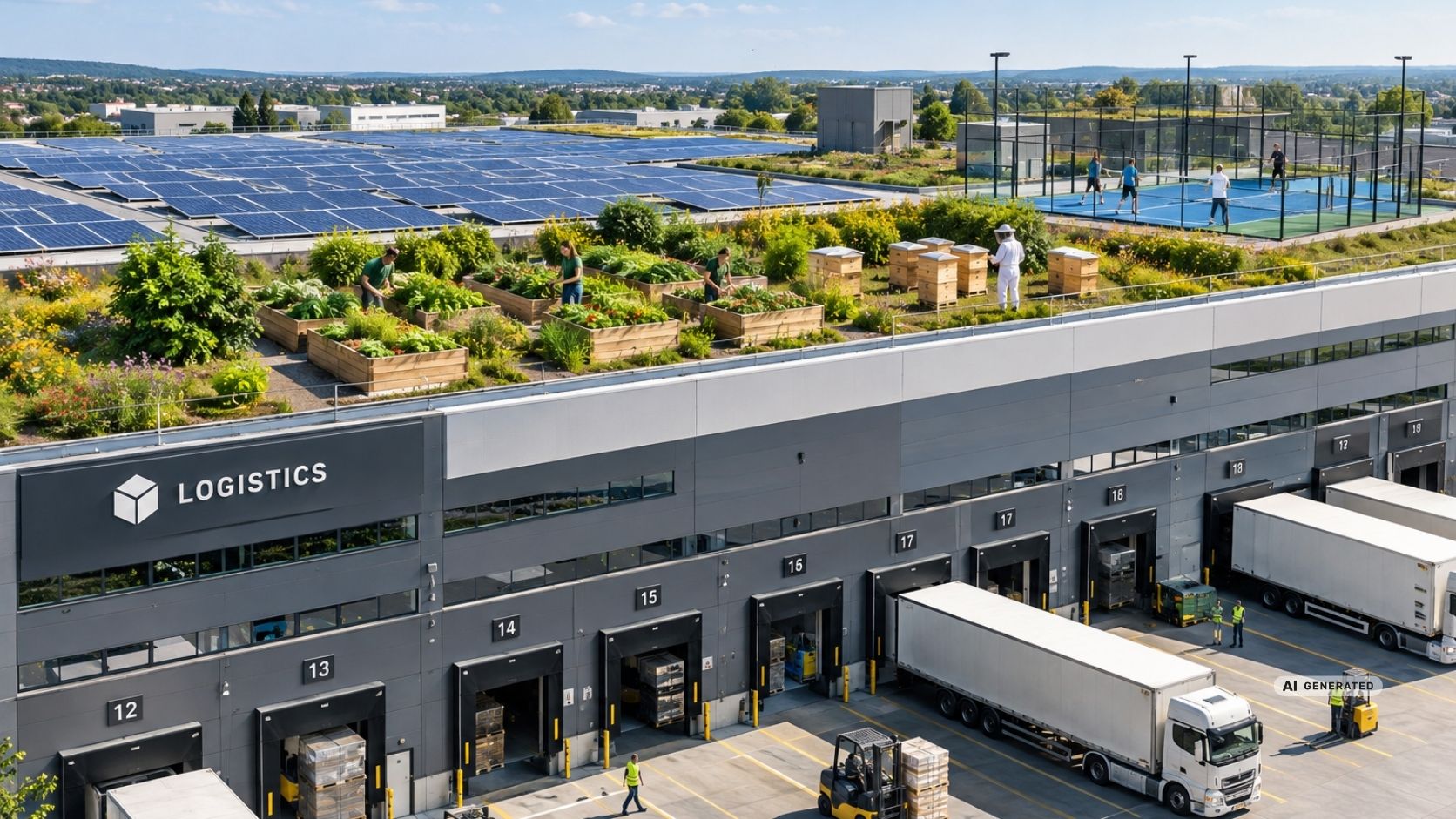
The Green Revolution on the Hall Roof: From Concrete Block to Ecological Power Plant?
Logistics roofs can do more than PV: greening, bees, urban farming and even sports areas turn unused roof space into multifunctional rooms....