


Shared Warehouse vs. Dedicated Warehouse: Which Solution Fits Your Business Model?
Table of Contents
- The Crucial Question of Intralogistics: Shared or Dedicated?
- The Hard Cost Comparison: CapEx vs. OpEx in Detail
- Scalability: How Flexibly does Your Warehouse Breathe?
- Industry Suitability: Where Standardization Fails
- Operational Control and IT Integration: Who has a Hand on the Lever?
- SLA Structures: Contractual Protection against "Client Envy"
- Flexibility Comparison: Reacting to Unforeseeable Market Changes
- International Comparison: Germany vs. Europe vs. Global Markets
- Practical Example: The Scaling Pain of "BioTech-Fit GmbH"
- Checklist: Which Solution Fits Your Business Model?
- Conclusion: The Evolution from Shared to Dedicated Warehouse
The global logistics landscape is under constant pressure. Volatile supply chains, fluctuating commodity prices and the unstoppable boom in e-commerce are forcing small and medium-sized enterprises (SMEs) to radically rethink their supply chain structures. Especially in Europe and Germany – the logistics heart of the continent – a fundamental strategic question quickly arises for growing companies: Should we store our goods in a shared warehouse (multi-user center) or invest in a dedicated warehouse (single-user center)?
The decision between these two models is not just a question of cost. It is a strategic decision that determines scalability, customer satisfaction and ultimately the ability to survive in the market.
But what are the differences between the models in detail? What are the hidden cost risks, and how do the concepts perform in international comparison to Germany? This guide examines the niche of contract logistics down to the smallest detail.
The Crucial Question of Intralogistics: Shared or Dedicated?
Before we get into data-based analysis, we need to precisely delineate the structural definitions. In logistical practice, the terms often become blurred, which can lead to expensive misunderstandings when negotiating with third-party logistics (3PL) service providers.
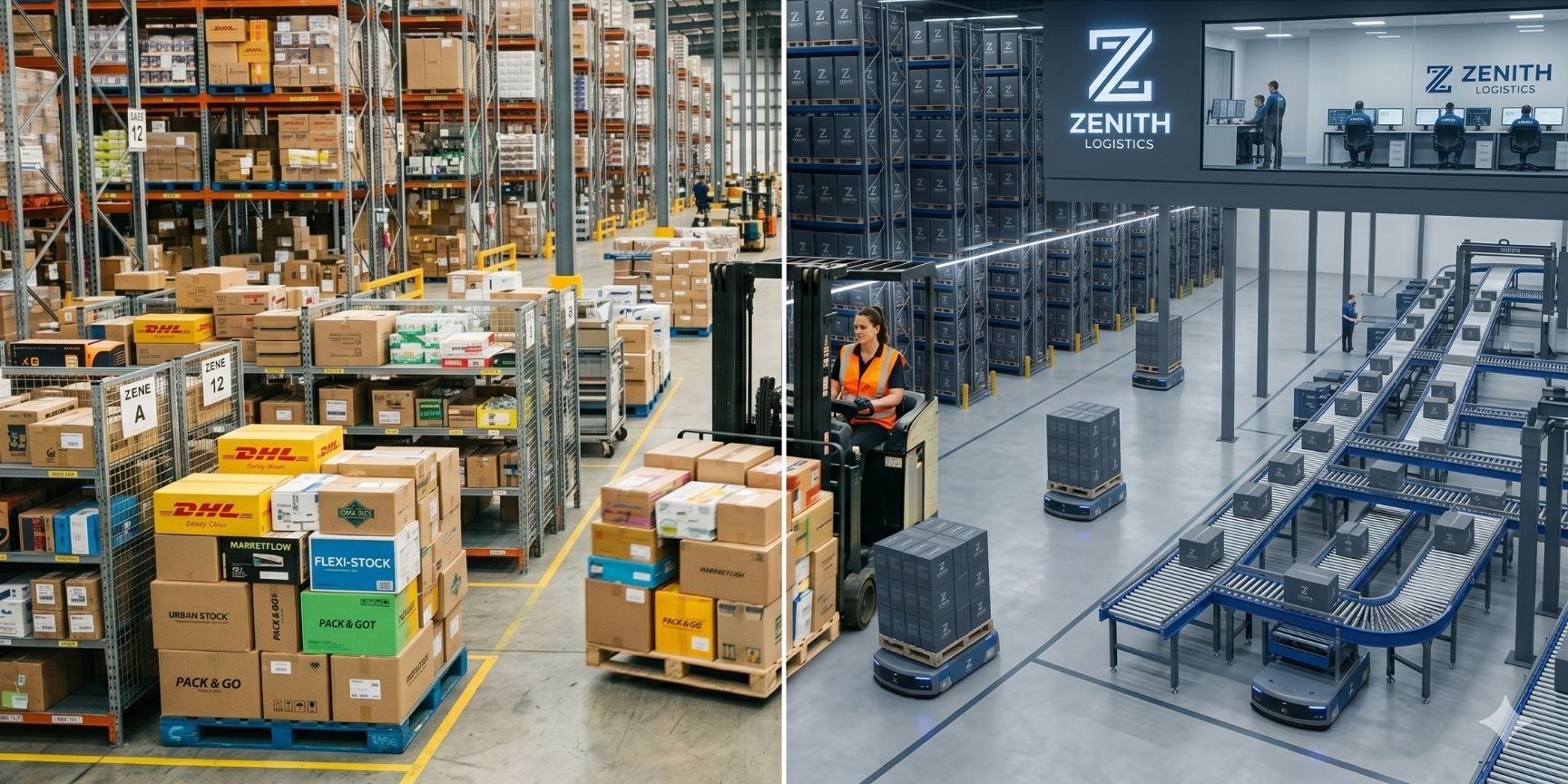
- Shared warehouse (multi-user warehouse): Here, several, often industry-related or complementary clients share the physical infrastructure, personnel and equipment of a logistics service provider. The resources are used dynamically where there is peak season.
- Dedicated warehouse (single-user warehouse): This logistics center is reserved exclusively for a single client. All processes, IT systems (WMS), levels of automation and personnel structures are tailored to the requirements of this one customer.
Key questions that this article answers for you:
- How do the fixed and variable cost blocks shift between the models?
- At what shipment volume is it worth taking the leap into exclusivity?
- Why is a shared warehouse in Germany often more complex from a regulatory point of view than in the USA or Eastern Europe?
- Which service level agreements (SLAs) protect SMEs from performance losses?
The Hard Cost Comparison: CapEx vs. OpEx in Detail
The financial difference between shared and dedicated warehousing is best illustrated by the structure of CapEx (Capital Expenditure) and OpEx (Operational Expense).
According to data from the Fraunhofer Institute for Material Flow and Logistics (IML), warehouse setup costs in Central Europe have risen by over 18% due to inflation and automation requirements.
| Cost category | Shared Warehouse (Multi-User) | Dedicated Warehouse (Single-User) |
| Initial Capital Expenditure (CapEx) | Extremely low. IT connection (interfaces) and, if necessary, special load carriers. | Very high. Hall construction/leasing, shelving systems, conveyor technology, WMS licenses. |
| Fixed costs (background noise) | Low. Billing is usually per used parking space (pay-per-use). | High. Long-term rental or leasing contracts, permanent core staff. |
| Variable costs (OpEx) | Higher per pick/pack, as the service provider prices in flexibility risks. | Lower per pick with high volume due to optimized, dedicated processes. |
| Risk of vacancy | Lies with the 3PL service provider. | Is 100% owned by the client. |
The mathematical reality
For an SME with a volatile shipment volume of 5,000 to 20,000 shipments per month, for example, the shared warehouse is almost always superior from a business point of view. The fixed cost curve is linear to volume.
With the dedicated warehouse, on the other hand, you start with a massive fixed cost block. Only from a critical threshold value – in Western Europe usually from approx. 40,000 to 50,000 shipments per month or a storage area of permanently over 10,000 square meters – the unit costs (cost-per-unit) in the dedicated model fall below those of the shared model.
Scalability: How Flexibly does Your Warehouse Breathe?
Scalability is the point of sale for the shared warehouse. SMEs often suffer from seasonal fluctuations (e.g. Black Friday, Christmas shopping or summer slump).
Seasonal Volatility
│
├─► Shared warehouse: Employees and space breathe flexibly (3PL pool)
└─► Dedicated Warehouse: Fixed capacities lead to bottlenecks or expensive vacancies
In the shared warehouse , the surface "breathes" with it. If you suddenly need 2,500 pallet spaces instead of 500 in November, the 3PL provider will reallocate space that is released by seasonally contrasting industries (e.g. garden furniture manufacturers in winter). The staff is also recruited from a common pool.
In the Dedicated Warehouse, you will come up against hard walls. If the hall is full, it is full. They have to rent expensive external warehouses, which drives up transport costs (shuttle traffic). Conversely, you pay for empty hall sections and unused staff in the summer slump.
Industry Suitability: Where Standardization Fails
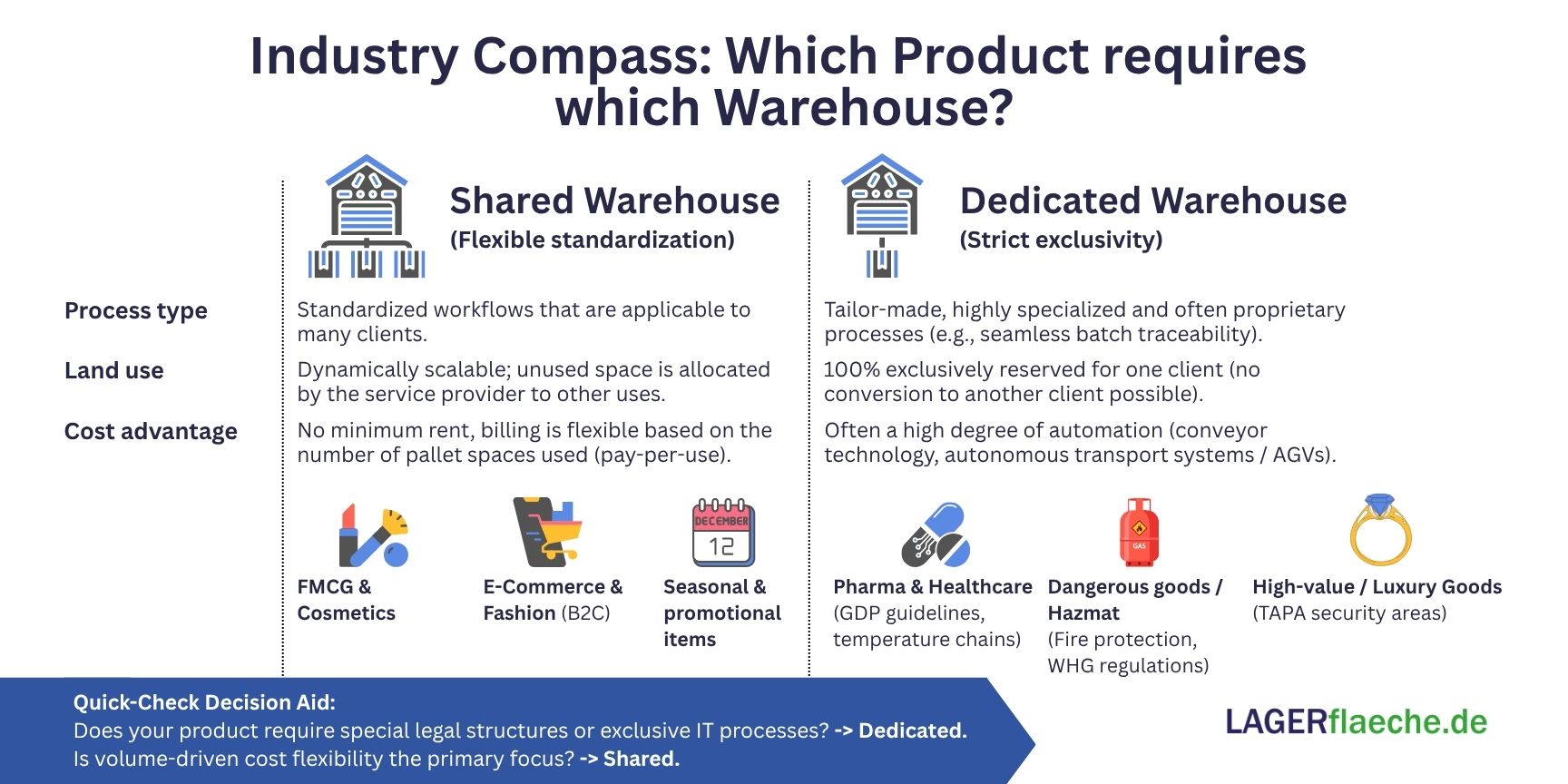
Not every product is allowed in a shared warehouse. The choice of model is strongly determined by regulatory requirements and product characteristics.
Industries predestined for shared warehousing:
- Standard FMCG (Fast Moving Consumer Goods): Non-perishable food, cosmetics without special requirements.
- Standard E-Commerce / Fashion: Textiles, electronic accessories, consumer goods.
- Seasonal goods: Toys, sports equipment.
Industries predestined for dedicated warehousing:
- Pharmaceuticals: Strictest GDP guidelines (Good Distribution Practice), narcotics law, complete temperature monitoring (15-25°C or 2-8°C). Here, contamination risks often prohibit the sharing of halls.
- Hazardous Materials (Dangerous Goods / Hazmat): Chemicals, lithium-ion batteries of performance class 2 and 3. In Germany, strict fire protection and water management laws (WHG) apply, which require specialized warehouses.
- High-value tech: Luxury goods, high-end electronics. These require TAPA (Transported Asset Protection Association) certifications and special cage areas, which are difficult to implement in multi-user centers.
Operational Control and IT Integration: Who has a Hand on the Lever?
An often underestimated point of conflict in the shared warehouse is the information technology and procedural subordination.
Rule of thumb for logistics managers: In the shared warehouse, you are a guest in the service provider's system. In the Dedicated Warehouse, you are the architect.
If you need specific picking methods (e.g. pick-by-light, voice picking) or tailor-made packaging processes (e.g. handwritten greeting cards, tissue paper wrapping in the premium D2C segment), the shared warehouse reaches its limits. The service provider requires standardization (e.g. standard cardboard boxes, automated labeling) to ensure efficiency across all clients.
In the Dedicated Warehouse, you determine the Warehouse Management System (WMS). You can natively mirror your own SAP-EWM or Infor structure, run real-time inventories, and fine-tune the pick sequences precisely to your production or shipping cycles.
SLA Structures: Contractual Protection against "Client Envy"
In a shared warehouse, you share the attention of the warehouse manager and pickers with other companies. This carries risks: What happens if major customer A blocks all staff on Black Friday while your SME orders are left behind?
This is where Service Level Agreements (SLAs) come into play. When drafting contracts, SMEs in the shared model have to negotiate harder than in the dedicated model.
Critical KPIs that you need to contractually fix:
- Cut-off-time performance: Percentage of orders that leave the warehouse on the same day when orders are received by e.g. 2:00 p.m. (target value: ).
- Inventory Accuracy: Variance between system inventory and physical inventory (target: ).
- Order Picking Error Rate: Number of faulty shipments (target: ).
In the dedicated model, SLAs are just as important, but the risk of resource displacement is eliminated. In return, you bear the risk of staff turnover and sick leave indirectly through the agreed deployment fees.
Flexibility Comparison: Reacting to Unforeseeable Market Changes
How quickly can you turn your business model around? The COVID-19 pandemic and the Suez Canal crises have shown the importance of strategic agility.
- Contract terms: Shared warehouse contracts often have short terms (12 to 24 months) or are based on rolling contracts with a three-month notice period. Dedicated contracts usually require terms of 3 to 5, sometimes even 10 years, due to the amortization of the service provider's CapEx investments.
- Process changes: If you want to switch from B2B pallet shipping to B2C single-item shipping overnight, this is often a question of tariff in the shared warehouse. In the Dedicated Warehouse, this means a complete, months-long restructuring of the logistics infrastructure.
International Comparison: Germany vs. Europe vs. Global Markets
The decision for shared or dedicated is massively influenced by the geographical location. Germany is considered the logistics world champion, but has specific structural disadvantages compared to other regions.
Focus on Germany
In Germany, land prices for logistics space (especially in the core regions such as Hamburg, Frankfurt/Rhine-Main and Munich) have risen to record levels (in some cases over €8.50 to €10.00 per square metre), according to recent reports by Jones Lang LaSalle (JLL, 2025/2026). In addition, there is an acute shortage of skilled workers.
Consequence for SMEs: A dedicated warehouse in Germany is hardly financially feasible for SMEs. The trend is massively towards shared warehouses in order to distribute the extremely high fixed costs for real estate and German collective bargaining staff on several shoulders.
The European Comparison: Eastern Europe & the Netherlands
- Poland & Czech Republic: These countries have developed into the "logistics backyards" of Germany. Rents for halls here are often 30–40% below the German level, and wage costs are still lower despite the adjustment. Strategic benefit: Many German e-commerce SMEs are moving to western Poland (e.g. Poznań/Szczecin region) for dedicated warehouses. They take advantage of the cost advantages of exclusivity, but serve the German market within 24 hours via the infrastructure close to the border.
- Netherlands (Venlo/Rotterdam): The Netherlands is the gateway for overseas imports. Highly developed, highly automated shared warehouses dominate here. Dutch 3PLs are often technologically more advanced than German providers and offer excellent multi-user concepts for the pan-European market, but use strict standardization.
The Global View: USA and China
- USA: The US market is strongly dominated by the "Amazon effect". SMEs there almost exclusively use shared structures via gigantic 3PL networks (such as DHL Supply Chain, GXO or FBA alternatives) to bridge the sheer geographical distance. A dedicated warehouse makes absolutely no sense for European SMEs when entering the US market, unless it is extremely specialized heavy industry.
- China (Greater Bay Area / Yangtze River Delta): There is an extreme density of highly specialized, dedicated factory warehouses here. Due to the enormous production volumes and the lower regulatory hurdles in hall construction, the dedicated model is also widely used there for smaller export players in the B2B sector.
Practical Example: The Scaling Pain of "BioTech-Fit GmbH"
To translate theory into practice, let's look at the fictional (but realistic) BioTech-Fit GmbH, a German SME that sells premium supplements and fitness equipment.
Context
In 2023, the company generated sales of 8 million euros. The shipment (approx. 4,000 parcels/month) was carried out via a shared warehouse of a regional service provider in North Rhine-Westphalia. The costs were fully variable (approx. 4.50 € per package incl. pick, pack & storage fee).
The Turning Point (2025)
Due to a viral success on social media and the entry into large drugstores, the volume exploded to 35,000 parcels/month in the B2C sector, plus 80 B2B pallets per week for retail. In addition, the market now demanded climate-controlled storage (below 21°C) for certain powder products.
The dilemma in the shared warehouse
The previous 3PL service provider was unable to guarantee the air-conditioned area at short notice because other clients blocked the space. In addition, variable costs rose to over 150,000 euros per month for 35,000 parcels. The error rate increased because the service provider's staff was overwhelmed by the sudden peak.
The Solution
BioTech-Fit GmbH decided against its own, completely self-operated dedicated warehouse (too high CapEx risk for the hall construction) and chose the middle ground of contract logistics: It concluded a 5-year contract with a specialized logistics provider for a dedicated warehouse (single-user operation by the 3PL) near the border with Poland (Görlitz).
- The result: the cost per parcel fell to €2.90 due to the scaling and the tailor-made packaging line. The required temperature control was installed exclusively for them. The SME retained full process control via a directly connected ERP system, but outsourced the operational employer risk to the service provider.
Checklist: Which Solution Fits Your Business Model?
Use this decision matrix for your next strategy meeting. Add up the points of the statements that apply:
| Statement | Totally true (points) |
| Our monthly shipment volume fluctuates by more than 50% seasonally. | +3 Shared |
| Our products require strict legal requirements (e.g. dangerous goods, GDP-Pharma). | +5 Dedicated |
| We require highly individual packaging processes (e.g. branding, inserts). | +4 Dedicated |
| Our IT budget for logistics interfaces is limited in the first step. | +3 Shared |
| We are currently expanding into a new country (e.g. UK or USA) and testing the market. | +5 Shared |
| We store more than 8,000 pallets permanently and have a constant basic throughput. | +4 Dedicated |
- Evaluation: If the shared points predominate, you should definitely rely on a multi-user center to protect your capital. If the dedicated points predominate, you risk performance losses and regulatory conflicts in the shared model – the step to exclusive storage is advisable.
Conclusion: The Evolution from Shared to Dedicated Warehouse
There is no "better" or "worse" in the shared vs. dedicated warehouse debate. For the classic European SME, the shared warehouse is the ideal catalyst to grow without high financial risk, to test international markets and to benefit from the logistical expertise of large 3PL players.
However, as soon as your business model reaches a critical mass, processes become highly proprietary or regulatory hurdles set the tone, the shared warehouse mutates from an efficiency driver to a brake on growth. Anyone who dares to take the leap to the dedicated warehouse should choose the location strategically – and take a look beyond the German borders to Eastern Europe or the Netherlands in order to successfully master the balancing act between cost control and maximum operational sovereignty.
Sources and database:
- Fraunhofer Institute for Material Flow and Logistics (IML) – Market Analysis of Contract Logistics
- Jones Lang LaSalle (JLL) – Logistics Market Report Europe 2025/2026
- Bundesvereinigung Logistik (BVL) e.V. – Key figures of logistics
Latest Blog Posts
Stay up to date with the newest trends, insights, and tips in warehouse and logistics. Our latest articles help you navigate the industry with confidence.

Data Centres vs. Logistics Facilities: The Race for Power and Land
Across Europe, logistics operators are competing for more than land and transport access. They increasingly need something much harder to secure: grid capacity. Data centres are intensifying that competition — and changing how logistics locations are evaluated....

Chinese companies discover Europe's logistics real estate
Chinese companies are becoming an increasingly visible user group in Europe's logistics real estate market. What does this mean for warehouse space, 3PL structures and the requirements for European logistics locations?...
AI Hallucinations in Logistics: When AI Plans the Wrong Delivery
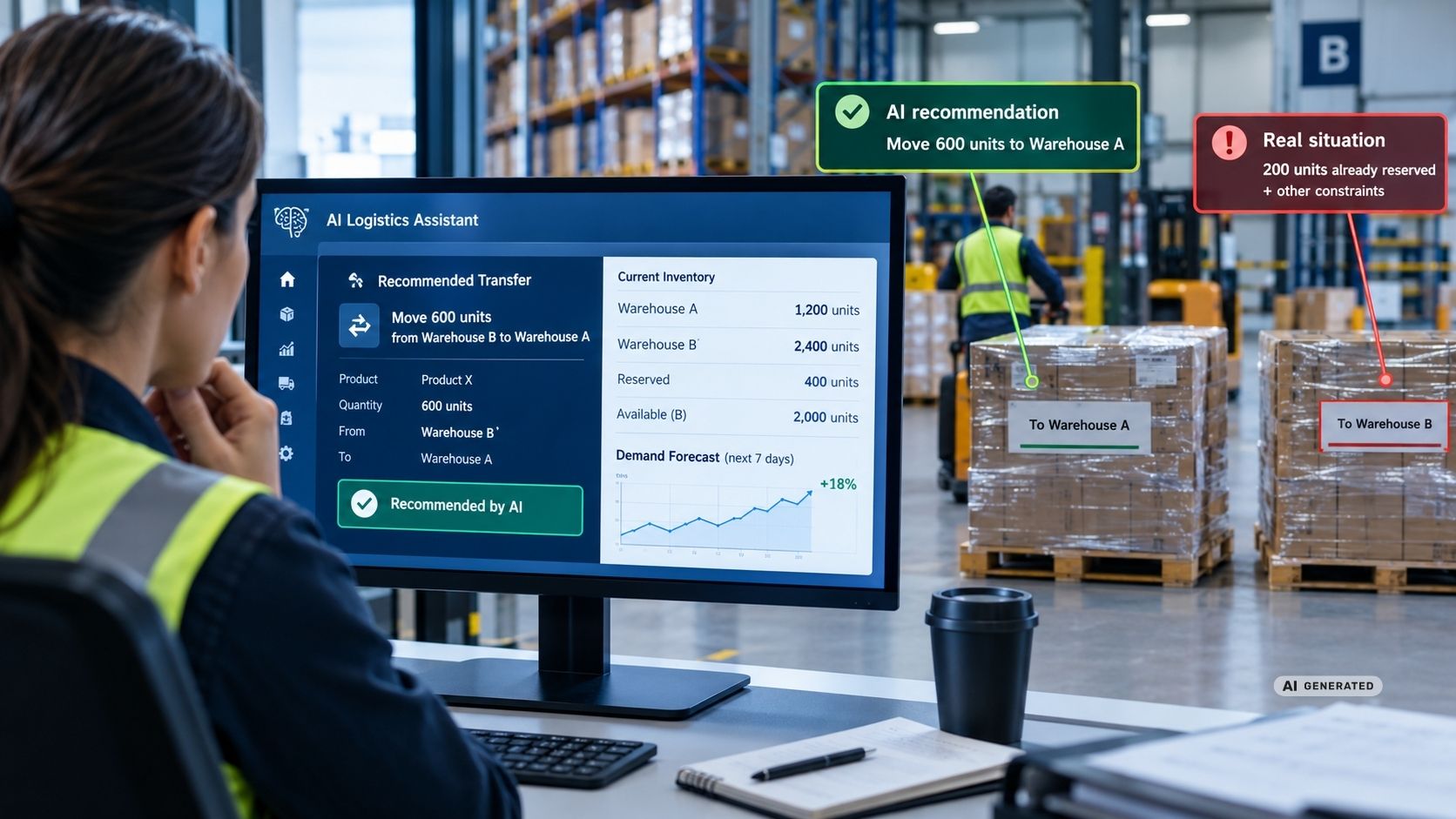
AI can analyze enormous amounts of logistics data — but it can also produce a convincing answer that is simply wrong. The critical question is not whether AI makes mistakes, but what happens when a wrong recommendation becomes an operational decision....
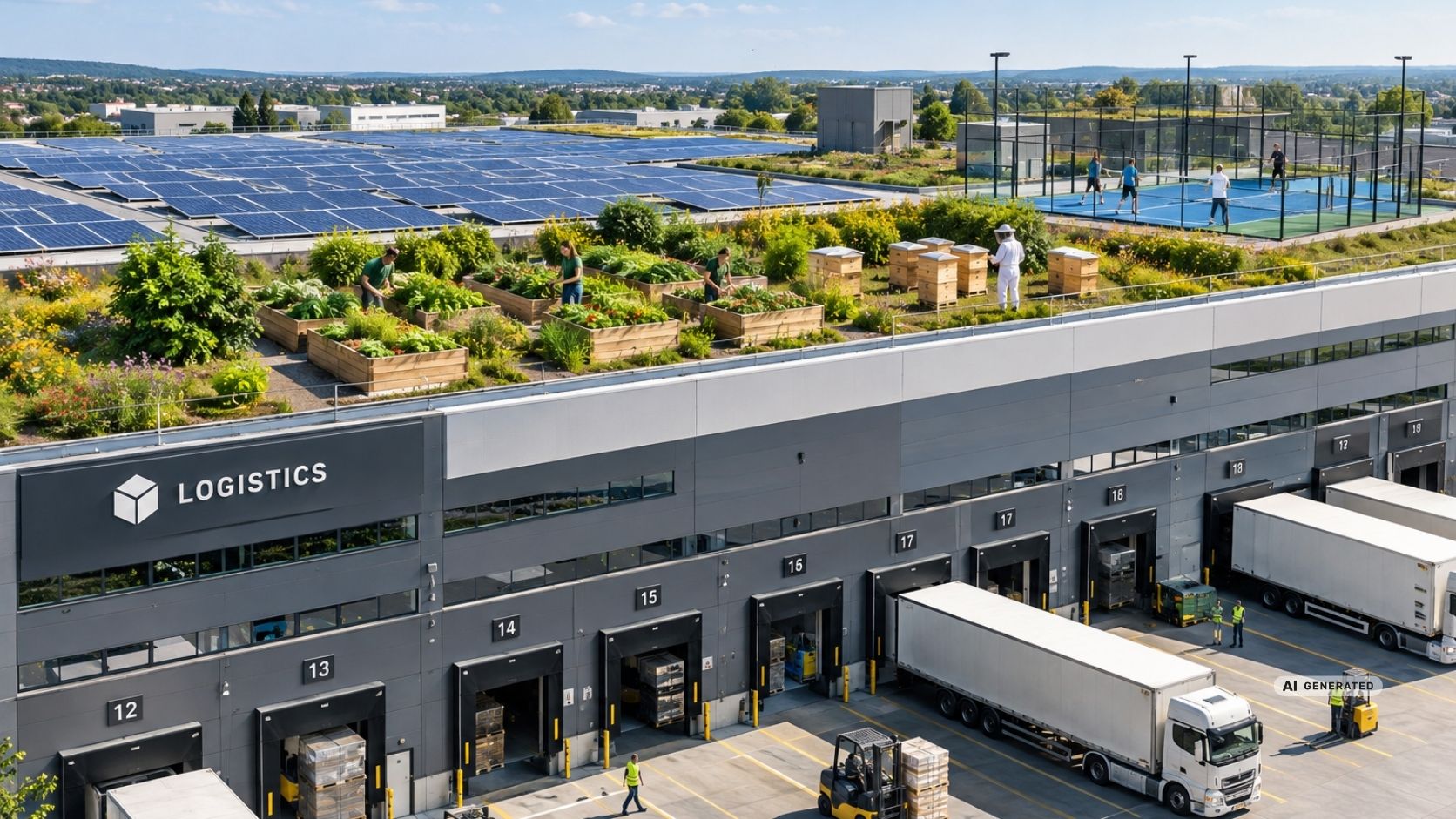
The Green Revolution on the Hall Roof: From Concrete Block to Ecological Power Plant?
Logistics roofs can do more than PV: greening, bees, urban farming and even sports areas turn unused roof space into multifunctional rooms....