


From the Wooden Box to the AI Box: The Evolution of Packaging in Warehouse Logistics
Table of Contents
- The Nostalgia of the Mail Order Business: How did you Pack "in the Past"?
- The Status Quo Today: The Dilemma Between E-Commerce Boom and Space Scarcity
- The Waste Chaos at the End Consumer: When the Bins Overflow
- Ecological and Economic Efficiency: What does the Perfect Packaging Look Like?
- Global Comparison: How is Germany Doing in the International Packaging Jungle?
- The Automation Revolution: Who is Doing the Work Today?
- The Future of Packaging Logistics: Materials and Technologies of Tomorrow
- Practical Example: How "Möbel-Logistik GmbH" saved 35% Transport Volume
- Conclusion & Checklist for Logistics Decision-Makers
When opening an online shop package, have you ever wondered why you got a box the size of a shoe box for a USB cable? Why do we still transport so much air across the country in the 21st century?
Packaging logistics is at a historic turning point. It is no longer just the "shell" for protecting the goods, but a strategic core area of the supply chain that is decisive for profitability, CO₂ balance and customer satisfaction. But to understand where the journey is heading, we first have to take a look back – to a time when mail order still worked via printed catalogs.
The Nostalgia of the Mail Order Business: How did you Pack "in the Past"?
Anyone who placed an order with Otto-Versand, Quelle or Neckermann in the 1970s, 1980s or 1990s experienced a completely different world of logistics. The ordering process took days, and delivery often took weeks. From today's perspective, the packaging methods were standardized, pragmatic, but also highly inefficient.
Standardization instead of individualization
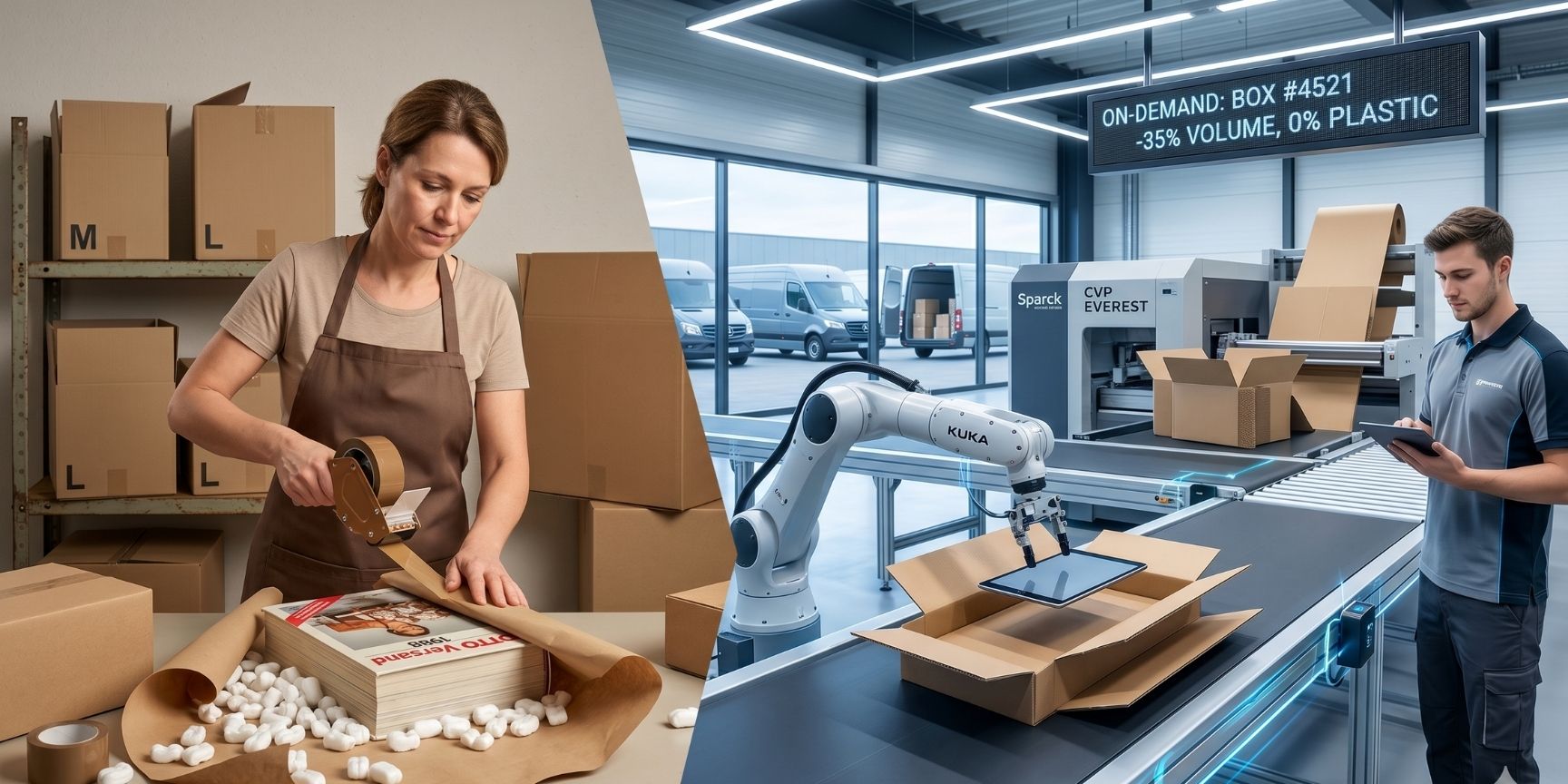
In the past, there was a very limited selection of cardboard boxes. Large mail-order companies usually worked with a handful of standard sizes (XS, S, M, L, XL). If a product did not fit in exactly, the cavity was generously filled with wood wool, heavy wrapping paper or later with polystyrene pellets (so-called packaging chips). The goal was exclusively transport protection, not volume optimization.
Who did the packaging?
The work in the camp was pure, heavy manual labor. Legions of warehouse workers (often in piecework) stood at packing tables. They took the delivery note, took the goods from manual shelves, chose a cardboard box by eye, unfolded it, glued it with wet adhesive tape, filled in the upholstery material by hand and stuck on the address label. This manual activity was error-prone, physically demanding and created enormous personnel bottlenecks in the run-up to Christmas.
The Status Quo Today: The Dilemma Between E-Commerce Boom and Space Scarcity
The unstoppable rise of e-commerce has driven parcel volumes to astronomical heights. According to the Federal Association of Parcel and Express Logistics (BIEK), over 4.1 billion courier, express and parcel shipments (CEP) were transported in Germany in 2024. Further growth is forecast for 2026 and beyond. This leads to two massive logistical bottlenecks:
1. Limited hall space ---> High real estate prices
2. Limited cargo space ---> "We transport air"
Problem 1: Limited space in the hall areas
Storage space (especially in urban areas for the "last mile") is expensive and scarce. If you have to store huge quantities of empty cardboard boxes in hundreds of different sizes, you waste valuable usable space.
Problem 2: Limited space in delivery vehicles
This is where the real economic and ecological disaster lies. Studies by packaging specialist DS Smith show that in global e-commerce, an average of 43% of the volume of a parcel is made up of air.
In plain language, this means that almost every second delivery vehicle literally transports "nothing". This blocks valuable cargo space in the vans of CEP services (DHL, DPD, Hermes, etc.), increases the number of necessary trips and massively increases logistics costs per shipment.
The Waste Chaos at the End Consumer: When the Bins Overflow
One aspect that is often neglected in classic industrial logistics is the "end-of-life" scenario of packaging for the end consumer. Especially in urban areas and apartment buildings, the flood of parcels leads to a real disposal contract problem.
The phenomenon of collapsing garbage cans
The waste paper bins in municipal housing complexes regularly overflow. The reason: Many consumers dispose of cartons without first shredding them. In addition, the mix of different materials (cardboard with plastic tape, bubble wrap made of PE and polystyrene is causing frustration.
Who bears the costs?
The German Packaging Act (VerpackG) imposes financial obligations on manufacturers and online retailers via the so-called "system participation obligation" (licensing in dual systems such as the Green Dot). In 2026, license fees for non-recyclable or difficult-to-separate packaging have risen drastically. Companies that use monomaterials (e.g. 100% waste paper without plastic content) save money. The pressure to design recyclable packaging has thus gone from being an ecological wish to a hard economic KPI.
Ecological and Economic Efficiency: What does the Perfect Packaging Look Like?
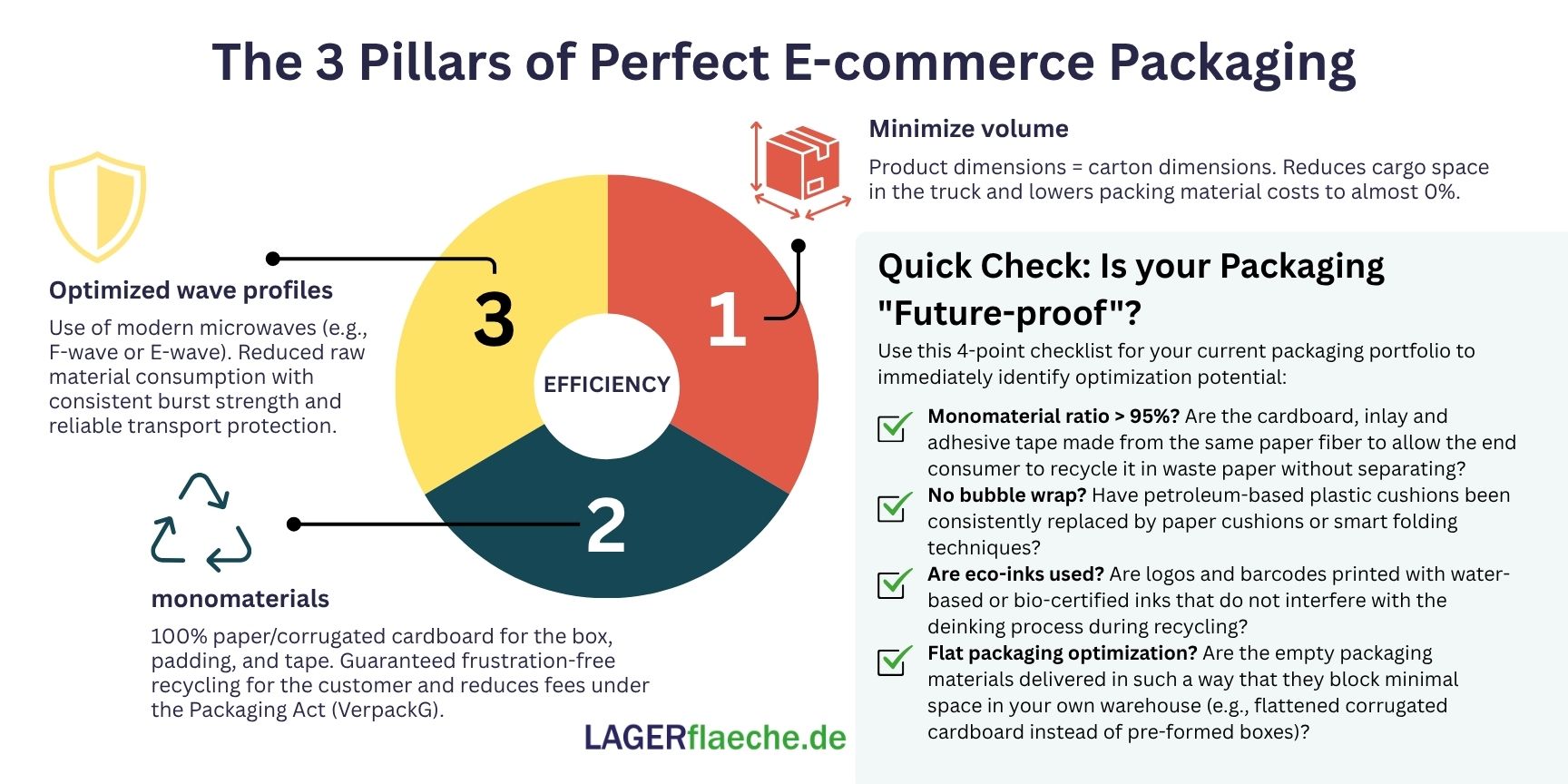
How can the mathematical and logistical dilemma between protective function, costs and sustainability be solved? The formula for modern packaging optimization is based on three pillars:
1. Volume reduction (on-demand packaging)
The most efficient packaging is the one that has the exact dimensions of the product. Modern sensor-based packaging systems measure the dimensions of the goods in a fraction of a second and cut a tailor-made cardboard box from a continuous corrugated cardboard.
2. Monomaterials and circularity
Plastic inlays and bubble bags are increasingly being replaced by paper-based solutions. If the padding, tape and cardboard are made of the same material (pulp), the end user can throw the entire packaging into the blue bin without any separation effort. The recycling loop is closed.
3. Material thickness optimization
Innovative corrugated profiles in corrugated cardboard (e.g. F-flute or microwave) can save up to 30% of material while maintaining the same stability. This reduces the weight of the shipment and saves resources in production.
Global Comparison: How is Germany Doing in the International Packaging Jungle?
The approach to packaging logistics differs drastically around the world. This is due to cultural habits, geographical conditions and legal frameworks.
| Country / Region | Packaging philosophy | Regulatory pressure | Special features / trends |
| Germany | Extremely regulated, focus on recycling and mono-materials. | Very high (VerpackG, strict quotas for material recycling). | High acceptance of brown, unprinted eco-cartons; extreme sensitivity of consumers to plastic waste. |
| USA | Focus on throughput speed and branding ("unboxing experience"). | Low (Very fragmented laws by state). | Often oversized boxes; extremely heavily printed, colorful boxes; high proportion of plastic inlays. |
| China | Ultra-high-speed logistics, focus on ultra-low cost. | Rising (New government restrictions against overpackaging). | Massive use of inexpensive plastic mailers and extremely thin protective films for maximum packing density. |
| Japan | Culturally deep-rooted perfection in the packaging ("omotenashi"). | High (Strict municipal waste separation). | Each product is packaged like a gift; extremely elaborate, but perfectly separable origami folding techniques. |
While in the USA the emotional unpacking experience is often in the foreground (which leads to a lot of waste), in Germany and continental Europe the idea of efficiency and recycling dominates. If you ship internationally, it is imperative to adapt your packaging strategy to these target markets in order to avoid penalties or customer complaints.
The Automation Revolution: Who is Doing the Work Today?
The packing worker mentioned at the beginning, who folds boxes by eye, is becoming increasingly rare in modern logistics centers (such as Amazon, Zalando or large third-party logistics service providers). Today, the transformation of work is divided into two dimensions:
The fully automated high-end line
This is where the machine takes over. An artificially intelligent camera system records the geometry of the goods on the conveyor belt. A robotic arm places the product, while an on-demand machine folds and seals the carton and applies the shipping label at top speed. Throughput rates of over 1,000 packages per hour and packing line will be the industry standard in 2026.
The collaborative workplace (cobots)
Where full automation is not economical due to overly heterogeneous product structures (e.g. in the exclusive fashion sector), "cobots" (collaborative robots) support humans. The human takes over the delicate insertion of the goods, while the robot takes over the pre-assembly of the cardboard packaging, the automatic gluing and the heavy lifting of packages.
The Future of Packaging Logistics: Materials and Technologies of Tomorrow
Where is packaging headed in the next 5 to 10 years? Research is in full swing, driven by biotechnology and digitalization.
Smart Packaging
Packaging is going digital. Integrated, printed RFID chips or smart QR codes track not only the location, but also parameters such as temperature (important for pharmaceuticals and food) or vibrations. Packaging automatically "reports" to the logistics system if it has been damaged.
Innovative materials from nature
The era of petroleum-based plastic in shipping is numbered. The following materials are entering the market:
- Fungal mycelium (mycelium): Fungal roots and agricultural waste can be used to grow custom-fit shock absorbers that replace Styrofoam 100% and are compostable in the garden.
- Algae and grass cardboard packaging: Packaging with a high grass content drastically reduces water and energy consumption in paper production.
- Edible or water-soluble protective films: For small parts that simply dissolve without leaving any residue under the tap at the end user.
Practical Example: How "Möbel-Logistik GmbH" saved 35% Transport Volume
To illustrate the concrete utility value of these technologies, let's look at the real scenario of the fictitious but typical Möbel-Logistik GmbH, a medium-sized online retailer for designer home accessories and disassembled small furniture.
The initial situation
Until recently, the company used eight fixed carton sizes. When shipping filigree floor lamps and solid wooden shelves, massive problems regularly occurred:
- Air percentage: 48% on average per package.
- Damage rate: 4.2 % due to insufficiently fixed goods in the box.
- Customer complaints: Frequent criticism for recovering plastic bubble wrap.
The transformation
The management invested in an automated on-demand cartoning system and switched the logistics completely to mono-material (corrugated board).
The hard facts (ROI analysis after 12 months)
The results of the project significantly exceeded the amortization calculation:
- Reduction of transport volume: by exactly 35%. As a result, more parcels could be loaded into the same trucks per day.
- Savings in CEP freight costs: 18% savings due to the elimination of volumetric weight surcharges.
- Damage ratio: Dropped to less than 0.5% because the customized packaging perfectly fixes the goods.
- Material costs: Despite the investment in the system, the running material costs fell by 22%, as expensive filling material (plastic chips) no longer had to be purchased.
Conclusion & Checklist for Logistics Decision-Makers
Packaging is the face of your company with the customer and at the same time the lever for a highly efficient supply chain. Anyone who still "ships air" today loses money in the fierce competition of e-commerce and gambles away the trust of environmentally conscious consumers.
Quick check for your warehouse:
- Have you measured the real air share of your outbound shipments in the last month?
- Do you still use mixed materials (e.g. cardboard with plastic tape) that make disposal more difficult at the end consumer and increase your license fees?
- Is it worth getting started with on-demand packaging for your shipment volume?
The future of logistics is tailor-made, automated and green. It's time to rethink packaging.
Latest Blog Posts
Stay up to date with the newest trends, insights, and tips in warehouse and logistics. Our latest articles help you navigate the industry with confidence.
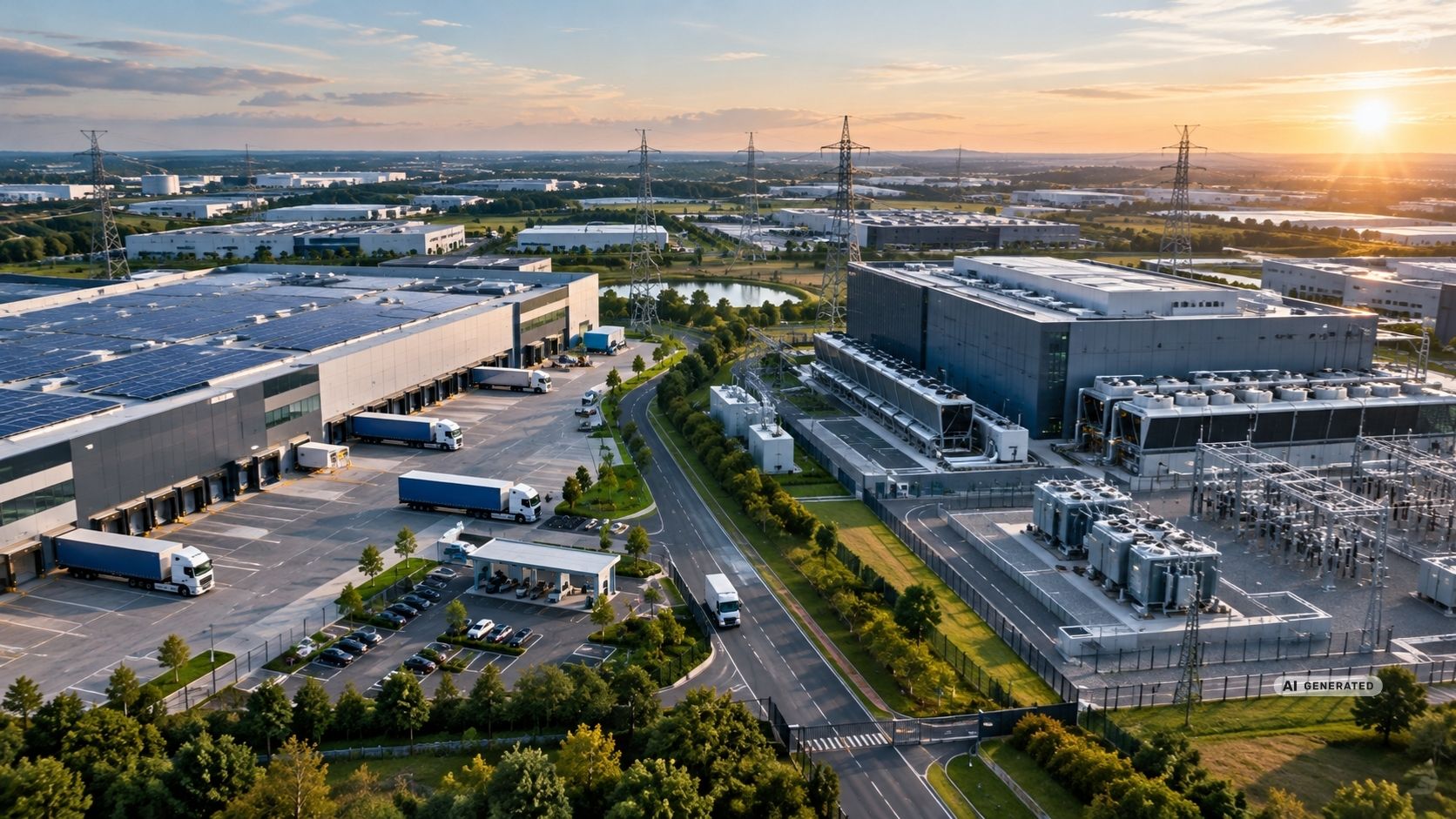
Data Centres vs. Logistics Facilities: The Race for Power and Land
Across Europe, logistics operators are competing for more than land and transport access. They increasingly need something much harder to secure: grid capacity. Data centres are intensifying that competition — and changing how logistics locations are evaluated....
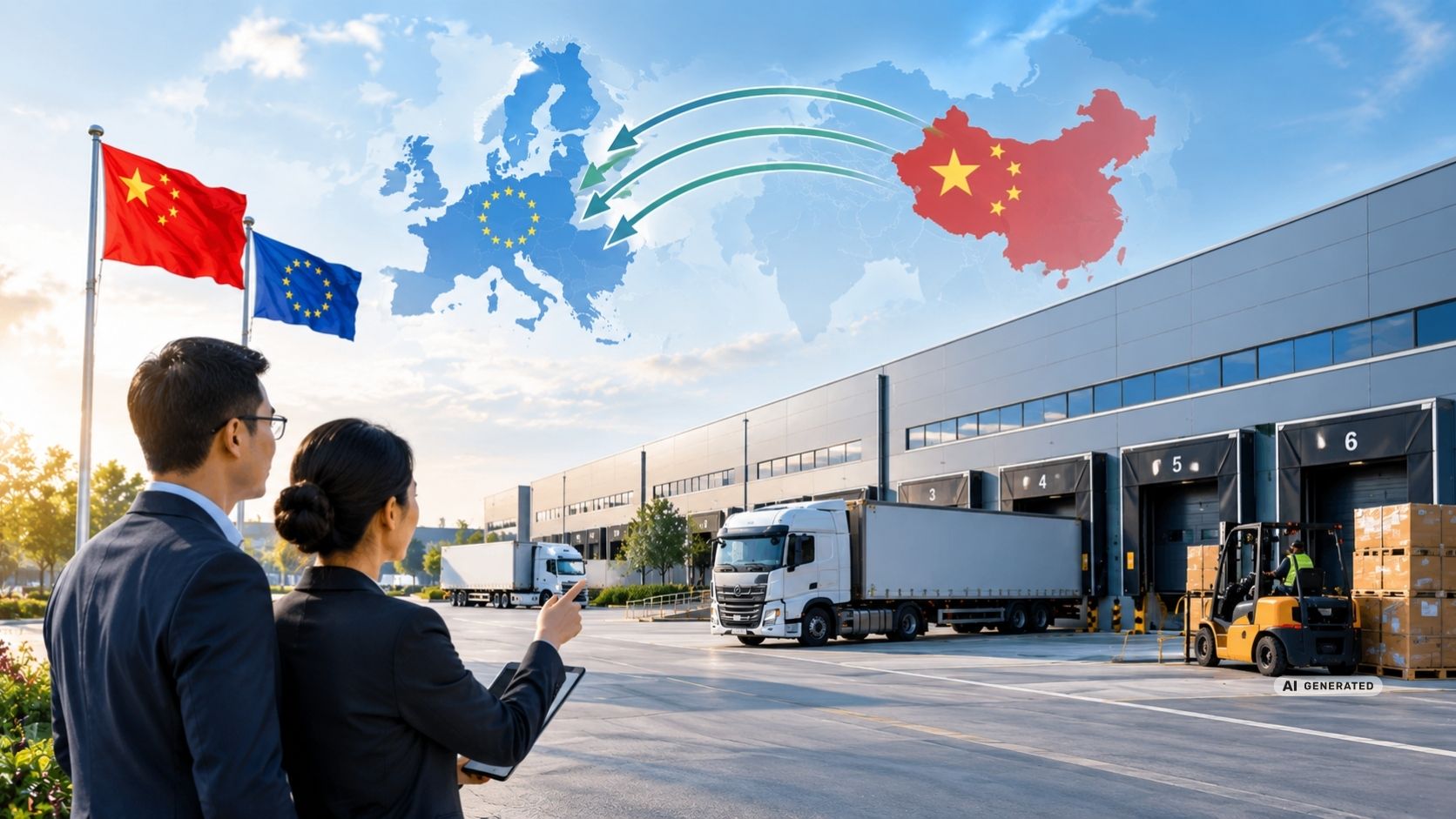
Chinese companies discover Europe's logistics real estate
Chinese companies are becoming an increasingly visible user group in Europe's logistics real estate market. What does this mean for warehouse space, 3PL structures and the requirements for European logistics locations?...
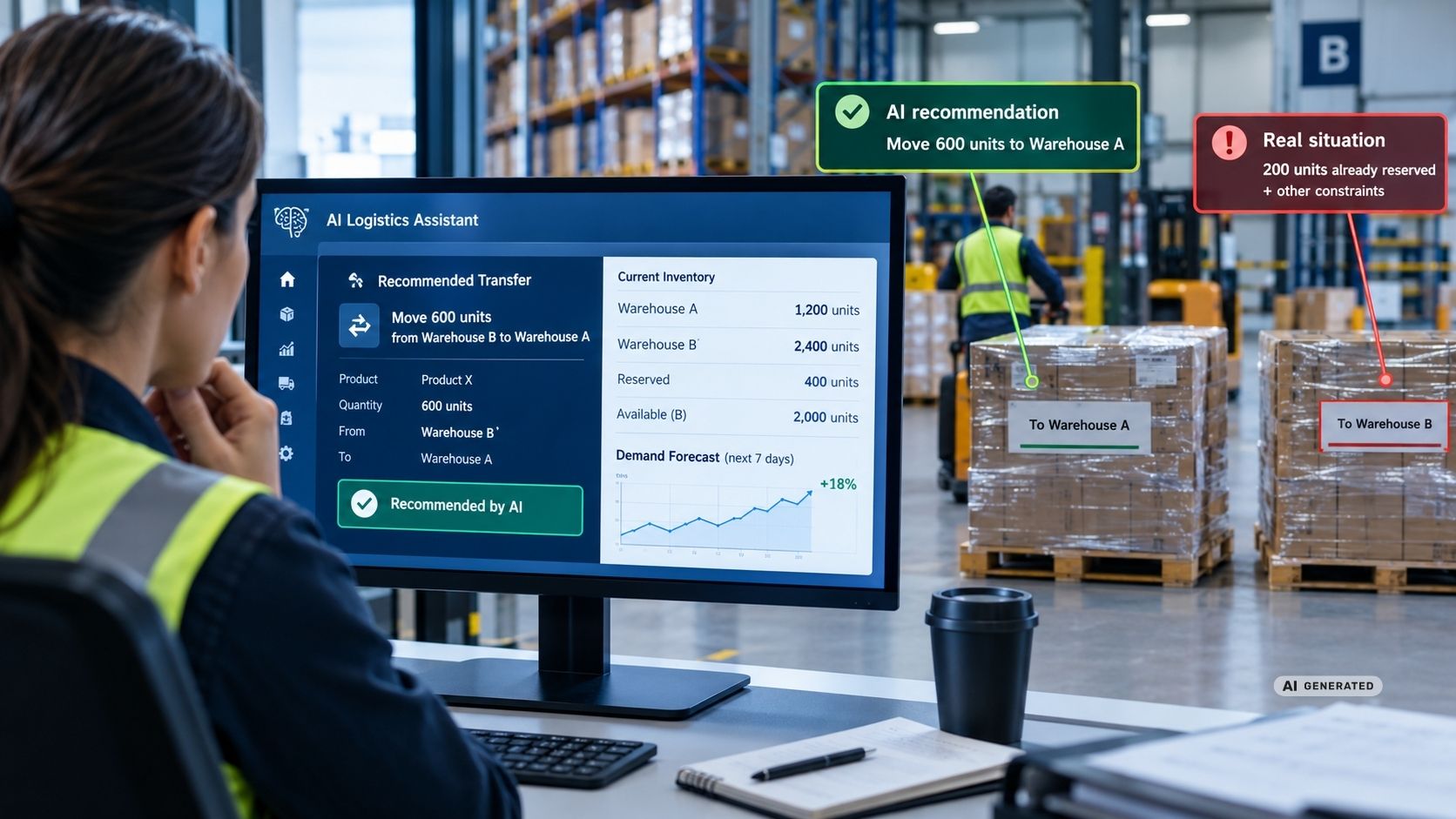
AI Hallucinations in Logistics: When AI Plans the Wrong Delivery
AI can analyze enormous amounts of logistics data — but it can also produce a convincing answer that is simply wrong. The critical question is not whether AI makes mistakes, but what happens when a wrong recommendation becomes an operational decision....
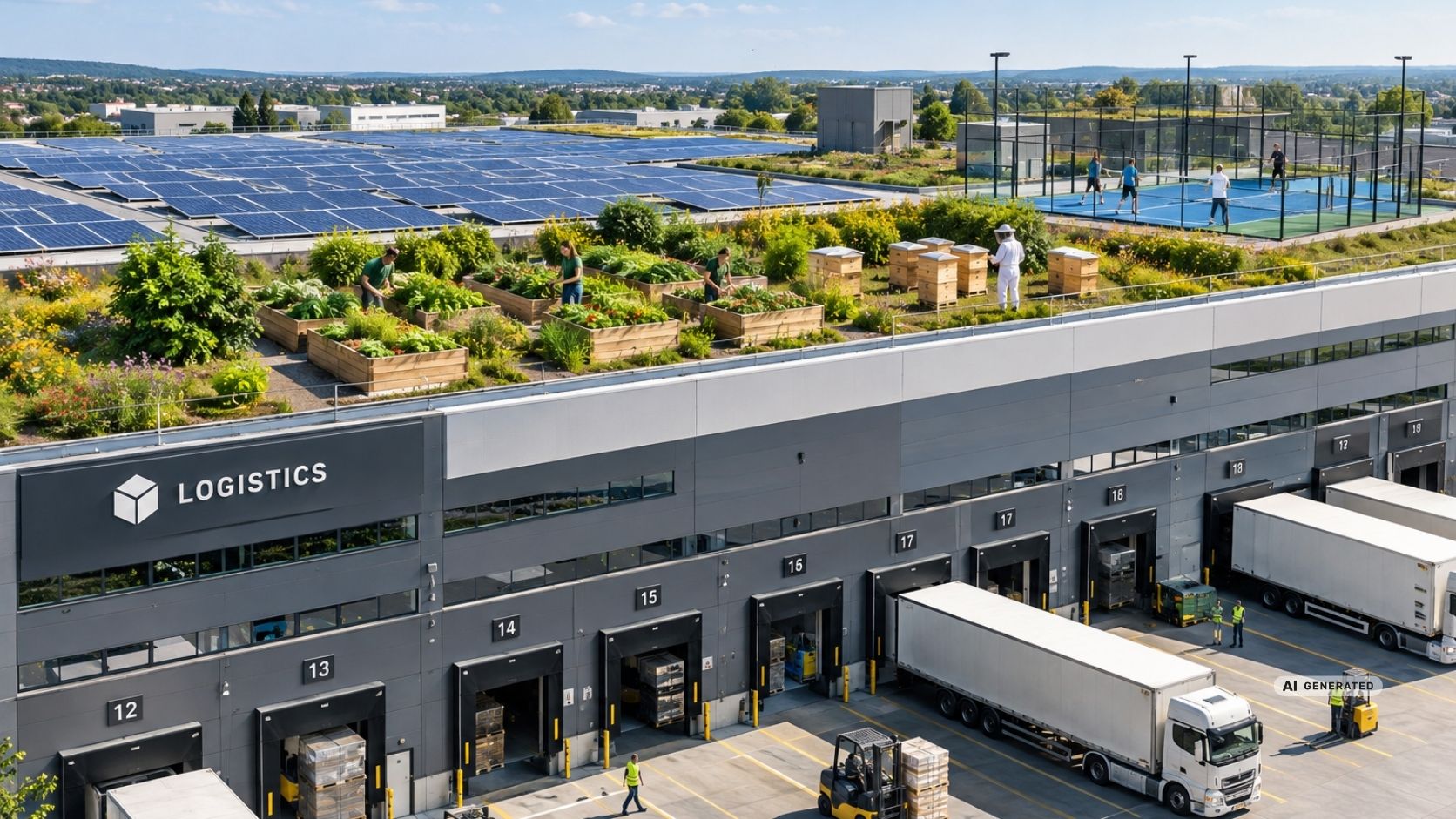
The Green Revolution on the Hall Roof: From Concrete Block to Ecological Power Plant?
Logistics roofs can do more than PV: greening, bees, urban farming and even sports areas turn unused roof space into multifunctional rooms....