



Multi-Story Warehouses: The Future of Urban Logistics Amid Land Scarcity?
Table of Contents
- The driver: Why we are suddenly looking up in logistics
- More than just an intermediate floor: What is a real two-storey logistics property?
- Everyday life in the logistics high-rise: How does it work in practice?
- The project developer's checklist: More than just a floor on top
- Matter of consideration: The advantages and disadvantages in detail
- Europe in comparison: Where are the pioneers and where does Germany stand?
- Projects and experiences: What is the reality in Germany?
- The limits of the vertical: How high can and should we stack logistics?
- Conclusion: Revolution or niche solution?
The pressure on the market for logistics real estate is enormous. In German logistics hotspots such as Hamburg, Berlin, Munich or the Rhine-Main region, land is not only extremely expensive, but simply no longer available. At the same time, demand is exploding, driven by e-commerce and the call for ever faster "last-mile delivery". Logistics must move closer to urban centres, but where? The answer could lie in the vertical: two-storey logistics properties.
But is stacking logistics areas really the patent solution? How does such a building work in the harsh everyday logistics environment? What hurdles do project developers have to overcome and where does Germany stand in international comparison? This article dives deep into the subject matter and sheds light on the topic from all perspectives.
The driver: Why we are suddenly looking up in logistics
The key question is: Why this trend now? The answer is a simple but critical equation: Rising demand meets extreme scarcity of space. For decades, the motto was "flat and wide". Large, single-storey halls on greenfield sites were the standard. These areas are exhausted near the conurbations.
According to JLL's logistics real estate seismograph, prime rents in Germany's top 8 logistics regions have risen continuously in recent years, while vacancy rates have fallen to historic lows (in some cases below 2%). This shortage is forcing the industry to rethink. Instead of moving further to the periphery and thus extending supply chains, inward densification is becoming a strategic necessity. The vertical design is the logical consequence of this pressure.
More than just an intermediate floor: What is a real multi-storey logistics property?
First of all, an important distinction: a two-storey logistics property is not simply a hall with a mezzanine level for office or light warehouse activities. We are talking about two full-fledged logistics levels that can be used independently of each other.
The decisive feature is the accessibility of the upper floor by heavy trucks (40-ton trucks). This is usually achieved through two concepts:
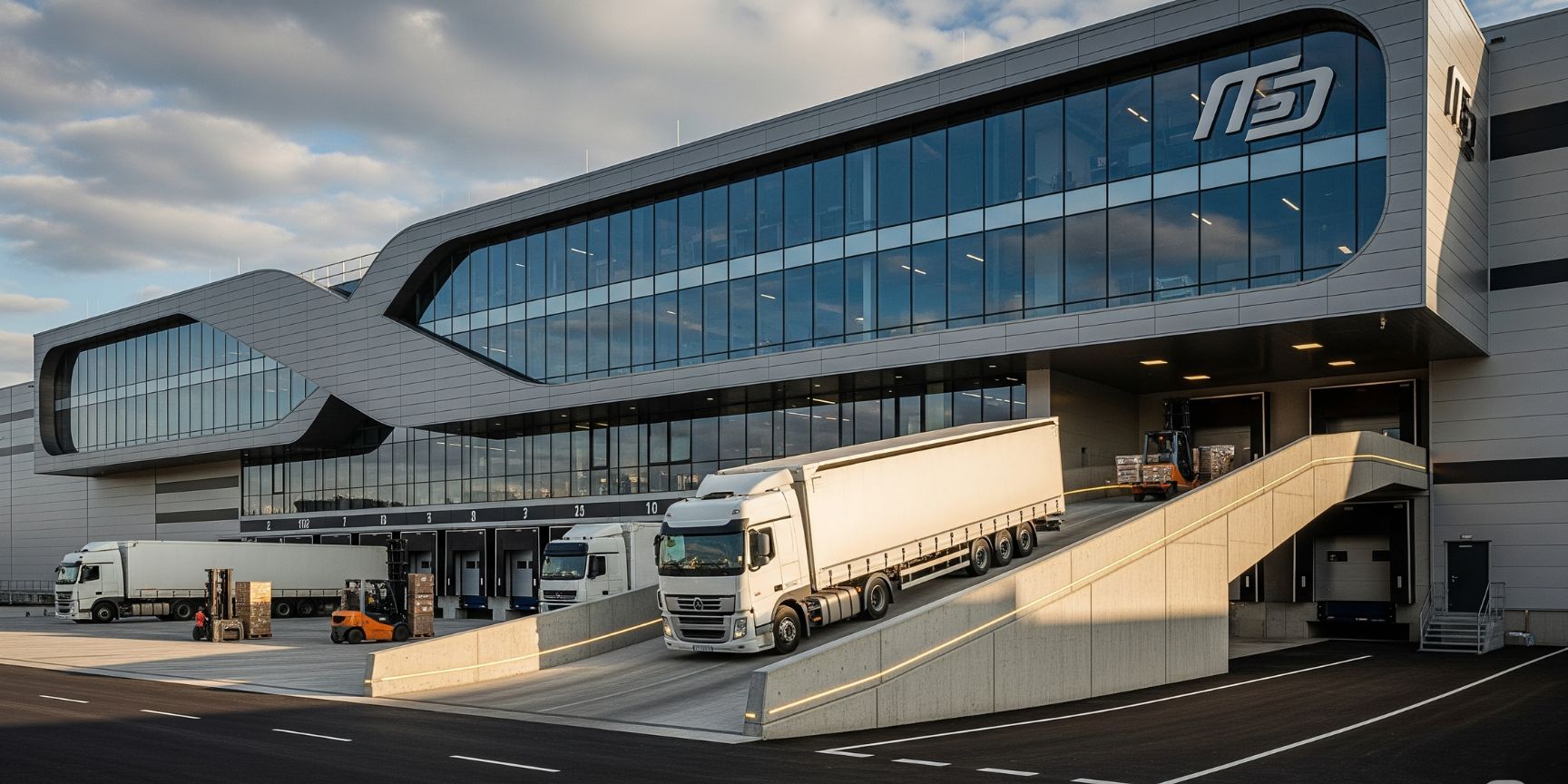
- External ramps: A long, heated ramp runs around or directly into the building, allowing trucks to dock directly at the gates on the first floor. This is the most common and efficient method for the flow of goods.
- Freight elevators: In extremely densely populated locations (e.g. in Asian metropolises), oversized freight elevators are used to transport entire swap bodies or smaller trucks vertically. This system is more complex and has a lower throughput.
Both levels thus function as independent logistics units with their own gates, shunting areas and internal infrastructure.
Everyday life in the logistics high-rise: How does it work in practice?
Imagine the operation: The classic logistics operation runs on the ground floor. Trucks dock, goods are unloaded, picked and prepared for delivery. At the same time, another 40-tonne truck is driving up the wide outer ramp. Once at the top, it has its own full-fledged manoeuvring and docking area in front of the gates of the first floor.
The flow of goods is the decisive factor. In a well-planned property, the traffic flows of the ground floor and upper floor are strictly separated to avoid traffic jams and obstructions. The ramp must be wide enough for oncoming traffic or designed as a one-way street system. Weather conditions are also critical: heating the ramp is essential in our latitudes to ensure operation in ice and snow.
Inside, the demands on the statics are enormous. The floor load capacity on the first floor must be similar to that on the ground floor (often 5 t/m²) to allow the use of forklifts and the storage of heavy pallets. This requires a solid construction.
The project developer's checklist: More than just a floor on top
For project developers, the construction of a two-storey logistics property is an enormous challenge that goes far beyond a standard project.
- Construction costs: The decisive hurdle. The cost per square metre is significantly higher. Experts estimate the additional costs compared to a single-storey building at 50% to 100%. The drivers are the massive steel structure, the elaborate foundations, the expensive ramp construction and the more complex technical building equipment (e.g. fire protection).
- Statics and floor loading: The entire structure must be designed for double the load. This starts with the foundation and runs through the entire supporting structure.
- Fire protection: Two levels mean more complex escape routes, separate fire compartments and more elaborate sprinkler systems. The requirements of the authorities are significantly higher.
- Approval procedures: Since this is a new type of building, there are often no well-rehearsed approval processes. Coordination with the building authorities is more intensive and time-consuming. Issues such as noise protection for residents through the high-altitude truck operations must be considered.
- Tenant acquisition: Developers need to find tenants whose processes are suitable for a vertical solution and who are willing to pay the higher rent. Not every logistics company can or wants to divide its processes into two levels.
Matter of consideration: The advantages and disadvantages in detail
| Advantages | Disadvantages |
| ✅ Maximum space efficiency: Almost doubling of the logistics area on the same plot size. This is the decisive advantage. | ❌ High construction costs: Significantly more expensive to build than single-storey properties. |
| ✅ Urban proximity: Enables logistics in locations where it would otherwise be impossible and shortens the "last mile". | ❌ Higher rents: The investment costs have to be refinanced through the rent, which makes the property more expensive. |
| ✅ Sustainability: Lower land consumption (land sealing) per m² of usable area. Shorter distances to the end customer reduce transport-related CO₂ emissions. | ❌ Less flexibility: the fixed structure with ramp and supports limits the subsequent conversion or adaptation of the property. |
| ✅ Operational separation: Two levels can be ideally used by two different users or for two separate processes (e.g. inbound/outbound). | ❌ Operational complexity: Traffic management, ramp usage and the flow of goods between levels require precise planning and can lead to bottlenecks. |
Europe in comparison: Where are the pioneers and where does Germany stand?
The clear pioneer in Europe is Great Britain, especially in the Greater London area. Due to the extremely high land prices and the enormous population density, the economic pressure here was first so high that the additional investment paid off. Developers such as SEGRO set standards there years ago with projects such as the "SEGRO Park Rainham". In the Netherlands, too, around Schiphol Airport and the port of Rotterdam, more and more multi-storey concepts are being developed.
Germany lags behind in comparison. Why?
- Availability of land: For a long time, there were still sufficient conversion areas in Germany – even near metropolises – (former industrial or military wastelands). This pool is now exhausted.
- Higher construction and approval hurdles: German building regulations, especially in fire protection, are very strict and make such projects even more complex and expensive.
- Conservative market expectations: Developers and investors have been cautious for a long time. Only the extreme pressure of recent years has forced a rethink.
Projects and experiences: What is the reality in Germany?
The number of projects in Germany is still manageable, but it is growing. They are the lighthouses on which the market orients itself.
- SEGRO CityLogistik Hamburg (2019): Considered one of the first prominent projects in Germany. It is a "forklift-deliverable" variant in which the upper floor is reached via freight elevators, primarily for CEP service providers (courier, express, parcel).
- Goodman Hamburg-Harburg (under construction): This project takes the next step with a truck-accessible ramp to the upper floor and offers two fully autonomous logistics units. It shows that the concept is now also arriving on a large scale in Germany.
- Panattoni Berlin (in planning): The developer Panattoni is also planning a multi-storey concept in the capital with the "City Dock Berlin Spandau" to counter the shortage of space.
The experience of the developers shows that the planning horizon must be longer and the cooperation with the municipalities more intensive. Above all, users appreciate the unbeatable location advantage. The operational conversion on two levels is described as feasible, but requires a precise process analysis in advance. The key is to tailor the property exactly to the needs of the tenant.
The limits of the vertical: How high can and should we stack logistics?
The question that logically follows on from the two-storey model is: Where is the limit? If two floors work, why not three, four or even a real logistics high-rise? Is this structurally possible and, above all, does it make logistical sense?
The structural perspective: Everything is possible, but at what price?
From a purely structural point of view, the construction of three- or four-storey logistics properties is not rocket science. After all, the construction industry also builds skyscrapers. However, the challenges lie in the details and are directly linked to the specific requirements of logistics:
- Vertical transport: This is the crux of the matter. An external truck ramp to a second or even third floor will be exponentially longer, more expensive and more space-consuming. It itself becomes a "land eater", which undermines the original purpose of land densification. For everything that goes beyond two, at most three floors, ramps are usually no longer a practical solution.
- Freight lifts as an alternative: The alternative is heavy-duty lifts that can transport entire truck containers or swap bodies. These systems are technically feasible, but they create a bottleneck inherent in the system.
- Statics and costs: Each additional floor massively increases the requirements for the foundations and the load-bearing structure of the entire building. Construction costs are not rising linearly, but exponentially.
The logistical and economic perspective: the fight against the bottleneck
This is where technical feasibility separates from logistical sense. Every minute that a truck or a commodity waits for an elevator costs money and destroys the efficiency of the supply chain.
- Throughput decreases: A docking gate on the ground floor can potentially be operated uninterrupted. A gate on the fourth floor is always dependent on the capacity and availability of the elevator system. The maximum throughput of goods per square metre decreases with each additional floor that is accessed via an elevator.
- The tipping point in profitability: While construction costs per square meter increase with each floor, operational efficiency decreases. There is an economic tipping point where the additional cost of the amount exceeds the benefit of the additional area because this area can no longer be farmed efficiently enough. For most logistics processes (e.g. fast parcel handling, pallet logistics), this point is quickly reached in Europe.
A look at Asia: Where logistics high-rises are a reality
To see three-, four- or even ten-story logistics facilities in action, we have to look to Asia. In metropolises such as Hong Kong, Singapore or Tokyo, such buildings are a reality. The famous "Goodman Interlink" in Hong Kong is a 22-storey logistics centre with an internal, spiral truck ramp that leads to the highest floors.
Why does it work there, but not (yet) here? The answer is a single factor: astronomical land prices. If a square metre of land costs many times what is required in Munich or Hamburg, the cost-benefit calculation shifts dramatically. The immense construction costs of a logistics tower are put into perspective by the extreme cost of land. In this environment, it is more economical to build extremely expensively than to acquire minimally more extremely expensive land.
What does this mean for Germany and Europe?
For the German and European market, three- or four-storey logistics properties currently make neither economic nor operational sense in the vast majority of cases.
- Two floors are the "sweet spot": The two-storey model with direct truck ramp delivery currently represents the best compromise between maximum space density and high operational efficiency.
- A perspective for the future: If the shortage of land in Europe's top metropolises continues to worsen so dramatically that land prices reach Asian levels, this assessment could change in the future.
At the moment, it remains to be said that the jump from one to two floors is a logical and necessary revolution for urban hotspots. The jump to three or four floors would currently be a step in which logistical efficiency would fall by the wayside.
Conclusion: Revolution or niche solution?
Are two-storey warehouses the all-encompassing solution to the shortage of space in Germany's logistics hotspots? No, they are not a one-size-fits-all solution, but they are an indispensable and smart niche solution for the right locations.
They will not replace classic big-box logistics on greenfield sites. But for urban logistics, city depots and last-mile hubs in prime locations, where every square metre counts, they are the future. The high investment expenditure is more than offset by the strategic value of the location.
For project developers, investors and logistics companies, the question is no longer whether to build vertically, but when and where it makes the most sense. The pioneering projects in Hamburg and Berlin are only the beginning. In the coming years, we will see a significant increase in this intelligent type of land densification – because we have to.
Latest Blog Posts
Stay up to date with the newest trends, insights, and tips in warehouse and logistics. Our latest articles help you navigate the industry with confidence.
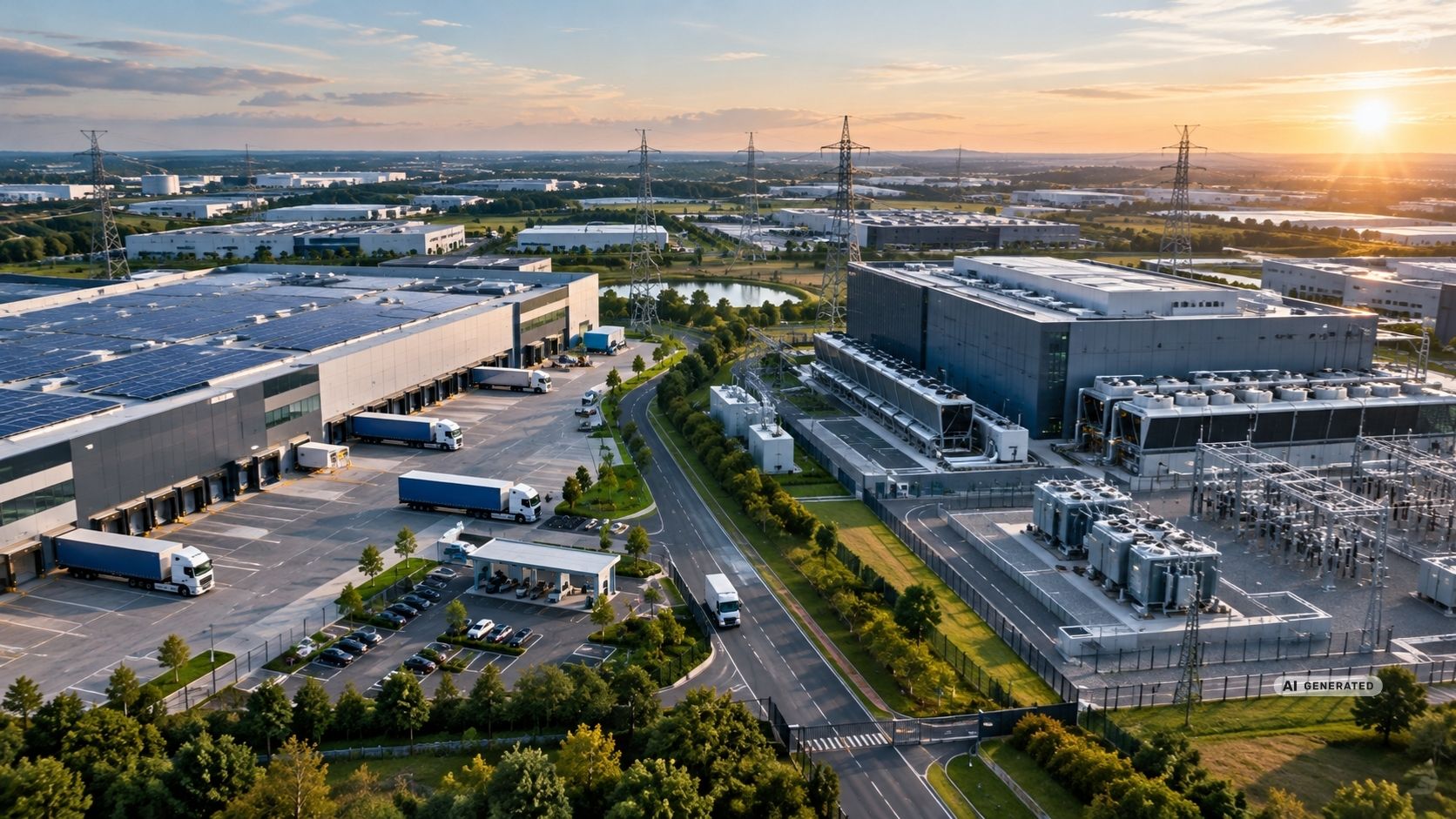
Data Centres vs. Logistics Facilities: The Race for Power and Land
Across Europe, logistics operators are competing for more than land and transport access. They increasingly need something much harder to secure: grid capacity. Data centres are intensifying that competition — and changing how logistics locations are evaluated....
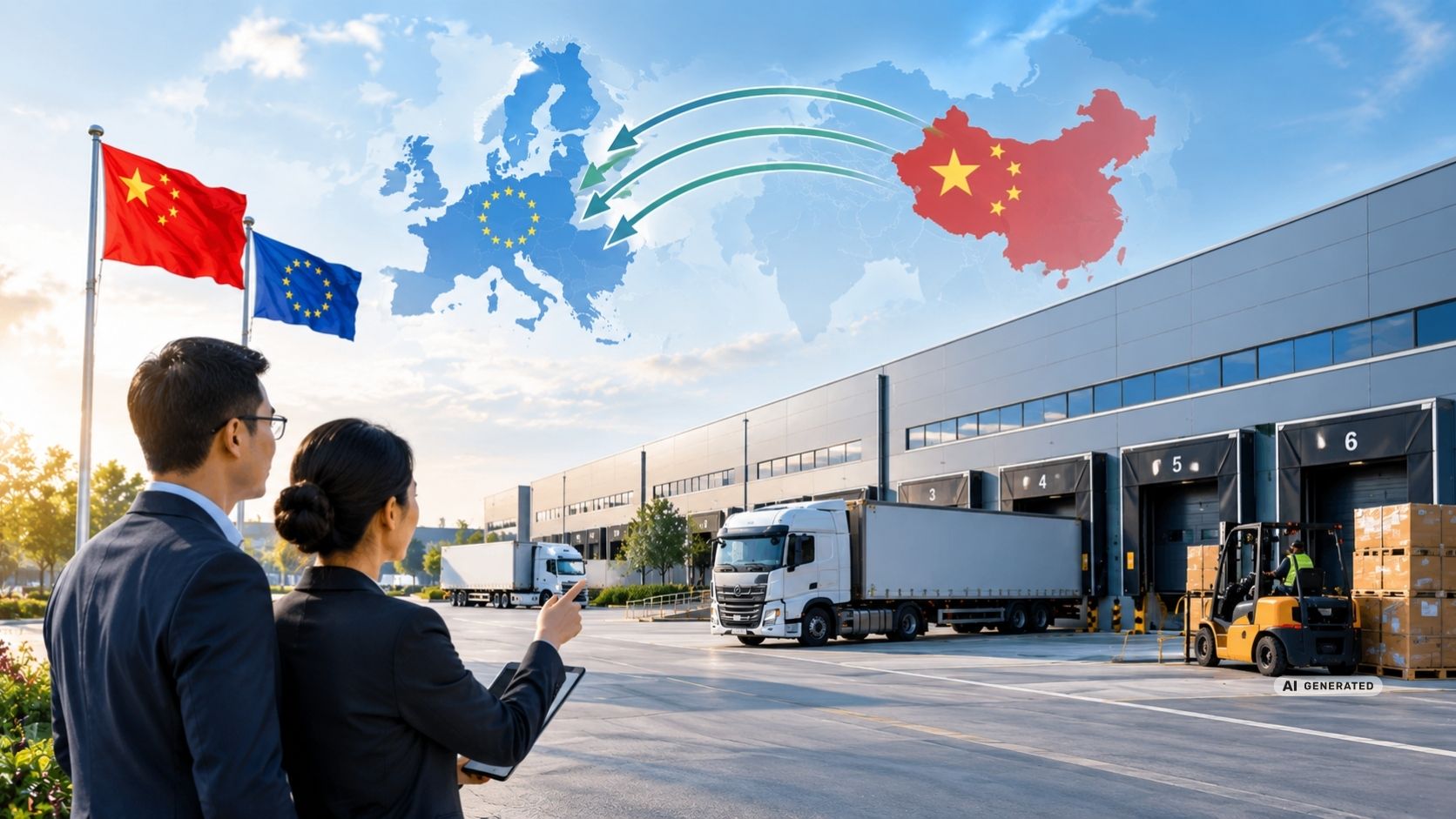
Chinese companies discover Europe's logistics real estate
Chinese companies are becoming an increasingly visible user group in Europe's logistics real estate market. What does this mean for warehouse space, 3PL structures and the requirements for European logistics locations?...
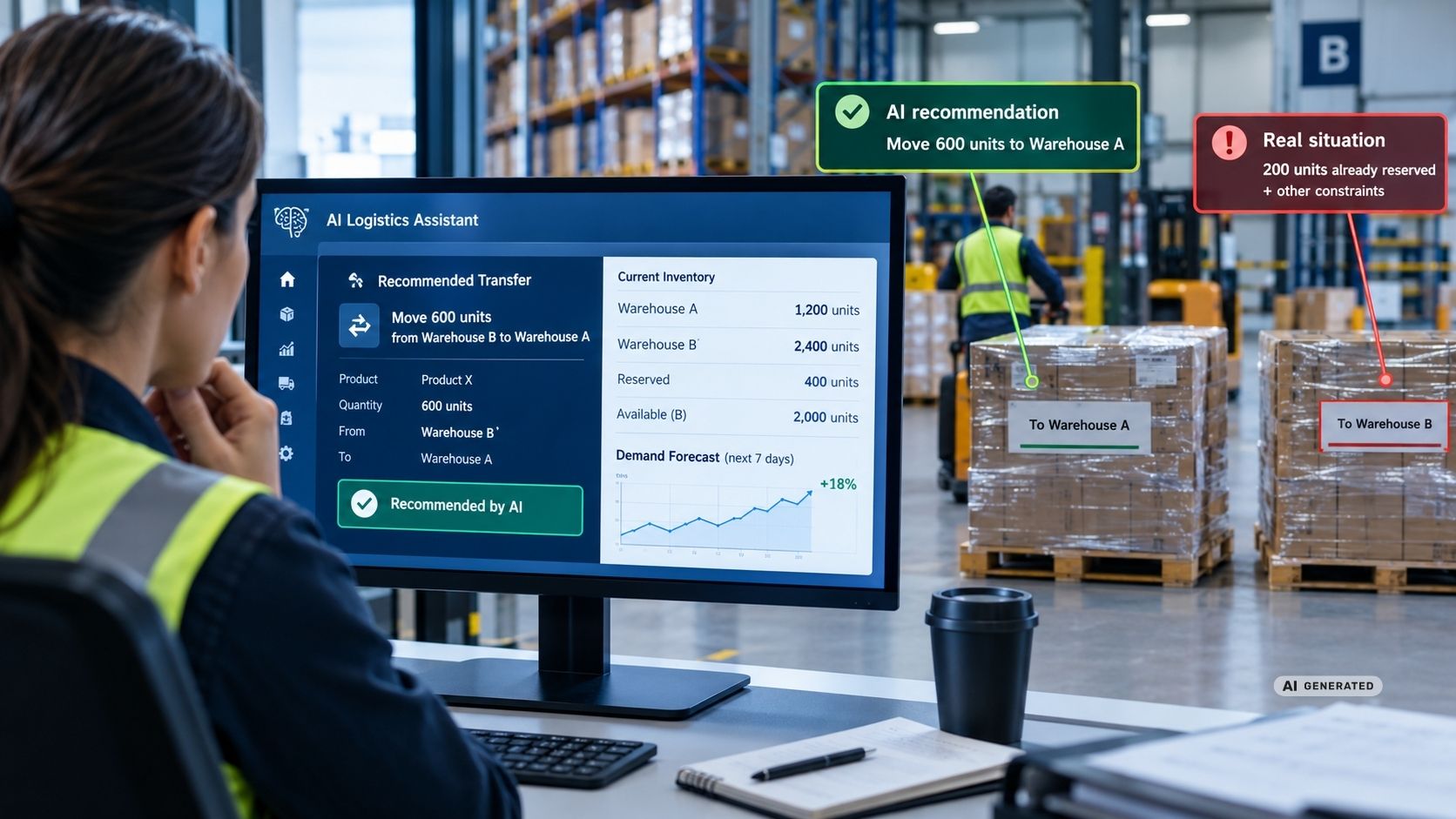
AI Hallucinations in Logistics: When AI Plans the Wrong Delivery
AI can analyze enormous amounts of logistics data — but it can also produce a convincing answer that is simply wrong. The critical question is not whether AI makes mistakes, but what happens when a wrong recommendation becomes an operational decision....
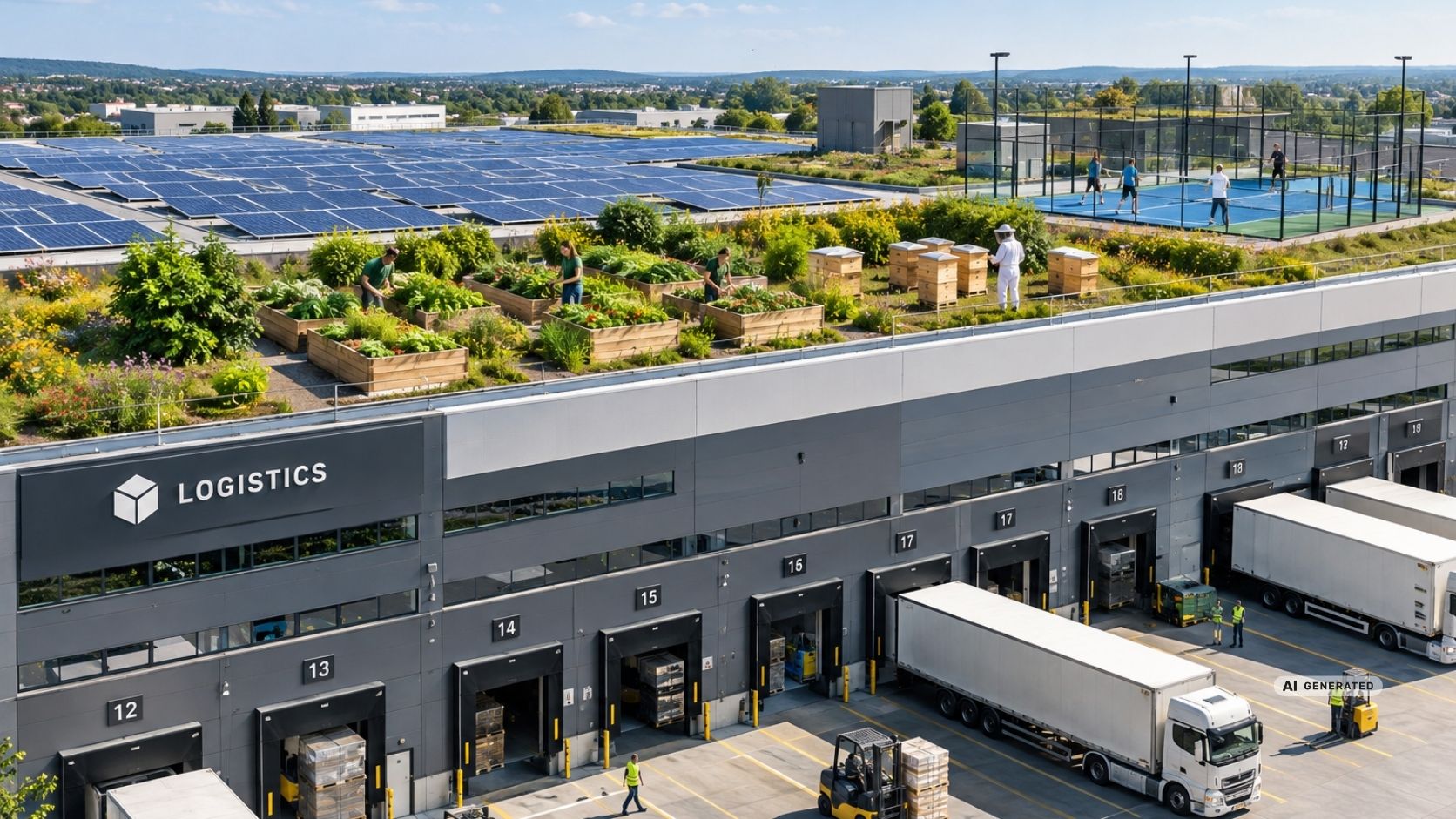
The Green Revolution on the Hall Roof: From Concrete Block to Ecological Power Plant?
Logistics roofs can do more than PV: greening, bees, urban farming and even sports areas turn unused roof space into multifunctional rooms....