


Logistics world champion Germany: Why our location is better than its reputation
Table of Contents
- The Heart of Europe: The Unbeatable Geographical Location
- Legal Certainty and Planning Horizons: The "Safe Haven" for Investors
- Infrastructure: More than just a Motorway
- Warehouse Logistics as a Driver of Innovation: This is where the Tech Heart Beats
- Logistics Real Estate: Pioneer in ESG and Sustainability
- The Economic Stimulus Package and Government Stimulus: Tailwind for the Industry
- Country Comparison: Why not Somewhere Else?
- Practical Example: The "Hidden Champion" in the Rhön
- Why Companies Should Settle in Germany NOW
- Conclusion: Time for Logistical Pride
The German media landscape is often dominated by reports about dilapidated bridges, rail strikes and bureaucratic hurdles. However, if you broaden your view and take a global perspective, you will quickly realise that Germany is and will remain the powerhouse of European logistics. But what exactly makes us "really good"? Why do international corporations continue to invest billions in German logistics real estate despite high labor costs?
In this article, we dive deep into the hidden strengths of our location, compare ourselves with the global players and show why German warehouse logistics is ahead of the rest of the world in terms of innovation and sustainability.
The core questions of this article:
- Why is Germany's geographical location an unbeatable asset?
- How does Germany compare to the USA, Poland or China?
- What role do legal certainty and planning security play for investors?
- How are innovations and the economic stimulus package transforming the industry?
The Heart of Europe: The Unbeatable Geographical Location
It sounds like a cliché, but it is the physical foundation of our success: Germany is the logistics hub of the continent. No other country borders on nine neighbouring countries.
Within a truck radius of 800 kilometers (a typical 24-hour delivery distance), more than 250 million consumers can be reached from Central Germany. This density of purchasing power and industrial value creation is almost unique in the world. While countries such as Spain or Finland occupy geographical peripheral locations, in Germany the flows of goods on the west-east and north-south axes converge.
Fact: Germany regularly ranks among the top 3 in the World Bank's Logistics Performance Index (LPI). Especially in the categories "Infrastructure" and "Logistics Quality", Germany achieves top marks of over 4.1 (scale to 5).
Legal Certainty and Planning Horizons: The "Safe Haven" for Investors
In a world marked by geopolitical instabilities (Ukraine war, tensions in the South China Sea), Germany scores points with an often underestimated factor: institutional stability.
Companies that develop logistics properties worth 50 to 100 million euros need security for decades. The German land registry, transparent approval procedures (even if they sometimes take time) and a reliable legal system are worth their weight in gold in a global comparison.
- Investment security: In contrast to emerging markets, there is no risk of arbitrary expropriations or sudden changes in the law in Germany.
- Financing: German logistics properties are considered "core investments" by banks. The financing conditions for properties in A-locations are often more attractive than in southern Europe due to their intrinsic value.
Infrastructure: More than just a Motorway
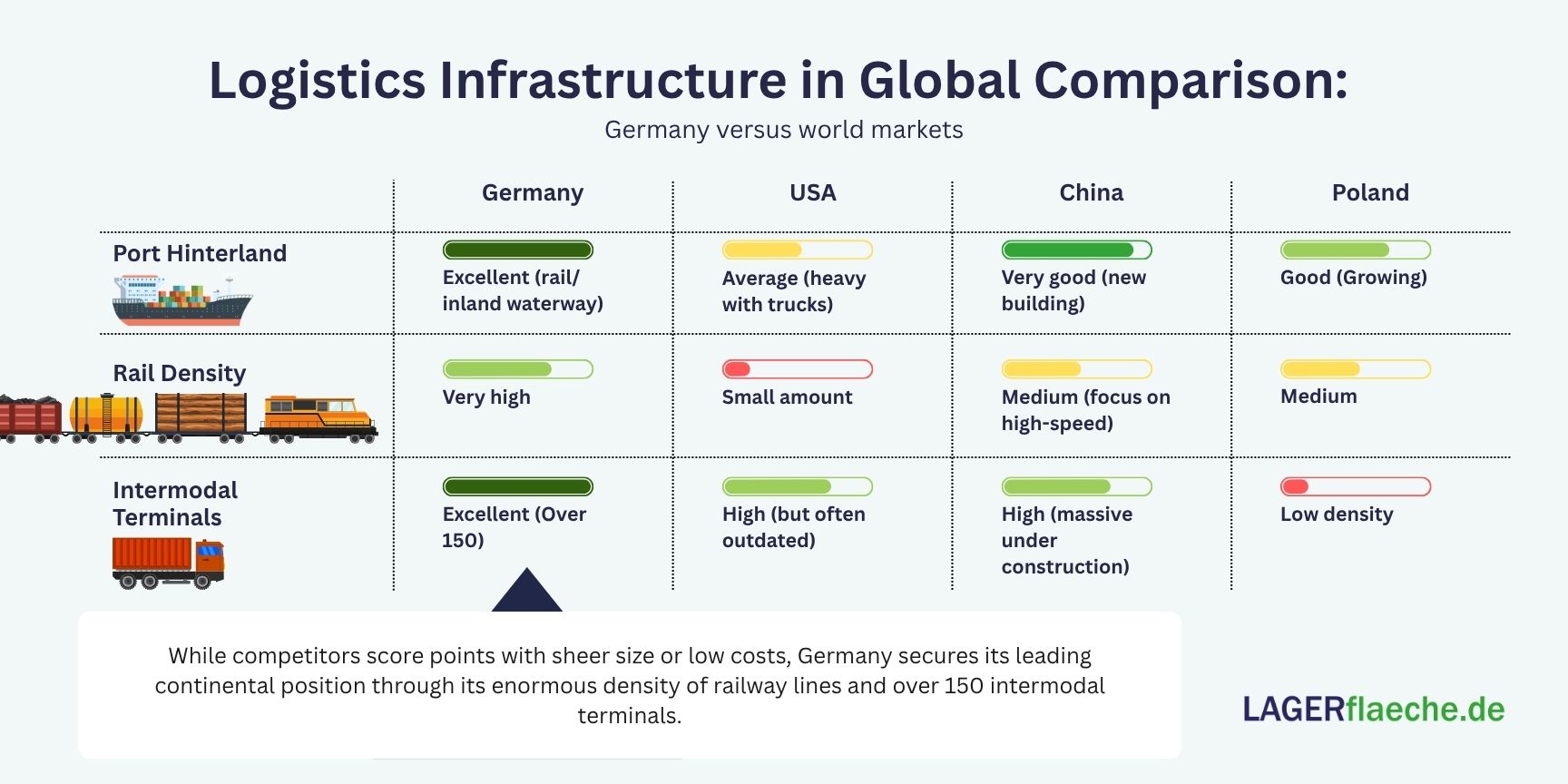
Yes, we curse about construction sites. But let's look at the bare figures: Germany has one of the densest motorway networks in the world (approx. 13,200 km) and the longest rail network in Europe (approx. 38,000 km).
Comparison to other countries:
- USA: While the USA has huge terminals, the condition of the bridges and roads in many states is significantly worse than in Germany. In addition, the rail network is designed almost exclusively for bulk goods (coal, ore) and less for high-frequency intermodal logistics.
- Poland: Poland has caught up massively, but does not yet have the same depth of hinterland connections to the seaports as Germany (keyword: Port of Hamburg and the connection to Bavaria/Austria).
Warehouse Logistics as a Driver of Innovation: This is where the Tech Heart Beats
Where Germany is really ahead is intralogistics. Companies such as Jungheinrich, KION (Still/Linde) and Grenzebach are world market leaders. The integration of robotics and artificial intelligence (AI) into the warehouse management system (WMS) is more advanced in this country than in most other EU countries.
In German warehouses today we find:
- Autonomous Mobile Robots (AMR): That relieve the order pickers of the routes.
- AI-powered slotting optimization: Calculates where goods need to be located to reduce pick time by 15-20%.
- Digital Twins: The complete mapping of the warehouse in digital space to simulate stress scenarios.
In recent years, micro-fulfillment technology in particular has developed rapidly in German metropolitan areas in order to efficiently serve the "last mile" in e-commerce.
Logistics Real Estate: Pioneer in ESG and Sustainability
One area in which Germany leaves the USA and Asia far behind is sustainable construction. Today, logistics real estate is no longer a "grey box".
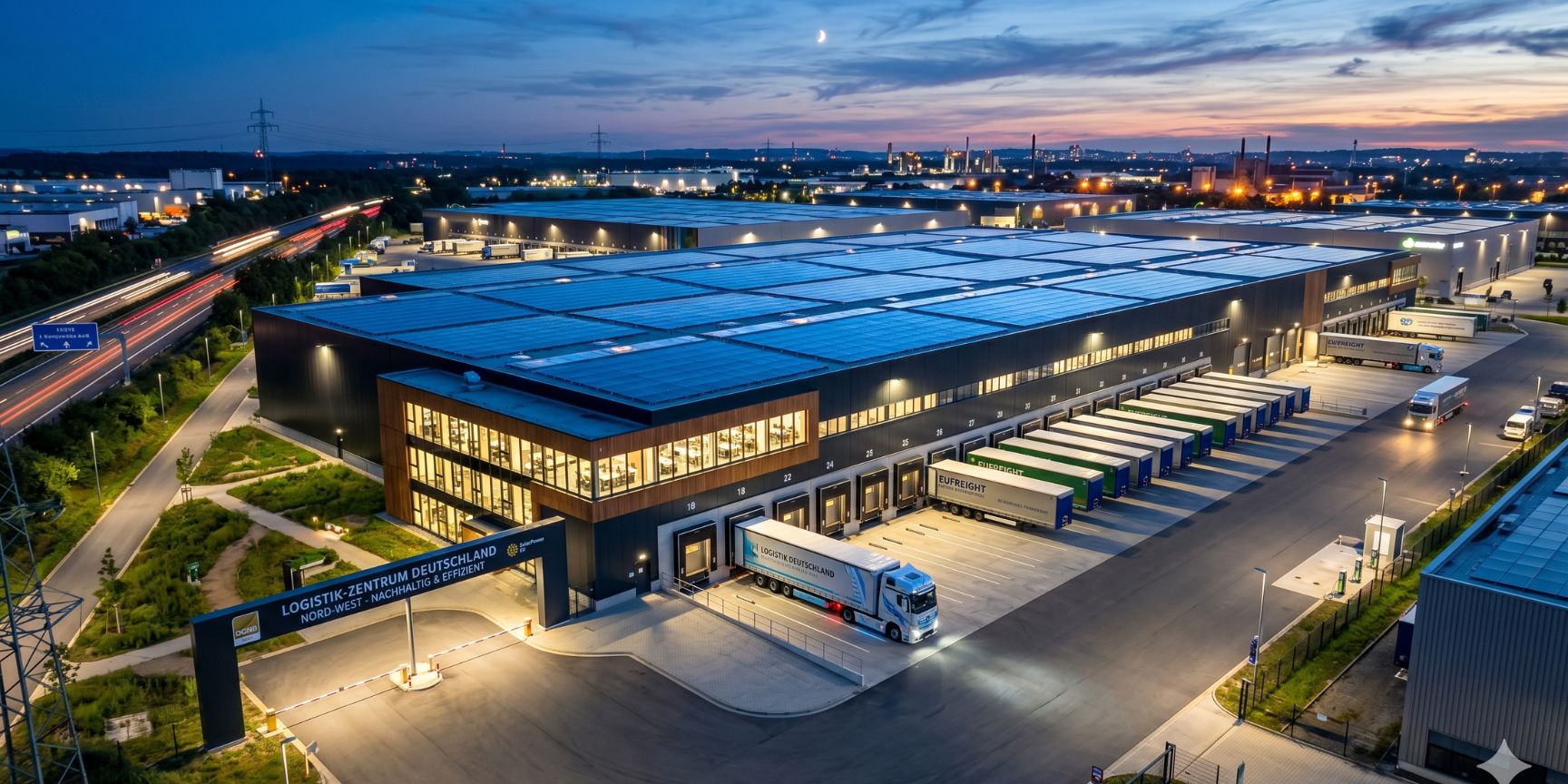
Strict ESG criteria (Environmental, Social, Governance) and certifications such as DGNB (German Sustainable Building Council) turn real estate into power plants.
- PV systems: It is now standard for the roof surfaces of new buildings to be completely equipped with photovoltaics.
- Heat pumps & fossil-free heating: While gas heating systems are often still standard in the USA, German project developers rely on geothermal energy and heat pumps.
- Biodiversity: Façade greening and flower strips are now part of the good manners in order to increase the chances of approval by municipalities.
This makes the sites more cost-efficient in the long term, as they are less dependent on fluctuating energy prices.
The Economic Stimulus Package and Government Stimulus: Tailwind for the Industry
The German government has recognized that logistics is the backbone of the economy. The current economic stimulus package and the associated investment programmes set important accents:
- Digitization promotion: SME programs support SMEs in introducing AI and automation in warehouse logistics.
- Strengthening the rails: With the "general refurbishment" of the corridors (e.g. Riedbahn), massive investments are being made in the capacity of the future in order to shift the modal split in favour of the railways.
- Hydrogen infrastructure: Germany is investing billions in the construction of hydrogen filling stations, which is particularly crucial for the logistics fleets of the future (H2 trucks).
Country Comparison: Why not Somewhere Else?
Germany vs. Poland/Czech Republic:
Companies often settle in the east because wage costs are lower. However, the Total Cost of Logistics (TCL) is often lower in Germany. Why? Because productivity per employee is higher due to the high degree of automation, and transport costs to the end customer (last mile) are reduced due to proximity to the market.
Deutschland vs. China:
China is unbeatable in the speed of new construction. But when it comes to data security and IP protection (intellectual property), global players prefer German server locations and legal frameworks for their sensitive supply chain data.
Germany vs. Netherlands:
The Netherlands is the gateway to Europe (Rotterdam). But when it comes to storage and refining (value-added services) for the DACH market, the locational advantage in the German hinterland is often superior due to the shorter distances to the industrial centers (Stuttgart, Munich, Ruhr area).
Practical Example: The "Hidden Champion" in the Rhön
A medium-sized spare parts logistics company for mechanical engineering was faced with a choice: expansion in Poland or new construction in northern Hesse (Bad Hersfeld/Kassel).
- Decision: New construction in Germany.
- The reason: the availability of highly qualified specialists (dual training system!) and the perfect connection to the DHL and UPS parcel hubs.
- The result: a fully automated AutoStore system quadrupled the picking performance. The PV system on the roof covers 85% of the company's own needs. The proximity to Frankfurt Airport enables "Next Flight Out" services for global customers.
This example shows that the combination of technology, personnel quality and location beats the pure wage cost advantage.
Why Companies Should Settle in Germany NOW
Anyone who invests in German logistics real estate today is not only buying square meters, but also access to one of the most stable and innovative ecosystems in the world.
Summary of the advantages:
- Highest productivity: Through automation and excellent training.
- Resilience: A dense network of alternative routes and modes of transport.
- Future-proofing: Leading the way in the decarbonization of the supply chain.
- Market proximity: Direct access to the most affluent market in the EU.
Conclusion: Time for Logistical Pride
We should stop looking at German logistics only through the lens of construction sites. We are world champions in the organization of complex flows. The combination of engineering in warehouse technology, a central location and growing sustainability makes Germany the most sought-after logistics location in the world.
Are you ready for Germany as a business location?
The question is not whether Germany is too expensive, but whether you can afford not to be present in the heart of the European market.
Sources and database (excerpt):
- World Bank Group: Logistics Performance Index (LPI) 2023/2024.
- Fraunhofer Institute for Material Flow and Logistics (IML): Annual report on logistics.
- Statista: Turnover of the logistics industry in Germany until 2024.
- DGNB: Statistics on certified logistics properties in Europe.
- BMDV: Master Plan for Rail Freight Transport and Investment Programmes 2025.
Latest Blog Posts
Stay up to date with the newest trends, insights, and tips in warehouse and logistics. Our latest articles help you navigate the industry with confidence.
Data Centres vs. Logistics Facilities: The Race for Power and Land
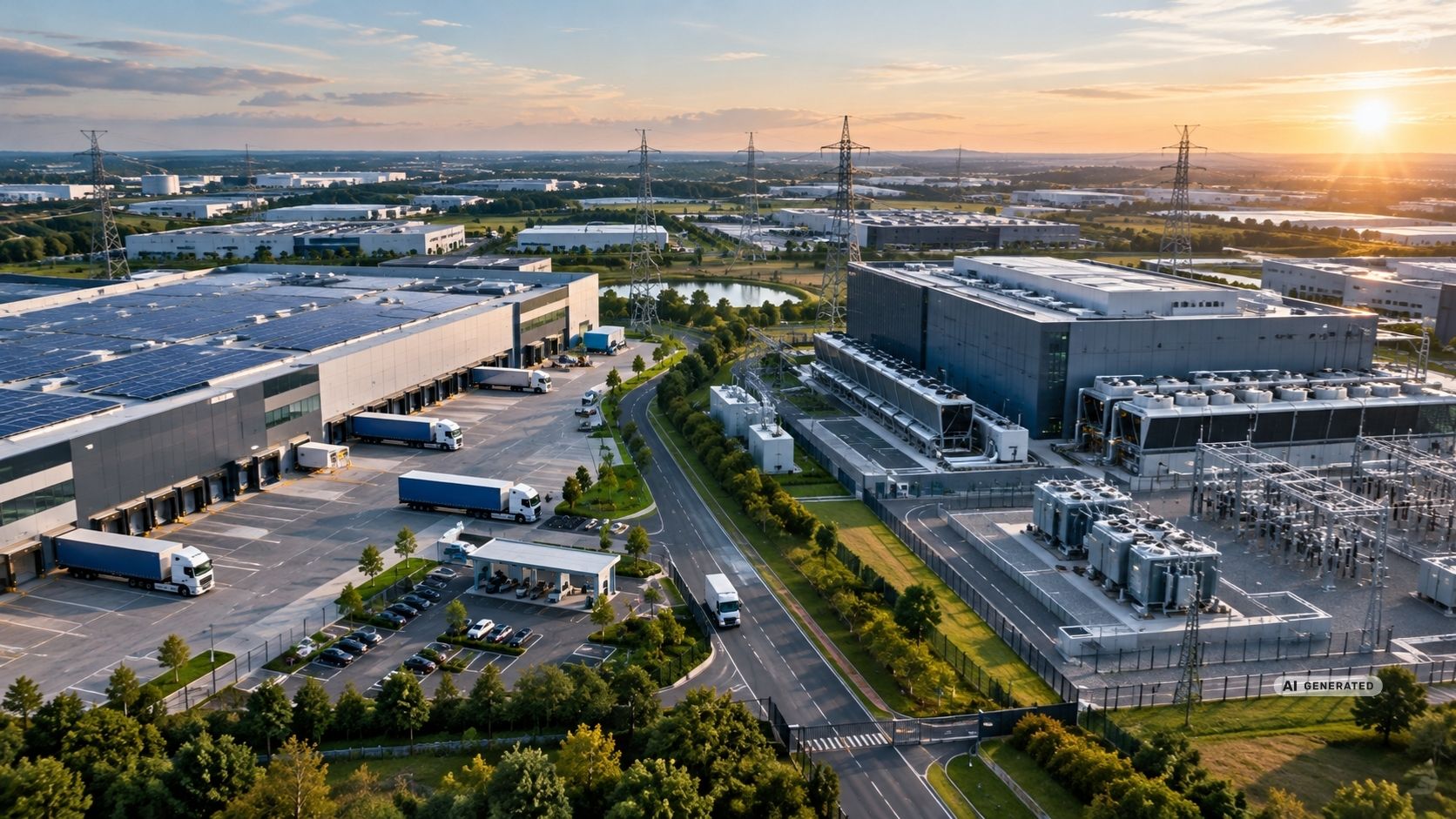
Across Europe, logistics operators are competing for more than land and transport access. They increasingly need something much harder to secure: grid capacity. Data centres are intensifying that competition — and changing how logistics locations are evaluated....
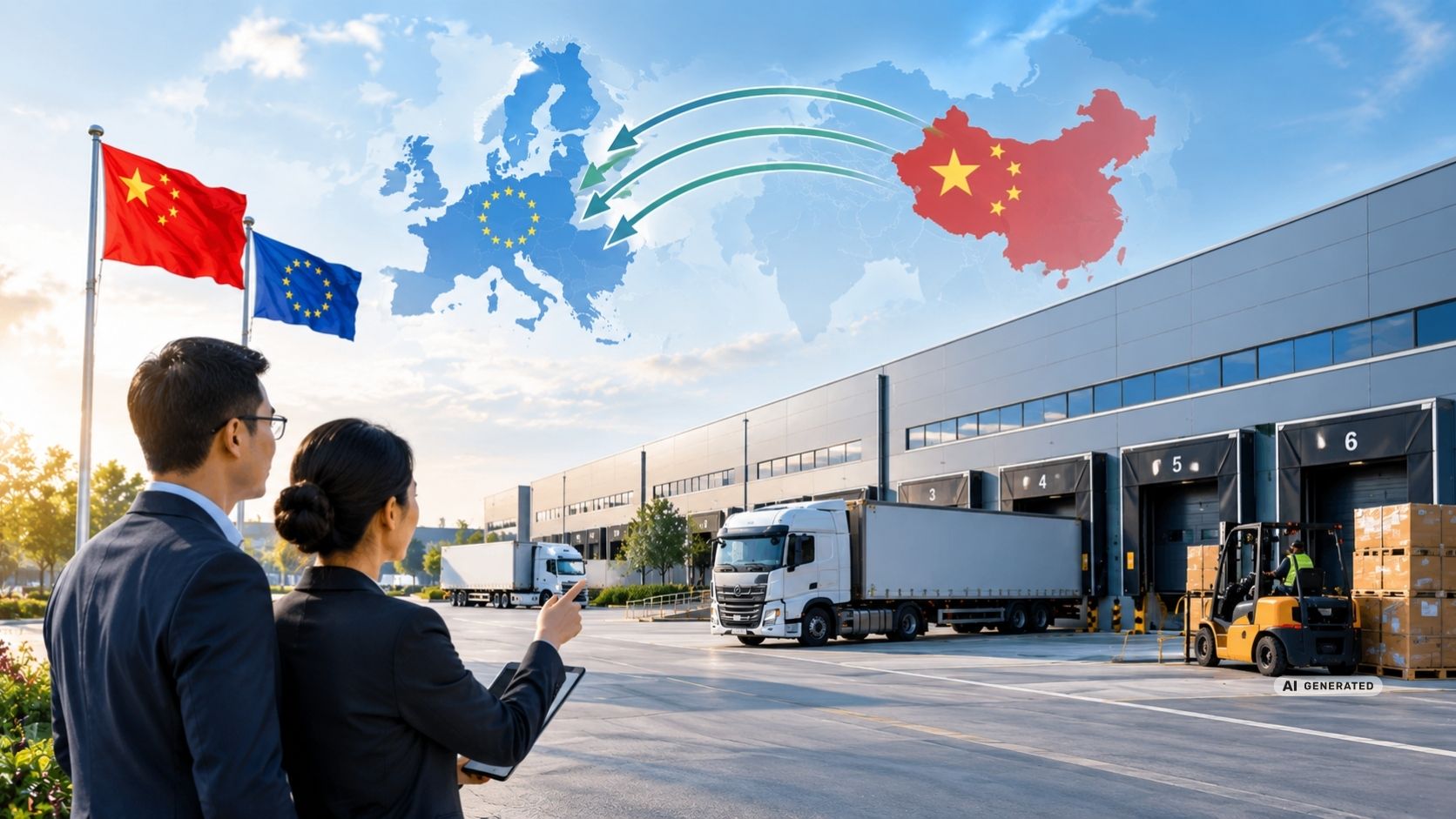
Chinese companies discover Europe's logistics real estate
Chinese companies are becoming an increasingly visible user group in Europe's logistics real estate market. What does this mean for warehouse space, 3PL structures and the requirements for European logistics locations?...
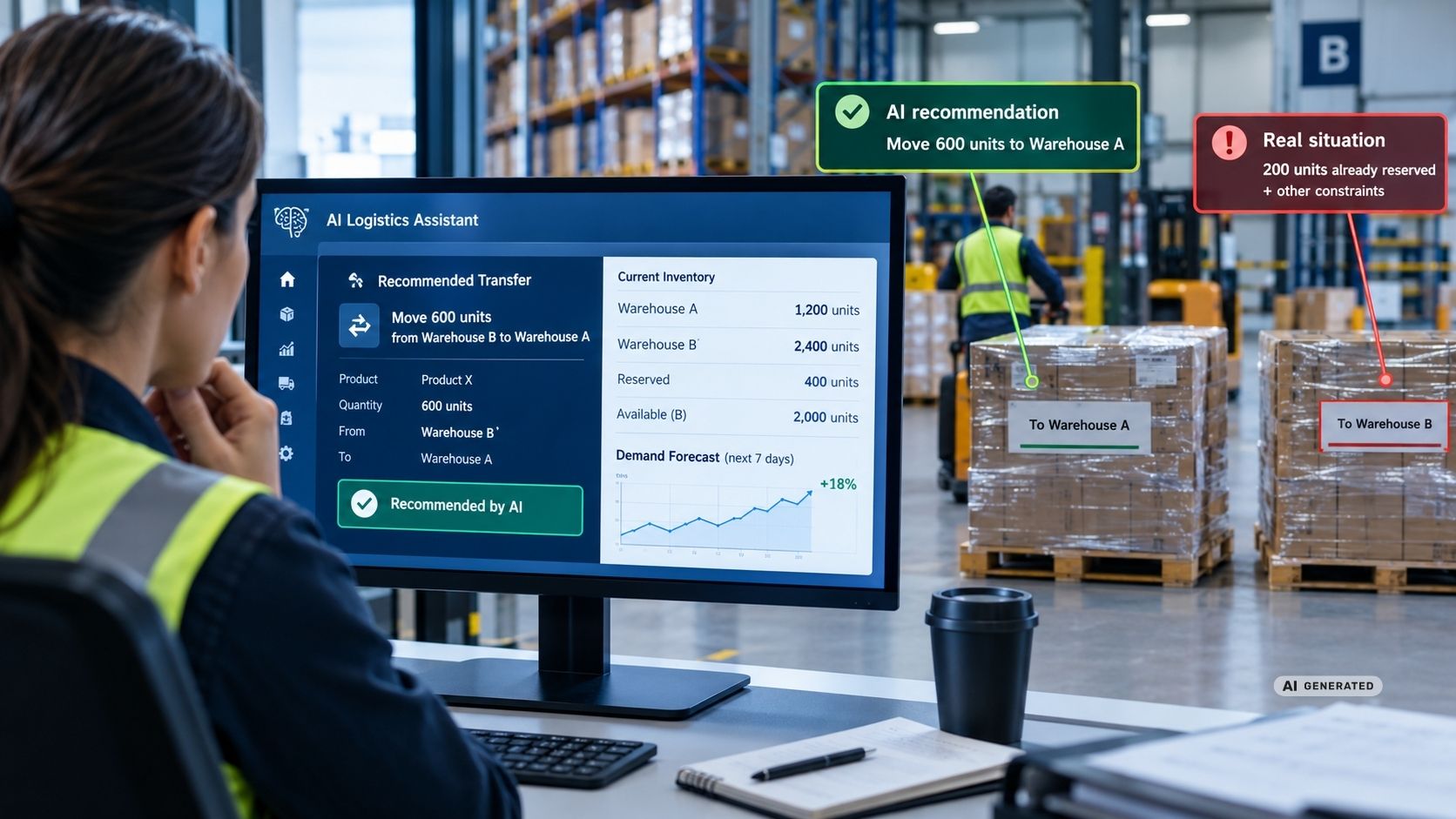
AI Hallucinations in Logistics: When AI Plans the Wrong Delivery
AI can analyze enormous amounts of logistics data — but it can also produce a convincing answer that is simply wrong. The critical question is not whether AI makes mistakes, but what happens when a wrong recommendation becomes an operational decision....
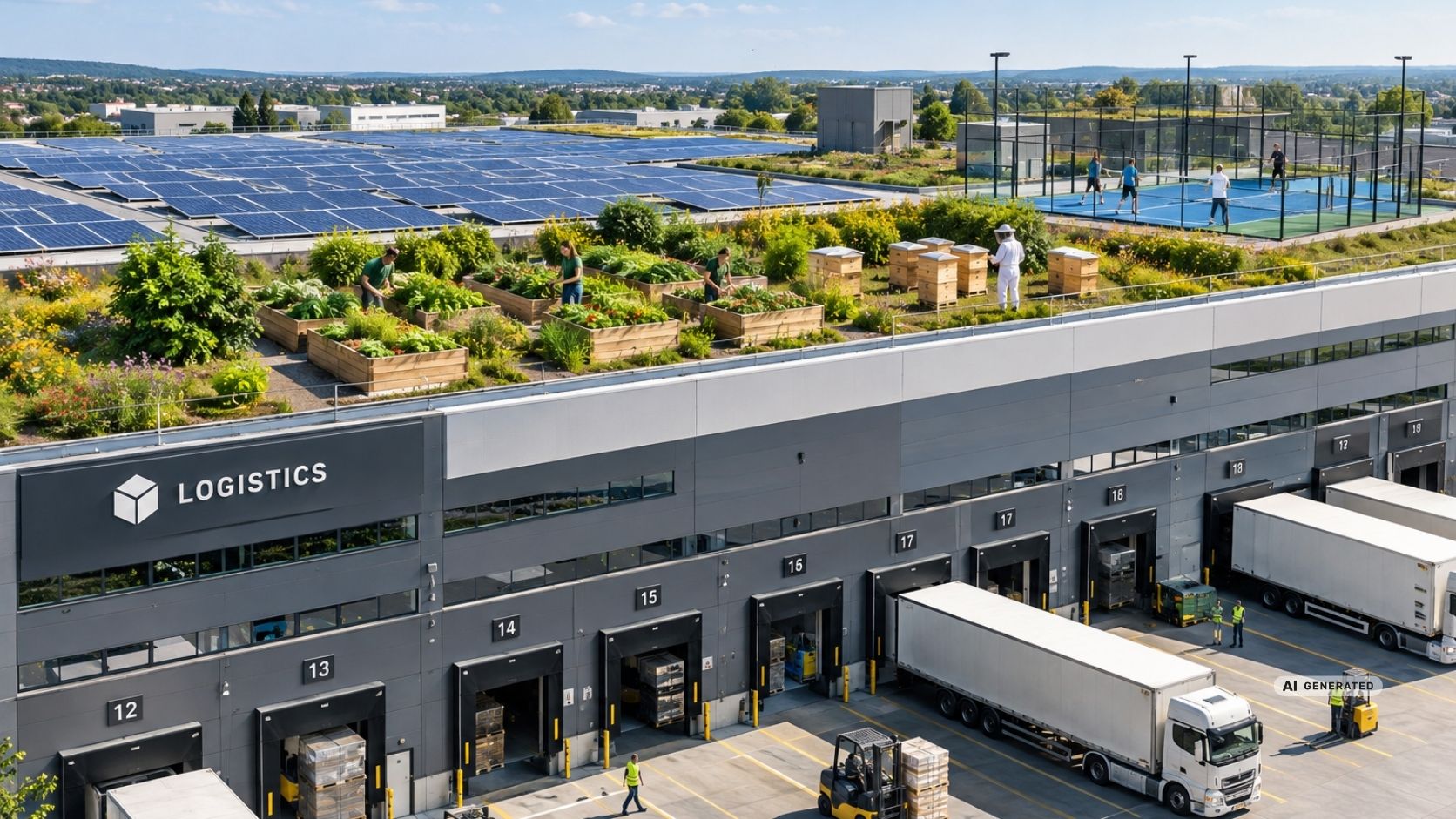
The Green Revolution on the Hall Roof: From Concrete Block to Ecological Power Plant?
Logistics roofs can do more than PV: greening, bees, urban farming and even sports areas turn unused roof space into multifunctional rooms....