



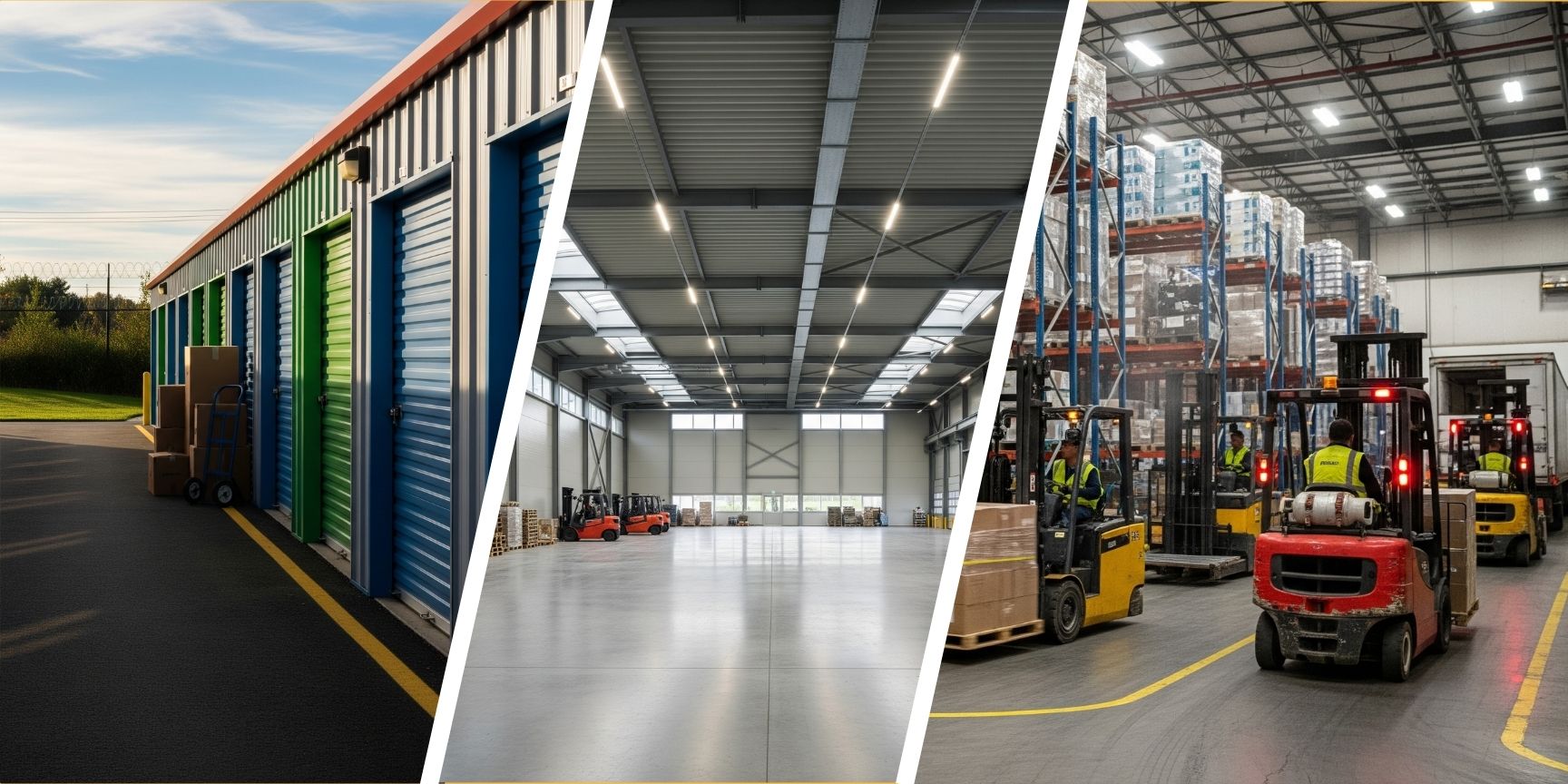
Comparing Storage Spaces: Self-Storage, Commercial Warehouses, or Outsourcing? Your Guide to the Logistics Jungle
Table of Contents
- Self-Storage: The Flexible Unit for Private and Small Business Needs
- Commercial and Warehouse Spaces: The Empty Space for Self-Organization
- Managed Warehousing: Service and Efficiency from a Single Source
- Value-Added Services (VAS): When the Warehouse Becomes a Strategic Partner
- Contract Logistics: The Fully Integrated and Tailored Logistics Solution
- Making the Right Choice: Your Path to the Optimal Storage Solution
Choosing the right storage solution is one of the most critical decisions for companies of any size. Whether you're a start-up, an e-commerce retailer, or an established corporation, the need for space to store goods, products, or materials is universal. But the world of storage is complex and offers much more than just a roof over your head. There's a world of difference between a simple self-storage unit and a highly complex contract logistics center, with significant variations in service level, flexibility, cost, and strategic importance. This blog post takes you on an exciting journey through the different categories of storage solutions. We'll break down the differences, highlight the respective pros and cons, and help you make the optimal decision for your specific needs. Find out which storage type best supports your business and how you can maximize your logistics efficiency!
Self-Storage: The Flexible Unit for Private and Small Business Needs
Self-storage units are the most well-known and accessible form of storage, having grown rapidly in recent years. They are primarily aimed at private individuals but are also an attractive option for micro-enterprises, start-ups, or solo entrepreneurs.
Concept:
With self-storage, you rent an individual, lockable storage unit (often container-like or a room) in various sizes. You typically have access to your unit at any time and manage its contents independently.
Features:
- Flexibility: Short-term rental contracts (often with monthly cancellation).
- Accessibility: 24/7 access or long opening hours.
- Low Service Level: No management of the contents by the provider; you are responsible for storing, retrieving, and inventorying items yourself.
- Security: Most facilities offer video surveillance, access controls, and individual locks.
Use Cases:
Storing furniture during a move, seasonal items, files, tools, small inventories for online shops, or tradespeople.
Advantages: Simple rental process, high flexibility, ideal for irregular or low storage needs, full control over your own items.
Disadvantages: No logistics services, limited sizes, often higher cost per square meter compared to large warehouse spaces.
Commercial and Warehouse Spaces: The Empty Space for Self-Organization
Commercial and warehouse spaces are the classic model for companies that need significant storage space and want to manage their logistics processes themselves. Here, you rent the raw space and take over all management.
Concept:
Companies rent an entire warehouse or a defined section of one. The tenant is fully responsible for the interior fittings (shelving, forklifts), personnel, inventory management, and all logistics processes.
Features:
- Size: From several hundred to thousands of square meters.
- Infrastructure: Often includes loading docks, ramps, basic lighting, and heating, but no specific storage technology.
- High Control: Maximum autonomy in designing storage processes and integrating your own systems.
- Long-Term Commitment: Leases are typically long-term (3-10 years), providing planning security.
Use Cases:
Manufacturing companies, wholesalers, freight forwarders with their own storage, companies with very specific storage requirements that should not be outsourced.
Advantages: Full control, potential for customized process optimization, often lower cost per square meter for large needs, ability to invest in your own warehouse technology.
Disadvantages: High initial investment for equipment and personnel, less flexibility for fluctuating demand, operational risk lies entirely with the tenant, ties up management capacity.
Managed Warehousing: Service and Efficiency from a Single Source
Managed warehousing, also known as fulfillment centers, offers the first level of service integration. Here, you not only rent the space, but the service provider also takes over basic operational tasks.
Concept:
Companies rent storage space from a logistics provider who also handles operational processes such as receiving, put-away, retrieval, and shipping. This means the provider supplies the warehouse staff and technology.
Features:
- Basic Services: Often includes inventory management (via the provider's WMS), physical handling of goods, and reporting.
- Partial Relief: Your company doesn't have to worry about operational staff or warehouse technology.
- Scalability: The provider can react more flexibly to volume changes as they bundle capacity for multiple clients.
- Transparency: Access to inventory data through the provider's system.
Use Cases:
E-commerce companies outsourcing their operational warehousing but not yet needing the full spectrum of contract logistics; companies planning geographic expansion.
Advantages: Relief from daily operational tasks, access to specialized technology and personnel, improved scalability, reduced fixed costs.
Disadvantages: Less control over processes than with in-house storage, dependence on the service provider, potentially higher costs than pure space rental, services are still limited.
Value-Added Services (VAS): When the Warehouse Becomes a Strategic Partner
Value-Added Services (VAS) are additional services that create value, offered by logistics providers (often 3PLs) beyond simple storage and management. They transform the warehouse into an extension of your production line.
Concept:
In addition to storage and basic management, the logistics provider performs further tasks that increase the product's value or prepare it for shipment.
Features:
- Customization: Picking and packing, kitting and bundling (assembling sets), repackaging, labeling, price tagging, quality control, assembly, returns management, minor defect correction.
- Industry-Specific: VAS can be highly industry-dependent (e.g., special services for fashion, electronics, pharmaceuticals).
- Efficiency: Performing these services directly in the warehouse saves transport routes and time.
Use Cases:
Companies with complex product configurations, e-commerce retailers sending personalized packages, manufacturers wanting to outsource final assembly steps.
Advantages: Shortens the supply chain, cost savings through bundling, allows focus on core competencies, improved product quality and customer satisfaction, flexibility for special requirements.
Disadvantages: Requires close coordination with the provider, potential dependence for critical processes.
Contract Logistics: The Fully Integrated and Tailored Logistics Solution
Contract logistics represents the highest level of an outsourcing relationship and is typically the domain of 3PL or 4PL providers. It involves long-term, customized, and comprehensive logistics solutions.
Concept:
A logistics provider not only takes over parts of the logistics but plans, controls, and optimizes the entire supply chain or significant strategic sections of it. This often includes a combination of transport, warehousing, VAS, and IT integration, tailored to the specific needs of the client.
Features:
- Long-Term Partnership: Based on long-term contracts that allow for deep integration.
- Customized Processes: Development and implementation of specific logistics concepts for the client.
- Comprehensive Services: Combines all mentioned services (warehousing, transport, VAS, IT services) and often includes strategic planning tasks (e.g., site analysis, network optimization).
- Technology Integration: Deep system integration between the client and provider (e.g., ERP connection to WMS/TMS).
- Risk Distribution: Operational risks are transferred to the service provider.
Use Cases:
Large corporations, manufacturing industries, international retailers, and e-commerce giants who want to outsource their entire logistics to focus on their core business.
Advantages: Significant cost reduction and efficiency gains, access to specialized know-how and global networks, maximum relief to focus on core competencies, high scalability and flexibility for complex requirements.
Disadvantages: High dependence on the service provider, initial effort for system integration and process definition, potential loss of control over operational details.
Making the Right Choice: Your Path to the Optimal Storage Solution
The decision for the right storage solution is highly individual and depends on a variety of factors. There is no "one-size-fits-all" solution.
- Needs and Volume: How much storage do you need? Is it stable or fluctuating? Self-storage is suitable for small, flexible needs. A dedicated commercial warehouse or contract logistics is better for large, constant needs.
- Service Requirements: Do you just need space, or also operational support, value-added services, or a complete logistics solution? The more services you need, the more you should lean towards managed warehousing or contract logistics.
- Costs and Budget: Consider not only the rent but also investments in equipment, personnel, IT, and risk management. A Total Cost of Ownership (TCO) analysis is essential here.
- Core Competencies: Do you want to keep logistics as an in-house core competency, or would you rather focus on your main business?
- Flexibility and Scalability: How important is it for you to be able to react quickly to market changes or growth? Outsourcing usually offers more flexibility here.
- Risk Appetite: What operational risks are you willing to bear yourself?
Which Storage Solution is Right for you? An Overview.
| Criterion | Self-Storage | Commercial Warehouse | Managed Warehousing (Fulfillment) | Contract Logistics (3PL/4PL) |
| Control | Complete You manage the contents and access entirely by yourself. | Maximum You design and control all warehouse processes and equipment. | Low Operational control lies with the provider; you monitor inventory levels. | Strategic You define the goals; the partner optimizes the entire supply chain. |
| Flexibility | Very High Short-term leases, often on a month-to-month basis. | Low Long-term leases (3-10 years) tie up capital and resources. | Medium to High Easily scale your storage volume up or down as needed. | Strategically High Adapts to complex, long-term business changes. |
| Cost Structure | Low Fixed Costs Simple, predictable monthly rent. No investment in equipment needed. | High Initial Investment Rent plus significant costs for staff, shelving, forklifts, and IT. | Variable Costs are often usage-based (per pallet, per pick, per package). | Partnership-Based Custom, long-term pricing models, often with shared risk. |
| Service Level | None You are only provided with a secure space. | None You are responsible for providing all logistics services yourself. | Operational Includes receiving, storage, picking, packing, and shipping services. | Comprehensive Includes transport, VAS, returns, IT integration, and strategic planning. |
| Ideal for... | Start-ups, tradespeople, and individuals with small or fluctuating storage needs. | Manufacturers and wholesalers who view logistics as a core competency and want full control. | Growing e-commerce businesses and SMBs looking to outsource daily operations. | Large corporations and enterprises seeking a strategic partner for their entire logistics. |
A careful analysis of your internal processes, your strategic goals, and the strengths of the different storage types will help you make the optimal decision. The right storage solution is not just a cost factor, but a strategic lever for your company's success in an increasingly complex logistics world.
Latest Blog Posts
Stay up to date with the newest trends, insights, and tips in warehouse and logistics. Our latest articles help you navigate the industry with confidence.

Data Centres vs. Logistics Facilities: The Race for Power and Land
Across Europe, logistics operators are competing for more than land and transport access. They increasingly need something much harder to secure: grid capacity. Data centres are intensifying that competition — and changing how logistics locations are evaluated....
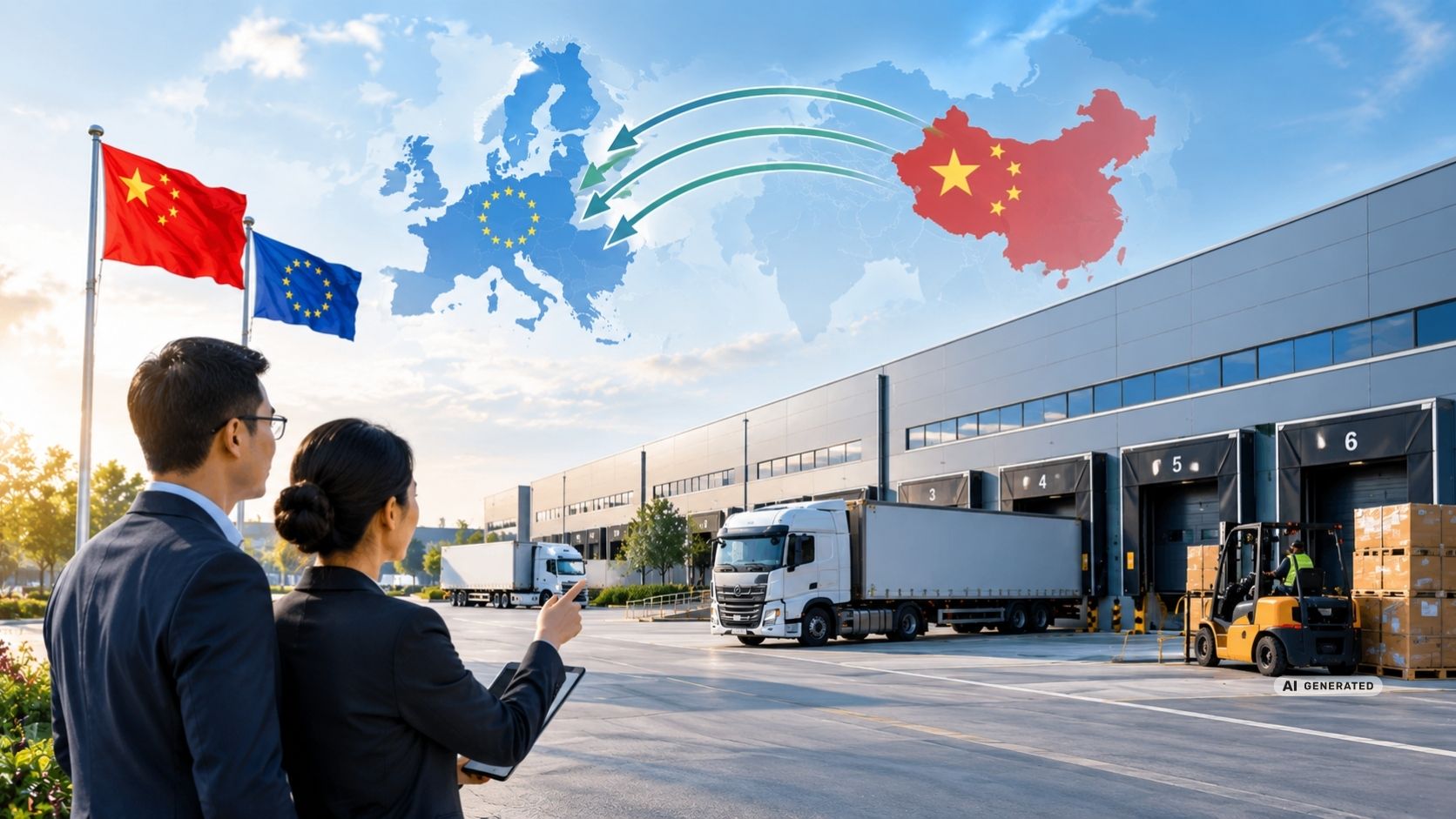
Chinese companies discover Europe's logistics real estate
Chinese companies are becoming an increasingly visible user group in Europe's logistics real estate market. What does this mean for warehouse space, 3PL structures and the requirements for European logistics locations?...
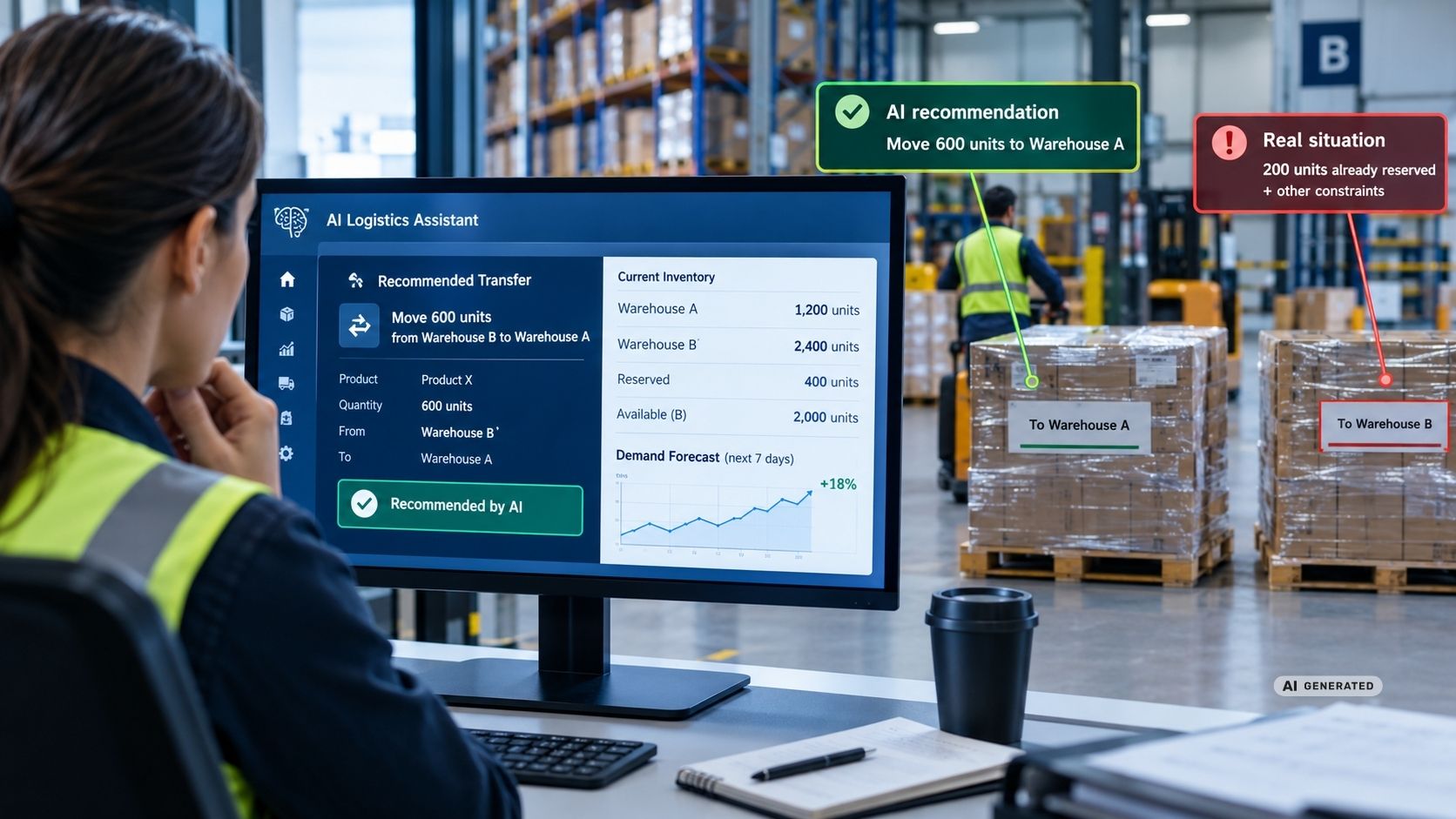
AI Hallucinations in Logistics: When AI Plans the Wrong Delivery
AI can analyze enormous amounts of logistics data — but it can also produce a convincing answer that is simply wrong. The critical question is not whether AI makes mistakes, but what happens when a wrong recommendation becomes an operational decision....
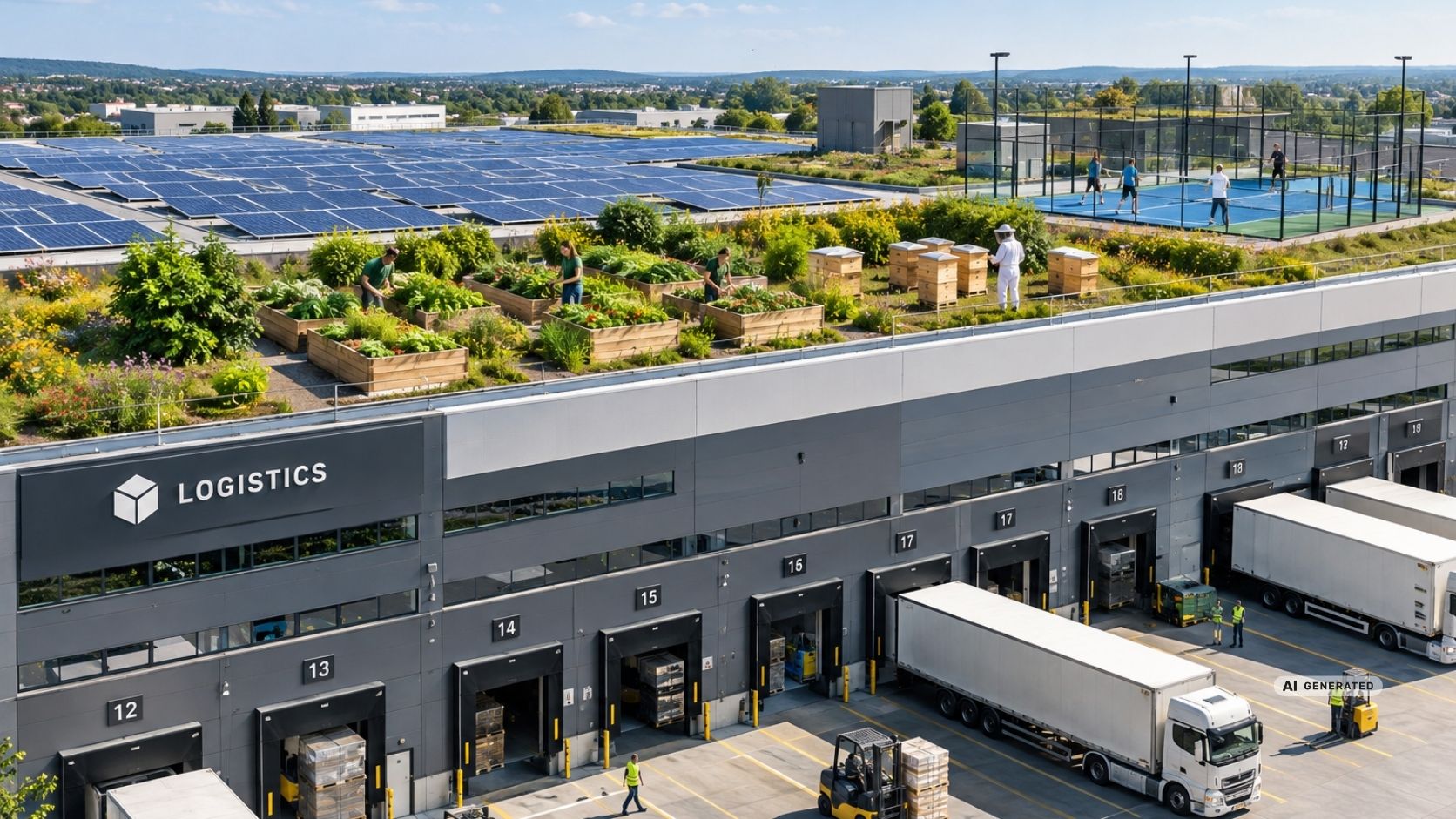
The Green Revolution on the Hall Roof: From Concrete Block to Ecological Power Plant?
Logistics roofs can do more than PV: greening, bees, urban farming and even sports areas turn unused roof space into multifunctional rooms....