


Speculative Project Development - Courage to Take Risk or Strategic Necessity
Table of Contents
- The Mechanics of Speculation: Why Build "In Advance"?
- The Path to Becoming an Anchor Customer: Marketing or Market Pressure?
- Cost Structure: What does the Hall Really Cost?
- Risk vs. Benefits: The Pendulum of Project Development
- Ownership Structures: Hold or Sell?
- Built-to-Suit vs. Speculative: Why Not Always Play Safe?
- International Comparison: Germany vs. Worldwide
- Outlook 2026–2031: Where is the Journey Heading?
- Practical Example: The "Gewerbepark Nord"
- Conclusion: Is the Risk Worth it?
In the world of logistics and industrial real estate, project developers today are faced with a fundamental decision: Do we wait for the one perfect tenant, or do we create the supply before demand comes knocking? While the "security variant" Built-to-Suit (BTS) was the measure of all things for a long time, speculative construction has developed into a highly efficient tool for high-yield portfolios.
But what are the pitfalls? How do you find the anchor customer in a volatile market environment when the foundations have already been laid? In this article, we analyze the costs, risks and opportunities of speculative development compared to the global market.
The central questions we answer:
- How do you win an anchor customer for a property that is not yet standing?
- What cost factors (building permit, construction) are realistic today?
- Why is speculative construction often more difficult in Germany than in the USA or Poland?
- Do project developers remain owners in the long term or do they sell the risk on immediately?
The Mechanics of Speculation: Why Build "In Advance"?
Speculative project development means starting a construction project without prior permanent letting. In a market characterized by extremely low vacancy rates (often below 2.5% in top German logistics regions), time is the most valuable commodity.
A company that immediately needs 20,000 m² of warehouse space due to e-commerce growth or supply chain resilience (nearshoring) cannot wait two years for a built-to-suit project to be planned and approved. Speculative land is the answer to the "speed-to-market" pressure of the modern economy.
The Path to Becoming an Anchor Customer: Marketing or Market Pressure?
The acquisition of an anchor customer in a speculative development is like a strategic chess game. An anchor customer is usually the tenant who occupies at least 50% of the space and thus massively increases financing security.
How do you proceed?
- Early networking: Project developers work closely with brokerage houses (JLL, CBRE, Colliers, etc.) even before the groundbreaking ceremony takes place.
- Flexibility in fit-out: In order to attract tenants, construction is often carried out according to the "shell & core" principle. The hall is finished, but the specific equipment (number of ramps, office share, mezzanine areas) remains adaptable until the lease is signed.
- Pre-letting rates: Financing banks often require a pre-letting rate of 30-50% before the loan is paid out in full. The "anchor" is therefore often already on board during the construction phase.
Cost Structure: What does the Hall Really Cost?
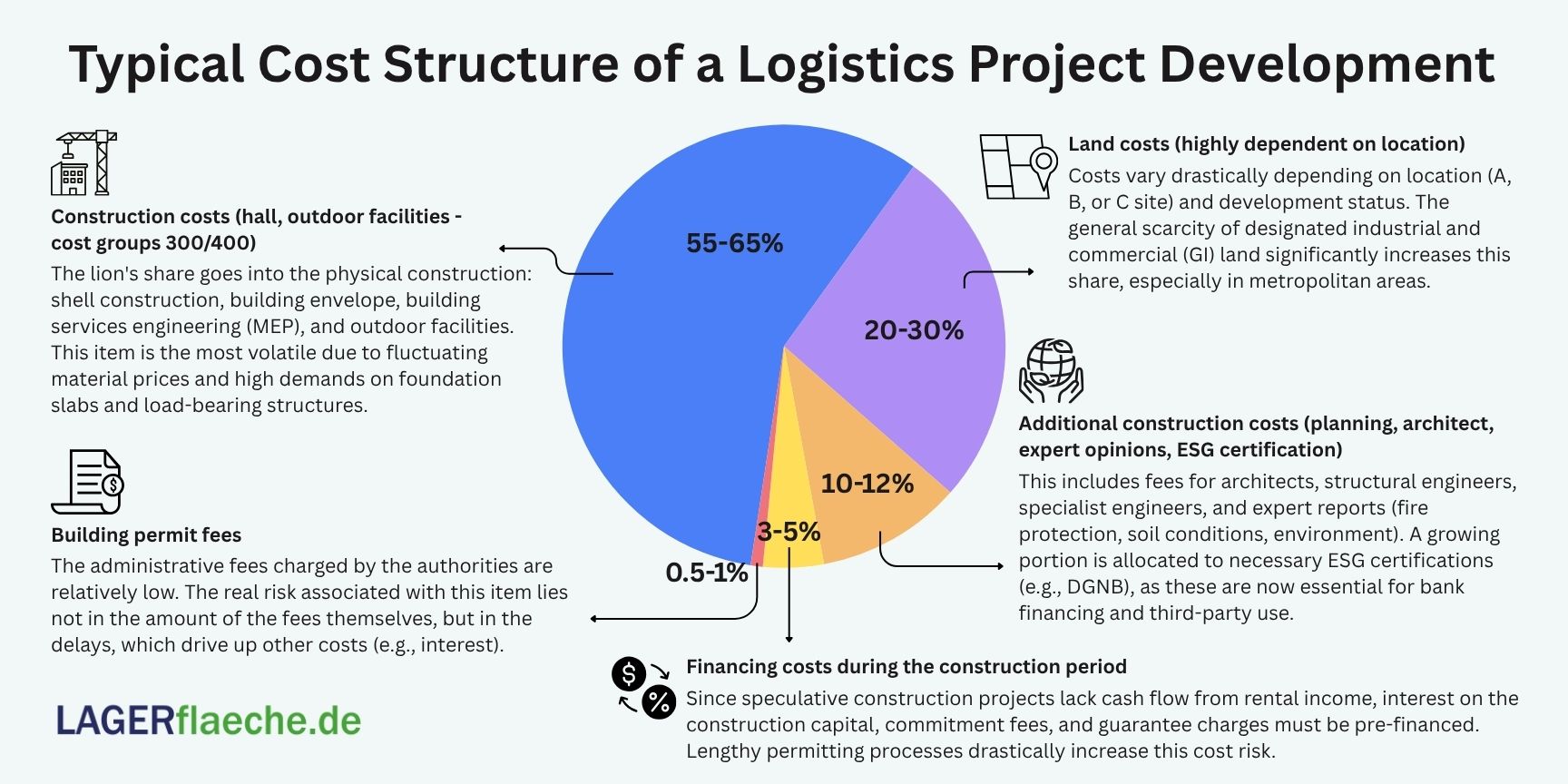
The costs for a modern logistics hall (Standard Grade A) have remained highly volatile in recent years due to material price increases and interest rate turnarounds. Here is a calculation for the German market (as of 2024/2025):
Building permit procedure
The costs for the procedure itself (fees) are usually the smallest part. They are often 0.5% to 1% of the construction costs. Much more serious are the planning costs (architects, structural engineers, fire protection experts), which are approx. 10% to 12% of KG 300/400 (building and technology).
- Trap: A lengthy procedure (12-24 months in Germany) massively increases financing costs (commitment interest).
Construction costs (CAPEX)
- Standard logistics hall: Between €800 and €1,200 per m² of rental space (excluding land).
- Land costs: Depending on the location (A, B or C location) between €150 and over €600 per m².
- ESG surcharge: Certifications (DGNB Gold/Platinum) initially cost around 3–5% more, but increase the resale value and third-party usability.
Risk vs. Benefits: The Pendulum of Project Development
| Feature | Speculative development | Built-to-Suit (BTS) |
| Rental risk | High (vacancy threatens) | Null (tenant is determined) |
| Renditechance | Higher (market rents at completion) | Moderate (fixed rent in advance) |
| Speed | Immediate availability for tenants | Long planning phase (18-24 months) |
| Third-party use | Very high (neutral construction) | Often restricted (special construction) |
Advantages of speculation:
- Exit strategy: Investors (funds, insurance companies) prefer to buy completed properties that have been started speculatively but are rented out when they are sold, as this is where the highest potential for rent increases lies.
- Scalability: Developers can use standard prototypes.
Risks:
- Interest rate risk: With a construction period of 12 months, rising interest rates can spoil the exit yield (cap rate).
- Poor planning: A hall that is too specific will not find a tenant on the free market.
Ownership Structures: Hold or Sell?
Are project developers also owners? The answer is: Mostly only temporarily.
- Trader-Developer: These developers build, rent and sell immediately after completion (forward deal or asset deal). Their goal is to profit from project development.
- Investor-developer (hold strategy): Large players such as Prologis, Goodman or SEGRO often keep the properties in their own portfolio (asset management). You earn from the long-term cash flows.
- Contract development: Here, the developer builds on behalf of an end user (e.g. BMW or Amazon) on their property for a fee (fee development).
In recent years, the model of forward funding has dominated in Germany, in which an end investor buys the project before completion and pays the installments according to construction progress.
Built-to-Suit vs. Speculative: Why Not Always Play Safe?
Why not always choose the safe built-to-suit variant? The main problem is the supply of land. In Germany, designated industrial areas (GI) are rare. When a developer gets hold of a rare piece of land, they are often forced to start speculatively in order not to miss the market cycle.
If you wait for a BTS customer, you may lose 12 months in which the competitor is already building the shell. In addition, BTS leases are often very specific (e.g. cold stores), which reduces the ability to be used by third parties. Banks today prefer to finance a neutral, speculative "multi-tenant" property rather than a highly specialized monostructure that can hardly be re-let after the first tenant has moved out.
International Comparison: Germany vs. Worldwide
The differences in project development are striking and are strongly related to planning law.
- USA: Speculative construction is the standard here. Thanks to liberal development plans and fast approvals, halls can be erected in record time. The risk is cushioned by a liquid investment market.
- Poland: Poland has become the European darling of speculative developers. Why? Shorter approval phases (often less than 6 months) and lower construction costs while having access to the Western European market. In regions such as Wroclaw or Poznan, millions of square meters are being built "in advance".
- Great Britain: The market here is extremely mature. Speculative developments (big boxes) are often sold to institutional investors before the "golden brick" (first stone on the foundation).
- Germany: Germany is slow and expensive in comparison. The focus here is massively on brownfield development (revitalization of old industrial areas), as "greenfields" (arable land) are hardly politically enforceable. This makes speculative projects more complex and risky.
Outlook 2026–2031: Where is the Journey Heading?
In the next 2 to 5 years, we will see three major trends:
- Multi-level logistics: Due to a shortage of space, speculative construction is carried out upwards (especially in metropolitan areas such as Hamburg or Munich).
- Dark stores & city logistics: Smaller, speculative units in the immediate vicinity of the city are becoming cash cows.
- Sustainability as a duty: A speculative property without a PV system, heat pump and fossil-free certificate becomes a "stranded asset" and is almost unsaleable.
Expert Tip
Yields on logistics properties have stabilized at around 4.5% to 5.0% after the interest rate shock. Anyone who builds speculatively today must pay extremely close attention to ancillary costs (ESG efficiency), as tenants are increasingly looking at the warm rent.
Practical Example: The "Gewerbepark Nord"
A medium-sized project developer acquires a 40,000 m² greenfield site near Leipzig.
- Strategy: Speculative construction of a 20,000 m² hall, divisible into two units.
- Course: After 4 months of construction (shell is complete), an e-commerce retailer shows interest in 12,000 m² (anchor customer). Since the hall was planned speculatively and neutrally, the remaining 8,000 m² can be rented to a regional logistics company without any problems.
- Result: Due to the early start of construction, the tenant was able to move in 6 months earlier than with a BTS procedure. The developer achieves a rental premium of 10% over the BTS market average due to its rapid availability.
Conclusion: Is the Risk Worth it?
Speculative construction is not for the faint of heart, but in the current market environment it is often the only way to gain significant market share. Those who have costs under control, rely on third-party usability and take ESG requirements seriously will be rewarded.
Latest Blog Posts
Stay up to date with the newest trends, insights, and tips in warehouse and logistics. Our latest articles help you navigate the industry with confidence.
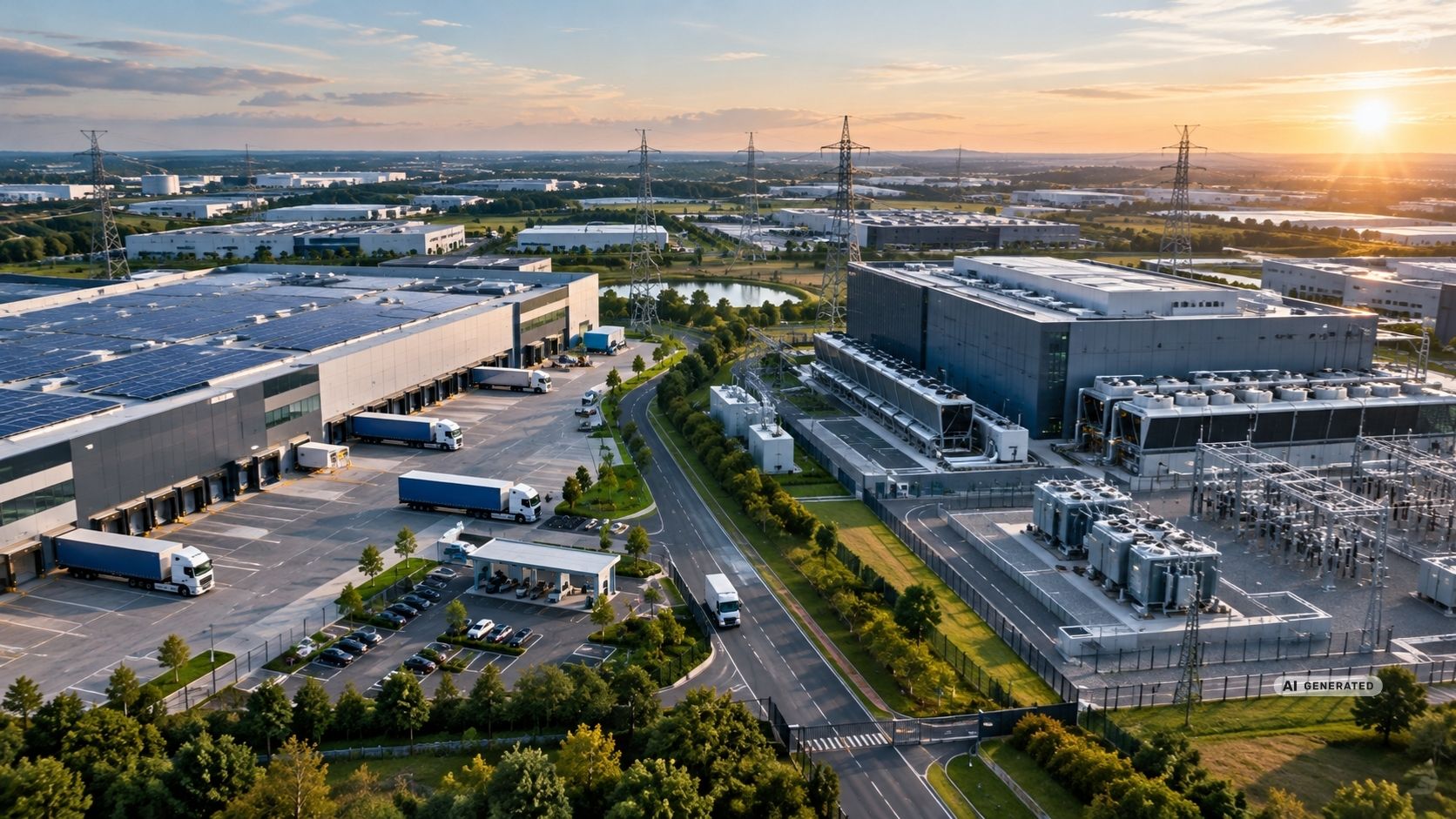
Data Centres vs. Logistics Facilities: The Race for Power and Land
Across Europe, logistics operators are competing for more than land and transport access. They increasingly need something much harder to secure: grid capacity. Data centres are intensifying that competition — and changing how logistics locations are evaluated....

Chinese companies discover Europe's logistics real estate
Chinese companies are becoming an increasingly visible user group in Europe's logistics real estate market. What does this mean for warehouse space, 3PL structures and the requirements for European logistics locations?...
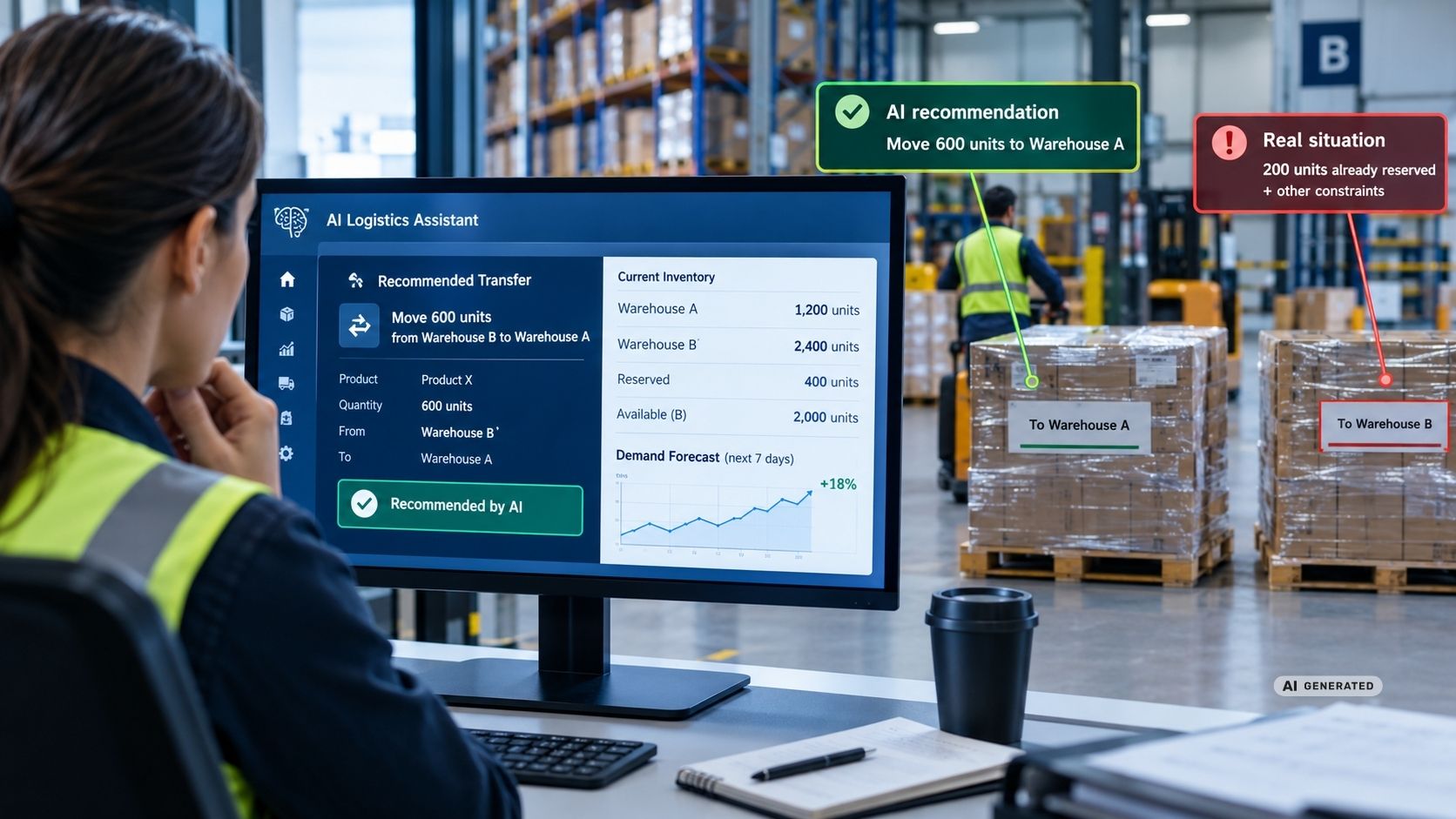
AI Hallucinations in Logistics: When AI Plans the Wrong Delivery
AI can analyze enormous amounts of logistics data — but it can also produce a convincing answer that is simply wrong. The critical question is not whether AI makes mistakes, but what happens when a wrong recommendation becomes an operational decision....
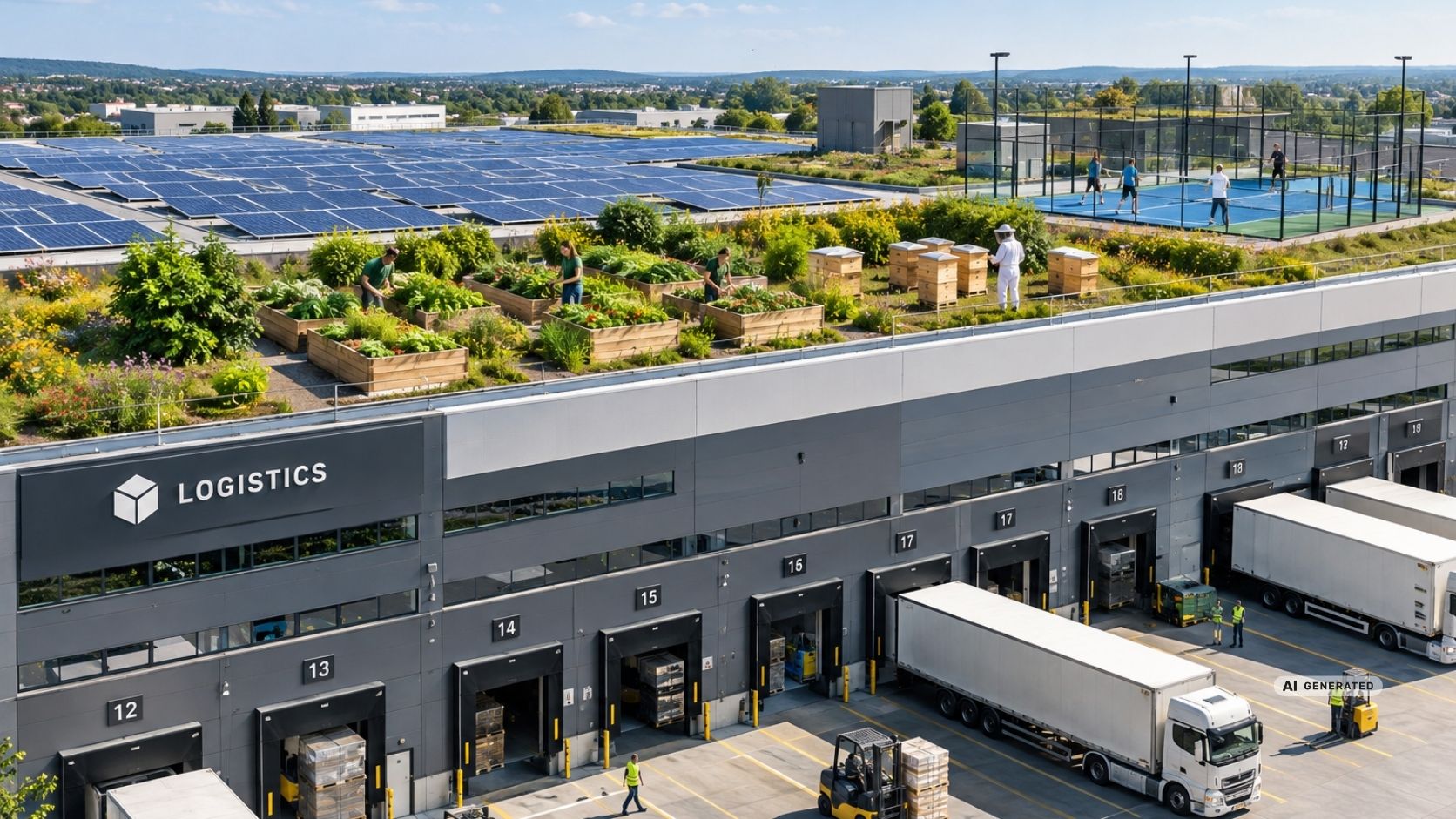
The Green Revolution on the Hall Roof: From Concrete Block to Ecological Power Plant?
Logistics roofs can do more than PV: greening, bees, urban farming and even sports areas turn unused roof space into multifunctional rooms....