




Urban distribution centers in warehouse logistics
Table of Contents
- Definition and Evolution: The Urban Distribution Center (UDC)
- Logistics Property: Architecture and Space Scarcity
- Warehouse logistics in the high-frequency range
- Contract logistics: value-added services in the city
- Sustainability and ESG as approval factors
- Questions and answers (Q&A) for practice
- Data, Figures, Facts (Benchmark Table)
- Conclusion: The hall as a productivity factor
Definition and Evolution: The Urban Distribution Center (UDC)
Urban distribution centers are specialised logistics hubs within or on the immediate outskirts of conurbations. In contrast to peripheral central warehouses (European Distribution Centers), their focus is not on stockpiling, but on maximum throughput.
In the hierarchy of the logistics chain, they act as the decisive link between long-distance logistics and small-scale delivery (last mile). While classic halls were often built on greenfield sites, the UDC is a response to increasing urbanisation and changing consumer behaviour (e-commerce quota in Germany approx. 12–15% of retail sales).
Logistics Property: Architecture and Space Scarcity
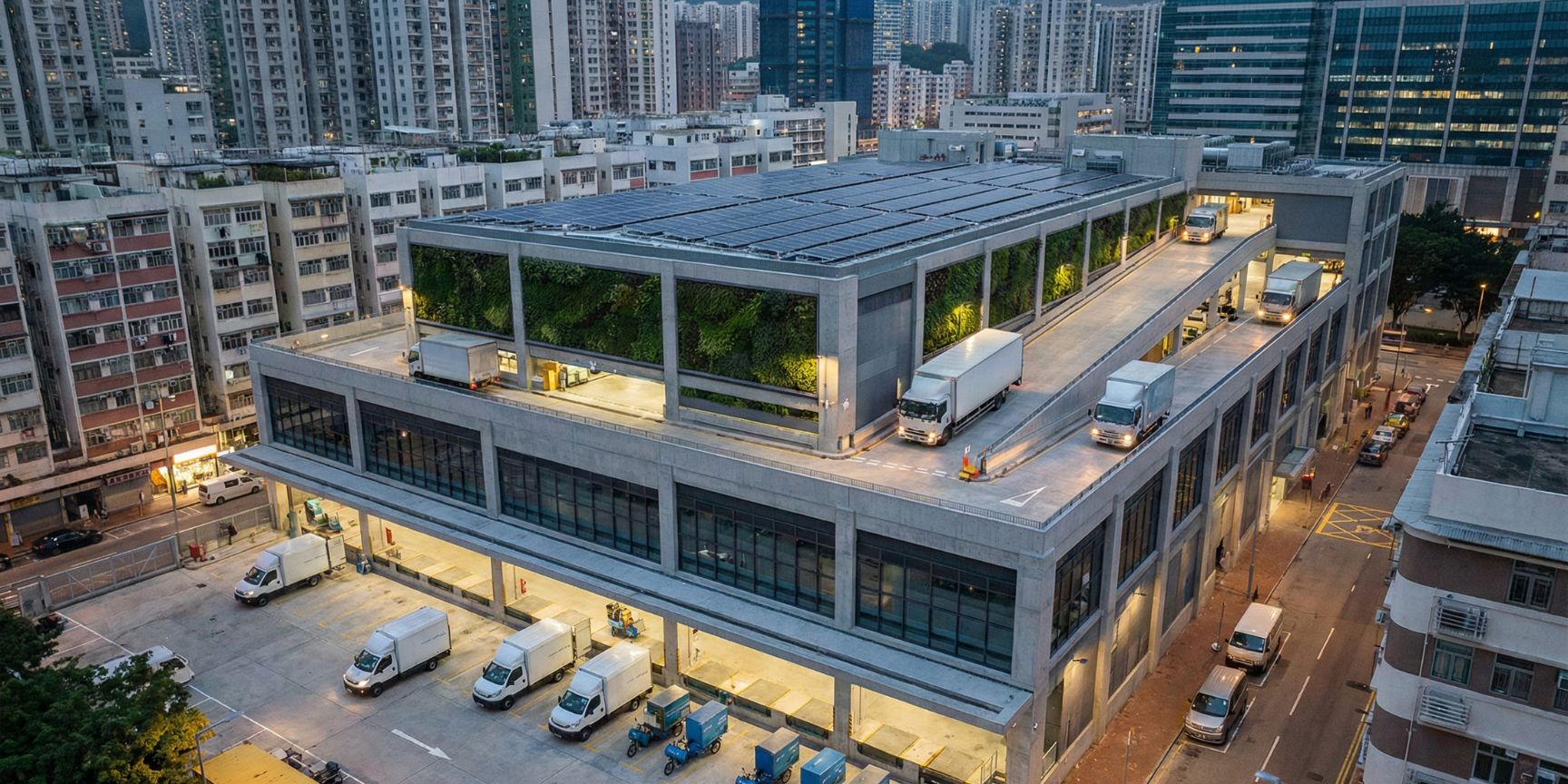
The biggest challenge for urban distribution centers is the lack of available space. This leads to a paradigm shift in industrial construction:
- Multi-level logistics: Since land is expensive, construction is carried out upwards. Ramp systems lead trucks up to the first or second floor (example: Mach2 in Hamburg).
- Brownfield development: Revitalization of former brownfield sites. In this context, contaminated sites often have to be remediated and noise protection requirements (DIN 18005) must be strictly observed.
- Delivery and cross-docking: A UDC requires a high number of gates (docks) in relation to the floor space to guarantee fast loading and unloading.
Warehouse logistics in the high-frequency range
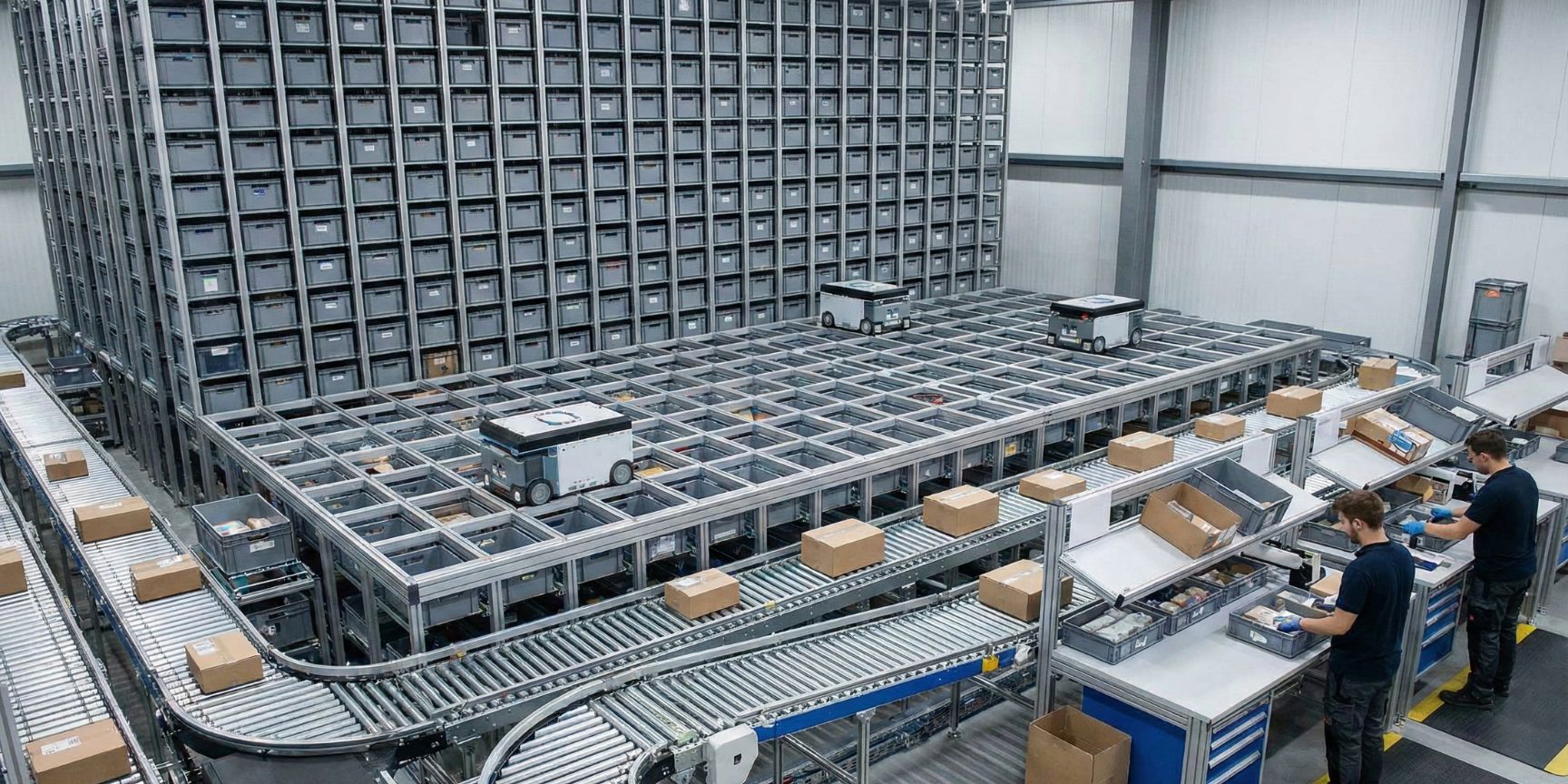
In an UDC, warehouse logistics is fundamentally different from classic high-bay warehouses. The principle of "short stay, high velocity" rules here.
- Micro-fulfillment centers (MFC): Highly automated areas, often less than 5,000 m², where robots (e.g. autostore systems) execute picks in seconds.
- Turnover ratios: The inventory turnover frequency here is often 10 to 20 times higher than in regional warehouses. Stocks are often "buffered" for only a few hours.
- Sorting technology: The heart of the system is often an automated sorter system that pre-sorts parcels according to delivery districts (tours) in order to minimise the loading times of the transporters.
Contract logistics: Value-added services in the city
For contract logistics companies (3PL), the UDC offers a complex playing field. It's no longer just about storage, but about value-added services (VAS) directly at the end customer:
- Returns management: The immediate inspection and reprocessing of returns in the city area saves long transport routes.
- City logistics concepts: Consolidation of the flow of goods from different providers in order to reduce the number of delivery vehicles in the city center (white-label delivery).
- Inventory management: Predictive logistics, in which goods are already made available in the UDC based on AI forecasts before the order is finally received.
Sustainability and ESG as approval factors
Without a coherent ESG (Environmental, Social, Governance) concept, project developers today hardly receive building permits in core areas.
- Emissions: Focus on electric fleets. The UDC requires a massive charging infrastructure (charging hubs), which places high demands on the power grid connection.
- Noise protection: Night deliveries are often only possible with noise-optimised vehicles and covered, soundproofed courtyards.
- Third-party usability: The property must be built flexibly enough to function for other urban uses (e.g. craft yards) even after a change of tenant.
Questions and answers (Q&A) for practice
Question: What is the ideal area size for an urban distribution center?
Answer: It depends on the type. While micro-hubs work from as little as 500 m², high-performance UDC for CEP services (courier express parcel) usually require between 5,000 and 15,000 m².
Question: What floor load capacity is required in multi-level halls?
Answer: On the upper floors, 2.0 to 5.0 tons per square meter are often standard in order to also enable forklift traffic and heavy racking systems.
Question: Does automation always make sense in urban areas?
Answer: Due to the high labor costs and the shortage of skilled workers in cities, automation solutions (AGVs, sorters) pay for themselves much faster here than in rural areas.
Data, Figures, Facts (Benchmark Table)
| Feature | Classic central warehouse | Urban distribution center |
| Location | Periphery (motorway connection) | Inner-city / suburban |
| Hall height (UKB) | 12 m - 40 m | 6 m - 10 m (often limited) |
| Rental price (Ø DE) | €5.00 - €7.50 / m² | €12.00 - €25.00 / m² |
| Throughput time of goods | Days to weeks | 2 to 12 hours |
| Vehicle Types | 40t truck | E-Transporter, Cargo Bikes, 7.5t |
Conclusion: The hall as a productivity factor
Urban distribution centers are no longer simple "halls". They are highly complex, mechanized production facilities that require a symbiosis of highly efficient intralogistics and urban integration. For investors and logistics companies, the choice of location is crucial: proximity to the customer (delivery density) often beats the high rental costs, as transport costs on the last mile can account for up to 50% of the total logistics costs.