



Cybersecurity in the warehouse
Table of contents
- What does cybersecurity mean? (Definition & Basics)
- Why is warehouse logistics a prime target for cyberattacks?
- Specific risks for contract logistics and logistics real estate
- Facts, figures, data: Focus on the threat situation
- Practical guide: How to effectively protect your logistics hall
- The human factor: Employees as the first line of defense
- FAQ: Important questions and answers
- Conclusion: IT security as the foundation of modern supply chain management
What does cybersecurity mean? (Definition & Basics)
Cybersecurity (often referred to as IT security) encompasses all strategic, technological, and operational measures aimed at protecting networks, computer systems, programs, and digital data from unauthorized access, theft, damage, or manipulation. At its core, it is about safeguarding three basic pillars: confidentiality, integrity and availability of information. While traditional IT security used to mostly only affect office computers, cybersecurity now extends deep into the physical and operational world – an aspect that is particularly crucial for modern industrial and logistics sectors.
Why is warehouse logistics a prime target for cyberattacks?
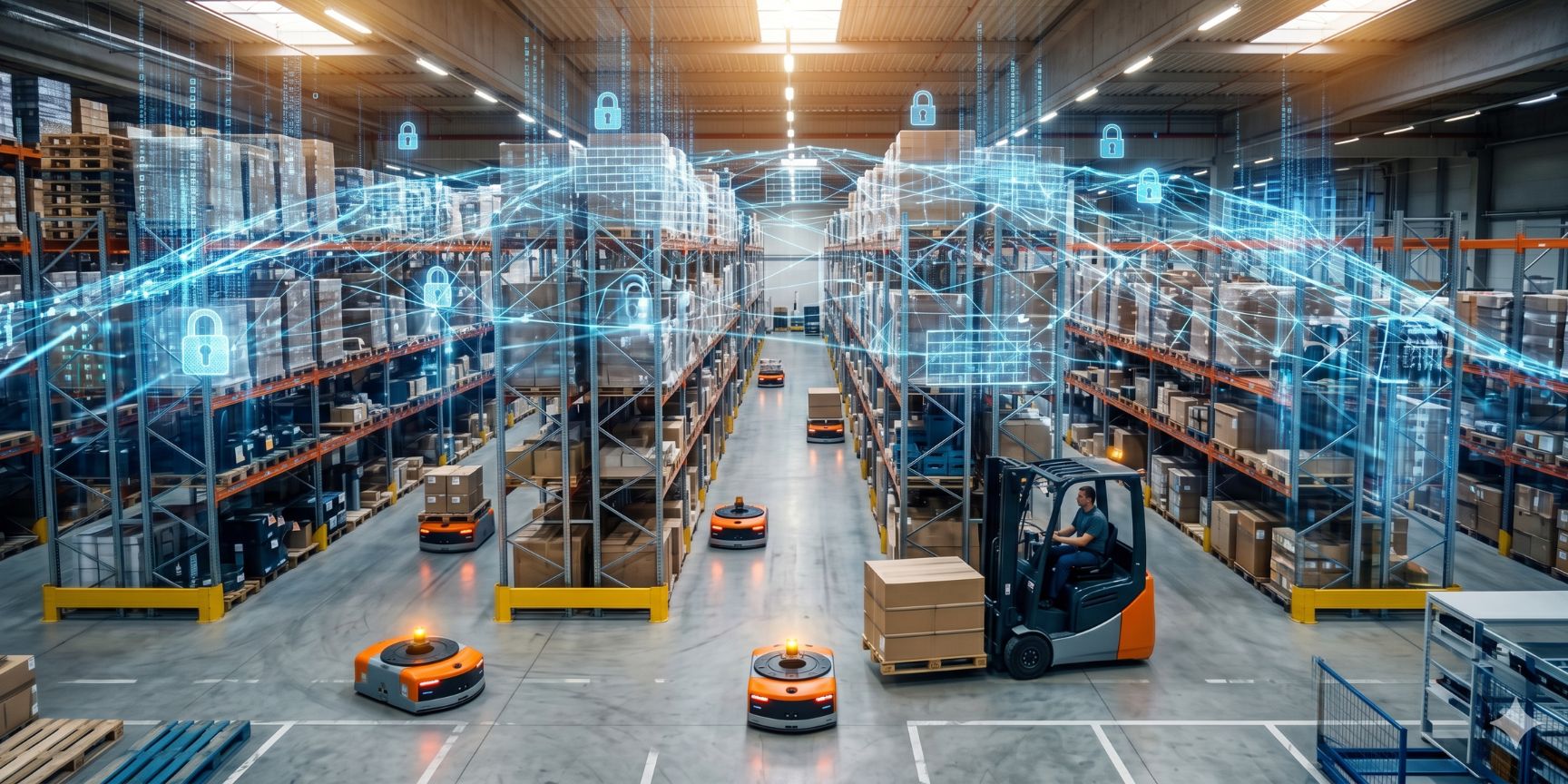
Warehouse logistics has undergone a massive digital transformation in recent years. Modern department stores are controlled by complex warehouse management systems (WMS). Handheld scanners, automated guided vehicles (AGVs), automated high-bay warehouses and networked conveyor technology communicate with each other in real time.
This networking (Internet of Things, IoT) increases efficiency enormously, but at the same time increases the attack surface for cybercriminals. When hackers paralyze the WMS, the production lines come to a standstill. Trucks can neither be loaded nor unloaded, cold chains could be interrupted and just-in-time deliveries could be missed. The result is massive financial losses and far-reaching reputational damage.
Specific risks for contract logistics and logistics real estate
Contract logistics is particularly at risk, as service providers are often deeply integrated into the IT systems of their clients. A successful attack on a contract logistics provider can jump to the systems of numerous clients via interfaces (APIs) like a virus (supply chain attack). Attackers often use logisticians as a "back door" to large, even more heavily guarded corporations.
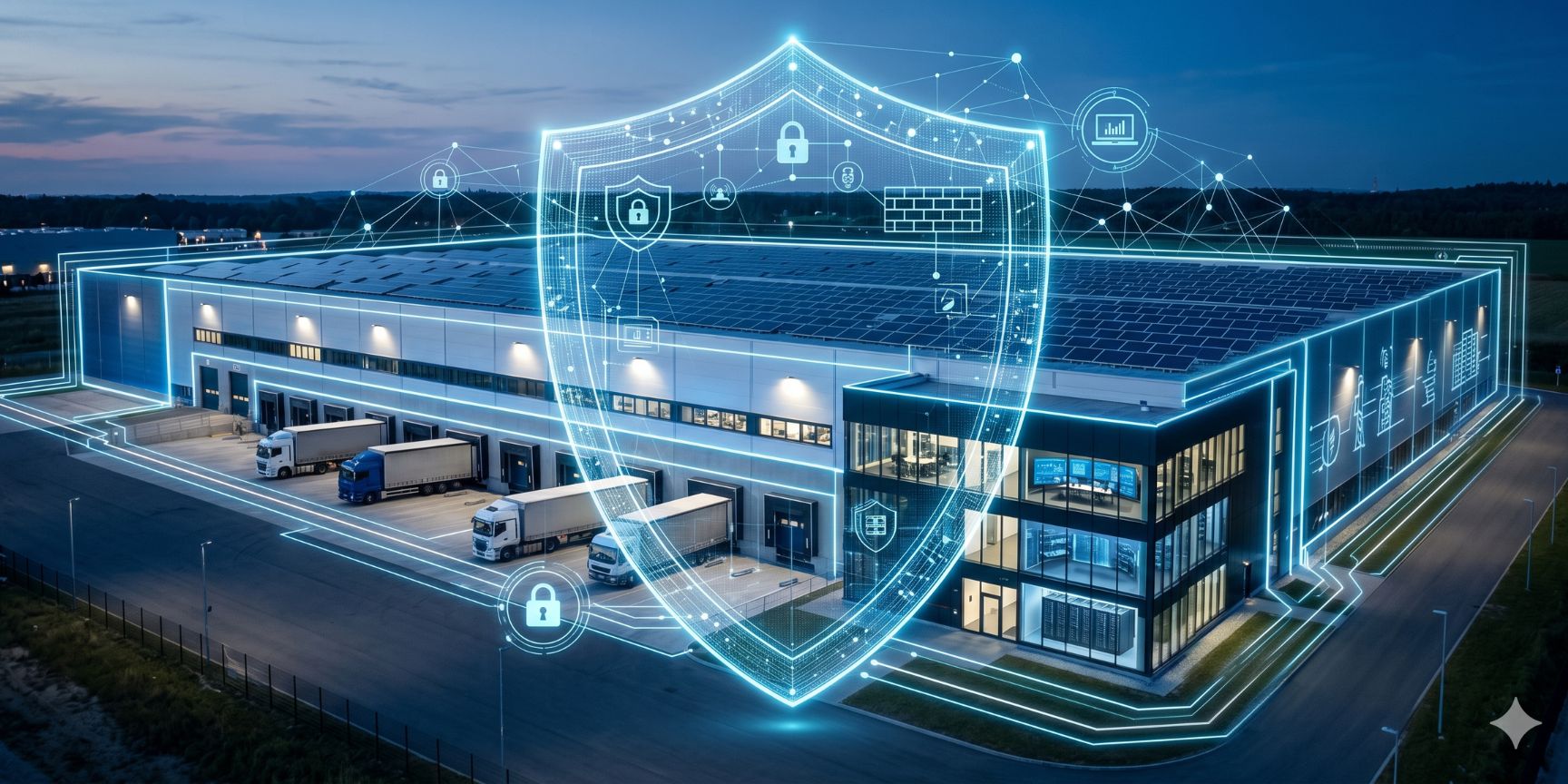
In the case of the pure logistics property (the hall itself), the focus is on the so-called "smart building". Modern halls have networked building management systems:
- Smart locking systems and access control systems
- Networked gates and surveillance cameras
- Digital control of heating, ventilation and air conditioning (HVAC)
If these systems are hacked, criminals can gain physical access to the hall (gates open by themselves) or provoke the spoilage of entire stocks of goods by manipulating the refrigeration technology.
Facts, figures, data: Focus on the threat situation
To underline the urgency of the topic, it is worth taking a look at the current threat situation:
- Amount of damage: According to the digital association Bitkom, the total damage caused by cyberattacks in the German economy in 2023 amounted to around 206 billion euros.
- Concern: About 68 percent of the companies surveyed said they had been victims of cyberattacks.
- Supply chain attacks: Cybersecurity experts have recorded an increase in attacks on supply chains by over 40 percent in the last two years. Logisticians are in the crosshairs of ransomware gangs (extortion Trojans), which specifically attack time-critical industries, as this is where the willingness to pay ransoms is estimated to be the highest.
Practical guide: How to effectively protect your logistics hall
A practical utility value can only be created through concrete recommendations for action. Operators of logistics properties and warehouse logistics companies should prioritize the following measures:
- Network segmentation: Strictly separate the office network from the operational network of the hall (WMS, machine control) and the building network (gates, cameras). If one area fails, the others remain protected.
- Patch management for IoT devices: Sensors and smart trucks must be regularly updated with software to address known security vulnerabilities.
- Access controls (Zero Trust): Implement strict access rights according to the "least privilege principle". Each employee and each system receives only the rights that are absolutely necessary for the respective task.
- Redundant backups: Back up WMS data and inventory lists multiple times and offline. In the event of a ransomware attack, this allows you to restore operations faster without having to pay a ransom.
The human factor: Employees as the first line of defense
The best firewall is of no use if an administrative employee or a shift supervisor in the warehouse clicks on a well-crafted phishing email. In logistics, there is often a lot of time pressure, which increases the error rate. Regular training tailored to logistics practice is essential. Employees must learn how to recognize manipulated freight documents in PDF format or forged e-mails from supposed freight forwarding partners.
FAQ: Important questions and answers
Question: What type of cyberattack is most common in warehouse logistics?
Answer: Ransomware (ransomware) and phishing are the most common threats. With ransomware, the systems (e.g., the WMS) are encrypted, and operations come to a standstill until a ransom is paid (which experts advise against).
Question: Are older logistics halls without a lot of technology safe from hackers?
Answer: Only to a limited extent. Although the attack surface is smaller in "dumb" halls, the administrative processes (inventory management, invoicing, customs clearance) are also digital here. A failure of the office IT also stops the flow of goods in an older hall.
Question: Who is liable if the customer's production comes to a standstill due to a hacker attack at the contract logistics company?
Answer: This depends heavily on the service level agreements (SLAs) and contracts. In general, if the logistics provider has demonstrably acted negligently and ignored industry-standard IT security standards (such as ISO 27001), he can be held liable. Solid cyber insurance is essential for logistics companies.
Conclusion: IT security as the foundation of modern supply chain management
The logistics industry is the backbone of the global economy. The failure of a logistics property or contract logistics company has an immediate impact on downstream industries and end users. Cybersecurity must therefore not be seen as a pure cost factor in warehouse logistics. Rather, a robust IT security concept is now a strategic competitive advantage that is increasingly becoming a decisive criterion when awarding logistics tenders. Only those who combine transparency, physical protection and digital resilience will be successful in the networked future of logistics.
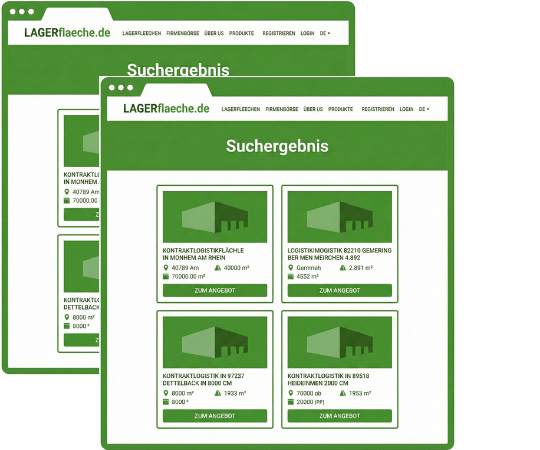
Your Ideal Logistics Warehouse
Browse listings for warehouse space, logistics real estate, industrial land, and contract logistics solutions.
Browse Exposés
Maximize Exposure for Your Warehouse Space
Showcase your logistics properties and attract qualified inquiries.
Discover Products