Commission-free offer
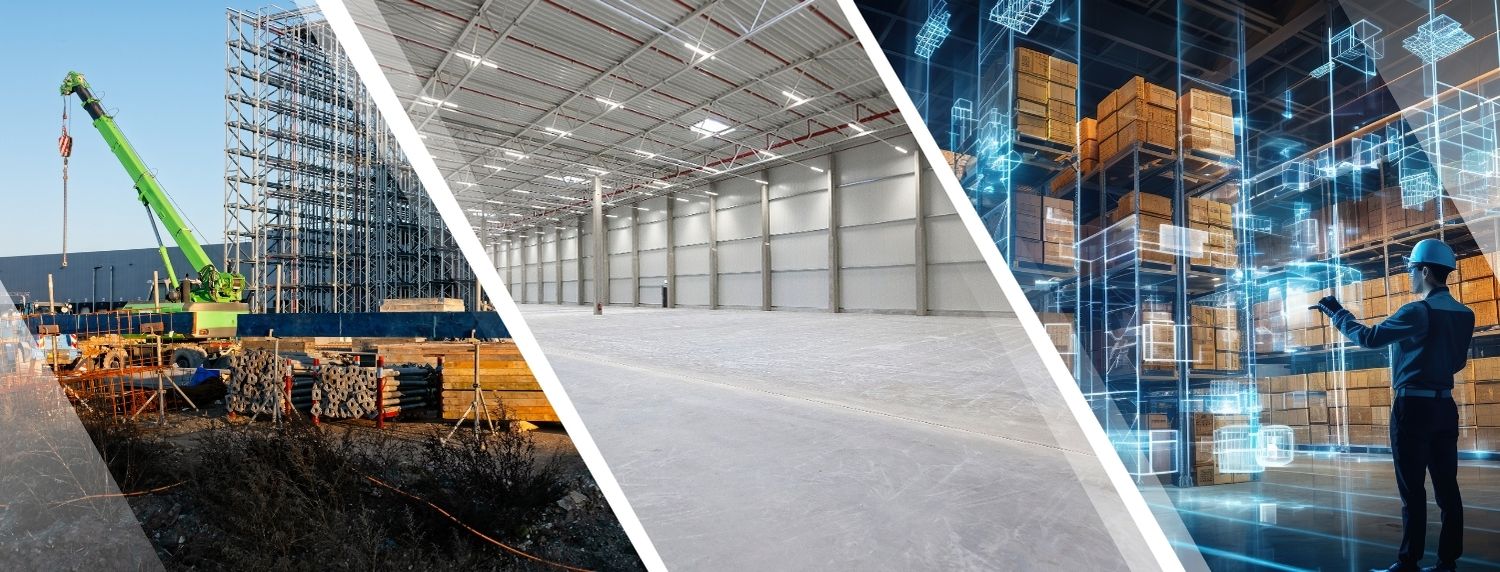
Kontraktlogistikfläche in Leipzig
Object no.: 9734
Contract logistics
Warehousing (warehouse with management)
Germany
04316 Leipzig
20000.00 m²
16500 (PP)
Price on request

The logistical heart of Central Germany in detail.
Object no.: 9734
Warehousing (warehouse with management)
Germany
04316 Leipzig
Price on request
» Whether renting storage space in Frankfurt am Main or renting a warehouse in Frankfurt am Main: LAGERflaeche.de
» Your reliable, precise and experienced partner for contract logistics in Frankfurt am Main
» Individual and holistic support in warehouse logistics in Frankfurt am Main
» Uncomplicated and fast, get online support for your logistics
» Find warehouse logistics and contract logistics service providers in Frankfurt am Main
The Leipzig-Halle logistics region has been one of the undisputed top locations in Europe for years. But what makes this location so resilient to market fluctuations? Why do global players choose their hubs here?
In this location description, we analyze the Leipzig freight center (GVZ) (focusing on the main location in the north and the correlation to the southern areas) in detail. We shed light on infrastructure, cost structures and the decisive competitive advantages that distinguish Leipzig from other German freight villages.
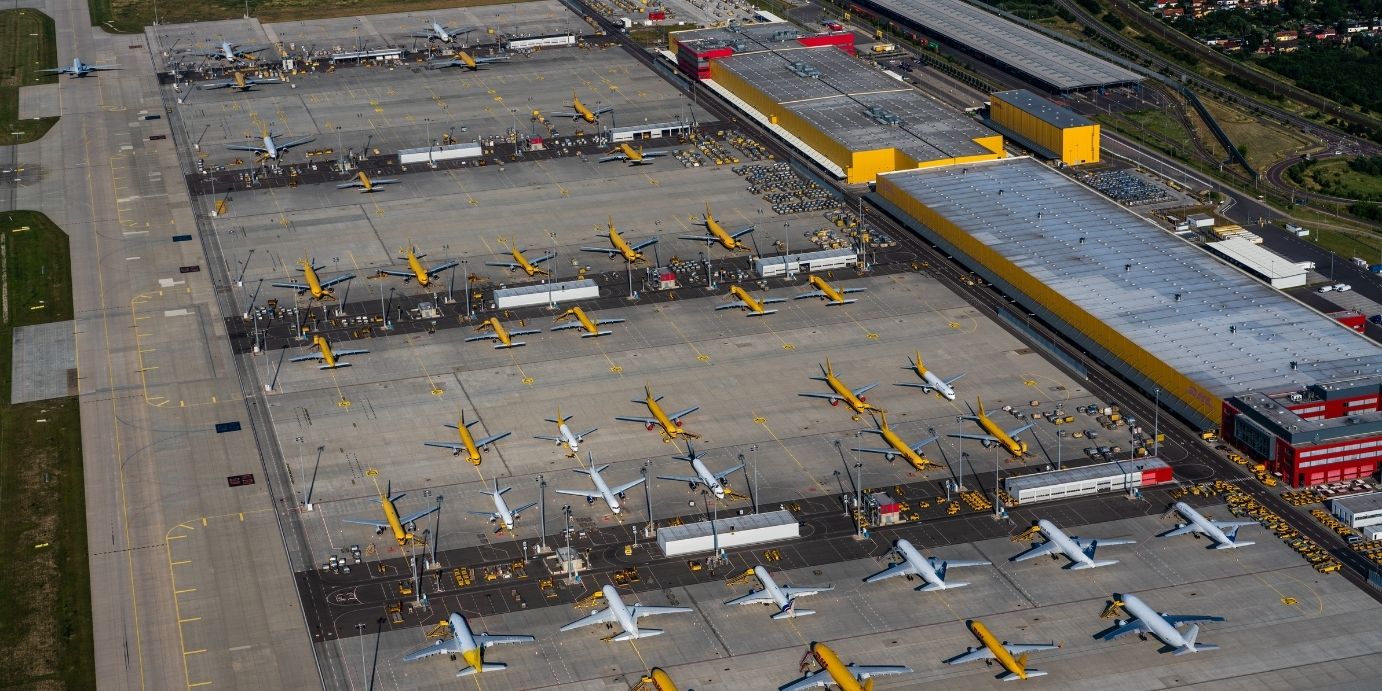
The GVZ Leipzig is much more than a collection of warehouses. It is a planned logistics ecosystem located at the intersection of the main European transport axes. Historically grown as a trading city, Leipzig has developed into an industrial logistics cluster through the settlement of Porsche, BMW and, above all, the DHL hub.
The official GVZ Leipzig is located in the north of the city (Leipzig-Radefeld/Lindenthal). It acts as an interface for freight handling between the modes of transport and bundles freight transport-intensive operations. This is complemented by strong logistical developments in the south of Leipzig (along the A38), which act as relief and supplementary locations, as space in the north is becoming increasingly scarce.
Why is this dichotomy important? While the north is characterized by its close proximity to the airport (air cargo) and the automotive industry, the south often serves as a gateway to the Eastern European markets and serves the regional distribution.
The GVZ is located in the northwest of the Saxon metropolis. Geographically, Leipzig is located in the center of the enlarged European Union.
This location enables logistics companies to reach almost all important German economic centers as well as markets in Poland and the Czech Republic within a truck day run (approx. 500-600 km).
| Category | Facts / Figures |
| Total | > 400 hectares (Cluster North & Airport) |
| Motorways | A14, A9, A38 |
| Airport | Leipzig/Halle (LEJ) - 24h operation |
| Rail handling | DUSS terminal (CT), sidings available |
| Top rent | approx. 6.00 - 7.00 €/m² (as of 2024/25 trend) |
| Business tax | 320% - 460% (depending on the municipality) |
| Pertinence | Top 3 logistics region in Germany |
| Focus Industry | Automotive, E-Commerce, Air Cargo, Chemie |
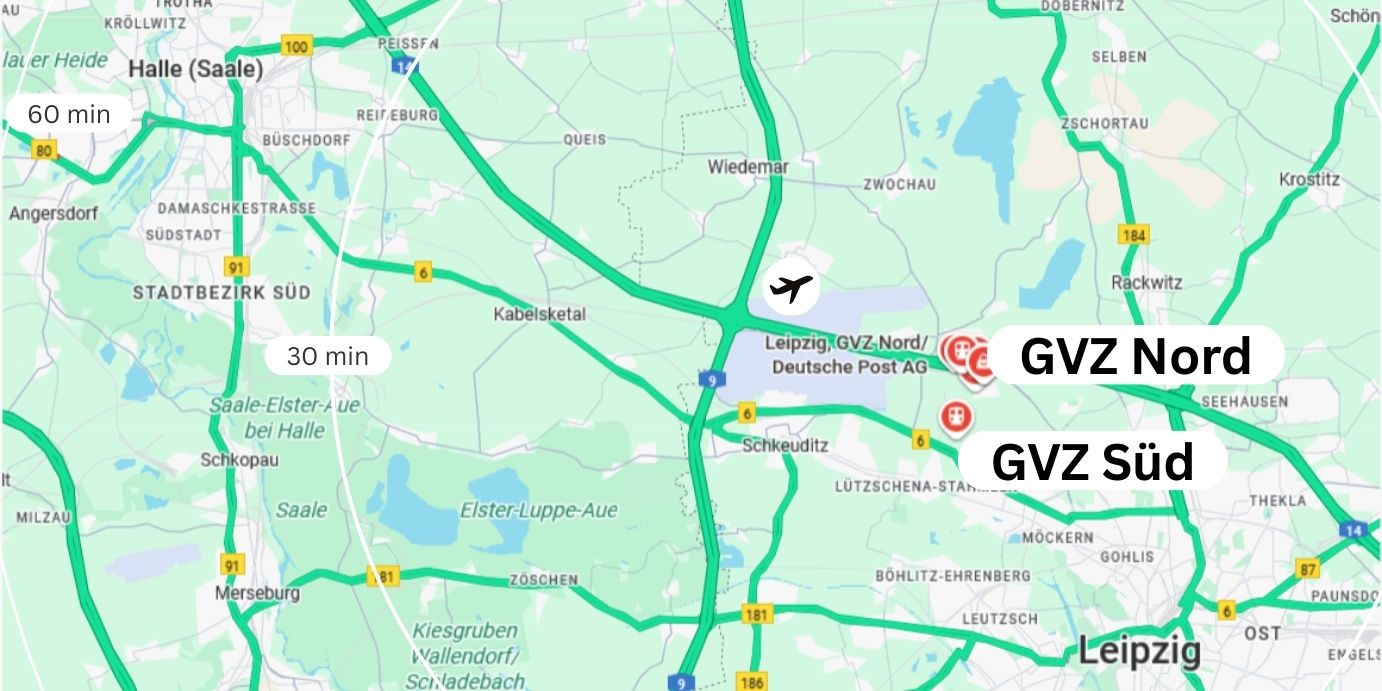
One of the most common questions from investors is: How efficient is transshipment between modes of transport really? The GVZ Leipzig is considered a prime example of multimodality, although the focus here is in fact on trimodality (road, rail, air).
The GVZ has excellent connections to the highway network:
Combined transport (CT) is a key factor in CO2 reduction in logistics.
This is the unique selling point (USP) of the location.
Is Leipzig a real water location? There is the Lindenau harbor, and historically there were plans for the Elster-Saale Canal. In fact, however, inland shipping plays a subordinate role for the Leipzig freight village compared to Duisburg or Mannheim. Container traffic is primarily carried out by rail and road. The site should therefore be honestly assessed as highly trimodal, but not primarily as a waterside hub.
In the rankings of the "top logistics regions" (e.g. Fraunhofer SCS), Leipzig/Halle regularly occupies top positions.
Economic dynamism: The region is growing above the national average. Cargo throughput at the airport is growing steadily (approx. 1.4 million tons per year, as of 2023/24). This partially decouples the region from pure cyclical dips in domestic consumption, as it acts as an international hub.
For decision-makers, the "hard facts" of costs are decisive. How have prices developed? (Note: The following values are guideline values as of 2024 and may fluctuate in market dynamics).
The "dumping price" myth of the East is over. Quality has its price.
Developed commercial space in the direct GVZ core is in short supply.
A decisive factor is whether the company settles in Leipzig or in the surrounding area.
→ Dresden Freight Center
→ Göttingen Freight Center
→ Erfurt Freight Center
The "Who's Who" of logistics will be on site. This concentration creates synergies, but also competition for personnel.
Are there still enough staff? This is the most critical question for new settlements.
The unemployment rate in Leipzig is historically low. The "war for talents" is real.
What makes the GVZ future-proof?
Question: Is the GVZ Leipzig only suitable for large corporations?
Answer: No. Although large players dominate, there are numerous multi-user warehouses that offer partial space for medium-sized freight forwarders or start-ups in e-commerce.
Question: How does the 24-hour flight permit affect real estate prices?
Answer: It is the No. 1 price driver. Properties with direct "airside" access or immediate proximity to the cargo area achieve top prices because they allow for late cut-off times for shipping.
Question: What role does the south of Leipzig play?
Answer: Since the north (GVZ/airport) is reaching its limits in terms of space, space-intensive logistics companies are moving south to the A38. There, land prices are often a little more moderate, with good connections.
The Leipzig freight village (north/south) is one of the most efficient logistics locations in Europe. The combination of 24-hour air freight, motorway junction and automotive cluster is unique in this form. For investors and companies, the location offers security and growth potential, but requires creative solutions in the area of personnel recruitment. If you are looking for trimodal excellence, you can't get past Leipzig.
Source: Data is based on market reports from BNP Paribas Real Estate, Bulwiengesa Logistics and Real Estate Studies, Fraunhofer SCS "Top 100 of Logistics", as well as statistical data from the City of Leipzig and the Leipzig Chamber of Industry and Commerce (as of the general market situation in 2024).
Commercial property, logistics property and contract logistics in Hesse at a glance - LAGERflaeche.de!
Object no.: 10182
Rental
Germany
34399 Oedelsheim
Price on request
Object no.: 10181
Rental
Germany
34385 Bad Karlshafen-Helmarshausen
Price on request
Object no.: 10104
Warehousing (warehouse with management)
Germany
64646 Heppenheim
Price on request
Object no.: 10073
Warehousing (warehouse with management)
Germany
34582 Borken
Price on request