



Supply Chain Giants: A Deep Dive into the World's Largest Logistics Properties
Table of Contents
- What qualifies a logistics property as a "giant"?
- The Titans: Where are the largest logistics properties?
- Why this immense size? The strategic imperatives behind XXL camps
- Concrete, steel and high-tech: The anatomy of a logistics giant
- The European Patchwork Quilt: One Continent, Many Logistics Faces
- The Chinese Dragon: A Logistics Market of Extremes
- Global differences: Why the logistics world doesn't work the same everywhere
- Conclusion: The future of logistics is contextual
The world of trade and the flow of goods is dominated by invisible giants: logistics real estate. But while we reap the fruits of their efficiency every day, the centers themselves often remain hidden. What are the largest logistics properties? Where do they stand, and why do they reach such breathtaking dimensions? In this article, we dive deep into the world of XXL distribution centers, shed light on their design and analyze the fascinating differences – from Germany to Europe to China.
What qualifies a logistics property as a "giant"?
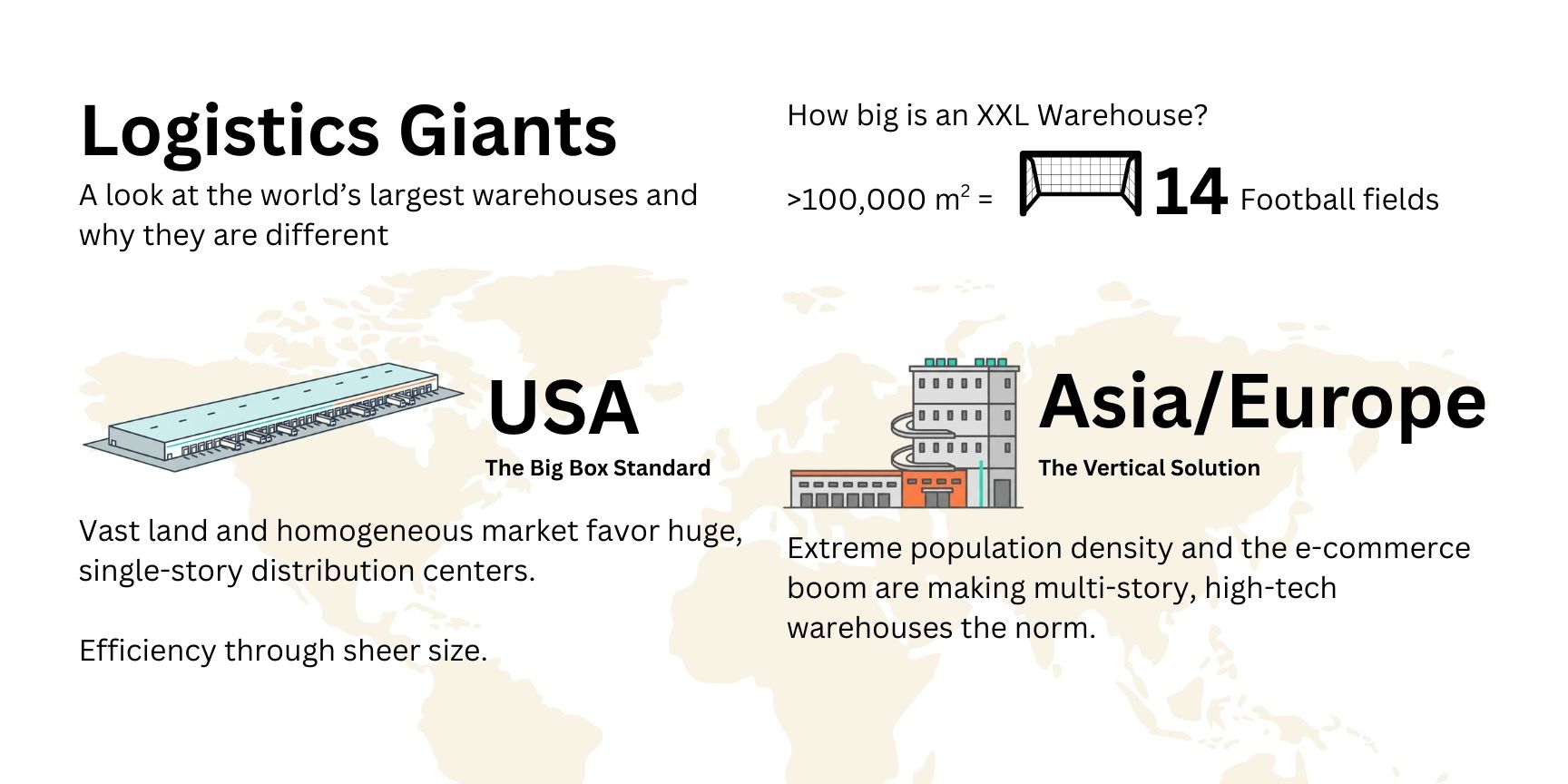
When will we no longer just talk about a large warehouse, but a real XXL logistics property? A consensus has formed in the industry: A property is considered a "big box" or XXL warehouse if it has a contiguous storage area of over 100,000 square meters. This corresponds to the area of about 14 football pitches. These buildings are more than just passive storage sites; they are highly automated, strategic hubs that are at the heart of modern supply chains.
The Titans: Where are the largest logistics properties?
The hunt for the title of "largest logistics center in the world" is dynamic. Nevertheless, there are some outstanding examples that illustrate the scale:
- Boeing Everett Factory, Washington, USA: Even though it is primarily a production facility, this building is often considered the largest building in the world with a volume of 13.3 million cubic meters and a floor area of 399,480 m². Its logistical functions to supply aircraft production are immense.
- Tesla Giga Texas, USA: This "Gigafactory" is a prime example of the fusion of production and logistics and extends over more than 930,000 m² (source: Tesla). Size is crucial here for the entire vertically integrated process.
- John Deere North American Parts Distribution Center, Illinois, USA: This center extends over approximately 260,000 m² to stock the huge amount of spare parts for the North American market.
One can see a pattern: the largest contiguous areas are often found in the USA, where land availability and a homogeneous market allow for such dimensions. But what about the more densely populated regions of the world?
Why this immense size? The strategic imperatives behind XXL camps
The decision to build a warehouse of over 100,000 m² is a tough economic and strategic necessity. The main drivers are:
- E-commerce boom: Online retail requires huge areas for a wide range of products and fast, automated processing of thousands of orders per hour.
- Consolidation and efficiency: Instead of operating many small warehouses, companies are pooling their inventories. This reduces costs and enables the use of expensive but highly efficient automation technology, which is only profitable at high throughput.
- Strategic choice of location: These giants do not arise by chance. They are placed at motorway junctions, near cargo airports and container ports to minimise transport times.
Concrete, steel and high-tech: The anatomy of a logistics giant
The construction of XXL logistics properties is designed for maximum efficiency and flexibility:
- Construction: A steel or reinforced concrete skeleton structure with large spans minimizes the number of obstructive columns.
- Floor slab: The extremely flat and heavy-duty steel fibre concrete floor slab is the most critical component.
- Sustainability: Modern buildings integrate photovoltaic systems, LED lighting, rainwater harvesting and DGNB or BREEAM certifications as standard.
The European Patchwork Quilt: One Continent, Many Logistics Faces
While the USA is characterized by its vastness, Europe is a mosaic of different markets. This is directly reflected in the logistics properties.
- Germany: As the heart of Europe, Germany is a transit country with extremely dense infrastructure. Logistics here is often more decentralized. Large warehouses of 60,000-80,000 m² are common, but projects beyond the 100,000 m² mark are rarer than in other regions and are subject to strict approval procedures due to the high land consumption.
- United Kingdom: As a very mature and one of the largest e-commerce markets in Europe, there is extreme space pressure in the logistics heart, the "Golden Triangle" (Midlands). Land prices are high, which means that the UK is a European leader in the development of two- and three-storey logistics centres. Here, construction is being built upwards out of necessity.
- Netherlands: With the Port of Rotterdam as the "Gateway to Europe", the Netherlands is a primary port of call for goods from overseas. Along the Rotterdam-Venlo-Ruhr logistics axis, there is one of the highest densities of XXL distribution centres in Europe. Many of these hubs serve not only the local market, but pan-European distribution.
- Poland: Poland has become the most important logistics hub for Central and Eastern Europe. Lower labor and land costs as well as a massively developed infrastructure attract huge investments. Some of the largest logistics parks in Europe are being built here, often with areas of several hundred thousand square meters spread over several buildings. The buildings are often more standardised and trimmed for cost efficiency.
The Chinese Dragon: A Logistics Market of Extremes
When comparing global markets, China stands out with unprecedented dynamism. The Chinese logistics real estate market is driven by factors that make it unique.
- Huge market demand: Driven by e-commerce giants such as Alibaba and JD.com, which move hundreds of millions of parcels every day, the need for modern logistics space is almost insatiable.
- Dominance of multi-store warehouses: In the metropolitan regions around Shanghai, Beijing and Shenzhen, single-storey XXL warehouses are an absolute rarity. Due to the extreme population density and astronomical land prices, the construction of multi-storey logistics centres is the standard. Ramps that allow trucks to drive directly to the second or third floor are commonplace here. A single-storey warehouse would be an inefficient waste of valuable soil.
- Government planning and speed: Development is often driven by government-planned logistics zones and a tremendous pace of construction. Where years pass for approval in Germany, state-of-the-art plants are built in China in just a few months.
- Technological "leapfrogging": Many of the newly built Chinese centers are among the most technologically advanced in the world. They have partly skipped the development stages of Western countries ("leapfrogging") and have relied on fully automated sorting systems, swarms of autonomous robots and AI-controlled warehouse management from the very beginning.
Global differences: Why the logistics world doesn't work the same everywhere
The reasons for these global differences can be broken down into three core factors:
- Land (availability & cost): In the US, land is cheap and available. In Europe, it is expensive and scarce. In China's metropolises, it is extremely expensive and strictly regulated. This is the main reason for the different construction methods (flat vs. high).
- Market structure: A homogeneous market such as the USA or China favors huge central hubs. The fragmented Europe, with its national borders and different consumption habits, requires a finer, more decentralised network.
- Regulation & workforce: Lengthy approval procedures and a high level of soil protection in Germany are slowing down land use, while lower labour costs in Poland are making large-scale developments attractive.
Conclusion: The future of logistics is contextual
The world's largest logistics properties are more than just halls; they are the physical image of global economic flows. Their size and design are a direct response to the local conditions of market, space and costs. While the USA continues to rely on space-intensive "big boxes", the shortage is forcing Europe to find intelligent and condensed solutions. China, on the other hand, is redefining the upper limit of what is possible with its multi-storey, highly automated tech hubs.
For industry professionals, this means that there is no such thing as a "one-size-fits-all" solution. The future of logistics real estate depends on the context. The key to success is understanding these global differences and finding the right strategic answer for each market – whether it's a sprawling park in Poland, a multi-storey marvel in London or a highly efficient, medium-sized distribution centre in the heart of Germany.
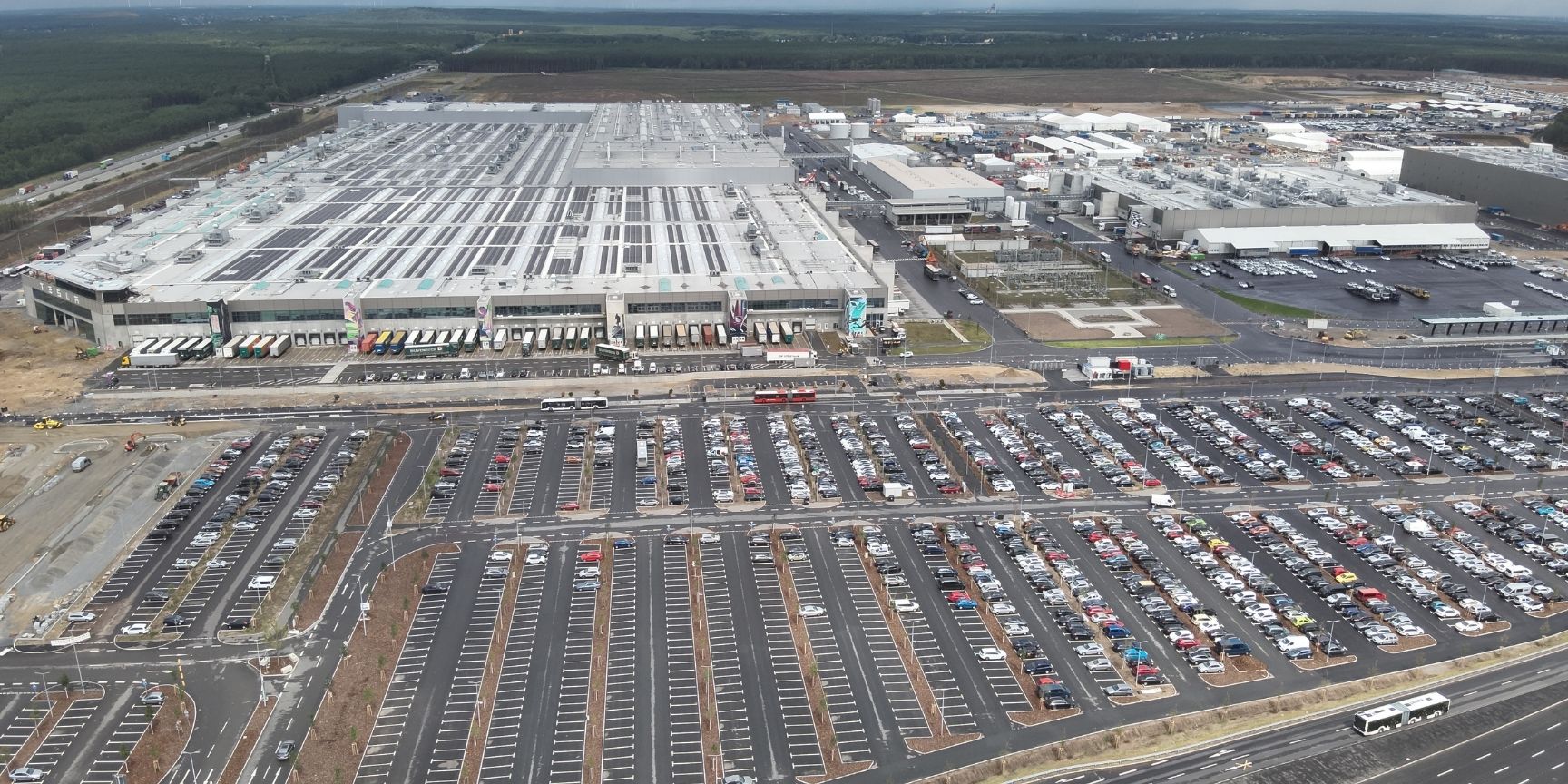
Image source: Tesla Giga Factory Berlin by Michael Wolf (https://www.la-wolf.de/)
Latest Blog Posts
Stay up to date with the newest trends, insights, and tips in warehouse and logistics. Our latest articles help you navigate the industry with confidence.
Data Centres vs. Logistics Facilities: The Race for Power and Land
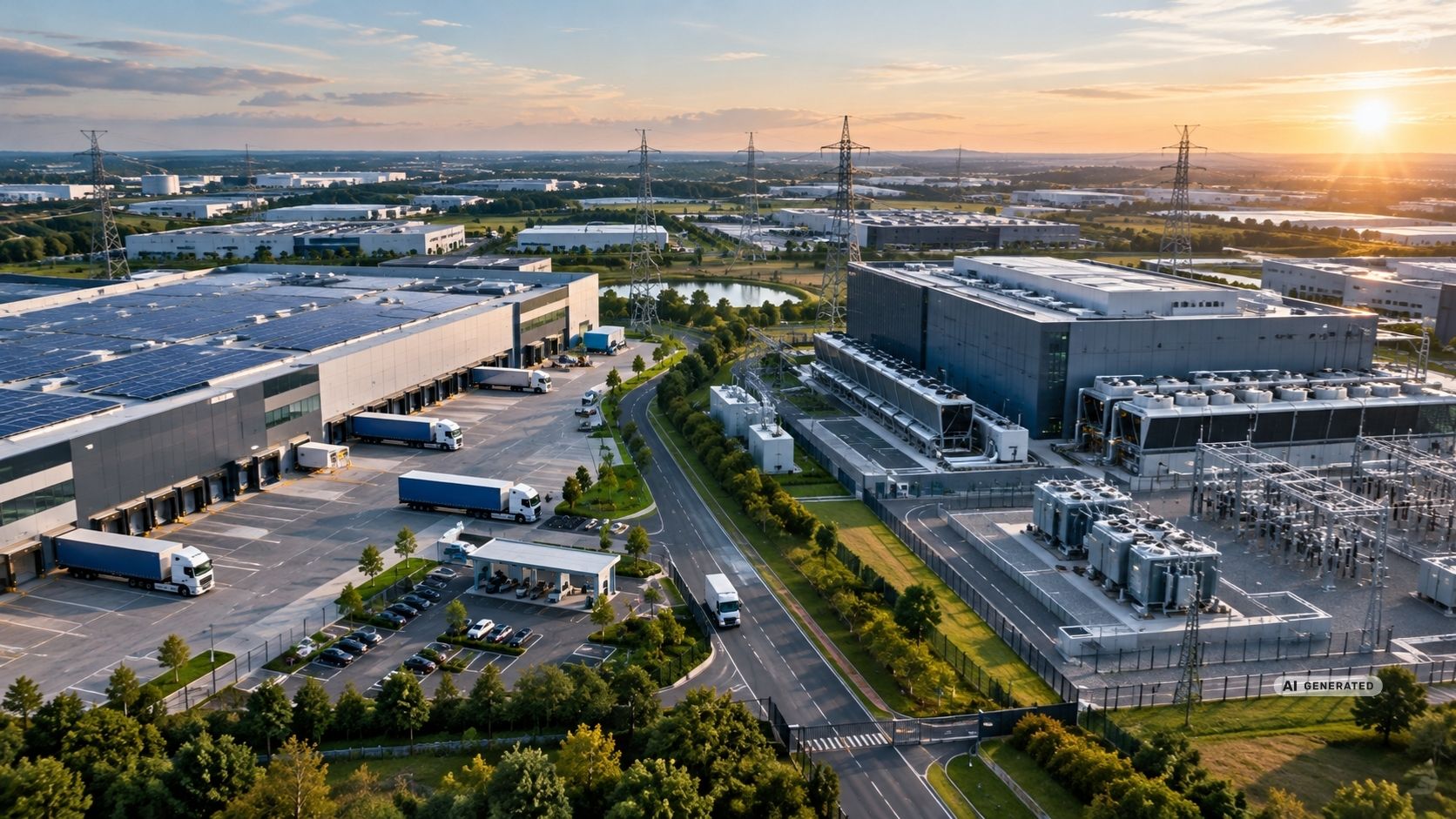
Across Europe, logistics operators are competing for more than land and transport access. They increasingly need something much harder to secure: grid capacity. Data centres are intensifying that competition — and changing how logistics locations are evaluated....
Chinese companies discover Europe's logistics real estate
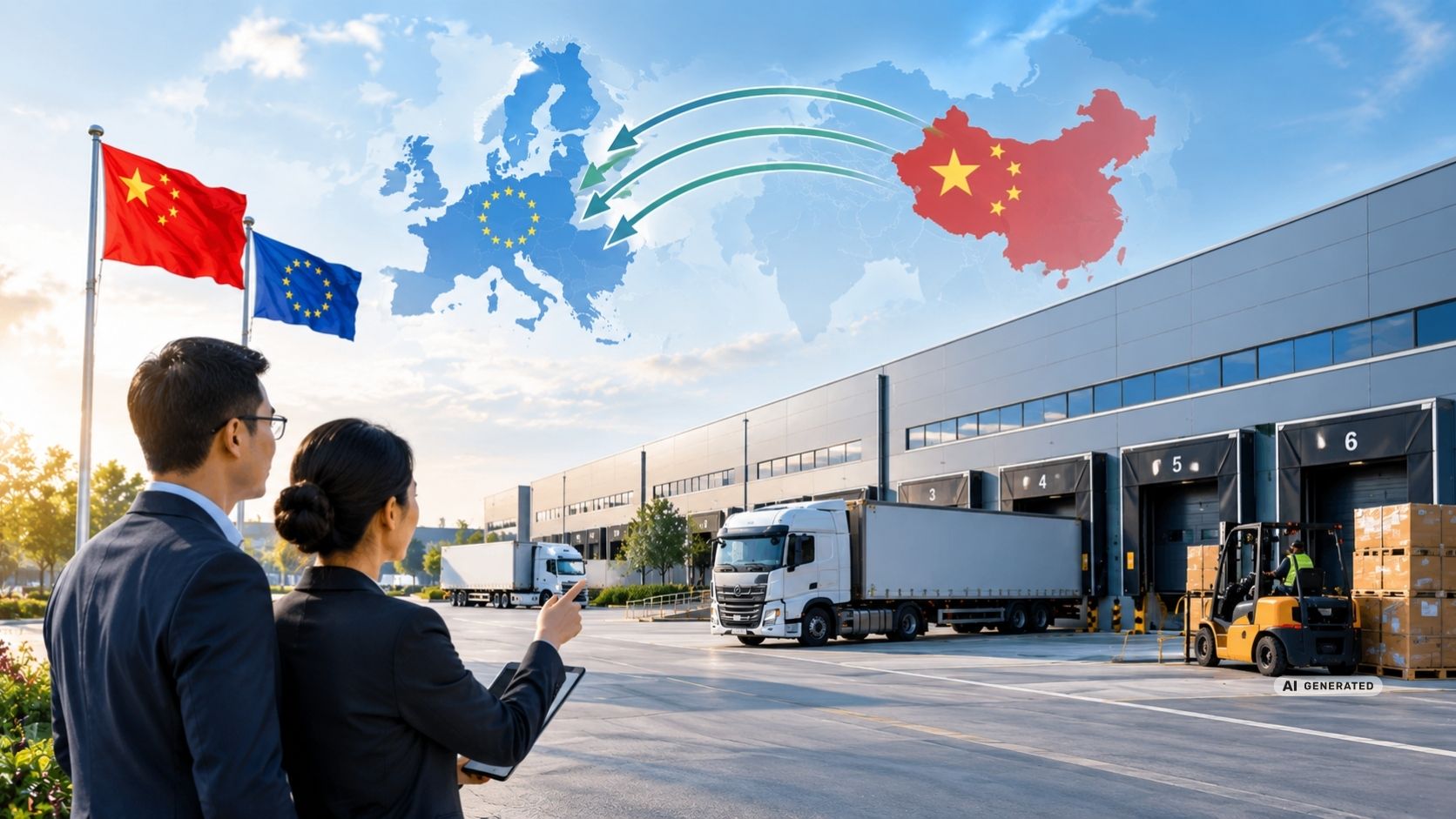
Chinese companies are becoming an increasingly visible user group in Europe's logistics real estate market. What does this mean for warehouse space, 3PL structures and the requirements for European logistics locations?...
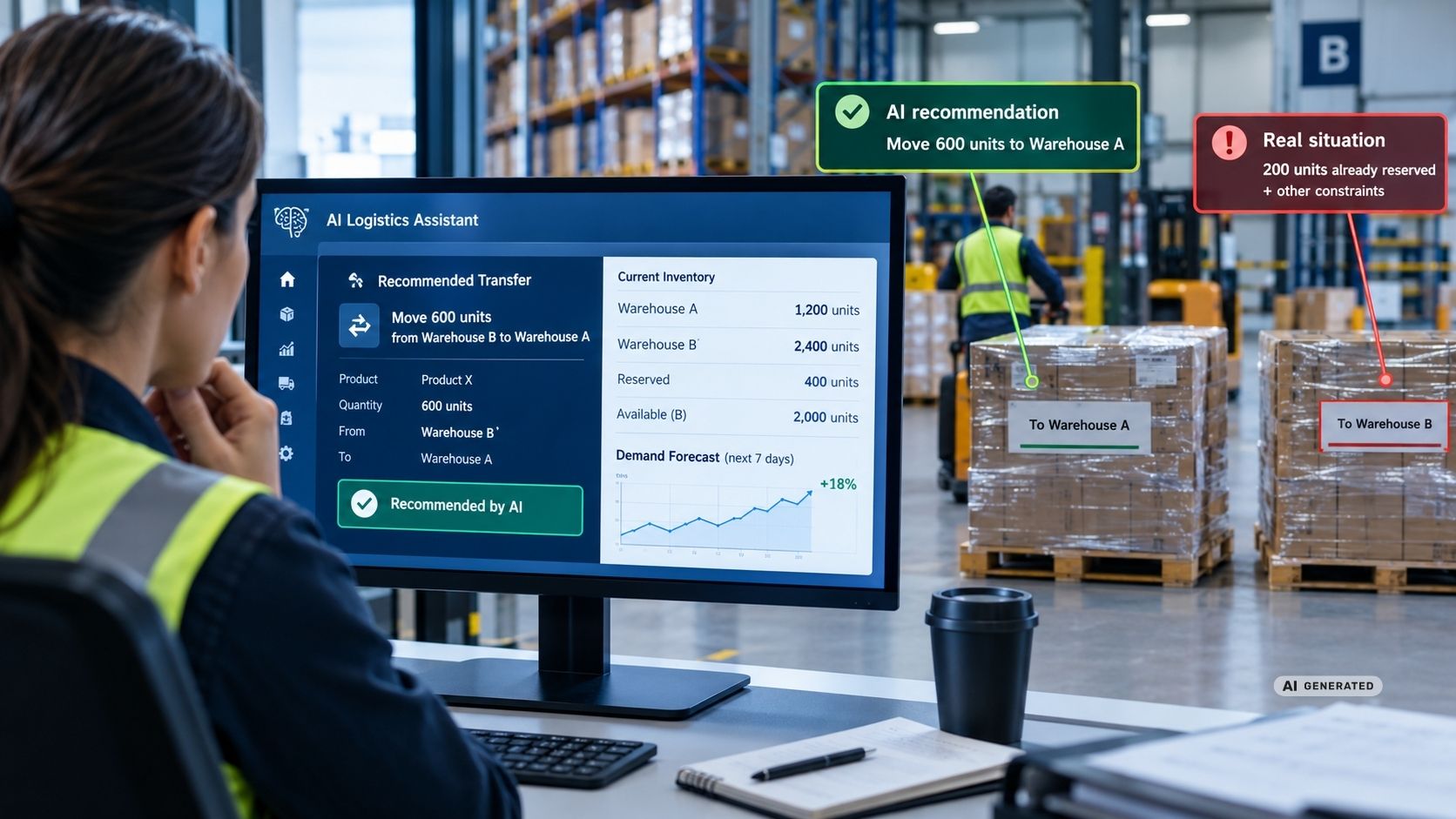
AI Hallucinations in Logistics: When AI Plans the Wrong Delivery
AI can analyze enormous amounts of logistics data — but it can also produce a convincing answer that is simply wrong. The critical question is not whether AI makes mistakes, but what happens when a wrong recommendation becomes an operational decision....
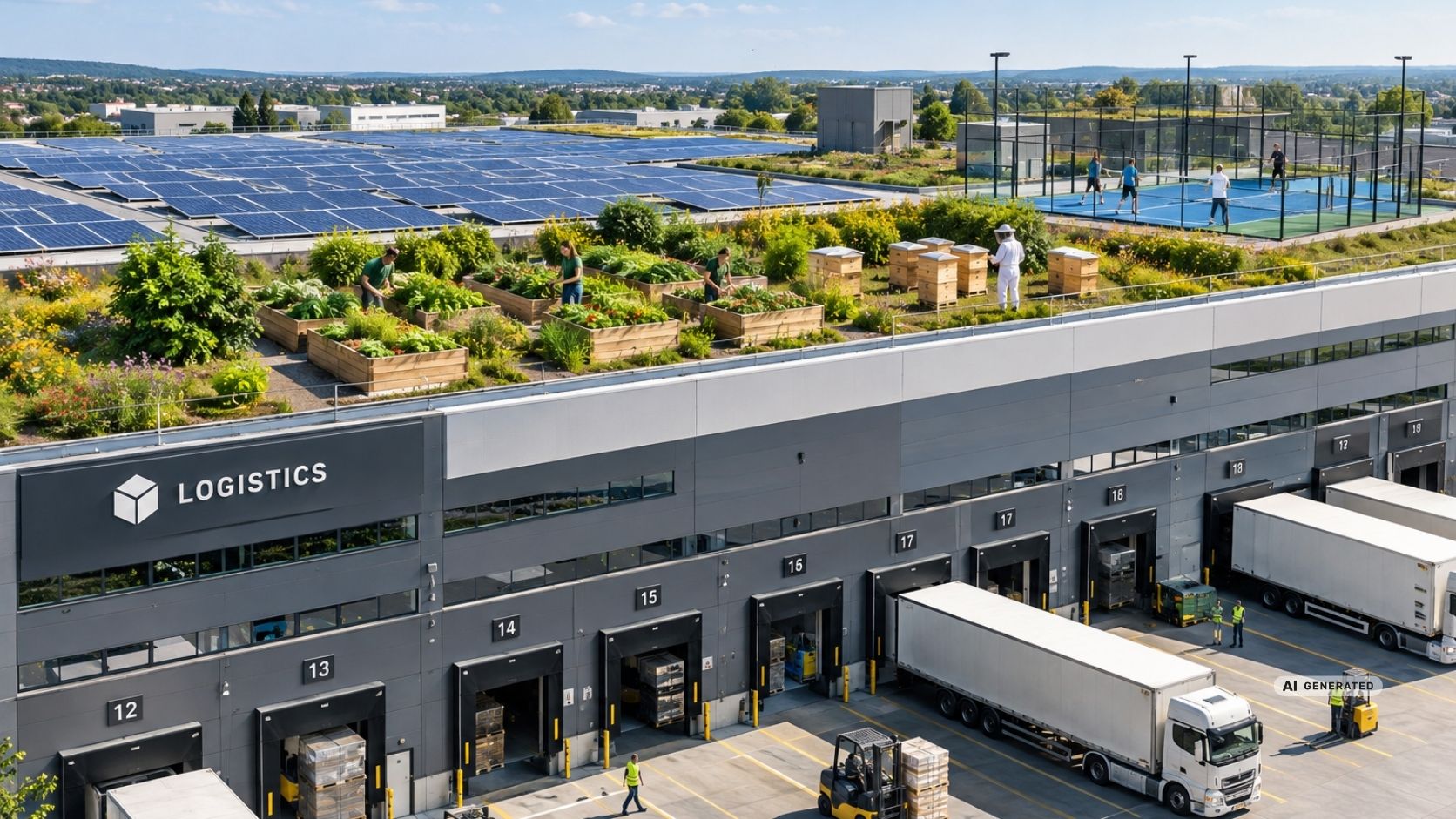
The Green Revolution on the Hall Roof: From Concrete Block to Ecological Power Plant?
Logistics roofs can do more than PV: greening, bees, urban farming and even sports areas turn unused roof space into multifunctional rooms....