
Commission-free offer
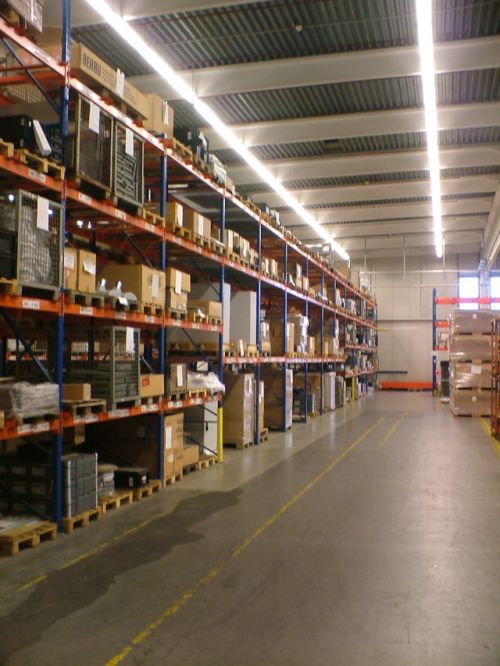
Freie Büro-, Lager- und Freiflächen in der Region Augsburg
Object no.: 3566
Logistics real estate
Rental
Germany
86169 Augsburg
10000 m²
12000 (PP)
Price on request

Southern Germany's bimodal logistics hub on course for the future
Object no.: 3566
Rental
Germany
86169 Augsburg
Price on request
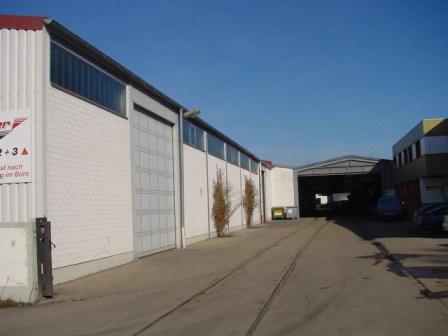
Object no.: 2523
Rental
Germany
86462 Langweid/Augsburg
Price on request
» General description: A successful inter-municipal project
» The location: In the heart of the southern German economic axis
» Infrastructure and modality: The bimodal powerhouse
» Economic attractiveness: focus on costs and taxes
» Workforce and skilled workers: potential of an educational region
» Top logistics region Augsburg: Why?
» Companies based here: A who's who of the industry
» Key facts GVZ Augsburg at a glance
» Conclusion: A location with strategic vision
The Augsburg Region Freight Centre (GVZ) positions itself as a central hub in southern German and European goods traffic. With its strategically favourable location, state-of-the-art infrastructure and clear focus on the intelligent networking of road and rail (bimodality), it offers companies in the logistics sector and the shipping industry decisive locational advantages. But what makes this location so attractive for global players and medium-sized companies? This non-fiction text sheds light on the decisive factors – from infrastructure to cost structures to the availability of skilled workers – and provides a well-founded description of the location for investors, logistics companies and economic decision-makers.
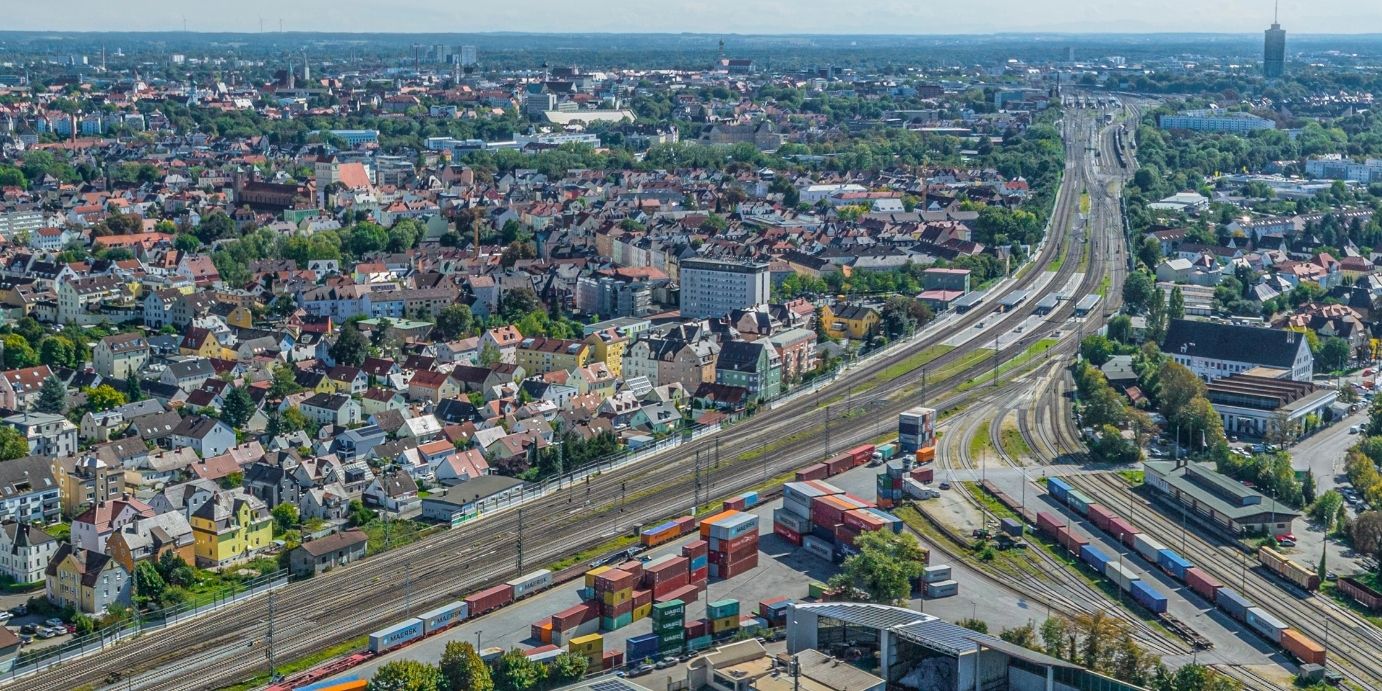
The Augsburg Region Freight Village is much more than just an industrial park. It is a carefully planned, inter-municipal project of the cities of Augsburg, Gersthofen and Neusäß, which was designed as an international freight hub. On a gross area of 112 hectares – the equivalent of about 150 football pitches – an area has been created that is tailored to the needs of modern logistics. Of the total area, around 71 hectares are designated as net commercial space, which is divided into various zones for logistics service providers, logistics-related services and the central container terminal.
The concept of the GVZ follows a clear strategic division, which is described as a "50-30-20" mix:
This well-thought-out structure promotes synergies between the companies located there and creates a comprehensive service ecosystem that goes far beyond the mere handling of goods. In the final expansion, up to 2,500 jobs are to be created in the Augsburg freight village and a cargo handling of around 1.43 million tons per year is to be realized.
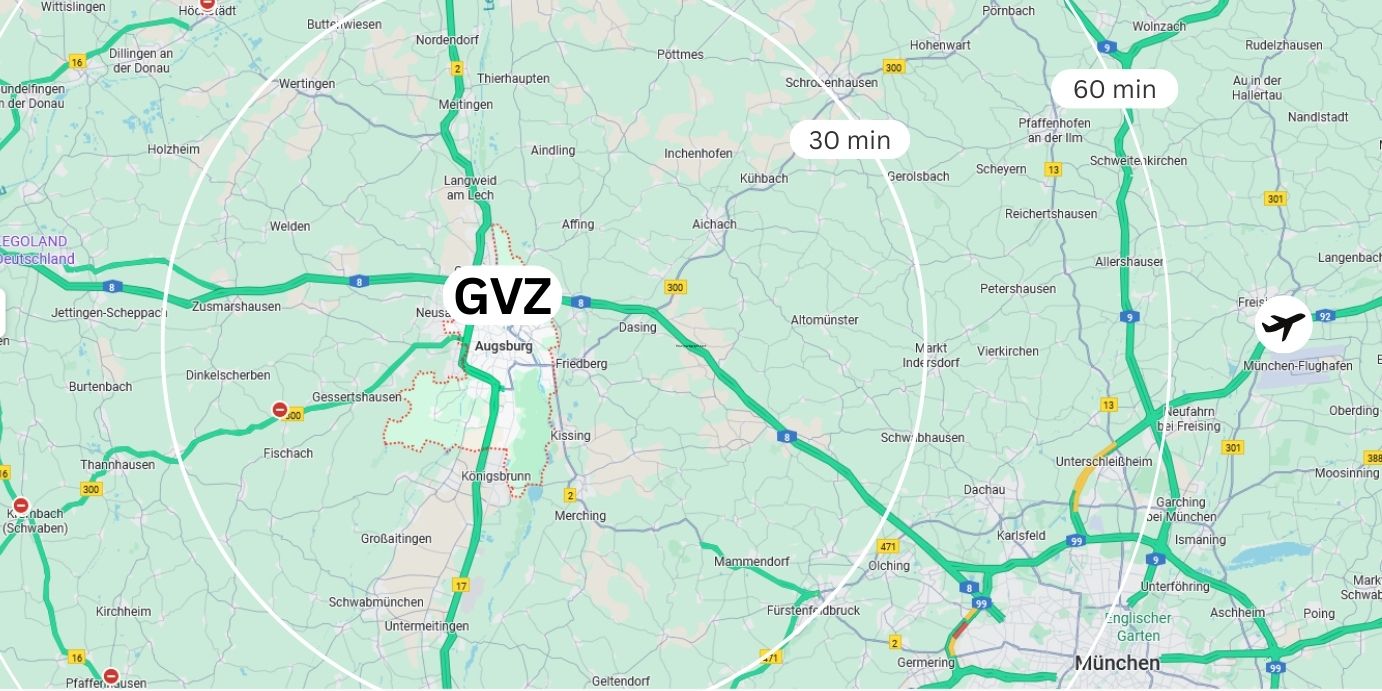
Perhaps the greatest strength of the Augsburg freight village is its geographical and infrastructural location. It is located directly at the intersection of important supra-regional transport axes and forms a strategic gateway for the flow of goods towards southern and southeastern Europe.
This positioning in the third largest conurbation in Bavaria, a region with a heterogeneous and strong economic structure without the dominance of a single industry, makes the GVZ an ideal consolidation and distribution point. Companies such as KUKA, MAN, Premium Aerotec and SGL Carbon shape the regional economy and generate considerable and steady demand for logistics.
The Augsburg freight village is designed as a bimodal location that optimally combines the modes of road and rail transport. There is no waterway connection, which underlines the clear focus on the efficiency of land transport.
The road infrastructure is excellently developed. The GVZ has direct, crossing-free connections to the most important federal highways in the region:
This first-class connection ensures fast turnaround times and reliable accessibility for long-distance truck and distribution transport.
The future of the Augsburg freight village lies largely on the rails. With the construction of the new terminal for combined transport (CT terminal), which is scheduled to go into operation at the end of 2026, the location will become a central hub for intermodal transport. This "container station", planned and built by DB InfraGO AG, replaces the previous, capacity-limited facility in Augsburg-Oberhausen and sets new standards.
This terminal provides direct access to the German seaports in the north (Hamburg, Bremerhaven) and the Adriatic ports in the south (e.g. Trieste, Koper) and strengthens the connection to the trans-European transport networks. For the regional economy, this means a massive relief of the roads, a reduction in CO2 emissions (estimated savings: 1,754 tons of CO2 per year) and a sustainable safeguarding of competitiveness.
For air freight shipments, Munich Airport (MUC), one of the largest cargo airports in Europe, can be reached quickly via the A8 motorway at a distance of approx. 70-80 km. The closer Augsburg Airport (AGB) does not play a role for scheduled and freight traffic.
→ Warehouse Munich
→ Warehouse Nuremberg
→ Warehouse Ingolstadt
The financial framework conditions are just as decisive for a location decision as the infrastructure. What costs do companies have to factor in in the Augsburg freight village?
The real estate market in the Augsburg region is dynamic. Exact rental prices for logistics properties in the GVZ are rarely published publicly and depend heavily on the equipment, size and term of the lease. Based on market reports for the Augsburg region, the following prime rents can be assumed as a guideline for modern logistics and industrial properties (new construction standard):
The land prices are indexed by the standard land values of the respective municipalities. Since the GVZ is located in the districts of Gersthofen and Neusäß, their values are relevant. The standard land values for commercial building areas have shown an upward trend in recent years. According to data from Bodenrichtwerte-Deutschland.de, the values for commercial properties (as of 2023) were:
These values serve as a guide; the actual purchase prices may vary depending on the situation and negotiation.
A significant advantage of the inter-municipal freight village is that companies benefit from the assessment rates of the respective city, depending on the exact location of their property. The trade tax rates of the participating municipalities are competitive in a regional and national comparison.
(Source: City of Gersthofen, gewerbesteuer.de for Neusäß, as of September 2025)
The significantly lower assessment rates in Gersthofen and Neusäß represent a clear financial incentive for settling in the corresponding parts of the GVZ and are an important factor in the overall consideration of operating costs.
Efficient logistics requires qualified and motivated employees. The Augsburg region offers a solid foundation for this. With over 1.1 million inhabitants in the wider catchment area, there is a large pool of potential workers available. The logistics industry is already the second largest employer in the region.
The availability of skilled workers is ensured by a wide range of training and further education opportunities:
Despite these good conditions, the nationwide shortage of skilled workers is also noticeable in the Augsburg region, especially in the commercial sector (e.g. professional drivers) and among specialized logistics companies. However, companies that invest in training and offer attractive working conditions have a clear advantage in the competition for the best minds.
→ Berlin Freight Transport Center
→ Bremen Freight Transport Center
According to studies, including those conducted by the Fraunhofer-Gesellschaft, the Augsburg-Swabia region is one of the top logistics regions in Germany. This ranking is based on a combination of several factors:
The success of the GVZ Augsburg can also be seen in the names of the companies that have already decided on the location. The mixture of internationally active corporations and specialized medium-sized companies shows the attractiveness of the location for different business models. Some of the best-known investors and tenants include:
| Feature | Facts and figures |
| Total | 112 hectares (gross) |
| Floor space | 71 hectares (net for farms and KV plant) |
| Modality | Bimodal (road/rail) |
| Road access | Directly on the A8, B17, B2 |
| Rail connection | CT terminal (under construction, commissioning end of 2026) |
| KV capacity | Up to 100,000 load units / year |
| Potential jobs | approx. 2,500 (in final expansion) |
| Potential for cargo handling | approx. 1.43 million tons / year |
| Business tax | 340% (Neusäß), 360% (Gersthofen), 470% (Augsburg) |
| Nearest cargo airport | Munich (MUC), approx. 75 km |
The Augsburg freight centre is more than just a collection of warehouses. It is a dynamic, growing logistics ecosystem that provides the right answers to the industry's key trends – intermodality, sustainability and efficiency. The strategic location, the excellent infrastructure and the imminent quantum leap through the new CT terminal make the GVZ one of the most attractive and future-proof logistics locations in southern Germany. For companies that want to optimize their supply chains for the European markets, there is hardly any way around the GVZ Augsburg. The question is no longer whether a settlement is worthwhile, but how quickly it can be realized in order to benefit from the advantages of this premium location.
Commercial property, logistics property and contract logistics in Hesse at a glance - LAGERflaeche.de!
Object no.: 10182
Rental
Germany
34399 Oedelsheim
Price on request
Object no.: 10181
Rental
Germany
34385 Bad Karlshafen-Helmarshausen
Price on request
Object no.: 10104
Warehousing (warehouse with management)
Germany
64646 Heppenheim
Price on request
Object no.: 10073
Warehousing (warehouse with management)
Germany
34582 Borken
Price on request