


The Logistics Real Estate Market in Transition - Leasing, Ownership or Sale-and-Lease-Back?
Table of Contents
- Status Quo: The Evolution of the Logistics Market (2020–2026)
- Leasing vs. Buying: A Strategic Comparison
- Sale and Lease Back (SLB): The Liquidity Turbo
- Stakeholder Analysis: Who Wins, Who Loses?
- Impact on Storage Costs
- International Comparison: Germany vs. Europe & World
- Alternatives to Classic Leasing
- Practical Example: Medium-sized Freight Forwarder "Logistik-Hansa GmbH"
- Conclusion and Outlook: Where is the Journey Heading?
In a world of volatile supply chains and rising financing costs, the logistics industry is faced with an existential question: Should the foundation of our business – real estate – be on the balance sheet or treated as a flexible asset?
For a long time, ownership of one's own warehouse was considered the epitome of stability. But the dynamics of recent years have shaken this dogma. Between the interest rate turnaround, ESG requirements, and the push for automation, companies are looking for ways to free up capital without losing operational control.
In this article, we clarify the crucial questions:
- Why is the "asset-light" strategy suddenly the gold standard?
- How does Germany compare to the more flexible foreign countries?
- What are the hidden cost risks of leasing compared to buying?
Status Quo: The Evolution of the Logistics Market (2020–2026)
The logistics real estate market has been on a rollercoaster ride over the past five years. During the pandemic (2020-2022), rental prices exploded due to the e-commerce boom. But with the ECB's interest rate turnaround in mid-2022, the game changed fundamentally.
The hard facts:
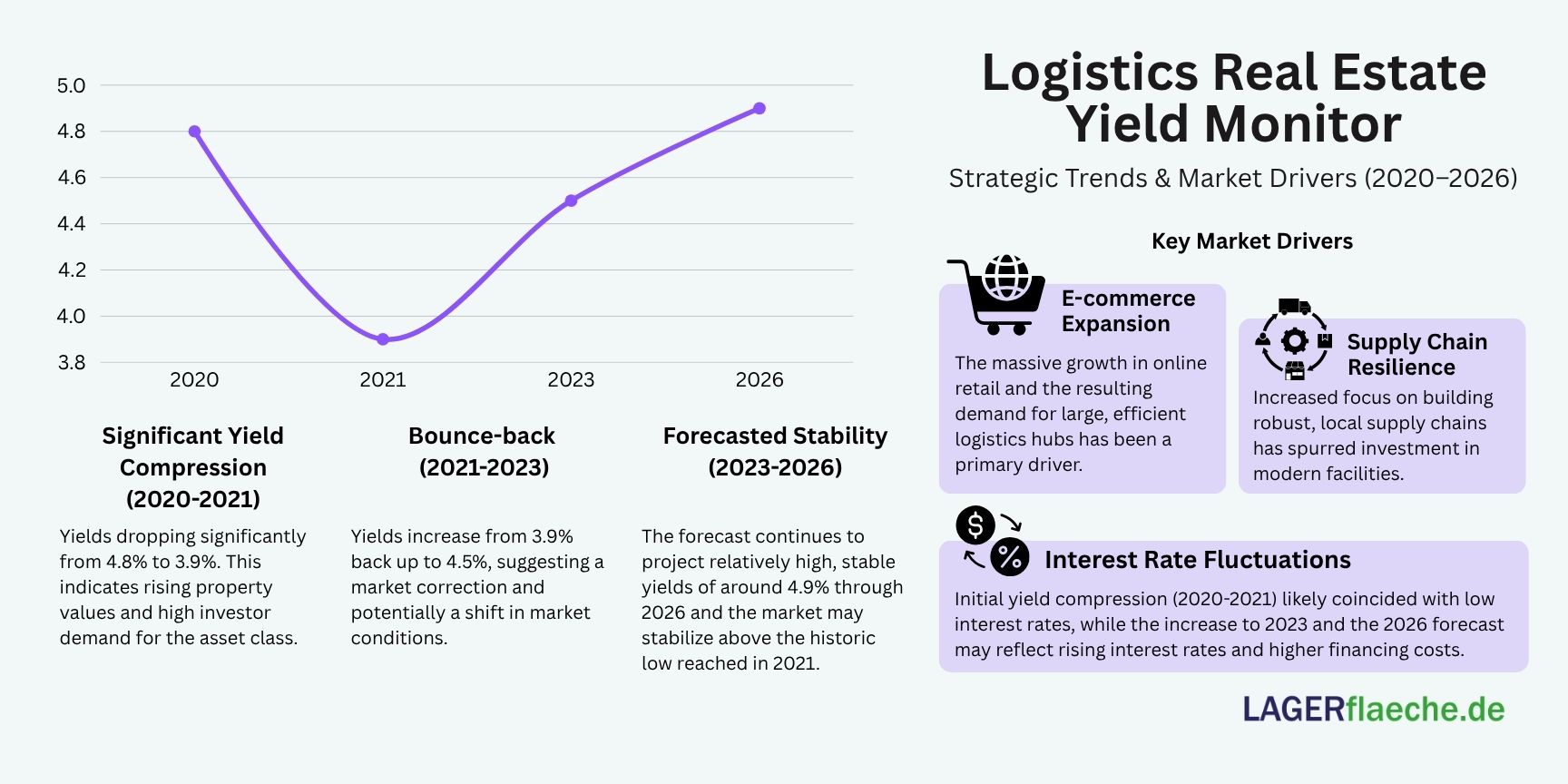
- Yield development: Prime yields for German logistics properties fell from a record low of around 3.0% (approx. 7.0%) in 2021 to around 4.3% to 4.5% in 2024/2025 (source: JLL/CBRE Market Reports).
- Shortage of space: Despite economic dips, the vacancy rate in top locations (A-locations) in Germany remains consistently below 2.5%.
- ESG pressure: Since 2023, existing properties have had to be massively renovated to make them more energy-efficient in order not to become "stranded assets".
Why is that? The combination of high construction costs and increased interest rates makes new buildings expensive. Companies that used to build to own now find themselves in a situation where financing burdens are crushing operating margins. This is where leasing comes in.
Leasing vs. Buying: A Strategic Comparison
The decision between purchase and leasing is not just a question of cost, but a question of capital allocation.
The Sale (Owner-Occupier)
Anyone who buys is looking for value enhancement and maximum autonomy.
- Advantage: Full control over conversion and third-party usability. No rent increases (indexation).
- Disadvantage: High capital commitment (CAPEX). The capital is lacking for core investments such as vehicle fleets or IT.
Real estate leasing
Leasing is essentially usage-based financing.
- Advantage: Balance sheet neutrality (limited according to IFRS 16, but still liquidity-friendly). The leasing instalments are fully tax-deductible as operating expenses.
- Disadvantage: Over the entire term, it is often more expensive than a cheaply financed purchase. Less flexibility for structural changes.
Expert question: Is the return on equity of my logistics business higher than the financing costs of the property? If so, leasing is almost always the economically more sensible choice.
Sale and Lease Back (SLB): The Liquidity Turbo
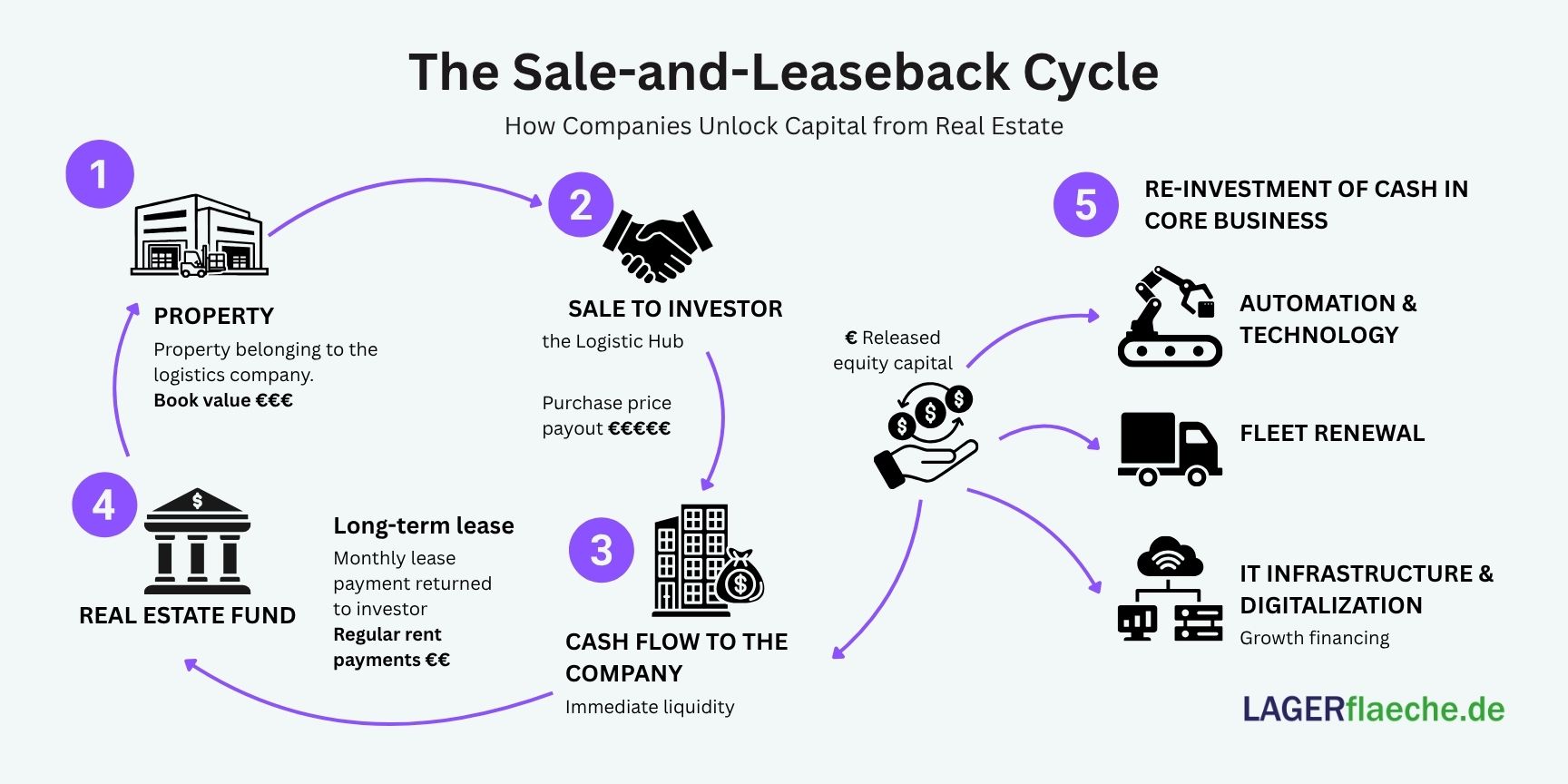
The sale-and-lease-back procedure is the surgical instrument of real estate financing. A company sells its existing property to an investor (e.g. a REIT or pension fund) and at the same time leases it back on a long-term basis.
Why are so many people thinking about it right now?
- Debt relief: Banks have become more restrictive in granting loans (Basel III/IV). SLB immediately improves the equity ratio.
- Financing transformation: Contract logistics companies use the freed-up capital to automate warehouses (autostore, robotics).
- Exit strategy: Owner-managed freight forwarders often use SLB to prepare for company succession.
Stakeholder Analysis: Who Wins, Who Loses?
The advantages and disadvantages vary greatly depending on the role in the market:
| Actor | Main advantage | Main risk |
| Project Developer | Quick exit; Capital recycling for new projects. | Dependence on the investment market and buyers' return expectations. |
| Contract logistics company | "Asset-light" model fits short contract terms with customers. | Location risk at the end of the contract; Indexed rents eat up margins. |
| Freight forwarders | Liberation from "dead capital"; Focus on logistics equipment. | Loss of hidden reserves in real estate. |
| Warehouse owner | Portfolio diversification through partial sales. | Tax disclosure of hidden reserves at the time of sale. |
Impact on Storage Costs
Leasing changes the cost structure from fixed to variable costs (OPEX).
- Triple net contracts: In commercial leases, it is common for the tenant (lessee) to bear all costs (roof, taxes, insurance).
- Interest rate sensitivity: Since leasing instalments are often linked to the refinancing costs of the lender, the costs for storage have increased by approx. 15-25%.
- Space efficiency: Since leasing can be more expensive per square meter than historical property, the pressure for vertical storage and narrow-aisle technology is increasing.
International Comparison: Germany vs. Europe & World
Why is the German market behaving so conservatively? A look across the border shows clear differences.
Germany: The "security fetishist"
In Germany, the ownership rate among owner-occupiers is comparatively high. The reason is the tax treatment and the historically low interest rate environment. SLB has long been stigmatized as an "emergency sale," which is only now changing.
USA & UK: The pioneers
In the Anglo-Saxon world, real estate is a purely financial instrument. REITs (Real Estate Investment Trusts) dominate here. Sale-and-lease-back is standard to maximize return on equity (ROE).
- Formula: Leasing reduces the tied equity, which drives the ROE massively up with the same profit.
Poland & CEE countries: The growth machines
Here, construction is almost exclusively for the rental market. Project developers such as Panattoni or CTP rely on leasing models to offer international logistics companies (Amazon, DHL) maximum flexibility when entering the market. The returns here are approx. 100-150 basis points higher than in Germany.
Alternatives to Classic Leasing
If neither purchase nor standard leasing fits, hybrid models come into focus:
- Hire purchase: A hybrid form in which ownership is automatically transferred at the end of the term.
- Joint ventures: A logistics company and a developer set up a project company. The logistics company participates in the increase in value, but bears less risk than with a sole purchase.
- Heritable building right: Massively reduces the acquisition costs, as the property does not have to be purchased. In times of high land prices (e.g. Hamburg, Munich) an attractive niche.
Practical Example: Medium-sized Freight Forwarder "Logistik-Hansa GmbH"
Initial situation:
The forwarding company owns three warehouses (book value €10 million, market value €18 million). The banks are demanding more equity capital to finance a new e-truck fleet.
Solution:
Sale-and-lease-back of a hall for €6 million.
- Effect: € 6 million in cash flows into the company.
- Balance sheet: The equity ratio rises from 20% to 35%.
- Costs: The monthly leasing rate is €25,000. This will be offset by the higher efficiency of the new fleet and saved maintenance costs.
Conclusion and Outlook: Where is the Journey Heading?
Commercial real estate leasing is not a trend, but a structural response to a more complex economic world.
The forecast for 2026 and beyond:
- Green leasing: Leases will contain clauses that oblige tenants and landlords to reduce CO2 emissions (ESG-linked rents).
- Flexibilization: We will see more "logistics-as-a-service" models, where lease terms become shorter and more modular.
- Technology integration: Investors will prefer to lease real estate that is already "robotics-ready".
Important questions to ask yourself now:
- Do I have hidden reserves in my real estate portfolio that would be better invested in my IT?
- Is my current rental structure inflation-proof or is there a risk of a cost trap due to index rents?
- Does my property meet the lessors' ESG criteria for 2030?
Latest Blog Posts
Stay up to date with the newest trends, insights, and tips in warehouse and logistics. Our latest articles help you navigate the industry with confidence.
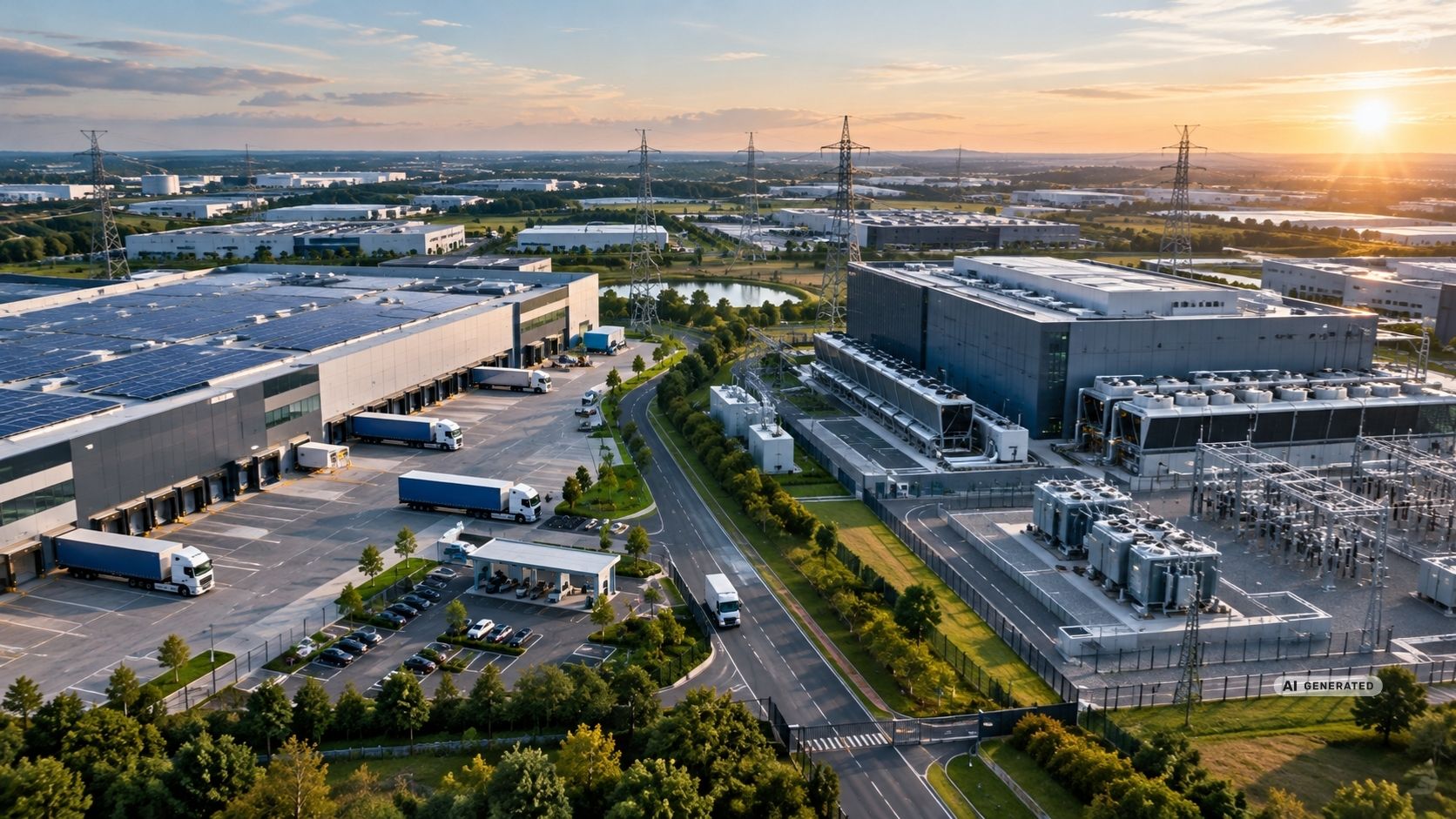
Data Centres vs. Logistics Facilities: The Race for Power and Land
Across Europe, logistics operators are competing for more than land and transport access. They increasingly need something much harder to secure: grid capacity. Data centres are intensifying that competition — and changing how logistics locations are evaluated....
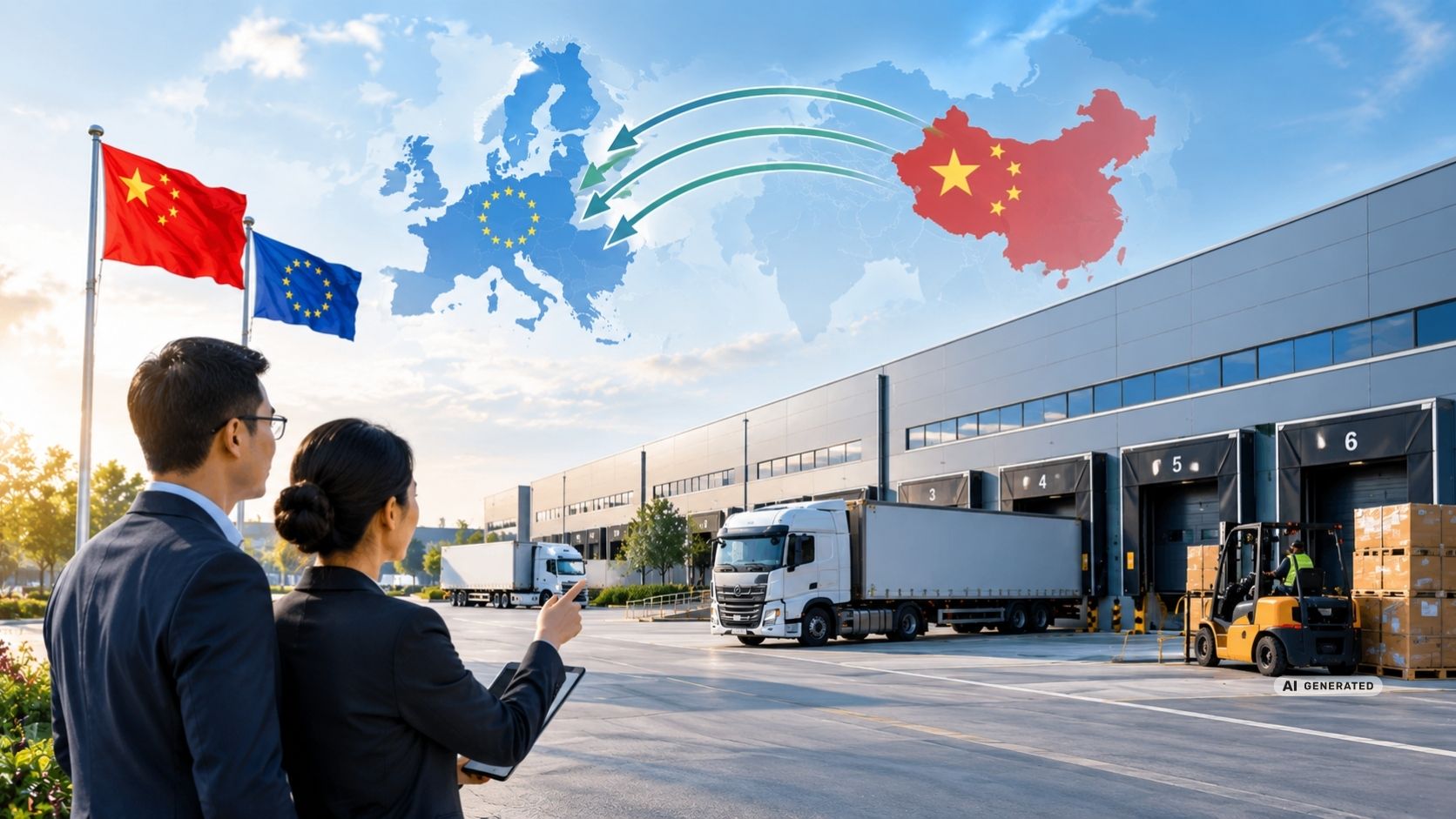
Chinese companies discover Europe's logistics real estate
Chinese companies are becoming an increasingly visible user group in Europe's logistics real estate market. What does this mean for warehouse space, 3PL structures and the requirements for European logistics locations?...
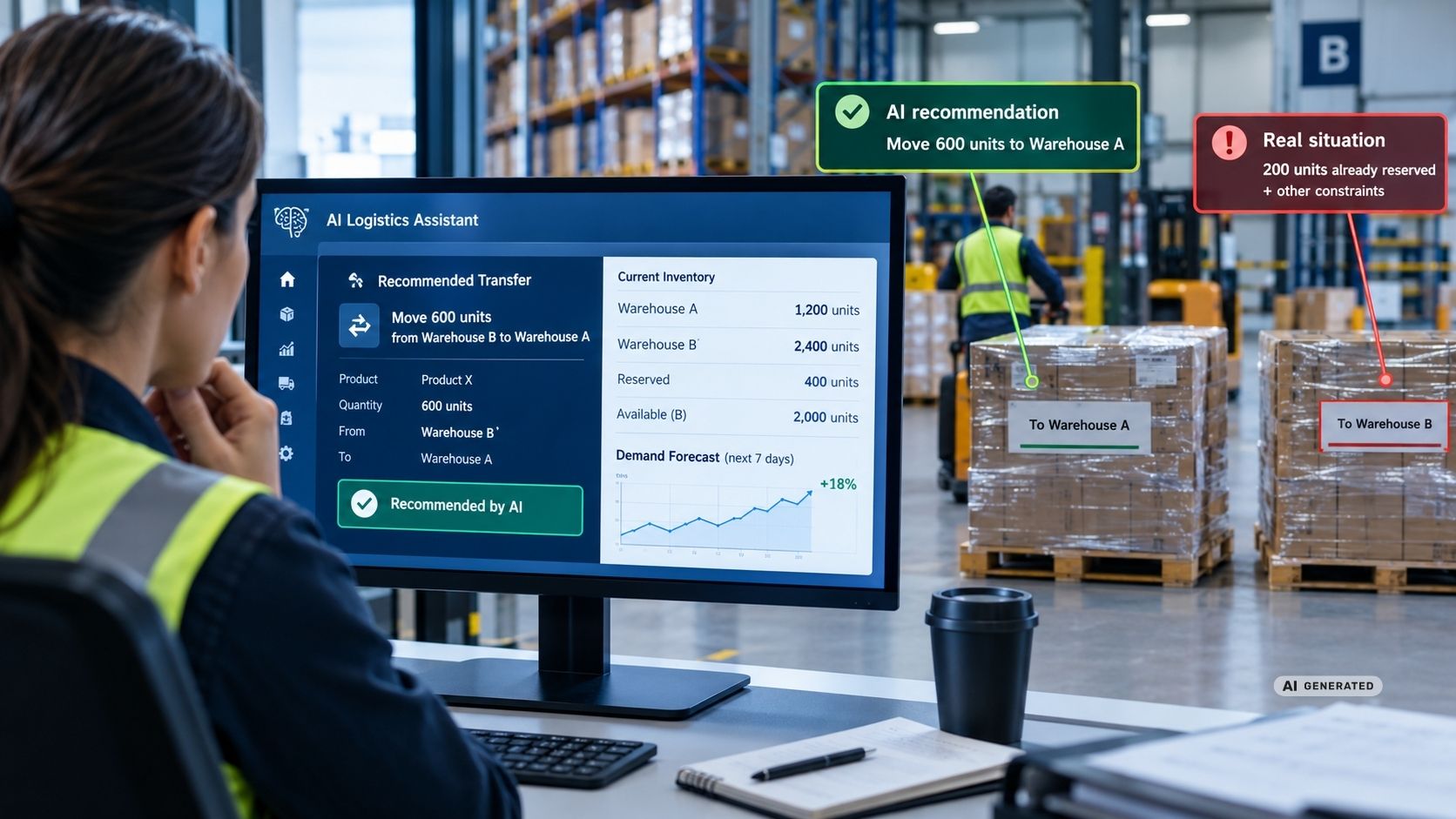
AI Hallucinations in Logistics: When AI Plans the Wrong Delivery
AI can analyze enormous amounts of logistics data — but it can also produce a convincing answer that is simply wrong. The critical question is not whether AI makes mistakes, but what happens when a wrong recommendation becomes an operational decision....
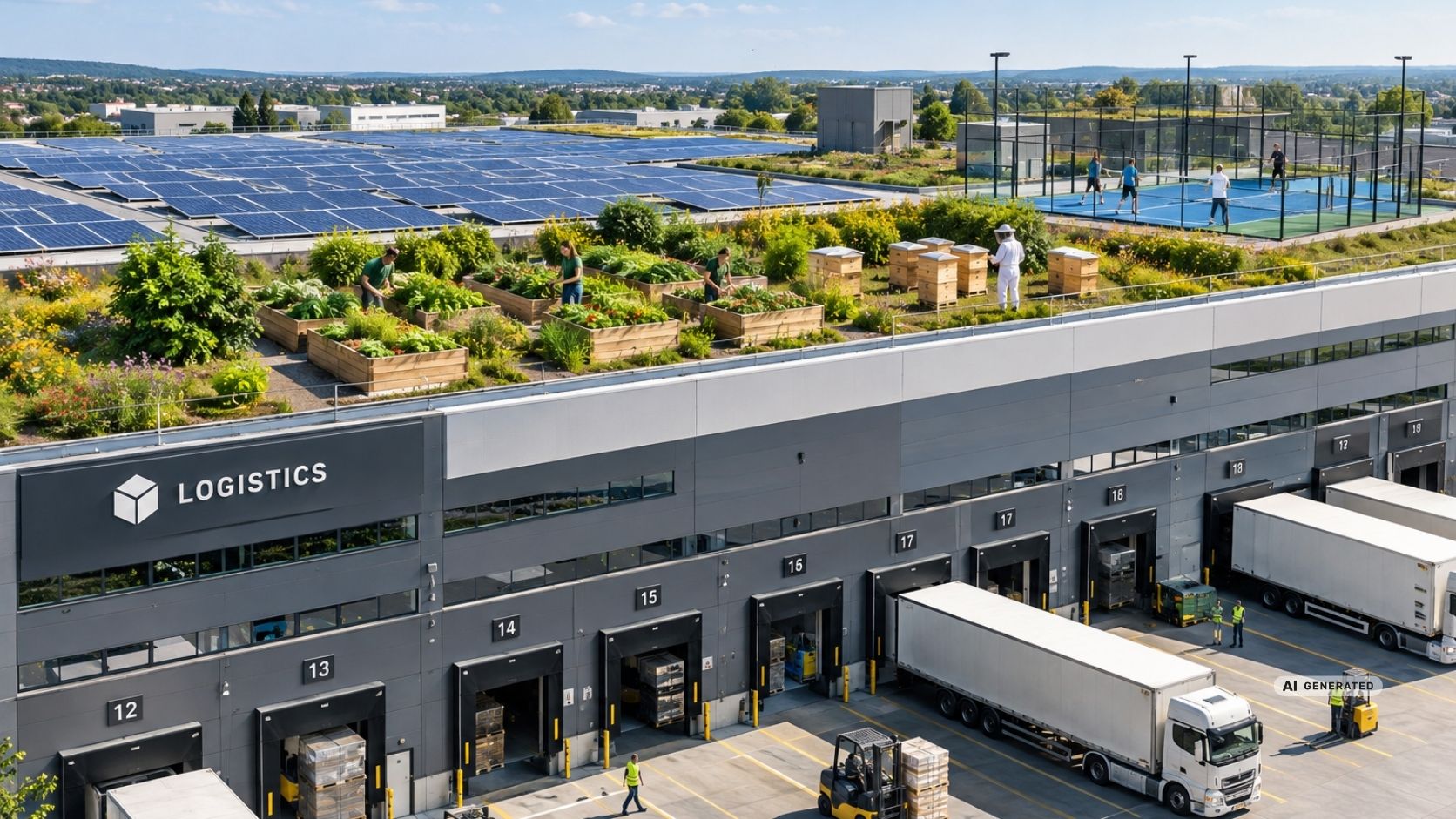
The Green Revolution on the Hall Roof: From Concrete Block to Ecological Power Plant?
Logistics roofs can do more than PV: greening, bees, urban farming and even sports areas turn unused roof space into multifunctional rooms....