



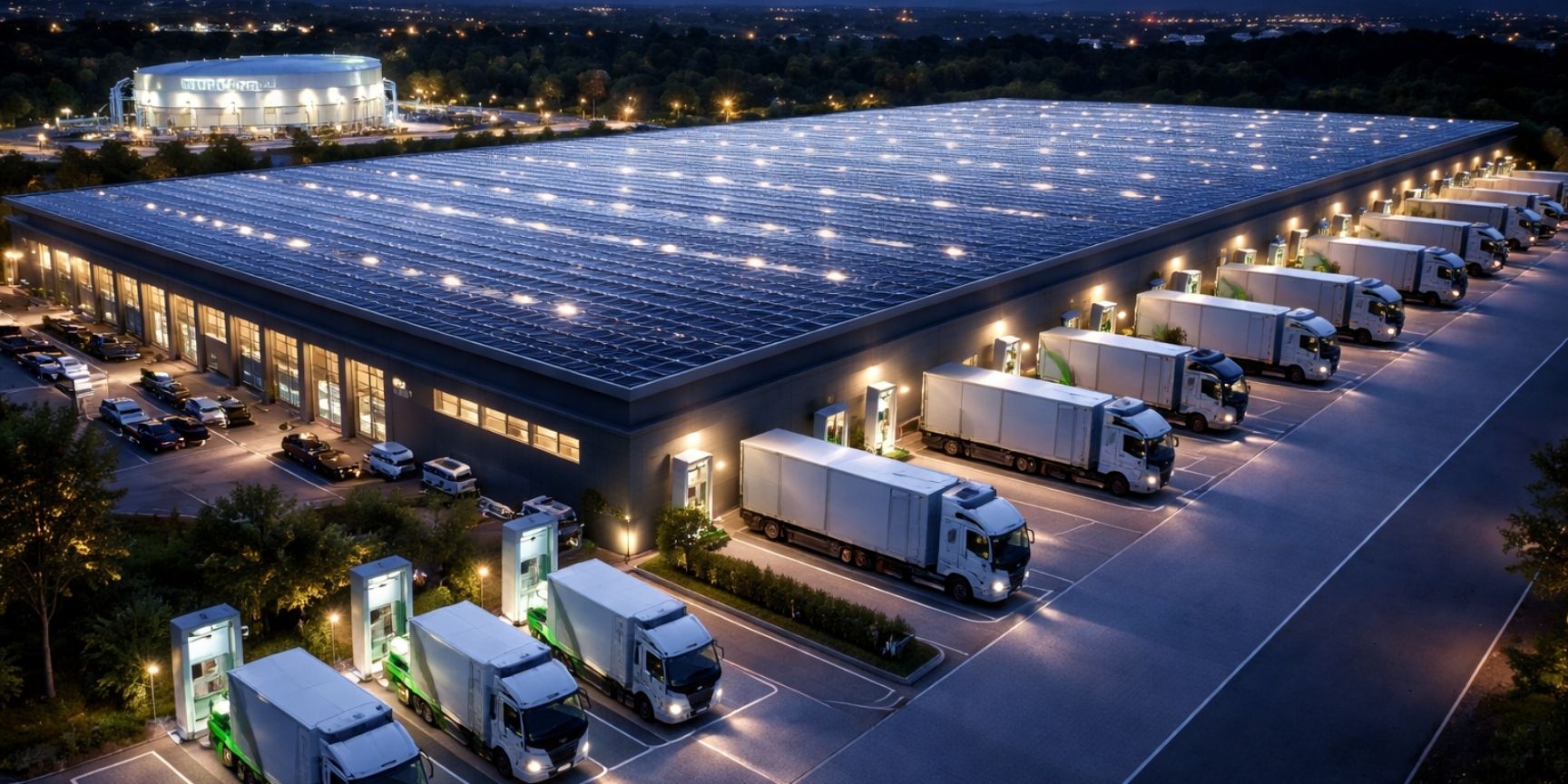
Energy Blackout or Self-sufficiency Boom? Logistics at the Crossroads in 2026
Table of Contents
- The Status Quo in 2026: When the Internet becomes the Eye of the Needle
- Automation as a Power Guzzler: Why Efficiency Costs Energy
- The Charging Dilemma: When the Truck Parking Lot Blows up the Net
- Battery Technology 2026: Wait or Invest Now?
- Hydrogen: The Saviour for the Long Haul?
- Independence from the Electricity Price: Is the PV System on the Roof Sufficient?
- Practical Example: The "Energy Hub" of a Contract Logistics Company
- Locational Competition: Germany vs. the World
- The Role of the Municipality and the State
- Conclusion: The Journey goes to "Logistics as a Power Plant"
The results of current industry studies for the year 2026 paint an alarming picture: The security of energy supply has mutated from a marginal issue to a critical obstacle for German supply chains. As automation progresses, the fear of grid collapse is growing. One in three logistics decision-makers counts energy supply as one of the top 3 challenges. We take a deep look at the matter: What does the solution look like?
The Status Quo in 2026: When the Internet becomes the Eye of the Needle
The German logistics landscape is in a paradox. On the one hand, companies are pushing digital transformation and automation to counter the shortage of skilled workers. On the other hand, it is precisely this technological upgrade that is threatened by an unstable energy infrastructure.
According to a recent survey (fictitious reference scenario based on IEA & Fraunhofer Trends 2026), 34% of German companies are actively struggling with grid fluctuations that can paralyze sensitive robotics systems. Contract logistics, which is based on tight margins and just-in-time promises, is facing a crucial test.
The central questions we answer in this article:
- How do we absorb the load peaks caused by e-truck fleets?
- Are today's batteries already "outdated" or safe for investment?
- Can a PV system be sufficient in the German winter?
- Why is Germany lagging behind in terms of energy costs in an international comparison?
Automation as a Power Guzzler: Why Efficiency Costs Energy
In modern warehouses (Warehouse 4.0), shuttles, AMRs (Autonomous Mobile Robots) and automated high-bay warehouses take over.
Facts & Figures: A fully automated warehouse with an area of 20,000 m² will require up to 25% more electricity on average in 2026 than a conventionally operated warehouse in 2020 (source: Simulation Logistics Energy Index).
This additional demand meets an infrastructure that is often not designed for these loads. If 50 robots are charging at the same time and the sorting systems are running at full load, peak demands arise that are not only expensive, but also jeopardize local grid stability.
The Charging Dilemma: When the Truck Parking Lot Blows up the Net
A massive problem in contract logistics is the electrification of heavy-duty transport. A typical DC fast charging station for trucks today has an output of between 350 kW and 1 MW (Megawatt Charging System, MCS).
The calculation example: If 10 trucks are parked in front of the ramp and want to charge at the same time with 350 kW, the location needs an ad hoc output of 3.5 megawatts. This corresponds to the electricity requirements of a small town. Many industrial parks have grid connections that are capped at 0.5 to 1.0 MW.
The solution: It is no longer possible without intelligent load management (smart charging). Algorithms have to calculate which truck has to be back on the road and when. Not every truck needs full power immediately.
Battery Technology 2026: Wait or Invest Now?
Many companies are hesitant: "Should I invest in lithium-ion storage now or wait for the solid-state battery?"
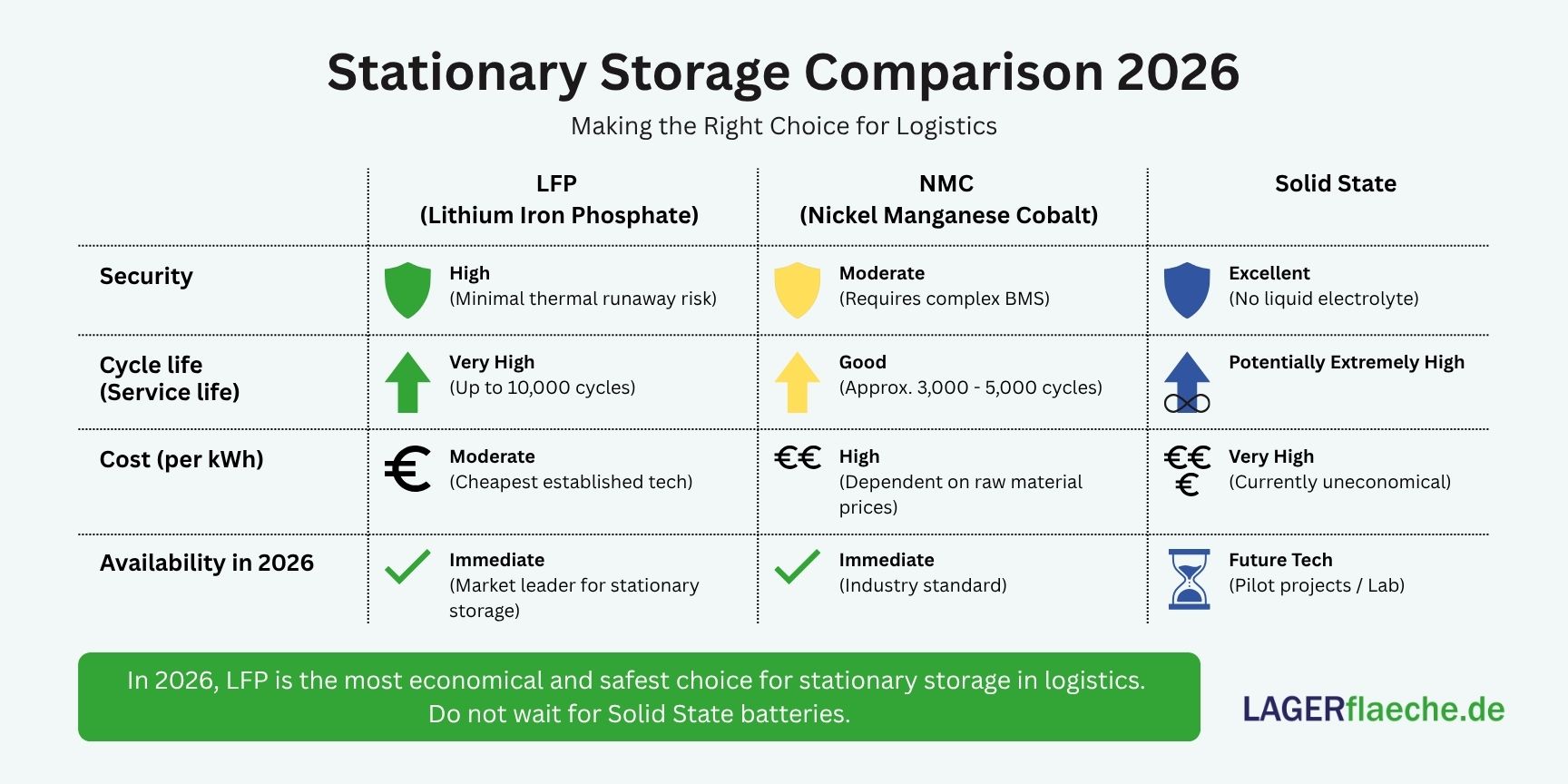
The fact check: Today's LFP technology (lithium iron phosphate) is ideal for stationary storage systems in logistics. It is durable (up to 10,000 cycles), safe (hardly any fire hazard) and attractively priced.
- Waiting for new batteries? A mistake. The development of sodium-ion batteries or solid-state batteries is promising, but industrial scaling up for large-scale storage systems will take years.
- Modularity is key: Modern storage systems have a modular design. If you invest today, you can integrate new cell types tomorrow without changing the entire infrastructure.
| Technology | Status 2026 | Suitability Logistics |
| Lithium-ion (NMC) | Standard | High (vehicles) |
| LFP (Iron Phosphate) | Market leader stationary | Excellent (security/price) |
| Sodium ions | First pilot projects | Promising (cheap) |
| Solid State | Labor/High-End | Dreams of the future (after 2028) |
Hydrogen: The Saviour for the Long Haul?
Hydrogen (H2) is often touted as a universal solution. In warehouse logistics, it will play two main roles in 2026:
- Fuel cell forklifts: Fast refueling (3 min.) instead of long charging (8 hours).
- Seasonal storage: Surplus PV electricity from the summer can be converted into H2 by electrolysis and converted back into electricity by fuel cell in winter.
However, the efficiency of the chain "electricity -> H2 -> electricity" is only about 35-40%. Storing electricity directly in a battery is much more efficient, with an efficiency of around 85-90%. Hydrogen is therefore more of a supplement for energy-intensive processes and heavy long-distance transport.
Independence from the Electricity Price: Is the PV System on the Roof Sufficient?
A clear no, the PV system alone is not enough – but it is the foundation.
Das Winter-Problem:
A logistics center in Germany produces only about 10-15% of the yield it generates in June. At the same time, the demand for heating and lighting is highest in winter.
The strategy for 2026:
- PV maximization: Use not only the roof, but also facades.
- Battery storage: To save solar power from the day to the night shift (self-consumption optimization).
- Microgrids: Joining forces with neighboring companies to exchange loads.
- Dynamic electricity tariffs: Purchase of wind power from the grid if it is available in abundance at night and is cheap.
Practical Example: The "Energy Hub" of a Contract Logistics Company
Scenario:
Logistik GmbH Nord operates a 40,000 m² center for an automotive supplier.
Challenge:
Conversion of the fleet to 20 e-trucks and installation of an AutoStore system. Grid connection is not enough.
Implementation:
* 2 megawatt peak (MWp) rooftop PV system.
- 1.5 megawatt hours (MWh) of battery storage (LFP).
- AI control that couples weather forecasts and delivery schedules.
Result:
The degree of self-sufficiency rose to 65%. Electricity costs fell by 40% as expensive load peaks were capped by the battery storage system (peak shaving). Even in the event of grid failures, operations can continue to run fully autonomously for 6 hours.
Locational Competition: Germany vs. the World
Why is the energy question so much more critical in Germany than elsewhere?
- Germany: High grid charges, bureaucratic hurdles for grid expansion, high dependence on volatile renewables without sufficient storage buffers.
- USA: Massive subsidies through the Inflation Reduction Act (IRA). Energy is often only half as expensive for logistics companies as it is in Germany.
- China: dominance in the battery chain. Logisticians there have direct access to the most cost-effective storage technologies.
- France/Nordics: More stable base load share (nuclear/hydro), which makes it easier to plan for automated warehouses.
The consequence: German logistics companies have to be "smarter". Since energy prices in this country will remain structurally higher, energy efficiency will become a decisive competitive advantage.
The Role of the Municipality and the State
Companies cannot manage the turnaround alone. 2026 will show that municipalities that have invested in industrial park networks at an early stage will win the settlement competition. The state must:
- Reduce the design process for transformer stations from years to months.
- Create tax incentives for bidirectional charging (V2G - Vehicle to Grid) so that truck batteries can serve as a grid buffer.
Conclusion: The Journey goes to "Logistics as a Power Plant"
Energy supply is no longer an annoying cost factor, but a core competence of logistics. If you want to be successful in 2026, you can't wait for "the state" or "new miracle technologies".
The journey leads to the logistics site, which is also a power plant: production, storage, intelligent distribution. The technology is there – the implementation will determine Germany's competitiveness in the global structure.
Latest Blog Posts
Stay up to date with the newest trends, insights, and tips in warehouse and logistics. Our latest articles help you navigate the industry with confidence.
Data Centres vs. Logistics Facilities: The Race for Power and Land
Across Europe, logistics operators are competing for more than land and transport access. They increasingly need something much harder to secure: grid capacity. Data centres are intensifying that competition — and changing how logistics locations are evaluated....
Chinese companies discover Europe's logistics real estate
Chinese companies are becoming an increasingly visible user group in Europe's logistics real estate market. What does this mean for warehouse space, 3PL structures and the requirements for European logistics locations?...
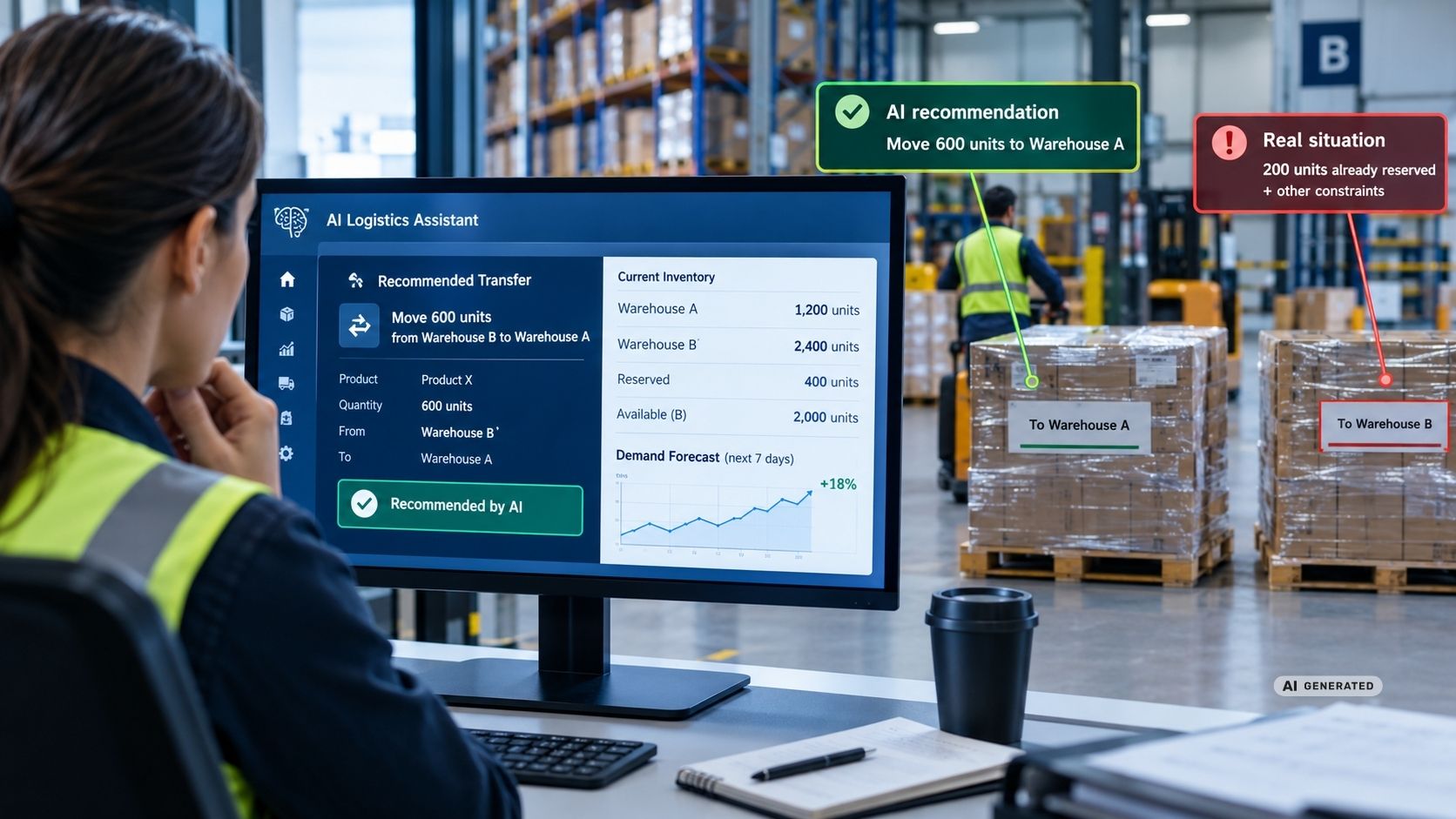
AI Hallucinations in Logistics: When AI Plans the Wrong Delivery
AI can analyze enormous amounts of logistics data — but it can also produce a convincing answer that is simply wrong. The critical question is not whether AI makes mistakes, but what happens when a wrong recommendation becomes an operational decision....
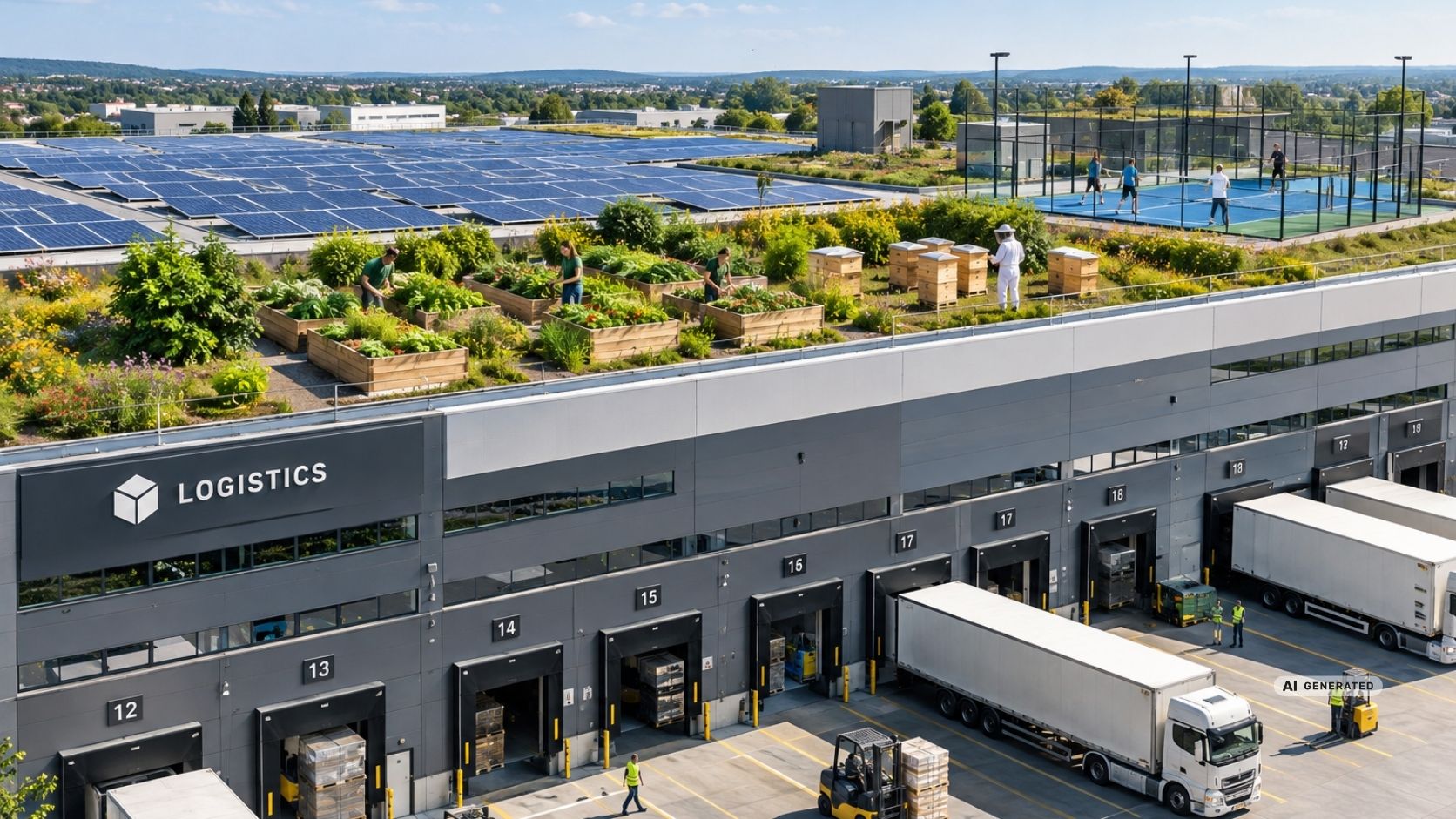
The Green Revolution on the Hall Roof: From Concrete Block to Ecological Power Plant?
Logistics roofs can do more than PV: greening, bees, urban farming and even sports areas turn unused roof space into multifunctional rooms....