



Cold Storage Logistics: Why the Most In-Demand Type of Real Estate of the Future Is So Difficult to Build
Table of Contents
- The Anatomy of Cold: What Cooling Sections Are There Today?
- Requirements for the Hall: More than just Insulation
- Choosing a Location: Why a Cold Store is not a "Normal" Warehouse
- The Cost Explosion: Why Cooling is Bought at a High Price
- Reducing Energy Costs: Strategies against the Electricity Price Trap
- Safety and Temperature Stability: No Degree of Clearance
- The German Market vs. Abroad: Where are the Capacities?
- Change of Time: Earlier vs. Today
- Case Study: The "Cool Hub" in Southern Germany
- Practical Questions for Decision-makers
- Conclusion: The Niche with a Future
Have you ever wondered why, in times of a logistics boom and shortage of space, specialized cold storage facilities are considered a "scarce commodity"? While standard logistics properties are springing up like mushrooms, the temperature-controlled warehouse segment remains an exclusive and highly complex market. But what is the technical difference between a cold store and a "dry" hall? What demands do modern supply chains place on humans and machines? And why is Germany lagging behind in terms of capacity in an international comparison?
In this guide, we shed light on the depth of refrigerated logistics – from the physical basics to the tough investment costs.
The Anatomy of Cold: What Cooling Sections Are There Today?
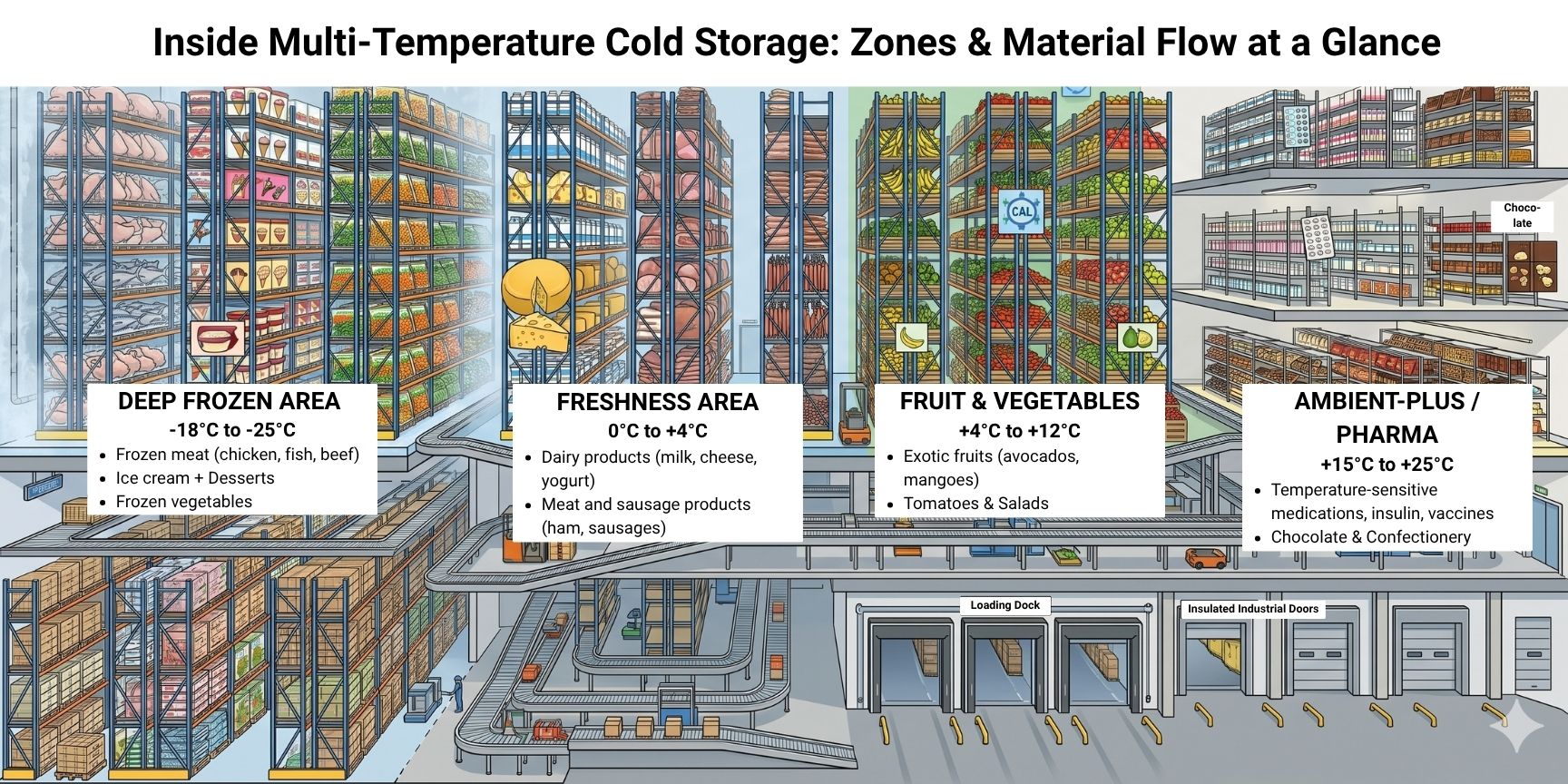
A modern cold storage facility is not a monolithic block, but a precisely balanced system of different temperature zones. The requirements vary massively depending on the product group.
The common temperature zones at a glance:
- Frozen area: -18 degrees to $-25 degrees (for ice cream, meat, frozen vegetables).
- Chilled: 0 degrees to +4 degrees for meat and sausage products, dairy products).
- Fruit and vegetable area (O&G): +4 degrees to +12 degrees (depending on the variety, often with controlled atmosphere/ripening).
- Ambient-Plus / Pharma: +15 degrees to +25 degrees (for temperature-sensitive medicines or chocolate).
Requirements for the Hall: More than just Insulation
The construction of a cold store follows completely different laws than that of a standard property. While a conventional logistics hall primarily offers protection against the weather and theft, the cold store is a thermal system.
Structural features:
- The floor slab: A critical point. In order to prevent the ground from freezing (frost lifting) under the freezer area, an underfloor freeze protection heater (electric or glycol) must be installed.
- Insulation: Sandwich panels with a thickness of up to 200 mm (for TK) are standard. Thermal bridges must be consistently avoided.
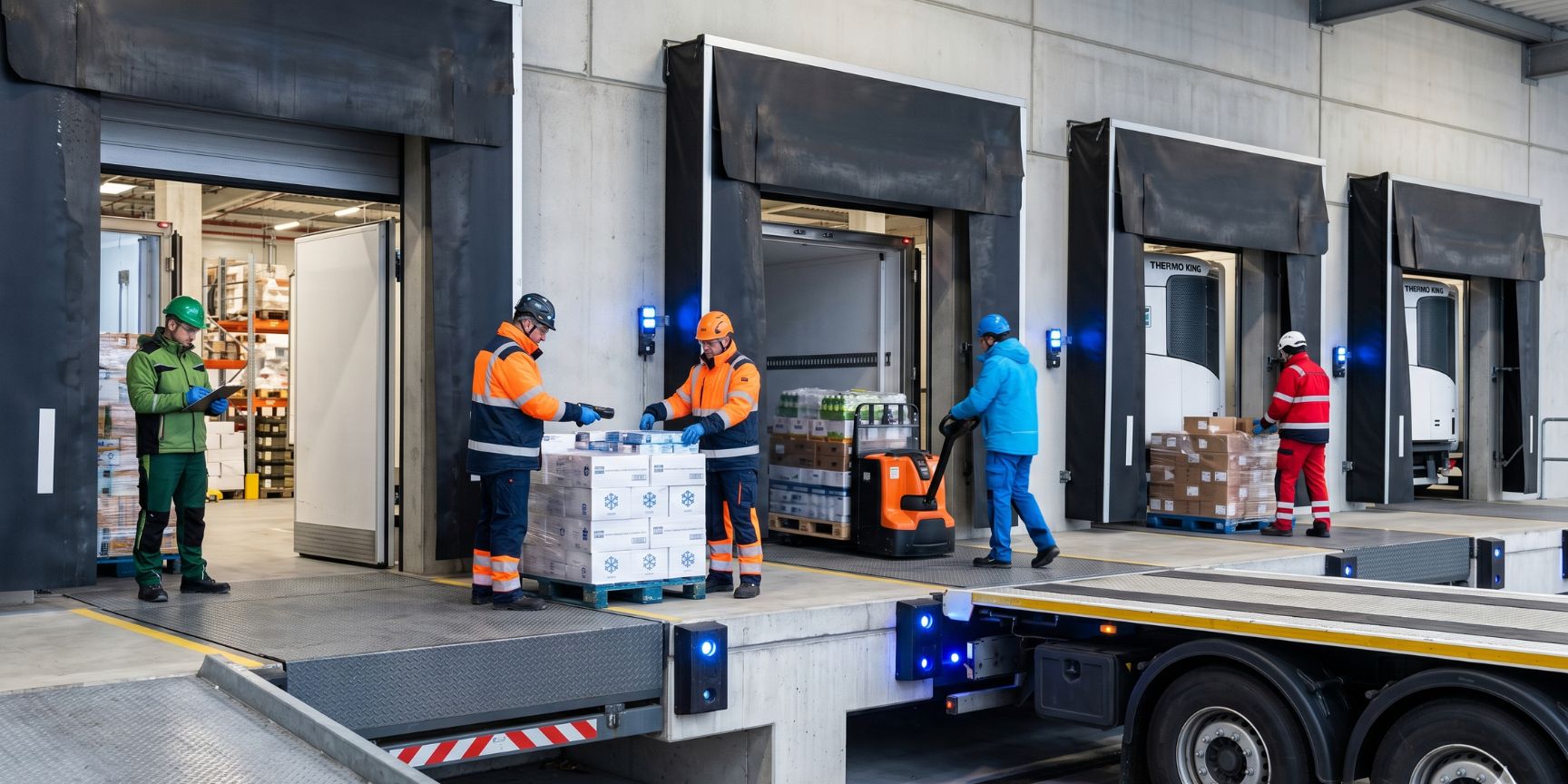
- Lock systems: Thermal locks on the ramps prevent massive heat input during loading and unloading.
Personnel in the extreme area:
Working in a cold store places the highest demands on occupational safety. In accordance with DGUV Rule 110-002 (formerly BGR 191), employees in the telecommunications sector must be granted warm-up times (e.g. 90 minutes of work are followed by 15 minutes of warm-up time). The protective equipment (PPE) must not only insulate, but also be breathable to prevent sweating and subsequent freezing.
Choosing a Location: Why a Cold Store is not a "Normal" Warehouse
When selecting a location for a standard logistics property, transport connections and labor availability are the primary considerations. In the case of a cold storage facility, there is another decisive factor: the energy infrastructure.
A modern deep-freeze warehouse with 10,000 pallet spaces has a power requirement that can correspond to a small town. If the power supply line at the site is not sufficiently dimensioned, the project will fail as early as the planning phase. In addition, proximity to food producers or large conurbations (last mile) is more critical than for non-food goods due to the short shelf life of the goods (BBD).
The Cost Explosion: Why Cooling is Bought at a High Price
The question of costs is essential for investors and users. A rule of thumb: A cold store is about 2 to 3 times as expensive to build as an uncooled hall.
Cost comparison (2026 estimates):
| Feature | Standard logistics property | Cold storage (frozen / chilled mix) |
| Construction costs per m² | approx. 800 € - 1.200 € | approx. 2,000 € - 3,500 € |
| Cost per pallet space | approx. 150 € - 250 € | approx. 500 € - 900 € |
| Energy costs share OpEx | < 5 % | 25 % - 40 % |
(Source: Own market analysis based on data from JLL and CBRE Research 2025/2026)
Why is that? The technology (refrigeration systems, redundancy, insulation) and the massive energy demand drive up the capex (investment) and opex (operating costs).
Reducing Energy Costs: Strategies against the Electricity Price Trap
In the face of volatile energy markets, efficiency is the biggest lever for profitability.
- Photovoltaics (PV): Cold stores have a decisive advantage: The highest cooling demand is usually when the sun is shining strongest. PV systems on the huge roof areas can cover up to 30-50% of the company's own needs.
- Heat recovery: The waste heat from the chillers is used to heat offices or to operate the underbody freeze protection.
- Automation: A fully automated high-bay warehouse (HRL) requires less lighting and has smaller opening cycles on the doors, which minimizes thermal loss.
Safety and Temperature Stability: No Degree of Clearance
In order to provide complete proof of the cold chain (important for IFS Food or GDP in the pharmaceutical sector), complex security measures are necessary:
- Redundancy: Refrigeration systems are often designed according to the n+1 principle. If one system fails, the others take over the full load.
- Monitoring: Wireless sensors at each parking space monitor the temperature in real time. In the event of deviations of 1 K (Kelvin), an alarm is sent to the technician's smartphone.
- Emergency power: Diesel generators secure operation in the event of a power failure to prevent the goods from thawing.
The German Market vs. Abroad: Where are the Capacities?
In Germany, there is a chronic shortage of cold storage space. The vacancy rate in top locations is often close to 0%.
Why are there so few?
- High barriers to market entry: The financial risk and technical complexity deter speculative developers.
- Long approval procedures: Refrigeration systems with natural refrigerants (ammonia/NH3) in particular are subject to strict requirements (Major Accidents Ordinance).
International comparison:
- Netherlands: The "gateway to Europe". There is an extremely high density of cold storage facilities here (e.g. in the port of Rotterdam or Venlo), as the Netherlands acts as a central hub for global fruit, vegetable and flower exports.
- USA: Here, the market is much more consolidated. Giants such as Lineage Logistics or Americold dominate the market with huge, automated locations.
- Poland: Strong growth as a nearshoring location for German food production, with state-of-the-art infrastructure at slightly lower operating costs.
Change of Time: Earlier vs. Today
In the past, cold stores were often "ice cellars" – simply insulated halls for meat halves or butter mountains. Today, the requirement profile has changed radically:
- Product diversity: The trend towards convenience food, vegan substitutes (often subject to refrigeration) and the increase in highly sensitive biopharmaceuticals (insulin, vaccines) has increased the volume and requirements for temperature precision.
- E-grocery: Online supermarkets need pick zones in different temperature zones, which makes intralogistics extremely complex.
- Sustainability: In the past, CFC-containing refrigerants were used. Today, switching to CO_2 (R744) or ammonia (NH_3) is mandatory due to the F-Gas Regulation.
Case Study: The "Cool Hub" in Southern Germany
A medium-sized food logistics company replaced its old warehouse with a new one in 2025.
- Problem: Energy costs of €45 per pallet/year.
- Solution: Construction of an automated shuttle warehouse with 15,000 seats, 1 MWp PV system and cascade cooling (NH_3/CO_2).
- Result: Reduction of energy costs by 40% while increasing the pick rate by 25%. According to the business plan, the investment of €25 million will pay for itself in less than 10 years – just through the efficiency gains.
Practical Questions for Decision-makers
- Have we secured the electricity capacity at the site for the next 10 years? (Keyword: e-truck charging infrastructure is also being added!)
- Is our insulation fit for 40-degree summer days? (Climate change is increasing the load on the chillers).
- Can we flexibly adapt different zones as the assortment changes?
Conclusion: The Niche with a Future
Cold storage facilities are the "high-yield assets" of the logistics world. They are expensive, complicated and maintenance-intensive – but they are systemically relevant. Anyone who invests in modern, sustainable and automated refrigerated surfaces today occupies a market that is constantly growing due to population growth and increasing quality requirements in the pharmaceutical and food industries. Germany must catch up here in order not to lose touch with highly efficient neighbours such as the Netherlands in the European logistics structure.
Latest Blog Posts
Stay up to date with the newest trends, insights, and tips in warehouse and logistics. Our latest articles help you navigate the industry with confidence.
Data Centres vs. Logistics Facilities: The Race for Power and Land
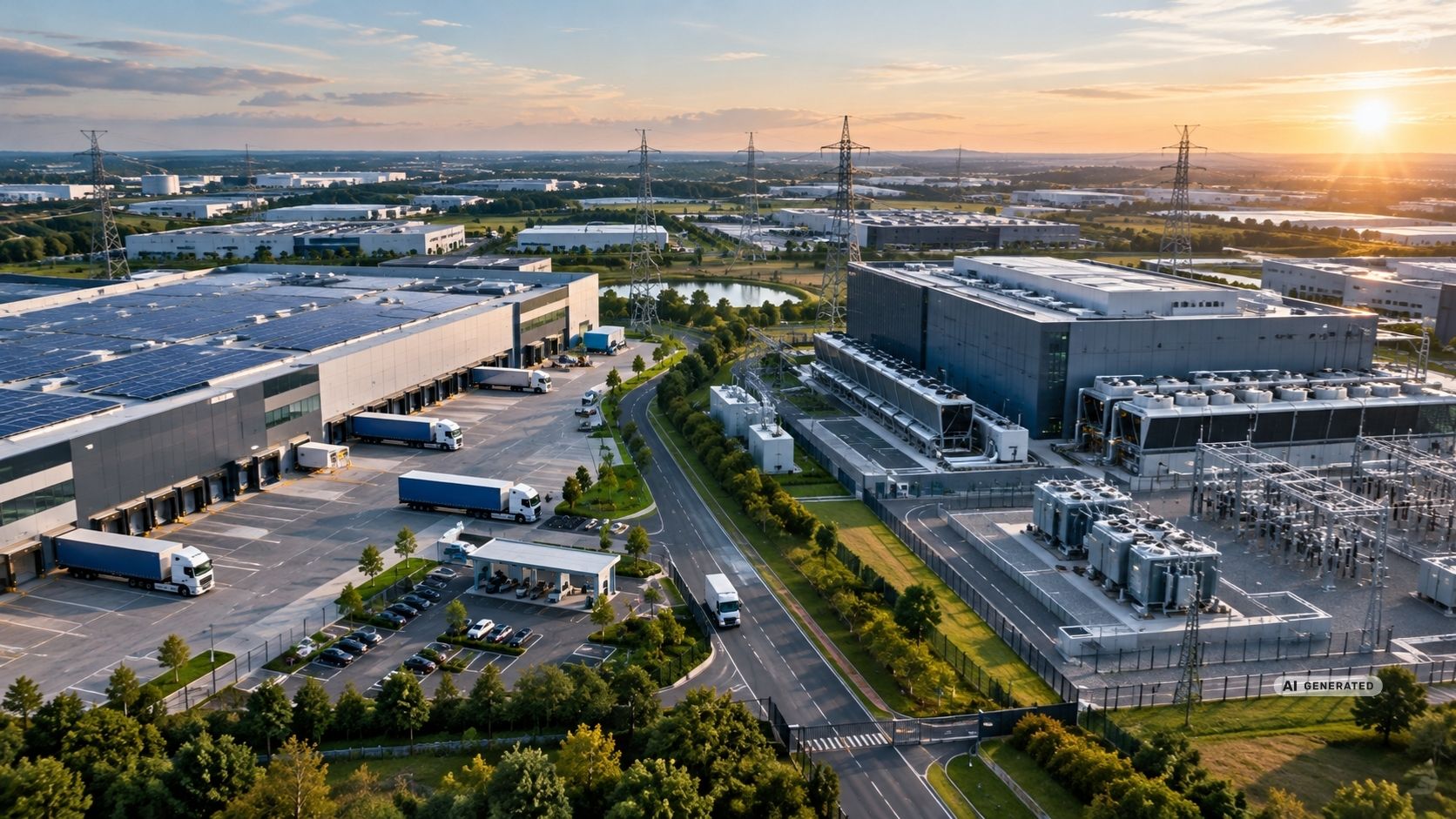
Across Europe, logistics operators are competing for more than land and transport access. They increasingly need something much harder to secure: grid capacity. Data centres are intensifying that competition — and changing how logistics locations are evaluated....
Chinese companies discover Europe's logistics real estate
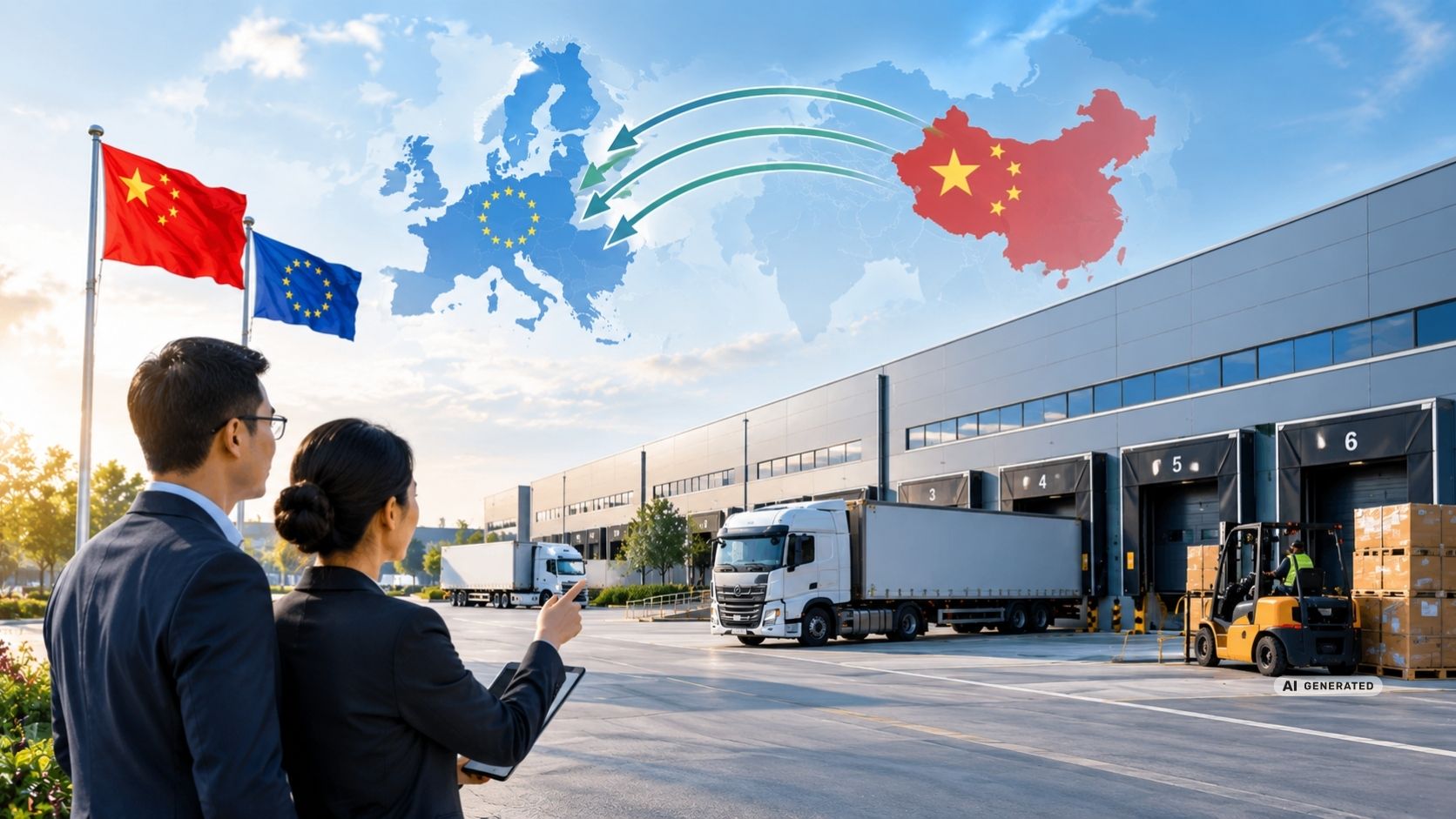
Chinese companies are becoming an increasingly visible user group in Europe's logistics real estate market. What does this mean for warehouse space, 3PL structures and the requirements for European logistics locations?...
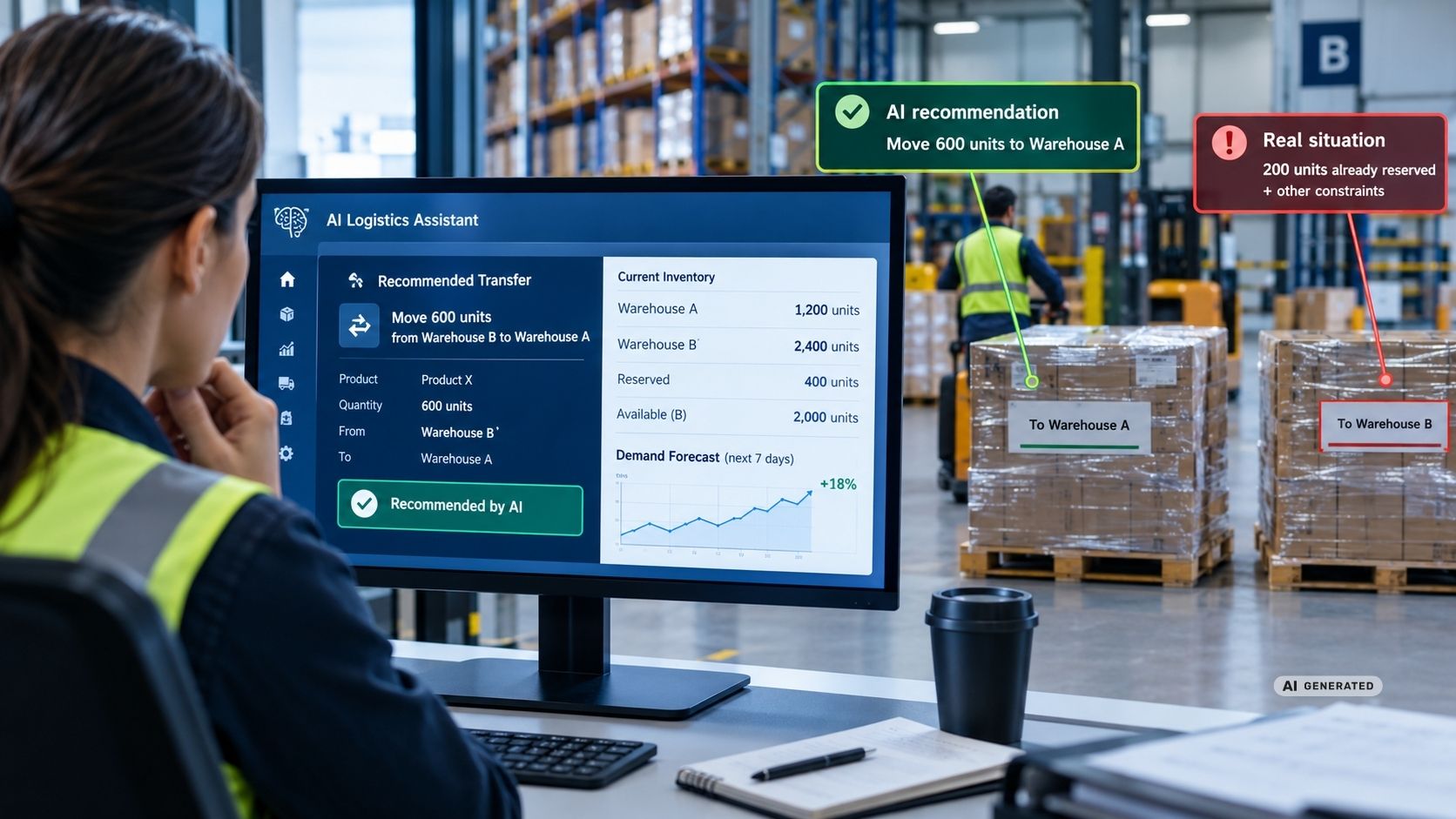
AI Hallucinations in Logistics: When AI Plans the Wrong Delivery
AI can analyze enormous amounts of logistics data — but it can also produce a convincing answer that is simply wrong. The critical question is not whether AI makes mistakes, but what happens when a wrong recommendation becomes an operational decision....
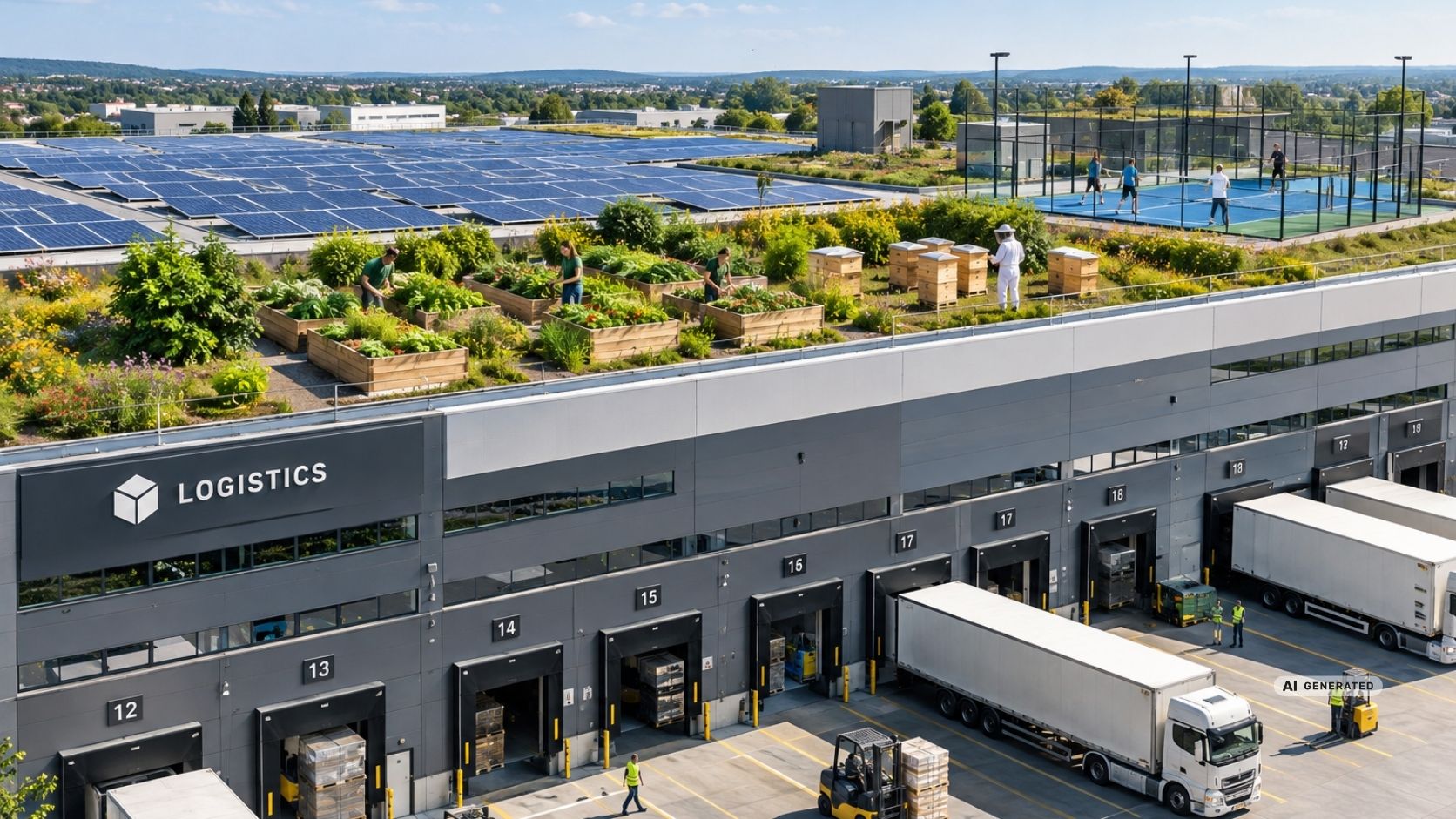
The Green Revolution on the Hall Roof: From Concrete Block to Ecological Power Plant?
Logistics roofs can do more than PV: greening, bees, urban farming and even sports areas turn unused roof space into multifunctional rooms....