


3D Printing in Logistics: Revolution in the Supply Chain or an Expensive Niche?
Table of Contents
- The Central Question: Is 3D Printing Already Economical for Logistics Companies Today?
- Applications in Practice: What Does Everyday Life Look Like?
- The New Value-Added Service (VAS): Logistics Becomes Production
- Existing Solutions: Who is Already Using the Technology?
- The "Virtual Warehouse": Transforming Warehousing
- Advantages vs. Disadvantages: A Critical Balance
- The Environmental Aspect: Green Logistics Through 3D Printing?
- Global Comparison: Where does Germany Stand?
- Conclusion: Dreams of the Future or Revolution?
Global logistics is on the verge of a paradigm shift. While we've spent decades optimizing processes to move physical goods faster across oceans, additive manufacturing (AM) poses a fundamental question: Do we need to transport the product at all, or will we only transport the data set in the future?
For logistics service providers (3PLs), this opens up a field between an existential threat and lucrative new business models. Is 3D printing just a nice gadget for prototypes, or is it the key to the "virtual warehouse"? In this deep dive, we analyze the economic reality, the technical hurdles and the enormous potential for warehousing of the future.
The Central Question: Is 3D Printing Already Economical for Logistics Companies Today?
The short answer: Yes, but not for every product. The profitability of 3D printing in logistics is not defined by the pure manufacturing costs per piece, but by the total cost of ownership (TCO) and the avoidance of opportunity costs.
Traditionally, unit costs fall as the batch size increases (economies of scale). With 3D printing, the cost curve remains almost flat – whether you produce one part or a hundred. The technology is particularly cost-effective for logistics companies in the following areas:
- Slow-Movers: Parts that are rarely used but tie up storage space.
- End-of-life components: When tools for old series no longer exist.
- Emergency logistics: When the downtime of a machine costs thousands of euros per hour.
Facts & Figures:
According to a study by DHL Trend Research, up to 10% of all spare parts stored today could be replaced by 3D printing on-demand. According to Wohlers Report, the market volume for additive manufacturing is estimated to be over 70 billion euros by 2030 by 2024, with a significant part being accounted for by decentralized production.
Applications in Practice: What Does Everyday Life Look Like?
The application scenarios for logistics companies can be divided into three categories:
- On-demand spare parts management
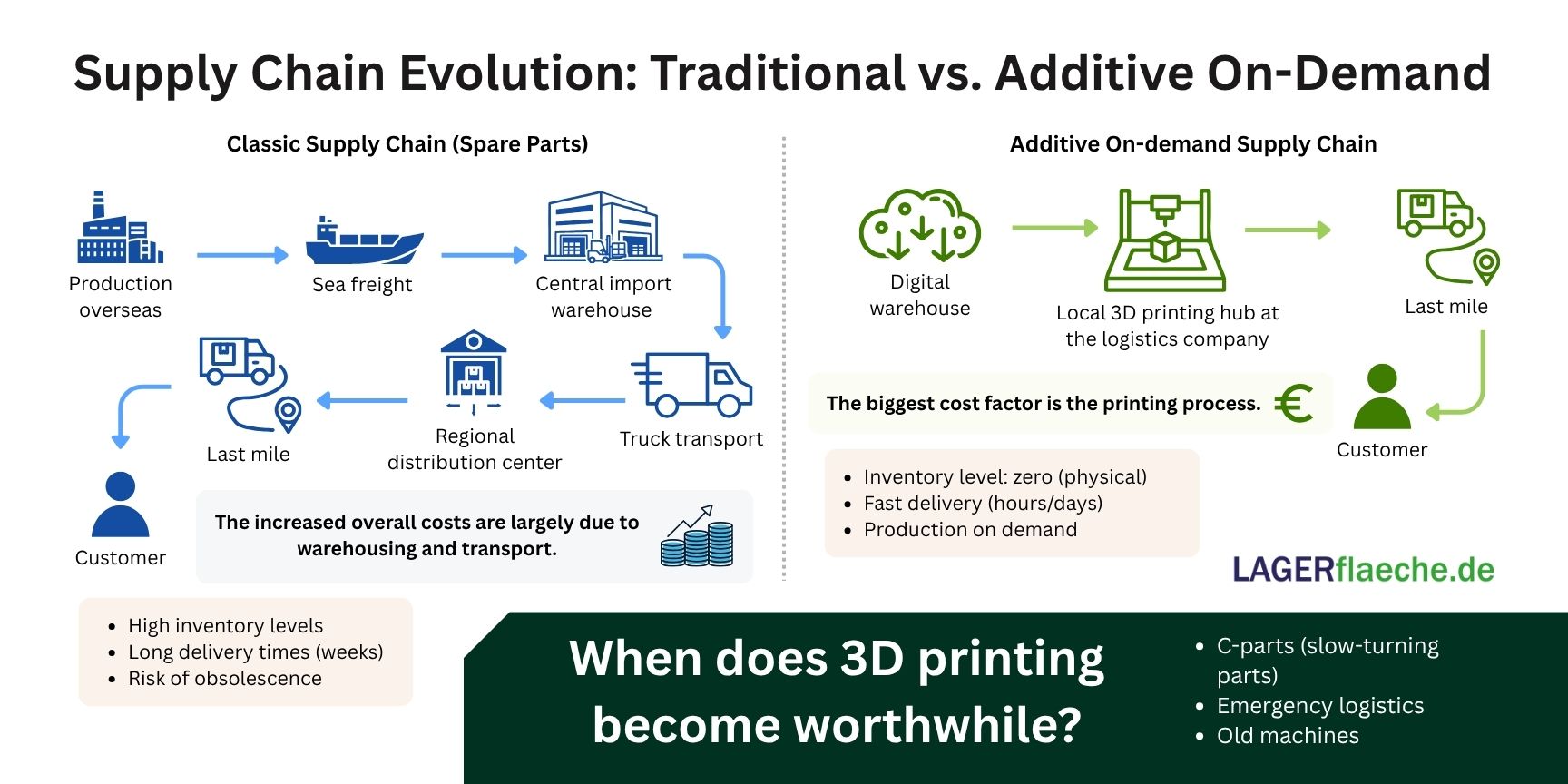
Instead of keeping thousands of parts in physical warehouses, they are stored as digital CAD files in a "virtual warehouse". Only when ordering does the printer become active at the logistically most advantageous hub.
- Personalization and Late Stage Customization
Logisticians take over the final step of the refinement. A standard product is stored, and customized holders, housings or labels are only printed shortly before shipping.
- Packaging optimization
Printing of tailor-made load carriers or guards for highly sensitive goods that are difficult to secure with conventional means.
The New Value-Added Service (VAS): Logistics Becomes Production
Until now, the boundary was clear: the producer manufactures, the logistics company moves. With 3D printing, these boundaries are blurred. Additive manufacturing is the ultimate value-added service.
Logistics companies such as DB Schenker or UPS already offer "Manufacturing as a Service". The customer benefits from a drastic reduction in lead times. If a logistics company not only delivers the last mile, but also manufactures the product "on the fly", this massively increases customer loyalty.
The crucial question for the logistician:
- Do I have the competence to guarantee material quality and certifications?
- Can I manage legally compliant digital libraries (IP protection)?
Existing Solutions: Who is Already Using the Technology?
It is no longer a dream of the future. Well-known companies have firmly integrated 3D printing into their logistics chain:
- Deutsche Bahn (DB): DB is a pioneer in Germany. More than 100,000 spare parts have already been additively manufactured – from fan grilles to heavy components for trains. This reduces downtimes and makes the railway independent of supply bottlenecks for old components. (Source: DB Mediaportal)
- Wilhelmsen & Ivaldi: In maritime logistics, spare parts for ships are printed directly in the port of Singapore instead of flying them halfway around the globe.
- Daimler Truck: Offers customers the opportunity to digitally retrieve more than 40,000 spare parts for Mercedes-Benz trucks and to have some of them printed by themselves or through partners.
The "Virtual Warehouse": Transforming Warehousing
How does this technique change storage? The influence is disruptive:
- Inventory reduction: Storage capacities for C-parts and slow-movers can be reduced by up to 90%.
- Decentralization: Large central warehouses are becoming less important. Small, technologically advanced micro-hubs near the conurbations are winning.
- Risk minimization: No risk of obsolescence (obsolescence of the goods in the warehouse).
Interesting question: Will the warehouse of the future be empty? Probably not. Raw materials (powders, filaments, resins) must continue to be stored. But the complexity is shifting from managing millions of different items to managing a few, highly standardized raw materials.
Advantages vs. Disadvantages: A Critical Balance
To make an informed decision, logisticians need to look at both sides of the coin.
| Pros | Disadvantages / Challenges |
| Enormous time savings: delivery possible within a few hours. | High initial costs: Industrial printers (SLS/SLM) often cost €250,000 upwards. |
| Material efficiency: Hardly any waste compared to machining processes. | Variety of materials: Not all types of industrial steel or plastics are yet perfectly printable. |
| Resilience: Independence from global supply chains and crises. | Legal risks: Who is liable in the event of material defects? The printer manufacturer or the logistics provider? |
| Sustainability: Reduction of transport emissions. | Post-processing: Many parts require manual finishing (removing support structures, polishing). |
The Environmental Aspect: Green Logistics Through 3D Printing?
The ecological footprint is one of the strongest drivers. A study by the Fraunhofer-Gesellschaft shows that additive manufacturing has the potential to reduce CO2 emissions in spare parts logistics by up to 40%.
- Weight reduction: Bionic design (material only where forces act) makes components lighter, which reduces energy consumption in operation (e.g. in airplanes or trucks).
- Local-for-local: The elimination of long sea routes or air freight transports saves a lot of fuel.
- Waste prevention: Unlike milling, where up to 80% of the material ends up as waste, 3D printing uses almost 100% of the raw material.
Global Comparison: Where does Germany Stand?
The global comparison shows clear differences in the adaptation of the technology:
USA:
Leader in software development and major platform solutions for on-demand manufacturing (e.g., Protolabs, Xometry). Here, the focus is on speed and venture-capital-driven scaling.
Singapore:
The state is investing massively in maritime 3D printing hubs. The goal is to become the "digital free port" of the world.
China:
Focuses on mass production through AM and is a leader in the production of low-cost hardware.
Germany:
Germany is a world leader in technology, especially in laser sintering processes (EOS, Concept Laser). We are the "machine builders of the AM world". However, a conservative risk assessment, strict certification requirements and unresolved liability issues often slow down broad logistical application.
Why is logistics implementation in Germany lagging behind in some cases?
In Germany, the first question is often for 100% legal protection and standardization (e.g. DIN/ISO standards), while in the USA or Singapore, business models are already being tested on the market according to the "trial-and-error" principle.
Conclusion: Dreams of the Future or Revolution?
3D printing in logistics is no longer a dream of the future, but it is also not a sudden revolution that will ban all trucks from the roads tomorrow. It is an evolutionary transformation.
For logistics companies, this means that those who do not invest in knowledge of additive processes and digital inventory management today will lose touch with a highly profitable VAS segment. The technology will transform storage by replacing physical inventory with digital flexibility.
The three most important questions for your company:
- Which of our top 100 spare parts have the highest storage costs with the lowest turnover rate?
- Do we have the IT infrastructure to receive and process 3D data securely?
- Can we generate a time advantage through local production that justifies the higher unit price?
The logistics of the future will no longer only transport atoms, but will control the flow of bits, which will become atoms again at their destination.
Latest Blog Posts
Stay up to date with the newest trends, insights, and tips in warehouse and logistics. Our latest articles help you navigate the industry with confidence.
Data Centres vs. Logistics Facilities: The Race for Power and Land
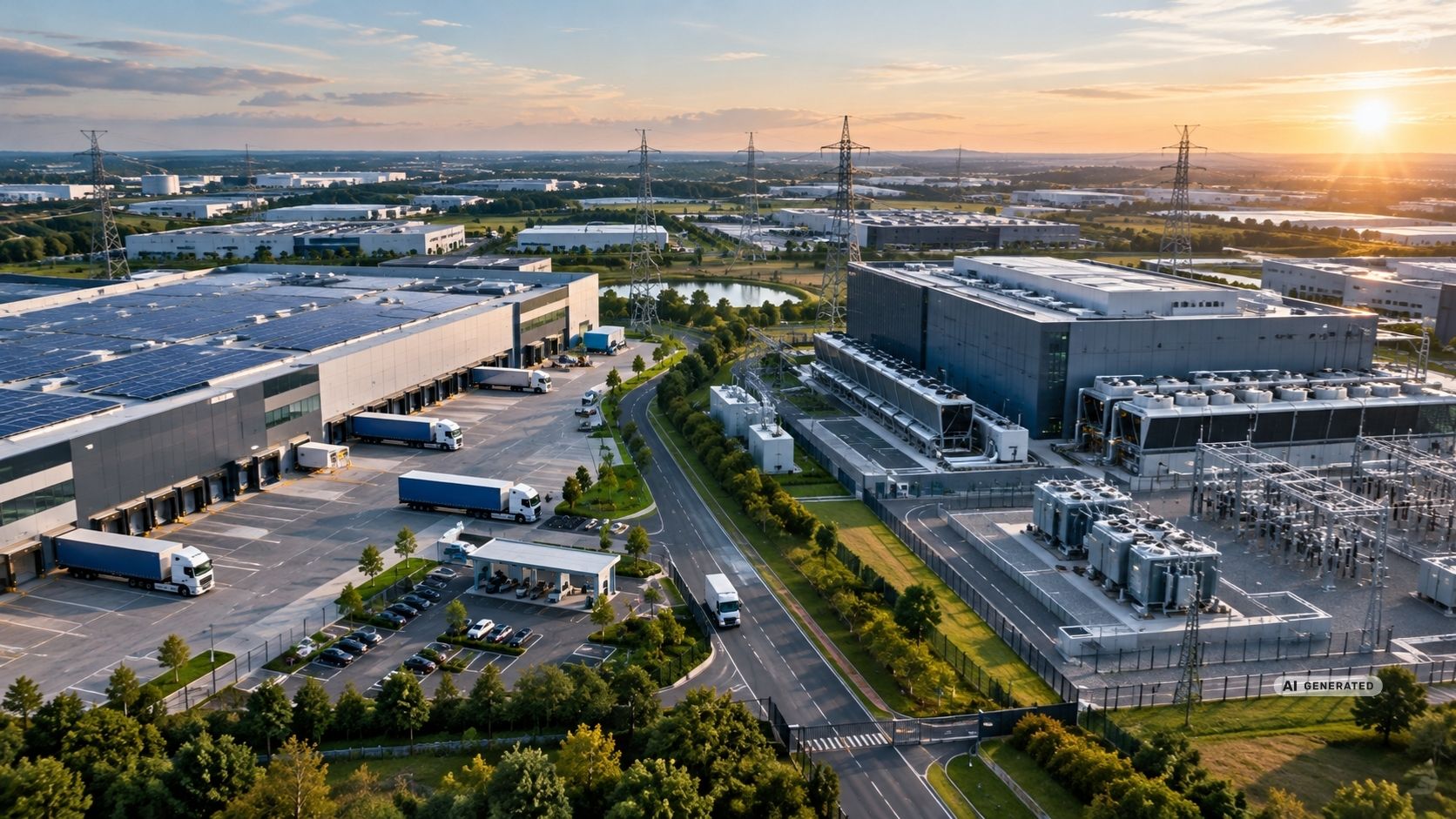
Across Europe, logistics operators are competing for more than land and transport access. They increasingly need something much harder to secure: grid capacity. Data centres are intensifying that competition — and changing how logistics locations are evaluated....
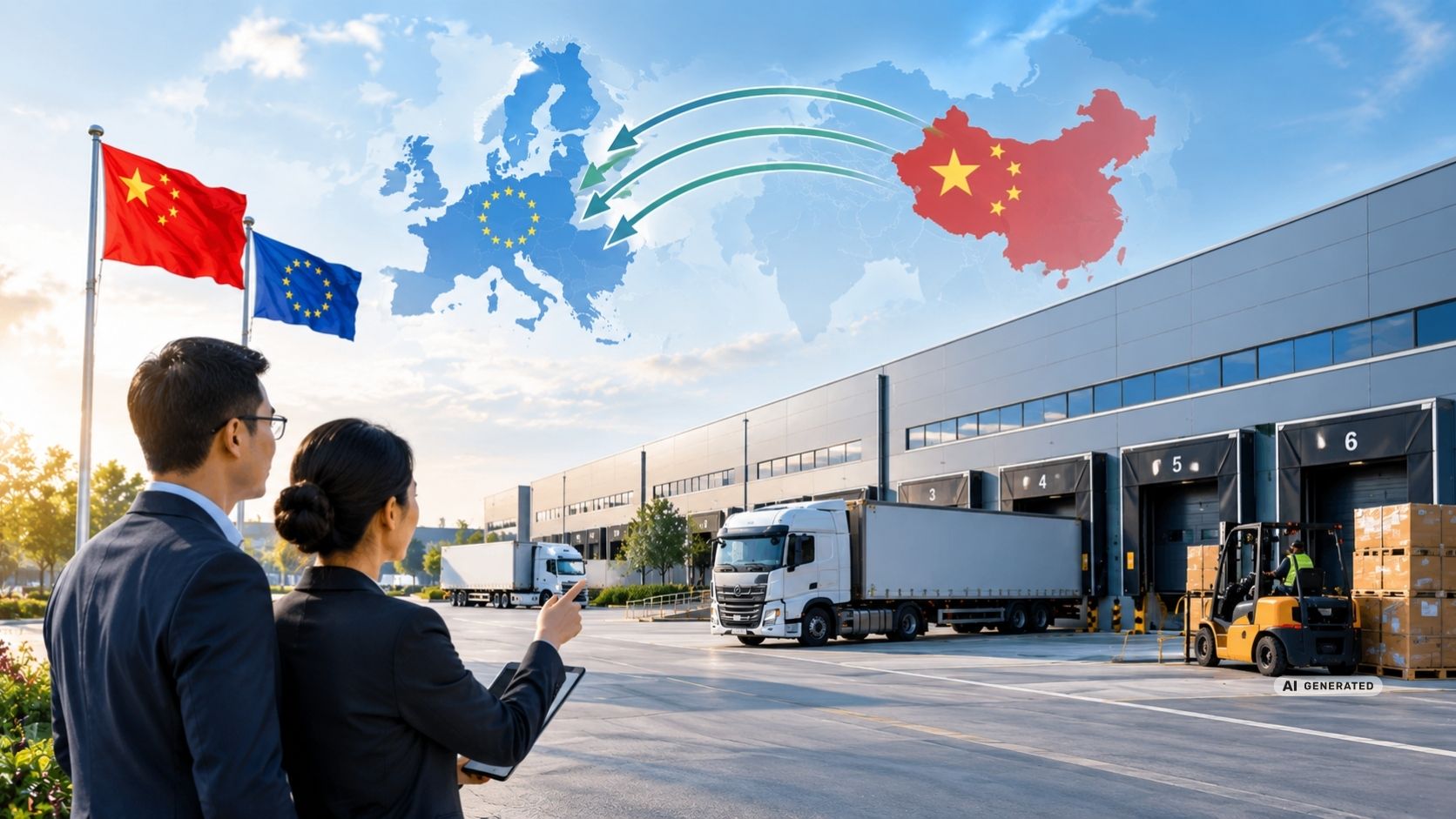
Chinese companies discover Europe's logistics real estate
Chinese companies are becoming an increasingly visible user group in Europe's logistics real estate market. What does this mean for warehouse space, 3PL structures and the requirements for European logistics locations?...
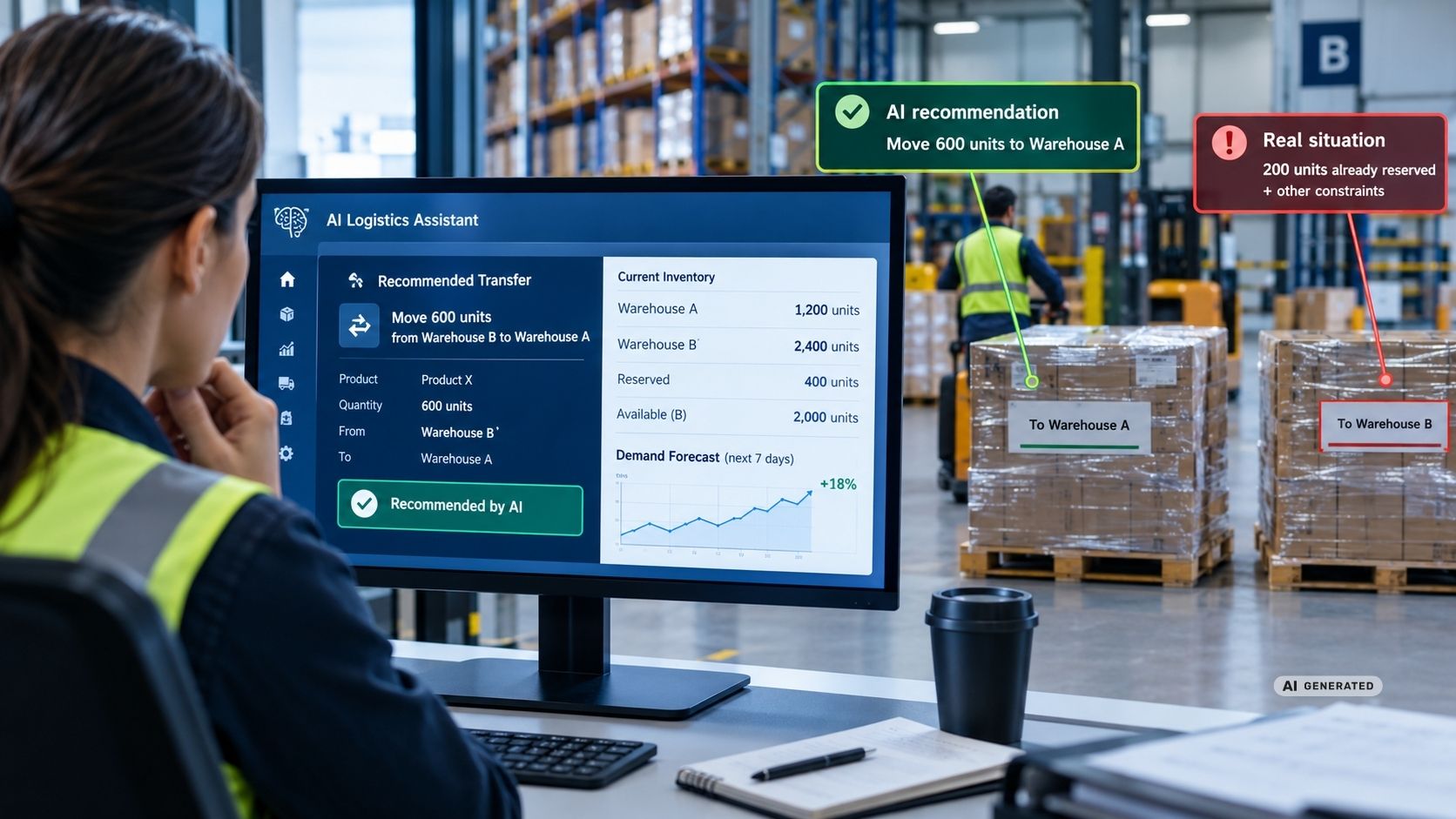
AI Hallucinations in Logistics: When AI Plans the Wrong Delivery
AI can analyze enormous amounts of logistics data — but it can also produce a convincing answer that is simply wrong. The critical question is not whether AI makes mistakes, but what happens when a wrong recommendation becomes an operational decision....
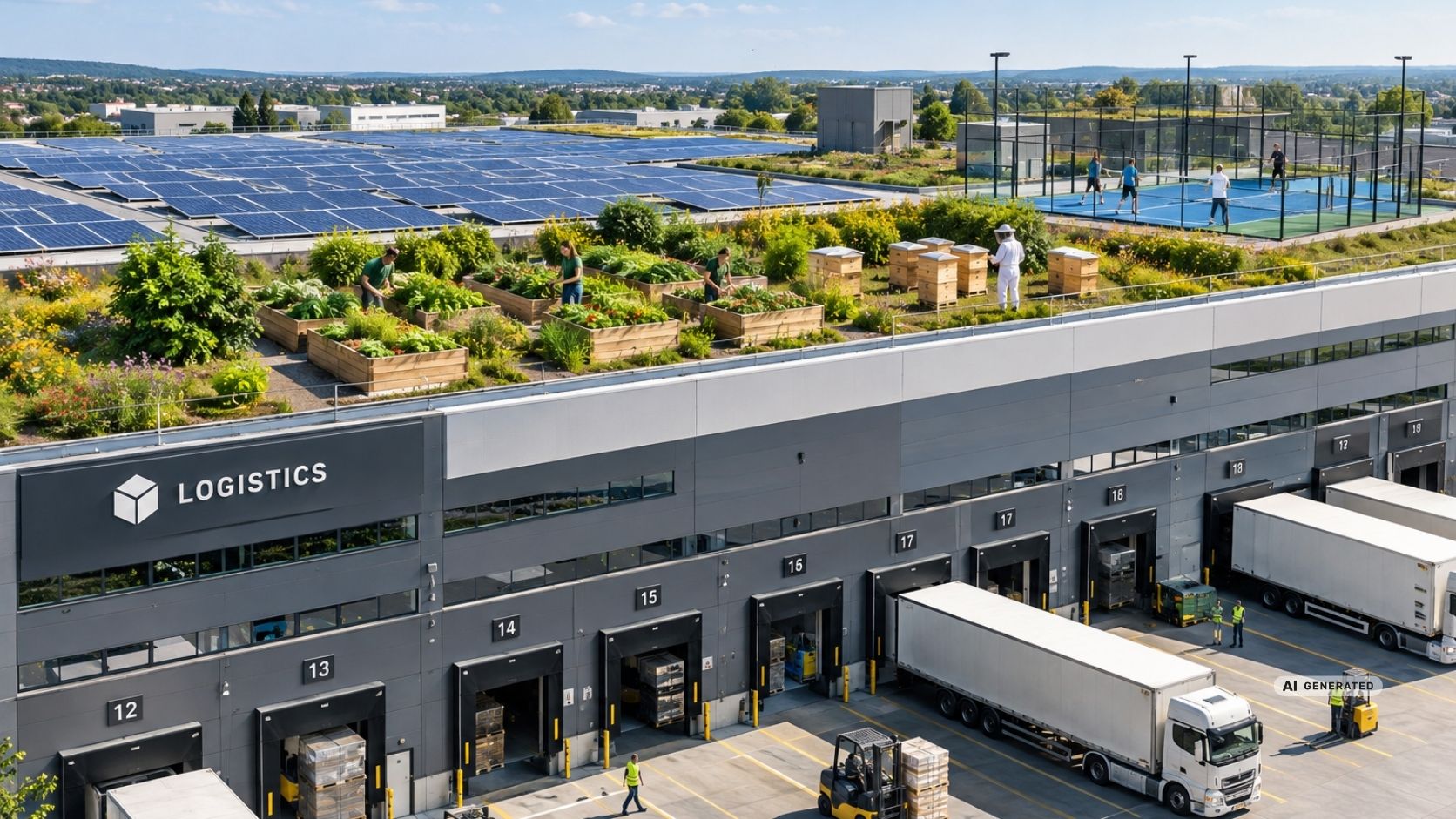
The Green Revolution on the Hall Roof: From Concrete Block to Ecological Power Plant?
Logistics roofs can do more than PV: greening, bees, urban farming and even sports areas turn unused roof space into multifunctional rooms....