


From the counter to 10-minute delivery: The unstoppable revolution of commerce through Q-Commerce
Table of Contents
- The Evolution of Shopping: A Journey Through Time
- The New Consumer: How "Immediately" Becomes the Standard Expectation
- Sustainability in a hurry: A promise with compromises?
- The heart of the revolution: logistics, warehouses and the last mile
- New requirements for contract and warehouse logistics
- The global race: How does Germany fare in an international comparison?
- The future: AI-driven, automated, and fully integrated
- Conclusion: A new era for trade and logistics
Retail never sleeps – it is constantly reinventing itself. Yesterday it was the leap from mom-and-pop shops to supermarkets, today it is the evolution from brick-and-mortar stores to global e-commerce to instant gratification of needs through quick commerce (Q-commerce). But what does this change mean for consumers, the environment and, above all, for the entire logistics industry? Is delivery within minutes just an urban luxury or the blueprint for the future of shopping? This article dives deep into the mechanisms, challenges, and potentials of an industry that is expanding at the speed of light.
The Evolution of Shopping: A Journey Through Time
Do you remember the weekly bulk shopping? In the past, trading was a physical, planned experience. For decades, brick-and-mortar retail was the undisputed center of consumption. With the advent of the Internet, the first major disruption began: e-commerce. Suddenly, the range was global and available 24/7. Pioneers such as Amazon have permanently changed customer expectations. Delivery within two to three days became standard.
But the development did not stand still. Driven by smartphone penetration and the desire for immediate availability, the next level was born: Q-Commerce. Here it is no longer a matter of days, but of minutes. Delivery services such as Flink, Getir (which has acquired Gorillas) and Wolt promise to deliver food and everyday products in a time window of often only 10 to 30 minutes. This service, which once started as a niche for forgotten cooking ingredients, is now expanding to other segments such as electronics and pharmacy products.
The New Consumer: How "Immediately" Becomes the Standard Expectation
The crucial question is: How does Q-commerce fundamentally change our buying behavior? The "on-demand culture", shaped by services such as Netflix, Spotify and Uber, has created an expectation of immediate availability. This is now fully transferred to the consumer goods sector.
- Impulse purchases are increasing: The extremely low hurdle to order promotes spontaneous purchase decisions. The planning purchase will be replaced by the demand-oriented immediate purchase.
- Loyalty is being redefined: Loyalty is no longer just about the brand or product, but above all about the speed and reliability of the delivery service. A negative delivery experience can cost a customer permanently.
- The shopping cart is shrinking: While larger orders are placed in traditional e-commerce to save on shipping costs, the shopping carts in Q-commerce are significantly smaller. A study by Roland Berger shows that the average shopping cart value in Q-commerce is around 20-30 euros, which poses enormous efficiency challenges for logistics.
Sustainability in a hurry: A promise with compromises?
Can a delivery that is designed for maximum speed be sustainable at all? This question is central and controversially discussed.
The points of criticism:
- Packaging waste: Small, frequent orders potentially lead to a higher relative volume of packaging per item.
- Energy consumption of the dark stores: These mini-warehouses in expensive inner-city locations, which operate around the clock, are energy-intensive.
- Working conditions: The model is often criticized because of the high pressure on the riders and the precarious employment conditions.
- Traffic congestion: Although many services rely on bicycles, bundling deliveries can be less efficient than with classic route planning.
Die Potential:
- E-mobility: The consistent use of e-bikes and cargo bikes reduces CO2 emissions on the last mile compared to delivery vans.
- Reduction of individual traffic: Ideally, an optimized Q-commerce delivery replaces the car journey of an individual customer to the supermarket.
- Needs-based shopping: Smaller, needs-based purchases can potentially reduce food waste in the home.
The truth lies in between. True sustainability in Q-commerce requires a rethink: from intelligent packaging solutions to fair working models to transparent measurement of the ecological footprint.
The heart of the revolution: logistics, warehouses and the last mile
For logistics, Q-Commerce is not an evolution, but a revolution. The traditional models of warehouse and contract logistics are being turned upside down. The focus is shifting from centralized, large-scale warehouses on the outskirts of cities to a decentralized, urban network.
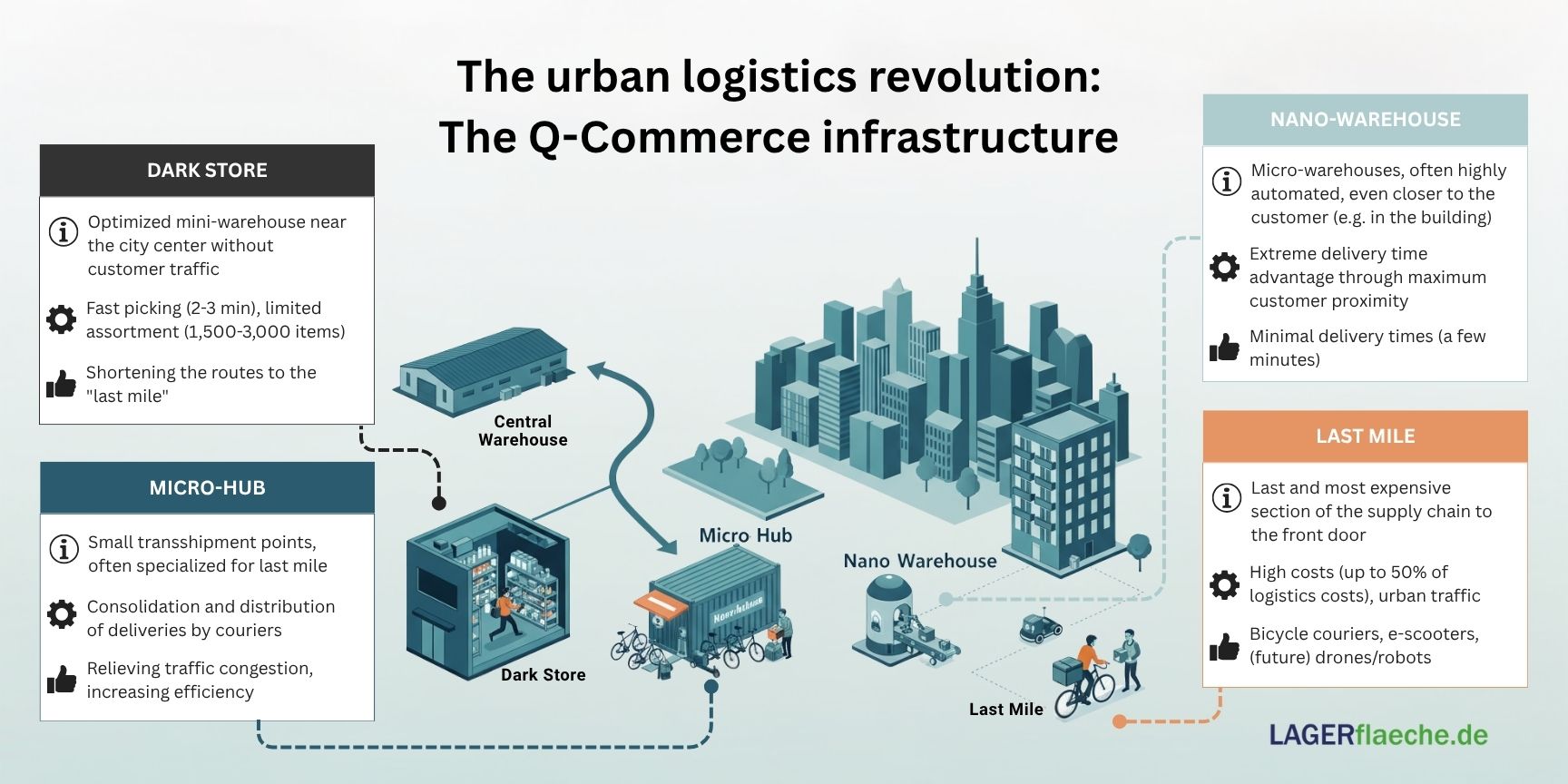
- The last mile: It has always been the most expensive and complex part of the supply chain. In Q-commerce, it becomes the all-important factor. The costs here can account for up to 50% of the total logistics costs. The challenge lies in minimizing the time between ordering and handover.
- Dark stores: These are the nerve centers of Q-commerce. These are former shops or small warehouses that are optimized exclusively for picking online orders – without customer traffic. A typical dark store has a limited assortment of 1,500 to 3,000 items and is designed in such a way that a "picker" can put together an order in under two minutes.
- Micro-hubs & nano-warehouses: These terms describe even smaller, highly automated units that are placed even closer to the customer. A micro-hub can be a container in a neighbourhood that serves as a handover point for couriers. A nano-warehouse goes one step further and can be an automated storage solution in the basement of a residential building. The aim is to shorten the distances and reduce the delivery time to an absolute minimum.
New requirements for contract and warehouse logistics
What does this mean for established logistics service providers? Traditional contract logistics, which is designed for long-term partnerships and predictable, large volumes from central warehouses, must adapt.
- Real-time inventory management: Forecast accuracy must be extremely high. In Q-commerce, an unavailable item ("out-of-stock") means the immediate loss of the customer to a competitor. AI-supported forecasting tools are becoming the standard here.
- Extreme flexibility: Demand is volatile and dependent on factors such as weather, time of day, and local events. Warehouse processes must be scalable within minutes.
- Urban warehousing: Expertise is shifting from managing large areas to managing small, decentralized units in complex urban environments in a highly efficient way.
The global race: How does Germany fare in an international comparison?
The adaptation of Q-commerce varies widely around the world and depends on cultural, regulatory and demographic factors.
- Germany: Considered a demanding market. German customers are online-savvy, but also very price-sensitive. According to a Capterra study, only 30-40% of Germans would pay more for same-day delivery. In addition, strict regulations (e.g. construction and labor law) make it difficult for dark stores to expand quickly in residential areas. Q-Commerce's market share in the food retail sector is still small, but it is growing steadily.
- UK: London, in particular, was an earlier and faster adopter of Q-commerce. A high urban density, a higher acceptance of "convenience" services and a lower regulatory hurdle have favored expansion.
- South Korea: The country is a global pioneer. Metropolises like Seoul, with their extreme population density, excellent mobile phone coverage and high affinity for technology, offer perfect conditions. Services such as "B-Mart" are deeply integrated into everyday life there.
- USA: The market is highly fragmented. In metropolises like New York City, Q-commerce is widely used, while in rural areas it hardly plays a role. The strong gig economy culture has fueled the growth of delivery services.
Why these differences? The key factors are:
- Degree of urbanization: Q-commerce is primarily an urban phenomenon.
- Purchasing power and willingness to pay: The acceptance of higher delivery fees for speed varies widely.
- Regulation: Local laws can greatly affect the opening of dark stores and the employment of drivers.
- Competitive landscape: The dominance of established supermarket chains and their own delivery services play a major role.
The future: AI-driven, automated, and fully integrated
The current hype around Q-commerce is just the beginning. The next phase will be driven by technology and integration.
- Hyper-automation: Robots will take over picking in the dark stores (see Noyes Technologies), which will increase efficiency and reduce costs.
- Predictive logistics: AI will not only predict WHAT customers will order, but also WHEN and WHERE. Inventory can thus be proactively moved to the nearest nano warehouses even before the order is received.
- Delivery by drone and robot: In a few years, autonomous vehicles and drones could replace human couriers on certain routes, further revolutionizing the last mile.
- Omnichannel integration: Brick-and-mortar retail will not disappear, but will merge with Q-commerce. Supermarkets themselves are becoming micro-hubs from which deliveries are made, and Q-commerce providers are opening physical express stores.
Conclusion: A new era for trade and logistics
Q-Commerce is much more than just a fast delivery service. It is a catalyst that redefines consumer expectations and forces the entire logistics value chain to radically innovate. The challenges in terms of profitability, sustainability and social responsibility are immense. But the companies that manage to build an efficient, sustainable and customer-centric model will not only shape the retail of tomorrow, but also the way we live and consume in our cities. The central task for the logistics industry will be to actively shape this transformation from a reactive to a predictive and decentralized discipline. The revolution has only just begun.
Latest Blog Posts
Stay up to date with the newest trends, insights, and tips in warehouse and logistics. Our latest articles help you navigate the industry with confidence.
Data Centres vs. Logistics Facilities: The Race for Power and Land
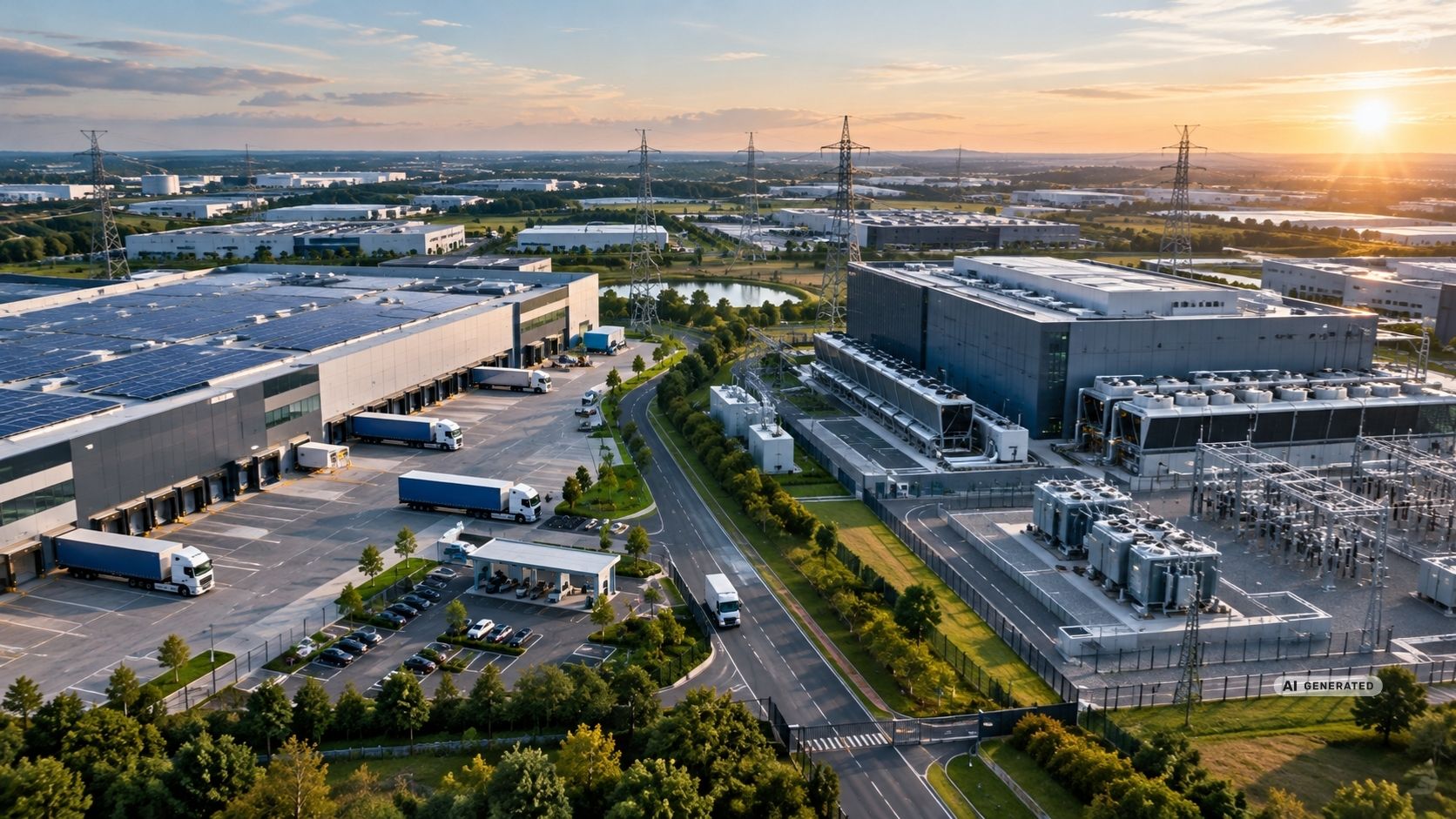
Across Europe, logistics operators are competing for more than land and transport access. They increasingly need something much harder to secure: grid capacity. Data centres are intensifying that competition — and changing how logistics locations are evaluated....
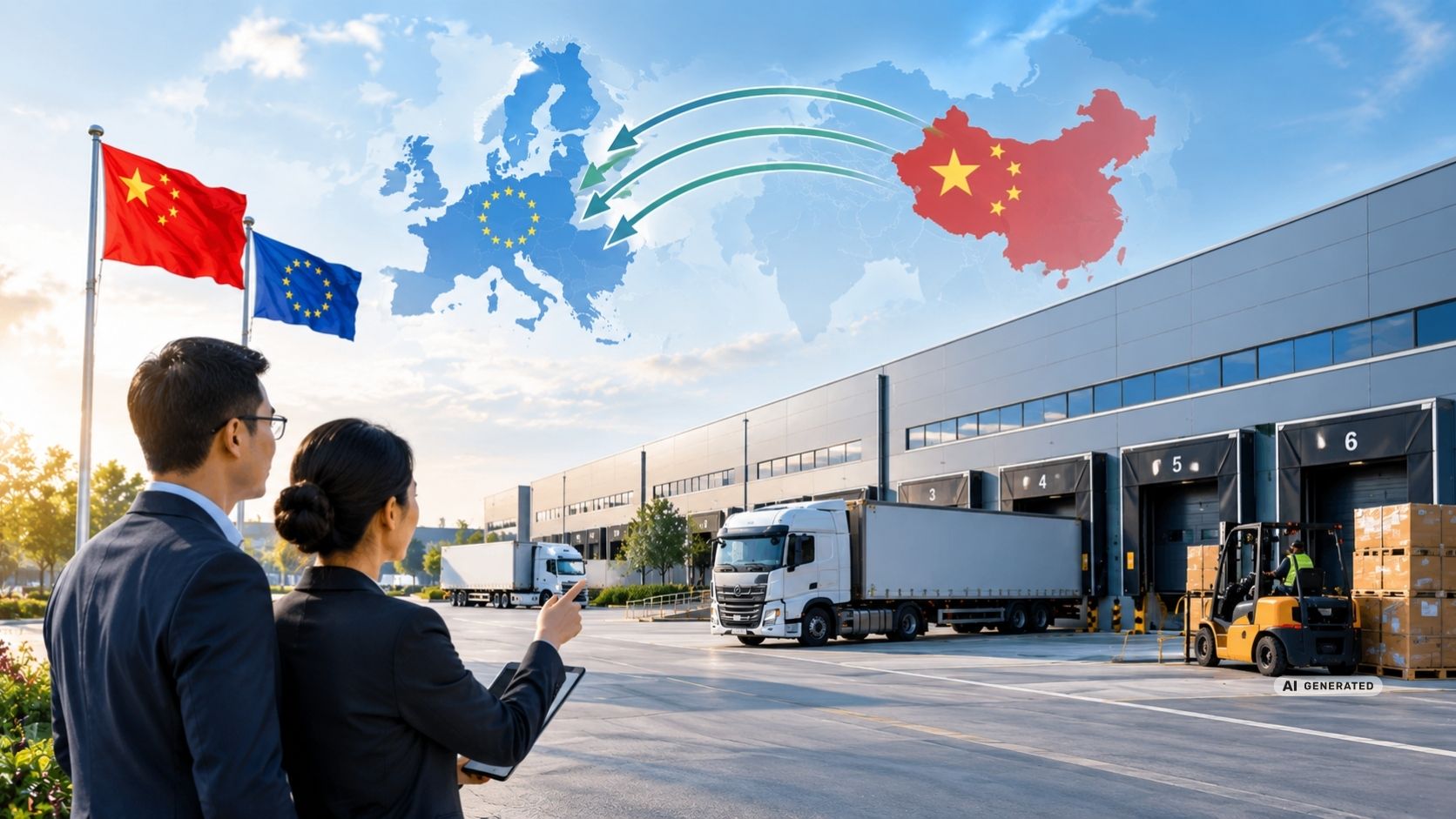
Chinese companies discover Europe's logistics real estate
Chinese companies are becoming an increasingly visible user group in Europe's logistics real estate market. What does this mean for warehouse space, 3PL structures and the requirements for European logistics locations?...
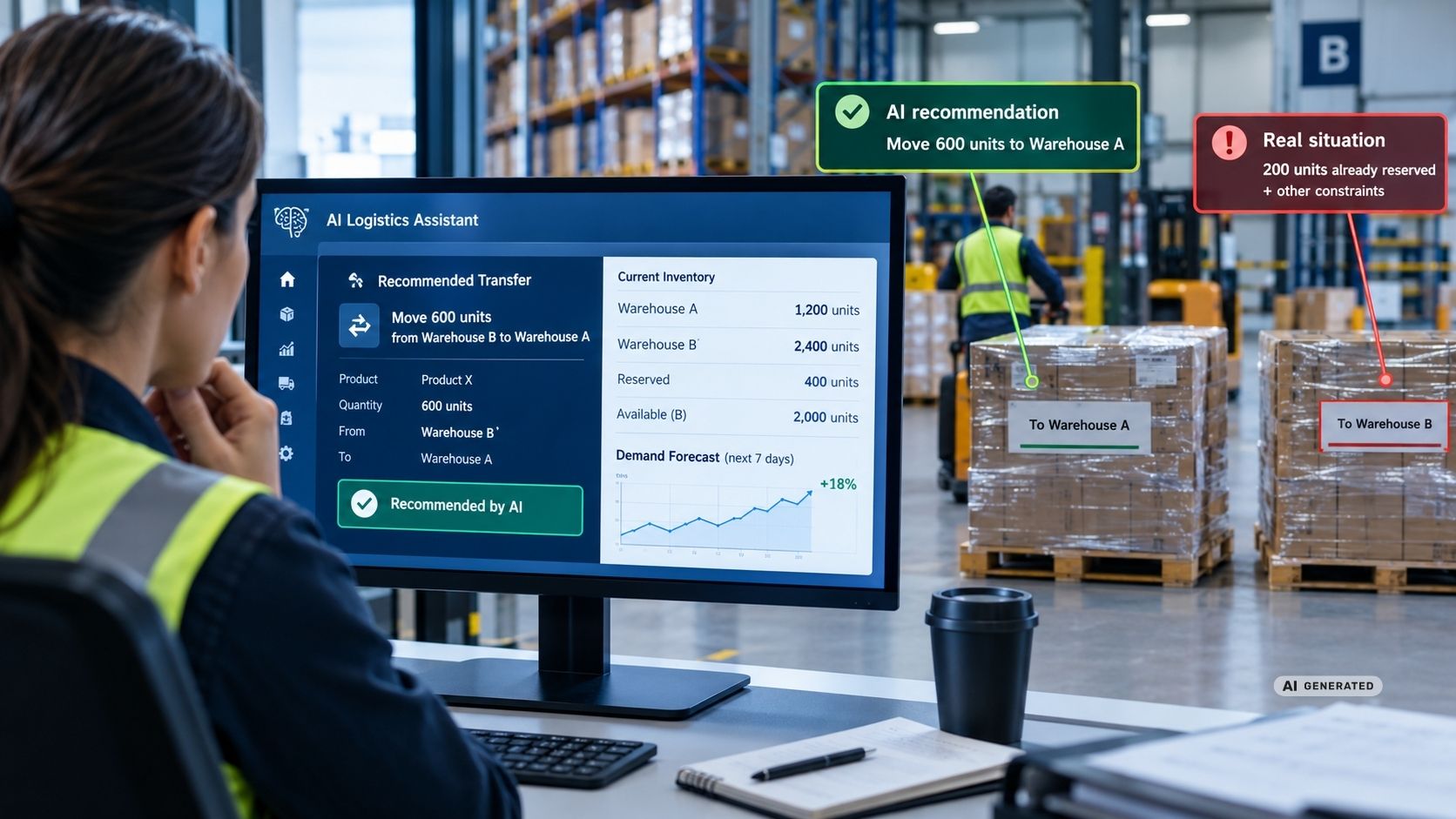
AI Hallucinations in Logistics: When AI Plans the Wrong Delivery
AI can analyze enormous amounts of logistics data — but it can also produce a convincing answer that is simply wrong. The critical question is not whether AI makes mistakes, but what happens when a wrong recommendation becomes an operational decision....
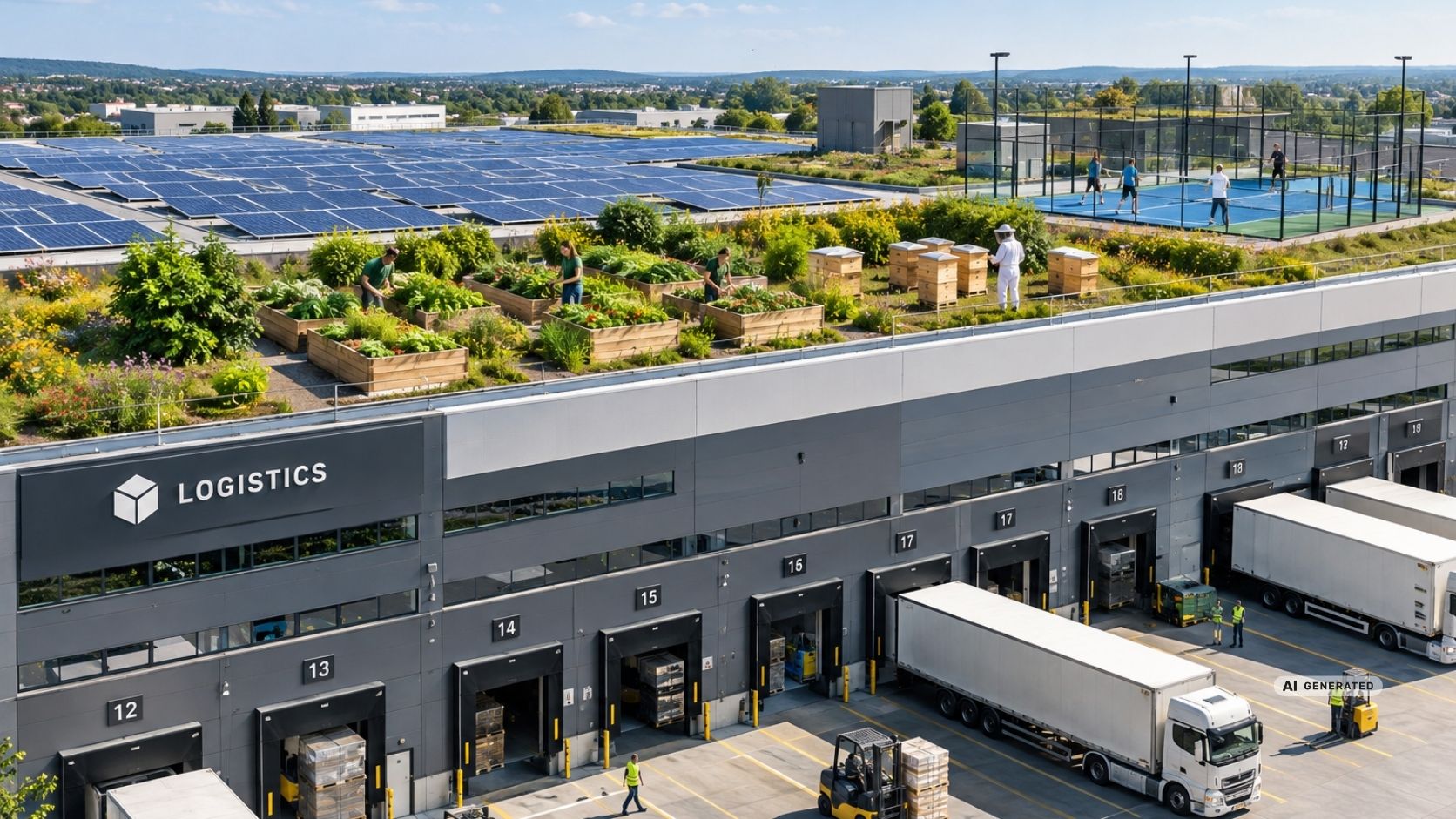
The Green Revolution on the Hall Roof: From Concrete Block to Ecological Power Plant?
Logistics roofs can do more than PV: greening, bees, urban farming and even sports areas turn unused roof space into multifunctional rooms....