




Warehouse tendering in logistics
Table of contents
- Warehouse tendering: The ultimate guide to logistics and real estate
- What is a warehouse tender in logistics?
- Why is the tendering process so crucial?
- The 5 Phases of a Successful Warehouse Tender
- The role of logistics real estate: More than just four walls
- ESG and automation: the new rules of the game
- Frequently Asked Questions (FAQ) about Warehouse Tendering
- Conclusion: Preparation is the key to logistics success
Warehouse tendering: The ultimate guide to logistics and real estate
The search for the perfect logistics location or a suitable service provider for contract logistics is rarely a gut decision. When companies grow, enter new markets or restructure their supply chain, they resort to a strategic instrument: warehouse tendering (also known as tender management). But what exactly is behind this process, and why is it often the architecture of the logistics property that decides on the award?

What is a warehouse tender in logistics?
A warehouse tender is a structured, often multi-stage procurement process. Shipping companies (e.g. from industry, trade or e-commerce) ask logistics service providers (3PL) or real estate developers to submit tailor-made offers for storage, handling and value-added services (VAS).
The aim is to find the service provider or hall that offers the best price-performance ratio, the highest process reliability and the necessary flexibility for future business growth. Depending on the complexity, a distinction is made between an RFI (Request for Information) and an RFP (Request for Proposal).
Why is the tendering process so crucial?
Today, logistics is no longer a pure cost factor, but a critical competitive advantage. A wrong choice of service provider or location can quickly cost millions. In contract logistics, contracts are usually concluded for terms of three to five years, and for new buildings (build-to-suit) even for ten years or more.
The tender forces the shipping company to ruthlessly analyze its own quantity structure (article master data, pallet locations, turnover frequency, seasonal peaks) in advance. Only with clean data can the logistics service provider calculate realistic prices and plan the optimal hall layout.
The 5 Phases of a Successful Warehouse Tender
A professional tender process often extends over several months and is divided into the following phases:
- Preparation & data collection: Creation of the functional specification (quantity structures, service level agreements, IT interfaces).
- Market Exploration (RFI): Pre-selection of 5 to 10 potential service providers or real estate locations.
- RFP & Bidding: The selected partners receive the detailed data and calculate personnel, technology and space requirements.
- Proposal presentation & negotiation: Pitch presentations, clarification of technical details (e.g. degree of automation of the hall) and tough price negotiations (often in the form of pay-per-pallet or open-book models).
- Conclusion of contract & implementation: The most important step. After signing, the physical and IT integration follows.
The role of logistics real estate: More than just four walls
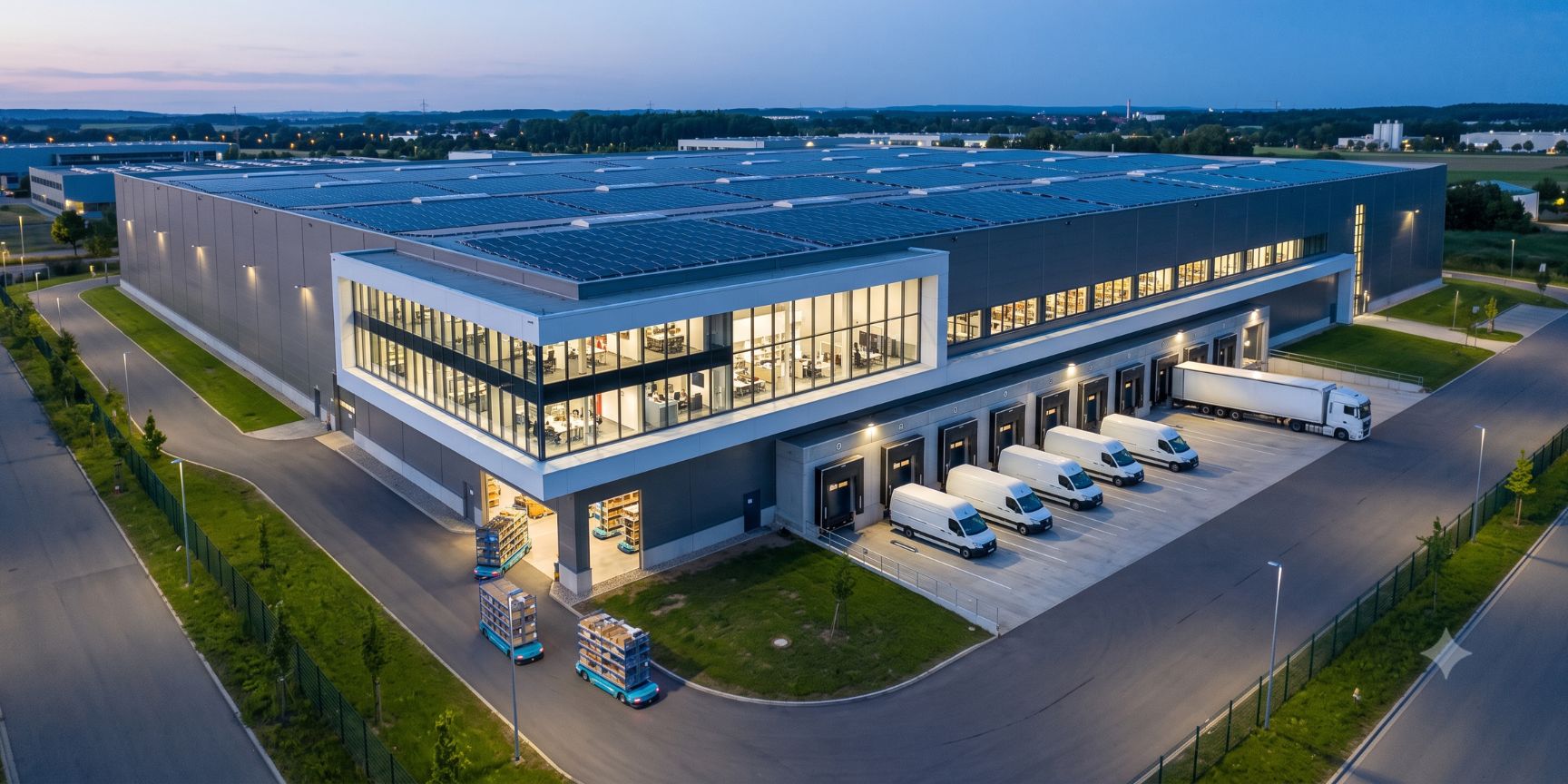
The best contract logistics fails if the logistics property does not play along. In modern warehouse tenders, the building is coming into focus massively. Service providers check carefully before submitting an offer:
- Is the floor load capacity (usually 50 kN/m²) sufficient for high racks or heavy automation technology (AGVs)?
- Are there enough loading gates (ideally 1 door per 1,000 m² of space) to handle cross-docking processes without congestion?
- Does the sprinkler system comply with the fire protection classes of the products to be tendered (e.g. WGK hazardous substances or tyres)?
Service providers often apply with existing space (multi-user warehouse) or directly include the rental of a new hall (dedicated warehouse) in their offer.
ESG and automation: The new rules of the game
Whereas in the past the pure pallet price was decisive, today sustainability (ESG) and automation are shaping tender management. The CSRD Directive and the Supply Chain Act (LkSG) require shippers to massively reduce their CO2 footprint in the Scope 3 category (external service providers). Those who win a warehouse tender today usually offer climate-neutral halls (e.g. DGNB Gold certification, photovoltaics, heat pumps) and intelligent automation concepts (robots, AI-controlled conveyor technology) to counteract the chronic shortage of personnel in logistics.
Frequently Asked Questions (FAQ) about Warehouse Tendering
Question: How long does a stock tender take?
Answer: A complete process – from the initial data collection to the signing of the contract – usually takes between three and six months. The subsequent implementation and relocation of the goods (go-live) often take another three to twelve months.
Question: From what size is a formal tender worthwhile?
Answer: Basically, from a logistics volume that has a significant influence on strategic business development. In most cases, the high effort of an RFP pays off from approx. 2,000 to 3,000 pallet spaces or annual logistics costs in the high six-figure range.
Question: What is the most common mistake in a logistics tender?
Answer: Poor or incomplete data. If shippers gloss over their historical data (e.g. return rates or seasonal peaks), the service provider calculates incorrectly. After the start, this inevitably leads to a lack of space in the hall, missed SLAs and renegotiations.
Conclusion: Preparation is the key to logistics success
A warehouse tender is much more than a simple price comparison – it is a strategic partnership for a limited period of time. If you do your homework as a shipping company, provide clean data and pay attention not only to the price, but also to the quality of the logistics property and IT integration, you will drastically minimise risks. At the same time, a fair, transparent tender process offers logistics service providers the opportunity to create real added value through innovative automation concepts and sustainable hall concepts (green logistics).
💡 Are you currently looking for the right logistics property for your tender or an experienced contract logistics specialist to accompany your growth? On LAGERflaeche.de you will find future-oriented areas throughout Germany and the right partners for your supply chain!
Your Ideal Logistics Warehouse
Browse listings for warehouse space, logistics real estate, industrial land, and contract logistics solutions.
Browse Exposés
Maximize Exposure for Your Warehouse Space
Showcase your logistics properties and attract qualified inquiries.
Discover Products