



Scope 3 emissions balance in warehouse logistics
Table of contents
- The three scopes at a glance: Where does the logistics stand?
- Why contract logistics and Scope 3 are inextricably linked
- Grey energy: Logistics real estate as a CO₂ driver
- Facts, figures, data: The footprint of the warehouse
- Q&A: The most important questions about the Scope 3 emissions balance
- Strategies for optimization: How to lower your Scope 3 values in the warehouse
- Conclusion: Regulatory obligation becomes a competitive advantage
European sustainability reporting (CSRD) is fundamentally changing the rules of the game in the logistics and real estate industry. While many companies have focused almost exclusively on their direct emissions (Scope 1 and 2) in the past, the most massive and complex lever is now coming into focus: the Scope 3 emissions balance. But what does this key figure mean in concrete terms from the point of view of warehouse logistics, contract logistics and the leasing of logistics properties?
This guide takes a deep dive into the topic and shows how you can turn a regulatory obligation into a real competitive advantage.
The three scopes at a glance: Where does the logistics stand?
According to the international Greenhouse Gas (GHG) Protocol, greenhouse gas emissions are divided into three categories (scopes) to avoid double counting:
- Scope 1: Direct emissions from own sources (e.g. the company's own vehicle fleet or gas heating systems in the company's own hall).
- Scope 2: Indirect emissions from purchased energy (e.g. the electricity purchased for conveyor technology and lighting).
- Scope 3: The most complex area. It includes all indirect emissions that occur in the upstream and downstream value chain. Experience has shown that this area often accounts for 80 to 90% of the total CO₂ footprint for logistics companies and retailers .
Why contract logistics and Scope 3 are inextricably linked
In the modern supply chain, manufacturing companies and e-commerce retailers outsource their warehousing to specialized contract logistics companies. What ensures maximum operational efficiency has accounting consequences: If a retailer has its products stored and picked by an external service provider (3PL), these outsourced processes fall completely into scope 3 for the retailer (categories 4 and 9: transport and distribution).
The contract logistics provider thus becomes an absolutely necessary data partner. If the service provider cannot provide an exact emissions balance for the portion of its warehouse used, it jeopardizes the ESG reporting obligation of its clients. Transparency becomes a hard award criterion in every new tender.
Grey energy: Logistics real estate as a CO₂ driver
A logistics property does not only emit CO₂ during ongoing operations. By far the largest share is hidden in so-called embodied carbon. These are the emissions that occur during the construction of the hall, the production of concrete, solid steel girders, insulation materials and the transport of building materials.
If a contract logistics company rents a hall, these construction emissions (caused in the past) are included in its Scope 3 balance sheet (category: leased assets) on a pro rata basis over the lease period. Today, this forces tenants to demand detailed life cycle analyses (LCA) of the buildings from the landlord for new contracts.
Facts, figures, data: The footprint of the warehouse
Hard facts help to understand the dimension of Scope 3 emissions in real estate logistics:
- Building materials as drivers: Around 11% of global greenhouse gas emissions come from the production of building materials such as steel and cement alone. This is a massive factor in the construction of new, tens of thousands of square meters of big-box halls.
- Life cycle calculation: The lifespan of a classic logistics property is usually calculated at 50 years in life cycle assessments (LCA). The embodied energy is allocated linearly over this period.
- The tenant impact: For e-commerce retailers, Scope 3 emissions often account for over 90% of the total balance, as they hardly have their own halls (Scope 1/2).
Q&A: The most important questions about the Scope 3 emissions balance
Question: As a pure tenant of a logistics hall, am I responsible for the Scope 3 data?
Answer: Yes, if your company (or your direct client) falls under the CSRD reporting obligation. You must show the environmental impact of the space you lease (leased assets). This requires so-called "green leases", in which the landlord commits to the automated transfer of building and consumption data.
Question: Are existing properties (brownfields) worse than new buildings in the Scope 3 balance?
Answer: Not necessarily! Although modern new buildings are often more efficient during ongoing operation (insulation, heat pumps, LEDs), their construction devours vast amounts of new "grey energy". An existing hall that has been cleverly renovated in terms of energy efficiency can even have a significantly better Scope 3 balance in a holistic life cycle assessment, as the CO₂-intensive concrete and steel frame was already "paid off" decades ago.
Question: What happens if I, as a shipper, lack Scope 3 data from the contract logistics provider?
Answer: The lack of primary data (real measured values) forces you to use blanket average values (secondary data) in your CSRD sustainability report. These are usually much more negative than reality and artificially worsen your balance sheet.
Strategies for optimization: How to lower your Scope 3 values in the warehouse
If you want to actively improve your balance sheet in warehouse logistics, you have to start with infrastructure and processes:
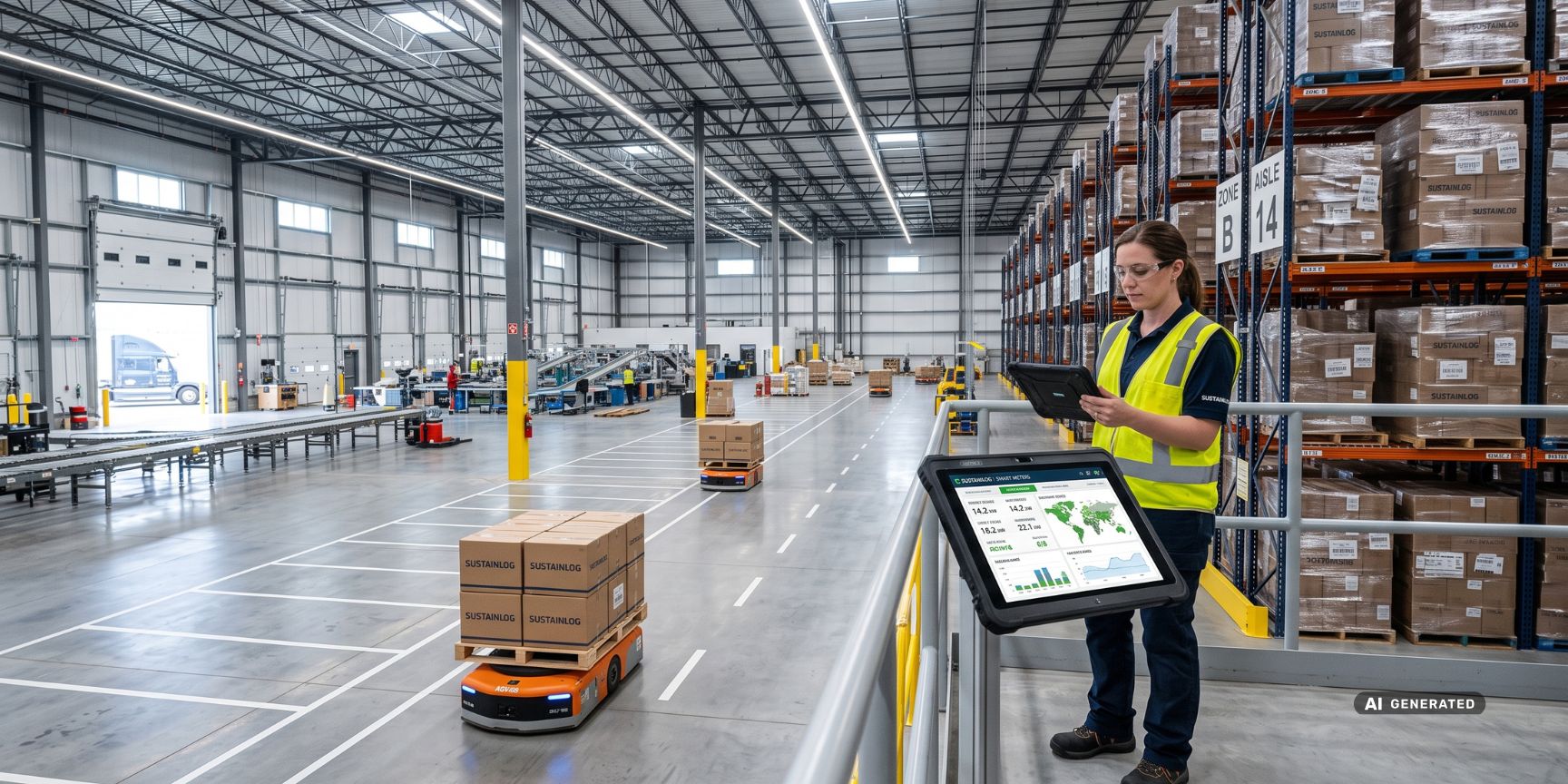
- Smart metering (IoT): Install smart meters. Only if you measure energy consumption at the level of individual hall sections or automated systems (such as AutoStore) can you accurately allocate consumption to customers.
- Renewable energies (photovoltaics): The self-generation of solar power via the huge hall roof not only reduces one's own Scope 2, but also has a positive impact on the Scope 3 balance sheet of your clients as a green logistics process.
- Sustainable certifications: When choosing a location, give preference to logistics properties that are certified according to DGNB or BREEAM. These standards guarantee transparent, already validated documentation of the embodied energy used.
Conclusion: Regulatory obligation becomes a competitive advantage
The Scope 3 emissions balance is much more than a bureaucratic hurdle for the EU. It is the most radical transparency filter that the logistics and real estate industry has ever experienced. Logistics properties are no longer just passive shells made of trapezoidal sheet metal, but active levers in the climate management of every supply chain.
For service providers in contract logistics, this means that those who are able to offer their customers transparent, data-based and optimized Scope 3 values for warehousing today will win the tenders of tomorrow. Those who ignore this issue, on the other hand, risk losing their most important customers in the medium term.
💡 Fancy even more industry insights? If you want to stay up to date on logistics real estate, space development and ESG compliance, feel free to take a look at our other exciting articles.
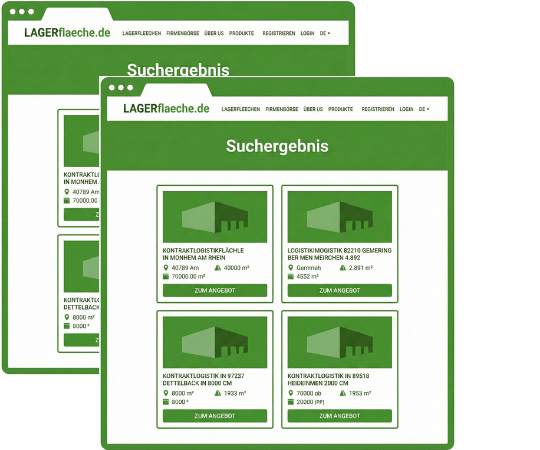
Your Ideal Logistics Warehouse
Browse listings for warehouse space, logistics real estate, industrial land, and contract logistics solutions.
Browse Exposés
Maximize Exposure for Your Warehouse Space
Showcase your logistics properties and attract qualified inquiries.
Discover Products