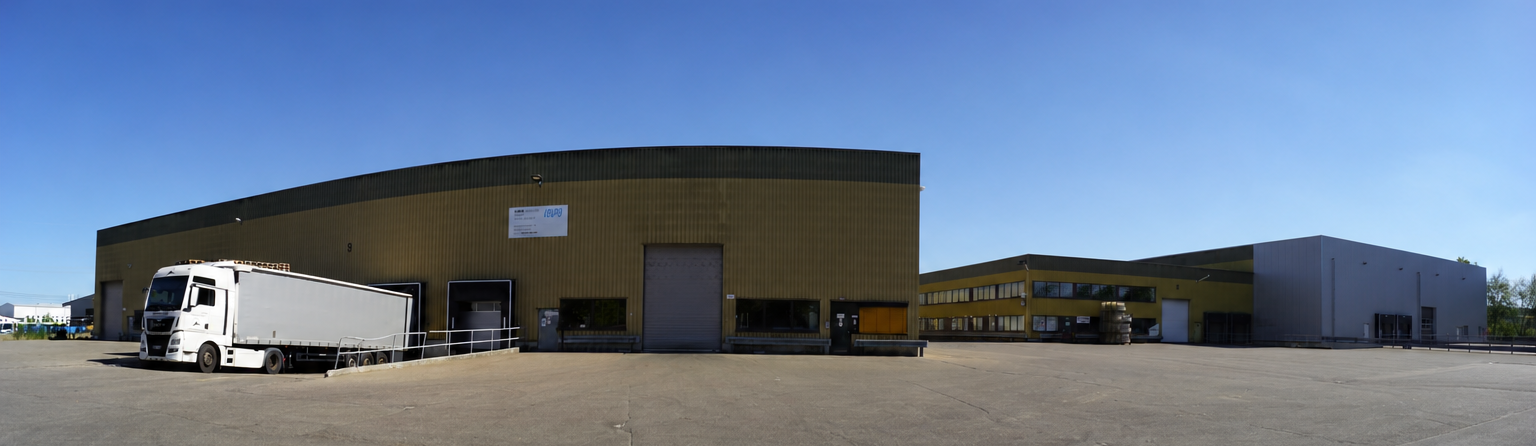
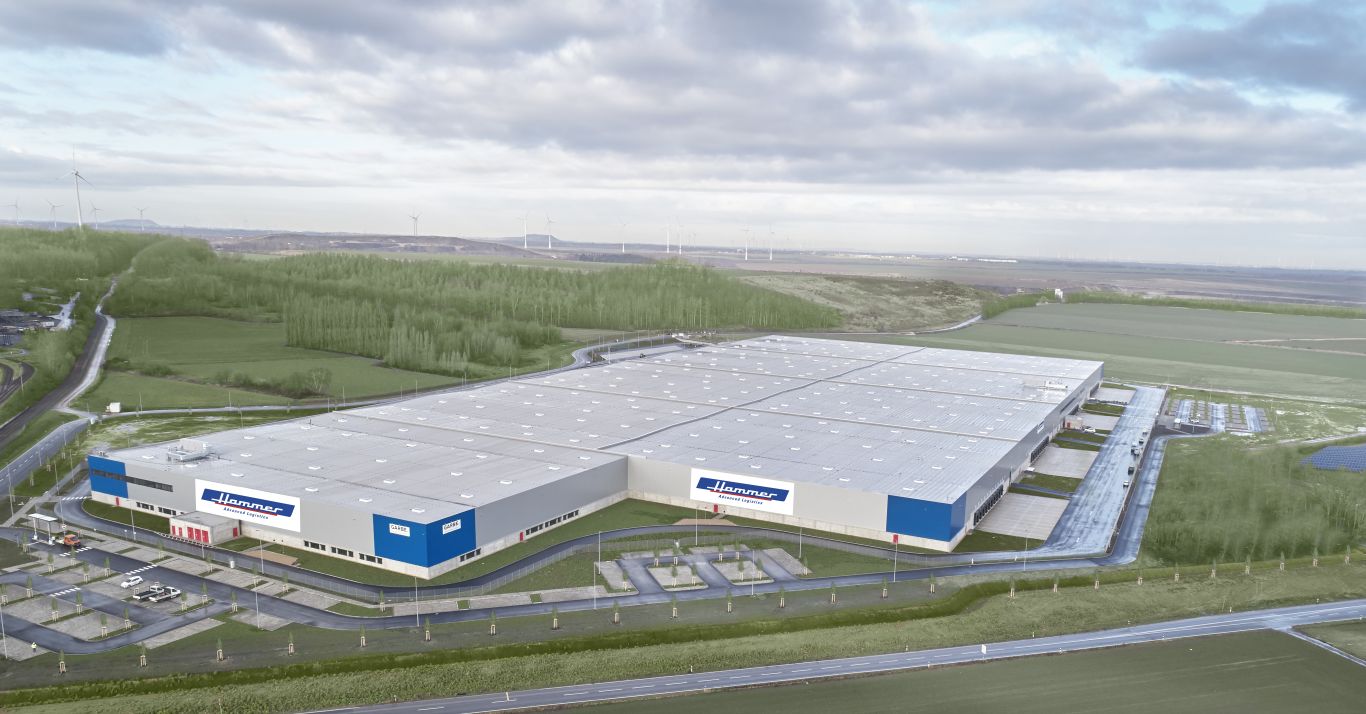
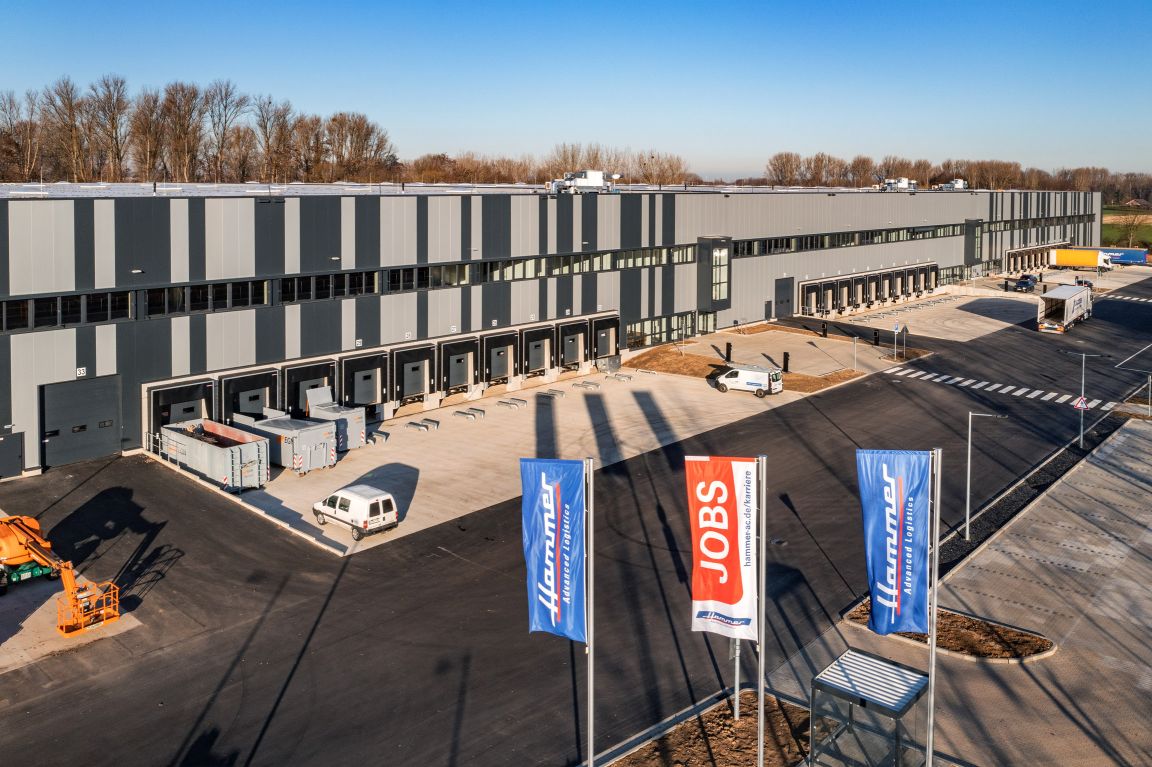
Kontraktlogistik Aichach im Wirtschaftsdreieck MUC-AUG-ING Bayerns: 4.000 m² Logistikflächen
Object no.: 10197
Warehousing (warehouse with management)
Germany
86551 Aichach
Price on request
Find state-of-the-art logistics properties and temperature-controlled storage areas that fully meet the strictest hygiene standards such as HACCP or IFS. Whether it's a multi-temp hall, ULO storage or specialised deep-freeze warehouse – we will provide you with the right space and experienced contract logistics specialists for your sensitive food supply chain.

The secure storage of food requires much more than just simple pallet spaces. Modern logistics service providers offer specialised multi-temperature zones in so-called multi-user centres in order to intelligently bundle the different volumes and seasonal peaks of different industries. In addition to purely temperature-controlled warehousing, experienced partners in contract logistics take on tailor-made value-added services (VAS) for you. These include precise quality controls, best-before date tracking, packaging in supermarket-friendly packaging, display construction and just-in-time distribution to the food retail trade (LEH). An optimal GEO location with a direct motorway connection to the commercial property also minimises transit times, which is crucial for the shelf life and market success of fresh products.
On our platform, you can currently see 89 specialised logistics locations in Germany or abroad, which are characterised by an optimal GEO location and direct motorway connections. Thanks to this regional clustering close to urban conurbations, you guarantee extremely short transit times and an uninterrupted cold chain just-in-time) all the way to the food retail sector. You can currently find storage facilities in northern Germany, North Rhine-Westphalia, the Rhine-Main area, southern Germany or even in Italy and Austria.
Object no.: 10197
Warehousing (warehouse with management)
Germany
86551 Aichach
Price on request
Object no.: 10195
Warehousing (warehouse with management)
Italy
37137 Verona
Price on request
Object no.: 10192
Warehousing (warehouse with management)
Germany
97337 Dettelbach
Price on request
Object no.: 10179
Warehousing (warehouse with management)
Germany
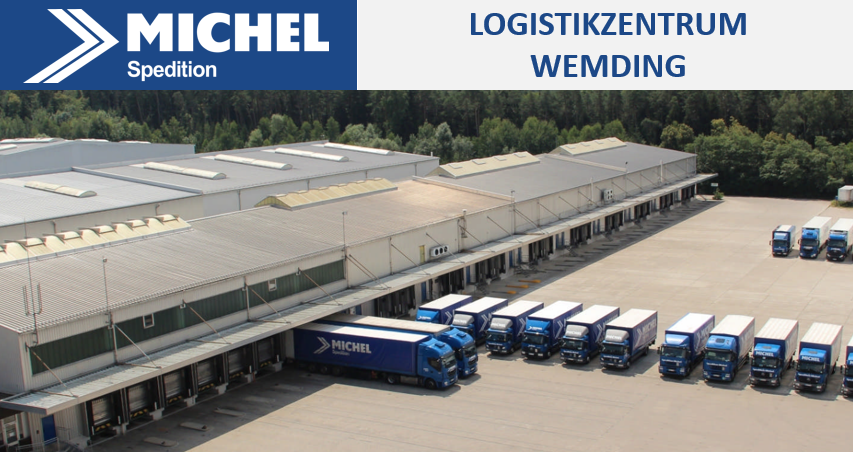
86650 Wemding
Price on request
Object no.: 10173
Warehousing (warehouse with management)
Germany
68159 Mannheim
Price on request
Object no.: 10171
Warehousing (warehouse with management)
Germany
52249 Eschweiler
Price on request
Object no.: 10170
Warehousing (warehouse with management)
Germany
52382 Niederzier
Price on request
Object no.: 10166
Warehousing (warehouse with management)
Germany
90471 Nürnberg
Price on request
» Food logistics
» Hygiene in food logistics
» Food production
» Food storage
» How much does storage space for building materials cost?
» Principles of food storage
» Food transport
» Possible transport vehicles for food logistics
» FAQ on food logistics: Expert knowledge about food warehouses and cold storage solutions
Are you looking for suitable locations to find and rent a state-of-the-art warehouse space for your food logistics? Whether you are wondering which certifications such as HACCP or IFS are mandatory or which specific temperature zones a modern logistics property must cover – our guide provides you with the exact answers to these questions. Find the ideal temperature-controlled hall with us and benefit from tailor-made contract logistics solutions for your sensitive food supply chain.
Food products are very sensitive goods with a low commodity value, which are subject to strong seasonal fluctuations and are traded in very large quantities during production and storage, but in rather smaller quantities during transport.
The vast majority of products are temperature-sensitive and many of them are also not shock-resistant. Except for delicacies, they also have a low commodity value and most food products also lose this value with storage/ageing. However, products such as wine or cheese can increase in value through storage. Certain foods are only available at certain times of the year, others are only in demand at certain times of the year.
Over the years, the trend has developed towards discounter products, which are already delivered on displays and distributed with low margins but in large quantities. On the other hand, there is a trend towards organic products, which are usually produced regionally, have a higher value and are distributed in small quantities.
During production, storage and also transport of food, special attention must be paid to temperature, hygiene and documentation of the origin of the products and raw materials, always taking into account the short product life cycle.
Food products can be classified according to the origin of the raw materials, the ingredients, the origin, the processing method, the reason for consumption or the need for refrigeration.
Share of turnover of the food industry in total turnover (in Germany):

The most important point, however, is hygiene. Not only in the warehouses or production halls, but also on the premises, cleanliness must be ensured at all times in accordance with the guidelines of the Food Monitoring Agency of the Ministry for Climate Protection, Environment, Agriculture, Nature and Consumer Protection. Preventive action must also be taken according to the principles of HACCP, which deals with the analysis, control and measures of and for the safety of food products. Particular attention should be paid here to pest control, but staff must also meet the standards through regular training. The EU-Organic Production-Regulation also plays an increasing role as organic products gain more and more attention.
It defines the following general matters:
The Codex Alimentarius is drafted by the Codex Alimentarius Commission (CAC) and its regional and technical committees. The Commission currently has 185 member states and the European Union as an organisation.
Self-control system for hazard analysis at control points to avert hazards that adversely affect food:
Guidelines for avoiding contamination, for consistent, reproducible product quality and for traceability (quality assurance):

Even during the production of food, attention must be paid to temperature. In many production steps, the machines and processes generate increased temperatures that can damage the product. Hygiene regulations must also be strictly observed here. Even when time-critical products are involved, safety and quality must not be neglected.
There are three different types of food storage:
In the case of dry storage, apart from the hygienic regulations, it must be noted that, as the name suggests, it is dry and well ventilated. The products should not be exposed to direct sunlight and the temperature should be +5°C to +20°C with a humidity of up to 70%.
In the case of chilled and frozen products, special care must be taken to ensure that the cold chain is not interrupted at any time, neither during order picking nor during storage and retrieval. As many checkpoints as possible must be established for this purpose.
The temperatures of cold storages must be constantly between -2°C and +5°C, with a relative humidity of 80-90%. Goods that have not yet been cooled down must not be stored with the food already in the cold storage for "cooling down", so as not to influence their temperature.
Deep-freeze storages have a temperature of 18°C or less. Here, products are usually stored for longer, as their shelf life increases considerably. Again, the freezing process of new goods precedes storage so as not to affect the temperature.
Refrigeration processes basically increase the life of fresh produce by slowing down molecular and microbacterial activities. The degrees of cold and frost protection can influence yield, quality and nutritional content. The most commonly used cooling method is recirculating air heat exchange, although heat extraction with plate freezers is also used in some cases. However, the balance between the costs of the cooling process and the quality of the products must always be taken into account.
Average rental prices for food warehouses
(Note: Rental prices in the food and fresh food sector are noticeably higher than those of conventional dry storage facilities due to the complex refrigeration technology, insulation and high energy costs (OPEX).)
| Warehouse Type / Temperature Zone | Average basic rent (per m²/month)* | Special features & equipment |
| Dry Storage / Ambient (15 °C to 25 °C) | €5.50 – €7.50 | For canned & non-refrigerated food, standard insulation. |
| Tempered / Chocolate storage (12 °C to 18 °C) | €6.50 – €8.50 | Avoidance of temperature fluctuations, often for wine & confectionery. |
| Cold and fresh food storage (2 °C to 8 °C) | €8.00 – €11.50 | Strict HACCP requirements, cold locks, for dairy products and meat. |
| Deep-freeze warehouse (below -18 °C) | €10.50 – €14.00 | High energy consumption, extremely thick insulation, frost protection in the floor. |
| Special bearings (CA / ULO warehouses) | on request (high CAPEX) | Absolute gas tightness, oxygen reduction to less than 1.0 %. |
| *The exact prices vary greatly depending on the GEO location, degree of automation and current energy prices. | ||

Food warehouses are basically operated according to the FiFo principle, as they are perishable goods with a mostly very short product life cycle, so appropriate storage equipment is necessary, e.g. flow racks.
Loose goods, such as grain or similar, are naturally stored in silos. However, such storage is almost only found in production warehouses before the product is further processed or packaged.
| Storage facility | Suitable foods | Climatic conditions | Technical and construction effort |
| Multi-temperature hall | Complete supermarket range (dairy, frozen, dry) | Different climate zones (frozen, fresh, ambient) under one roof. | Medium to High (Modular Highly Insulated Partitions, IoT Sensors). |
| Classic deep-freeze warehouse | Ice cream, frozen goods, convenience products | Constantly below -18 °C or significantly colder. | High (special refrigeration technology, often mobile mobile racks to save energy). |
| CA (Controlled Atmosphere) Storage | Fruit & vegetables (e.g. apples, pears) | Oxygen artificially reduced to 1.0% to 3.0%, CO₂ adjusted. | High (gas-tight rooms, nitrogen generators, CO₂ adsorbers). |
| ULO (Ultra Low Oxygen) storage | Specific fresh products for long-term storage | Oxygen extremely reduced to less than 1.0 % (usually 0.5 % - 0.9 %). | Very high (absolute gas tightness, special hydraulic doors, rubber lunges). |
In food logistics, high delivery reliability must be ensured, which means that deliveries, especially of fresh products such as fruit and vegetables, must be made just-in-time. This requires precise planning and detailed consumption/demand forecasts.
The loading and storage equipment must withstand special conditions. Thus, the choice of plastic is recommended here to ensure good cleaning, no corrosion and freedom from damage due to temperature differences. No products other than food may be transported in the transport containers.
Telematics systems in the transport vehicles are almost indispensable, as not only the temperature must be constantly controlled, but also the timely delivery to the end consumers must be ensured.
The storage of sensitive food, fresh products and frozen goods places the highest demands on seamless temperature control, strict hygiene standards (such as HACCP) and the specialised air conditioning technology of the logistics property. In our Frequently Asked Questions (FAQ), you will learn in a compact and practical way what is important when choosing the right food logistics warehouse, when different temperature zones are worthwhile and how you can make your food supply chain more efficient and legally compliant through tailor-made contract logistics.
When food is stored, a strict HACCP (Hazard Analysis and Critical Control Points) concept for hazard analysis is required by law. Leading warehouse locations in food logistics also have established quality standards such as IFS (International Featured Standard Food), organic certifications or GMP standards to guarantee the highest level of hygiene and complete food safety.
A modern food warehouse often acts as a multi-temp hall and offers different climate zones under one roof. The spectrum ranges from ambient areas (uncooled/room temperature) to active temperature control (e.g. 8 °C to 18 °C for chocolate or wine) and classic cold stores (1 °C to 3 °C) to special deep-freeze warehouses (below -18 °C).
Yes, highly specialised service providers take on complex tasks that go far beyond mere storage. The most important value-added services (VAS) include sorting work, quality control, labelling, packaging of goods in brand-specific packaging and the construction of promotional displays for the supermarket.
Both processes slow down the biological ripening process of fruit and vegetables (e.g. apples) extremely. In CA (Controlled Atmosphere) storage, the oxygen content is reduced to 1.0% to 3.0%. ULO (Ultra Low Oxygen) storage even pushes the oxygen content to below 1.0% (usually 0.5% to 0.9%), which requires an extremely gas-tight logistics property but preserves freshness for many months.
For perishable goods and fresh products, the geographical choice of location is absolutely critical to success. Strategic logistics hubs with direct motorway connections enable extremely short transit times. In this way, regional distribution centres or the end consumer can be supplied quickly, efficiently and in complete compliance with the cold chain (just-in-time).
Yes, this is common practice. In so-called multi-user warehouses, different customers share the capacities of a hall, often separated by different temperature zones and fire compartments. The pay-per-pallet model converts rigid fixed costs into variable operating costs, which allows companies to react with maximum flexibility to seasonal fluctuations in the food trade.
West
Rent a production hall in Frankfurt
Warehouse in Cologne
Industrial warehouse in Saarbrücken
South
Find Logistics Space in Munich
Storage Space in Nuremberg
Logistics Hall in Stuttgart
Rent Warehouse in Freiburg
Rent Warehouse Space in Italy
Logistics Hall in Austria
Storage Space in the Netherlands
Warehouses in France
Search Storage Space in Poland
Renting halls in Switzerland
Find logistics premises in Belgium
Storage in Bulgaria
Renting warehouses in the UK
Search for warehouse properties in Croatia
Logistics warehouses in Romania
Logistics centres in Russia
Search for warehouse locations in Slovenia
Rent warehouse space in Slovakia
Logistics property in Spain
Find storage space in Hungary
Rent a warehouse in the Czech Republic
Storage facility in Denmark