



OPEX Costs in Warehouse Logistics
Table of contents
- OPEX Costs in Warehouse Logistics: Guide to Real Estate & Operations
- What are OPEX costs in logistics?
- The biggest OPEX drivers in logistics real estate (hall)
- OPEX in contract logistics: personnel, technology and processes
- CAPEX vs. OPEX: The Strategic Shift in the Warehouse
- Practical Value: Understanding Total Cost of Occupancy (TCO)
- Levers to reduce operating costs in logistics
- FAQ: Frequently asked questions about OPEX costs in the warehouse
- Conclusion: OPEX optimization as a competitive advantage
- Key Success Factors for Entrepreneurs in Choosing the Optimal Warehouse
OPEX Costs in Warehouse Logistics: Guide to Real Estate & Operations
In this comprehensive guide, you will learn which factors drive ongoing operating costs (OPEX) in warehouse and contract logistics and which strategic levers you can use to optimize them in the long term.
What are OPEX costs in logistics?
In business administration, the term OPEX (Operational Expenditure) refers to the current operating expenses that are absolutely necessary to maintain a company's day-to-day operations. They are in direct contrast to the CAPEX (Capital Expenditure), which represent the one-off, long-term investment costs for fixed assets – such as the construction of a new logistics hall, the purchase of a plot of land or the purchase of a large high-bay system. OPEX, on the other hand, accrues continuously (monthly or annually) and flows directly into the income statement (P&L).
In the logistics industry, OPEX is the decisive factor for profitability. Every square metre of a logistics property and every move in contract logistics generates running costs. If you don't closely monitor and optimize these operating expenses in a highly competitive, low-margin market, you will quickly lose your competitiveness.
The biggest OPEX drivers in logistics real estate (hall)
The pure management of a modern logistics property entails a variety of cost blocks. From the perspective of facility management and the tenant (e.g. a logistics service provider), the classic real estate OPEX is essentially made up of the following items:
- Energy costs: The electricity for lighting and conveyor technology as well as gas, district heating or heat pump electricity for heating (or cooling) the hall. In conventional, older existing buildings, energy consumption often accounts for up to 60% of building OPEX.
- Maintenance and servicing: Regular, legally required inspections of roller shutters, dock levellers (ramps), fire protection systems (sprinklers) and heating systems.
- Cleaning and security: Ongoing hall cleaning, winter service, site maintenance as well as security services and access controls (especially if the warehouse is safety certified according to the TAPA standard).
- Duties and insurance: property tax, property insurance for the building and administrative costs.
Facts & Figures: For standard logistics properties (without temperature control), ancillary costs (OPEX) of €1.20 to €2.50 per square metre per month are roughly calculated in Germany. This range is highly dependent on the energy efficiency (ESG standard) and the degree of automation of the property. In specialised cold stores, these values can be drastically higher (often over €4.00/m²).
OPEX in contract logistics: personnel, technology and processes
If you change the perspective from the pure building envelope to the operational business (the actual warehousing), the cost structure shifts massively. Process-driven operating expenses dominate here:
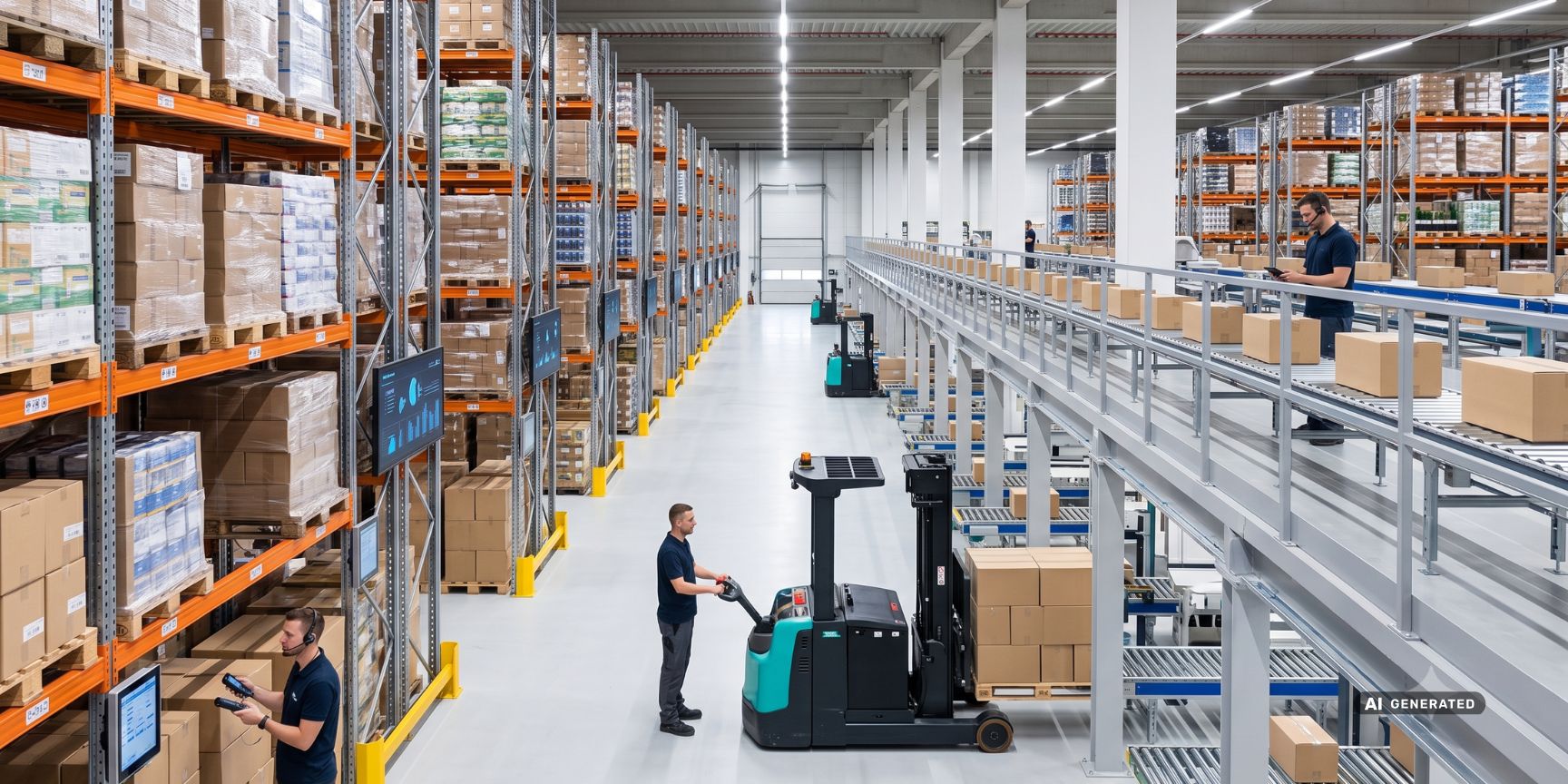
- Personnel costs: wages, shift bonuses and salaries for specialists in the warehouse (forklift drivers, order pickers, shift supervisors). Personnel often account for 50 to 70% of total logistics OPEX in traditional, manual warehouses .
- Industrial trucks & technology: Leasing rates, regular maintenance and energy costs (charging batteries) for forklifts, pallet trucks or automated guided vehicles (AGVs).
- Consumables: Packaging materials, cardboard, stretch film, filling material and labels for Fulfillment and Value Added Services (VAS).
- IT and software: Ongoing license fees (often as Software-as-a-Service, SaaS) for the warehouse management system (WMS), cloud hosting, and IT support.
CAPEX vs. OPEX: The Strategic Shift in the Warehouse
A highly topical trend in warehouse logistics is the shift from CAPEX to OPEX. In order to be able to react more flexibly to market fluctuations (as in e-commerce), companies are reluctant to tie up capital in the long term. Instead of building their own logistics halls (high CAPEX), space is rented (OPEX). Instead of purchasing expensive servers, cloud WMS solutions are subscribed to. "Robotics-as-a-Service" (RaaS) is even establishing itself in intralogistics: Instead of buying picking robots for millions, companies pay a monthly usage and maintenance fee. This protects liquidity, transforms fixed costs into variable costs and makes the supply chain extremely adaptable.
Practical Value: Understanding Total Cost of Occupancy (TCO)
When renting a storage space, never consider the cold rent in isolation! Logistics decision-makers have to calculate the "Total Cost of Occupancy" (TCO) – i.e. the basic rent plus all OPEX. A practical example: A state-of-the-art, DGNB-Gold-certified logistics hall with a basic rent of €7.50/m² and highly optimised OPEX of €1.00/m² (thanks to a heat pump and LED) is ultimately more economical than an uninsulated old building for €5.50/m² cold rent, which incurs €3.50/m² per month in ancillary costs due to massive heating requirements.
Levers to reduce operating costs in logistics
In order to secure the margin in logistics, running costs must be systematically reduced. The most effective levers are:
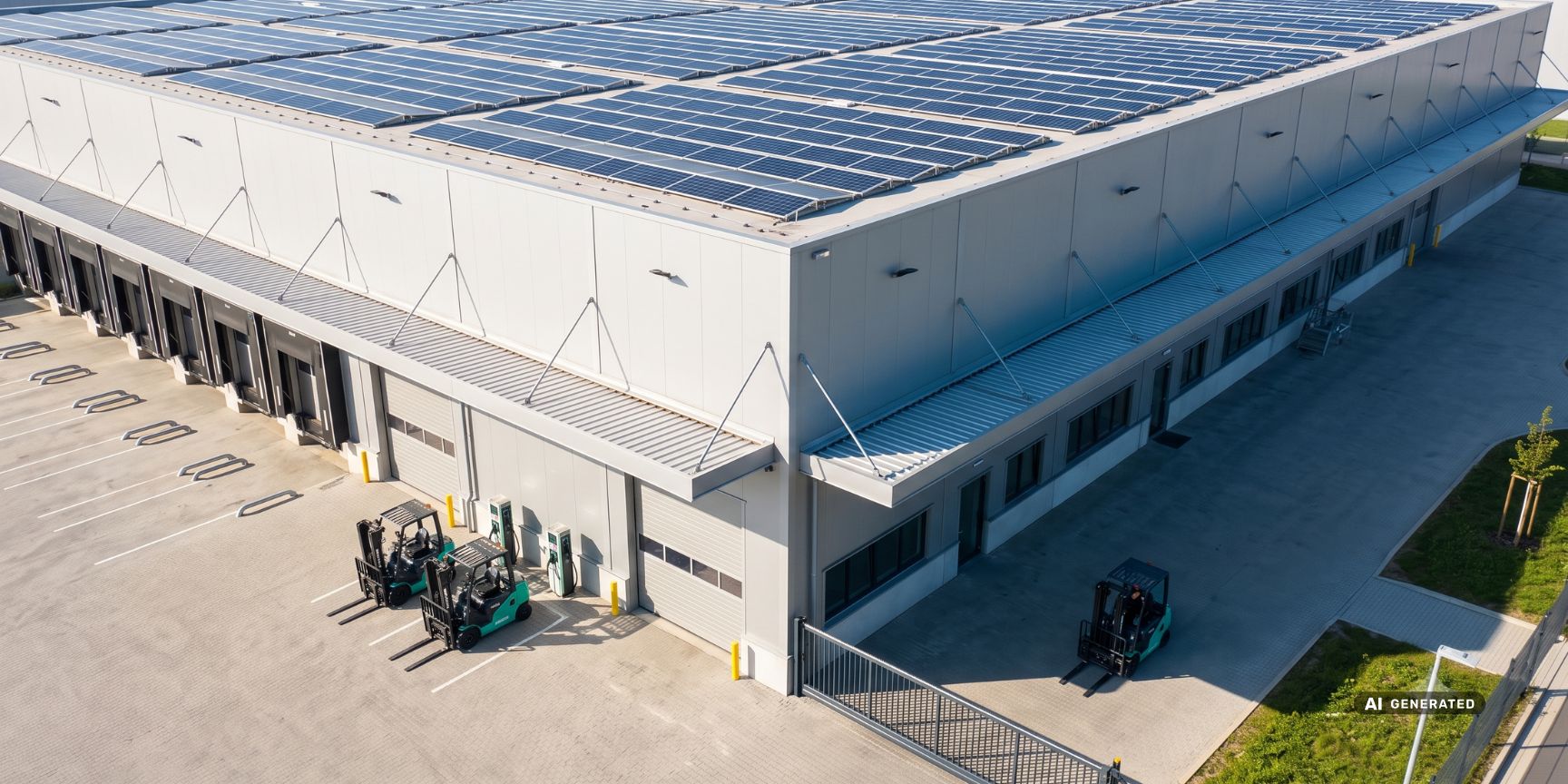
- Energy-efficient renovation & ESG: Switching to LED lighting with intelligent presence detectors can reduce the electricity costs for the light by up to 70%. Photovoltaic systems on the roof of the hall make operators less dependent on volatile electricity prices.
- Process optimization (WMS): Intelligent hall layouts and route optimizations through the warehouse management system drastically reduce the distances of the forklifts. This not only saves working time (personnel costs), but also reduces the wear and tear of the tyres and the energy consumption of the industrial trucks.
- Predictive maintenance: Sensors on hall doors and complex conveyor technology digitally report maintenance requirements to the system before a total failure occurs. This prevents expensive operational downtimes.
FAQ: Frequently asked questions about OPEX costs in the warehouse
What are non-apportionable operating costs in a logistics property? Non-apportionable OPEX are costs that the owner/landlord is not allowed to pass on to the tenant (logistics service provider). These usually include costs for the maintenance of the "roof and compartment" (i.e. the essential building structure), administrative costs of the owner and repair reserves. These must be clearly defined in the rental agreement (usually double-net or triple-net contracts).
How do Value Added Services (VAS) affect OPEX? Value-added services (such as quality controls, assembly or special kitting) initially drive up operational OPEX, as they are extremely personnel and material-intensive. However, they offer contract logistics companies the opportunity to stand out from the pure price war for pallet spaces and to achieve significantly higher margins that more than compensate for the increased OPEX.
Why are OPEX costs in warehouse logistics currently rising so sharply? The main drivers are the acute shortage of skilled workers, which is driving wages and recruiting costs in the industrial sector, as well as the volatile development of energy prices. In addition, legal requirements for ESG reporting (CSRD) and cybersecurity are increasing, resulting in additional software and administrative costs.
Conclusion: OPEX optimization as a competitive advantage
OPEX costs are the financial backbone of any logistics operation. Whether it's facility management of the physical logistics property or the control of highly complex contract logistics processes – absolute data transparency is the first step towards optimization. Anyone who invests in smart building technology, efficient software processes and scalable "as-a-service" models today not only reduces their monthly expenses. It creates a decisive, sustainable competitive advantage for itself in an extremely price-sensitive market.
Your Ideal Logistics Warehouse
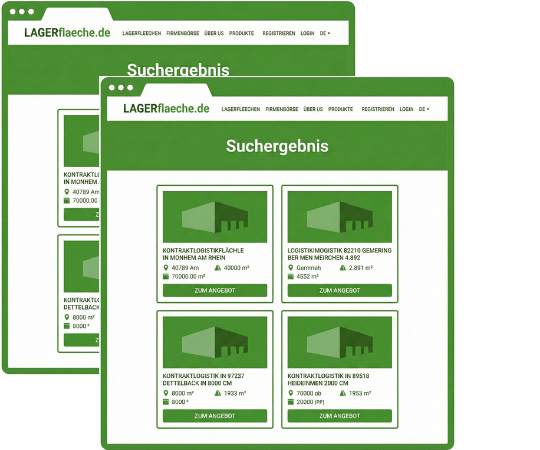
Browse listings for warehouse space, logistics real estate, industrial land, and contract logistics solutions.
Browse Exposés
Maximize Exposure for Your Warehouse Space
Showcase your logistics properties and attract qualified inquiries.
Discover Products