What does chemistry require of a warehouse?
Planning starts with storage class, containment and records. Square metres and the minutes to the motorway come after that.
Joint storage
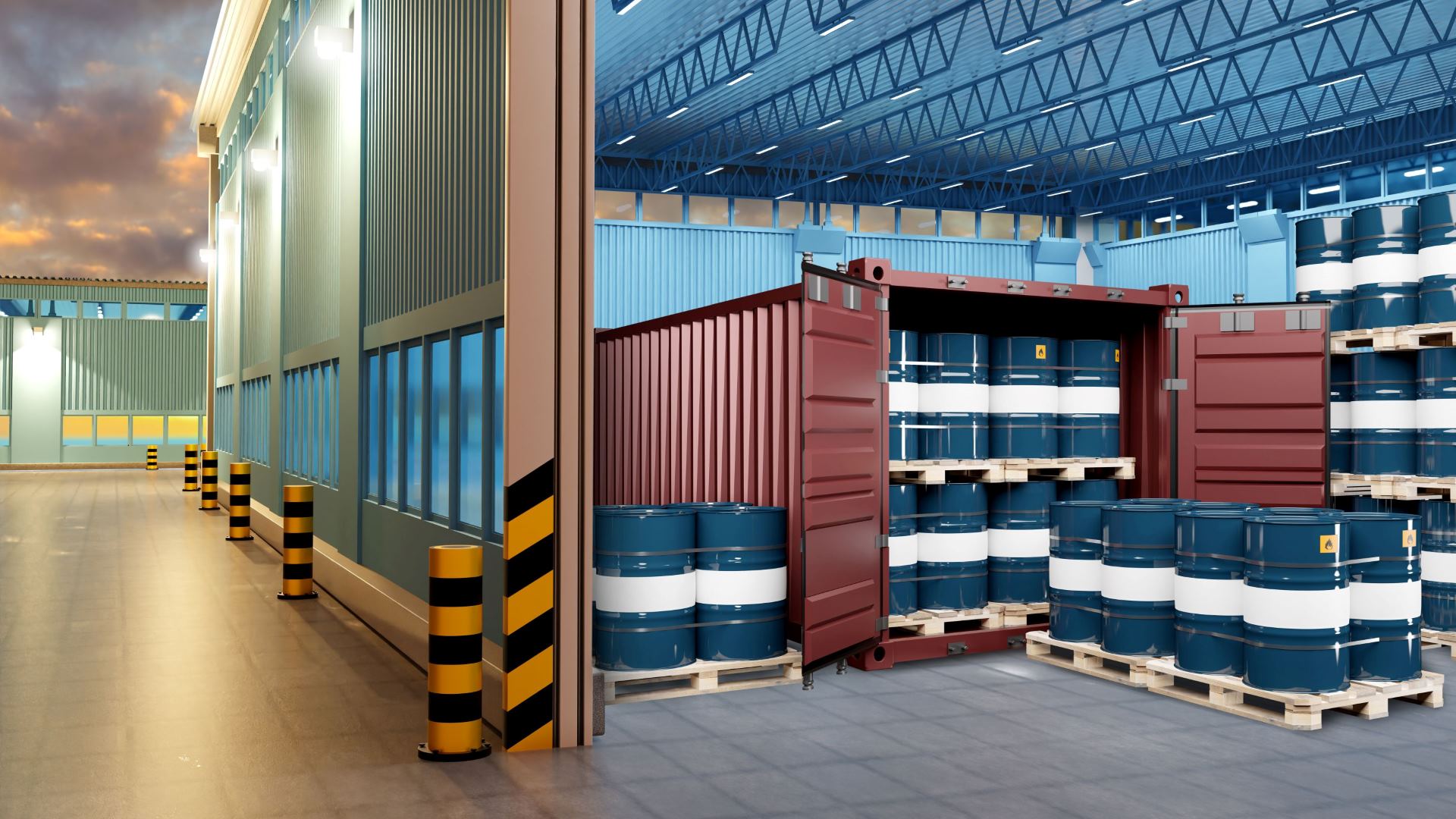
TRGS 510 (December 2020 edition, BAuA) applies to portable containers: drum, IBC, big bag, tank container, gas cylinder. Which classes may stand next to each other is in its joint-storage rules. A multi-substance warehouse is an operation with separated sections.
Containment and temperature
Substances hazardous to water need tight containment that resists the product, under the AwSV. The size depends on the container, the quantity and the site, and it is higher in water-protection areas. The temperature comes from the data sheet: often frost-free or a narrow band, rarely a cold chain. A cold store is right only when the sheet requires cold. Detail on the classes is in the guide WGK in the warehouse.
Papers, dock, people
Without a safety data sheet and a batch, goods can neither be put away nor shipped. CLP marking on the package and ADR marking for transport are two steps. At the dock, containment decides, and earthing for flammable liquids, and staff who have been instructed. Businesses that ship dangerous goods generally need a dangerous-goods safety adviser, unless an exemption applies. The guide ADR shows why the transport data are checked at goods-in.
Which goods are stored?
What is stored is a package with a property, not “chemicals” as a whole. Explosives, radioactive substances and infectious substances are not a standard job.
- Liquids in drums, canisters or IBCs fall under TRGS 510 and need containment. Repacking is its own place, not an aisle. More on this under liquid storage.
- Fixed tanks and filling fall under TRGS 509 (June 2022 edition, corrected 2024, BAuA).
- Solids arrive as sacks, big bags or loose. A silo and bulk goods fit as long as the substance is not hazardous goods.
- Gases stand apart, secured against falling. See storage of gases.
- Many polymers and finished goods are not hazardous goods and can sit in an ordinary hall. Coming from a chemical plant does not by itself make them so.
Warehousing for chemical logistics
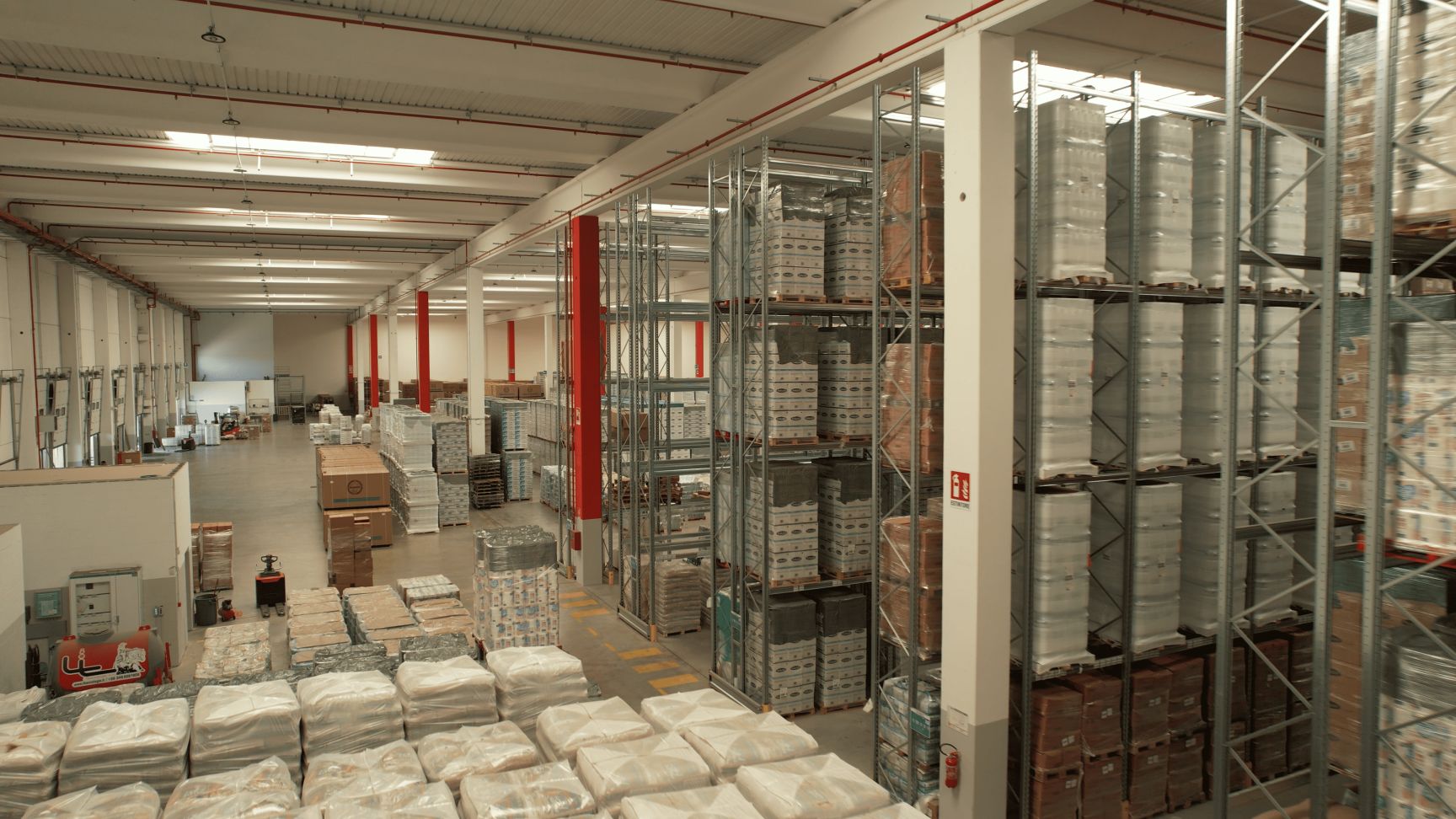
Warehousing means the space is operated, not only let. Goods-in checks the product against the data sheet and the approved storage class. Deviations stay put. The stock carries the batch and, where needed, a test date. Picking does not mix incompatible classes on one floor.
Repacking and labelling happen only in a place built for them. It makes sense when the permit and the staff are already with the operator, or when the volume fluctuates. It is not a shortcut when the substance may not enter the existing multi-substance warehouse.
Contract logistics is a longer-running operation of someone else’s goods with defined services. On LAGERflaeche.de it sits under contract logistics. Filling, labelling or sampling can be added as value added services.
The possible advantage: containment, the fire concept and trained staff do not have to be built again by every customer. The limit is the same hall. In a multi-user warehouse the strictest substance decides the neighbours, and a new formulation can break the joint storage. Outsourcing is therefore an operating decision. Whoever runs the operation themselves looks for a space with the right permit, not a contract.
Cross-docking in chemical logistics
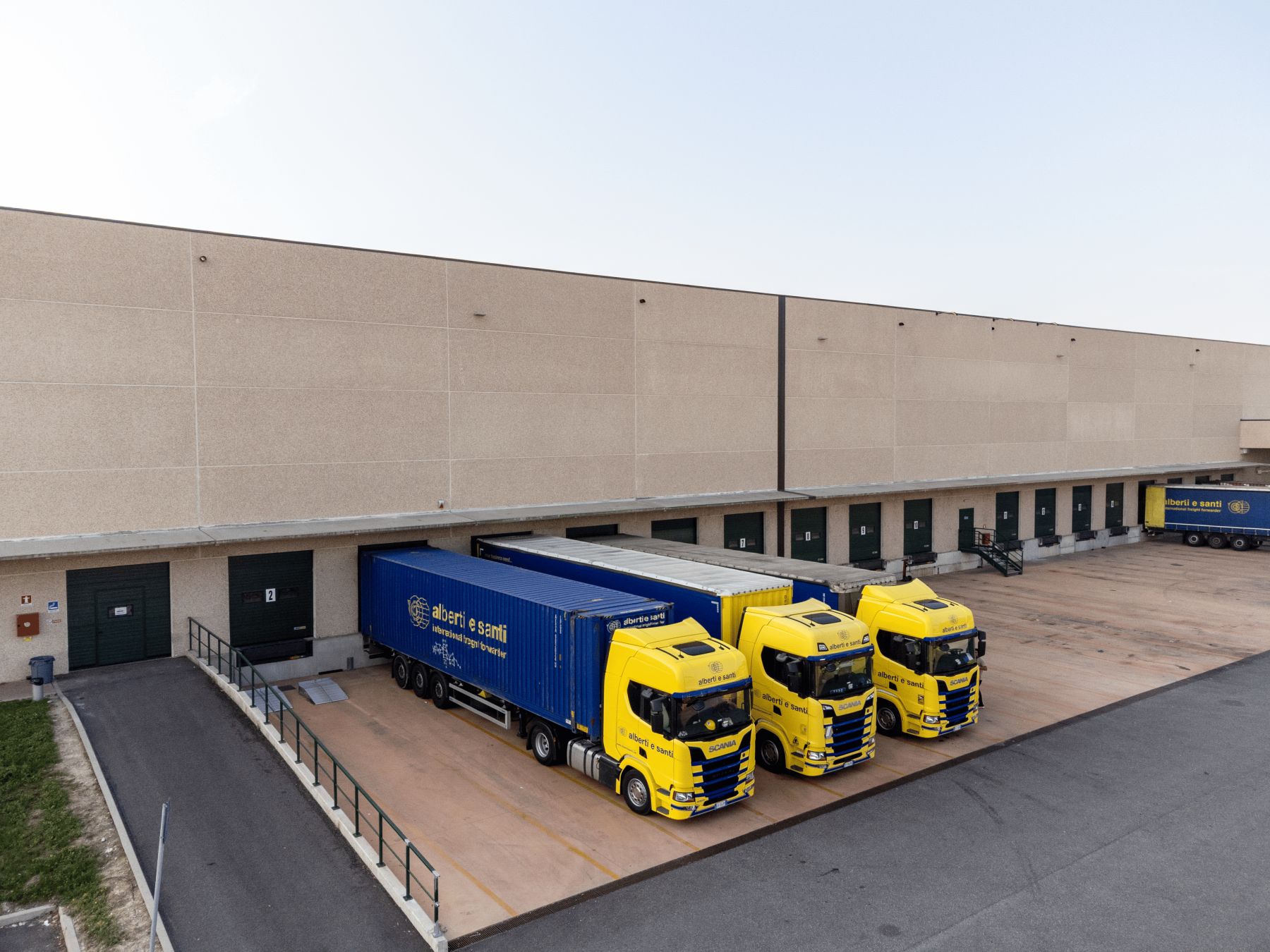
Cross-docking means arrive, assign, move on, without a storage place. It works for ready-to-ship, correctly marked packages with complete papers, for example paints or adhesives on the way into trade. Incompatible classes must not meet on the staging floor either. Repacking and missing UN numbers need an approved place. Bulk and tank movements are not cross-docking. The principle is in the guide cross-docking, and the matching space is the cross-docking warehouse.
Transport in chemical logistics
On the road the current ADR applies, on rail RID, at sea the IMDG Code, in the air ICAO and IATA. Not every substance may go by every mode. A general-cargo truck, a tank vehicle and a gas vehicle are different fleets. Just-in-time does occur, above all for coatings and adhesives in automotive logistics. Imports often run through a port and a bonded warehouse that can actually take the class.
Who is this for?
- Manufacturers look for a permitted space near the plant, or a distribution warehouse in a region without their own production. Pharma under GMP is a different case and sits with pharmaceutical logistics.
- Formulators of paints, adhesives and cleaners need the filling place and the separation of raw material and finished goods, not just floor space.
- Chemical trade needs a multi-substance warehouse and a dispatch that produces the papers with the picking. Cross-docking only relieves the fast movers.
- Buyers in automotive and construction often keep process chemicals in a temporary store at the plant, because the quantity or the class no longer fits inside the works.
What matters in the location
Three kinds of location are not interchangeable. Close to the plant, at the chemical parks, pipe racks and shared infrastructure count, in the Rhineland for example via North Rhine-Westphalia, Leverkusen, Duisburg and Cologne. Close to a port counts for tank containers, on the platform for example Hamburg. Close to the customer, for packed goods, the motorway counts, for example in Bavaria and Baden-Württemberg. The locations in Germany gather the regional search.
Expansion often fails on the permit, not on the plot. The 12th BImSchV applies only above the quantity thresholds. Below them, the Hazardous Substances Ordinance, the TRGS, the AwSV and building law remain.
Finding a suitable space or a provider
LAGERflaeche.de does not operate the warehouses. The platform lists spaces and warehousing. For chemicals, the storage class in the listing says more than a rent that most offers state only on request.
What the listing should state
- Approved storage classes, not only the word hazardous goods.
- Containment, temperature and the containers the operator names.
- Whether filling takes place and whether a filling point exists for it.
- Docks and earthing, and whether a major-accident permit exists.
- Stock with a batch. If the class is missing, the listing is not yet a decision.
If the space should come with staff and dispatch, read the named services against your classes. A search request is the route when none of the 28 spaces fits. Name the substance group, the container, the class, the quantity and the region.
Find chemical-logistics warehousesRequest a logistics solution
An orientation from warehouse prices in Germany 2025, not the price list of these chemical spaces. The ranges apply to an ordinary hall and an operated standard warehouse. Hazardous goods, cooling, tanks and silos stay on request. Only the same class, the same container and the same service can be compared.
| Warehouse type | Orientation | How it is charged |
|---|
| Storage hall, top regions such as Rhine-Ruhr, Frankfurt, Munich, Hamburg, Berlin | €5.50–€7.50 per m² per month | Hall rent. Prime locations can be higher. |
| Storage hall, secondary locations | €4.00–€5.50 per m² per month | Hall rent for a dry space. |
| Pallet warehouse with operations | €15–€30 per pallet space per month | Warehousing, plus handling. |
| Hazardous-goods warehouse | on request | Pallet place plus the rules, not the hall range. |
| Temperature-controlled hall or cold store | on request | Space plus energy. |
| Tank farm | on request | Tank and filling point, not per m². |
| Silo warehouse or Bulk warehouse | on request | Cell, tonne or space. |
| Outdoor storage | on request, usually below hall rent | Weatherproof goods only, not packages under TRGS 510. |
Sources
Rules that change over time are named with edition and source. Open the linked version again before publication.
- TRGS 510, December 2020 edition. Portable containers. BAuA.
- TRGS 509, June 2022 edition, correction 2024. Fixed tanks and filling points. BAuA.
- AwSV. Substances hazardous to water.
- 12th BImSchV. Major Accidents Ordinance, only above the quantity thresholds.
- Warehouse prices in Germany 2025. Orientation for hall rent and operated pallet spaces. Not a tariff for hazardous goods, tanks or silos.