Warehouse Types

Rent Pallet warehouses: The basis for efficient B2B supply chains

From the classic block warehouse to the fully automated racking system – the pallet warehouse is the undisputed backbone of modern goods flows. As a standardized load carrier, the pallet enables highly efficient handling throughout intralogistics. Discover flexible storage solutions, scalable storage spaces and professional management models that bring your goods to their destination safely, economically and future-proof.

Find Pallet warehouses

Pallet warehouse, Pallet storage
Offers on LAGERflaeche.de

Discover Free Pallet Spaces & Warehouse Locations

Fluctuating order books, seasonal peaks and dynamic e-commerce markets require flexible capacities. On LAGERflaeche.de, we connect you directly with suitable providers and B2B decision-makers in your target region. Check current vacancies, compare technical features and secure exactly the commercial property that perfectly suits your growth – whether as a pure rental space or as a holistic fulfillment solution.

Discover Pallet warehouses

11 Warehouses

What Distinguishes a Professional Pallet Warehouse?

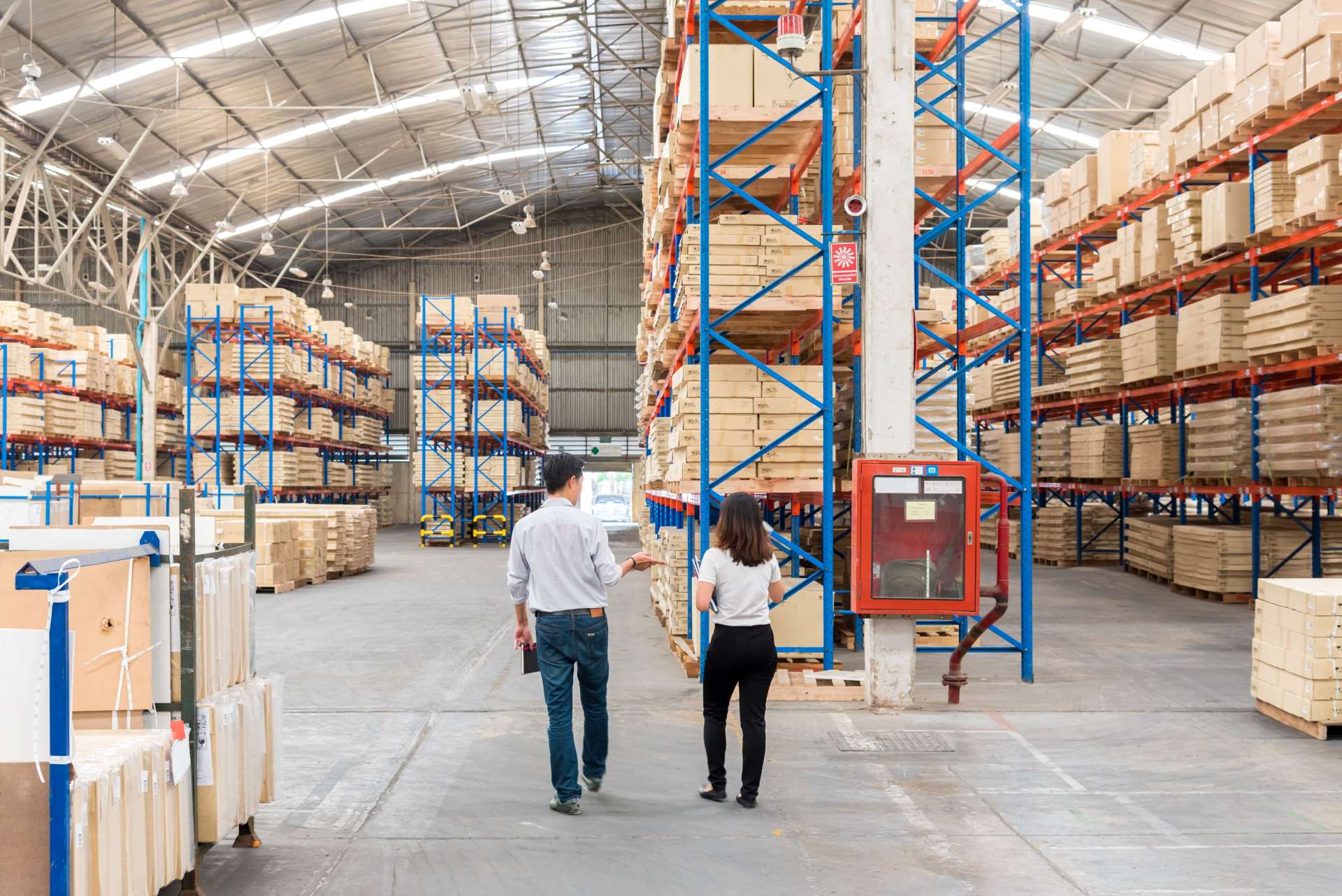
A pallet warehouse is a specially designed storage area that is designed for the storage and handling of standardized load units (such as the Euro pallet according to DIN EN 13698-1 or the industrial pallet). The standardization of load carriers allows industrial trucks (such as forklifts or pallet trucks), racking systems and truck loading areas to be used as efficiently as possible.

However, depending on the industry, the throughput rate and the type of goods, the structural and conceptual requirements for the warehouse location differ massively.

Rack Storage vs. Block Storage: Which System Suits Your Supply Chain?

The choice of the right storage system determines the use of space and the access speed. Basically, a distinction is made between two primary types of storage:

Block storage (Floor storage)

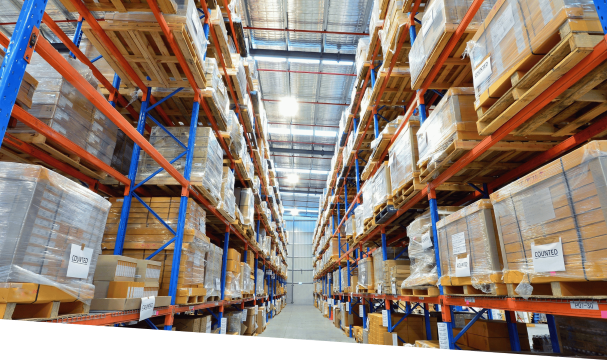
In block storage, the pallets are placed directly on the floor and – if the goods and cardboard boxes allow it – stacked on top of each other without shelves.

  • Advantages: No investment costs (CAPEX) for racking systems, maximum utilization of floor space.
  • Areas of application: Beverage industry, building materials, insensitive bulk goods with a small variety of articles.
  • Process principle: Usually LiFo (last-in-first-out), as the pallets that are stored first are blocked by rows in front of them.

The rack warehouse

Here, the pallets rest in static or dynamic steel constructions. Common variants are the wide-aisle warehouse, the space-saving narrow-aisle warehouse or high-density drive-in racks.

  • Advantages: Direct access to each individual pallet at all times, protection against pressure damage to the goods, excellent clarity.
  • Areas of application: e-commerce, food, pharmaceuticals, automotive and wherever there is a high variety of articles (SKUs).
  • Process principle: Supports FiFo (first-in-first-out) and guarantees batch tracking as well as best-before date controls.

Technical and Structural Requirements for the Warehouse Object

If you want to store and handle pallets safely, you have to apply strict technical criteria when selecting a location. The architecture of the commercial property has a significant influence on operating costs (OPEX):

  • Floor load capacity: A pallet rack exerts enormous point loads on the industrial floor. A load capacity of 50 kN/m² (5 tons per square meter) is now the industry standard for safely storing even heavy industrial goods.
  • Fire protection & safety: Wooden pallets and cardboard boxes carry a high fire load. Comprehensive ESFR sprinkler systems (Early Suppression Fast Response), fire alarm systems (BMA) and structural fire compartments are mandatory requirements.
  • Special requirements: Temperature-controlled zones (refrigerated/deep-freeze warehouses) are required for food logistics. The storage of hazardous substances, in turn, requires special WGK approvals (water hazard classes), retention basins and explosion-proof zones (ATEX).

Ready to scale your storage capacity?

Whether you need temporary capacities for seasonal business, want to set up strategic buffer warehouses or are planning the complete outsourcing of your supply chain to a fulfillment partner – LAGERflaeche.de brings you directly together with the relevant B2B providers. Compare tested location solutions, analyze technical specifications and optimize your logistics structures sustainably and cost-efficiently.

Search Pallet warehouses

Digitization and Warehouse Processes (WMS)

Modern warehouse operations can no longer do without IT support. A high-performance warehouse management system (WMS) controls the entire material flow. Using barcode scanners or RFID technology, each pallet is recorded when goods are received, assigned to a route-optimized storage location and seamlessly documented when goods are issued.

This digital footprint is not only essential for internal process optimization, but also absolutely necessary to comply with legal retention periods, batch traceability and the strict guidelines of the GDPR when processing customer data.

Rental Models: Pay-per-pallet or Fixed Rent?

The contract models for warehouse locations are changing. In addition to the classic fixed rent (rent of an entire building section at a fixed price per square meter), the pay-per-pallet model is becoming increasingly established.

With this variable approach, which is often used in multi-user centers (shared warehouses), companies only pay for the pallet spaces that are actually occupied per month. In addition, there are transaction fees (handling costs / pick rate) for incoming and outgoing goods. This converts fixed costs into variable costs and offers maximum scalability for growing companies.

Outsourcing: Contract Logistics and Fulfillment

Many companies today no longer rent just storage space, but outsource their intralogistics completely to a third-party logistics provider (3PL). Experienced logistics service providers offer valuable value-added services (VAS) directly in the warehouse center:

Frequently Asked Questions about the Pallet Warehouse

Prices vary greatly depending on region, equipment and rental model. In a simple block warehouse, the costs can be around 3 to 6 euros per pallet/month. In state-of-the-art, temperature-controlled rack warehouses or for the storage of hazardous materials, prices are significantly higher due to the technical complexity. In addition, handling costs for storage and retrieval must be taken into account.

The floor area of a Euro pallet (1,200 x 800 mm) is 0.96 m². In a block warehouse, several pallets can theoretically be stacked on top of each other per square meter of floor space. When planning a rack warehouse, however, the space required for routes, aisles, supports and fire protection distances must be generously taken into account. As a rule of thumb, classic racking systems often require approx. 2 to 2.5 square meters of hall space per pallet space.

The block storage system is ideal for robust, pressure-resistant and stackable goods. Typical examples are beverage crates, building materials, drums or palletized raw materials where a large quantity of the same article is stored with low access frequency.

In addition to the Workplace Ordinance and the accident prevention regulations (DGUV Rule 108-007 for storage facilities), fire protection requirements and the Technical Rules for Hazardous Substances (TRGS 510) play a central role. Strict HACCP and IFS standards also apply to food storage.

These might also interest you

Block storage, Dangerous goods warehouse, Warehouse space, High-bay warehouse
Logistics Sectors, Food Logistics, Retail Logistics, eCommerce Logistics, Chemical Logistics
Storage locations, logistics centre, warehouse locations, storage