Warehouse Types
Rent Floor Warehouse: Flexible Storage Space for your B2B logistics
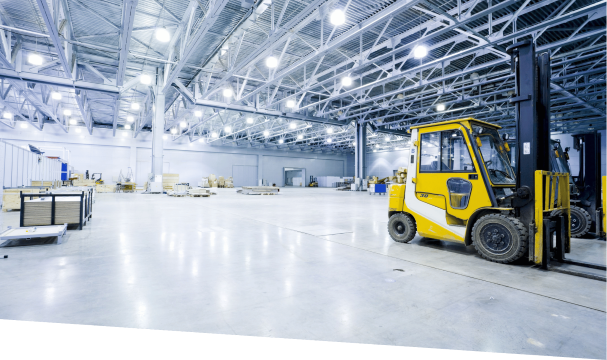
Floor-level storage offers companies maximum flexibility in the use of space and at the same time minimizes the investment costs for expensive shelving systems. As a dynamic storage solution, the floor warehouse is ideal for heavy loads, bulky goods and for fast handling processes in the context of fulfillment and contract logistics.
Offers on LAGERflaeche.de
Compare available floor storage and logistics objects directly
Are you looking for a bespoke industrial property or a flexible storage area to rent or buy? On our marketplace, we efficiently connect providers and searchers with each other. Use our platform to identify the right location solution for your logistics needs.
» What is a Floor Warehouse? Definition and Logistical Basics
» Technical Requirements and Infrastructure of a Modern Warehouse
» Process Optimization and Operational Procedures in the Rackless Warehouse
» Economic Consideration: Prices, Cost Factors and Rental Models
» Rental Models at a Glance
» Strategic Advantages and Challenges of Soil
» Industry Solutions: For which Goods is the Floor Storage Ideal?
» FAQ regarding Floor Warehouses
What is a Floor Warehouse? Definition and Logistical Basics
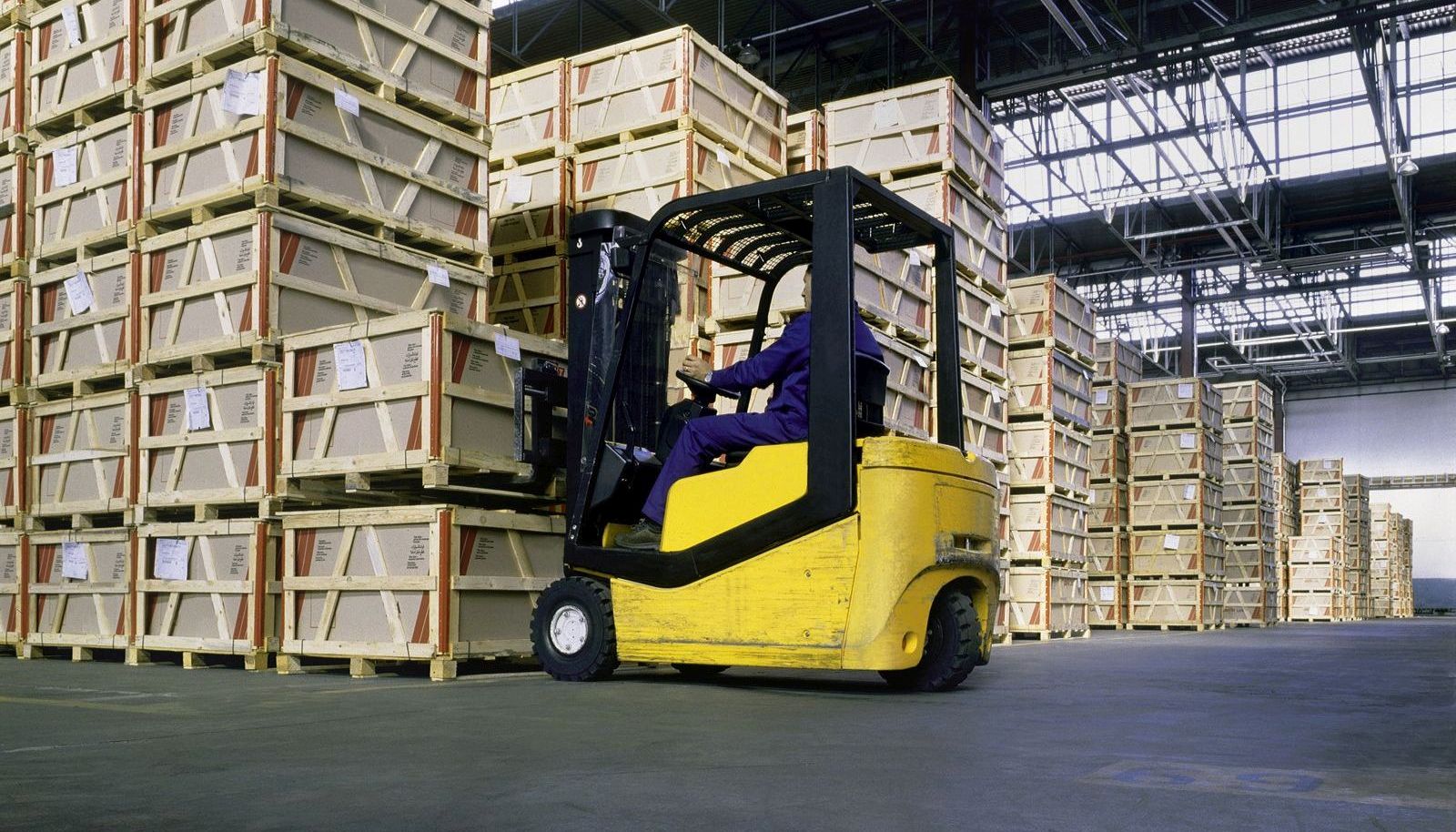
A floor storage system (often referred to as a shelfless warehouse) is a type of storage in which the load units – such as Euro pallets, lattice boxes or large containers – are placed directly on the hall floor. In contrast to capital-intensive high-bay warehouses, fixed racking systems are completely dispensed with.
In the practice of warehouse management and transport logistics, a structural distinction is made between two main forms:
- Block storage: Here, the goods are stacked in several rows both next to each other and directly on top of each other without gaps. This ensures excellent use of space.
- Row storage: The load units are placed in long rows behind each other. Fixed aisle widths remain between each row to ensure direct access to each individual unit.
This storage solution is particularly common in transport and industrial companies that need to handle large quantities of homogeneous items with a high turnover rate or store extremely heavy goods that would exceed the shelf loads of traditional racking.

Technical Requirements and Infrastructure of a Modern Warehouse
The efficiency and safety in a floor storage facility depend largely on the structural and technical parameters of the commercial property. Since there are no rack constructions to absorb the loads, all weight forces act directly on the structure.
Soil load capacity and condition
The load-bearing capacity of the soil (expressed in kilo- or meganewtons per square meter, e.g. 50 kN/m²) is the most critical factor. For the use of heavy industrial trucks and the stacking of heavy industrial goods, dust-free, flatness-optimized industrial floors (often designed as liquid-tight concrete floors in accordance with the WHG) are absolutely necessary.
Ceiling height and lighting
Although no high rack is installed, the usable clear height of the industrial property determines how many load units can be safely stacked on top of each other. Modern, glare-free LED hall lighting also ensures occupational safety and error-free scanning processes during order picking.
Air conditioning and safety requirements
Depending on the product group, storage areas must be kept frost-free, temperature-controlled or dry. In addition, strict legal requirements apply with regard to fire protection (sprinkler systems, smoke and heat exhaust ventilation systems) and theft protection (video surveillance, access control systems).
Secure the optimal location solution for your company now
Whether it's a short-term shortage of space or a long-term distribution center – on LAGERflaeche.de you can find the right industrial property quickly and easily. Compare current offers now or request a detailed exposé for your dream property directly.
Process Optimization and Operational Procedures in the Rackless Warehouse
A smooth material flow in the non-rack warehouse is based on digitized warehouse processes. Since there are no fixed storage coordinates like in a shelving rack, the software control system plays a key role.
- Incoming goods & identification: Incoming goods are recorded by barcode or RFID. The higher-level Warehouse Management System (WMS) assigns the pallet a zone in the floor area.
- Storage: Industrial trucks (such as forklifts or reach trucks) transport the goods to their destination. In block storage, the LIFO principle (Last-In – First-Out) usually applies, as the goods stored first are delivered by the front row of blocks.
- Warehouse management & tracking: Through chaotic warehouse management or dedicated zone management, the system optimizes the travel times of the forklifts. Permanent digital inventory management prevents search times.
- Retrieval & picking: The system controls the retrieval orders in a route-optimized manner. For goods with a best-before date or batch obligation, row storage is preferable in order to guarantee the FIFO principle (First-In – First-Out) without gaps.
Economic Consideration: Prices, Cost Factors and Rental Models
The leasing or outsourcing of logistics capacities to an external warehouse center requires a precise calculation of the space required. The cost structures for a floor storage facility are made up of various components:
| Cost factor | Description | Influence on the budget |
| Basic rent per m² | Base price for the pure hall space, strongly dependent on the regional location factor. | Fixed cost basis |
| Operating and ancillary costs | Expenses for heating, lighting, property taxes and insurance. | Variable according to consumption |
| Logistical services | Handling flat rates (storage/retrieval), picking as part of contract logistics. | Transaction-based |
Rental Models at a Glance
Companies can choose between long-term leases for fixed hall complexes or highly scalable fulfillment solutions. With the latter, billing is often handled flexibly per occupied parking space or per square meter per month, which guarantees maximum financial agility in the event of seasonal fluctuations in sales.
Strategic Advantages and Challenges of Soil Storage
Before deciding on a particular warehouse location, B2B decision-makers should carefully weigh up the specific advantages and disadvantages of this warehouse organization.
The advantages:
- Minimal investment costs (CapEx): Since no expensive shelving systems have to be purchased, installed and inspected annually in accordance with DIN EN 15635, commissioning is extremely cost-effective.
- Maximum flexibility: The open space can be adapted to changing load dimensions, changing types of packaging or new logistical processes at any time without structural changes.
- Easy access and handling: There is no need for complex entry and exit steps at great heights. Industrial trucks can pass through barriers freely, which drastically reduces throughput times in goods handling.
The challenges:
- Limited use of height: Without shelves, the stackability of the goods itself limits the use of the room volume. Lightweight or non-stackable goods waste valuable space upwards.
- Higher risk of damage: Because the goods units are placed directly on top of each other or close to each other, the risk of transport damage increases when maneuvering with forklifts.
- Difficult inventory transparency: Without complete digital recording by modern warehouse management software, block warehouses tend to become confusing. Direct access to units below is impossible.
Industry Solutions: For which Goods is the Floor Storage Ideal?
The floor warehouse is not an all-rounder, but a highly specialized solution for clearly defined industry segments:
- Building materials industry & heavy duty: Tile pallets, cement bags, steel coils or cable drums are extremely heavy and insensitive to pressure. They make optimum use of the high floor load capacity.
- Beverage logistics & food: Homogeneous pallet goods (e.g. mineral water or beer crates) are handled in huge quantities. Block storage offers maximum compaction here.
- Automotive & Suppliers: Large lattice boxes with standardized components can be stacked excellently in blocks and ensure the synchronized supply of the production lines.
- Paper and packaging industry: Huge paper rolls or palletized cardboard boxes often have a geometry that is difficult to integrate into classic shelf compartments.
FAQ
A floor storage facility is always the more economical choice if you need to store large quantities of homogeneous, stackable goods with a high turnover frequency or if the cargo is extremely heavy and bulky. If, on the other hand, many different items (high variety of variants) with direct access protection are required, the high-bay warehouse is the best option.
As soon as personal data (e.g. customer names on shipping labels in fulfillment) can be found on the stored goods, accompanying documents or transport documents, the provisions of the GDPR must be complied with. This requires, among other things, the conclusion of an order processing agreement (DPA) with the logistics service provider as well as strict physical access controls to the warehouse object.
The calculation is not only based on the dimensions of the load units. In addition to the pure net storage area, the required traffic and maneuvering areas for the industrial trucks (aisle widths), areas for incoming and outgoing goods, picking zones and legally prescribed escape and rescue routes (DGUV industry guidelines) must be added.
As part of proper accounting and logistics processes, bills of lading, delivery notes, storage fee books and goods receipt protocols in Germany are subject to the statutory retention periods in accordance with § 257 HGB and § 147 AO. As a rule, these tax-relevant documents must be archived in an audit-proof manner over a period of 6 to 10 years.
These might also interest you