


Commission-free offer
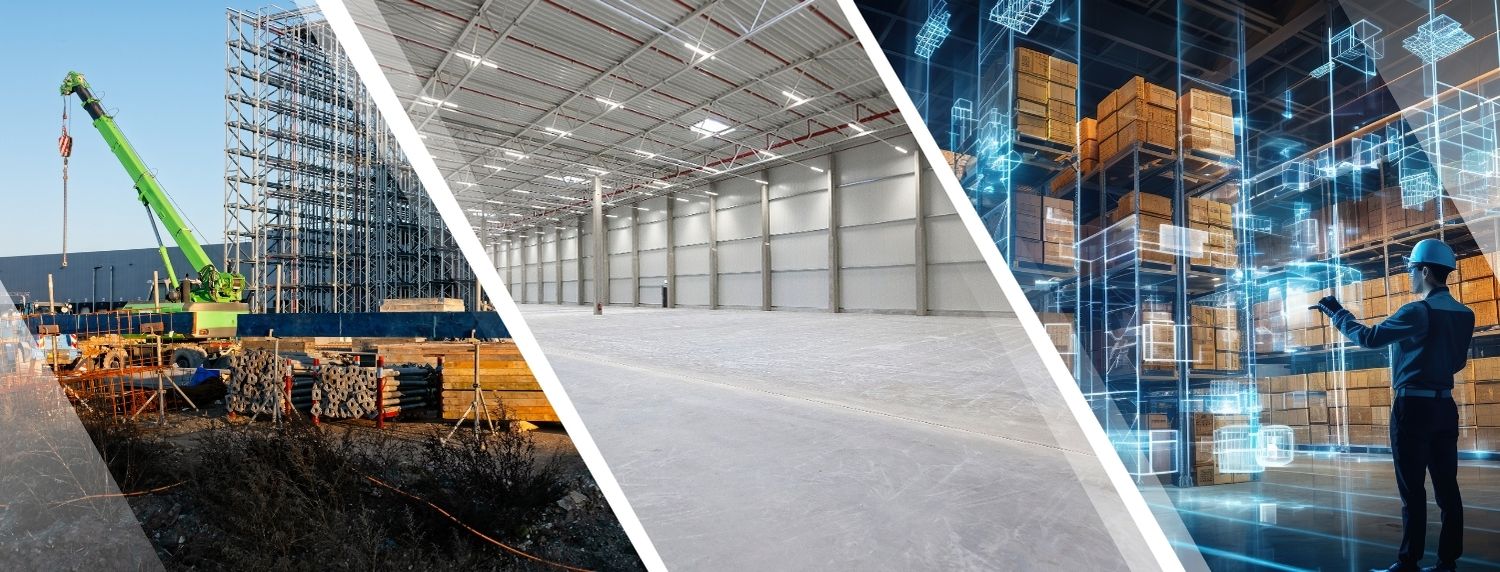
Gewerbehalle in attraktiver Lage
Object no.: 10182
Logistics real estate
Rental
Germany
34399 Oedelsheim
16.000 m²
Price on request

The Gateway to the Baltic Sea Region
» The Logistics Hub and Freight Village (GVZ) Kiel – The Gateway to the Baltic Sea Region
» General Description and Location: More than just a Port
» Key Facts: The GVZ Kiel at a Glance
» Infrastructure and Modality: Trimodality put to the Test
» The "Top Logistics Region" Kiel: Classification and Potential» Economic Development and Settlement Structure
» Cost Structure: Rents, Prices and Taxes
» Workforce and Skilled Worker Situation
» Special Features of the GVZ Kiel: Innovation and Digitization
» Conclusion and Outlook
The logistics map of Germany is characterized by central hubs, but hardly any other location occupies such a clear and strategically indispensable niche as Kiel. While locations such as the Ruhr area or Halle/Leipzig see themselves as central distributors, Kiel acts as the specialised bridgehead to Scandinavia and the Baltic States.
But what makes this location economically viable away from pure geography? What is the actual trimodal performance and what costs will companies willing to settle incur? This non-fiction text analyses the "GVZ Kiel" – which is de facto represented by the Ostuferhafen and the adjacent industrial areas such as Wellsee and Friedrichsort – in detail.
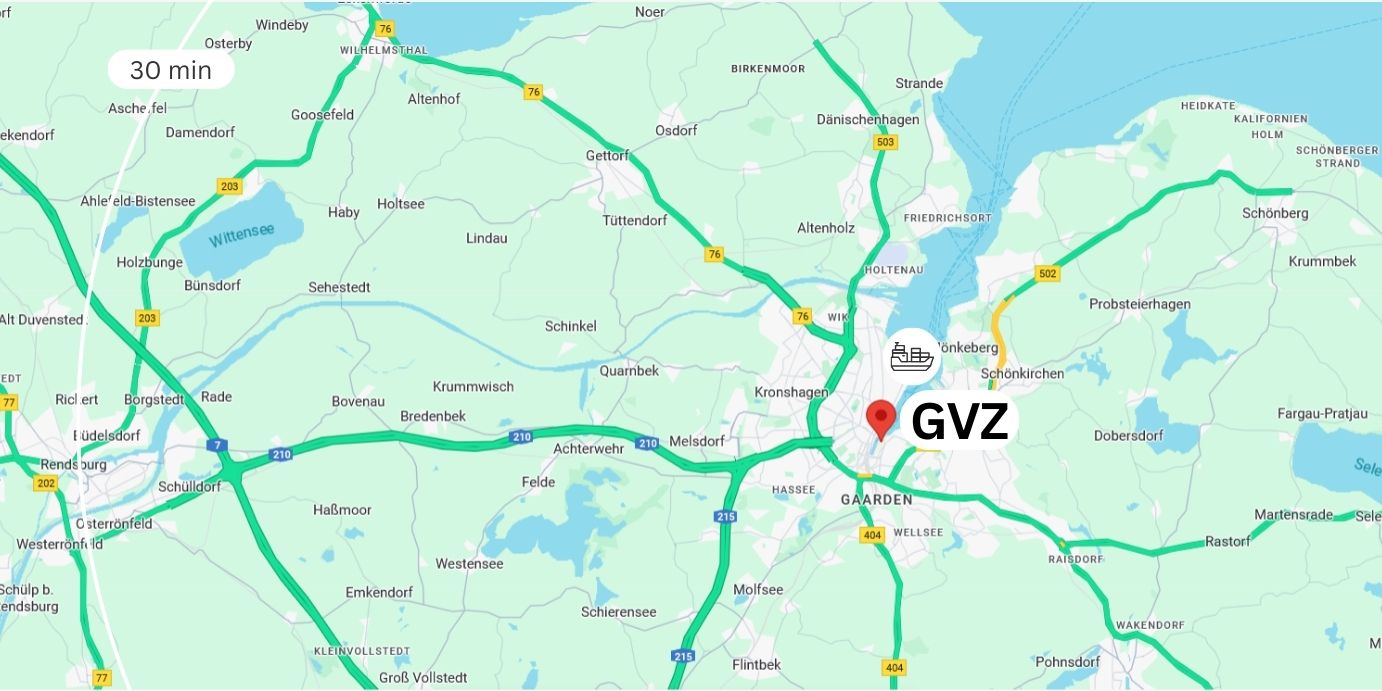
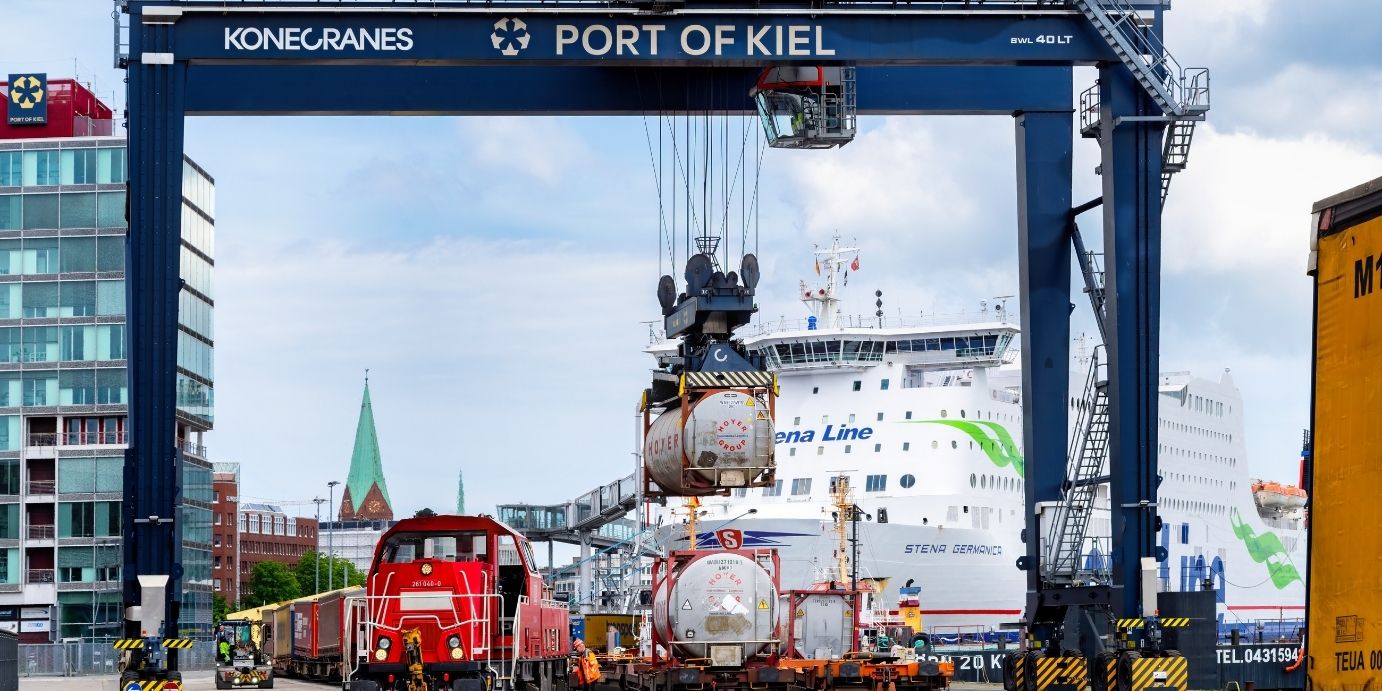
Kiel is the state capital of Schleswig-Holstein and forms the southern terminus of the world's busiest artificial waterway, the Kiel Canal (NOK). However, the logistical heart of the city beats not only on the canal, but above all in the Ostuferhafen, which functions as a de facto freight transport centre (GVZ).
The Kiel freight village is not a classic "dry freight village" on a greenfield site, but a maritime logistics centre. It is located directly on the Kiel Fjord and seamlessly integrates port logistics with hinterland traffic. This hybrid structure is the unique selling point.
Why is the location so strategically relevant? The location is defined by the "Jutland Route" and the direct ferry connection to Oslo (Norway), Gothenburg (Sweden) and Klaipeda (Lithuania). For logistics companies, this means that Kiel is the starting point of the "blue motorway". If you have to reach markets in Scandinavia quickly and with high tonnages, you can hardly avoid Kiel.
To give the reader a quick overview, here are the consolidated data:
Ratio | Value / Description |
Total Port Throughput (2023) | approx. 7.9 million tons (Source: Port of Kiel Annual Report) |
Intermodal share | Increasing, target > 25% rail share |
Main traffic relations | Sweden (Gothenburg), Norway (Oslo), Baltic States (Klaipeda) |
Motorway connection | A215, A21, A7 (indirect) |
Business tax | 450 % |
Top rent logistics | approx. 7,50 €/m² |
Focus Industry | Paper/forestry, automotive, RoRo, passenger transport |
Airport | Hamburg (HAM) - 90 km |
→ Warehouse Itzehoe
→ Warehouse Flensburg
→ Warehouse Cuxhaven
A modern freight village must guarantee the seamless chain between the modes of transport. Is Kiel really trimodal? The answer is yes, with a strong focus on RoRo (roll-on/roll-off).
The Port of Kiel is the third largest German Baltic Sea port. The water connection is excellent, as the port has deep fairways that can also accommodate large cruise and cargo ships.
Kiel has invested massively in this area in recent years. The question "Will the goods get from the rail to the ship quickly enough?" will be answered by the expansion of the terminal at Schwedenkai and Ostuferhafen.
The connection to the highway network is good, albeit fraught with bottlenecks.
Kiel-Holtenau Airport (KEL) is primarily used for general aviation and charter traffic, but does not play a relevant role for air freight.
In the rankings of the top logistics regions (as defined by Fraunhofer SCS or Bulwiengesa ), Kiel often appears as part of the "Hamburg/Northern Germany" region or as an independent special location.
Expert note: Kiel is not a classic "big box" logistics region for e-commerce fulfillment (such as Bad Hersfeld). Its strength lies in handling and value-adding services around the port (port-centric logistics).
The economic development in the GVZ sector is stable and positive, driven by rising throughput figures in the port.
The mix of industries is strongly maritime and industrial:
It can be observed that pure warehousing is increasingly being supplemented by "value-added services". Companies use the port interface not only to handle goods, but also to pick or finish them (postponement).
→ Bremen Freight Center
→ Emsland Freight Center
→ Hannover-Lehrte Freight Center
For investors and tenants, the "hard facts" are decisive. How expensive is Kiel in comparison?
(Note: The following values are indications, as of 2023/2024, and may fluctuate depending on the market)
Kiel is in the upper midfield of major German cities.
The answer depends on the business model. Those who are dependent on imports from Scandinavia save massive "last mile" costs (drayage) due to the direct proximity to the port. For purely national distribution traffic, a location further south (Neumünster/Hamburg) often makes more sense.
As a university city (Christian-Albrechts-University, Kiel University of Applied Sciences), Kiel benefits from a high level of education.
Kiel differentiates itself through technological innovations:
The Kiel Freight Transport Centre and Kiel as a logistics location is much more than a local distribution point. It is a systemically important interface in European north-south traffic.
For companies, the location offers a unique combination of direct lake connections and a solid hinterland infrastructure. The challenges – as almost everywhere in Germany – lie in the availability of industrial specialists and the flow of traffic on the feeder roads at peak times.
Is it worth settling here? For companies with a focus on Scandinavia: Absolutely. The short distances between the ship and the warehouse as well as the sustainable orientation ("Blue Port") are weighty arguments. There are cheaper alternatives for purely domestic distribution, but as a maritime gateway, Kiel is the undisputed number one for Western Scandinavia in the German Baltic Sea region alongside Lübeck.
The location will become even more attractive in the coming years due to the further expansion of the rail infrastructure and the completion of the A21.
Source note: The data used is based on market reports of the Kiel Economic Development Agency, annual reports of the PORT OF KIEL and common real estate market reports (e.g. BNP Paribas Real Estate, JLL) as of 2023/2024.
Commercial property, logistics property and contract logistics in Hesse at a glance - LAGERflaeche.de!
Object no.: 10182
Rental
Germany
34399 Oedelsheim
Price on request
Object no.: 10181
Rental
Germany
34385 Bad Karlshafen-Helmarshausen
Price on request
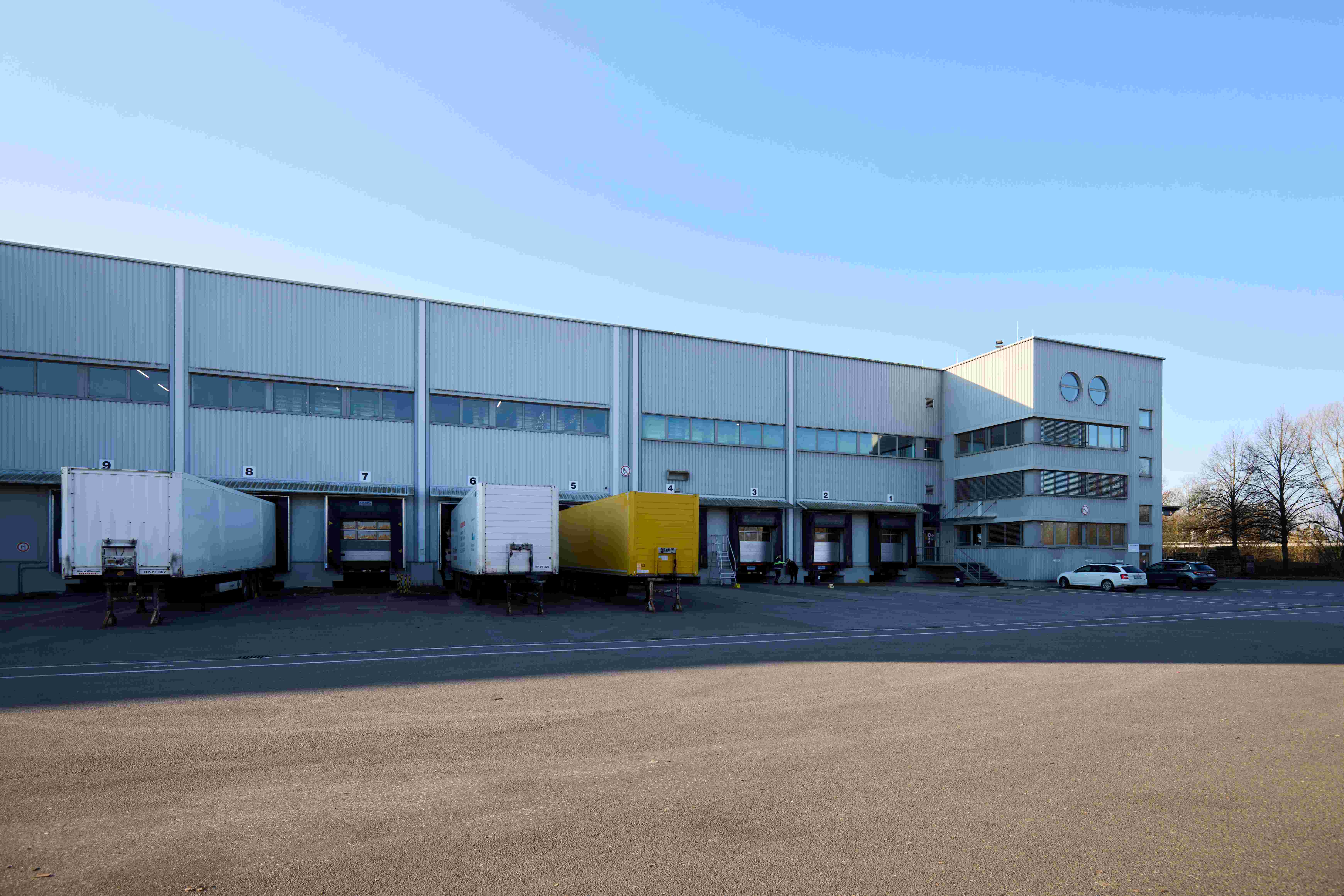
Object no.: 10104
Warehousing (warehouse with management)
Germany
64646 Heppenheim
Price on request
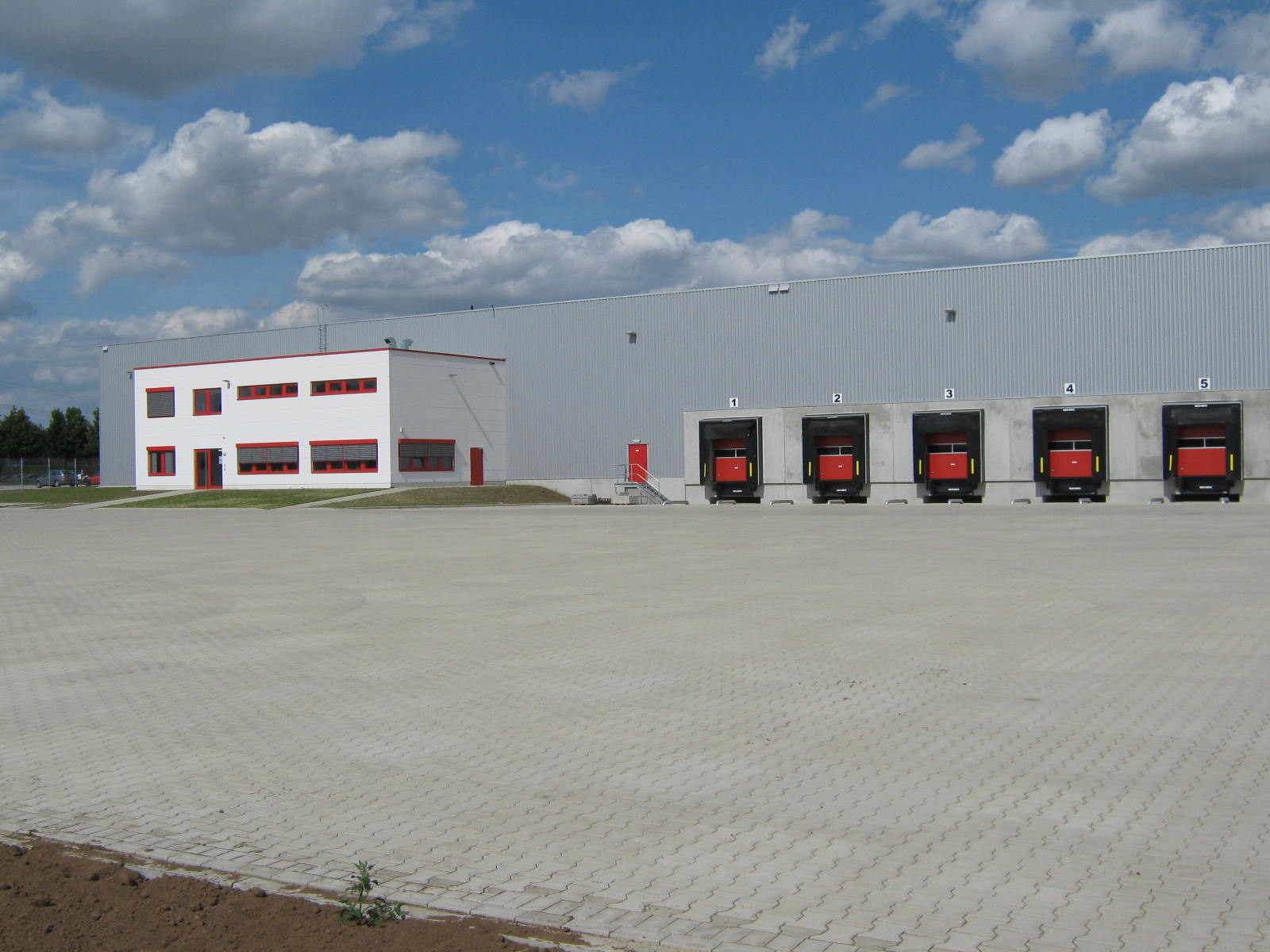
Object no.: 10073
Warehousing (warehouse with management)
Germany
34582 Borken
Price on request