



Supply Chain Santa 4.0: When Reindeer meet Big Data – A Logistical Masterpiece
Table of Contents
- The Lapland Distribution Centre: Hub-and-spoke in Perfection
- Predictive Analytics: The "Naughty or Nice" Database
- The Fleet: Reindeer Propulsion vs. Hypersonic Logistics
- Global Distribution: Differences in the "Last Mile" Concept
- Intralogistics and AI: Where is the Contemplation?
- Practical Example: "Operation Skyscraper"
- Sustainability: Green Logistics at the North Pole
- Outlook: The Advent Season as "Peak Season" Preparation
- Conclusion: What we can learn from Santa
How does a single CEO (Chief Elfen Officer) manage to deliver to billions of end customers in a time window of only 31 hours? Welcome to the ultimate stress test of global logistics.
Imagine Amazon, DHL and Maersk merge, multiply their capacities by a factor of 100 and have to deliver the entire annual turnover in a single night. Sounds impossible? For North Pole Logistics GmbH & Co. KG , this is "business as usual".
But the romantic idea of a cozy sleigh and hand-carved wooden horses has long been outdated. Today, we look behind the scenes of the world's most modern supply chain and ask ourselves: What does Santa's operational excellence really look like in 2025? And above all: What can we logisticians learn from it?
The Lapland Distribution Centre: Hub-and-spoke in Perfection
Let's start in the heart of the action: Korvatunturi, Finnish Lapland. What used to be a small workshop is now a gigantic fulfillment center that makes every intralogistics specialist green with envy.
Warehousing and Secret Santa Management
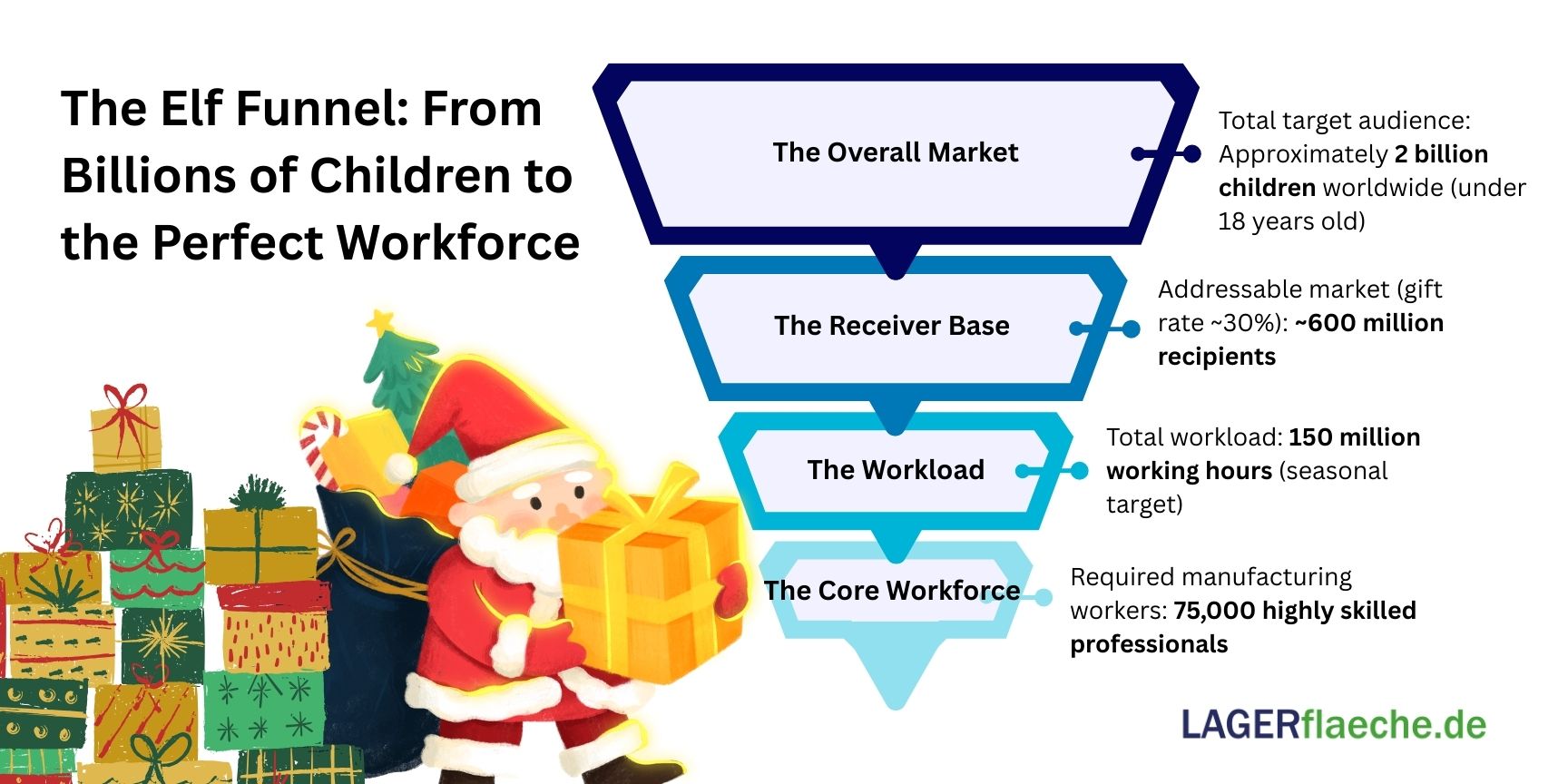
The data situation is clear: With about 2 billion children worldwide (under 18 years of age) and an average gift rate (taking into account religious and cultural conditions) of about 30% (about 600 million recipients), we are talking about a massive volume. If each child receives a gift with an average volume of 0.005 m³, Santa will have to store and pick 3 million cubic meters of cargo.
How many elves does it take? If you calculate with a production and packaging time of 15 minutes per gift (highly optimized), we need 150 million working hours.
- With an 8-hour day and 250 working days a year, Santa would need 75,000 highly qualified elves in production alone.
- In addition, there are 20,000 elves in administration (HR, customs clearance, route planning) and 10,000 in the maintenance of the reindeer fleet.
Fact check: Amazon employed around 1.5 million people worldwide in 2023. Santa manages the same volume with a tenth of the workforce. The secret? Magical automation and no union breaks (but unlimited cocoa).
Predictive Analytics: The "Naughty or Nice" Database
"He knows if you're sleeping, he knows if you're awake." It used to be a Christmas carol, but today it's the definition of big data and surveillance capitalism.
The famous list has long since ceased to be a parchment scroll, but a cloud-based database fed in real time by AI algorithms.
- Demand Forecasting: Santa uses predictive analytics to know months in advance which toy will trend in which country. He knows that Kevin from Berlin wants an e-bike even before Kevin knows it.
- Dynamic Scoring: The "brave factor" is a dynamic KPI. If a child misbehaves on December 23, the system automatically adjusts the SKU (Stock Keeping Unit) from "PlayStation 5" to "sack of coal". This saves valuable freight capacity.
The Fleet: Reindeer Propulsion vs. Hypersonic Logistics
Let's move on to the most critical point: transport. To reach all households on Christmas night, Santa uses the time difference. He travels from east to west and thus gains time. Theoretically, he has 31 to 34 hours at his disposal.
The physics of the sled (numbers, data, facts)
According to calculations by physicists (including Roger Highfield), the sled must provide the following performance:
- Number of stops: Approx. 800 to 1,000 per second.
- Cruising speed: About 1,000 to 3,000 kilometers per second (several times the speed of sound? No, we are talking about relativistic speeds).
- G-forces: Without inertial dampers, Santa and the gifts would be crushed into atoms at every stop.
This is where logistical innovations come into play: Today, the sleigh ("Sleigh One") is probably a hybrid of quantum technology and traditional reindeer propulsion. Rudolph's red nose is not a biological defect, but a state-of-the-art LIDAR system for obstacle detection in bad weather (fog, snow, chemtrails).
Global Distribution: Differences in the "Last Mile" Concept
The "last mile" is the most expensive part of logistics. Santa faces cultural challenges here that no DHL driver knows. How do the markets differ?
Germany: The competitive market
There is a duopoly in Germany. Santa Claus shares the market with the Christ Child (Christkind).
- Logistical peculiarity: The Christ Child often acts "invisibly" and uses spiritual teleportation, while Santa physically comes through the chimney.
- Delivery time: December 24 in the evening. This requires an extreme pace compared to the Anglo-American countries (25 in the morning). Germany is the "early bird" in the tour plan, so to speak.
USA & UK: The classic fireplace delivery
- Infrastructure: Lots of chimneys, but often too cramped. Here, Santa relies on shrink technology.
- Fuel surcharge: Milk and biscuits are provided in the USA. That's approx. 300 million calories in one night. A bio-chemical reactor in the sled converts this sugar energy directly into thrust.
Spain & Russia: The delayed delivery
This is where Santa's genius comes into its own in capacity planning.
- Spain: The gifts often do not bring until the Three Kings on January 6. This massively relieves the core fleet and allows "post-peak" deliveries.
- Russia: Father Frost (Ded Moroz) arrives on January 7 (Orthodox Christmas).
- Advantage: These stores serve as buffer warehouses to correct returns and misdirections from the peak night.
Intralogistics and AI: Where is the Contemplation?
With all the technology, where is the spirit of Christmas? The answer lies in AI-powered empathy. While algorithms calculate the route (the classic "traveling salesman problem" in extreme complexity), AI ensures that the personal touch is not lost.
- Handwriting robots: Gnomes use robotic arms to write millions of reply letters in "personal" handwriting.
- Sensuality through efficiency: Because the logistics run so smoothly, Santa has exactly 0.001 seconds at each stop to shout "Ho Ho Ho" and spread positive vibes. Without AI, he would just be a stressed parcel carrier.
Practical Example: "Operation Skyscraper"
Let's take a look at a case study. Scenario: A 100-story high-rise in Shanghai. No fireplaces. High security access. Solution:
- Drone use: The sled is parked in geostationary orbit above the city.
- Swarm Intelligence: Thousands of mini-drones (disguised as snowflakes) swarm out.
- On-site 3D printing: Instead of transporting heavy packages, the drones send blueprints to 3D printers that the elves have pre-installed in the children's rooms (under the bed).
- Result: Just-in-time production directly at the point of consumption. CO2-neutral and extremely quiet.
Sustainability: Green Logistics at the North Pole
Santa Claus also has to meet ESG criteria (Environmental, Social, Governance).
- Reindeer: Produce methane. To compensate for this, the North Pole operates a biogas plant that heats the headquarters.
- Packaging: The trend is moving away from plastic towards biodegradable wrapping paper made from algae fibres.
- Coal: Naughty children don't get real coal anymore (fossil fuel = bad PR). Instead, they receive CO2 certificates with a negative value.
Outlook: The Advent Season as "Peak Season" Preparation
The Advent season is not a time of rest for the elves, but a stress test.
- Week 1-3: Ramp-up phase. The camps are filled, the reindeer carbo-loaded.
- Week 4: "Freeze Period". No more address changes possible. The system is closed.
- Tranquility? Yes, but only in shifts. In the "Blue Zone" of the North Pole, there are meditation rooms for burnt-out elves. After all, only a mentally healthy workforce can achieve zero-error tolerance.
Conclusion: What we can learn from Santa
Santa's logistics are a marvel of efficiency, coupled with traditional values. It shows us that technology (AI, drones, big data) does not destroy magic, but makes it possible in the first place. Without innovation, there would be no more gifts today – at least not on time.
For us logisticians, the realization remains: If an old man with overweight and 12 animals can deliver the world in one night, then we should be able to make the "Next Day Delivery" from Hamburg to Munich too, shouldn't we?
With this in mind, I wish you a stress-free peak season, logistical wonders under the tree and a punctual, trackable and happy new year 2026!
Appendix: Sources & Facts
- Highfield, Roger: "Can Reindeer Fly? The Science of Christmas". (Physical calculations of speed).
- Statista (2024): Number of children worldwide & e-commerce growth.
- Amazon Logistics Reports (comparative data on the number of employees).
Latest Blog Posts
Stay up to date with the newest trends, insights, and tips in warehouse and logistics. Our latest articles help you navigate the industry with confidence.
Data Centres vs. Logistics Facilities: The Race for Power and Land
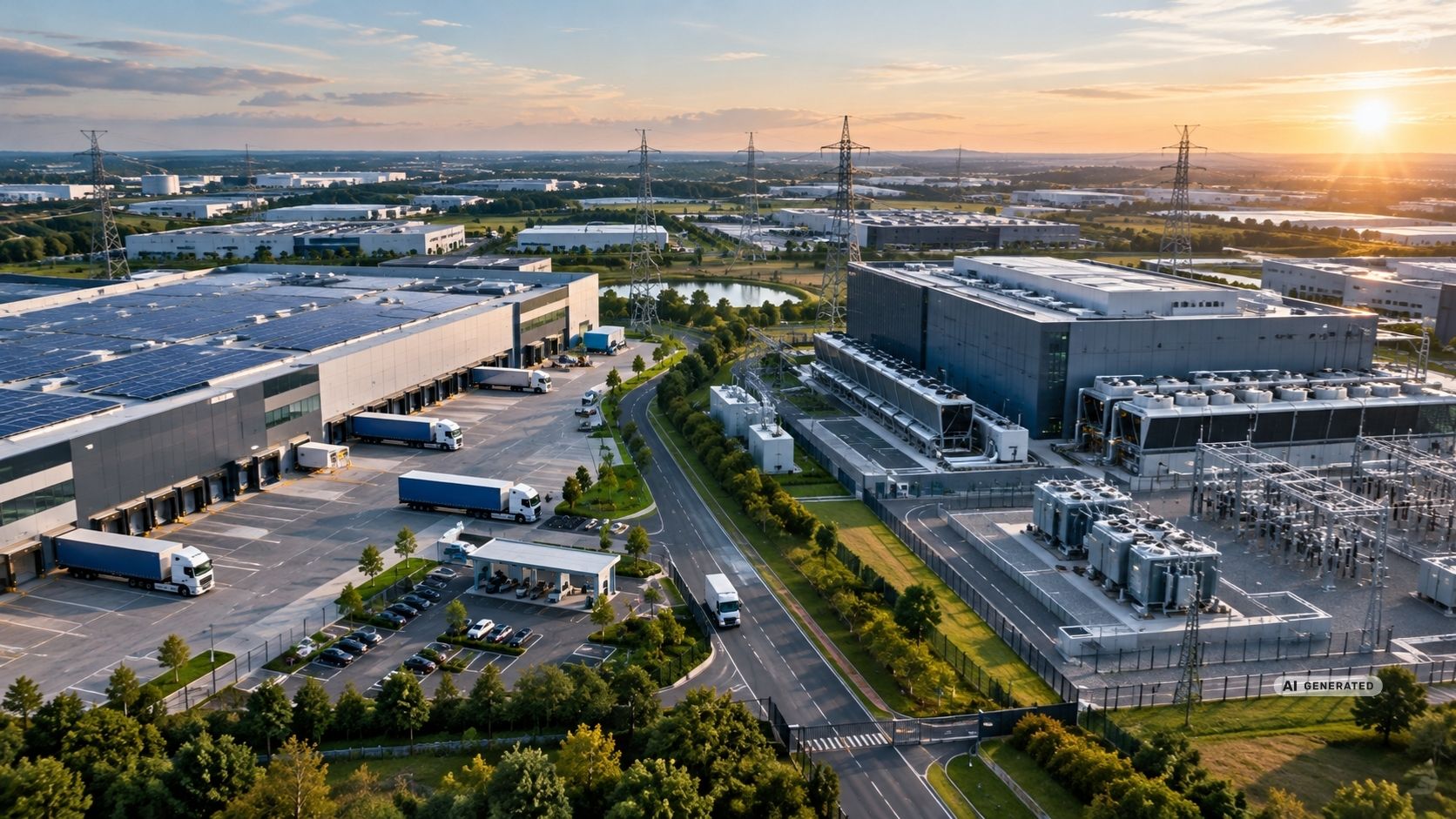
Across Europe, logistics operators are competing for more than land and transport access. They increasingly need something much harder to secure: grid capacity. Data centres are intensifying that competition — and changing how logistics locations are evaluated....
Chinese companies discover Europe's logistics real estate
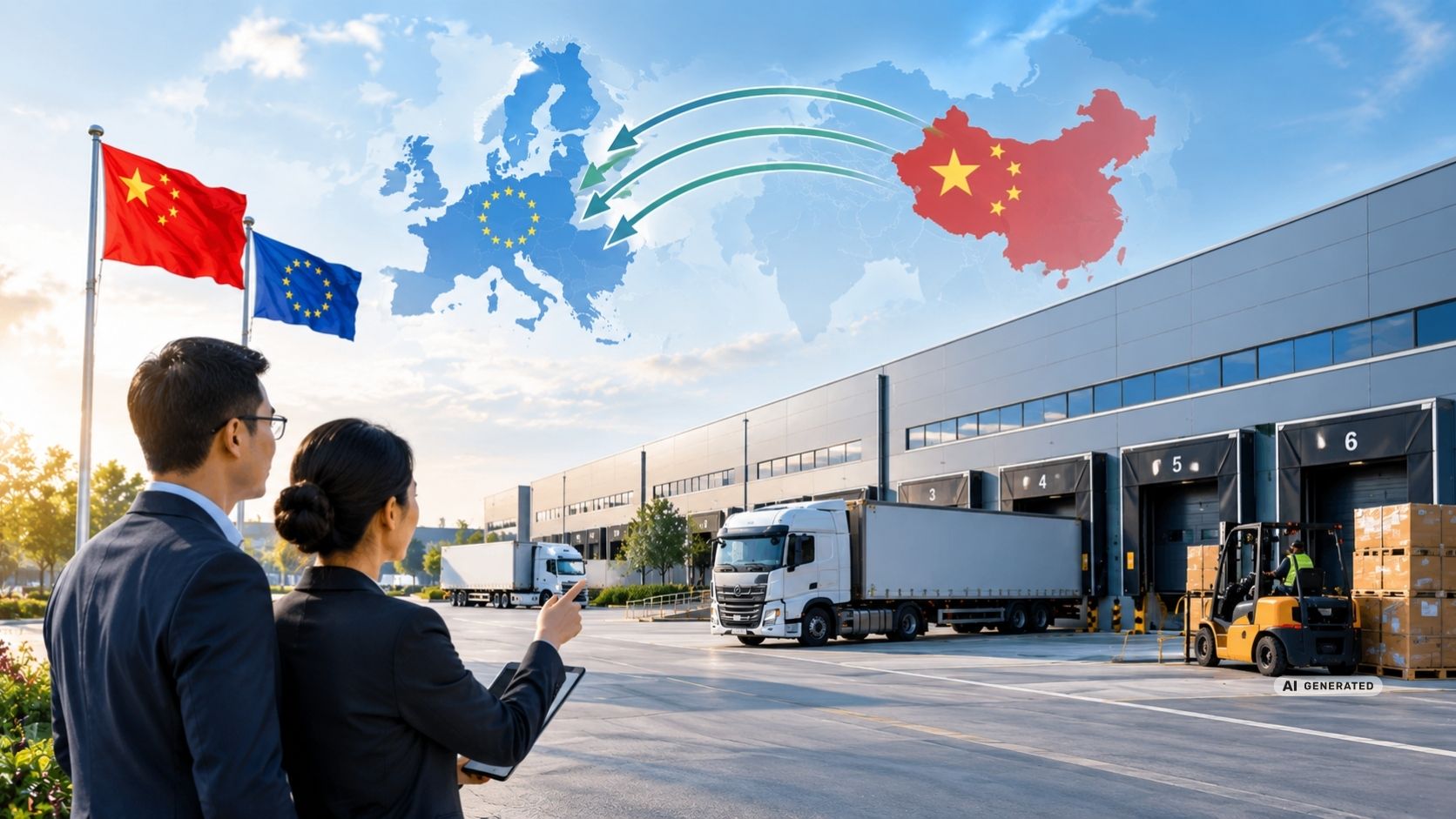
Chinese companies are becoming an increasingly visible user group in Europe's logistics real estate market. What does this mean for warehouse space, 3PL structures and the requirements for European logistics locations?...
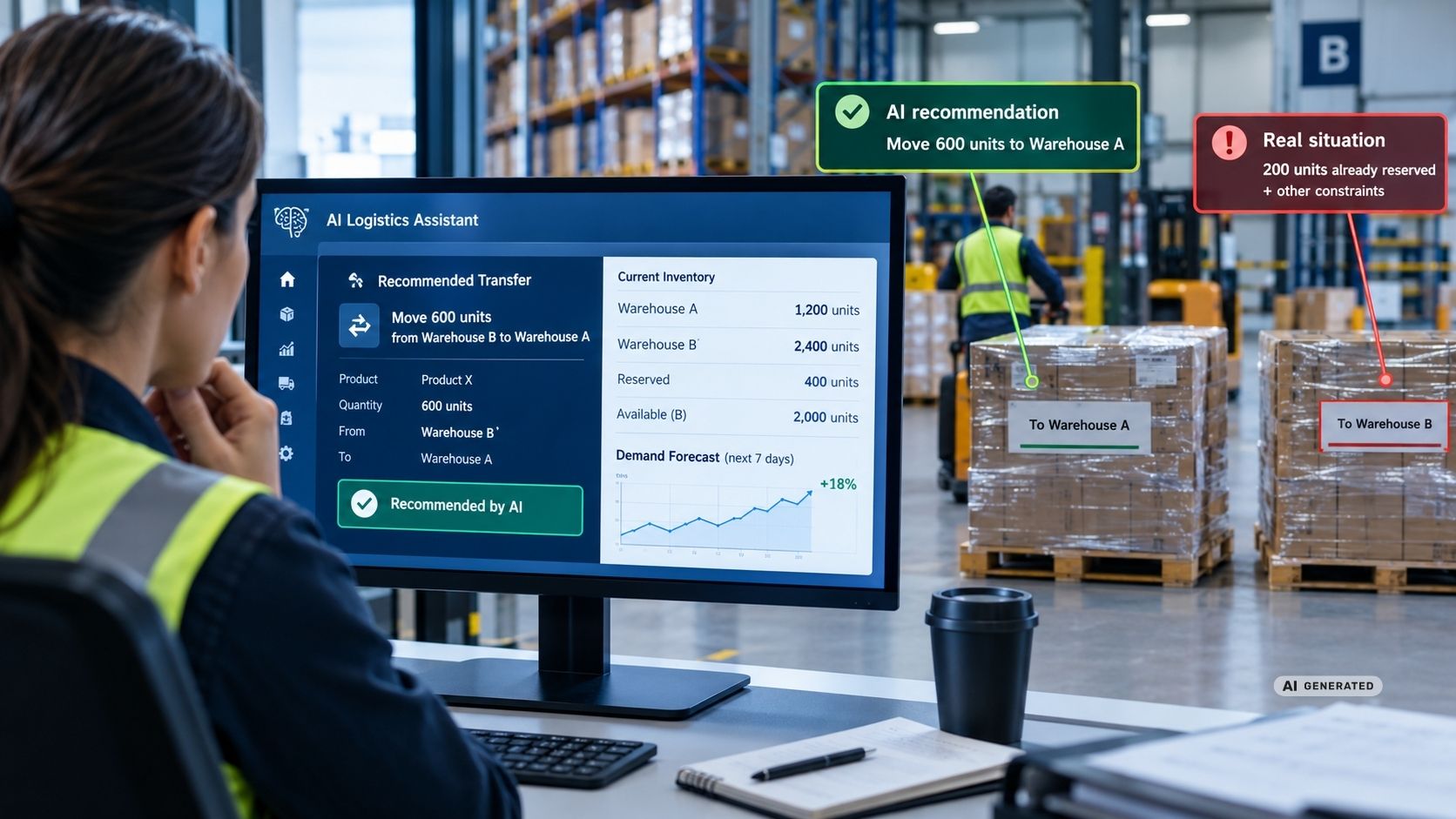
AI Hallucinations in Logistics: When AI Plans the Wrong Delivery
AI can analyze enormous amounts of logistics data — but it can also produce a convincing answer that is simply wrong. The critical question is not whether AI makes mistakes, but what happens when a wrong recommendation becomes an operational decision....
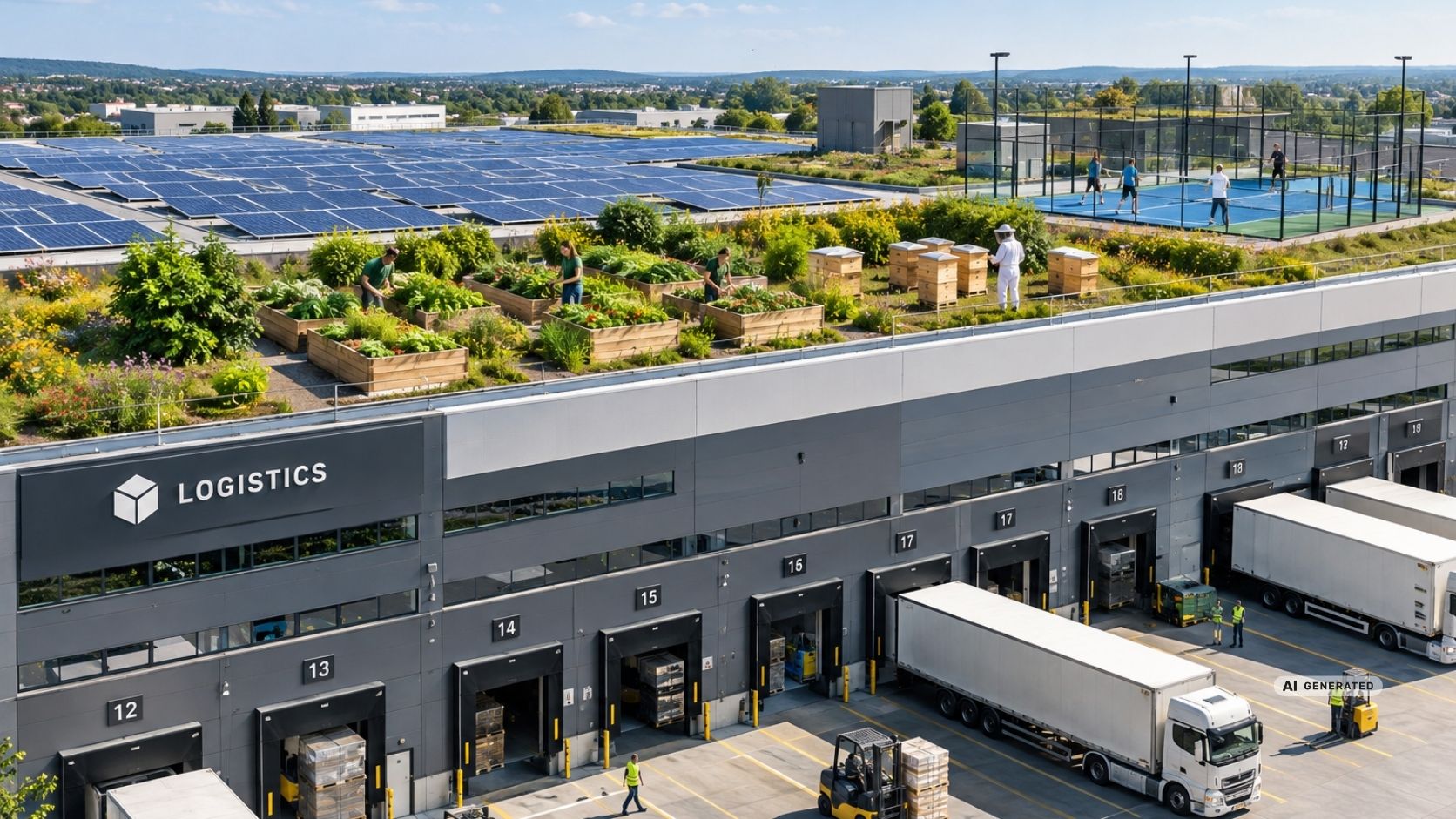
The Green Revolution on the Hall Roof: From Concrete Block to Ecological Power Plant?
Logistics roofs can do more than PV: greening, bees, urban farming and even sports areas turn unused roof space into multifunctional rooms....