



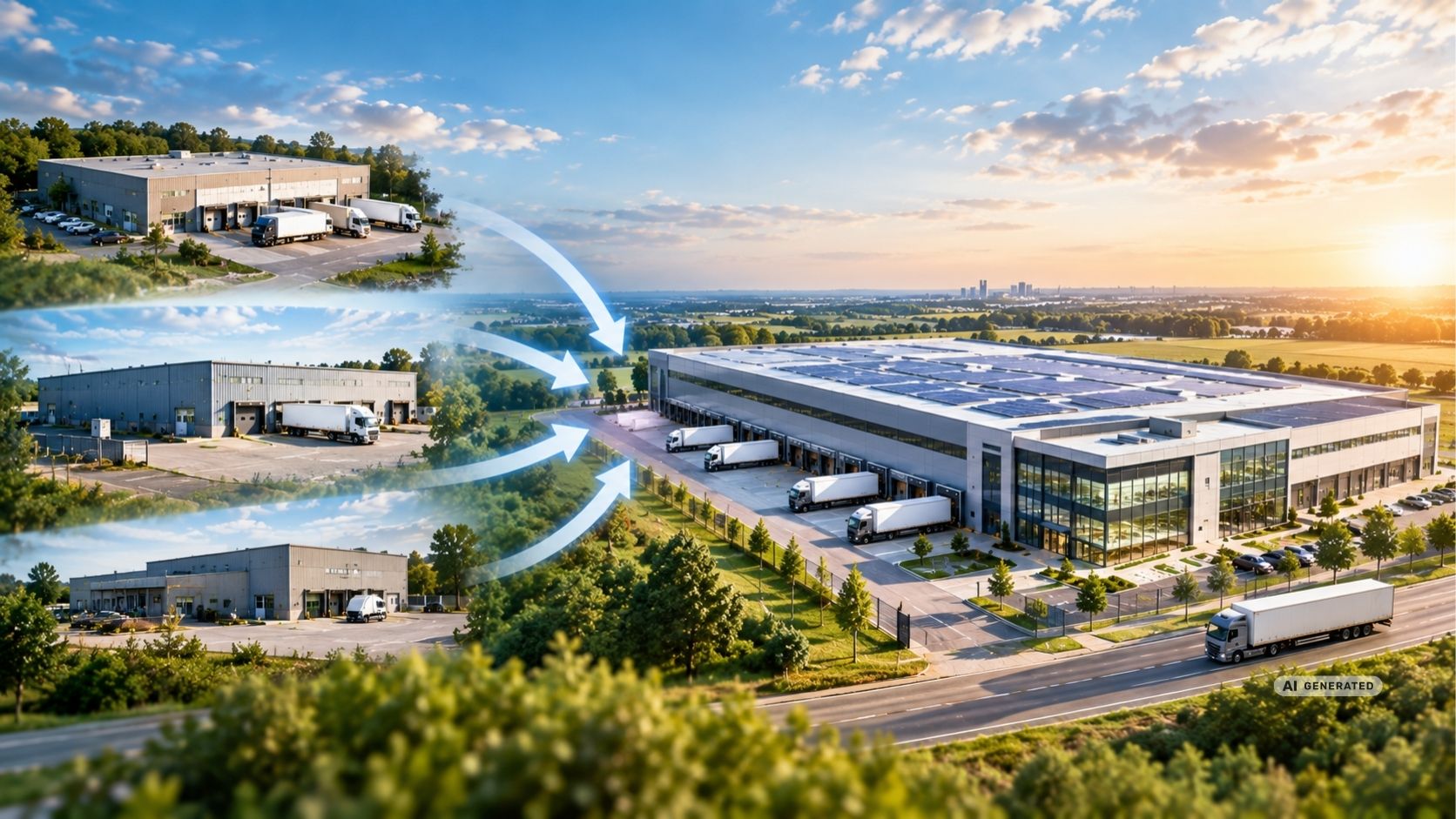
Location Consolidation in Logistics: When is it Worthwhile to Merge Several Warehouse Locations?
Table of Contents
- What does Site Consolidation Mean in Logistics?
- Why are Historically Grown Camp Structures Becoming a Problem?
- When is it Worthwhile to Merge Several Warehouse Locations?
- What are the Benefits of Site Consolidation?
- When does Consolidation Become a Curse?
- What Questions do Companies Need to Answer before Making a Decision?
- How can the Profitability of Consolidation be Calculated?
- Central Warehouse, Multi-user or Hybrid Network?
- What Role do Location, Automation and ESG Play?
- Site Consolidation in Germany, Poland, Great Britain and the USA
- Practical Example: What a Site Consolidation could Look Like
- Conclusion: Curse or Blessing?
Many companies today operate several warehouses, production sites or logistics properties within a region. These structures have often grown historically: one location was taken over, another was rented, and later an additional hall was added. What initially made operational sense can become a considerable burden as the company grows.
Several properties not only mean several rental or purchase contracts. Personnel, technology, IT, maintenance, energy, internal transport and administrative processes also have to be organized several times. At the same time, additional interfaces are created between the locations.
This is exactly where site consolidation comes in.
This is not simply a matter of relocating several warehouses to a larger building. The real question is:
When does it make economic and operational sense to merge several existing warehouse locations – and when can centralization even create new risks?
Consolidation is therefore less a pure real estate decision than a strategic decision about the future logistics network.
What does Site Consolidation Mean in Logistics?
Site consolidation is the targeted consolidation of several previously separately operated warehouse, production or logistics locations at fewer locations.
This can mean, for example:
- three regional warehouses will be merged into a central logistics centre;
- several rented halls will be replaced by a larger property;
- Warehouse and production areas are bundled at one location;
- a historically grown real estate portfolio is being restructured;
- existing locations will be reduced and replaced by a modern, automatable building.
The goal is not automatically a single central warehouse. A reduction from six to three locations, for example, can also be a sensible consolidation.
Scientific studies on warehouse centralization show that there is no optimal degree of centralization across the board. The ratio between storage, inventory, transport and service costs is decisive.
This makes an important distinction clear:
Site consolidation is not the same as complete centralization.
Why are Historically Grown Camp Structures Becoming a Problem?
Historically grown networks are often created for understandable reasons. A company is growing, taking over a competitor or needs additional capacity at short notice. Another hall nearby then seems to be the simplest solution.
Over time, however, complex structures can emerge.
For example, multiple properties mean:
- several rental or purchase agreements,
- Multiple technical infrastructure,
- multiple warehouse management systems or interfaces,
- additional management and administrative structures,
- different building standards,
- additional internal transport,
- more transfers between locations,
- different processes and ways of working.
The decisive cost factor is therefore often not the pure rent.
A study on the redesign of warehouse networks describes the potential benefits of consolidation, including better capacity utilization, lower storage and administrative costs, and reduced material movements. At the same time, research points to the potential disadvantage of longer delivery times with greater centralization.
It is precisely this conflict of goals that must be examined before consolidation.
When is it Worthwhile to Merge Several Warehouse Locations?
Consolidation is particularly interesting when several locations suffer from similar structural problems on a permanent basis.
Typical warning signs are:
Low space utilization: Several halls have reserves, while at the same time high overall real estate costs are incurred.
Dual infrastructure: Forklifts, shelving systems, IT, technology, workshops or social rooms are needed at several locations.
High internal transport costs: Goods are regularly moved between the company's own locations because inventories or production steps are distributed.
Different processes: Each location works with its own procedures, systems or responsibilities.
Rising real estate costs: Several leases expire or have to be renegotiated.
Technological backlog: Old buildings can only be automated or improved in terms of energy efficiency with considerable effort.
Growth problems: Individual locations can no longer be expanded in a meaningful way.
The current market situation can also influence a consolidation decision. In Germany, around 3 million m² of industrial and logistics space was taken up in the first half of 2026. At the same time, prime rents in the five most important markets rose by 3.2% compared to the previous year. In many established regions, the supply of modern space remains limited.
The question is therefore not only:
How much does a new property cost?
But:
What does it cost the company to operate the existing structure unchanged for another five or ten years?
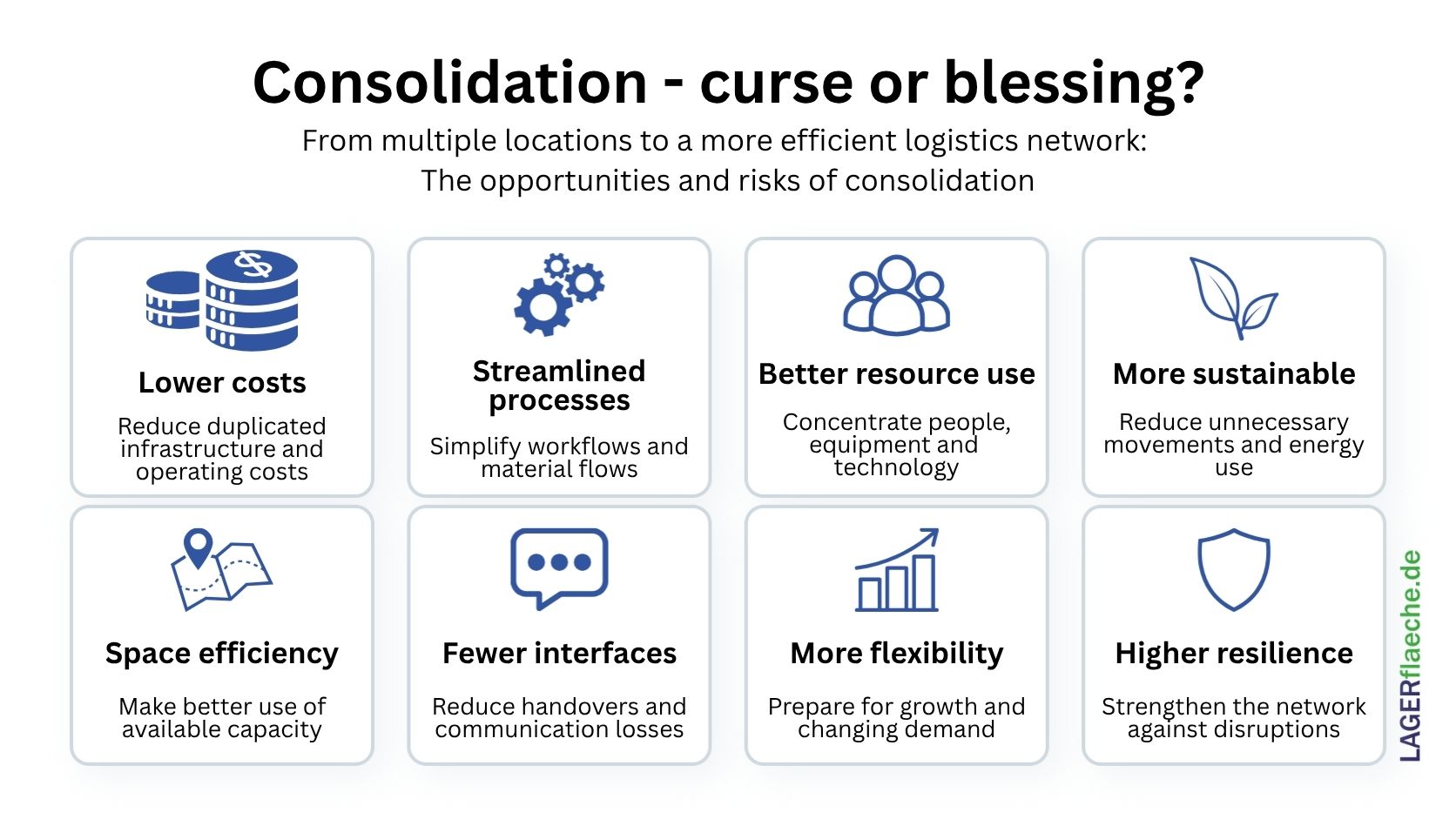
What are the Benefits of Site Consolidation?
The most obvious benefit is the reduction of duplicate structures. However, the actual economic impact can go much further.
Less real estate complexity
Fewer locations mean fewer leases, utility bills, technical facilities and administrative processes.
Better use of space
A modern property can coordinate storage, picking, office and circulation areas in a more targeted manner.
Centralized technology
Automation, conveyor technology, charging infrastructure, IT and energy supply can often be better integrated in a newly planned property.
Less internal transport
If goods no longer have to be moved regularly between several of the company's own halls, material flows can become easier.
Better scalability
A sufficiently dimensioned new location can already take into account expansion space and future growth.
Better automation
Consolidation can be the reason not to simply transfer processes to a new building, but to fundamentally replan them.
Research on warehouse network planning confirms that pooling inventory and capacity can offer significant efficiency potential. At the same time, the optimal degree of centralization depends on transportation costs, inventory, and service requirements.
When does Consolidation Become a Curse?
A professional analysis must not hide the disadvantages.
The biggest mistake would be to look exclusively at the saved real estate costs.
Higher transport distances
If several regional warehouses become a single location, the distances to customers or production facilities can be longer.
Single Point of Failure
If, for example, the central location fails due to a technical defect, fire, flood or other unusual incident, much larger parts of the network can be affected.
Higher investments
A new logistics center can incur significant costs for land, buildings, racking systems, automation, IT and relocation.
Conversion risks
During migration, old and new processes often have to be operated in parallel. Errors can affect delivery capability and customer service.
Loss of regional proximity
A regional location can make strategic sense from the customer's point of view. Centralization must therefore not only be viewed from a real estate perspective.
Long contract commitments
A new building or a highly specialized rental solution can create long-term commitments. This can become problematic if sales volumes or business models change.
Research on centralization shows precisely this conflict of goals: Fewer warehouse locations can reduce storage and inventory costs, while at the same time transport routes and delivery times can increase.
Consolidation is therefore only a blessing if the entire network becomes more efficient – not just the number of properties decreases.
What Questions do Companies Need to Answer before Making a Decision?
Before looking for a new location or starting a construction project, the existing network should first be analyzed.
Important questions are:
Which locations are actually redundant?
Not every additional property is automatically inefficient. Some locations fulfil an important regional function.
Which flows of goods can be merged?
Consolidation is particularly interesting if there are many internal movements of goods between the existing locations.
How do transport costs and delivery times change?
A lower real estate bill can be eaten up by higher external transportation costs.
What areas are really needed?
Instead of simply adding up the existing total area, the future process structure should be calculated.
What capacity will be needed in five or ten years?
Consolidation should not only reflect the current situation.
Which processes can be redesigned?
A new building is the opportunity to fundamentally replan material flows, picking, storage and shipping.
What are the risks of centralization?
Business continuity, delivery capability and reliability must be part of the decision.
Once the decision for a new location has been made, the next challenge begins: the actual migration. From planning to IT conversion to phased relocation, numerous processes must be coordinated. Our Blog - The Master Plan for Logistics Relocation shows how such a logistics move can be structured.
How can the Profitability of Consolidation be Calculated?
A simple comparison of "old rents" and "new rents" is not enough.
The factors that influence the actual cost of warehouse space are explained in more detail in our article on the cost factors of warehouse space.
For a business case, at least the following cost blocks should be considered:
Cost of today's network
- Rents or financing costs
- Ancillary costs and energy
- Staff
- Internal transport
- External transports
- Maintenance
- IT and Systems
- Technical installations
- Administration
- Inventory costs
- Empty and reserve areas
Consolidated Network Costs
- new rent or land costs
- Construction or conversion costs
- Financing
- Relocation
- new shelving systems
- Automation
- IT migration
- Additional transport routes
- Personnel changes
- Start-up and transition costs
Not only a static annual financial statement should be prepared. It makes sense to look at it over several years with different scenarios.
For example:
Scenario A: existing locations remain unchanged.
Scenario B: two out of five locations are closed.
Scenario C: Consolidation in a new central logistics center.
Scenario D: Reduction of own locations and additional use of a multi-user warehouse.
Research on centralization in particular shows that the optimal solution arises from an interplay of storage and transport costs.
Central Warehouse, Multi-user or Hybrid Network?
Site consolidation does not necessarily have to end in a single logistics center of its own.
For example, companies can choose between three basic models:
Own central warehouse
This makes sense when processes, quantities of goods and long-term requirements are relatively easy to plan and the company needs a high level of control.
Multi-user or shared warehouse
An alternative if capacity requirements fluctuate greatly or the company wants to avoid investing in its own property.
Hybrid Network
A central main location is combined with smaller regional or external locations.
This third variant can be interesting if complete centralization would lead to longer delivery times or high risks of failure.
Thus, the decisive question is not:
"Central or decentralized?"
But:
"Which network structure meets our service, cost and growth targets with the lowest overall risk?"
More about Shared Warehouse and Dedicated Warehouse
What Role do Location, Automation and ESG Play?
If several sites are merged, the new location should not only reflect the old processes on a larger scale.
It offers the opportunity to align the property with future requirements.
These include, for example:
- automated storage and picking systems,
- Conveyor technology,
- autonomous mobile robots,
- digital inventory management,
- digital building and process models,
- photovoltaics,
- Charging infrastructure,
- energy-efficient building technology,
- flexible expansion areas.
In Germany in particular, cost pressure is increasing the incentive to balance modern space and automation economically. CBRE reports rising prime rents and a further limited supply in several established logistics regions for the first half of 2026. At the same time, automation and AI-based processes are gaining in importance.
However, ESG should not be seen as an isolated additional topic. Well-planned consolidation can support several goals at the same time, for example through shorter internal routes, more efficient buildings and better space utilization.
Site Consolidation in Germany, Poland, Great Britain and the USA
The basic idea of consolidation is similar internationally. However, the framework conditions differ significantly.
Germany: Shortage of space and costs
In Germany, companies in many established logistics regions are encountering limited space availability and rising prime rents. In the first half of 2026, take-up was around 3 million m²; prime rents in the top 5 markets rose by 3.2% year-on-year.
This can make consolidation attractive if several older or inefficient locations can be replaced by one modern property.
At the same time, the choice of location must be made particularly carefully, because a cheaper location outside a core region may cause higher transport costs.
Poland: Growth and nearshoring
Poland has become an important logistics location in Europe. At the end of the second quarter of 2026, the state-of-the-art warehouse and logistics space portfolio comprised around 38 million m², 5.5% more than a year earlier.
For companies, Poland can therefore not only be a production or distribution location, but also part of a European network optimization.
Consolidation must take into account, for example, the proximity to production sites, international markets and European transport axes.
Great Britain: scarce modern space and portfolio optimisation
The UK logistics market is also showing strong demand for modern real estate. CBRE reports a letting performance for 2025 that increased by 22% year-on-year. At the same time, the vacancy rate was 7.1% in the fourth quarter of 2025. 70% of the space leased in 2025 was for new construction.
It is interesting to note that CBRE explicitly observes that companies are consolidating their real estate portfolios. This shows that consolidation is not limited to the German market.
USA: longer distances and different network design
In the USA, the geographical dimension plays a much greater role. Strong centralization can therefore quickly lead to long transport routes.
At the same time, the current market survey by CBRE shows that more than 90% of the industrial and logistics users surveyed want to keep their real estate space stable or expand it over the next 36 months. 23% want to switch to more modern buildings, while 17% aim to reduce costs.
The international perspective thus shows an important point:
There is no universal optimal number of warehouse locations.
The right structure depends on customer density, transport costs, labour market, real estate costs, delivery times and the required resilience.
Practical Example: What a Site Consolidation could Look Like
The following example is fictitious and is for illustrative purposes only.
A medium-sized industrial equipment supplier operates three warehouses in the same economic region. One hall is mainly used for incoming goods and intermediate storage, a second for picking and a third for spare parts and returns.
However, as the company has grown, the processes have increasingly overlapped.
Employees move goods between the buildings. Inventories are managed multiple times. Different racking systems and IT processes make control more difficult. At the same time, several leases expire.
The company is therefore investigating three variants:
Variant A: All three locations will remain in place.
Option B: Two locations are merged and a small regional location is retained.
Option C: All three locations will be replaced by a new, centrally located logistics center.
In variant C, storage, goods receipt, picking and shipping could be organized in a continuous material flow. Automation could be integrated right from the start.
However, the company would also have to check at the same time how delivery times to its most important customers are changing and what default risks arise from the concentration.
The example shows the crucial point:
The best solution is not automatically the one with the fewest properties.
It is the solution in which real estate, storage, transport, personnel and service costs are considered together.
Conclusion: Curse or Blessing?
Site consolidation can be a significant strategic advantage – but not just because a company subsequently owns fewer properties.
The real benefit comes when consolidation solves multiple problems at once:
- Duplicate structures are reduced,
- better use of space,
- Processes unified,
- internal transport,
- automation enables
- Real estate costs optimized,
At the same time, centralization must not become an end in itself. Longer transport routes, higher investments, delivery time risks or a central point of failure can partially or completely consume the expected savings. The scientific literature confirms precisely this conflict of goals between storage, inventory, transport and service costs.
The decisive question is therefore not:
"How much does a new location cost us?"
But:
"What will it cost us in the long term to continue our current structures unchanged – and what risks will arise if we change them?"
If you answer this question with reliable data, you can turn a real estate decision into a strategic network decision.
Site consolidation is therefore neither a curse nor a blessing. It is a tool. The decisive factor is whether the new structure fits better with the future corporate strategy than the existing one.
Sources
- CBRE Germany: Germany Logistics Market Q2 2026 / Industrial and Logistics Real Estate Market Germany, 2026.
- CBRE Poland: European Logistics Outlook 2026 and Polish industrial and logistics market Q2 2026.
- CBRE UK: UK Real Estate Market Outlook 2026 – Logistics.
- CBRE: 2026 U.S. Industrial & Logistics Occupier Survey.
- ScienceDirect / Transportation Research: Investigations into centralization, warehouse network design and the ratio of storage, inventory and transport costs.
Latest Blog Posts
Stay up to date with the newest trends, insights, and tips in warehouse and logistics. Our latest articles help you navigate the industry with confidence.
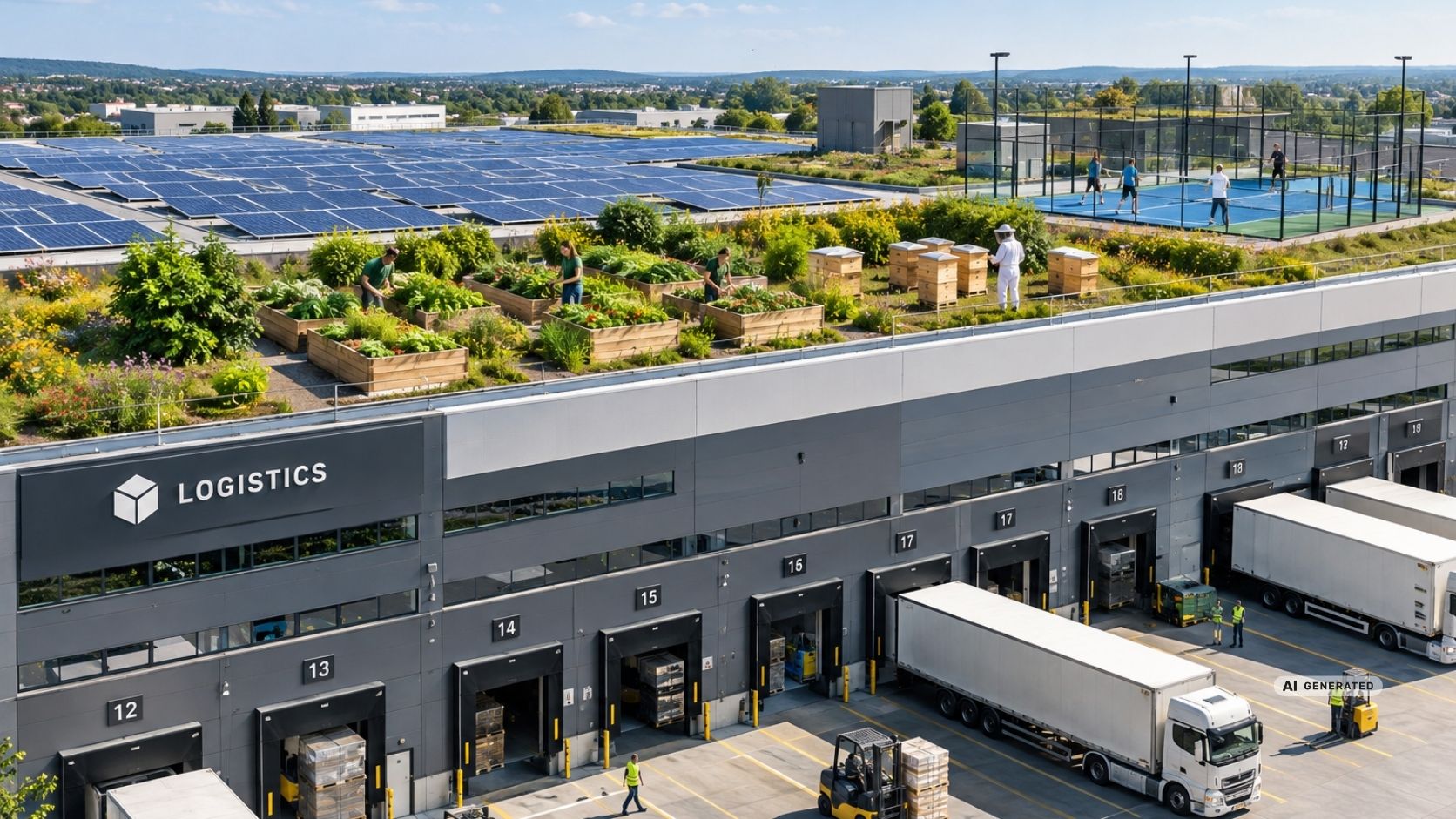
The Green Revolution on the Hall Roof: From Concrete Block to Ecological Power Plant?
Logistics roofs can do more than PV: greening, bees, urban farming and even sports areas turn unused roof space into multifunctional rooms....
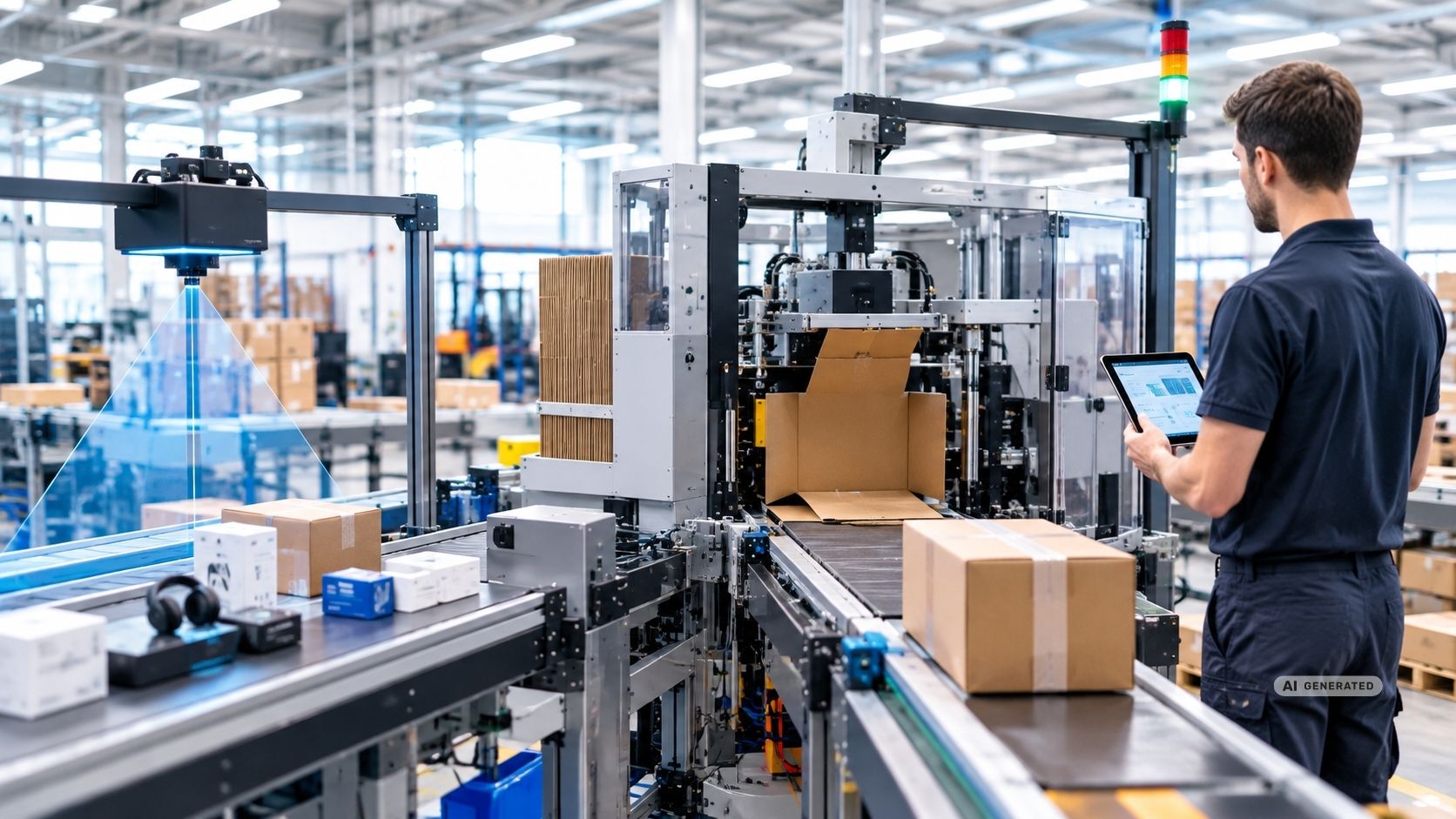
Automated Packaging in the Warehouse: Costs, ROI and Investment Decision
Automated packaging can reduce staff shortages, material consumption and shipping volume. However, it is not the technology alone that is decisive, but whether it is economically suitable for your own shipping process....
Location Consolidation in Logistics: When is it Worthwhile to Merge Several Warehouse Locations?
Multiple warehouse locations can grow for years without their structures growing with them. Find out when site consolidation becomes a strategic advantage – and when it creates new risks....
10 Logistics Myths that will no Longer be True in 2026
10 common assumptions about warehouses, logistics properties and supply chains will no longer stand up to scrutiny in 2026. This fact check shows which logistics myths are outdated – and what companies should consider instead....