



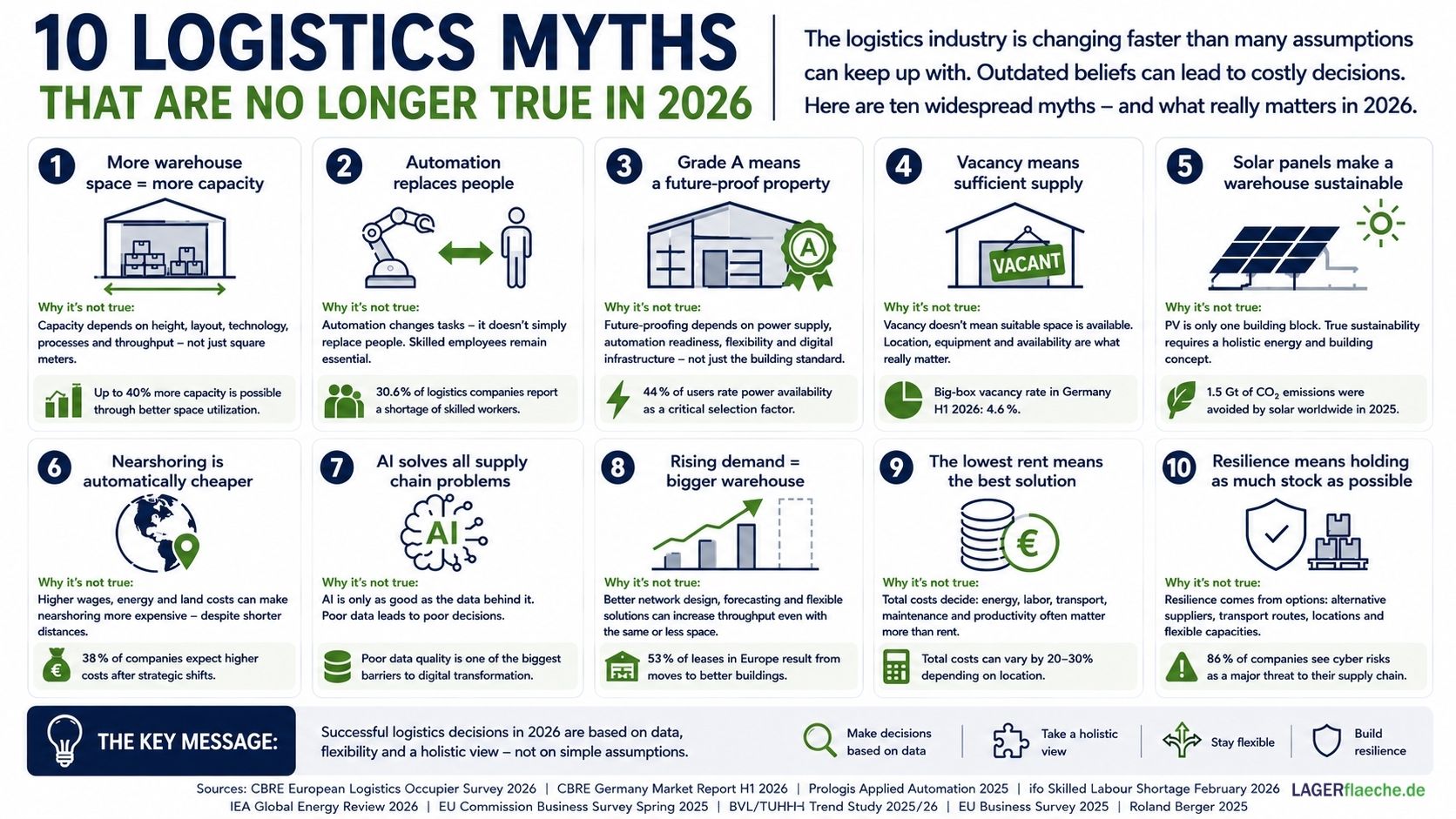
10 Logistics Myths that will no Longer be True in 2026
Table of Contents
- Myth 1: More Storage Space Automatically means more Capacity
- Myth 2: Automation Replaces Staff
- Myth 3: A Grade A Logistics Property is Automatically Future-proof
- Myth 4: Vacancy means that there is Sufficient Storage Space Available
- Myth 5: Photovoltaics on the Roof make a Logistics Property Sustainable
- Myth 6: Nearshoring Automatically means Lower Costs
- Myth 7: AI Solves Supply Chain Problems Automatically
- Myth 8: Increasing Demand Automatically means a Larger Warehouse is Needed
- Myth 9: The Lowest Rent Means the Cheapest Logistics Property
- Myth 10: Resilience Means Keeping as Much Inventory as Possible
- What Companies can Learn from the Ten Logistics Myths
- Conclusion: In 2026, Logistics will Need Fewer Simple Answers
Logistics in 2026 will no longer be the same as it was just a few years ago. Automation, artificial intelligence, increasing energy requirements, geopolitical uncertainty and changing location strategies are now directly influencing the question of how companies plan their warehouses and supply chains.
Nevertheless, some simple assumptions are surprisingly persistent.
More storage space means more capacity. Automation replaces staff. A modern Grade A property is automatically future-proof. Vacancy means sufficient supply. Photovoltaics make a warehouse sustainable. Nearshoring reduces costs.
But are these statements actually still true in 2026?
The current market data and developments paint a more nuanced picture. This fact check takes a close look at ten common logistics myths and shows what conclusions companies should draw from them when planning their warehouse and logistics locations.
Myth 1: More Storage Space Automatically means more Capacity
Is that really true?
Not necessarily.
The square footage of a warehouse is only part of the actual capacity. Among other things, the hall height, racking system, support grid, traffic areas, picking routes, pallet spaces and the achievable throughput are decisive.
A warehouse with 10,000 m² can therefore have a higher usable capacity than a poorly configured hall with 15,000 m² under certain conditions.
More importantly, storage capacity and handling capacity are not the same thing. More storage spaces are of little help if incoming goods, picking or shipping become a bottleneck.
This is precisely why an area expansion should not start with the question: "How many additional square meters do we need?"
It makes more sense:
How many pallet spaces, order lines, goods movements and what throughput are required?
Only from this can the actual space requirement be derived.
Automation also changes this calculation. Modern systems can make existing space more productive without necessarily requiring a larger building. Prologis, for example, reports that by 2025, around 30% of modern logistics spaces already contained some form of automation. Fully automated AS/RS systems, on the other hand, remain comparatively rare at around 3-5%.
Practical question: Is an additional warehouse really necessary – or can the productivity of the existing space be increased first?
Myth 2: Automation Replaces Staff
Automation reduces certain manual activities. However, this does not mean that people will disappear from the warehouse.
Rather, the qualification profile is shifting.
Employees operate and monitor systems, analyze data, rectify faults, maintain systems and take on tasks that cannot be automated in an economically or technically sensible way.
The development of the labour market clearly shows this difference. In February 2026, 30.6% of transport and logistics companies reported a shortage of qualified workers. Although the figure had fallen significantly from 42.7% in October, this does not mean that the staffing problem has been solved.
At the same time, the level of automation is increasing. According to Prologis, around 30% of modern logistics spaces contained at least one form of automation in 2025. Particularly flexible systems such as AMR and AGV are gaining in importance, while fully automated solutions continue to be much less common.
The decisive question is therefore not:
"How do we replace our employees?"
But:
"Which activities should humans take over and which machines?"
This is a considerable difference – and also influences the requirements for a property.
Myth 3: A Grade A Logistics Property is Automatically Future-proof
"Grade A" describes a high building standard. However, it is no guarantee that a property will be suitable for every user in the long term.
Why?
Because the requirements for logistics buildings are changing.
In 2026, for example, electrical power, grid connection, automatability, floor quality, hall height, column grid and digital infrastructure will play an increasingly important role.
The current European user survey by CBRE shows this very clearly: For more than 44% of the logistics users surveyed, the availability of electricity is now an important factor in the choice of building – more than twice as much as four years ago. At the same time, more than 80% of those surveyed see the availability or reliability of the power supply as a problem.
So a property can look modern today and still reach operational limits in a few years.
Sustainability therefore does not only mean modern construction.
It means that a building can grow with the requirements of the user.
These include, for example, sufficient electrical power, retrofittable automation, flexible use of space and location quality that also works in the event of changing supply chains.
Appropriate Deep Dive: [Logistics Real Estate 2026: Between Resilience and Realignment – An In-Depth Analysis]
Myth 4: Vacancy means that there is Sufficient Storage Space Available
If the vacancy rate increases, it should become easier to find a suitable warehouse. Or should it?
Only to a limited extent.
In 2026, the German big-box market will show exactly why the general vacancy rate should not be equated with the actual availability of suitable space.
In the first half of 2026, the vacancy rate in the German big-box segment was 4.6%. At the same time, around 3 million m² of logistics and industrial space was taken up. CBRE also points out that the structural shortage of space is once again coming to the fore in established logistics regions.
The decisive word is suitable.
A company may need 12,000 m² with:
- sufficient hall height,
- many ramps,
- high floor load capacity,
- 24/7 usability,
- good motorway connections,
- sufficient electricity and
- short-term availability.
An empty hall somewhere in the market may not meet these requirements.
CBRE therefore does not primarily describe a shortage of storage space overall in 2026, but an increasing shortage of modern, automatable and sufficiently energy-supplied space at the desired locations.
Myth 5: Photovoltaics on the Roof make a Logistics Property Sustainable
Photovoltaics is undoubtedly an important building block of the energy transition. But a solar roof alone does not make a sustainable logistics property.
The IEA shows the enormous importance of solar energy: The global expansion of photovoltaics avoided an estimated 1.5 gigatons of energy-related CO₂ emissions in 2025.
However, for a single logistics building, another question must be asked:
How much energy does the building consume – and how much of it can the photovoltaic system actually provide?
Among other things, the following are relevant:
- Building envelope and insulation standard,
- Heating and cooling,
- Lighting,
- Storage technology,
- Charging infrastructure,
- automation,
- Electricity storage,
- Self-consumption and
- Mains connection.
The BVL/TUHH Trend Study 2025/2026 also shows that sustainability is increasingly being thought of together with digitalisation and resilience. 80% of the companies surveyed have specific CO₂ reduction targets.
PV should therefore not be seen as a marketing label, but as part of an energy and decarbonisation concept.
Myth 6: Nearshoring Automatically means Lower Costs
Nearshoring is seen as a response to geopolitical risks, long transport routes and dependencies on individual production regions.
But closer is not automatically cheaper.
Production can be closer to the sales market and still cause higher costs – for example through higher wages, energy prices, land costs or investments in new production and logistics structures.
In a study on international adaptation strategies, the European Commission comes to a remarkable conclusion: Of the companies that change their strategies due to international tensions, around 38% expect production or operating costs to rise, while only 17% expect costs to fall.
Nearshoring must therefore be assessed differently.
The relevant invoice is not:
"Is the production closer?"
But:
"What is the relationship between costs, delivery times, security of supply and risk created by the new supply chain structure?"
This can make nearshoring economically viable – even if direct production costs increase.
Myth 7: AI Solves Supply Chain Problems Automatically
Can artificial intelligence compensate for bad data?
No.
AI can recognize patterns, make forecasts, and optimize processes. However, if the underlying data is incomplete, incorrect, or incompatible with each other, the AI output becomes correspondingly problematic.
The BVL/TUHH Trend Study 2025/2026 cites limited data quality and availability as well as incompatible systems and interface problems as key obstacles to digital transformation. At the same time, 68% of the companies surveyed want to implement or scale AI in the next five years.
This is an important difference:
AI is becoming more important – but data quality is not becoming less important, it is becoming more important.
For example, a warehouse with unreliable inventory data can calculate a very accurate demand forecast and still make the wrong decisions.
The order should therefore be:
Collect data → improve data quality → connect systems → standardize processes → use AI → monitor results.
Matching Deep Dive: [How AI is changing the supply chain]
Myth 8: Increasing Demand Automatically means a Larger Warehouse is Needed
More sales often leads to more goods movements. But this does not automatically mean that the existing warehouse space has to be increased.
Maybe the problem is in the network.
For example, inventories can be distributed differently, regional warehouses can be replenished or parts of logistics can be outsourced. Better forecasting can also lead to less safety stock being required.
CBRE sees a remarkable trend in 2026: A large part of European leasing activity will come from relocations to better buildings and not from simply increasing the footprint of space. Inefficient buildings, high operating costs and a lack of automation options are driving users out of older properties.
This means:
A company can grow and still need the same total area.
Or it can even take up less space while achieving more throughput.
Fitting Deep Dive: [Flex Warehousing: The Agile Answer to Fluctuating Order Books and Uncertain Markets]
Myth 9: The Lowest Rent Means the Cheapest Logistics Property
A low rent per square metre sounds attractive. However, it is only one variable for the actual logistics costs.
For example, a low-cost building can incur higher costs due to:
- energy consumption,
- longer transport routes,
- higher personnel requirements,
- inefficient building structures,
- additional maintenance,
- lack of automation options, or
- higher idle and waiting times.
Conversely, a more expensive property can be more economical if it allows for better throughput and lower operational costs.
The German market also shows that rents will continue to be under pressure in 2026. In the first half of the year, prime rents rose in several high-demand markets, while modern space remained scarce.
The key figure is therefore not:
"How much does the square metre cost?"
But:
"How much does the entire logistical service cost at this location?"
Myth 10: Resilience Means Keeping as Much Inventory as Possible
After the supply chain disruptions of recent years, more safety stock seems to be an obvious solution.
But additional stocks tie up capital and do not solve every supply problem.
Resilience can also come from other measures:
- several suppliers,
- alternative transport routes,
- regional warehouses,
- flexible storage capacities,
- better data,
- more realistic forecasts,
- Nearshoring or Friendshoring and
- quick evasive options.
The BVL/TUHH study shows how relevant this topic remains: Almost one in two companies surveyed expects the extent of supply chain disruptions to increase in the next five years. 86% see cyber incidents and data breaches as a particularly high risk.
Resilience therefore does not necessarily mean:
"More goods in stock."
It increasingly means:
"More opportunities if something doesn't go according to plan."
This can be an additional supplier. But it can also be a second warehouse location, a flexible warehouse contract or an alternative logistics property.
What Companies can Learn from the Ten Logistics Myths
The ten myths have a common core:
Simple key figures are no longer sufficient for complex logistics decisions.
Square meters say little about the actual storage performance. A modern property is not automatically future-proof. A low rental price is not automatically economical. And digitization does not work without reliable data.
For companies, this results in a practical test framework.
1. Look at capacity instead of square meters
Evaluate not only area, but pallet spaces, cubic meters, throughput and order performance.
2. Plan the property and process together
Building height, floor, ramps, power supply and column grid must match the planned storage process.
3. Compare total costs instead of rental prices
Rent, energy, personnel, transport, maintenance and productivity belong in the same profitability calculation.
4. Understand technology as part of the location decision
Automation and AI are not downstream IT topics. They are increasingly influencing the requirements for the property itself.
5. Check future viability with scenarios
The decisive question is not only whether a building works today.
What happens if there are 20% more orders? If the assortment changes? If there is greater automation? If energy requirements increase?
Conclusion: In 2026, Logistics will Need Fewer Simple Answers
The ten logistics myths show how much the evaluation standards are changing.
More space does not automatically mean more capacity. Automation does not simply replace staff. Grade A does not guarantee future-proofing. Vacancy does not automatically mean suitable availability. Photovoltaics alone does not make a building sustainable. Nearshoring is not automatically cheaper. AI cannot repair bad data. And resilience does not simply mean larger inventories.
For logistics decision-makers, this means one thing above all:
The quality of a decision increasingly depends on how many factors are considered at the same time.
CBRE is observing exactly this development in the European logistics real estate market in 2026: users often do not move to larger buildings, but to more efficient, more automatable and better energy-supplied properties. Around 3% of the European stock is considered to be at risk of obsolescence every year without appropriate investments.
This also shifts the central question in the search for a location.
Not only:
"How many square meters do we need?"
But:
"Which property enables our logistical performance today – and will remain economical in five or ten years' time, even under changed conditions?"
It is precisely this question that is likely to be more decisive for logistics real estate in the coming years than any single trend.
Latest Blog Posts
Stay up to date with the newest trends, insights, and tips in warehouse and logistics. Our latest articles help you navigate the industry with confidence.
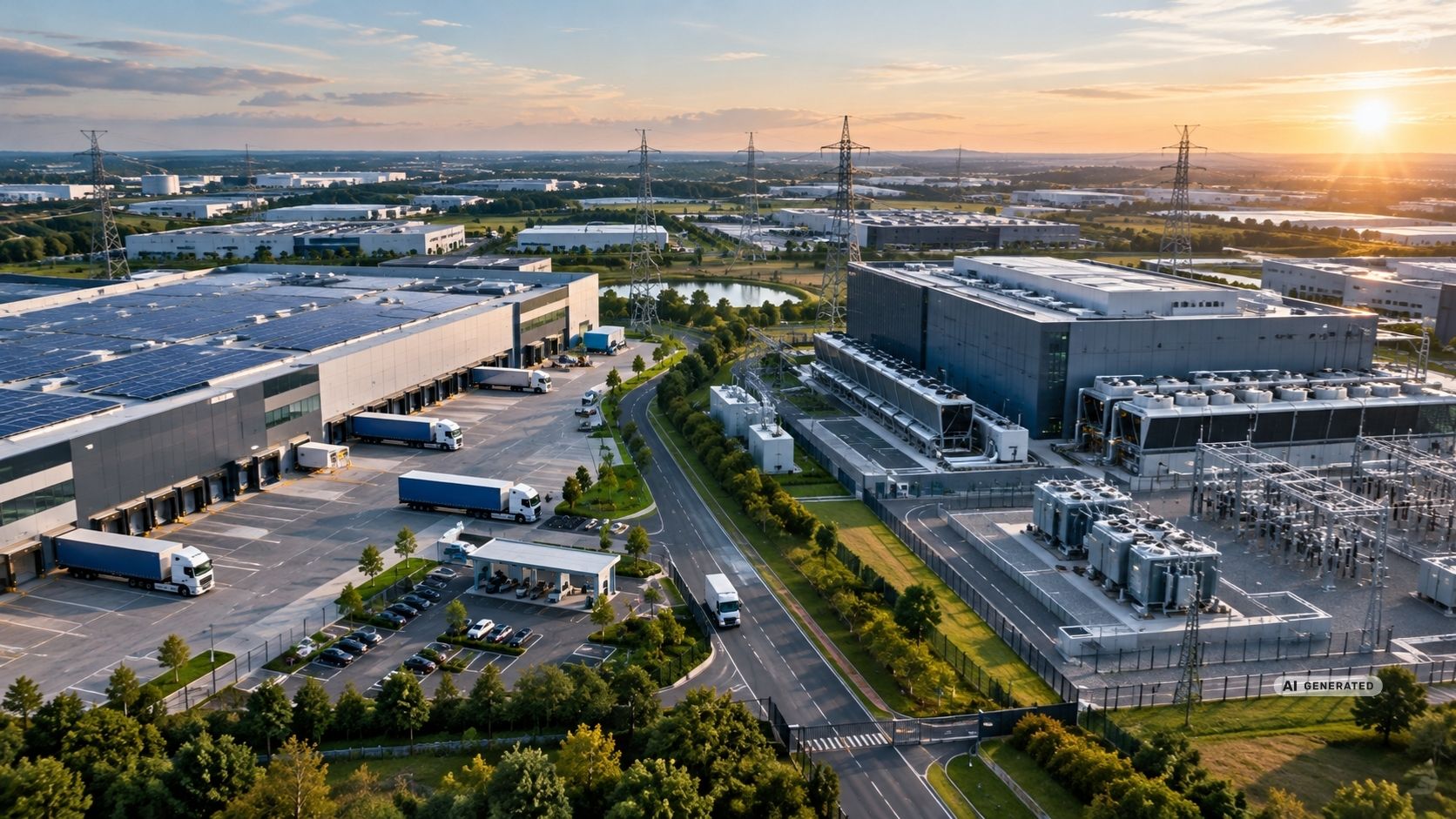
Data Centres vs. Logistics Facilities: The Race for Power and Land
Across Europe, logistics operators are competing for more than land and transport access. They increasingly need something much harder to secure: grid capacity. Data centres are intensifying that competition — and changing how logistics locations are evaluated....
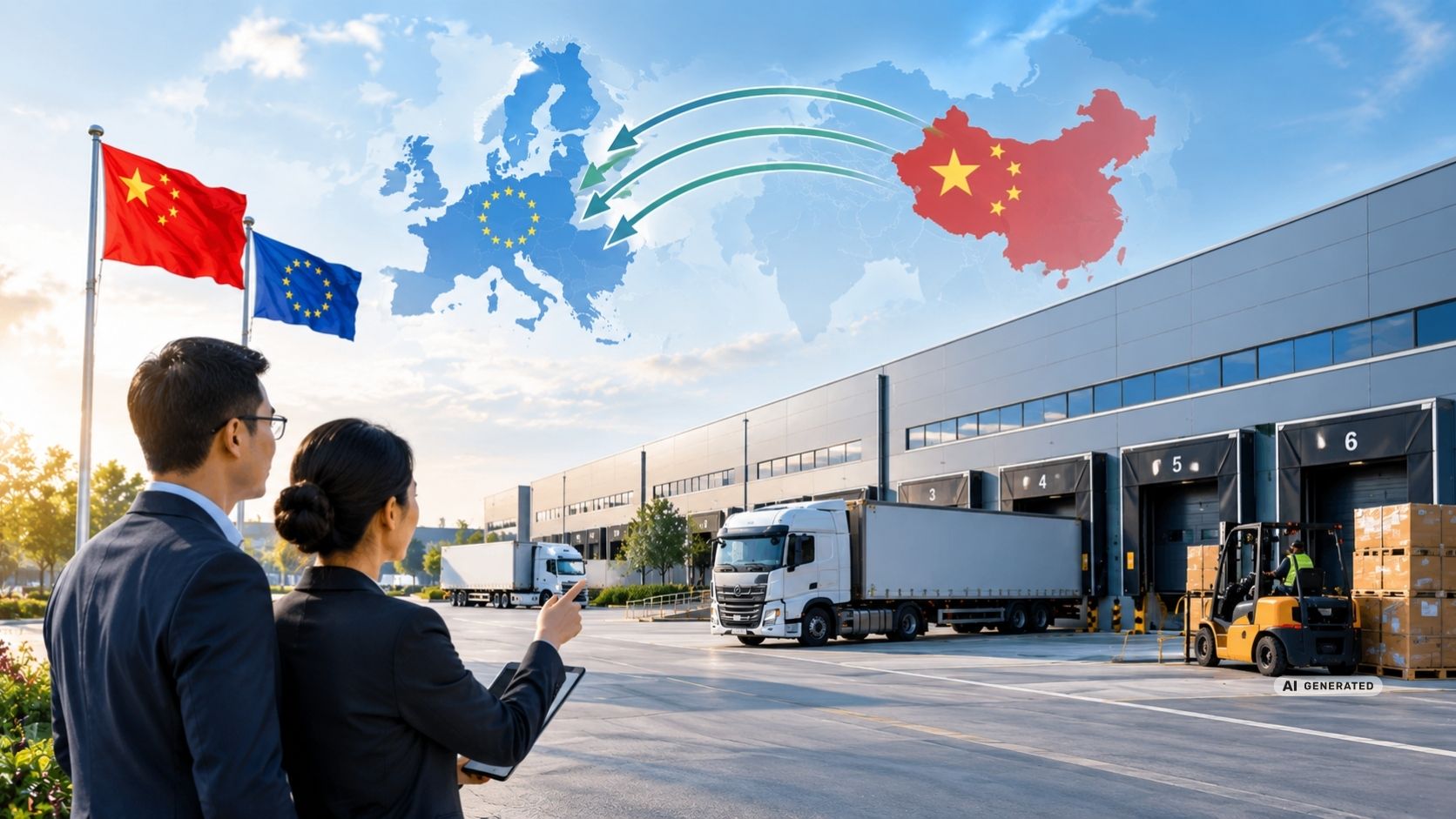
Chinese companies discover Europe's logistics real estate
Chinese companies are becoming an increasingly visible user group in Europe's logistics real estate market. What does this mean for warehouse space, 3PL structures and the requirements for European logistics locations?...
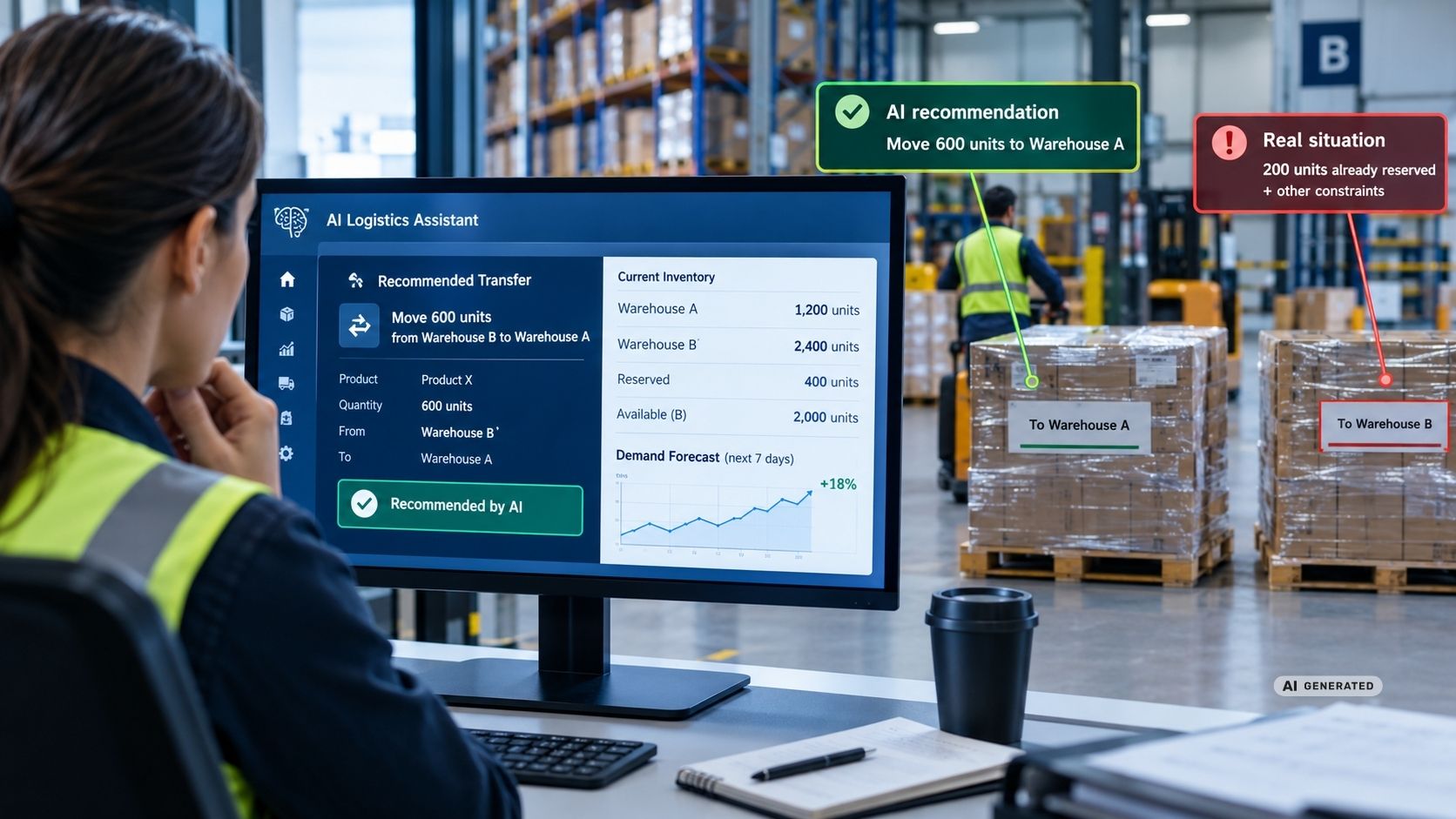
AI Hallucinations in Logistics: When AI Plans the Wrong Delivery
AI can analyze enormous amounts of logistics data — but it can also produce a convincing answer that is simply wrong. The critical question is not whether AI makes mistakes, but what happens when a wrong recommendation becomes an operational decision....
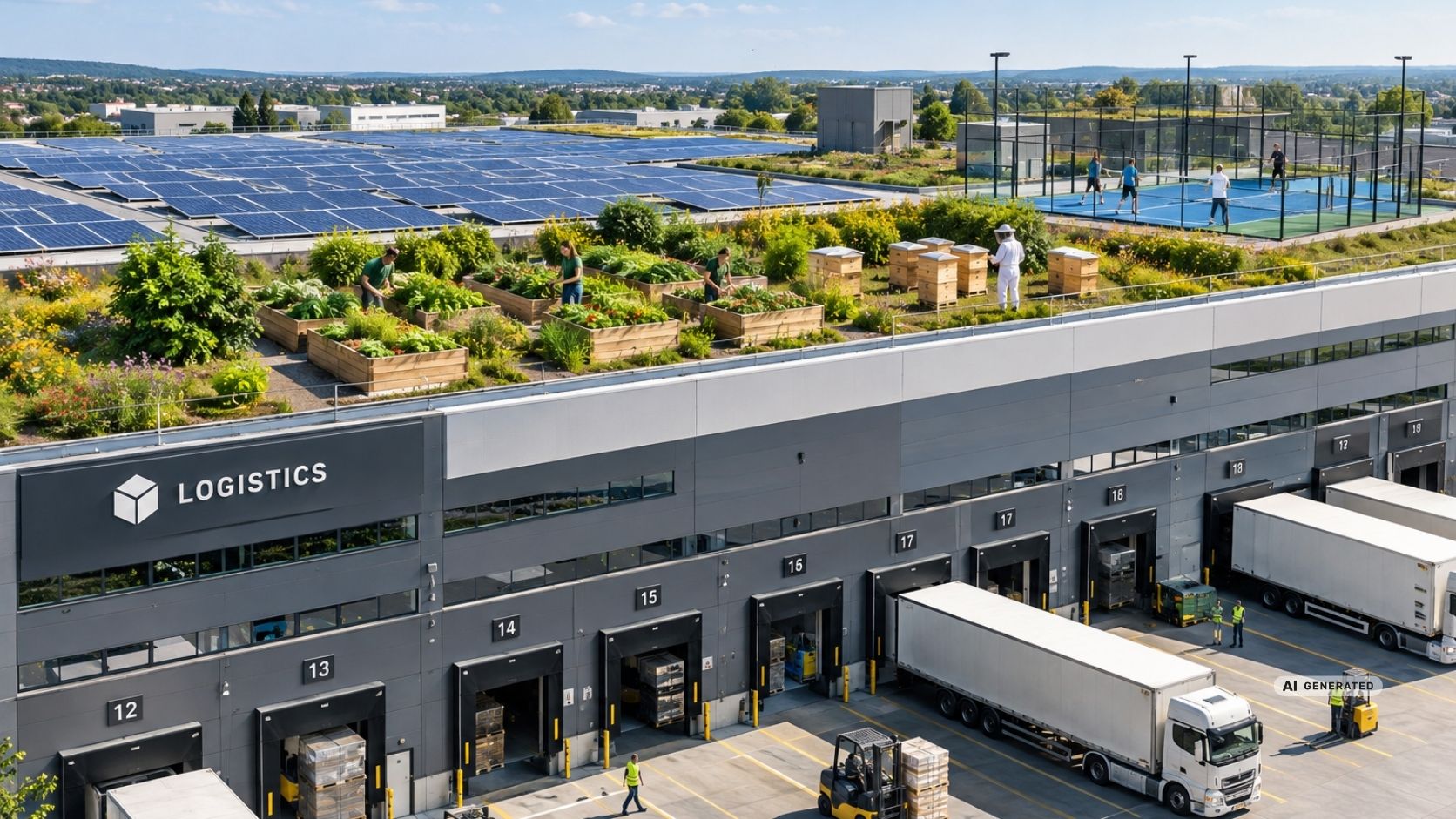
The Green Revolution on the Hall Roof: From Concrete Block to Ecological Power Plant?
Logistics roofs can do more than PV: greening, bees, urban farming and even sports areas turn unused roof space into multifunctional rooms....