


Dual-Use Logistics Real Estate - When Civil Efficiency Meets National Security Strategy
Table of Contents
- Definition and Demarcation: What is a Dual-use Logistics Property?
- The Genesis: How and Why did Dual-use Logistics Develop?
- Who Needs Dual-use Areas? The Target Groups
- Advantages and Disadvantages of Dual-use Halls
- International Comparison: Germany vs. Poland, Baltic States and USA
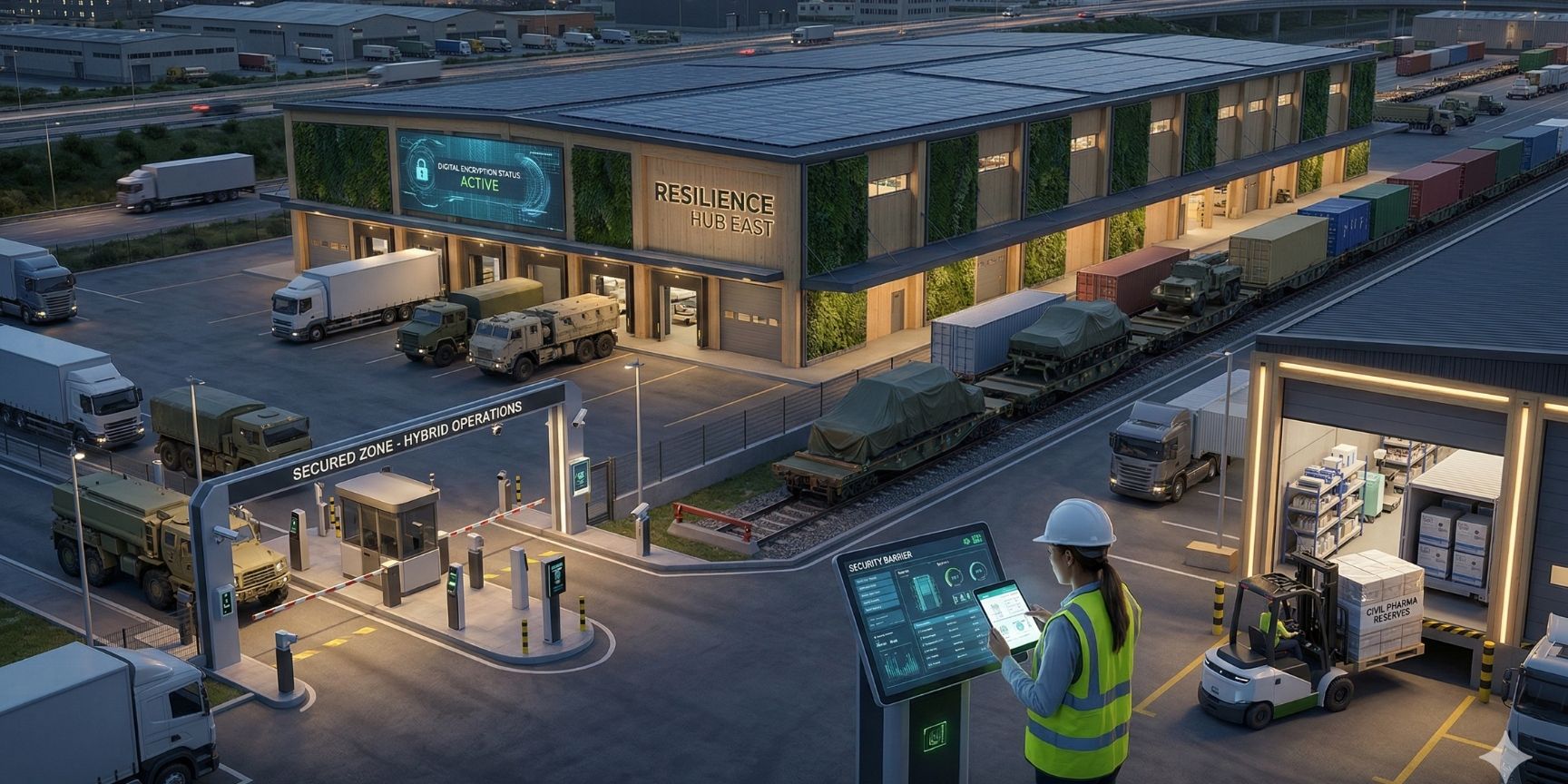
- Practical Example: The "Resilience Hub East" (Case Study)
- The Future: Where is the Journey Heading?
- Conclusion: Why Dual-use is Not a Niche Topic
In a world that is in a state of "permacrisis", the understanding of logistics real estate is changing fundamentally. While the past decade was characterized by the optimization of the "last mile" and maximum space efficiency for e-commerce, a new, strategic type of real estate is now coming into focus: the dual-use logistics property.
But what does this term mean? Why is the bridge between civilian use and military necessity suddenly becoming a decisive factor for investors and project developers? And how does this approach differ from classic models such as the "big box" or "dark warehousing"?
Definition and Demarcation: What is a Dual-use Logistics Property?
To understand the core of dual-use logistics, we need to differentiate it from established concepts.
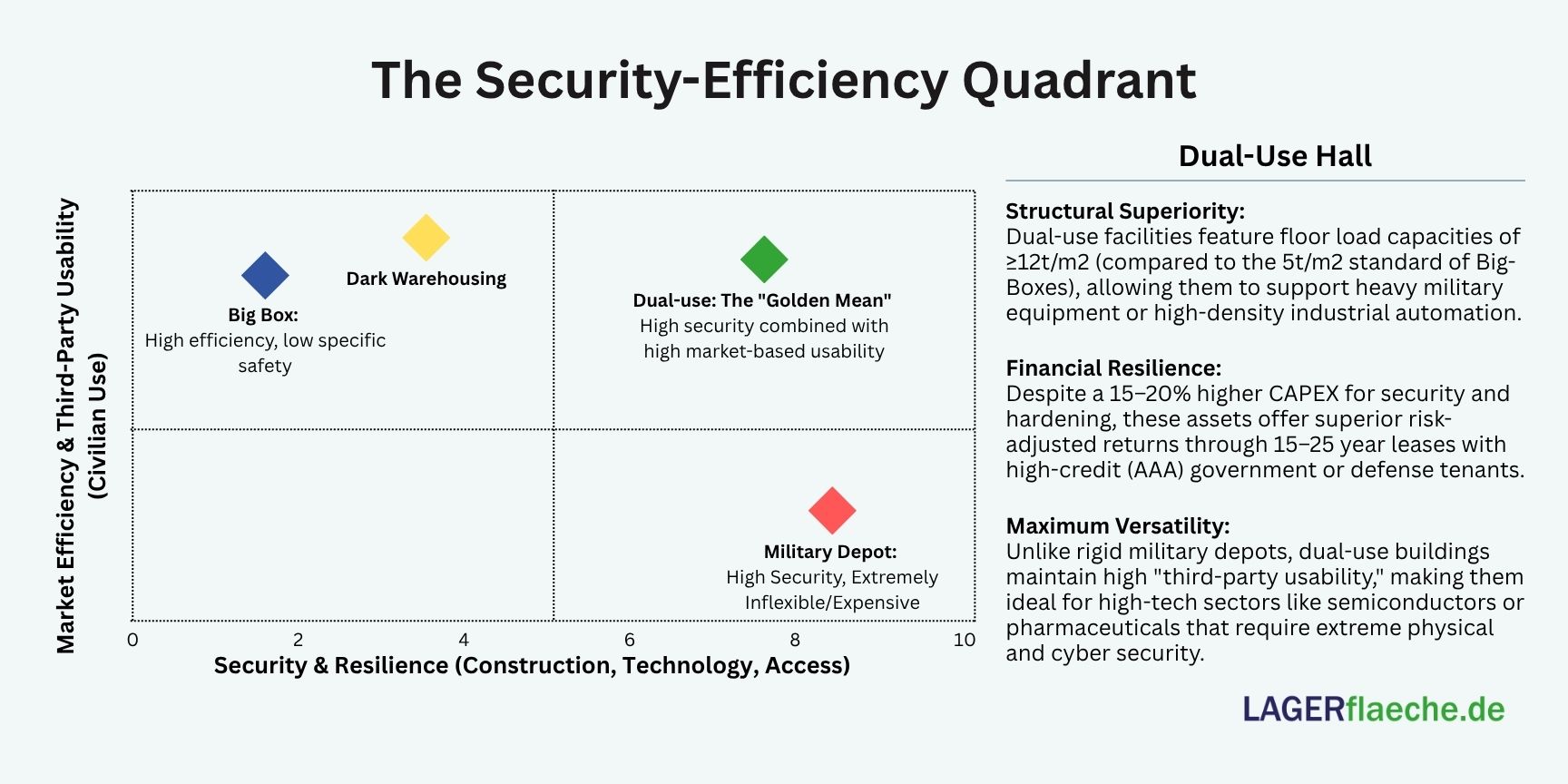
- Big box logistics: These are large-scale standard halls (usually from 10,000 m²) that are optimized for economies of scale and civilian distribution. Focus: Throughput and cost efficiency.
- Dark warehousing: These properties are highly automated, often without human staff (hence "dark") and designed for fast pick-and-pack processes in e-commerce. Focus: mechanization and speed.
- Dual-use logistics properties: These halls are designed to enable highly efficient civil logistics (e.g. automotive, pharmaceuticals or FMCG) in peacetime operations, but can be converted for national security tasks or military logistics within a very short time.
The three pillars of dual-use real estate:
- Physical Resilience: Higher floor loads (often) for heavy equipment.
- Security architecture: Advanced fencing, biometric access controls and cyber security standards (e.g. according to TISAX or military requirements).
- Multimodality: Direct connections to rail, water and heavy-duty corridors.
The Genesis: How and Why did Dual-use Logistics Develop?
The path to dual-use logistics is closely linked to the geopolitical turning point.
Historical context
After the end of the Cold War, the "peace dividend" prevailed. Logistics properties were planned purely in terms of market economy. Inventories were shifted to the road (just-in-time). The infrastructure was trimmed for maximum civilian efficiency, while military storage capacities were massively reduced.
The turning point
Two main factors were decisive:
- The pandemic (2020): It showed the fragility of global supply chains and the lack of strategic reserves (medicines, protective equipment).
- Geopolitical tensions (from 2022): The war in Ukraine made it clear that NATO infrastructure in Europe ("military mobility") is not designed for the rapid deployment and supply of large formations.
Fact: According to the EU's PESCO project "Military Mobility", infrastructures must be designed to meet both civilian and military requirements in order to receive funding. This was the starting signal for a rethink in the real estate industry.
Who Needs Dual-use Areas? The Target Groups
The demand for dual-use properties is fed by a hybrid user base:
| User group | Requirements |
| Defence industry | High safety standards, storage of dangerous goods (ammunition/components), proximity to test sites. |
| Government agencies | Civil protection, stockpiling of emergency reserves (civil protection). |
| High-tech companies | Intellectual property protection, physical security for semiconductors or sensitive hardware. |
| Logistics Service Providers (3PL) | Flexibility to be able to conclude contracts with the defence sector without losing the civilian base. |
Advantages and Disadvantages of Dual-use Halls
Pros
- Resilience: Stronger security against physical and digital attacks.
- Future-proofing: Meeting stricter ESG criteria through durable construction and often self-sufficient energy supply (PV, battery storage).
- Third-party usability: Due to the robust construction (higher ceiling loads, larger doors), these halls can be used for almost any type of industry.
- Eligibility: In certain regions (e.g. eastern Poland, Baltic States) there are state subsidies for security-related infrastructure.
Cons
- Higher construction costs: The investment costs (CAPEX) are about 15-25% higher than those of a standard hall (due to reinforced floor slabs, fire protection and safety technology).
- More complex approval procedures: Safety-related aspects can prolong planning.
- Location limitations: Not every location is strategically relevant; proximity to NATO transport hubs is often crucial.
International Comparison: Germany vs. Poland, Baltic States and USA
The implementation of dual-use concepts varies greatly around the world, driven by the respective threat situation and military doctrine.
Poland and the Baltic States (The Pioneers)
In Poland, the logistics landscape is currently undergoing massive upheaval. Hubs are being built near the border with Ukraine, which handle goods for Western retail chains during the day, but act as logistical relay stations for relief supplies and equipment at night.
- Why? Direct border location to NATO's eastern flank.
- Difference to Germany: Faster approval procedures for strategic projects and closer integration of the private sector and the Ministry of Defence.
USA (The Gold Standard)
In the USA, the concept of "dual-use" has been anchored in the Civil Reserve Air Fleet (CRAF) or in the maritime sector for decades. Logistics properties near military bases are often built with "mobilization readiness" in mind.
Germany (The Latecomer with Potential)
For a long time, Germany was considered a "logistics hub" purely for export.
- Status quo: Many bridges and roads are unsuitable for heavy-duty transport (e.g. self-propelled howitzers).
- Trend: As part of the "Zeitenwende", the German government recognizes that civilian storage space is not sufficient in the event of a crisis. The first projects in eastern Germany (Saxony, Brandenburg) are already geared towards increased safety standards.
Practical Example: The "Resilience Hub East" (Case Study)
Scenario:
An investor is developing a 40,000-metre logistics property near Magdeburg (Intel settlement, proximity to military training areas).
- Civilian use: Storage of semiconductor components and automotive parts.
- Dual-Use-Features:
- Reinforced base plate
- Installation of a 5G campus network for highly secure communication.
- Self-sufficient energy supply via geothermal energy and PV in order to operate autonomously for 72 hours in the event of a grid failure.
- Access roads for special transporters (overwidth/overweight).
- Benefit: In the event of a crisis, the building can serve as a distribution center for medical supplies or spare parts for the military within 48 hours without endangering the statics.
The Future: Where is the Journey Heading?
The future of logistics real estate is hybrid. We will see a move away from the "cheapest" hall to the "most resilient" hall.
Forecasts until 2030:
- Cyber-physical systems: Logistics properties become part of the critical infrastructure (KRITIS) and must comply with corresponding IT security laws.
- Modular construction: Halls are built in such a way that they can be quickly subdivided (safety zones).
- AI-supported site selection: Algorithms will evaluate locations not only according to highway access, but also according to "strategic depth" and safety from natural disasters or geopolitical risks.
Conclusion: Why Dual-use is Not a Niche Topic
Dual-use logistics real estate is the answer to a more uncertain world. They offer investors a hedge against market volatility as they appeal to a broader tenant base – from traditional logistics companies to state actors.
Important questions for the industry:
- Are we prepared to bear the higher initial costs for long-term resilience?
- How can private investors and state security organs cooperate better?
- Does your current portfolio offer the necessary robustness for the requirements of the next decade?
Latest Blog Posts
Stay up to date with the newest trends, insights, and tips in warehouse and logistics. Our latest articles help you navigate the industry with confidence.
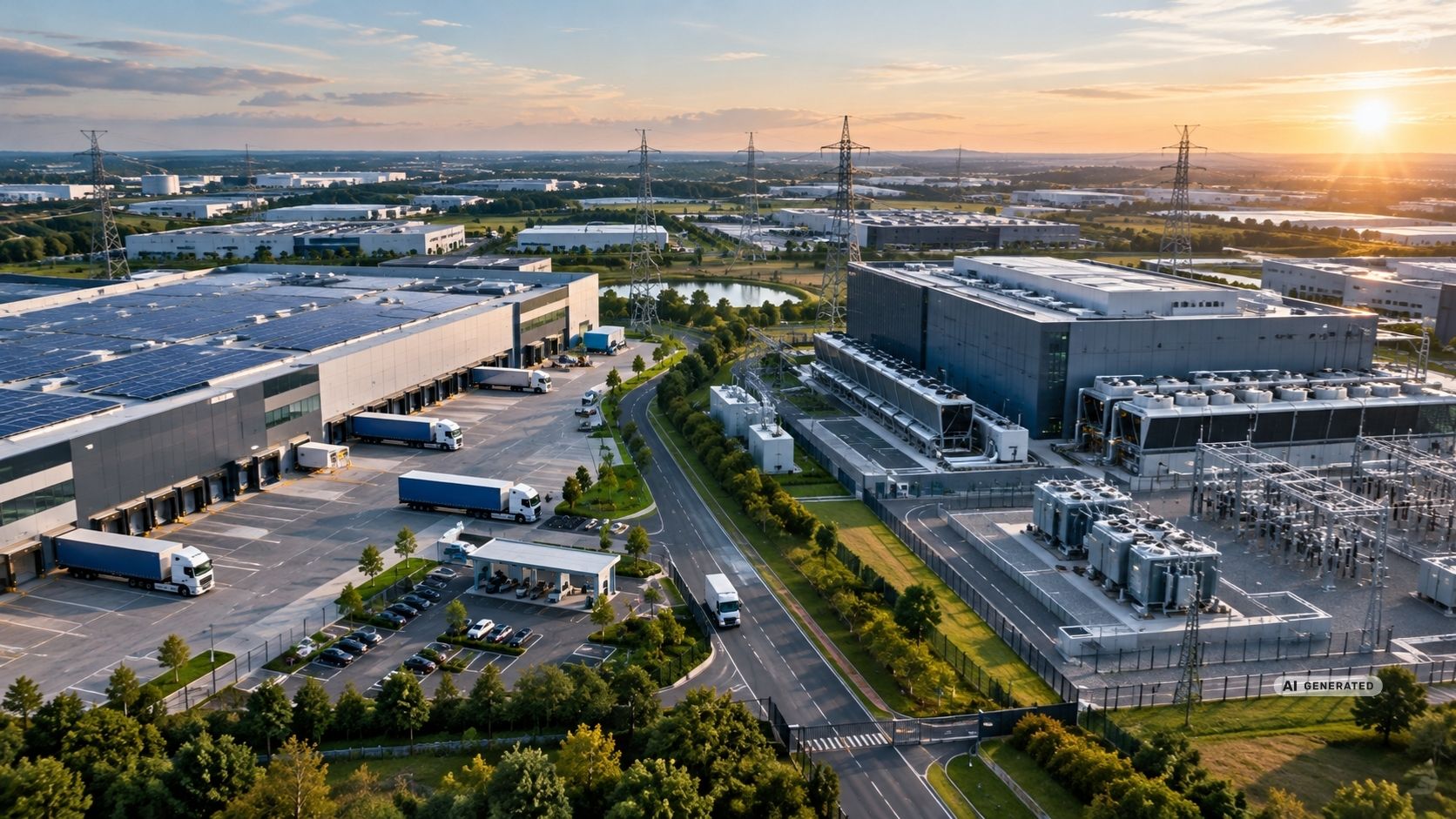
Data Centres vs. Logistics Facilities: The Race for Power and Land
Across Europe, logistics operators are competing for more than land and transport access. They increasingly need something much harder to secure: grid capacity. Data centres are intensifying that competition — and changing how logistics locations are evaluated....
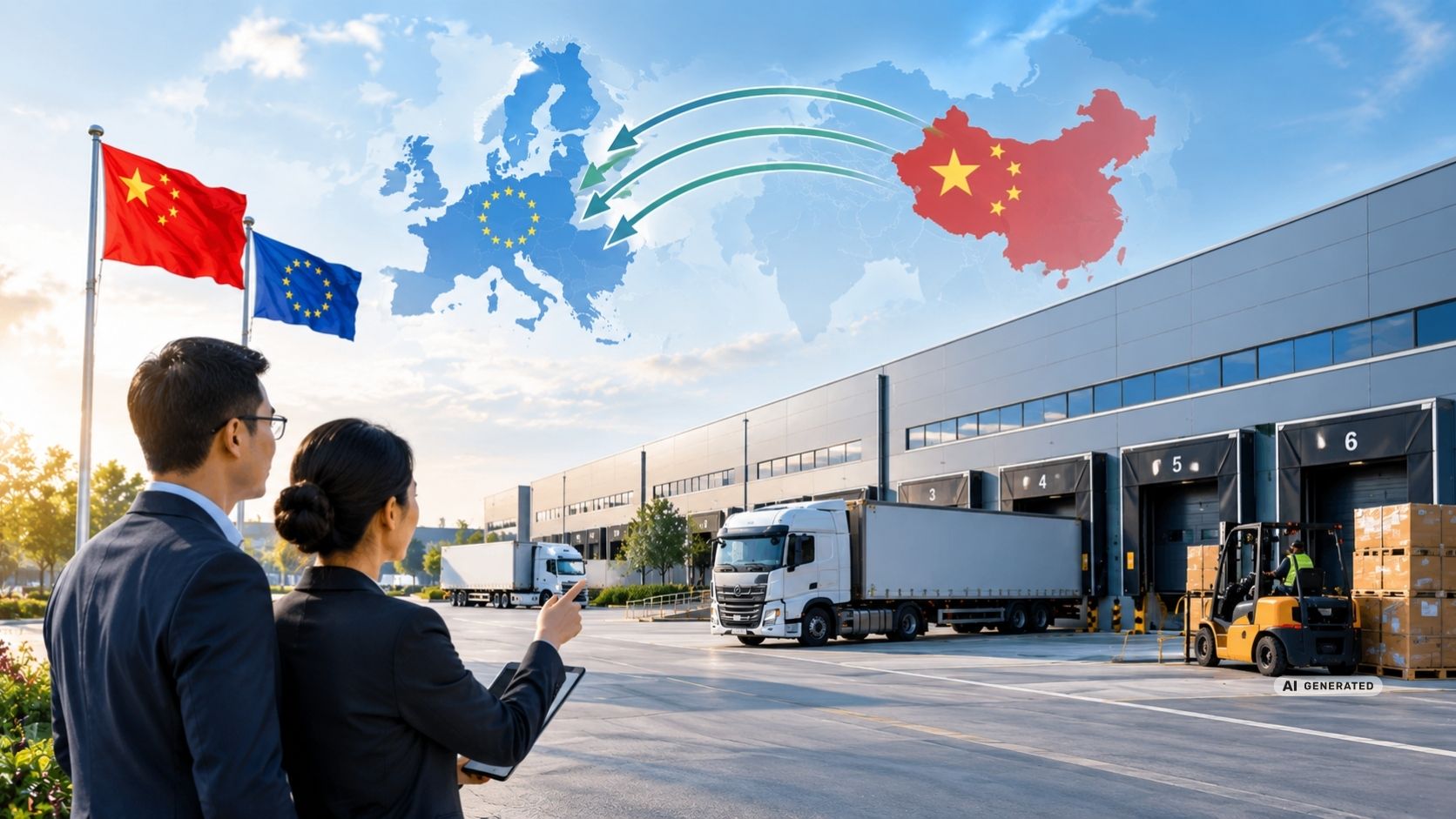
Chinese companies discover Europe's logistics real estate
Chinese companies are becoming an increasingly visible user group in Europe's logistics real estate market. What does this mean for warehouse space, 3PL structures and the requirements for European logistics locations?...
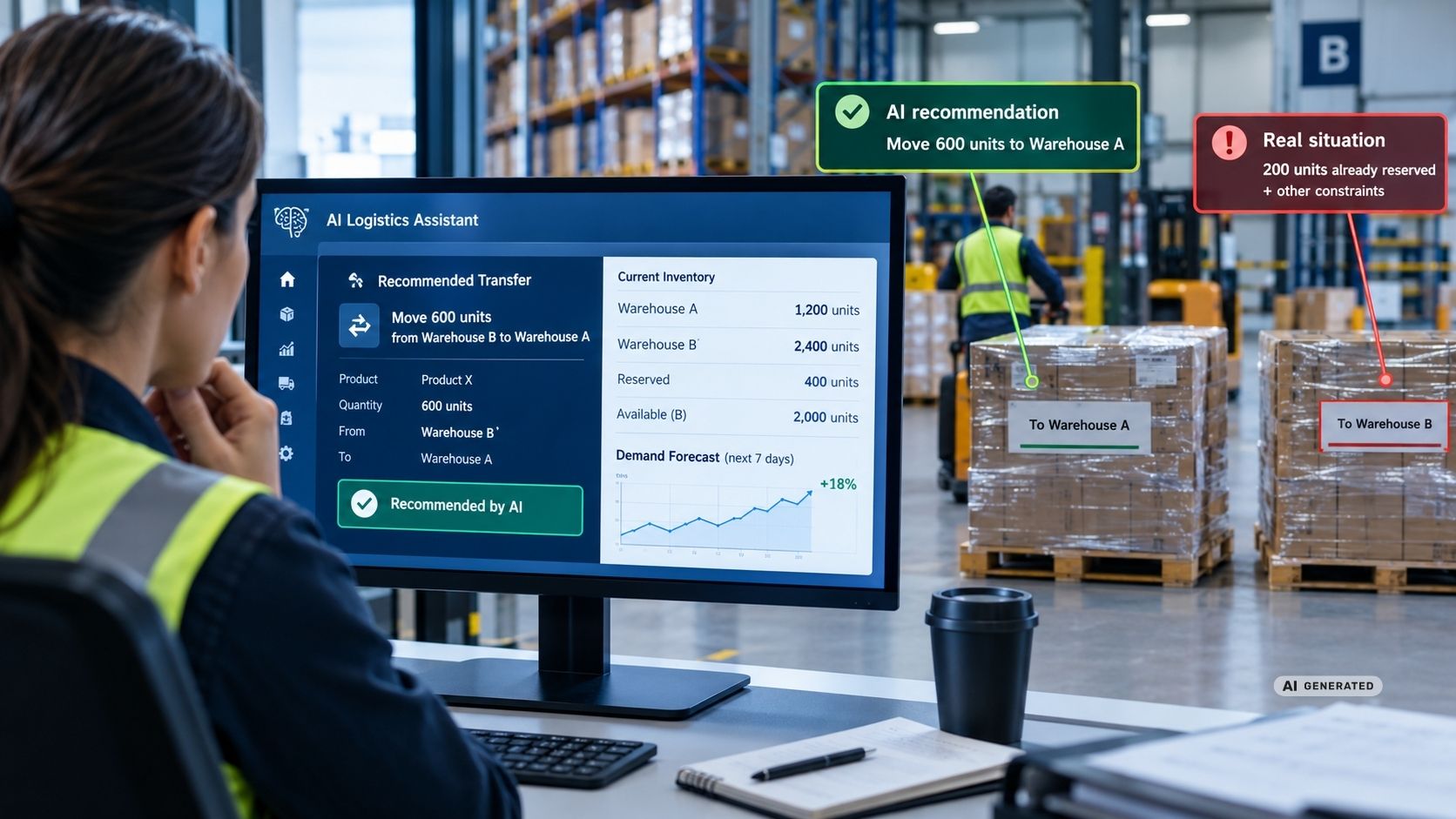
AI Hallucinations in Logistics: When AI Plans the Wrong Delivery
AI can analyze enormous amounts of logistics data — but it can also produce a convincing answer that is simply wrong. The critical question is not whether AI makes mistakes, but what happens when a wrong recommendation becomes an operational decision....
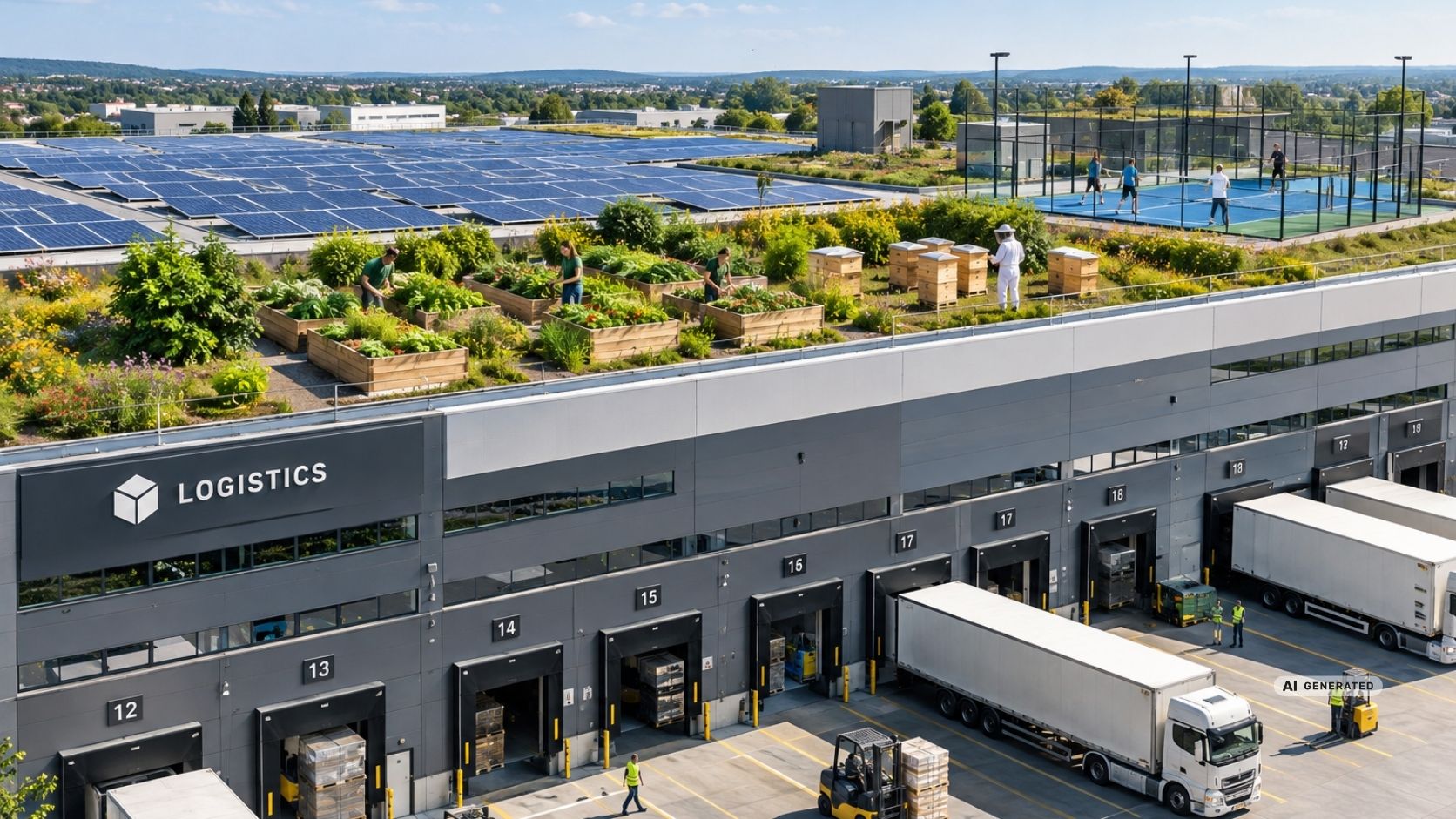
The Green Revolution on the Hall Roof: From Concrete Block to Ecological Power Plant?
Logistics roofs can do more than PV: greening, bees, urban farming and even sports areas turn unused roof space into multifunctional rooms....