



Automatic Inspection Optimizes Pallet Logistics: How AI is Revolutionizing the Warehouse
Table of Contents
- From the Eye of the Needle to the Success Factor: Why Manual Inspection has Become Obsolete
- Process Revolution: How is Warehouse Logistics Changing in Concrete Terms?
- Hard Facts: What Costs are Reduced by the Inspection?
- The Winners of the Supply Chain: Advantages for Logistics Companies and Shippers
- Global Perspective: What are the Differences Worldwide and Why?
- Practical Example: How a Logistics Center Saved 30% Throughput Time
- Interesting Questions & Answers (FAQ)
- Conclusion: The Fully Automated Pallet as the Backbone of the Future
The Euro pallet is the undisputed backbone of the global supply chain. In Europe alone, there are an estimated 600 million EPAL pallets in circulation [source: EPAL Annual Report 2023]. But it is precisely this backbone that often becomes an expensive weak point in highly automated warehouses: a single damaged pallet with a nail sticking out or a broken floor board is enough to paralyze a state-of-the-art AutoStore system or an automated high-bay warehouse (HRL) for hours.
The answer to this problem is: automatic pallet inspection. But how exactly does this technology change processes in warehouse logistics? What enormous costs can really be reduced with this? And why do the USA or Eastern Europe look at this issue completely differently than Germany? In this in-depth guide, we explore the pallet logistics revolution.
From the Eye of the Needle to the Success Factor: Why Manual Inspection has Become Obsolete
Let's take an honest look at the classic goods receipt: The manual visual inspection of a loaded pallet by an employee takes between 1.5 and 3 minutes on average. For a logistics center that handles 1,000 pallets a day, these checks tie up valuable human resources.
In addition, humans are prone to errors. Fatigue, poor lighting in the loading yard or simply time pressure lead to hairline cracks in the wood or slightly displaced blocks being overlooked.
Question: What is the error rate for manual pallet checks?
Answer: Studies in intralogistics show that up to 15% of critical pallet defects (which later lead to malfunctions in automated warehouses) are not detected during manual visual inspections [Cf. Fraunhofer IML Estimates on Intralogistics].
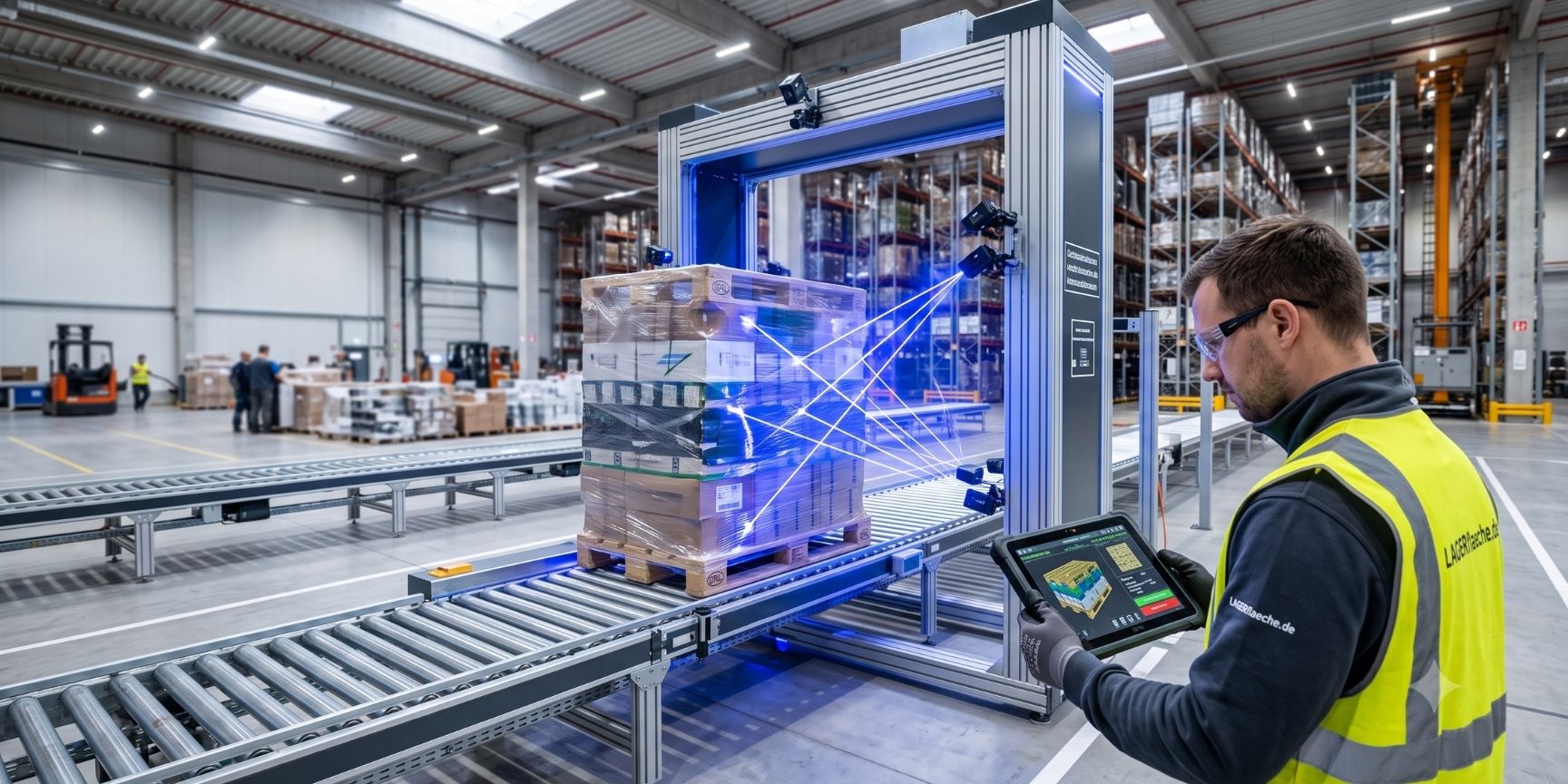
Automatic inspection, on the other hand, uses a combination of high-speed cameras, 3D laser profiling and artificial intelligence (computer vision). It scans the pallet from all sides (often even from below through gaps in the conveyor belt) in milliseconds, compares the data with thousands of error images and decides in real time: "Go" or "No-Go" (reject for repair).
Process Revolution: How is Warehouse Logistics Changing in Concrete Terms?
The implementation of an automated inspection gate fundamentally changes the DNA of warehouse processes. It's not just about photographing a piece of wood, but about seamless integration into the material flow.
- The goods receipt becomes an express gateway: the time-consuming stop for quality control is no longer necessary. Forklift drivers only set the pallet down at the transfer point. The system takes care of the rest.
- Real-time data integration (WMS/ERP): The system is directly connected to the warehouse management system. If the pallet is intact, it is immediately booked in the inventory and given a storage space in the high rack.
- Automated classification: The system not only detects "broken" or "whole", but also classifies according to A, B or C quality. For example, high-quality A-pallets can be reserved specifically for the food or pharmaceutical industry, while B-pallets go to heavy industry.
- Objective evidence at the transfer of risk: If there is a dispute with the carrier about damaged goods or pallets, the system provides high-resolution, time-stamped 360-degree evidence.
Hard Facts: What Costs are Reduced by the Inspection?
For logistics service providers and shippers, automated inspection is not just a technology gimmick, but a massive lever to increase returns (reduce OPEX).
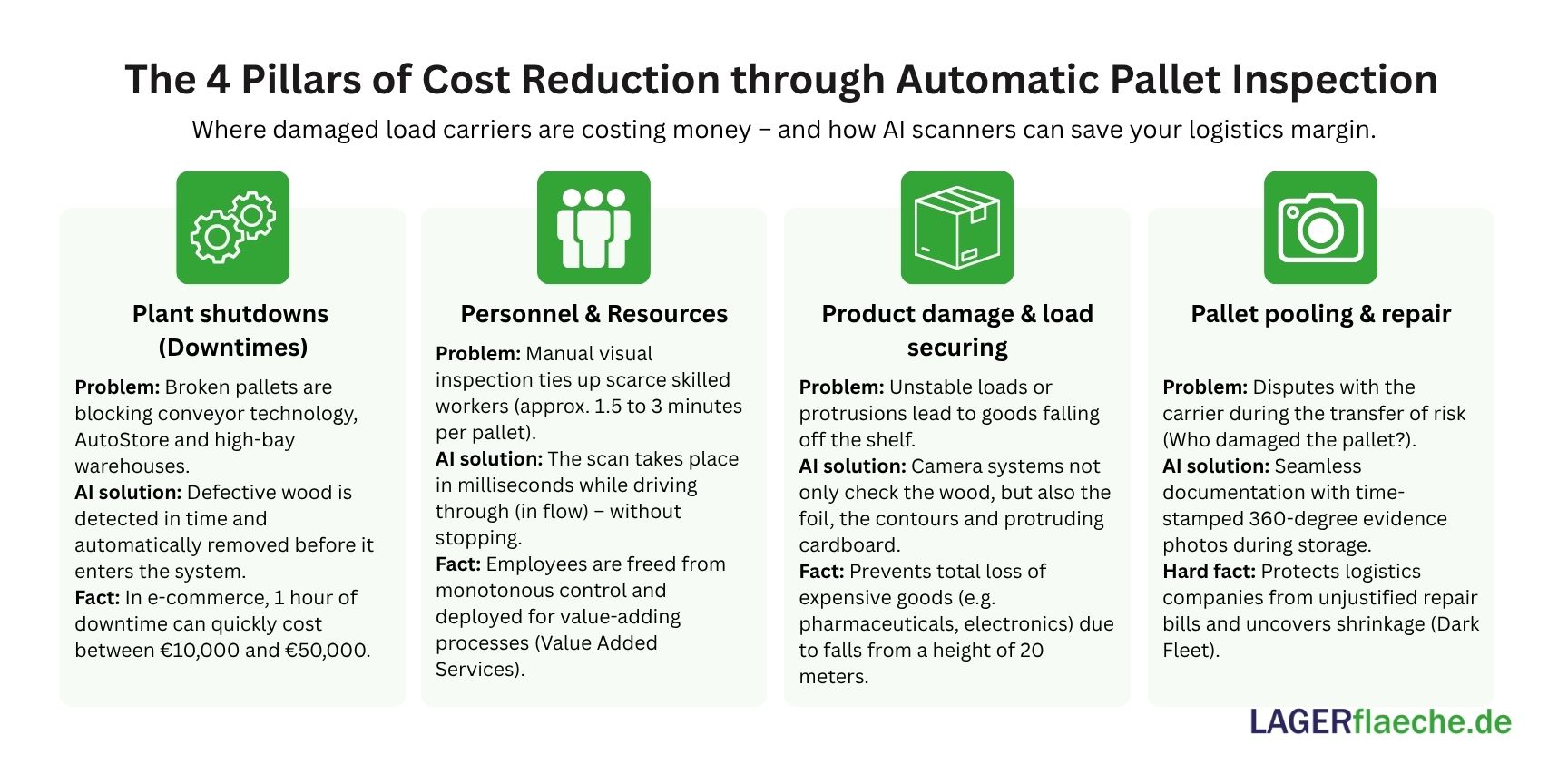
- Avoidance of plant downtimes (downtime costs): This is the biggest lever. If a broken pallet blocks a stacker crane (SRM) at a height of 20 meters, the system comes to a standstill. The recovery requires specialists. A one-hour standstill in an e-commerce fulfillment center can quickly cost 10,000 to 50,000 euros in lost sales and penalties.
- Reduction of personnel costs: Skilled workers in the warehouse are expensive and rare. By eliminating manual control, employees can be used for value-added services (order picking).
- Less product damage: An unstable pallet often leads to the fall of the goods on it. The automatic inspection also checks the load securing (protrusions, foiling) and thus protects the value of the goods.
- Optimized pallet pooling: If you have precise data on the wear and tear of your load carriers, you can better plan repairs. The waste demonstrably decreases.
The Winners of the Supply Chain: Advantages for Logistics Companies and Shippers
Who benefits most from this technology?
- For the contract logistics provider (3PL): It ensures the availability of its automated systems (often required >98%). In addition, he can guarantee his customers (the shippers) complete documentation and higher process reliability – a strong selling point in warehouse tenders.
- For the shipper (producer/retailer): He benefits from faster throughput times (time-to-market). His goods reach the end customer more safely and without delays due to logistical bottlenecks.
- For the pallet pooling company (e.g. CHEP, LPR): Accurate data collection helps to minimize shrinkage (the so-called "dark fleet") and predict repair cycles.
Global Perspective: What are the Differences Worldwide and Why?
Pallet logistics is not a globally homogeneous entity. Cultural, economic and infrastructural differences shape the market. How does Germany compare?
Germany: The standardization world champion
In Germany and large parts of Western Europe, the EPAL Euro pallet (800 x 1200 mm) rules. The market is extremely standardized and highly regulated. Due to the extremely high personnel costs and the acute shortage of skilled workers, the degree of automation in German logistics real estate is world-leading. Automatic pallet inspection is almost a mandatory prerequisite for securing expensive AutoStore or shuttle systems.
USA: Volume above standard
The US market is radically different. The GMA (Grocery Manufacturers Association, 48 x 40 inches) palette dominates here. Why is this important? The classic US pallet is often a so-called "stringer pallet". It is cheaper to produce, but less robust than the European block range (EPAL). In the USA, gigantic warehouses (often over 100,000 m²) are available, which traditionally relied heavily on manual forklift logistics. But that is changing: Due to the exploding e-commerce growth, the USA has to automate massively. Automatic inspection is currently the largest growth market there, as the cheaper US pallets lead to malfunctions in automated warehouses much more often than in Europe.
Eastern Europe (focus on Poland): The booming market in transition
Poland has become the largest logistics hub for e-commerce in Europe (e.g. for Amazon, Zalando). Historically, a lot of checks were done manually, as labor costs were significantly lower compared to Germany. The turning point: Wages in Poland are rising rapidly, and there is also a shortage of workers here. Large project developers (such as Panattoni or CTP) are now building logistics properties in Poland that are in no way inferior to those in Germany in terms of technology. Automatic pallet inspection is currently being retrofitted in Polish hubs at record speed in order to be able to cope with the gigantic cross-border volumes (cross-border e-commerce).
Asia (Focus China & Japan): High-Tech vs. Fragmentation
While Japan (similar to Germany) is highly automated and focused on quality, the Chinese market has long been extremely fragmented (countless pallet dimensions made of plastic and wood). Only in recent years has the Chinese government forced standardization. In the gigantic, new "dark warehouses" (deserted warehouses) of Alibaba or JD.com, sensor- and AI-supported pallet inspection is already standard, as humans are no longer provided for in these facilities.
Practical Example: How a Logistics Center Saved 30% Throughput Time
To illustrate the practical value, let's look at an (anonymized) best-practice case of a medium-sized contract logistics company in the Cologne area that stores cosmetics for the B2C market.
The initial situation:
The company invested 5 million euros in an automated shuttle warehouse. But the system was shut down for several hours a week because defective exchange pallets from the truck infeed blocked sensors or jammed on the conveyor lines. The manual incoming inspection was overloaded.
The solution:
The installation of an AI-powered pallet inspection portal directly behind the unloading dock.
- The process: The forklift sets the bunch down, the conveyor system pulls the pallets through the portal at 1.5 meters per second.
- The result: 99.8% of the defective pallets (e.g. loose nails, deviations in size) were detected before entering the shuttle warehouse and ejected onto a "repair lane".
- The ROI (return on investment): Due to the saved personnel costs (two employees per shift could switch to order picking) and the elimination of expensive plant downtimes, the inspection gate paid for itself after just 14 months. The total throughput time in goods receipt decreased by 30%.
Interesting Questions & Answers (FAQ)
Question: Does the automatic inspection also detect moisture or mold on the wood?
Answer: Yes. Modern high-tech gates not only work with optical cameras, but also use infrared and multispectral sensors. This allows them to detect whether the moisture in the wood exceeds the limit value (e.g. 22% according to the EPAL standard), which is particularly critical in pharmaceutical logistics.
Question: Can the AI also check the load on the pallet?
Answer: Absolutely. Many systems can be expanded on a modular basis. The cameras simultaneously check whether the cartons on the pallet are protruding (which would block light barriers in the warehouse), whether the stretch film is torn or whether the barcode / RFID tag is readable.
Question: Is the investment also worthwhile for smaller outdoor storage facilities or block storage facilities?
Answer: Rather rarely. In pure block or outdoor warehouses, where pallets are only moved by forklift and placed on the floor, damaged pallets rarely lead to disasters. The enormous cost advantage of automatic inspection unfolds primarily where fully automated intralogistics trades (high-bay warehouse, conveyor technology) are in use.
Conclusion: The Fully Automated Pallet as the Backbone of the Future
Today, the logistics market no longer forgives inefficiencies. Growing cost pressure, stricter sustainability requirements (CSRD) and extreme staff shortages are forcing companies to optimize every millimeter of their supply chain.
Automatic pallet inspection is no longer a luxury, but a strategic survival necessity for modern logistics properties. It transforms the error-prone goods receipt into a data-driven, high-precision express gateway. Whether in the highly regulated halls of Germany, the gigantic hubs of the USA or the booming markets of Eastern Europe: If you want to remain competitive in the future, you have to ensure that not only the data, but also the wood flows through the supply chain without errors.
💡 Are you currently planning to automate your intralogistics or are you looking for a logistics property that is state-of-the-art? On the LAGERflaeche.de specialist portal, you will not only find in-depth information, but also directly the right locations and contract logistics partners who have already anchored efficiency in their DNA. Search for your next, optimized logistics location now!
Latest Blog Posts
Stay up to date with the newest trends, insights, and tips in warehouse and logistics. Our latest articles help you navigate the industry with confidence.

Data Centres vs. Logistics Facilities: The Race for Power and Land
Across Europe, logistics operators are competing for more than land and transport access. They increasingly need something much harder to secure: grid capacity. Data centres are intensifying that competition — and changing how logistics locations are evaluated....

Chinese companies discover Europe's logistics real estate
Chinese companies are becoming an increasingly visible user group in Europe's logistics real estate market. What does this mean for warehouse space, 3PL structures and the requirements for European logistics locations?...
AI Hallucinations in Logistics: When AI Plans the Wrong Delivery
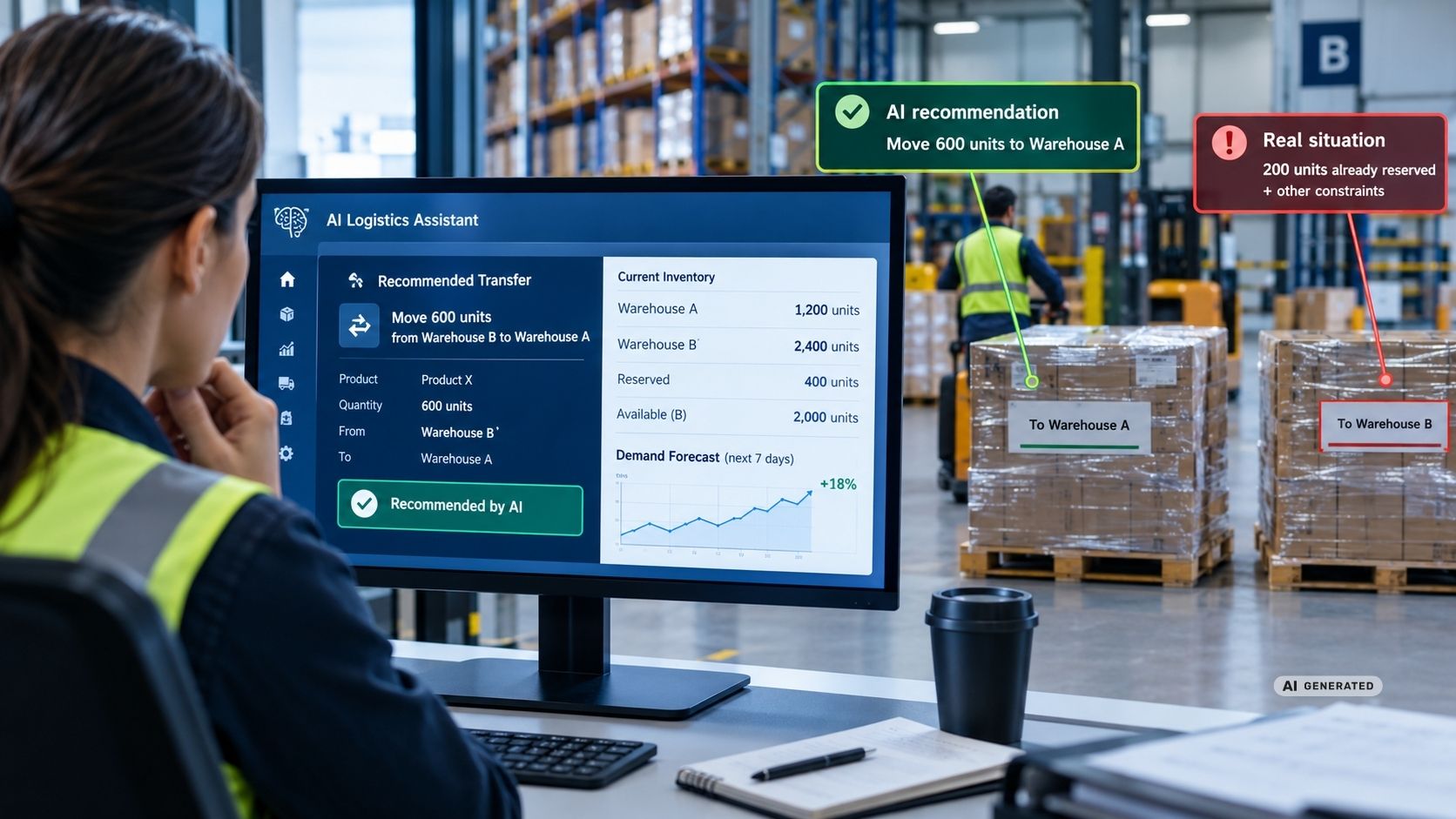
AI can analyze enormous amounts of logistics data — but it can also produce a convincing answer that is simply wrong. The critical question is not whether AI makes mistakes, but what happens when a wrong recommendation becomes an operational decision....
The Green Revolution on the Hall Roof: From Concrete Block to Ecological Power Plant?
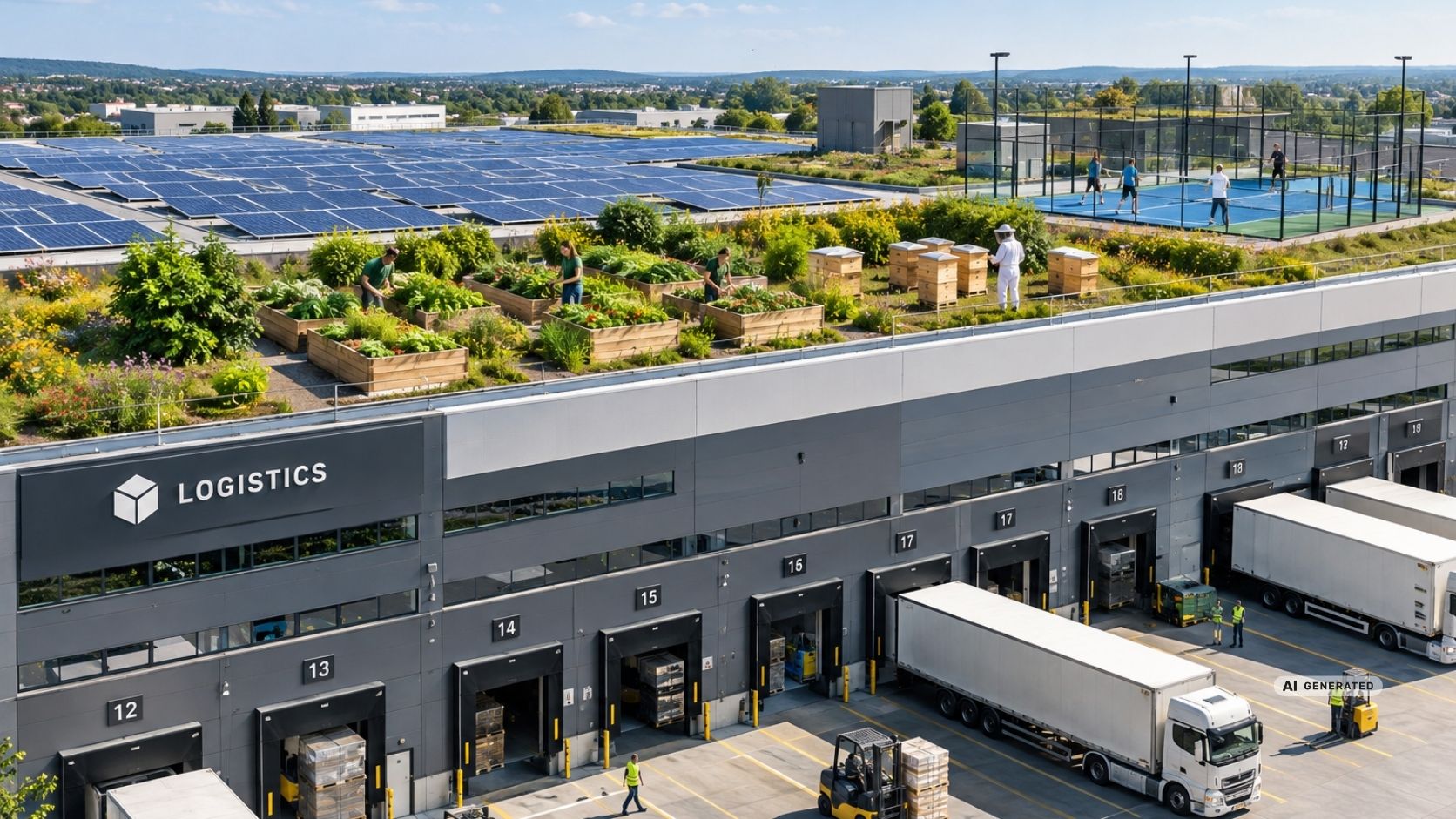
Logistics roofs can do more than PV: greening, bees, urban farming and even sports areas turn unused roof space into multifunctional rooms....