




Cross-border e-commerce in warehouse logistics
Table of contents
- What does cross-border e-commerce mean for the supply chain?
- The architecture of the ideal logistics property for international trade
- Contract logistics as the key to cross-border success
- Strategic choice of location: Where should the hall be located?
- Data and IT interfaces: The invisible backbone of the hall
- Returns management in cross-border fulfillment
- FAQ: Frequently asked questions about cross-border e-commerce
- Future of CBEC Logistics: Automation, Data & ESG
Cross-border e-commerce (CBEC) is one of the fastest-growing sectors of the global economy. Market studies predict that the global volume of the CBEC will break through the multi-trillion euro mark in the coming years. But while digital sales and marketing seem to be limitlessly scalable, physical processing poses enormous infrastructural challenges for companies. If you want to ship products across national borders to end customers quickly, cost-efficiently and in a legally compliant manner, you need more than just smart software. You need a physical infrastructure that combines maximum speed with customs precision.
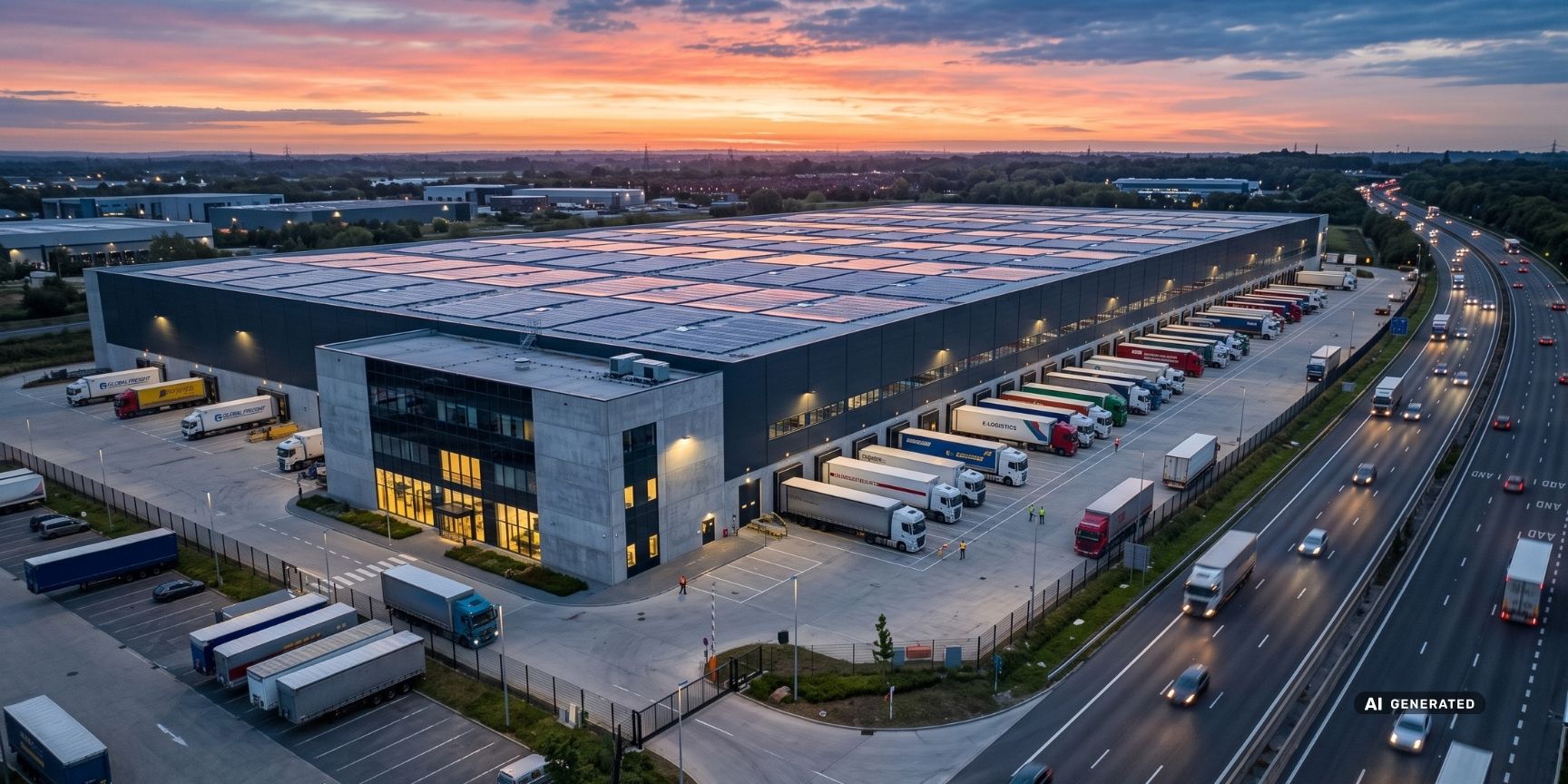
What does cross-border e-commerce mean for the supply chain?
In classic, nationally focused e-commerce, a central distribution center is often sufficient to serve the market in 24 to 48 hours. In the cross-border sector, however, this complexity multiplies abruptly. Companies are confronted with longer transit times, differing customs and tax regulations, fluctuating freight rates and highly complex returns processes.
Warehouse logistics is thus moving from a pure cost factor (cost center) to a strategic enabler. The warehouse space is no longer just used to store pallets, but is becoming a dynamic international hub. This is where freight consolidation, direct customs clearance processes and the so-called "injection" of the parcels into the local networks of CEP service providers (courier, express, parcel) of the respective destination countries take place. This requires a completely new, highly agile supply chain design.
The architecture of the ideal logistics property for international trade
Not every ordinary industrial or warehouse is suitable for the requirements of international e-commerce. The extremely high throughput of small parts largely dictates the architecture and nature of the property. Project developers and tenants must pay attention to specific features:
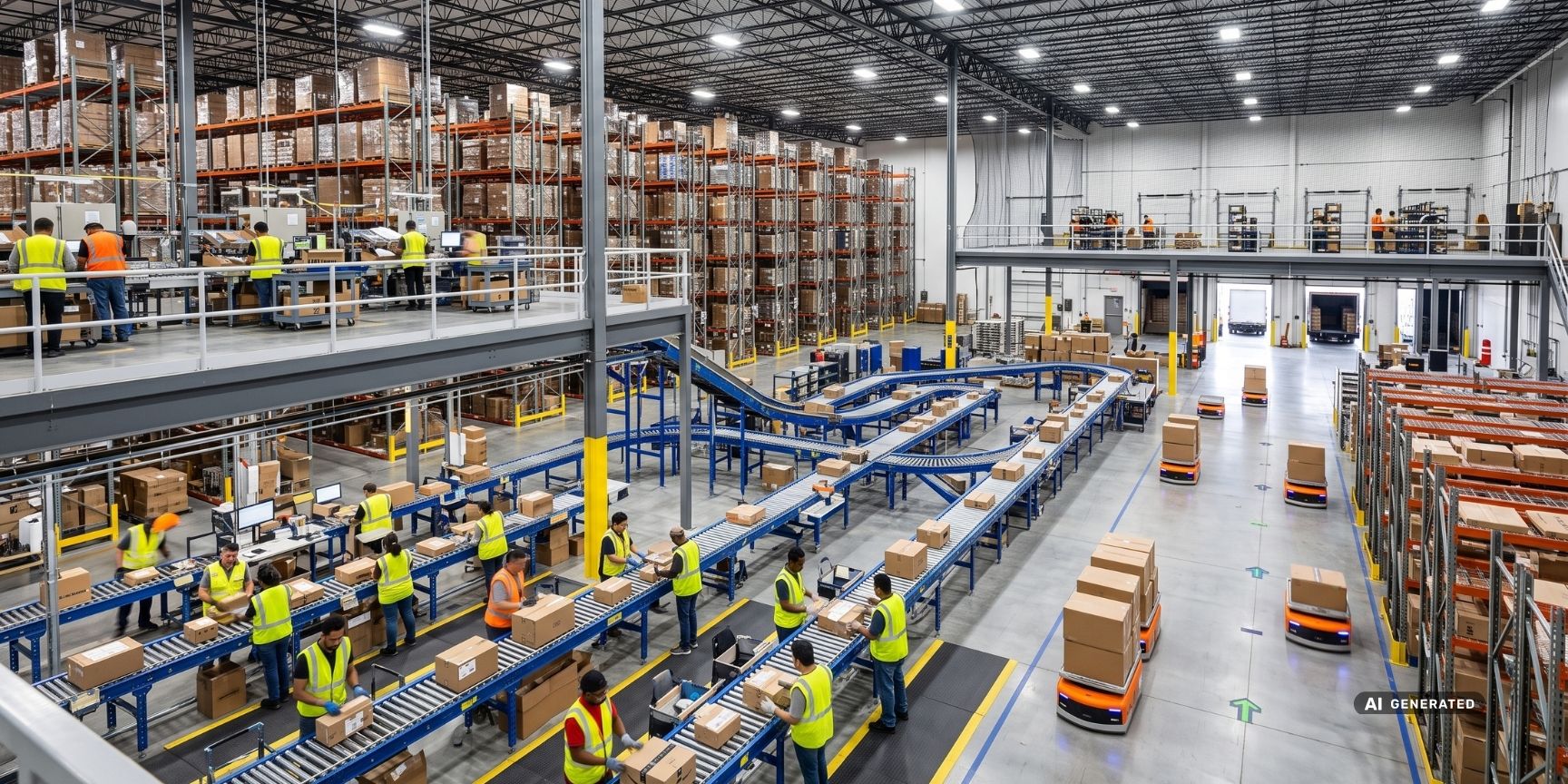
- Mezzanine areas: Since the CBEC requires an enormous amount of manual or semi-automated pick-and-pack work, retracted mezzanines multiply the usable area for shelving without having to expand the expensive floor space of the logistics property.
- Loading gates and cross-docking: The high frequency of arriving sea freight containers and departing Sprinters from CEP services requires a high number of doors. The industry standard here is at least one overload door per 1,000 square metres of hall space in order to avoid bottlenecks (traffic jams).
- Customs warehouse suitability: A CBEC hall often has to meet the strict structural and security requirements for an open customs warehouse (OZL), including TAPA security certifications, video surveillance and fenced areas.
Contract logistics as the key to cross-border success
Setting up your own warehouse location in a new target market ties up enormous capital (CAPEX) and involves strategic risks. This is why more and more retailers are turning to outsourcing. Contract logistics offers highly professional solutions here.
Specialized logistics service providers (3PL) not only provide the required storage space in multi-user warehouses, but also take care of the entire process as fulfillment partners. Through value-added services (VAS) such as country-specific packaging, the enclosing of local operating instructions or the replacement of power plugs, the goods are made marketable directly in the hall. Through transaction-based billing models (pay-per-pick or pay-per-parcel), fixed real estate costs are converted into variable, easily calculable expenses (OPEX).
Strategic choice of location: Where should the hall be located?
The geographical location of the logistics center is the biggest lever for reducing freight costs and delivery times (lead times). In the European CBEC environment, certain regions and networks currently dominate:
- Trimodal hubs: Locations with direct connections to air freight (e.g. Liège in Belgium or Frankfurt am Main) as well as to rail and road are indispensable for intercontinental flows of goods from Asia or the USA.
- Logistics hotspots close to the border: Warehouse locations have been established in western Poland or the Czech Republic (e.g. Pilsen) for efficient delivery to Western European markets with purchasing power (especially the DACH region). They offer access to sufficient specialist staff and attractive rental prices for commercial properties, but still enable delivery to Germany within 24 hours thanks to the direct motorway connection.
Data and IT interfaces: The invisible backbone of the hall
The best logistics property in cross-border trade only works if it is digitally seamlessly networked. IT integration – i.e. error-free communication between the retailers' ERP systems, the contract logistics provider's warehouse management system (WMS) and the customs software – is critical to success. Modern logistics service providers offer plug-and-play interfaces that process incoming orders in milliseconds, generate customs documents fully automatically and enable end customers to track transparently across all national borders.
Returns management in cross-border fulfillment
Around 20 to 40 percent of fashion items ordered online are returned. In cross-border trade, so-called reverse logistics is often the most critical and expensive process. Sending each parcel individually across the border back to the country of origin destroys any margin and does enormous damage to the environment.
Clever supply chain strategists are therefore setting up dedicated returns hubs in their foreign logistics properties. The contract logistics companies collect the returns locally, carry out strict quality checks, refurbish the goods and either feed them directly back into the local inventory or send them back to their home country as consolidated pallet freight at a low price.
FAQ: Frequently asked questions about cross-border e-commerce
Question: When does a local warehouse or a contract logistics provider in the destination country become worthwhile?
Answer: A logistical rule of thumb is that if the parcel postage costs and customs fees for individual shipments from the home country exceed the costs for consolidated truck freight plus the pick & pack fees of the local service provider in the destination country, the switch is economically imperative. In most cases, this break-even point is reached at a few thousand parcels per month.
Question: What is meant by a "bonded warehouse" in logistics?
Answer: A bonded warehouse is an officially approved customs warehouse. In this specially secured and approved warehouse, goods from third countries (non-EU) can be stored duty-free and import VAT-free. The duties are only due when the item actually leaves the warehouse to be delivered to the consumer. This protects the liquidity of retailers enormously and enables flexible distribution strategies.
Question: Is automation absolutely necessary in CBEC logistics?
Answer: Increasingly, yes. Due to the Europe-wide shortage of skilled workers in warehouse logistics, project developers and contract logistics companies are relying massively on automation. Autonomous mobile robots (AMRs), AI-supported sorting systems and automatic packaging machines are often standard today in order to be able to cope with the extreme seasonal peaks (such as peak seasons on Black Friday) in international trade.
Future of CBEC Logistics: Automation, Data & ESG
The market for cross-border e-commerce will continue to grow and have a lasting impact on the logistics industry. In addition to advancing automation, ESG criteria (environmental, social, governance) are coming into focus. End customers and institutional investors are demanding transparent and green supply chains. Modern logistics properties must increasingly be operated in a climate-neutral manner, for example through the use of large-scale photovoltaic systems on the hall roofs, modern heat pumps and strict building certifications (DGNB, BREEAM).
Only companies that combine excellent data integration, sustainable use of space and strong contract logistics partners will be ahead in the global trade of tomorrow and position themselves sustainably on the market.

Your Ideal Logistics Warehouse
Browse listings for warehouse space, logistics real estate, industrial land, and contract logistics solutions.
Browse Exposés
Maximize Exposure for Your Warehouse Space
Showcase your logistics properties and attract qualified inquiries.
Discover Products