



Commercial real estate in logistics
Table of contents
- Commercial Real Estate: Guide to Warehouse Logistics, Halls & Contract Logistics
- Typology: Which types of halls dominate the market?
- Architecture and equipment: What distinguishes a top hall?
- Contract logistics as a driver of real estate development
- Facts, figures, data: The market for logistics space
- ESG and sustainability: The "Green Building" standard
- Location factors: The foundation of the supply chain
- FAQ: Frequently asked questions about commercial real estate in logistics
- Conclusion: The enclosed space determines the return
Commercial Real Estate: Guide to Warehouse Logistics, Halls & Contract Logistics
Commercial real estate covers an extremely broad spectrum – from classic office buildings to retail space. But the undisputed driving force of this asset class is logistics real estate. In an economy driven by e-commerce, just-in-time production and global supply chains, warehouses are no longer simple "grey boxes". They are highly complex, data-driven hubs that set the pace of modern logistics. Companies that choose the wrong hall here risk massive losses in margin, scalability and delivery capability.
Typology: Which types of halls dominate the market?
Not every commercial property is suitable for every logistics concept. The market differentiates sharply depending on the intended use:
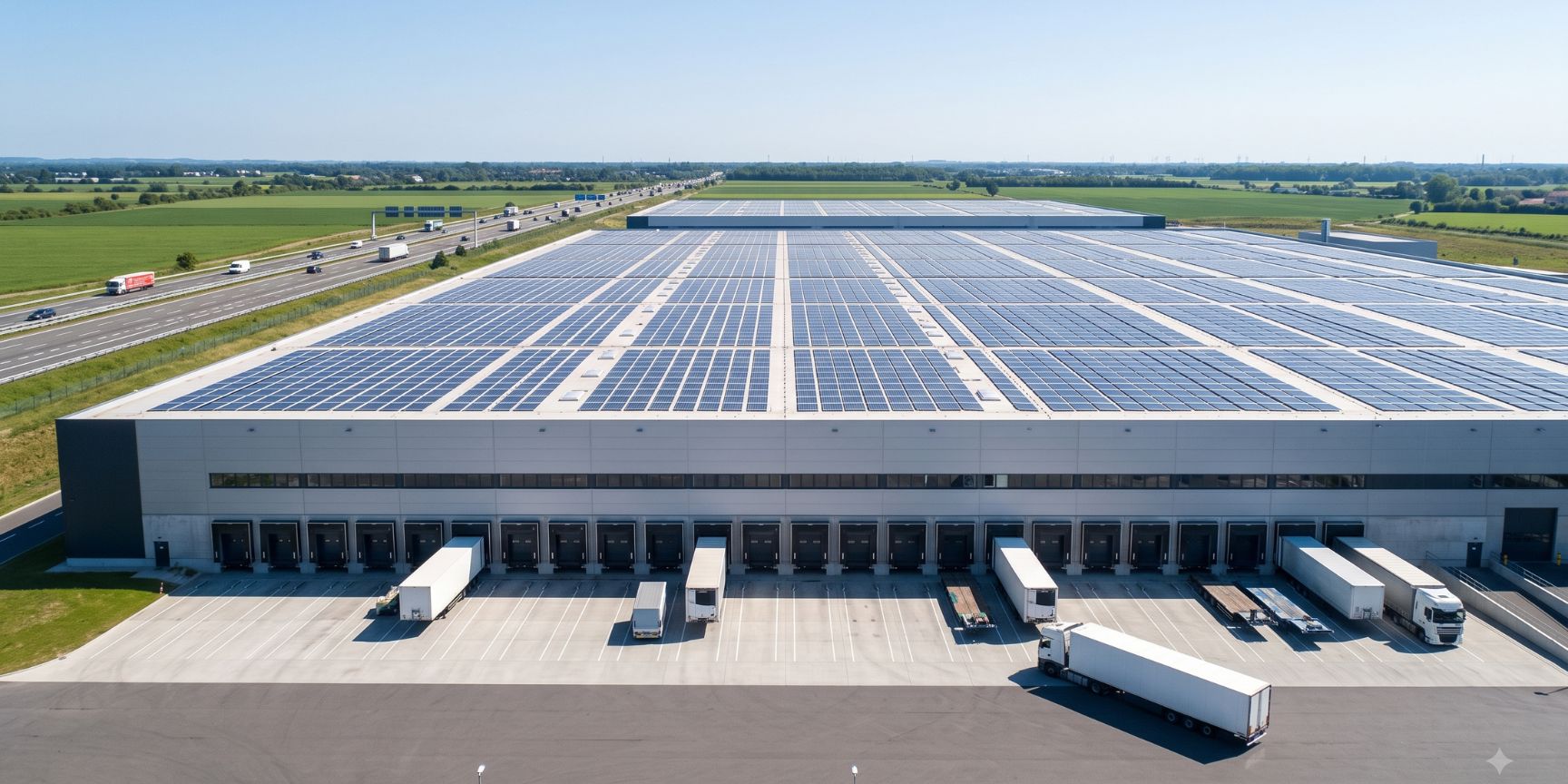
- Distribution centers (fulfillment centers): Large-scale halls, often over 10,000 square meters, optimized for e-commerce, high pick rates and automated intralogistics.
- Transshipment halls (cross-docking): Characteristic here are the many loading gates (ramps) on both sides (I-shape layout). The goods usually only stay here for a few hours.
- Special properties: These include highly regulated hazardous goods warehouses (according to BImSchG), deep-freeze warehouses or the emerging multi-level logistics warehouses for city logistics.
Architecture and equipment: What distinguishes a top hall?
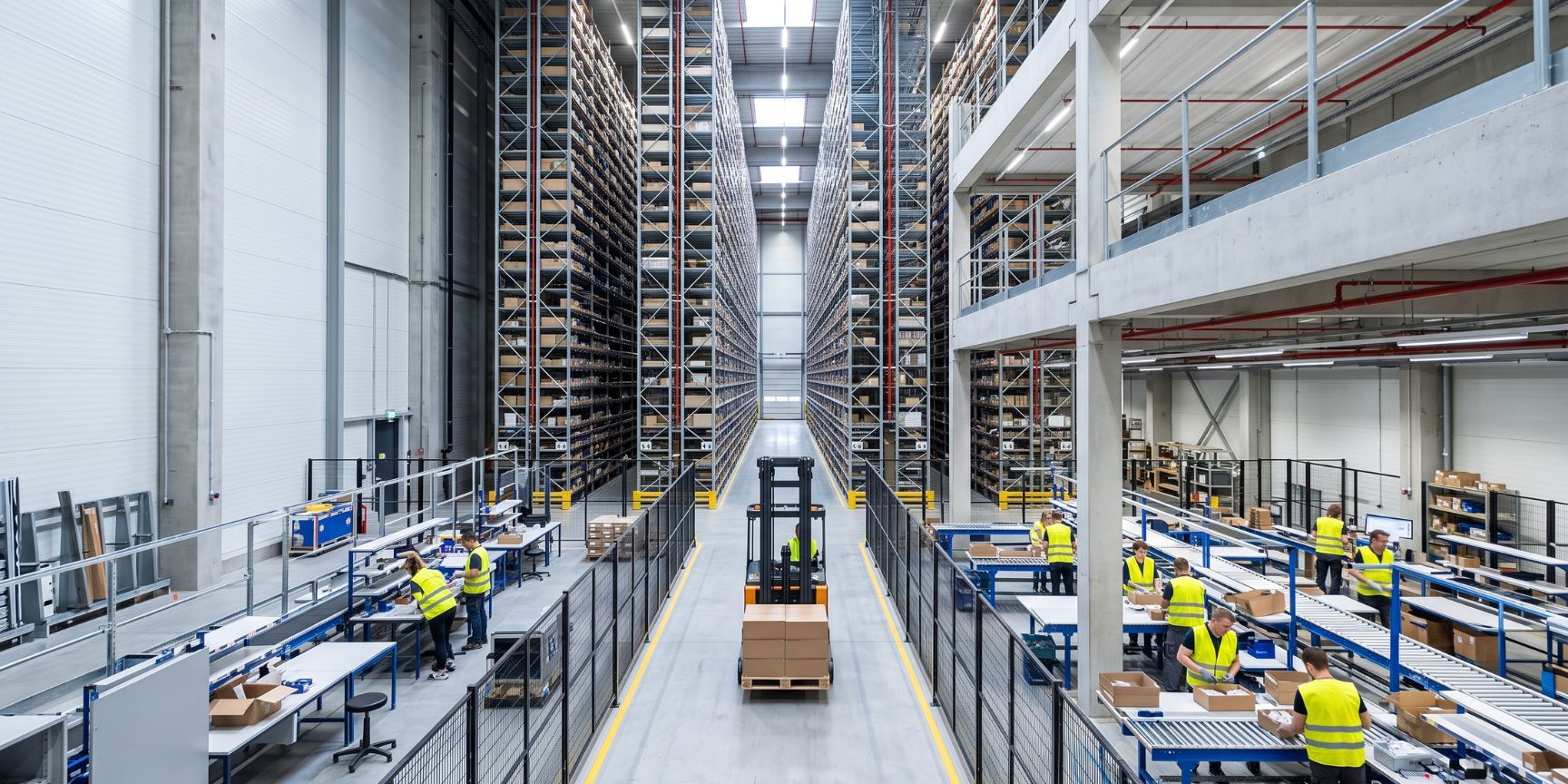
The physical nature of the property dictates the efficiency of the entire warehouse logistics. Modern standard halls today have a clear height (UKB - lower edge of truss) of at least 10 to 12 meters in order to be able to operate high-bay warehouses profitably. The floor load capacity must be at least 5 tons per square meter, often with special tolerances (FM2 standard) for smooth movements of industrial trucks. In addition, there are ESFR sprinkler systems for VdS-compliant fire protection. Any missing meter of ceiling height or insufficient power capacity can mean the immediate end for automation projects (such as AMR robots).
Contract logistics as a driver of real estate development
Contract logistics companies take on much more than just the storage of pallets for industry and trade. They offer so-called value-added services (VAS) – from quality control to complex assembly and returns management. This is massively changing the demands on commercial real estate: more and more mezzanine areas (mezzanines) are needed for small-scale packaging. In addition, the focus is on bright, air-conditioned offices and social rooms for specialist staff. Multi-user halls, in which one logistics provider serves several customers in parallel, also require maximum flexibility and separate fire compartments.
Facts, figures, data: The market for logistics space
The market for commercial logistics real estate in Germany and Europe is characterized by a historical excess of demand and an extreme shortage of space (land scarcity).
- Prime rents: In top locations such as Munich, Berlin or the Rhine-Main region, rents for new buildings are now scratching the mark of €10.00 to over €11.00 per square metre per month. In well-connected secondary markets, they are around €6.50 to €8.00.
- Investment volume: Logistics real estate has become the most sought-after asset class for institutional investors alongside residential, with transaction volumes in the billions.
- Yield: Commercial real estate in the logistics sector continues to offer extremely stable net prime yields (mostly between 4.2% and 5.0%) compared to office and retail space in crisis.
ESG and sustainability: The "Green Building" standard
A modern hall without a strict sustainability concept is now a de facto "stranded asset" and can hardly be rented out in a sustainable way. Tenants and investors are uncompromisingly demanding ESG-compliant commercial real estate (environmental, social, governance). These include full-surface photovoltaic systems on the hall roofs, heat pumps (no gas), smart LED lighting and charging infrastructure for e-trucks. Certificates such as DGNB (gold or platinum) or BREEAM are the market standard. This not only reduces operating costs (OPEX), but is also absolutely mandatory for the CSRD reporting of the renting companies.
Location factors: The foundation of the supply chain
Even the best hall is useless without the perfect location. The decisive factors for commercial logistics real estate are the direct connection to motorway junctions, the proximity to CEP service providers (parcel services) and, ideally, a trimodal connection (road, rail, water). Another factor that is often underestimated is the 24/7 operating license. If the property is too close to residential areas, there is a risk of restrictions on night work, which is fatal for freight forwarders and contract logistics companies.
FAQ: Frequently asked questions about commercial real estate in logistics
Question: Should you rent or buy a logistics hall as a company?
Answer: For most contract logistics companies and retailers, renting (leasing) makes more strategic sense. It conserves valuable equity (CAPEX) and provides the flexibility to relocate as customer contracts or supply chain strategies change.
Question: What is the difference between greenfield and brownfield in real estate development?
Answer: Greenfield refers to new construction on a previously undeveloped (green) field. Brownfield is the revitalization and development of industrial wastelands. Due to the massive shortage of land and stricter sealing laws, brownfield projects are increasingly dominating the German market.
Question: What does "third-party usability" mean for a commercial property?
Answer: This describes how easily a hall can be rented to a new user from outside the industry after the current tenant has moved out. A highly specialised system (e.g. a purely cold storage facility) has a low third-party usability, a classic standard hall a very high one – which reduces the risk for investors.
Conclusion: The enclosed space determines the return
Commercial real estate in logistics is the physical backbone of global trade. The hall has long since ceased to be a passive shelter, but an active machine that defines the cost efficiency of the entire supply chain through clever layouts, automation and ESG standards. Whether in your own warehouse operations or when outsourcing complex contract logistics services: the right property reduces throughput times, minimizes transaction costs and helps to retain sought-after skilled personnel in the long term.
💡 Are you currently planning to expand your logistics network, move to a sustainable green building or are you looking for a strong contract logistics provider? On LAGERflaeche.de you will find future-oriented commercial properties, state-of-the-art halls and the right partners for a scalable supply chain throughout Germany!
Your Ideal Logistics Warehouse
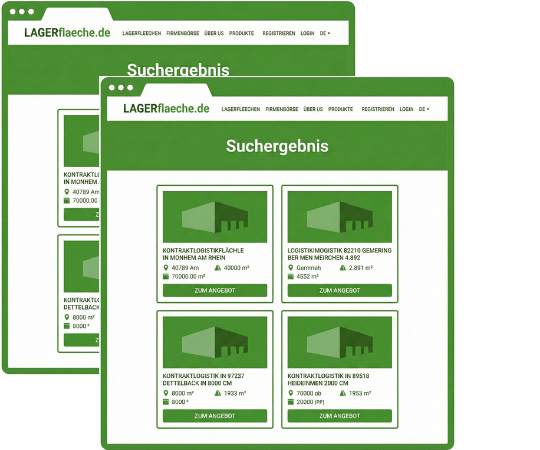
Browse listings for warehouse space, logistics real estate, industrial land, and contract logistics solutions.
Browse Exposés
Maximize Exposure for Your Warehouse Space
Showcase your logistics properties and attract qualified inquiries.
Discover Products