




Focus on Ancillary Costs for Warehouse: A Detailed Breakdown of the Second Rent
Table of Contents
- The “Second Rent”: What are the Legally Apportionable Ancillary Costs?
- The Largest Item: Energy Costs for Heating, Cooling, and Lighting
- Maintenance and Servicing: The Hidden Costs of Operational Readiness
- Operating Costs in Detail: From Property Tax to Winter Services
- Average Ancillary Costs per Square Meter: A Realistic Benchmark for 2025
- Cost Optimization Strategies: How to Actively Reduce your “Second Rent”
- The Utility Bill: Your Right to Transparency and Review
- Conclusion: Proactive Management as the Key to Success
The search for the perfect storage space is complete, and the lease agreement is in place. However, in addition to the base rent, there is often an underestimated cost factor: ancillary costs, also known as the “second rent.” Especially in the current economic environment and in view of fluctuating energy prices, a precise knowledge of these items is crucial for the profitability of your business. But what costs are really hidden behind the flat-rate advance payment? What will the average costs be in 2025 and – most importantly – where is there untapped potential for savings? This article takes a comprehensive look at the topic and offers you practical facts and strategies.
The “Second Rent”: What are the Legally Apportionable Ancillary Costs?
In Germany, the basis for the apportionment of ancillary costs is the Operating Costs Ordinance (BetrKV). It is a widespread misconception that landlords can pass on any costs to tenants. The decisive factor is what has been explicitly agreed in the rental agreement. Only the items specified therein and permitted by law may be charged. Typically, these include:
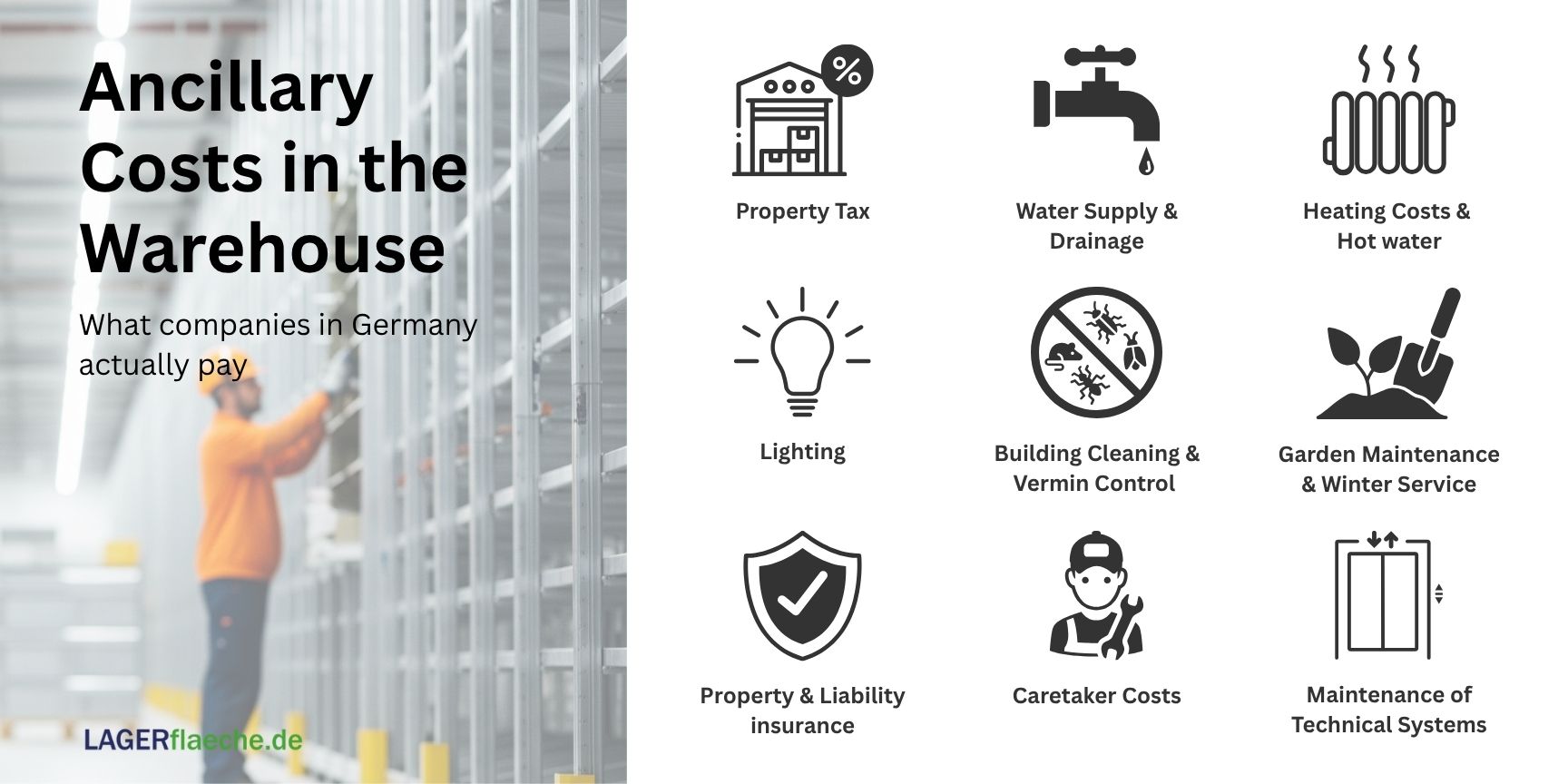
- Property tax: This is levied by the local authority and can be passed on in full to the tenant.
- Water supply and drainage: Costs for fresh water and the disposal of waste water and rainwater.
- Heating costs and hot water: Including the costs for fuel, operating electricity for the system, and maintenance.
- Lighting: Electricity costs for common areas such as driveways, loading ramps, and corridors.
- Building cleaning and pest control: Regular cleaning of common areas.
- Garden maintenance and winter service: Maintenance of outdoor facilities and ensuring traffic safety in winter.
- Property and liability insurance: Insurance for the building (e.g., against fire, storm, water).
- Caretaker costs: Personnel costs for the caretaker, if agreed in the contract.
- Maintenance of technical equipment: Elevators, ventilation systems, fire alarm systems, gates, etc.
Important: Administrative costs and maintenance or repair costs are generally not apportionable. Maintenance serves to preserve functionality, while repairs remedy a defect. This distinction is often a point of contention in practice.
The Largest Item: Energy Costs for Heating, Cooling, and Lighting
Energy costs account for the lion's share of ancillary costs, often between 30% and 50%. The exact amount depends heavily on the construction of the hall, the type of use, and, of course, current energy prices.
Heating
Older, inadequately insulated halls are real energy guzzlers. Modern logistics properties are now built according to efficiency standards such as the GEG (Building Energy Act).
- Facts, figures, and data: According to an analysis by real estate service provider JLL, the average heating costs for logistics properties in 2023 were around €0.60–€1.20 per square meter per month. Stabilization at a high level is expected for 2025, depending on geopolitical developments and the progress of the energy transition. A study by the Fraunhofer Institute for Building Physics IBP shows that energy-efficient renovation of the building envelope (roof, facade) can reduce heating costs by up to 60%.
Lighting
Conversion to LED technology is now standard, but is still far from being implemented across the board.
- Facts and figures: Switching from old fluorescent tubes to intelligently controlled LED systems can reduce electricity consumption for lighting by up to 80%. The payback period for such an investment is often only 2-4 years.
Cooling
In temperature-sensitive storage areas (pharmaceuticals, food), cooling is another significant cost driver.
Maintenance and Servicing: The Hidden Costs of Operational Readiness
Technical equipment must run smoothly. Failures, especially in roller doors, loading ramps, or fire alarm systems, can severely disrupt operations and cause immense follow-up costs. Regular maintenance is therefore essential and an integral part of ancillary costs.
- Roller doors and sectional doors: Annual inspection and maintenance in accordance with ASR A1.7 is required by law. Costs: approx. $100–250 per door per year.
- Fire alarm systems (BMA): Depending on the size and complexity of the system, annual maintenance costs range from $500 to several thousand dollars.
- Ventilation and air conditioning systems: Regular filter changes and technical inspections are crucial for air quality and efficiency.
- Sprinkler systems: Here, too, regular, cost-intensive inspections (maintenance, revision) are required.
Practical tip: Request the maintenance logs as part of the utility bill. This will ensure that the work has actually been carried out to the required extent.
Operating Costs in Detail: From Property Tax to Winter Services
This collective item includes a number of smaller costs that are relevant when added together.
- Property tax: The amount is determined by the assessment rate of the respective municipality. This can change annually. The landlord should be able to provide transparent information about the assessment rate.
- Insurance: The costs for building insurance depend on the location (risk area for flooding, storms), the type of construction, and the value of the building. It may be worthwhile to review the insurance policy to ensure that only the relevant risks are covered.
- Cleaning and exterior maintenance: Costs vary greatly depending on the size of the property and the agreed cleaning interval. It is worth asking: Is the frequency of cleaning really necessary or is there room for optimization?
- Winter service: This is a cost factor that should not be underestimated, especially in snowy regions. The costs for road salt and machine use have risen in recent years.
An analysis by the German Tenants' Association for residential properties, which can generally be applied to commercial properties, shows that these “other” operating costs (excluding heating and water) can quickly reach €1.00–1.50 per square meter per month.
Average Ancillary Costs per Square Meter: A Realistic Benchmark for 2025
It is difficult to give a blanket answer, as the costs depend on too many factors. Nevertheless, realistic ranges can be defined based on industry reports and market observations.
| Cost Type | Average costs per m² / month (2025, estimate) |
| Heating & cooling | 0,70 € - 1,50 € |
| Electricity (general) | 0,20 € - 0,40 € |
| Water / sewage | 0,15 € - 0,30 € |
| Maintenance of technical equipment | 0,25 € - 0,60 € |
| Property tax | 0,10 € - 0,35 € |
| Insurance | 0,10 € - 0,25 € |
| Cleaning / winter service / miscellaneous | 0,30 € - 0,70 € |
| Total (estimated) | 1,80 € - 4,10 € |
Source: Own estimate based on data from JLL, Colliers, and Fraunhofer IBP for 2023/2024 and forecasts.
This table shows that the “second rent” can easily amount to 25-40% of the base rent. For a 2,000 m² hall, this can quickly add up to ancillary costs of €3,600 to €8,200 per month.
Cost Optimization Strategies: How to Actively Reduce your “Second Rent”
As a tenant, you are not helplessly at the mercy of ancillary costs. Active management can save you money.
- Analyze consumption data: Request detailed consumption data for electricity, water, and heating. Are there any unexplained peaks? Modern building management technology with smart metering systems enables real-time monitoring and reveals potential savings.
- Intelligent lighting control: Motion detectors and daylight-dependent controls ensure that lights are only on when they are really needed.
- Optimization of heating control: Can certain areas of the hall be lowered to a lower base temperature on weekends or at night (night setback)?
- Review maintenance contracts: Negotiate flat rates with service providers or check out alternative providers. Bundle maintenance orders to obtain better terms.
- Employee awareness: Train your employees in energy-conscious behavior. Closing doors during the heating season or turning off lights in unused areas are simple but effective measures.
- Encourage investment: Talk to your landlord about energy-efficient renovation measures (e.g., conversion to LED, better insulation). It is often possible to find models in which the investment costs are refinanced through the savings in ancillary costs (contracting).
The Utility Bill: Your Right to Transparency and Review
You will receive your utility bill once a year. You should not accept it without checking it first. You have the right to a bill that is correct in form and content.
- Review period: After receiving the bill, you have a period of 12 months to raise any objections.
- Inspection of documents: You have the right to inspect all original invoices and receipts on which the statement is based. The landlord must allow you to do this at their business premises.
- Check the distribution key: Is the distribution key used (usually the rented area) correct and agreed in the rental agreement?
- Economic efficiency requirement: The landlord is obliged to ensure that operating costs are economically efficient. You do not have to accept overpriced service provider contracts.
If you are unsure or suspect errors, do not hesitate to seek professional help, e.g. from a lawyer specializing in commercial tenancy law.
Conclusion: Proactive Management as the Key to Success
The ancillary costs for storage space are far more than a negligible item. They are a significant part of the total rental burden and offer considerable potential for optimization. A thorough knowledge of the legal basis, a critical analysis of consumption, and proactive cooperation with the landlord are the decisive levers for keeping the “second rent” under control. Those who understand and manage ancillary costs secure a decisive competitive advantage and set the course for the long-term economic use of their warehouse property. The question is not whether you should deal with the issue, but how deeply you should delve into it in order to get the most out of it for your company.
Latest Blog Posts
Stay up to date with the newest trends, insights, and tips in warehouse and logistics. Our latest articles help you navigate the industry with confidence.
Data Centres vs. Logistics Facilities: The Race for Power and Land
Across Europe, logistics operators are competing for more than land and transport access. They increasingly need something much harder to secure: grid capacity. Data centres are intensifying that competition — and changing how logistics locations are evaluated....

Chinese companies discover Europe's logistics real estate
Chinese companies are becoming an increasingly visible user group in Europe's logistics real estate market. What does this mean for warehouse space, 3PL structures and the requirements for European logistics locations?...
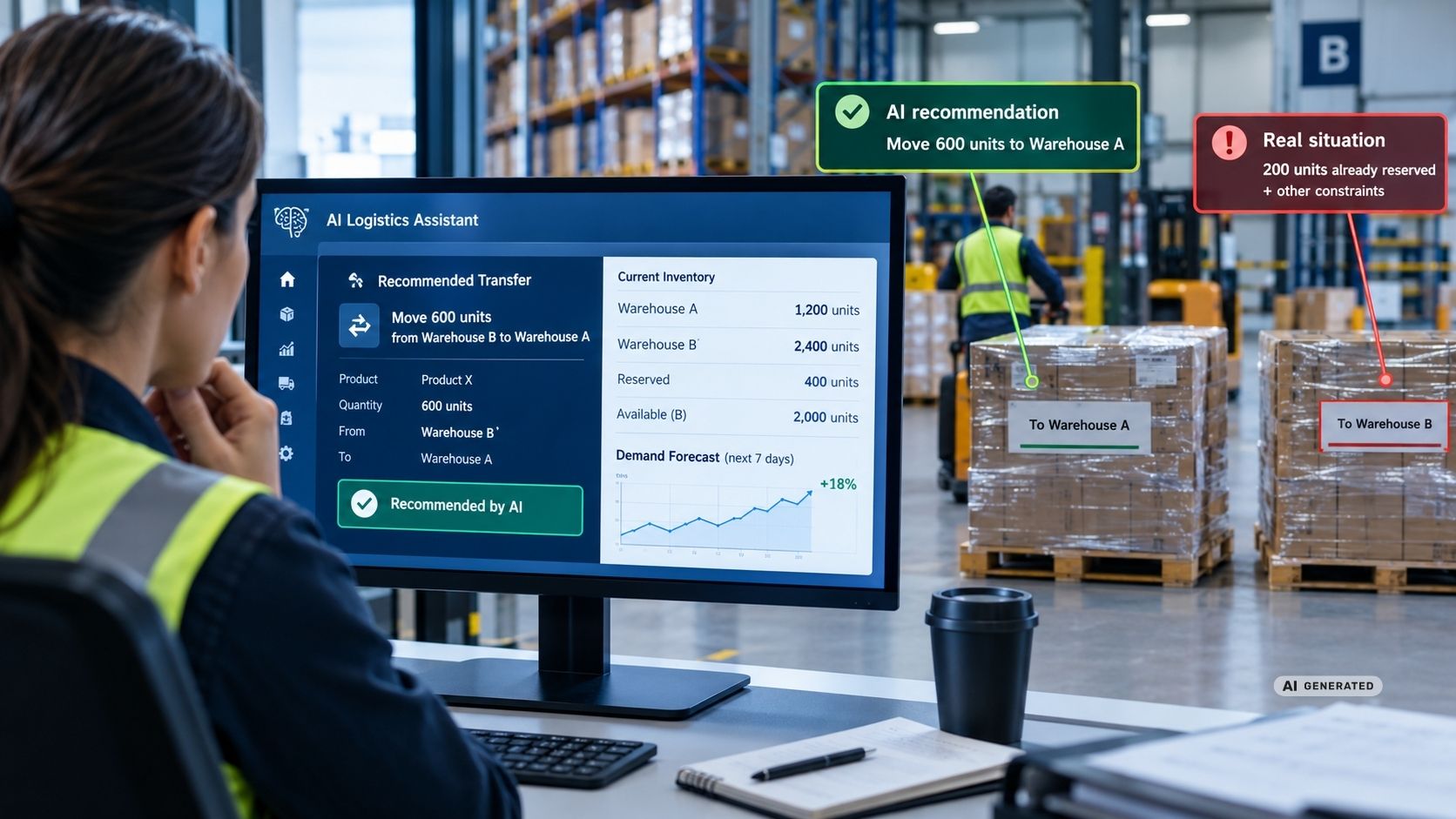
AI Hallucinations in Logistics: When AI Plans the Wrong Delivery
AI can analyze enormous amounts of logistics data — but it can also produce a convincing answer that is simply wrong. The critical question is not whether AI makes mistakes, but what happens when a wrong recommendation becomes an operational decision....
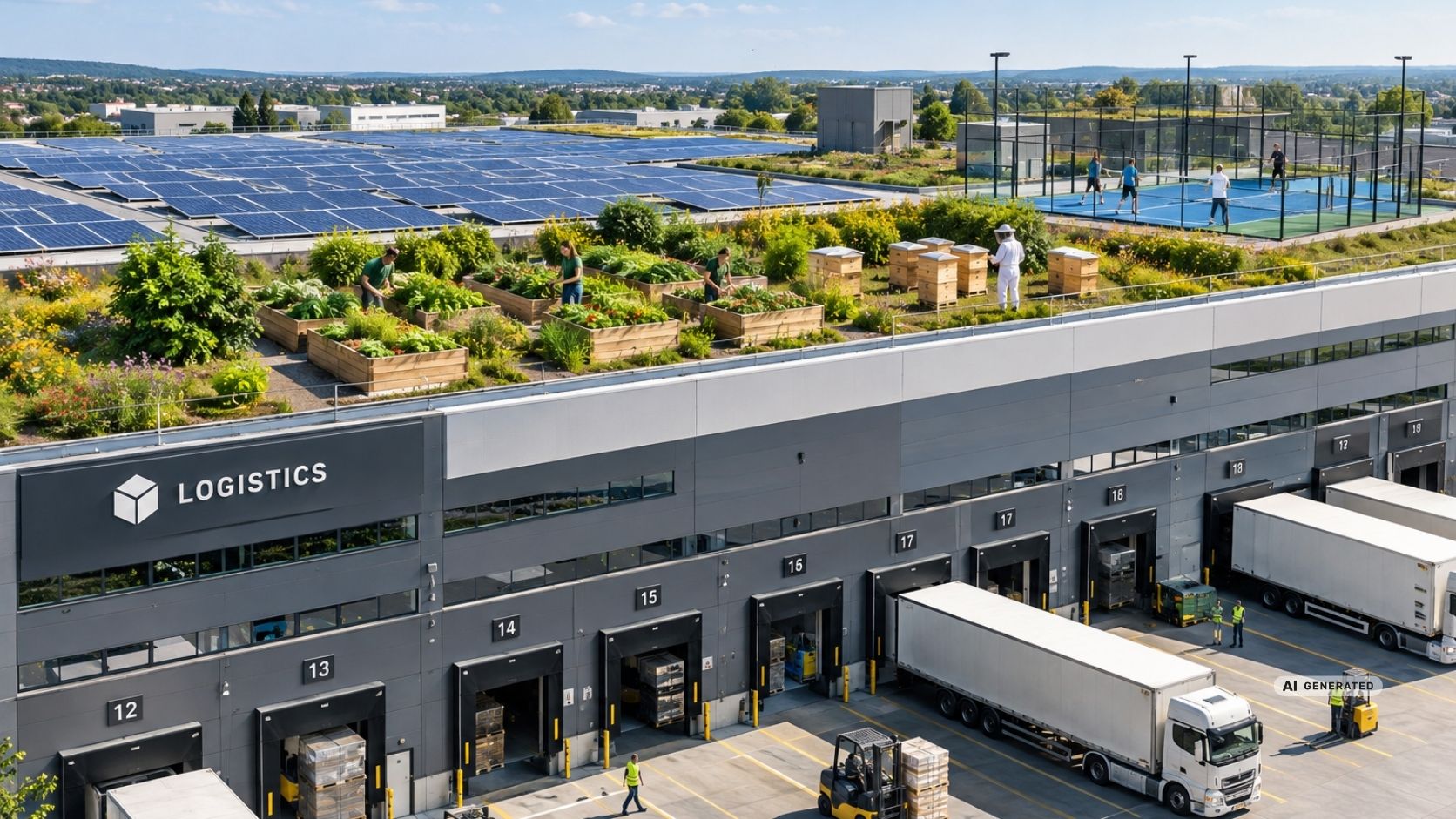
The Green Revolution on the Hall Roof: From Concrete Block to Ecological Power Plant?
Logistics roofs can do more than PV: greening, bees, urban farming and even sports areas turn unused roof space into multifunctional rooms....