



The silent engine of our economy is sputtering: Does the shortage of skilled workers in logistics really exist?
Table of Contents
- Facts, figures, data: The extent of the shortage in Germany
- The roots of the problem: Why does hardly anyone want to work in logistics anymore?
- Hotspots of shortage: Where is it burning the brightest?
- A look across the borders: What does the shortage of skilled workers look like abroad?
- Away from whining, towards action: How companies can take countermeasures
- Technology as the key: automation and digitization to relieve the burden
- Conclusion: A task for the future that begins now
Day after day, millions of people in logistics ensure that supermarket shelves are filled, production lines do not stand still and online orders arrive at our doorstep. But this cycle, which is so self-evident, is in danger. For years, there has been talk about the shortage of skilled workers in logistics – sometimes as a quiet murmur, sometimes as a loud alarm call. But what is the truth about the impending collapse of supply chains? Is it a temporary problem or a structural crisis? This article dives deep into the matter, sheds light on the situation especially in warehouse and contract logistics and shows why the problem is real and how companies must now take countermeasures.
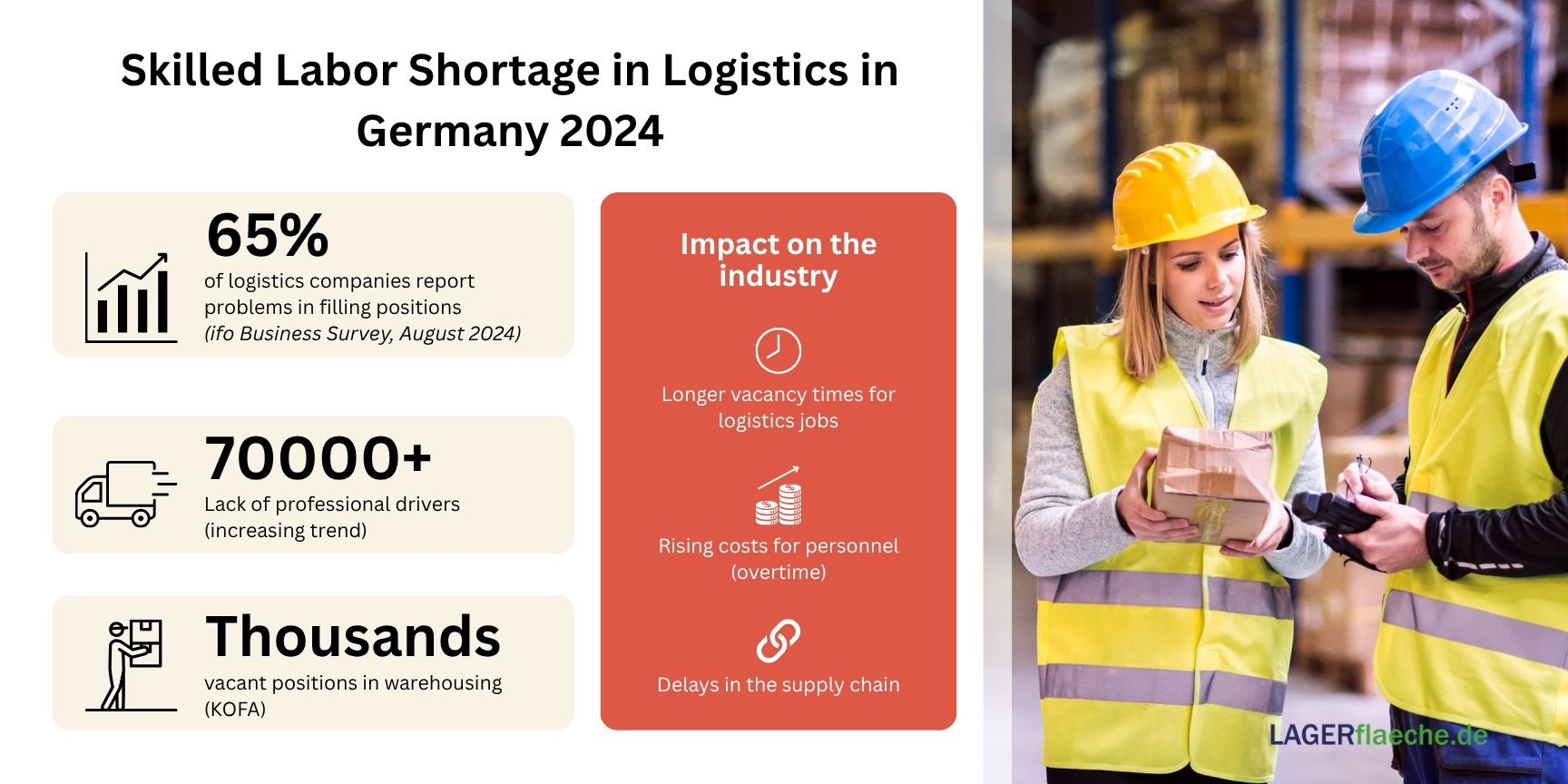
The answer is a resounding yes. The shortage of skilled workers is not an abstract theory, but a reality that can be felt every day in German companies. According to an ifo business survey from August 2024, almost two-thirds of companies in the logistics sector reported problems filling vacancies. In its surveys, the German Logistics Association (BVL) regularly confirms that the shortage of personnel is one of the most pressing problems in the industry. It is no longer just about the much-discussed truck drivers; the shortage runs through all areas.
Facts, figures, data: The extent of the shortage in Germany
To understand the urgency, we need to look at the numbers. According to studies, there would be a shortage of over 70,000 professional drivers in Germany as early as 2023, with an upward trend. But the focus on the drivers alone falls short. A study by the Competence Centre for Securing Skilled Workers (KOFA) revealed a significant shortage of skilled workers in warehousing with thousands of unfilled positions.
This is where the problem becomes apparent in its entirety: not only are there no hands to transport goods from A to B, but also the heads and hands that store, pick, pack and dispatch them. The vacancy times, i.e. the time it takes for a vacancy to be filled, are longer than average in many logistics professions. For companies, this means in concrete terms: orders cannot be accepted, delivery times are extended, service quality decreases and the costs for existing staff (keyword: overtime) explode.
The roots of the problem: Why does hardly anyone want to work in logistics anymore?
The shortage is not a coincidence, but the result of a toxic mix of demographic, image-related and structural factors.
- Demographic change is hitting: The baby boomer generation, which has long formed the backbone of logistics, is retiring. At the same time, significantly fewer young people are moving up from low-birth cohorts. In its demographic analyses, the Federal Employment Agency unequivocally points out that the gap between available workers and vacancies will widen further in the coming years.
- Image problem and lack of appreciation: Logistics work is often wrongly associated with hard physical work, poor pay and few opportunities for advancement. Reports of precarious working conditions, especially in the courier, express and parcel services (CEP) sector, have solidified this image. The social recognition for systemically important work, which became so obvious during the pandemic, is often not noticeable in everyday life.
- Demanding working conditions: Shift work, weekend work, high time pressure and increasing physical and mental stress are the order of the day in many areas of warehouse and contract logistics. According to salary portals such as Stepstone, the average salary for a warehouse logistics specialist is around €33,400 gross per year – a salary that is no longer attractive enough for many in view of the requirements.
- Changing requirements (skill gap): Logistics 4.0 requires new skills. Digital processes, the use of warehouse management systems (WMS), data analysis and the control of automated systems are in demand today. Many long-standing employees are not qualified for these new tasks, and this digital content is often neglected in the training system.
Hotspots of shortage: Where is it burning the brightest?
While the shortage affects the entire industry, there are clear epicenters.
- Professional driver (m/f/d): The chronic shortage here is the most well-known and has a direct impact on transport capacities.
- Warehouse logistics specialists & warehouse clerks: This is the heart of warehouse and contract logistics. Here, the bottleneck is particularly critical, as it directly affects picking performance, turnover speed and error rates.
- Forklift drivers & order pickers: It is also becoming increasingly difficult to find reliable personnel at the operational level of the executing activities.
- Dispatchers & forwarding agents: The organizational and planning roles are also affected. There is a shortage of qualified specialists who can control and optimize complex supply chains.
A look across the borders: What does the shortage of skilled workers look like abroad?
The shortage of skilled workers is a European, if not global, phenomenon. Nevertheless, there are significant differences compared to Germany.
- Netherlands: As one of Europe's leading logistics nations, the Netherlands is also struggling with bottlenecks. However, they benefit from a state-of-the-art infrastructure and a strong integration of education and practice. In addition, the Netherlands relied on the recruitment of workers from other EU countries at an early stage and made working conditions more attractive in many areas, which alleviated the pressure somewhat.
- Poland: For a long time, Poland was considered the most important country of origin for workers, especially in the transport sector. But this pool is drying up. The Polish economy is growing strongly, wages are rising, and many workers are finding attractive jobs in their own country. The wage difference to Germany is no longer so serious that it outweighs the disadvantages of working abroad. Companies in Poland themselves are now reporting a significant shortage of drivers and warehouse workers.
- Austria: The situation in the Alpine republic is comparable to that in Germany. Demographic change and competition with other industries are leading to similar bottlenecks, especially in border regions and conurbations.
The main differences often lie in wage structures, social benefits and state support through training initiatives. Germany is often less attractive than other EU countries due to its high non-wage labour costs and complex bureaucracy for foreign skilled workers.
Away from whining, towards action: How companies can take countermeasures
Companies are not helplessly at the mercy of the shortage. However, it requires a strategic rethink – away from reactive recruitment to proactive workforce management.
Employee retention as a top priority
The best new employee is the one you retain. Companies need to invest in a positive work culture. These include:
- Fair and competitive compensation: Regular salary analysis and a willingness to pay above the industry average.
- Appreciative leadership: A leadership culture at eye level, regular feedback and genuine recognition.
- Further training and development: Showing clear career paths, offering qualification measures (e.g. forklift licence, further training as a logistics foreman, training for avalanche transceivers).
- Health management and ergonomics: Modern lifting aids, ergonomic workplaces and health services reduce sick leave and increase attractiveness.
Rethinking recruiting
The classic job advertisement is no longer enough.
- Active sourcing & social media: Targeted approach to potential candidates on platforms such as LinkedIn or Xing.
- Employee referral programs: Bonuses for successful referrals are used by the networks of your own workforce.
- Simplified application processes: Enable applications via smartphone in a few minutes instead of requiring lengthy forms.
- Employer branding: Show what makes you unique as an employer. Modern workplaces, a good team, special benefits – all of this must be communicated to the outside world.
Technology as the key: automation and digitization to relieve the burden
Where there is a shortage of people, technology can help – not to replace people, but to relieve them and make processes more efficient.
Automation in warehouse logistics
- Automated guided vehicles (AGVs): Automate the internal transport of goods and reduce walking distances.
- Automated small parts warehouses (AS/RS): Increase storage density and speed up storage and retrieval.
- Robot-assisted picking (pick-by-robot): Robotic arms take over monotonous and physically demanding picking operations. The return on investment (ROI) of such systems is often as little as 1.5 to 4 years, as not only are personnel costs reduced, but error rates are also reduced and performance is increased.
Digitalization in contract logistics
- Modern warehouse management systems (WMS): Optimize the control of all warehouse processes and reduce manual planning effort.
- Digital tools for route planning: Relieve dispatchers and ensure more efficient routes.
- Mobile Data Capture (MDE): Simplify inventory and receiving, and reduce paperwork.
Conclusion: A task for the future that begins now
The shortage of skilled workers in logistics is not a temporary phenomenon, but a profound structural challenge that threatens the core of the German economy. "Business as usual" will inevitably lead to higher costs, declining service quality and ultimately to a loss of competitiveness.
The solution lies in a radical rethink. Companies need to position themselves as attractive employers that offer much more than just a salary. They must invest in the qualification of their existing workforce and at the same time courageously seize the opportunities of automation and digitalization. It is not about replacing humans with machines, but about creating a symbiosis in which humans can concentrate on value-adding, complex and monitoring activities. The time for hesitation is over. Only those who act now will be able to secure their place in the supply chain of tomorrow.
Latest Blog Posts
Stay up to date with the newest trends, insights, and tips in warehouse and logistics. Our latest articles help you navigate the industry with confidence.
Data Centres vs. Logistics Facilities: The Race for Power and Land
Across Europe, logistics operators are competing for more than land and transport access. They increasingly need something much harder to secure: grid capacity. Data centres are intensifying that competition — and changing how logistics locations are evaluated....

Chinese companies discover Europe's logistics real estate
Chinese companies are becoming an increasingly visible user group in Europe's logistics real estate market. What does this mean for warehouse space, 3PL structures and the requirements for European logistics locations?...
AI Hallucinations in Logistics: When AI Plans the Wrong Delivery
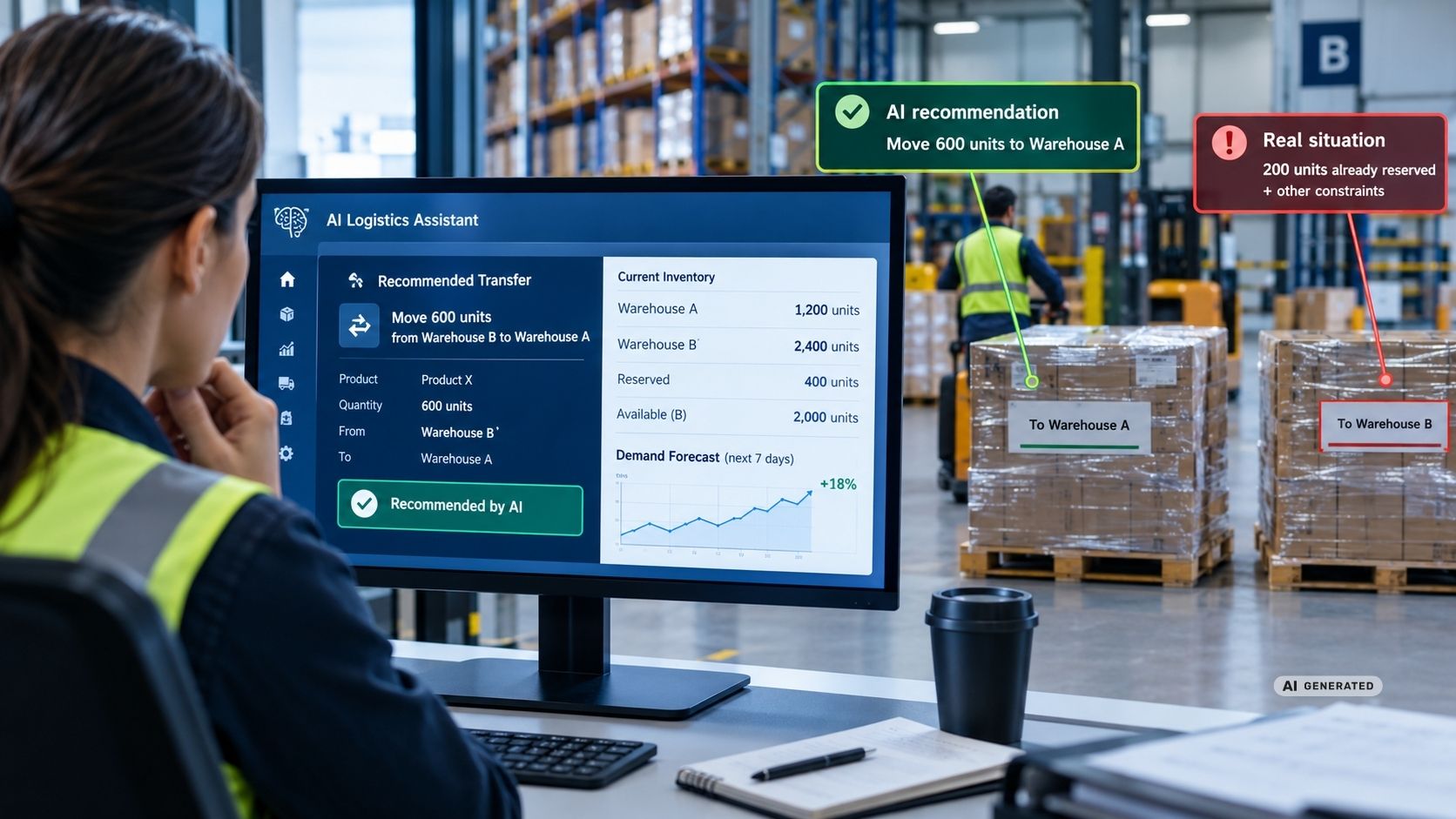
AI can analyze enormous amounts of logistics data — but it can also produce a convincing answer that is simply wrong. The critical question is not whether AI makes mistakes, but what happens when a wrong recommendation becomes an operational decision....
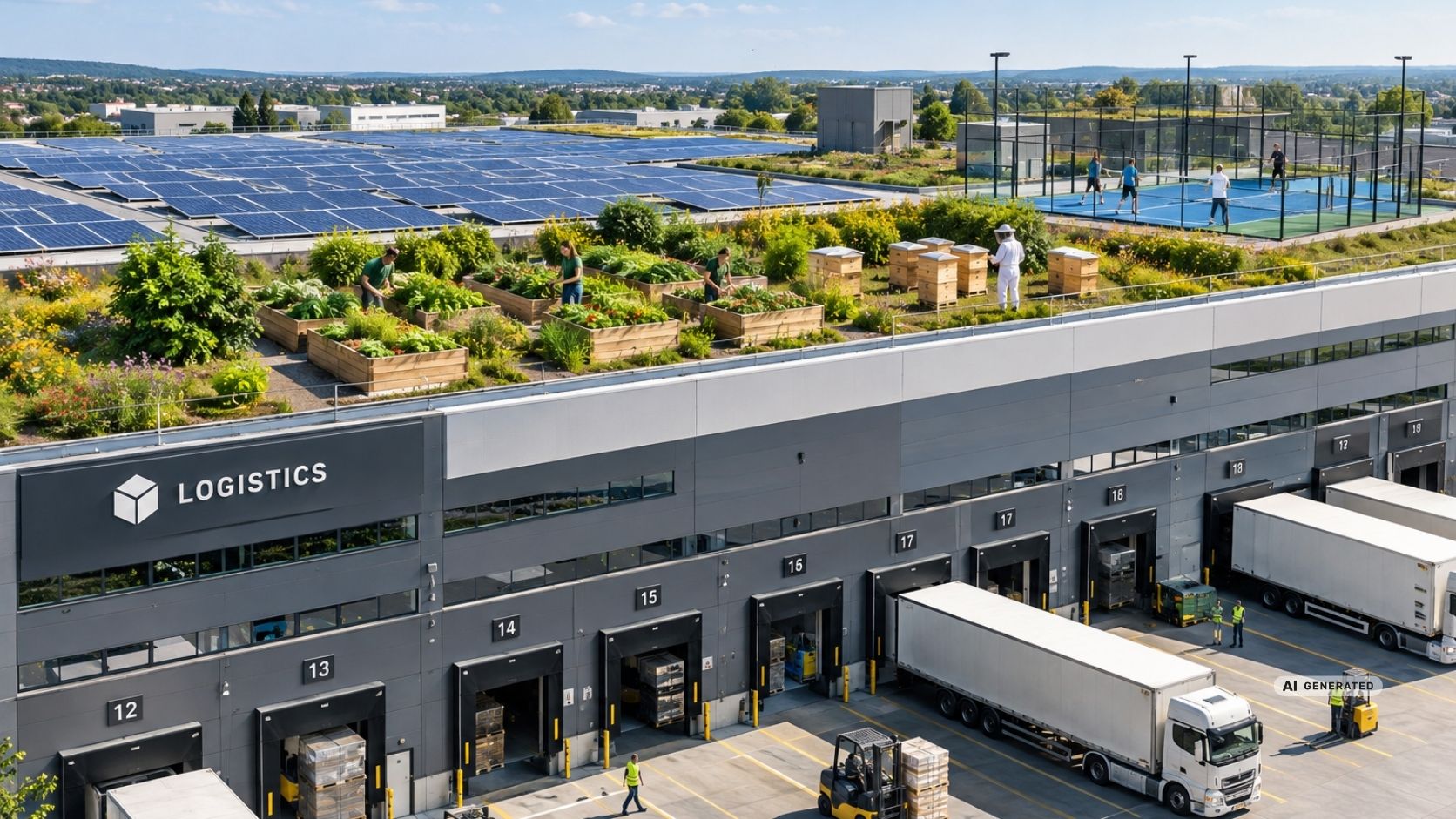
The Green Revolution on the Hall Roof: From Concrete Block to Ecological Power Plant?
Logistics roofs can do more than PV: greening, bees, urban farming and even sports areas turn unused roof space into multifunctional rooms....