


From Hotspot to Anchor of Stability: Why your Supply Chain is the Key to Customer Satisfaction in the Polycrisis
Table of Contents
- The Customer as a Pacesetter: 4 Supply Chain Factors that Determine Success
- Reality Strikes: These 10 Challenges are Paralyzing German Logistics
- Number of the Week: 49 Billion Euros
- The End of the "Just-in-time" Illusion? Why Resilience is now more Important than Efficiency
- Nearshoring & Friendshoring: The New Strategies of Risk Mitigation
- Spotlight Eastern Europe: Where German Companies are now Relocating
- Case Study: Müller GmbH – From Asia Risk to Dual Sourcing Strategy
- Logistics in a Global Comparison: The World Bank's LPI 2023
- Country Analysis: Germany vs. Netherlands, USA and China
- Conclusion: From Crisis Mode to Proactive Shaping of the Future
We live in an era of "polycrisis". What started as a temporary shock during the pandemic has developed into a permanent chain of disruptions: geopolitical conflicts (Ukraine, Red Sea), energy price shocks, extreme weather events and a chronic shortage of skilled workers. At the same time, customer expectations – whether in the B2B or B2C sector – have risen to an all-time high due to the "Amazon effect": immediate availability, same-day delivery and 100% transparency.
This balancing act between extreme volatility and maximum demands turns logistics and supply chain management (SCM) from a silent helper into a strategic tipping point. A supply chain is no longer just a cost; it is a decisive differentiating feature and the most direct line to customer satisfaction.
But how can companies not only retain their customers in this new reality, but also inspire them? How do you balance cost, speed and the new, vital currency: resilience? In this in-depth analysis for professionals and executives, we highlight the most critical factors, the top 10 challenges, and the strategic responses – from nearshoring to the global benchmark.
The Customer as a Pacesetter: 4 Supply Chain Factors that Determine Success
Customer satisfaction is the end goal. The supply chain is the means to get there. Four factors are of central importance:
- Reliability & On-Time Delivery (OTD): Nothing undermines trust more than a missed delivery promise. The "On-Time-Delivery" (OTD) value is the hardest currency. In B2B, a delayed part can shut down an entire production line. In the B2C sector, it leads to immediate migration to the competition.
- Availability & Inventory Management: The customer expects the desired product to be available. An "out-of-stock" event is a losing sale. This requires a move away from pure "just-in-time" models to "just-in-case" strategies with intelligent buffer stocks and excellent demand forecasting.
- Transparency & Communication: Where is my order? This question has become the standard. Customers demand proactive, real-time shipment tracking and honest communication in case of delays. Lack of transparency is now perceived as a lack of service.
- Flexibility & agility: The customer wants to be able to choose (e.g. standard vs. express delivery, pick-up point vs. front door) and expects a smooth returns process. For the supply chain, this means being able to react agilely to fluctuations in demand and individual wishes.
Reality Strikes: These 10 Challenges are Paralyzing German Logistics
The goal is clear, but the path is rocky. Rarely has the logistics industry – especially in Germany – been subjected to such a stress test. These 10 factors are currently putting the most strain on the systems:
- Shortage of skilled workers: First and foremost is the shortage of truck drivers, warehouse staff and IT specialists.
- Cost explosion (energy & toll): Rising diesel and energy prices as well as the drastic increase in truck tolls in Germany (including CO2 surcharge) are driving up transport costs.
- Infrastructure deficits: Dilapidated bridges, permanent construction sites and an overloaded rail network in Germany lead to daily delays and reduce efficiency.
- Geopolitical instability: The attacks in the Red Sea are forcing ships to take expensive detours around Africa, and the war in Ukraine is disrupting land and air freight routes.
- Bureaucratic hurdles: Long approval procedures (e.g. for large-capacity transports) and administrative burdens eat up resources that are lacking elsewhere.
- Digitization gap: Many players in the chain (small freight forwarders, administrations) still work analogue. A lack of data consistency prevents true transparency and AI-supported optimization.
- Sustainability pressure (ESG): Legal requirements (e.g. Supply Chain Due Diligence Act - LkSG) and the demand for CO2 neutrality require massive investments in green technologies without being able to pass on the costs directly.
- Volatile demand: Post-Corona demand (first a boom in goods, then a slump in consumption) makes precise planning extremely difficult.
- Cyber risks: As connectivity (IoT, cloud SCM) increases, the supply chain becomes a prime target for hacker attacks, which can lead to outages lasting weeks.
- Global bottlenecks: Although sea freight has returned to normal, local disruptions (port strikes, weather) continue to lead to congestion and container imbalances.
Number of the Week: 49 Billion Euros
To illustrate the urgency of one of these challenges, a look at the data helps: According to a 2024 study by the German Economic Institute (IW), the potential loss of production in Germany due to the general shortage of skilled workers alone amounts to 49 billion euros (source: IW Cologne, 2024).
The situation is particularly dramatic in logistics: In a further analysis, the IW found that three out of ten vacancies in transport and logistics occupations cannot be filled with suitably qualified unemployed people. This shortage is the biggest operational bottleneck and is driving up personnel costs rapidly.
The End of the "Just-in-time" Illusion? Why Resilience is now more Important than Efficiency
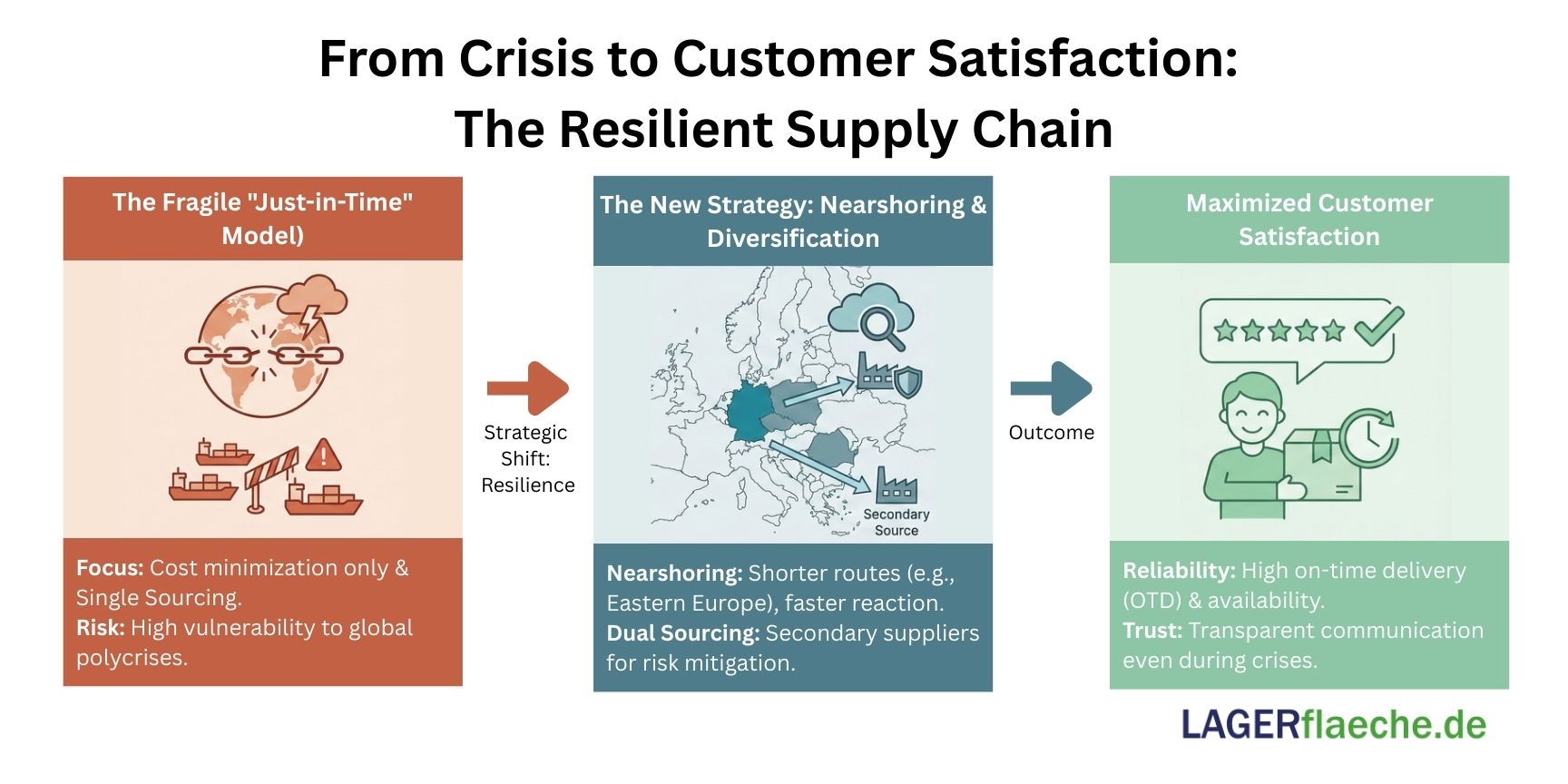
For decades, SCM has been optimized under the premise of "lean production" and "just-in-time" delivery. The goal was to minimize inventory levels and maximize capital efficiency, often through single-sourcing with the cheapest supplier in the Far East. The pandemic and the subsequent crises have revealed the fatal fragility of this model.
The new guard rail is called resilience.
Resilience does not mean giving up efficiency, but reassessing risk. It's a supply chain's ability to resist, adapt, and recover quickly from disruptions. The focus shifts from pure unit price (cost per unit) to the evaluation of the "total cost of risk" – what does it cost if production comes to a standstill due to a missing part?
Nearshoring & Friendshoring: The New Strategies of Risk Mitigation
How is resilience implemented in practice? The two most dominant strategies are "nearshoring" and "friendshoring".
- Nearshoring: The relocation of production or procurement to geographically closer countries (e.g. from China to Eastern Europe, Turkey or Mexico).
- Friendshoring: A geopolitical expansion in which the shift takes place to countries that are considered politically and value-based stable and allied.
The data show that this is no longer a theoretical trend, but lived practice:
- A global Capgemini study (March 2025) Found that more than half of the companies surveyed in Europe and the US had already recalled (reshoring) or relocated (nearshoring) parts of their production last year.
- 65% of companies said they were actively reducing their dependence on Chinese products.
- For German managers, nearshoring is the most effective method (30%) to reduce supply chain costs, according to a BCG study (November 2024).
Spotlight Eastern Europe: Where German Companies are now Relocating
For German companies, the focus is clear: Central and Eastern Europe (CEE). A joint survey by KPMG and the Committee on Eastern European Economic Relations (February 2025) provides impressive figures:
- 22% of the German companies surveyed are actively considering relocating production to the CEE region.
- 56% plan to invest there by 2030.
The top target countries for these investments are Poland (51%),Romania (43%) and – despite the war, as a sign of reconstruction – Ukraine (41%).
What are the reasons? It's no longer just the lower labor costs (cited by 33%). More important are the availability of qualified specialists (37%) and the high domestic demand in these growing markets (40%). The geographical proximity reduces transport times from weeks to days, reduces risks and improves the CO2 balance.
Case Study: Müller GmbH – From Asia Risk to Dual Sourcing Strategy
Let's take a practical, albeit fictitious example: Müller GmbH, a German medium-sized company for special valves.
- The situation (until 2021): Müller sources 80% of its forged blanks from a single, low-cost supplier in China. The delivery time is 8-10 weeks.
- The crisis (2022): Container prices are exploding. A lockdown in the port of Shanghai paralyzes deliveries for six weeks. Production at Müller in Germany is at a standstill. Angry customers (B2B) threaten contractual penalties and switch to the competition. The damage exceeds the savings of the last three years.
- The strategy (from 2023): Management reacts. They keep the Chinese supplier for 40% of the volume, but build a second, strategic supplier in Poland (dual sourcing + nearshoring).
- The result (2025): The blank from Poland is 15% more expensive to buy. BUT: The delivery time is only 4 days left. Transportation costs are 60% lower. Müller can now react to order peaks at short notice. When the crisis in the Red Sea begins, the volume in Poland is immediately ramped up. The ability to deliver remains at 99%. Customer satisfaction increases measurably, as Müller is the only one in the store that is able to deliver continuously.
Logistics in a Global Comparison: The World Bank's LPI 2023
Is the "logistics world champion" Germany still internationally competitive? The most important global benchmark is the World Bank's Logistics Performance Index (LPI). It measures 139 countries based on criteria such as infrastructure, customs, adherence to deadlines and shipment tracking.
The results of LPI 2023 were a wake-up call:
- 1st place: Singapore (Score: 4.3)
- 2nd place: Finland (Score: 4.2)
- 3rd place (shared): Denmark, Germany, Netherlands, Switzerland (all score: 4.1)
Germany is still among the absolute world leaders, but the lead is melting. Other countries, especially Singapore and the Netherlands, are setting standards in the digitization and efficiency of customs clearance.
Country Analysis: Germany vs. Netherlands, USA and China
A deeper look at the LPI data and the reality shows the fundamental differences in the logistics systems:
Germany (LPI rank 3):
- Strengths: Excellent, dense infrastructure (despite renovation backlog), high quality and reliability of the service providers, central location in Europe.
- Weaknesses: Extremely high costs (tolls, energy, personnel), high bureaucracy, acute shortage of skilled workers. The port turnaround time (TAT) is good at 1.3 days, but no longer world-class.
Netherlands (LPI rank 3):
- Strengths: The "Gateway to Europe". The Port of Rotterdam is a digitized masterpiece. Customs clearance is extremely fast and is considered a benchmark. Perfect connection to the hinterland (water, rail).
- Weaknesses: Strong dependence on international trade and the German economy.
USA (LPI Rang 17):
- Strengths: Huge domestic market, high level of innovation in the field of logistics tech (e.g. automation, AI).
- Weaknesses: Surprisingly far behind in LPI 2023. The reasons are the huge distances, a strong dependence on truck traffic, congested ports on the west and east coasts and a partly outdated rail infrastructure. The port TAT is 1.5 days, slower than Germany (source: World Bank).
China (LPI Rang 19):
- Strengths: Undisputed "workbench of the world" with massive state investments in infrastructure (ports, rail – "New Silk Road"). Unparalleled production capabilities.
- Weaknesses: Increasing geopolitical risks (trade conflicts, Taiwan), rising labor costs and lack of transparency in supply chains. The strategy of "friendshoring" is aimed directly at reducing this dependence.
Conclusion: From Crisis Mode to Proactive Shaping of the Future
The message is unmistakable: a supply chain that is only optimized for costs will fail in the polycrisis – and take customers with it.
Increasing customer satisfaction today begins with an honest risk analysis of your own supply chain. The 10 challenges, from driver shortages to geopolitics, are not temporary problems, but the new normal.
Companies that act proactively now win. They invest in dual sourcing, take advantage of the opportunities offered by nearshoring in stable partner countries such as Poland or Romania, and drive digitalization to create real transparency.
Logistics has risen from a vicarious agent to a strategic architect of the company's success. Resilience is the foundation, technology is the lever and customer satisfaction is the ultimate goal.
Latest Blog Posts
Stay up to date with the newest trends, insights, and tips in warehouse and logistics. Our latest articles help you navigate the industry with confidence.
Data Centres vs. Logistics Facilities: The Race for Power and Land
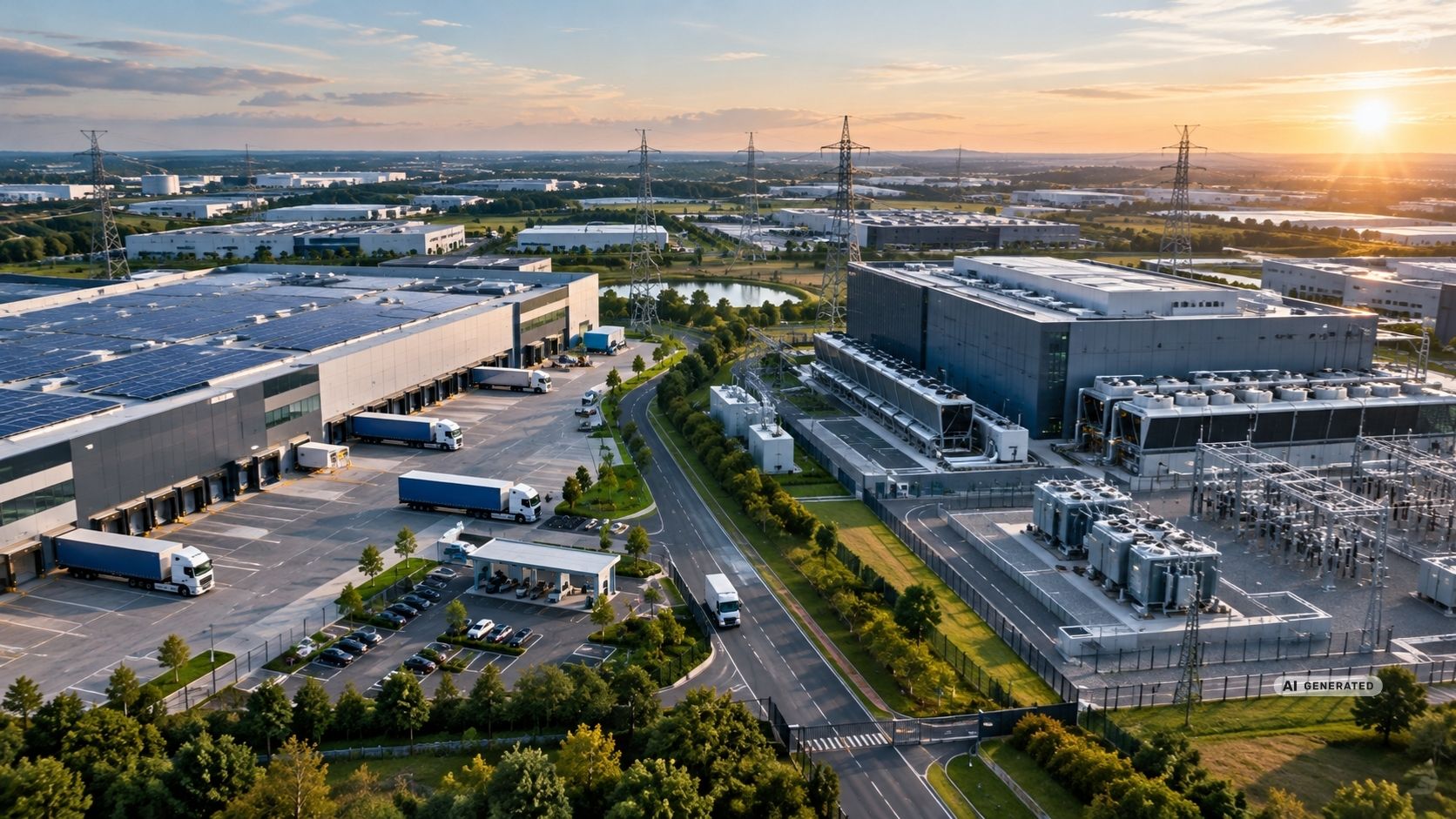
Across Europe, logistics operators are competing for more than land and transport access. They increasingly need something much harder to secure: grid capacity. Data centres are intensifying that competition — and changing how logistics locations are evaluated....
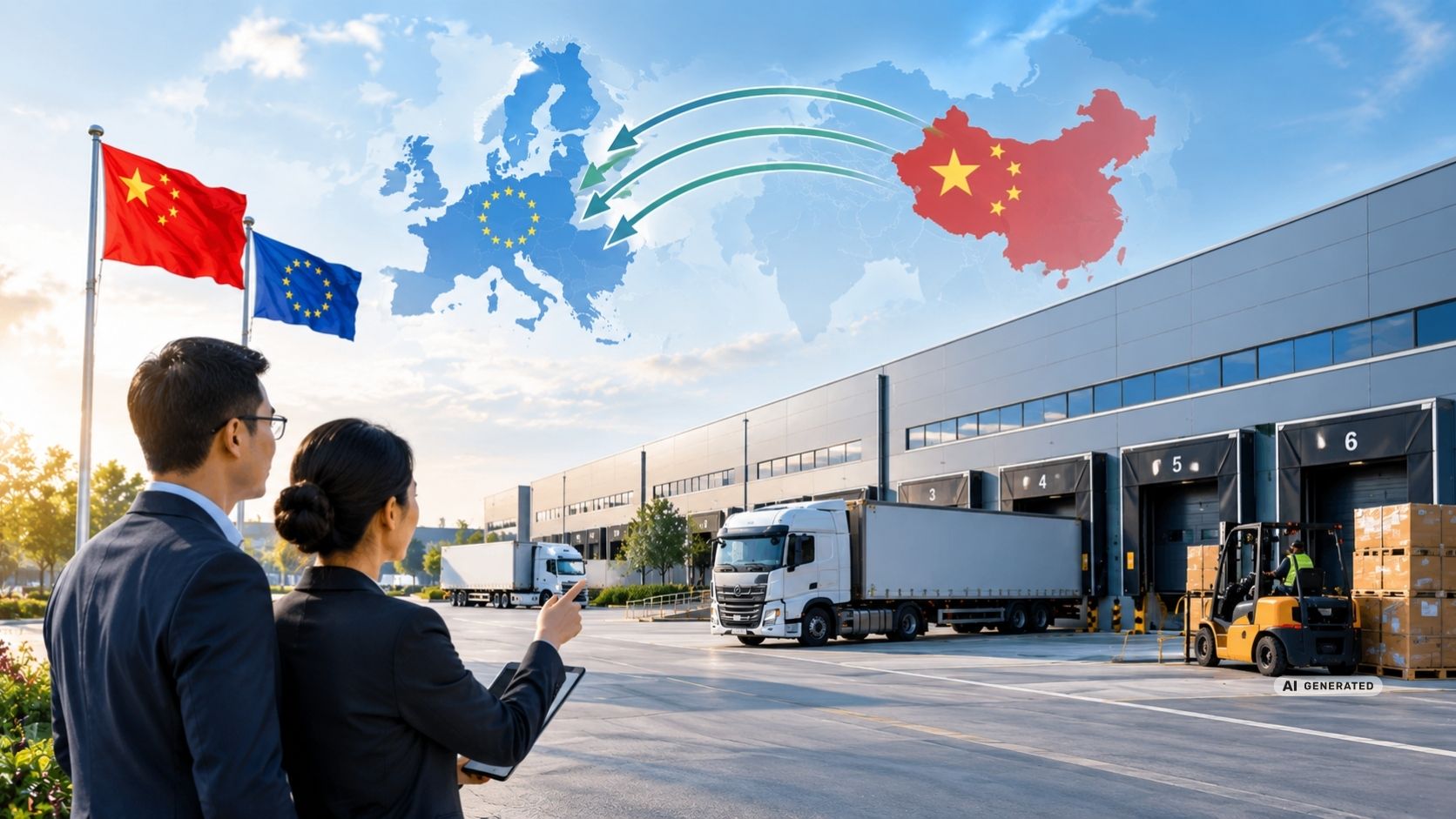
Chinese companies discover Europe's logistics real estate
Chinese companies are becoming an increasingly visible user group in Europe's logistics real estate market. What does this mean for warehouse space, 3PL structures and the requirements for European logistics locations?...
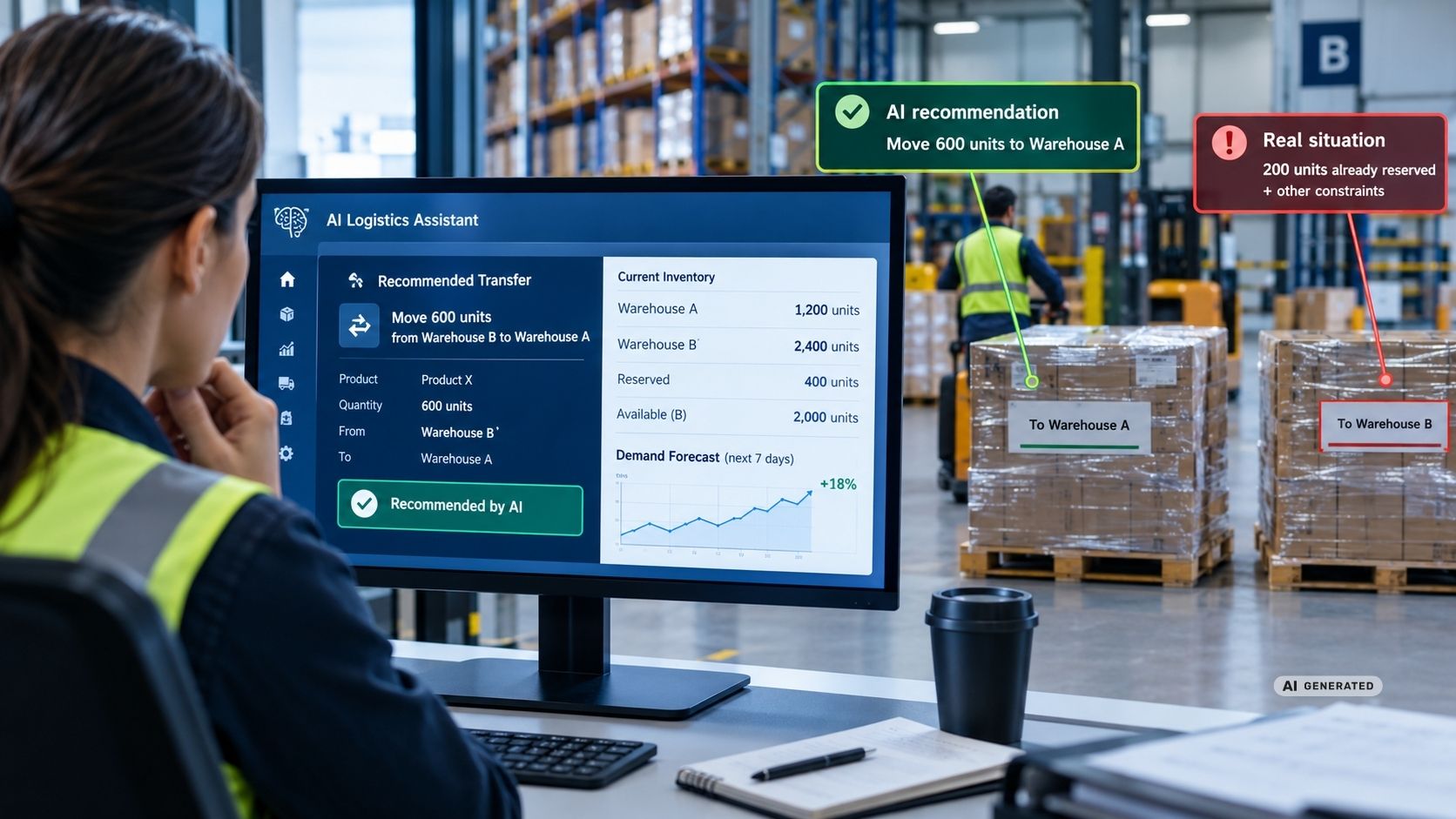
AI Hallucinations in Logistics: When AI Plans the Wrong Delivery
AI can analyze enormous amounts of logistics data — but it can also produce a convincing answer that is simply wrong. The critical question is not whether AI makes mistakes, but what happens when a wrong recommendation becomes an operational decision....
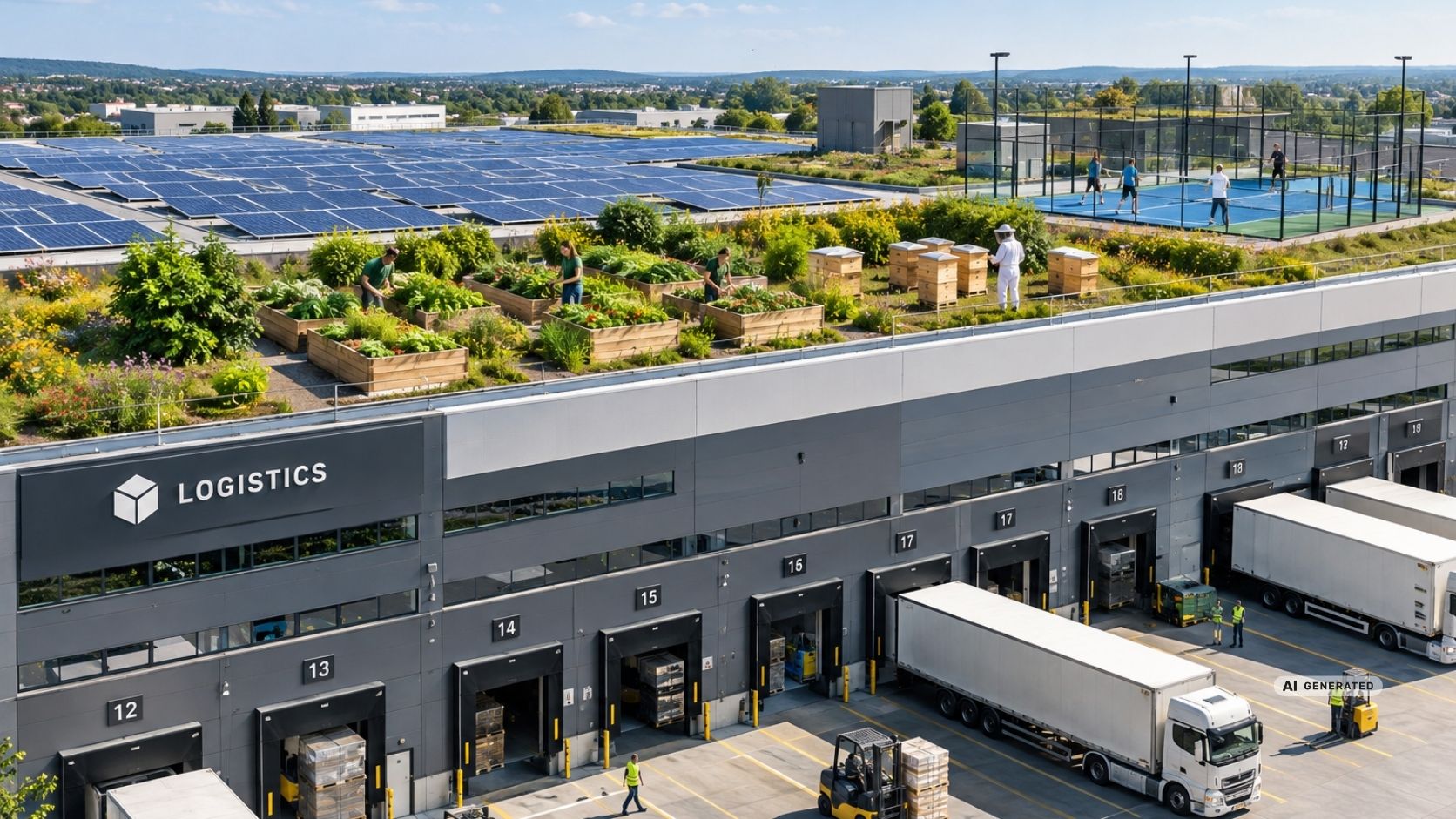
The Green Revolution on the Hall Roof: From Concrete Block to Ecological Power Plant?
Logistics roofs can do more than PV: greening, bees, urban farming and even sports areas turn unused roof space into multifunctional rooms....